 239 444 7833239 444 7833
56 pieces across 13 collections. Solid European oak, built to order in 10–16 weeks.
Ouray is a small town high in the Colorado mountains, the kind of place where a bedroom means heavy timber, deep quiet, and cold air outside the blankets.
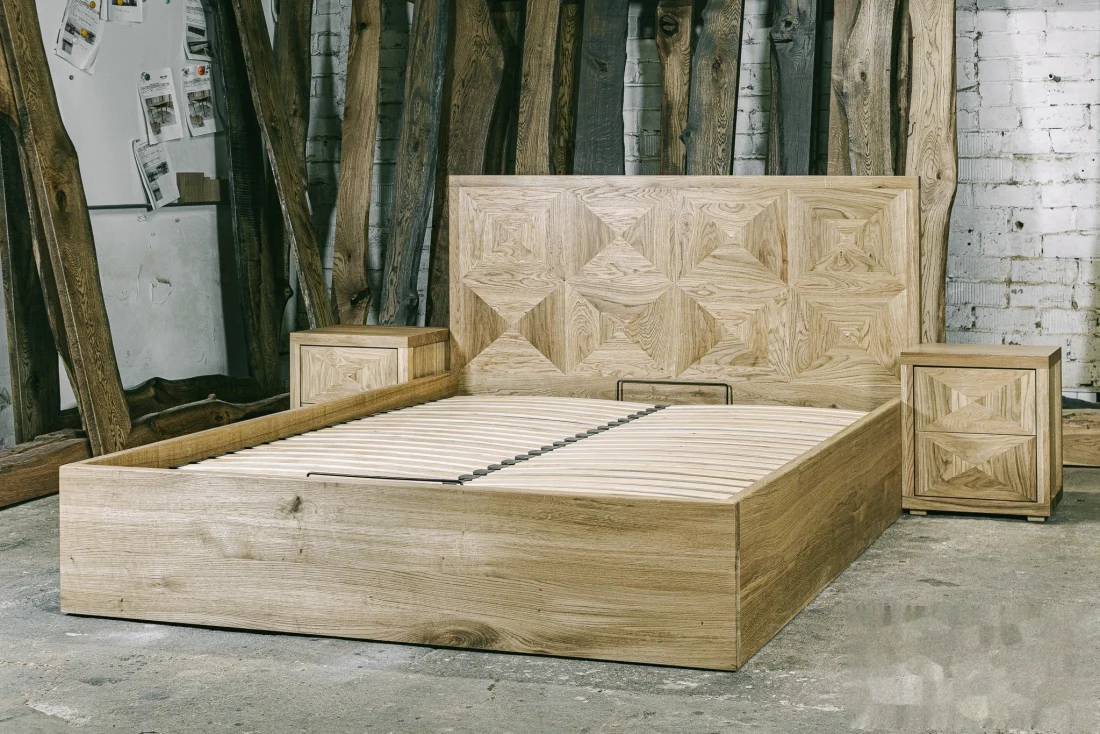
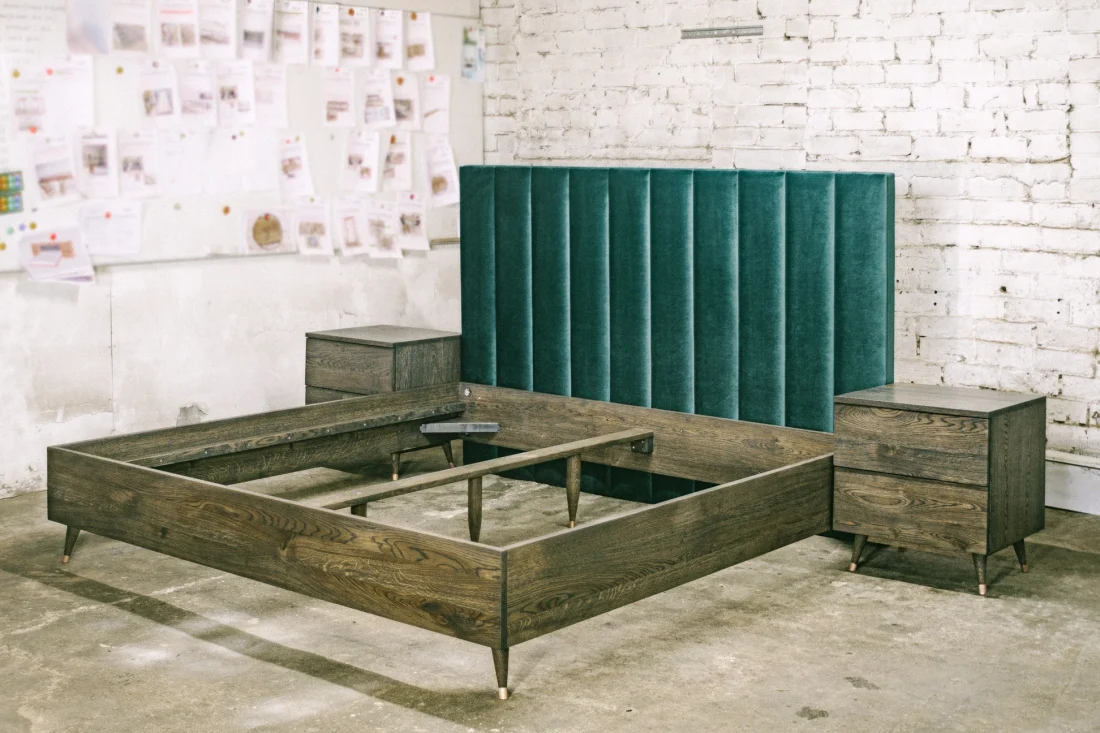
These beds carry that feeling. Wide oak platforms, low to the floor, with headboards that read as architecture — full panelled walls of oak, some with leather cushions set in where you actually lean. There is nothing decorative about the construction. The frames are solid oak throughout, joined to be slept on for decades and moved between houses without complaint. Several include floating nightstands built into the headboard wall itself, so the whole end of the room becomes one piece. A bed is the last thing you see at night and the first thing in the morning. This one earns both moments.
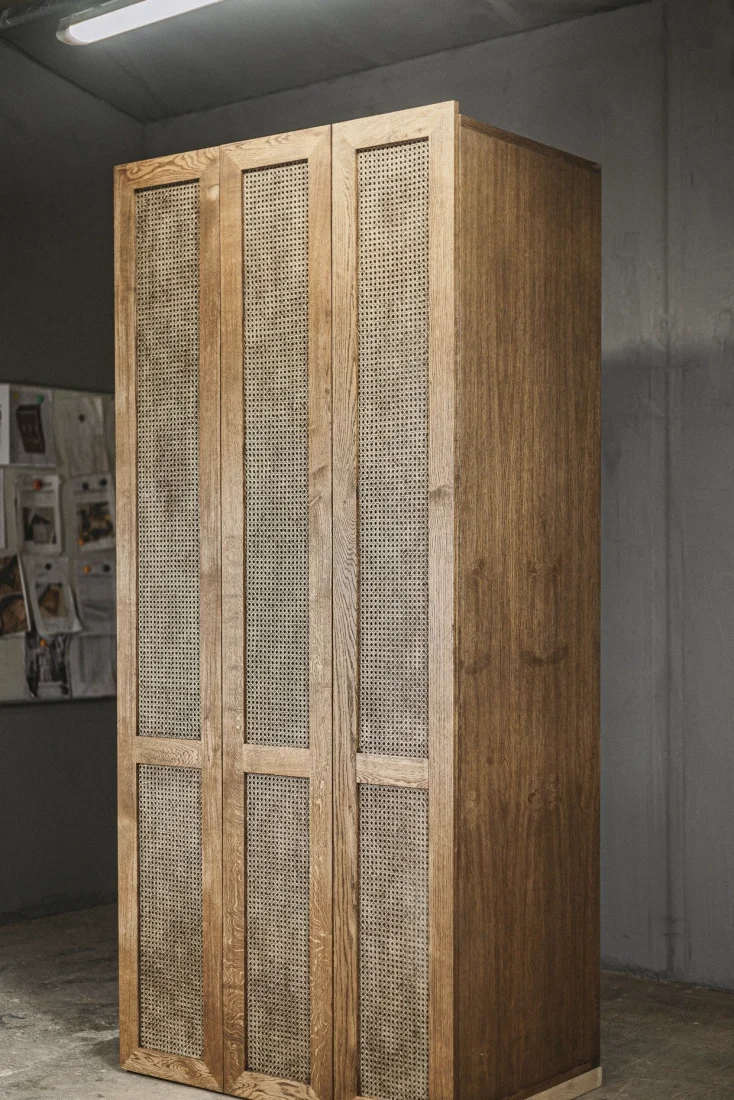
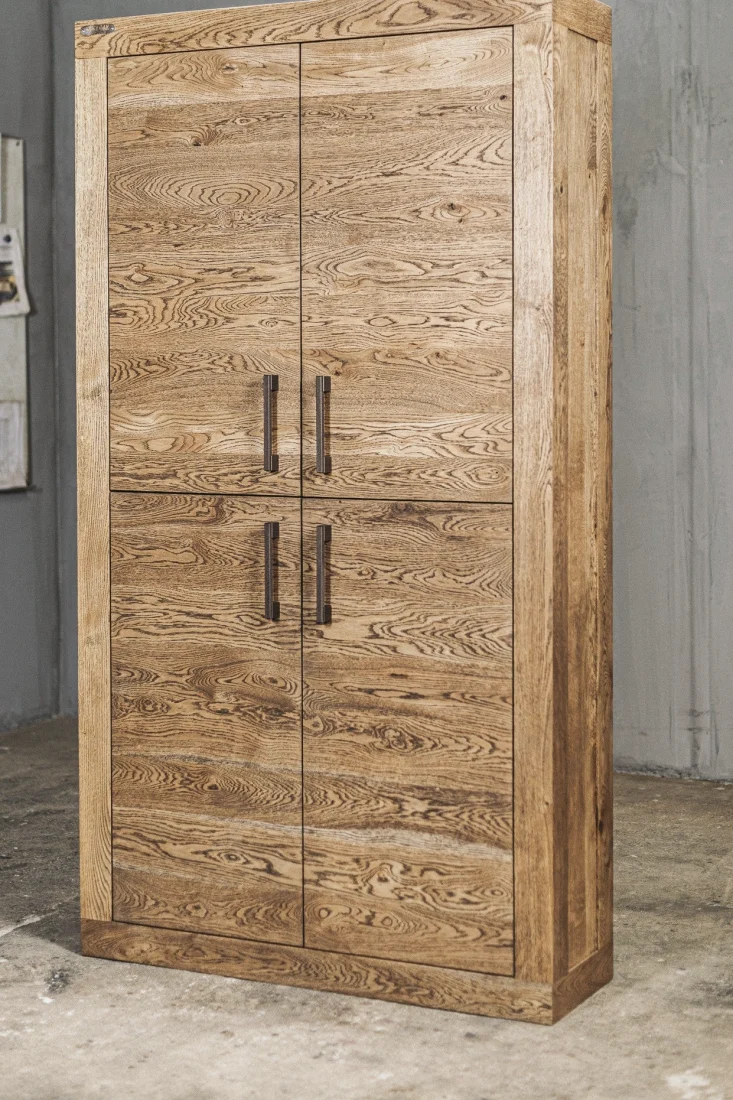
Menorca has a long history of hand-woven rope and cane work, made for boats and houses alike, and this wardrobe's door panels carry that craft directly — solid oak frames set with woven cane inserts instead of flat wood or glass, letting light and air move through even when the doors are shut.
Seven sizes make up the collection, in both natural oak and a deeper walnut tone, but the woven cane panel stays the identifying feature throughout, framed simply so the weave itself provides all the pattern. The oak carries the structural load; the cane does the rest. In a bedroom, it reads lighter than a solid-doored wardrobe of the same size, and it keeps what is inside from ever feeling completely sealed away.
Fluted columns and old arcades give this city's architecture its rhythm, and this closet borrows the same vertical grooving: a tall black metal frame scored with narrow channels, glass and open shelving mixed with oak-toned drawer sections, interior lighting built into the frame itself.
Nothing about it reads as a plain wardrobe box. It functions closer to a dressing room condensed into one piece — open display for what you want to see, drawers below for what you do not. The lighting matters more here than in most closets: switch it on and the piece reads as a small shop window built into a bedroom wall, which is more or less the intended effect. Positioned along a hallway rather than tucked in a corner, it turns a walk to the bedroom into something worth pausing for.
Big sky country builds barns to last generations, sliding doors and all, and this closet keeps that same logic at bedroom scale.
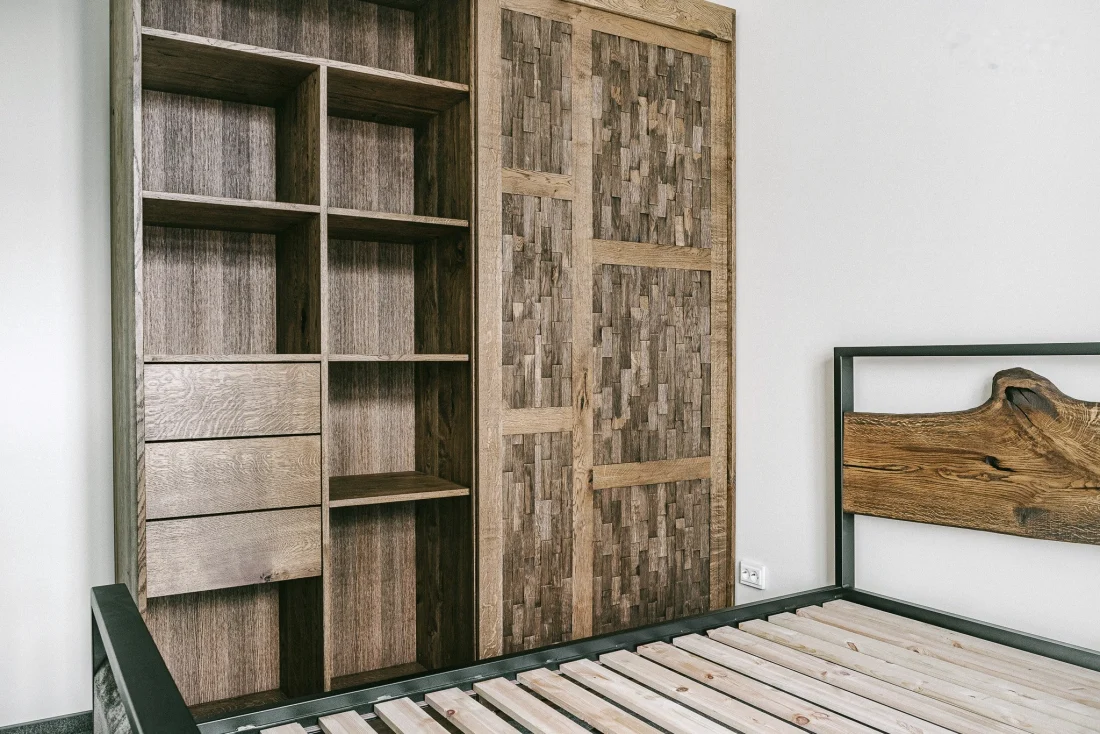
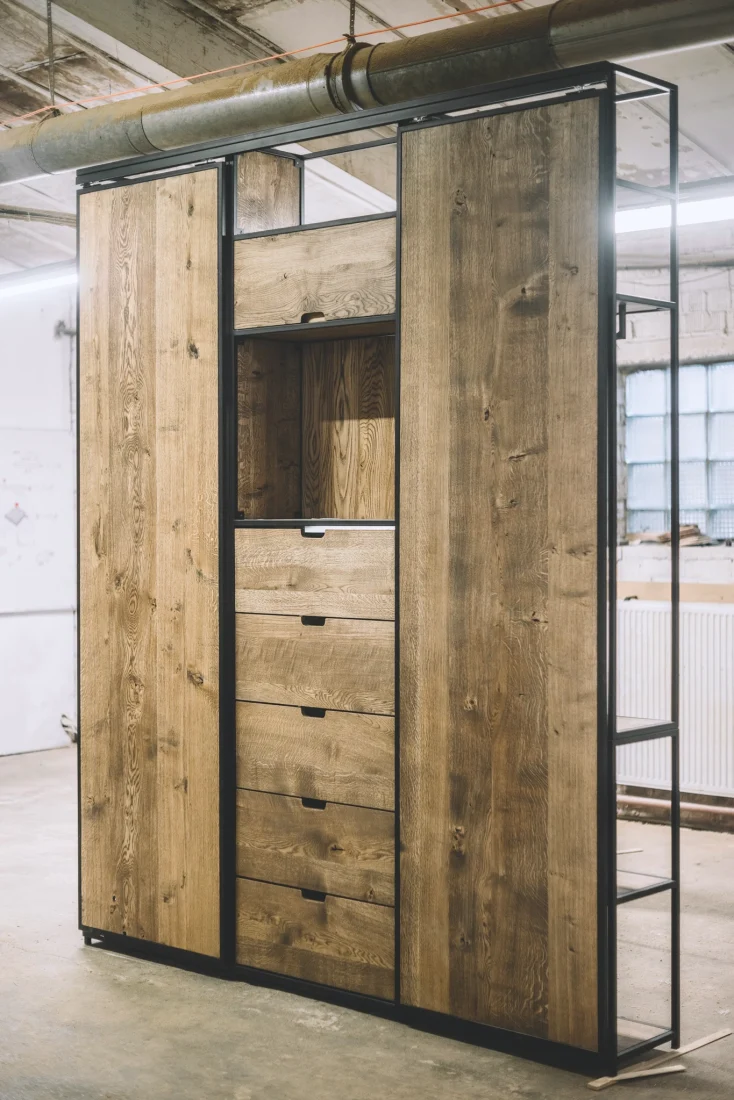
A black steel frame carries mixed wood sections — solid oak drawers below, open glass shelving above — with a walnut-toned sliding door running the width of the piece on a visible track. The mixed materials do double duty as storage and display: folded clothes and drawers stay hidden, while the open shelves above hold what you actually want to see each morning. It suits a room with high ceilings, since the piece reads tall rather than wide. Nothing about the hardware is disguised — the track and frame are part of the design, not an afterthought. It works best in a room built around exactly this kind of contrast — hidden storage below, open display above.
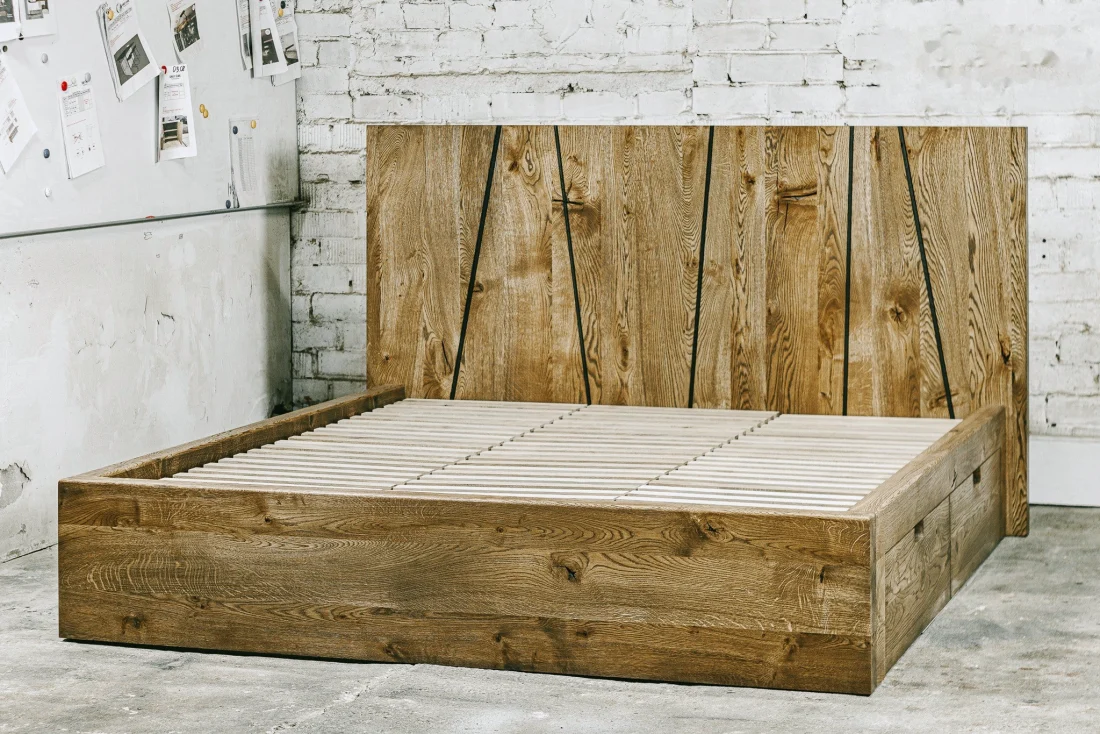
Limestone islands and long pale summers give Gotland its color, and this bed keeps that bleached, sun-worn look in solid oak.
The headboard is cut in one continuous wave, rising and falling like a coastline, sanded until the pale finish reads almost white. Underneath, the platform holds its own storage — drawers built into the base rather than added on. Some frames come in a natural, ungrained oak; others go dark, walnut-toned, for a room that wants contrast instead of calm. Either way the wave stays. A bed like this asks for plain linens and not much else on the walls — it is already the room's one gesture. Even the hardware stays hidden, worked into the drawer fronts so nothing metal interrupts the pale wood.
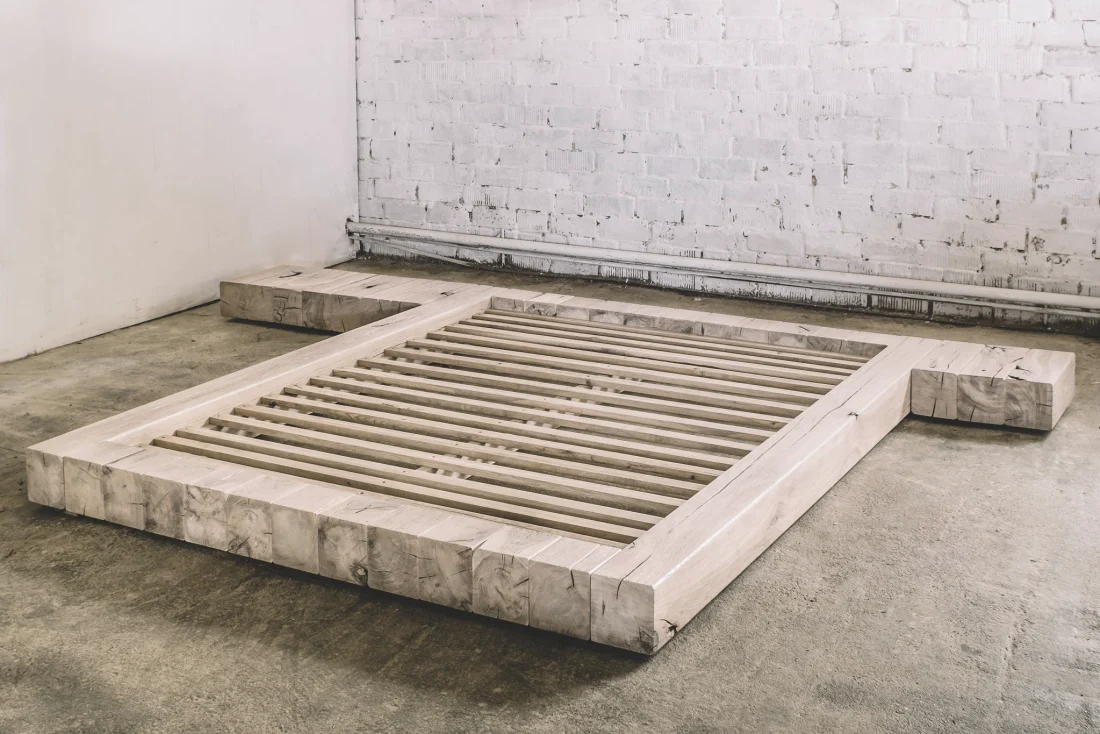
Whitewashed walls and a horizon that never seems to end — Santorini lends its color, not its shape, to this bed.
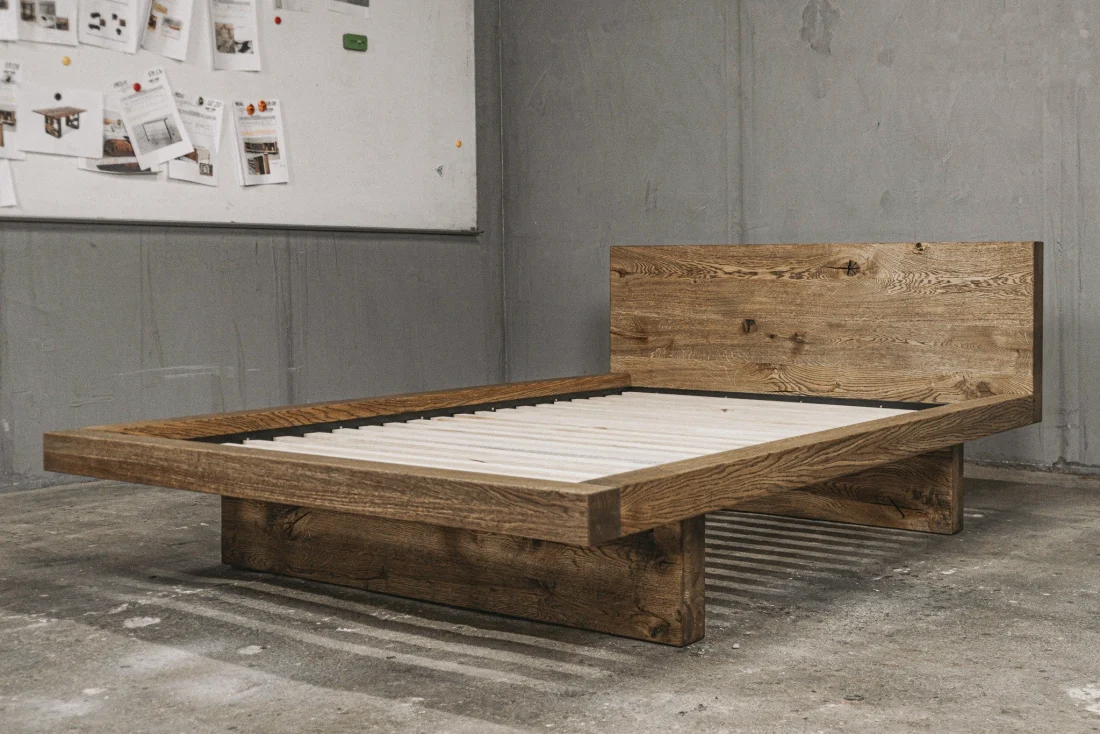
The platform sits low, built from chunky oak beams left with a pale, almost bleached finish, slatted through the center so the mattress breathes. A black steel frame carries some versions, oak legs the rest. There is little to it beyond that: no headboard doing extra work, no carved detail competing with the wood itself. It reads as calm the way a whitewashed room reads as calm — one material, one tone, nothing arguing with anything else. Set it low in a bedroom with bare walls and morning light does the rest. There is no footboard to speak of, so the platform reads as one long, low horizontal line across the room.
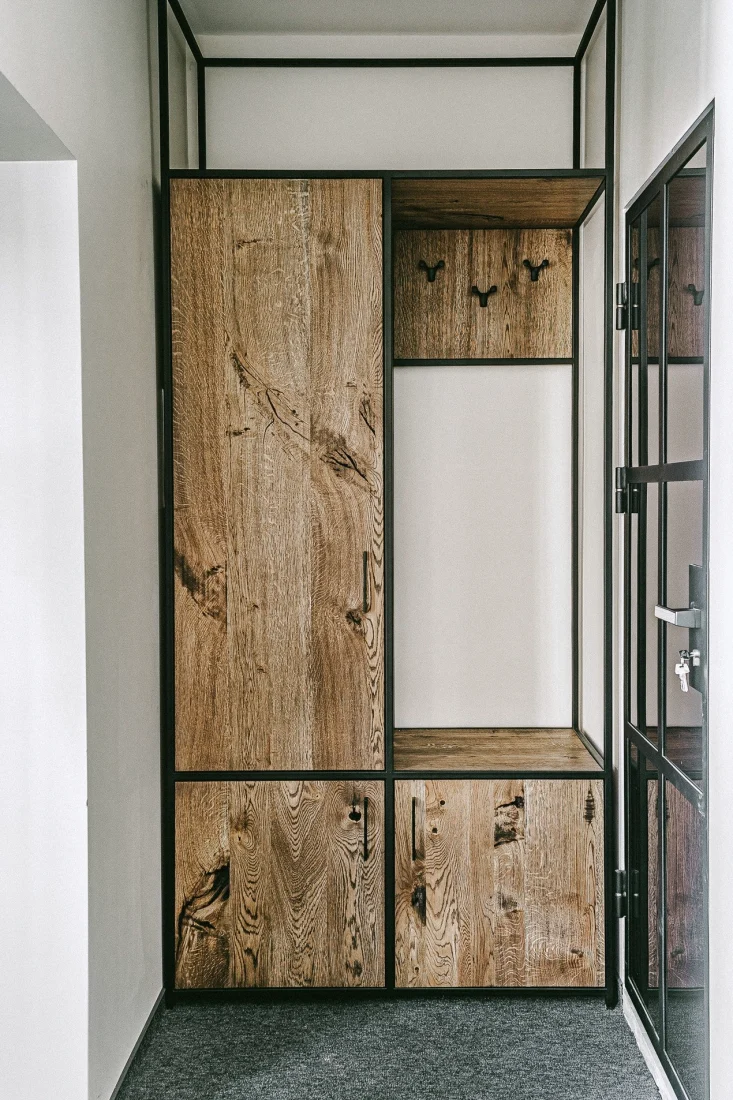
Austin's houses tend to blur the line between inside and outside, entries built as much for boots and bikes as for coats, and this open wardrobe unit is built for exactly that kind of arrival — a black steel frame holding oak shelving, a hanging rod, and a bench with drawers below, all left open rather than closed behind doors.
Two sizes make up the collection, both in natural oak against the black steel structure, with cubbies sized for shoes and baskets built into the base. Nothing is hidden here by design; the point is to see everything at a glance on the way in or out. It works best right inside a door, doing the sorting a closet usually leaves to a pile on the floor.
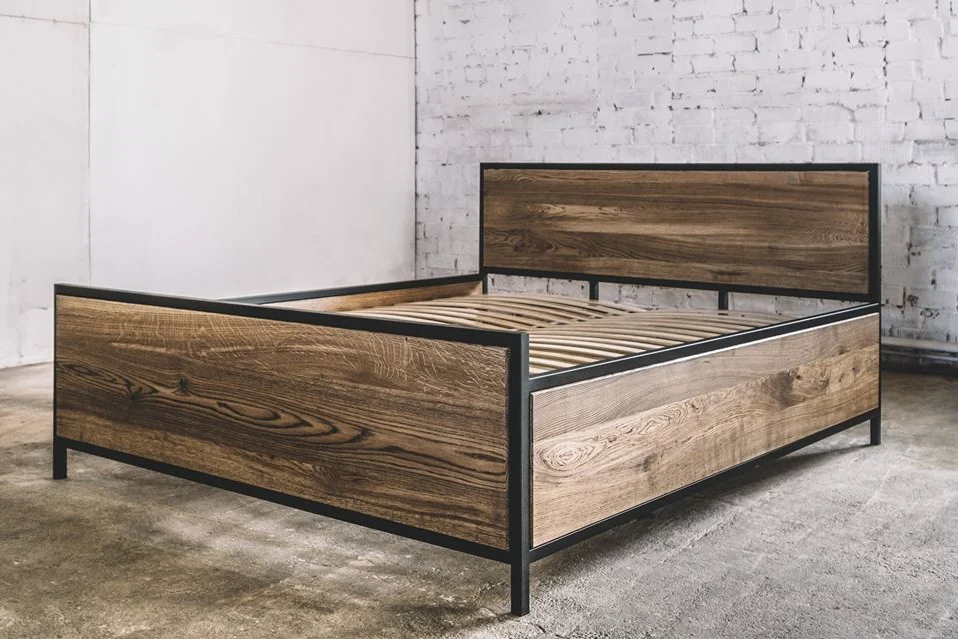
Lake towns in the mountains keep their timber rough, and the Tahoe headboard is the roughest thing in this bed: a single live-edge oak slab, the bark line still visible along one side, a knot left in rather than filled.
The platform below runs on a black steel frame, slatted, with no upholstery anywhere to soften the contrast between raw wood and machined metal. It works as the one statement in an otherwise plain room — the frame disappears into shadow at night, and the headboard is what catches morning light first. A bed like this does not ask for a matching nightstand. It asks for a room willing to let one slab of oak be the whole point. Everything else in the bedroom can change around it without the bed ever looking out of place.
Seaside towns with piers built for looking, not just walking, have a soft spot for curves, and these nightstands are all curve: round drum bodies in black oak, a single drawer set into the face, resting on legs bent in a deco sweep of black steel.
A few come finished in a deep blue oak instead of black, the kind of blue you get off water at dusk. They stand rather than sit — the metal legs lift the drum well clear of the floor, so the whole table reads lighter than a solid box would. One beside a bed does more work as sculpture than storage, and looks it. Two together, mirrored either side of a headboard, turn a plain bedroom wall into something worth walking past.
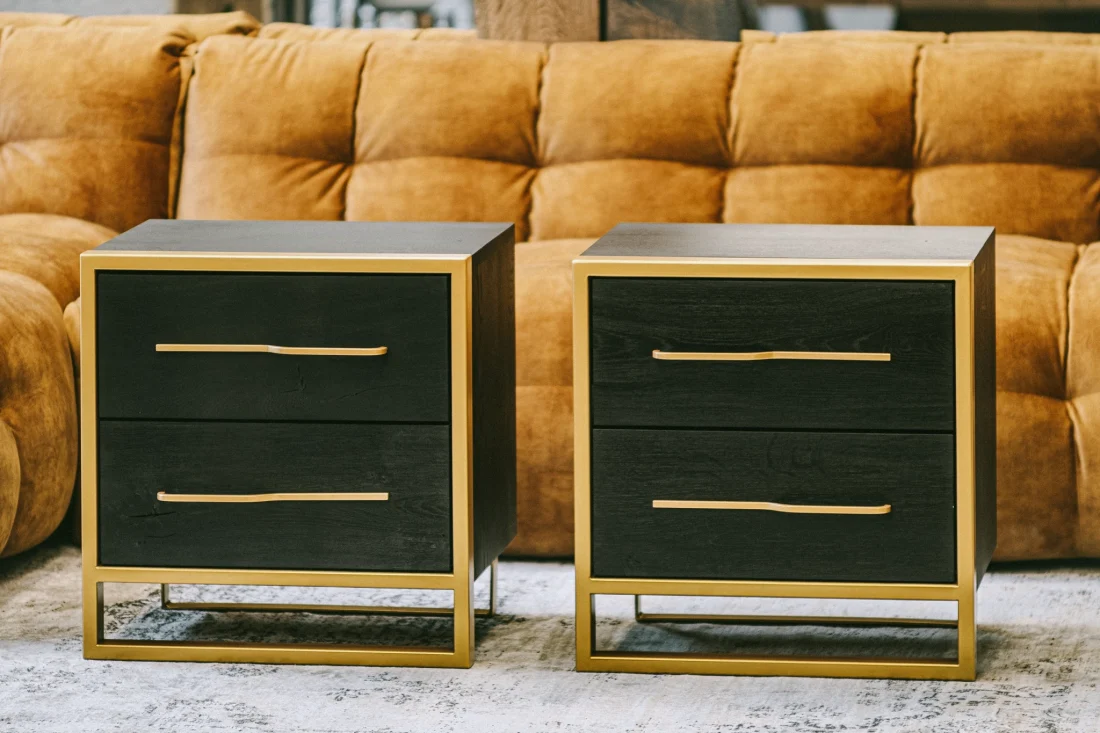
Quiet college towns keep their furniture understated, and this pair of nightstands follows that instinct: two drawers each, dark walnut-toned oak, no hardware louder than a small integrated pull.
They are built to flank a bed and be forgotten during the day, noticed only at the exact moment you reach for a lamp switch or a glass of water in the dark. A whitened-oak version exists for lighter rooms, paired with a black steel frame instead of solid legs, but the proportions stay the same across both. Set as a pair, they give a bedroom the kind of symmetry that makes the whole room feel settled rather than decorated. A concrete-topped version exists too, for a room that wants one cooler material against all that dark oak.
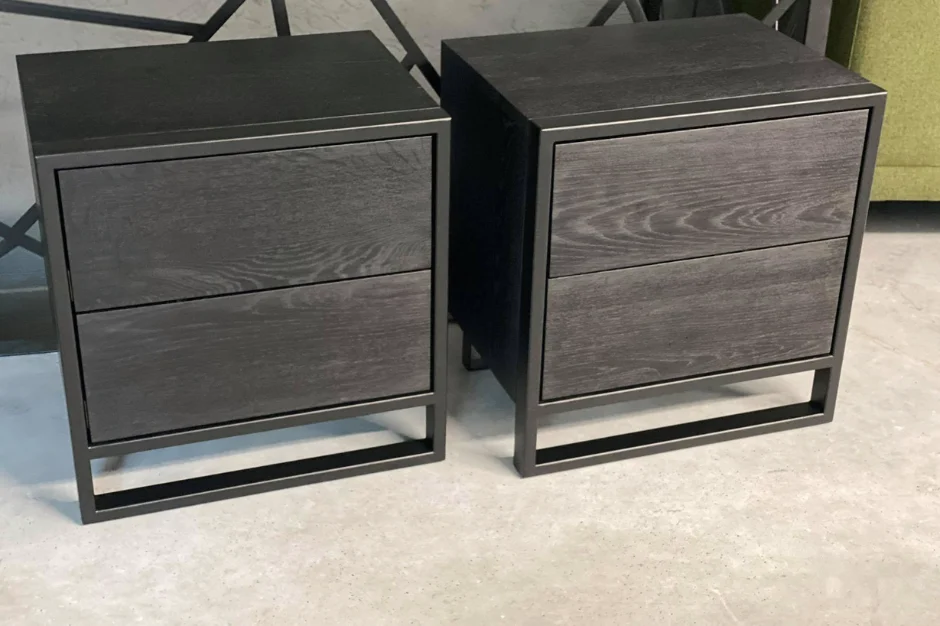
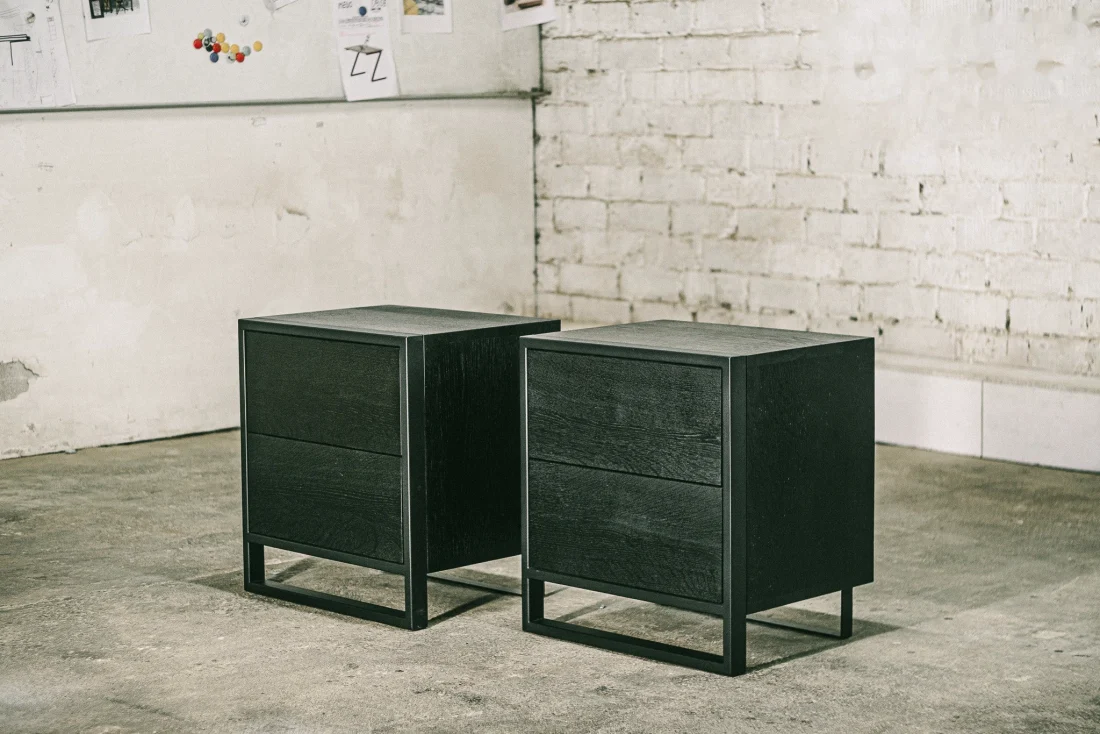
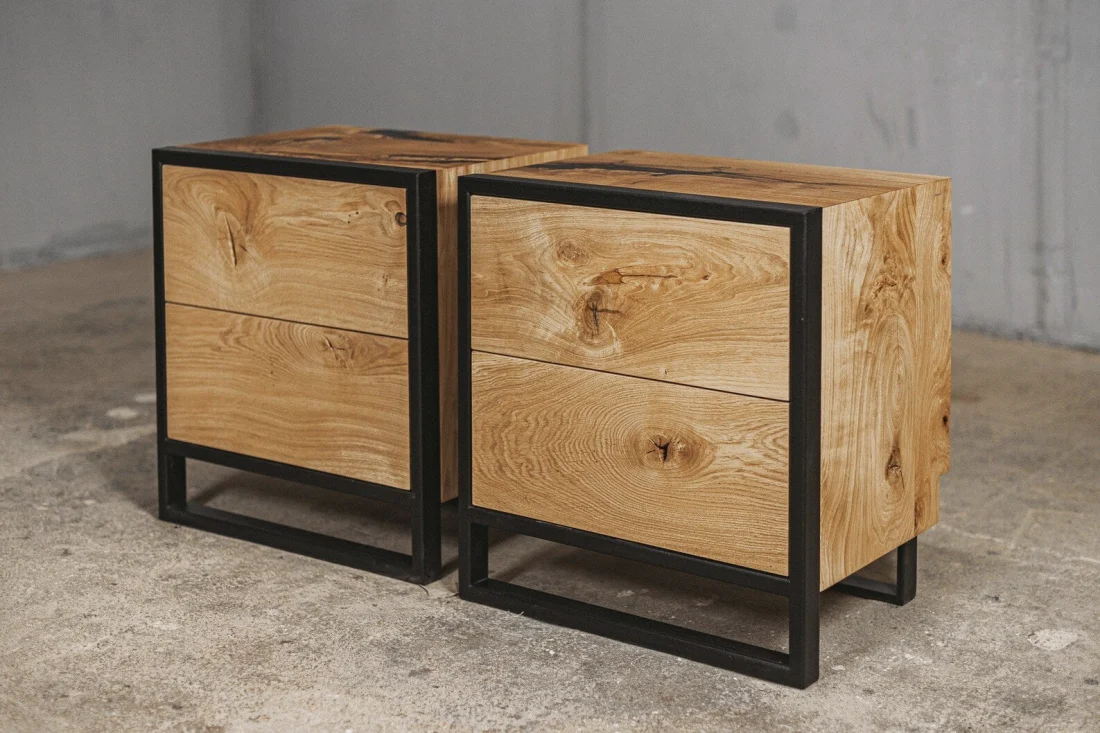
Mystic is a harbor town where fog softens every hard edge by midmorning, and the grain in this nightstand's oak drawer fronts has that same soft, blurred quality — walnut-toned wood set inside a spare black steel frame.
Two units are sized to flank a bed as a pair, a third stands taller and alone. The construction is direct: solid oak fronts and top, joined into a steel frame that does the structural work and stays visually out of the way, finished flat black rather than polished to shine. Drawers close with a quiet weight rather than a rattle. Beside a bed, one holds a lamp and whatever gets read before sleep; stacked as a pair, they frame the whole headboard wall evenly.
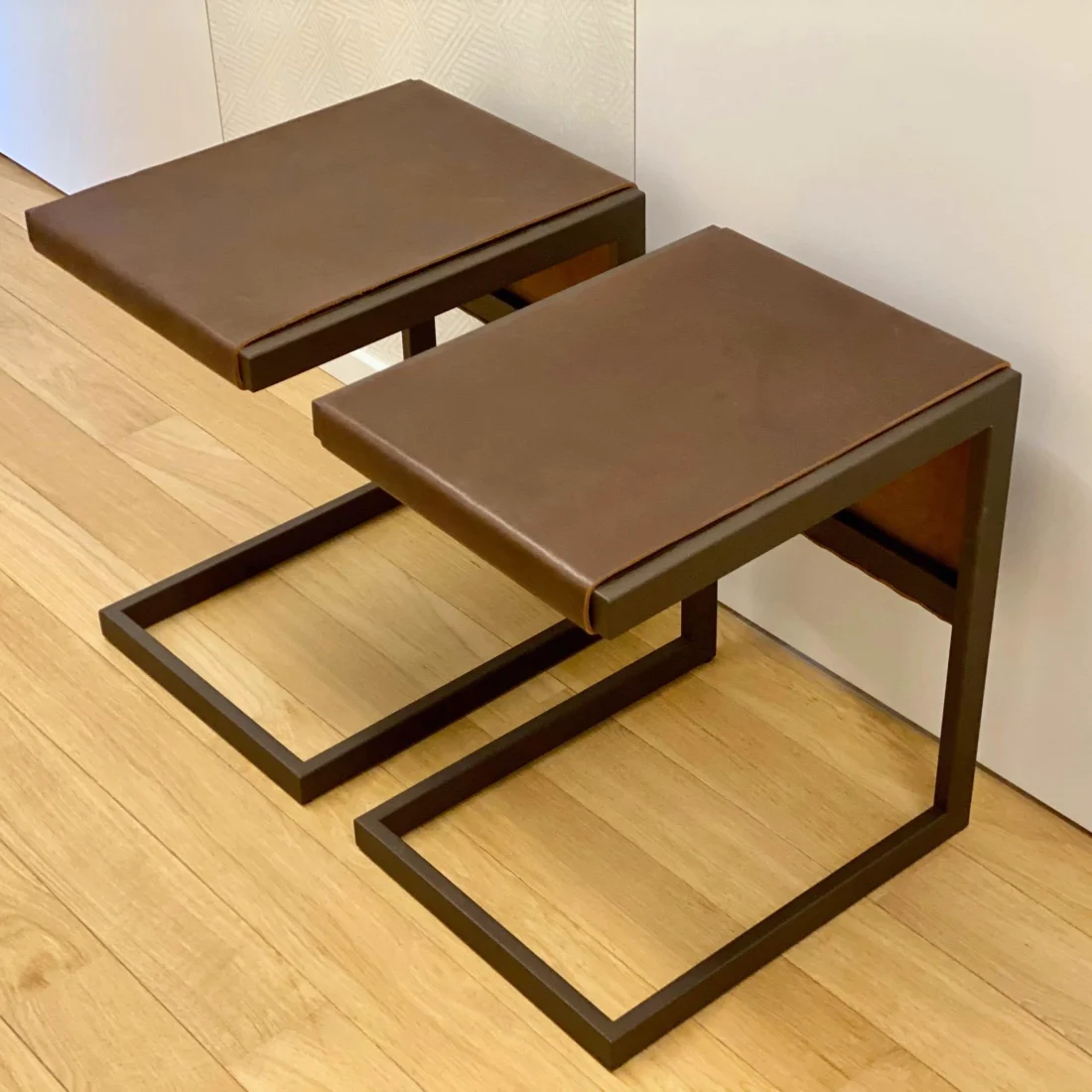
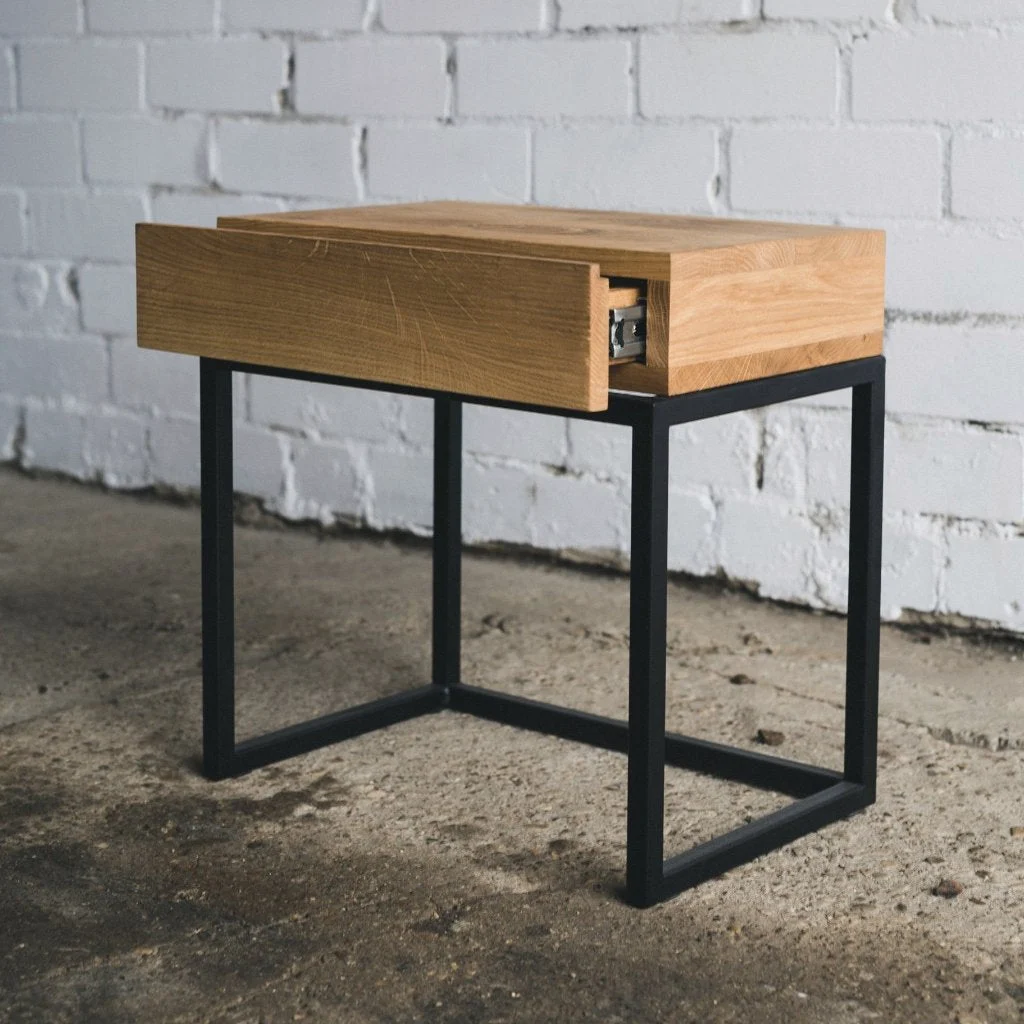
Thin black steel, bent into open rectangles, is the whole architecture of this table — legs and frame drawn as one continuous line, the way an Italian furniture sketch stays mostly white space.
A single oak drawer or leather-wrapped shelf sits inside that frame, walnut-toned or natural, the wood doing the only soft thing in the piece. It reads taller and lighter than its footprint, which makes it useful where a bedroom has no room to spare. Two side by side, mismatched heights, work as an off-kilter nightstand pairing — one for the lamp, one for whatever book did not make it to the shelf. Either way, the frame stays the true subject, with the wood or leather playing a supporting role.
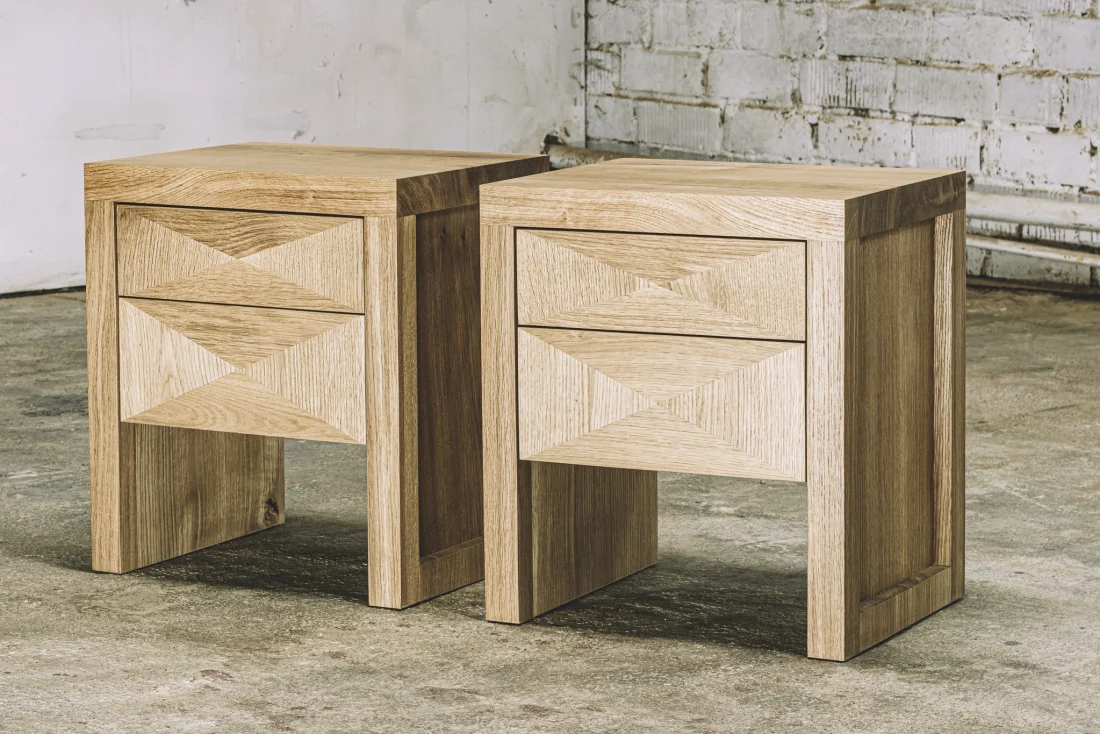
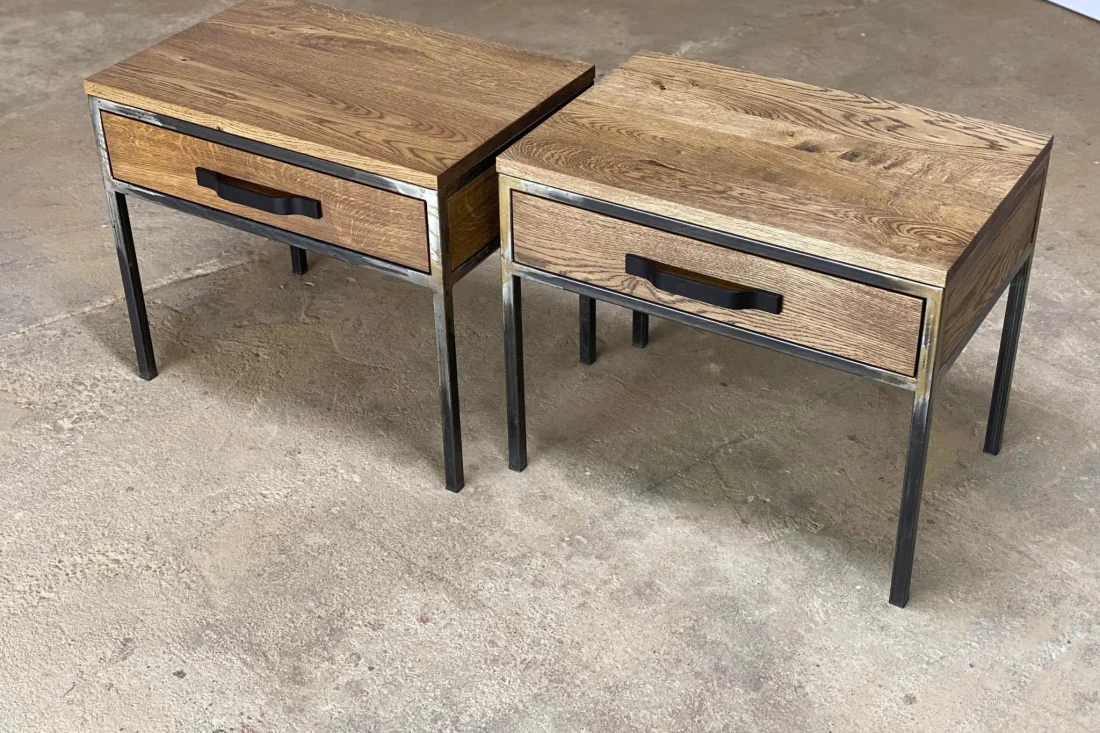
Sweden's old university town runs pale stone against dark timber, and this pair of nightstands does the same trade in miniature — one box in natural oak, one in black oak, both low and wide rather than tall.
Each is built as a single drawer the width of the whole top, deep enough to swallow a stack of books instead of just a phone charger. Metal legs lift some versions off the floor; solid oak carries the rest. Put the light one on your side of the bed and the dark one on your partner's, and the asymmetry reads as deliberate rather than mismatched — which, built this way, it is. The scale keeps both tables useful as more than a place to set a lamp down at night.