 239 444 7833239 444 7833
55 pieces across 13 collections. Solid European oak, built to order in 10–16 weeks.
Pastel colors on a cliffside harbor are Portofino's whole reputation, and this stool borrows one shade of it: a round cushioned seat in sage or dusty mint, set on a turned oak pedestal that widens like a mushroom cap toward the base.
A metal ring near the floor doubles as a footrest, the only hard edge on an otherwise soft silhouette. Some versions swap the wood for ash, lighter in tone, and the seat fabric runs through a small palette rather than one fixed color. It reads playful without trying hard at it — the kind of stool that works at a kitchen island where the rest of the room is being serious. It photographs almost like a toy, and that lightness is entirely intentional against more serious pieces nearby.
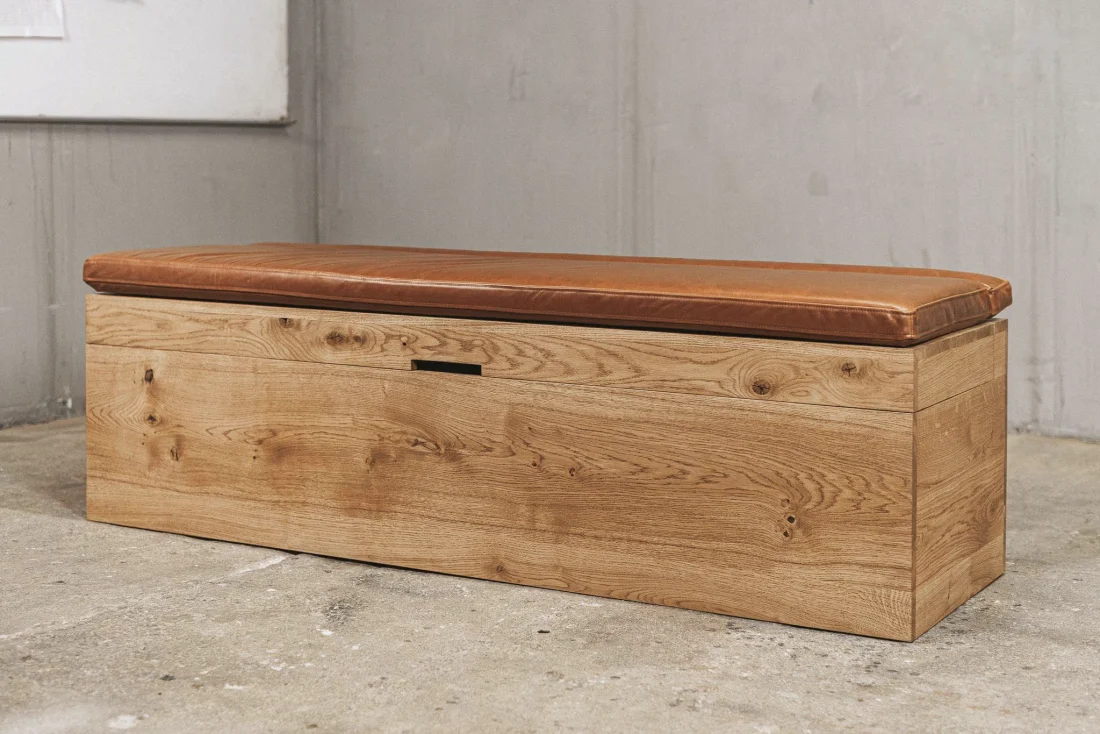
London's quieter streets keep their furniture reserved, and this bench matches that mood: a solid oak frame, storage box built into the base, topped with a cushion of genuine leather in cognac brown or black.
The proportions run long and low, meant for an entryway or the foot of a bed rather than a table. Lift the seat and the whole top hinges up — shoes, blankets, whatever a hallway needs to hide go inside the box itself. The leather takes a shine with use rather than losing one, which suits a piece that gets sat on daily while boots come off. It asks for nothing else nearby, just a wall and a hook. Over the years the leather picks up a faint darkening at the edges, exactly where hands and knees meet it most.
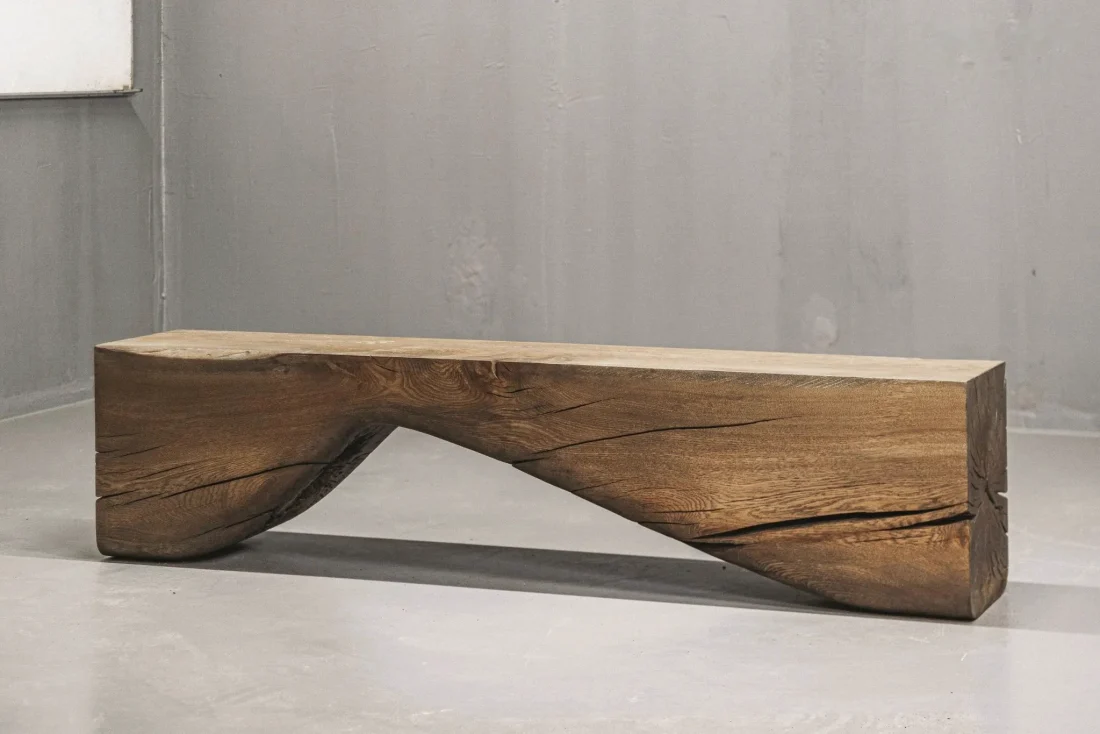
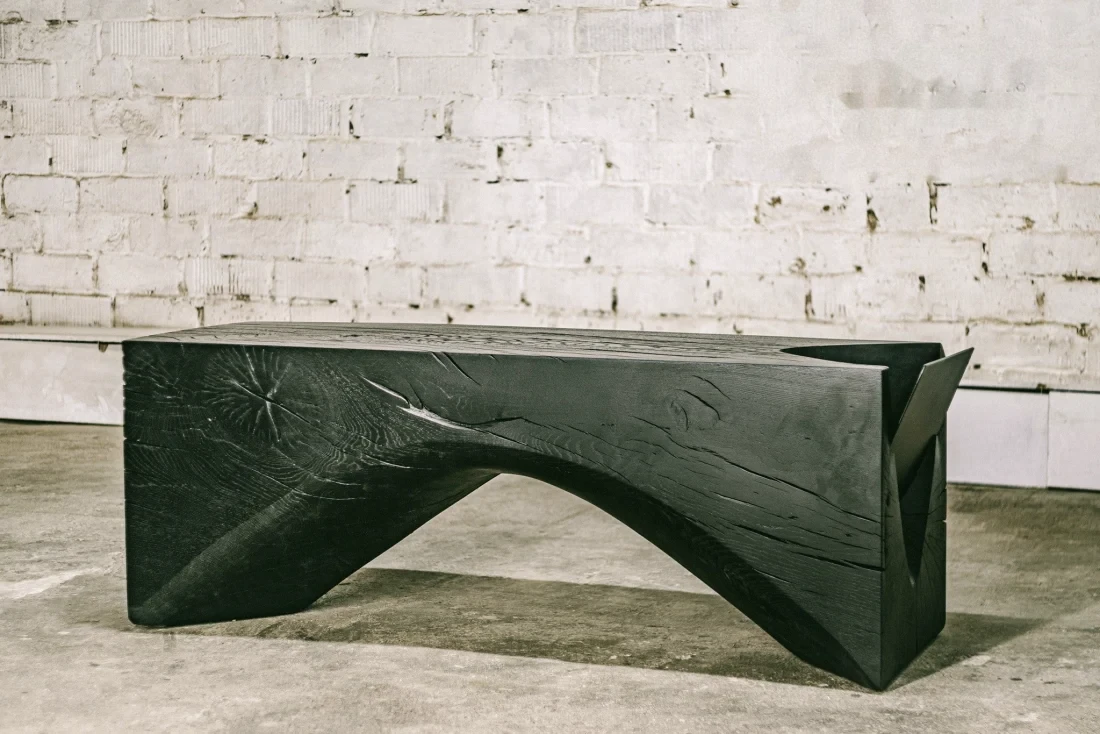
Lava cooling into rock gives a landscape edges that look poured rather than cut, and this bench is carved with the same logic: a single block of oak, finished black or in a dark tobacco tone, shaped into a curved seat that seems to flow rather than join at corners.
There is no frame underneath — the form itself is the structure, solid the whole way through. It reads more like sculpture than seating until someone sits on it, at which point the carving turns out to fit a body better than a flat bench ever would. One at the end of a hallway or beside a window does the work of a piece meant to be looked at first, used second.
Motor cities build things to outlast their upholstery, and this chair leans into that logic: a welded black steel frame, drawn in clean rectangles with no curve softening the joints, carrying a seat and back upholstered in velvet, usually dark grey against the black metal.
A version in solid oak and steel trades the velvet for a firmer bench seat. It sits lower and wider than a standard dining chair, closer to a lounge piece, so it earns a spot at the head of a table or on its own against a wall. The geometry is the whole decoration — nothing carved, nothing curved, just steel doing what steel does best. Two facing each other across a narrow console read like a conversation nook rather than a dining arrangement.
Siena is a city of curves — the shell-shaped square, the arched brickwork, the streets that bend instead of turning.
These chairs earned the name. The back and armrests are one continuous sweep of oak, carved and sanded until the joint is something you feel for rather than see. A chair is the hardest piece of furniture to build honestly: it has to be light enough to pull out with one hand and strong enough to hold a person leaning back on two legs. The Siena does both with no visible hardware — just shaped wood, a seat of leather or woven rattan, and the patience of someone who has made a few hundred of them. They pair with almost any table in our collection, which is exactly what a good chair should do.
The Riviera earned its name from leisure — chairs built for terraces, for reading in the sun with nowhere particular to be.
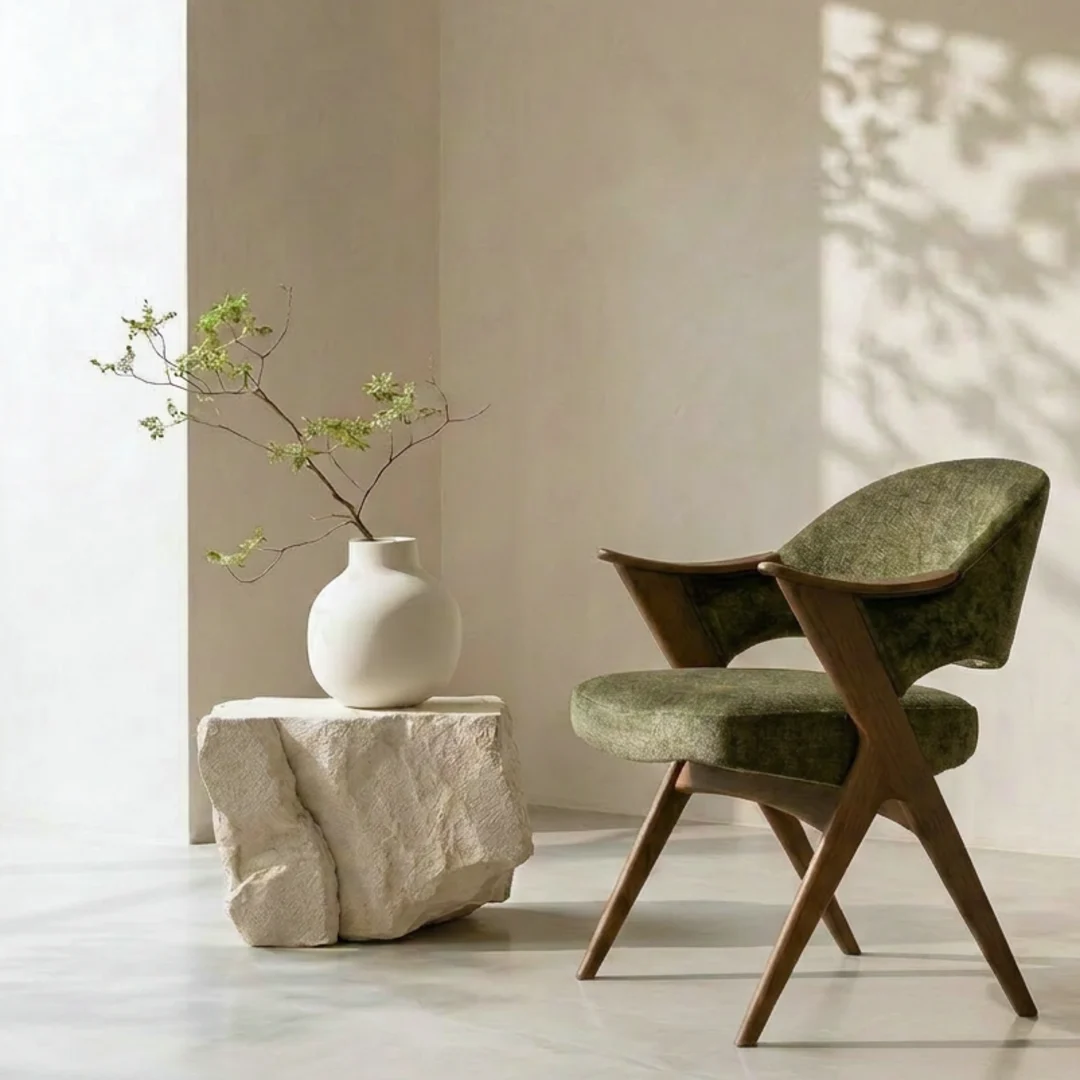
This one leans into that history with a sculpted silhouette: a high, curved back, crossed wooden legs in a warm walnut tone, and an angle set for lounging rather than sitting up straight. Across the eight pieces in the collection, the frame stays constant while the upholstery shifts — leather on some, a soft, heavy wool on others — but the shape is unmistakably one design, mid-century in spirit, with the joinery of the crossed legs left fully visible rather than hidden underneath. It wants a corner near a window, a reading lamp, a low table within reach — a single good chair rather than a matched pair.
Warehouse floors and repurposed factory hardware gave Brooklyn its furniture look before it was a look anywhere else, and this chair is built from exactly that instinct: a welded steel mesh cube, black wire on every face, holding a thick cushioned seat in burnt orange.
A burnt-oak trim appears on select frames, a warm note against all that black wire. It photographs like an object before it registers as seating, which is rather the point of pulling one into a room that already has enough soft furniture. Set alone in a corner or paired at a small table, it reads as industrial with a single loud color doing all the talking, and the mesh lets a room show through it rather than block the view.
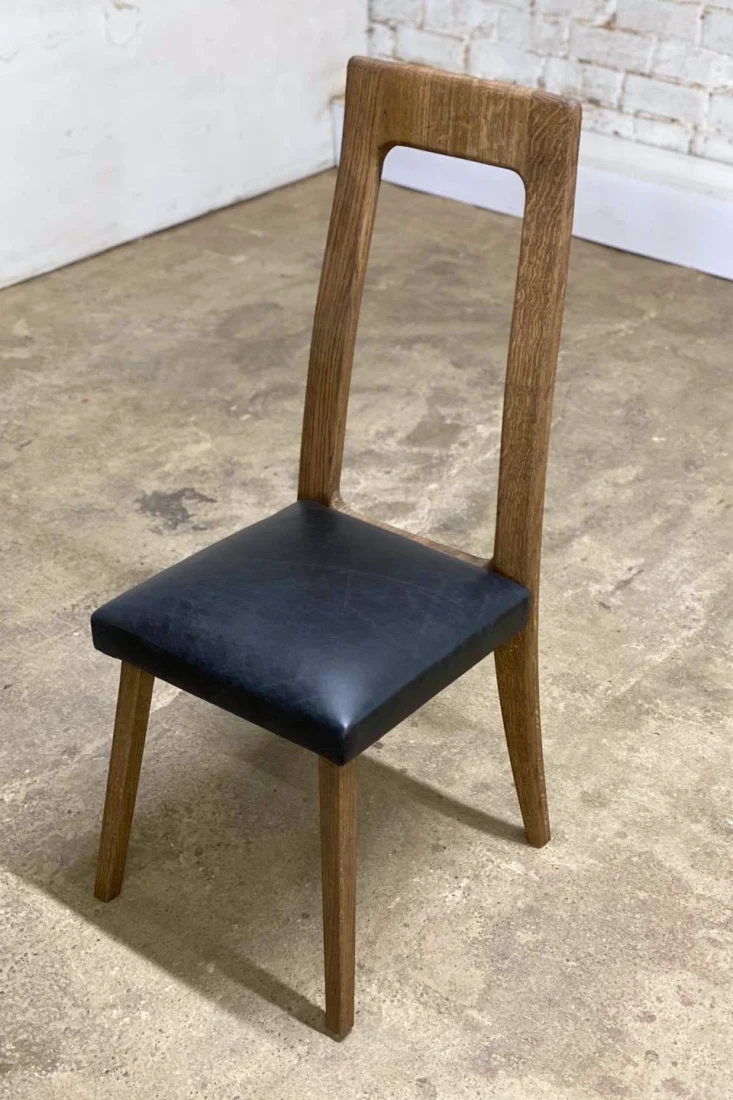
Norwegian coastal towns build their houses light-toned and their furniture the same way, and this chair keeps to that palette: a slim ladder-style back in natural oak, a seat of Italian leather stretched tight, legs turned thin enough to slide under a table without a sound.
A walnut-toned version pairs the same frame with black leather for a darker room. There is nothing extra in the design — no arms, no carved splat, just the vertical lines of the back rail doing the only visual work. Six of them around a long table read as understated rather than plain, which is exactly the balance a simple chair like this is built to hold. One alone at a writing desk holds up just as well, the thin legs disappearing under the surface.
Alsace's houses are built from exposed timber frames, dark beams set at deliberate angles against pale plaster, structure left in plain view rather than covered over.
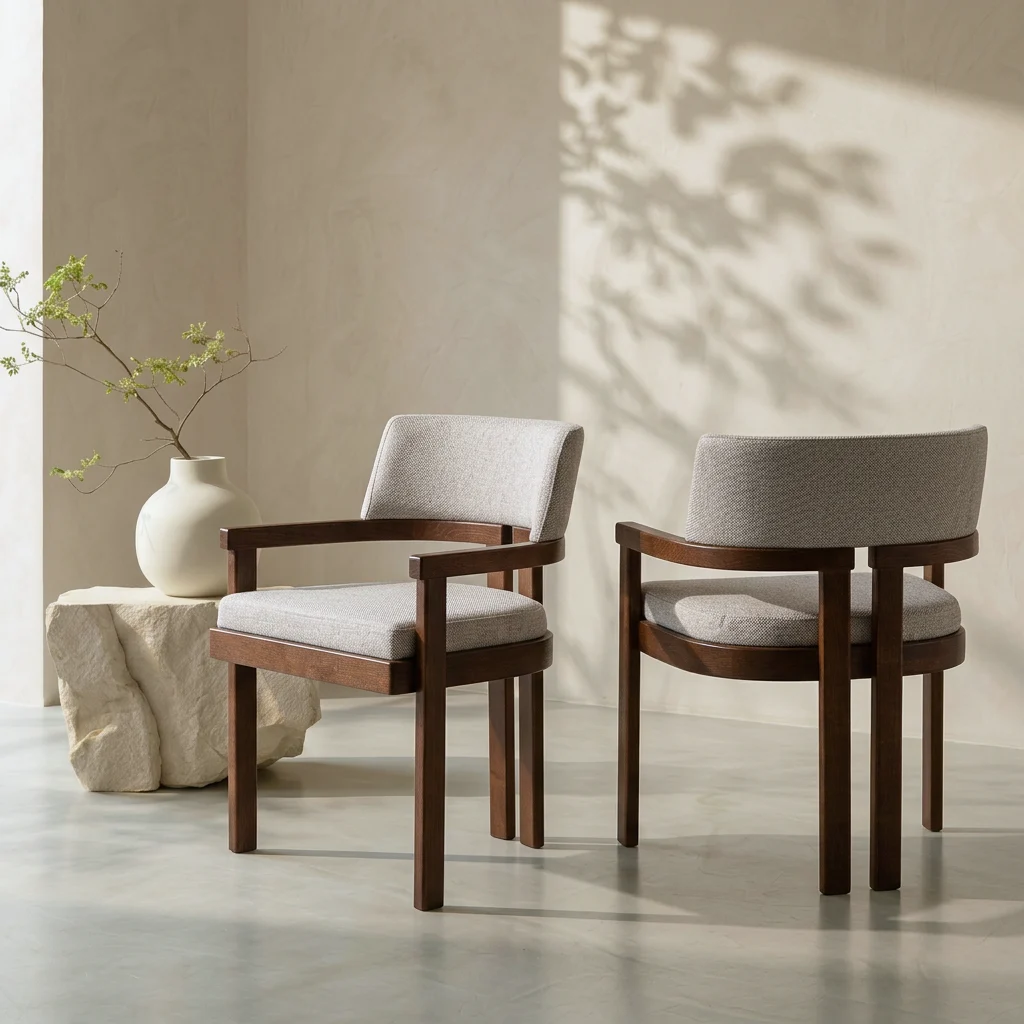
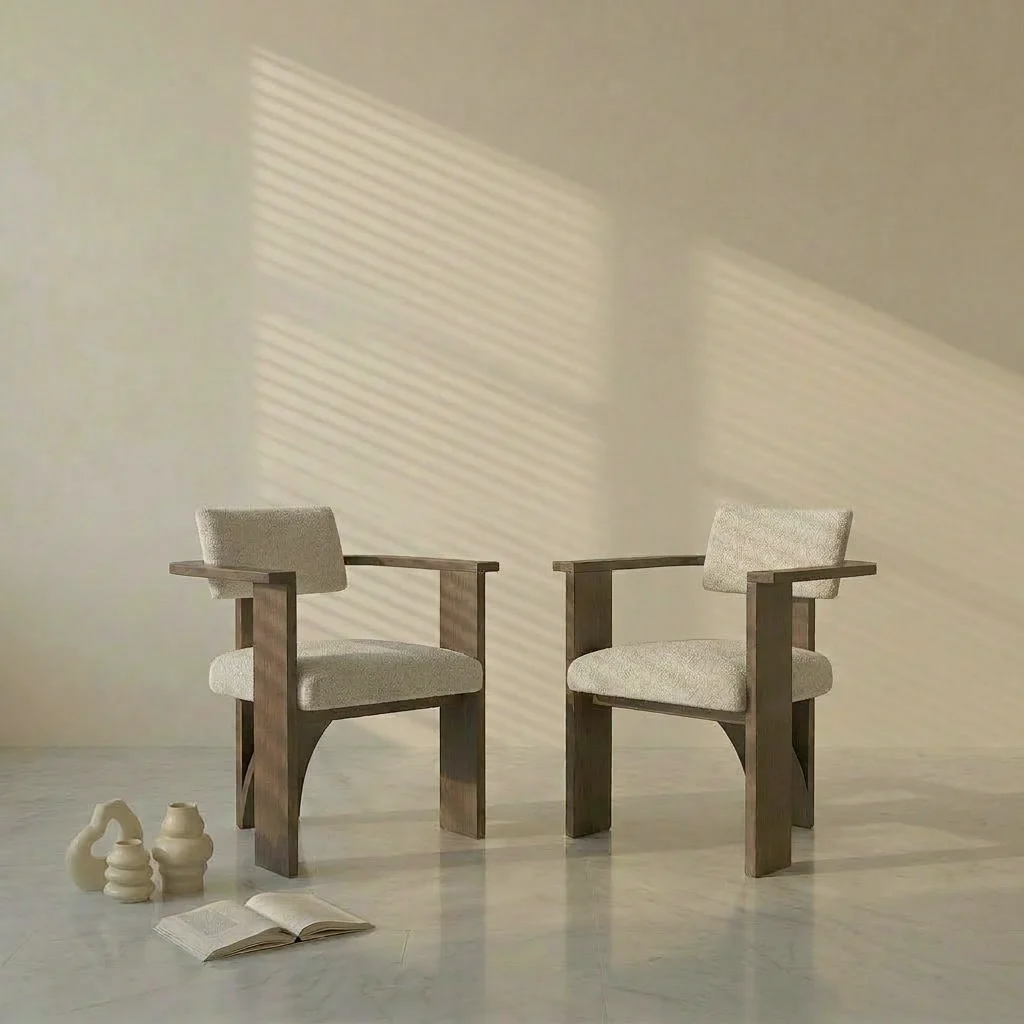
These armchairs borrow that honesty: a dark wood frame, legs and arms meeting at visible angles, with a single cushioned seat and back set into the structure rather than layered on top. The wood is a warm, walnut-toned oak, worked into flat, architectural planes rather than turned or carved. The cushions are a plain oatmeal fabric, just enough softness to make the chair livable without hiding the frame that does the actual work of holding you up. Three chairs make a set small enough for a breakfast nook or a reading corner, each one clearly built rather than merely upholstered.
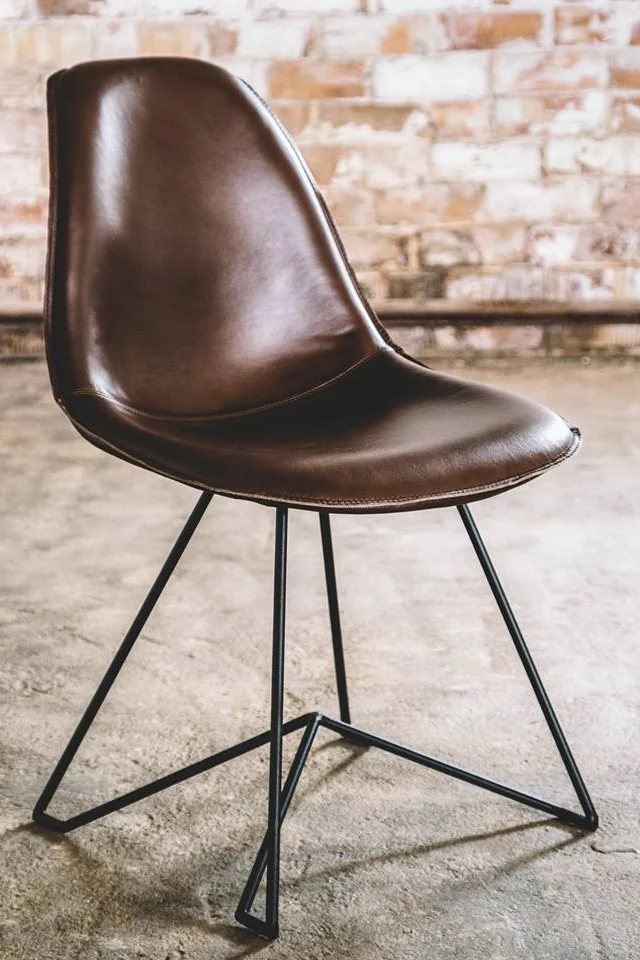
Antibes is a single, generously curved shell of a chair, molded leather in a deep brown stretched over a seat shape that wraps the lower back the way a real shell wraps whatever grew inside it.
Slim black steel legs, angled outward for stability, are the only hard edges anywhere on the piece. There is one version, one leather, one frame color, and no real need for more — the shape is the design, and it does not improve with variation. It sits happily at a dining table but does not require one; pulled up to a desk or set alone in a reading corner, it works as an actual chair, meant to be sat in rather than simply looked at.
Chantilly is remembered for cream and for lace, two things defined by softness held to a shape, and these counter-height chairs work the same trick.
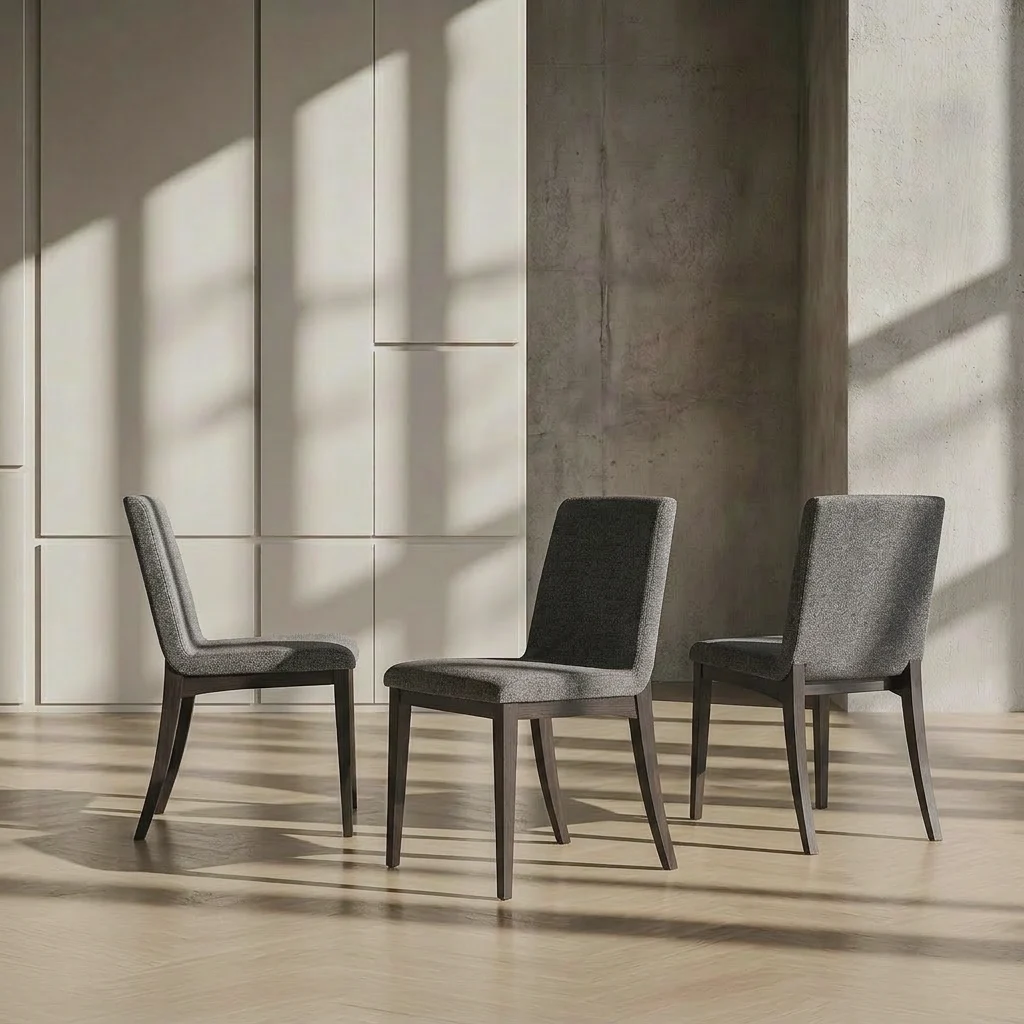
A light, unadorned wood frame carries a seat and back wrapped entirely in a pale, nubby bouclé, cream enough to earn the name honestly. Construction is straightforward and stays out of the way: tapered wooden legs, a simple frame, no exposed hardware. The fabric is the whole personality here — thick, looped, soft to the hand, the kind of texture that photographs warm even in a stark kitchen. Set in a row along an island or a counter, six of these turn a purely functional stretch of cabinetry into somewhere people actually want to sit and linger over coffee.
Oregon's forests have burned and regrown for longer than anyone has kept records, and this stool wears that history on its surface — a solid block of oak with one face left deeply charred, dark and textured, against the pale, untouched grain of the sides.
It is a single piece, cut and finished as one cube rather than assembled from parts, so the contrast between burnt and bare wood runs straight through the material rather than sitting on top of it as a stain. The scorched face is rough enough to feel the grain lift under a hand. Used as a stool, a side table, or a plinth for something else entirely, it works because it commits fully to the contrast rather than softening it.
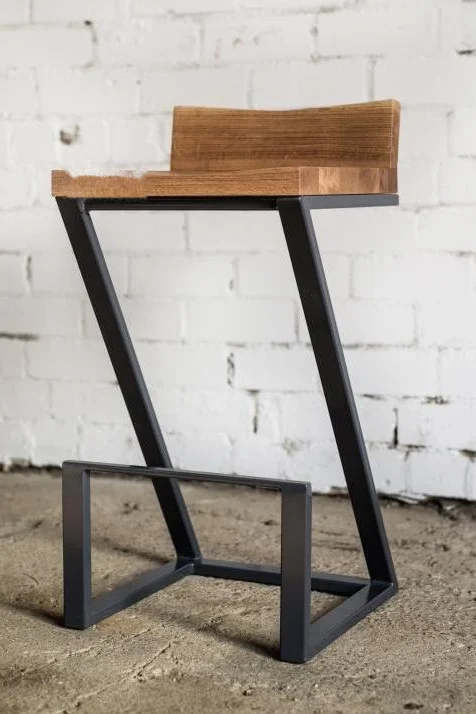
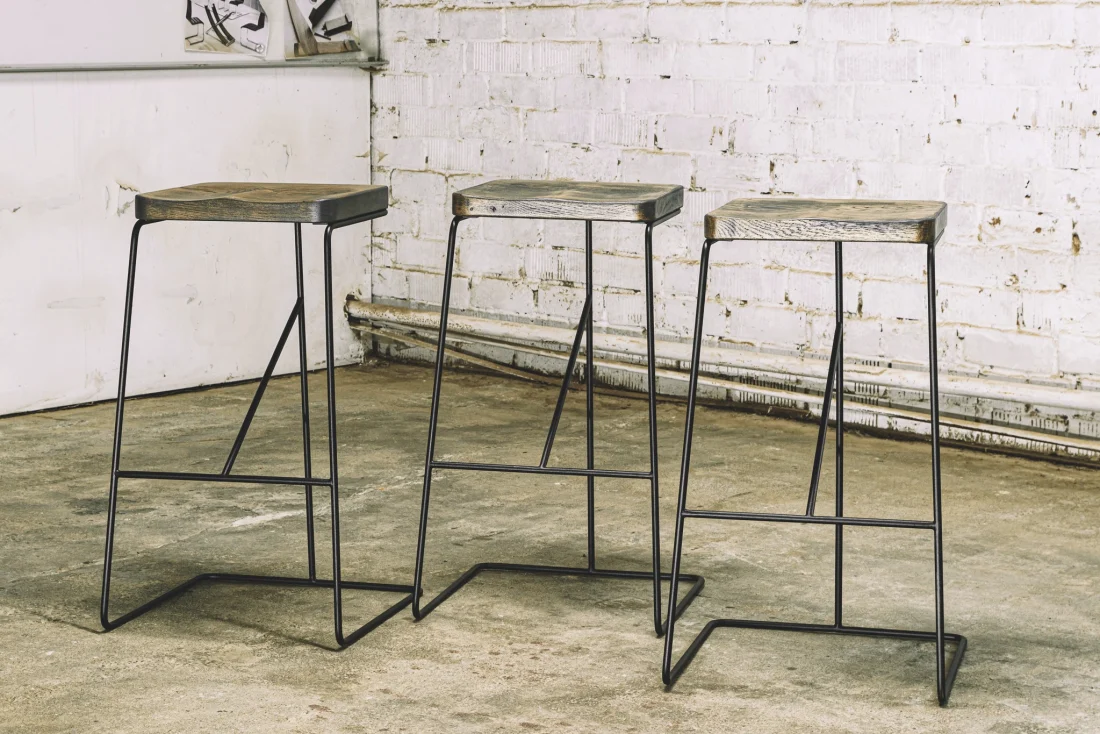
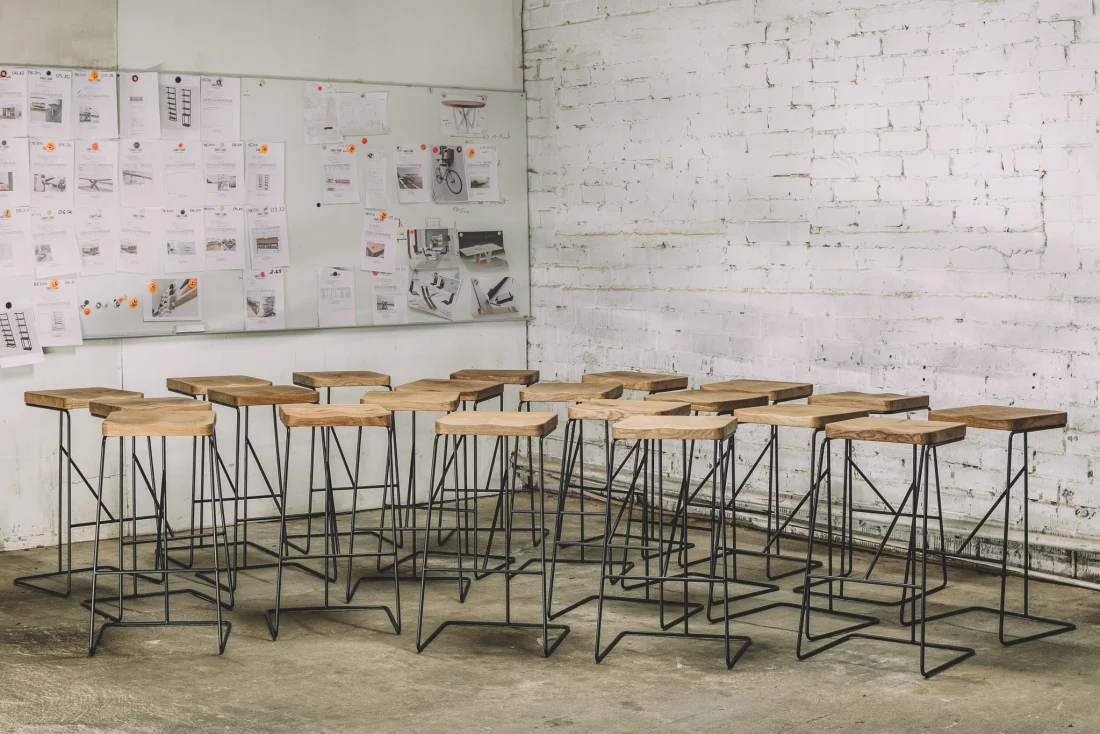
One line of black steel, bent twice, holds up a block of oak — that is the whole design, and it is enough.
The Camden stool skips the four-legged logic entirely: a single frame reads more like a drawn diagram than a support, negative space doing as much visual work as the metal itself. The seat is solid oak, left as a plain rectangular block, no cushion, no curve. Pull it up to a kitchen island and it disappears under the counter when you are done with it — nothing to catch a knee, nothing to trip over. It is the stool you buy when you want the room to read as steel and air, not furniture. A pair at a kitchen counter reads as two sketches rather than two seats, and the room feels less crowded for it.