 239 444 7833239 444 7833
201 pieces across 42 collections. Solid European oak, built to order in 10–16 weeks.
Yellowstone earns the name the same way a hot spring does, mineral color pooling and spreading where you would not expect it.
The top mixes a pale oak slab with a run of tinted resin down its center, natural edges left rough on both long sides, sitting on a pair of black steel legs bent into a simple U. Ten sizes make up the collection, from a four-seat table to one long enough for a proper dinner party, each with its own resin pattern since no two pours land the same way. It is a table that argues for itself before anyone even sits down, the kind of top guests lean over to study rather than simply eat across. Each top ships as one true original, not a reproducible pattern run twice.
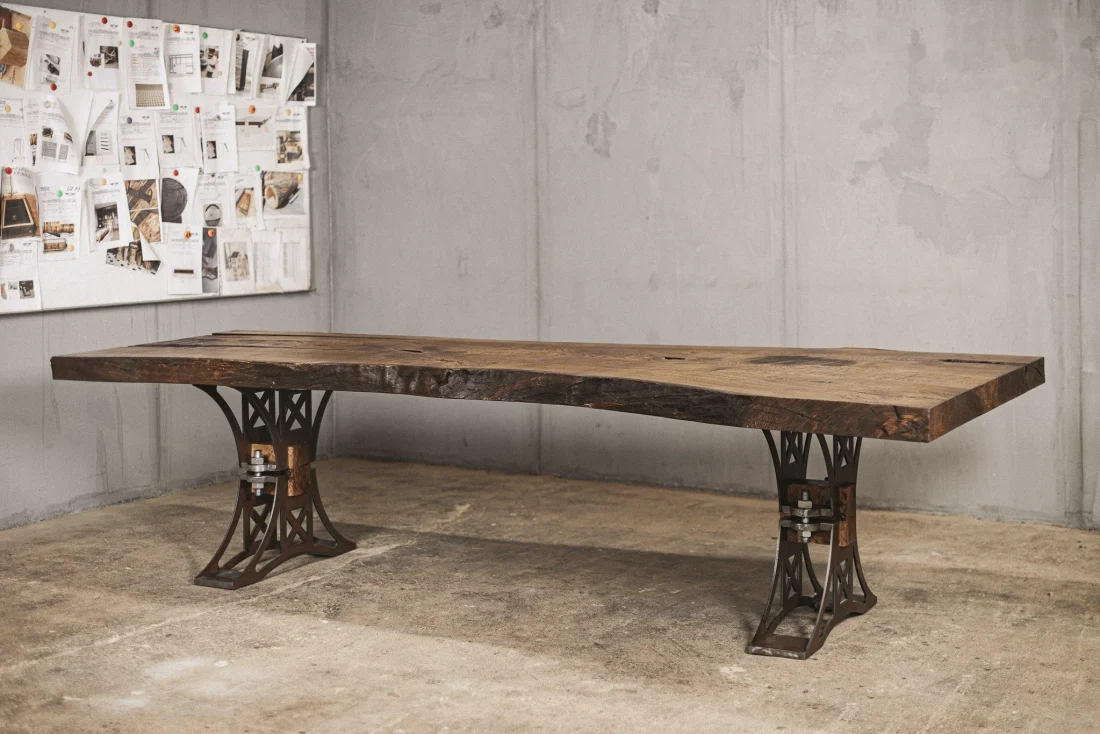
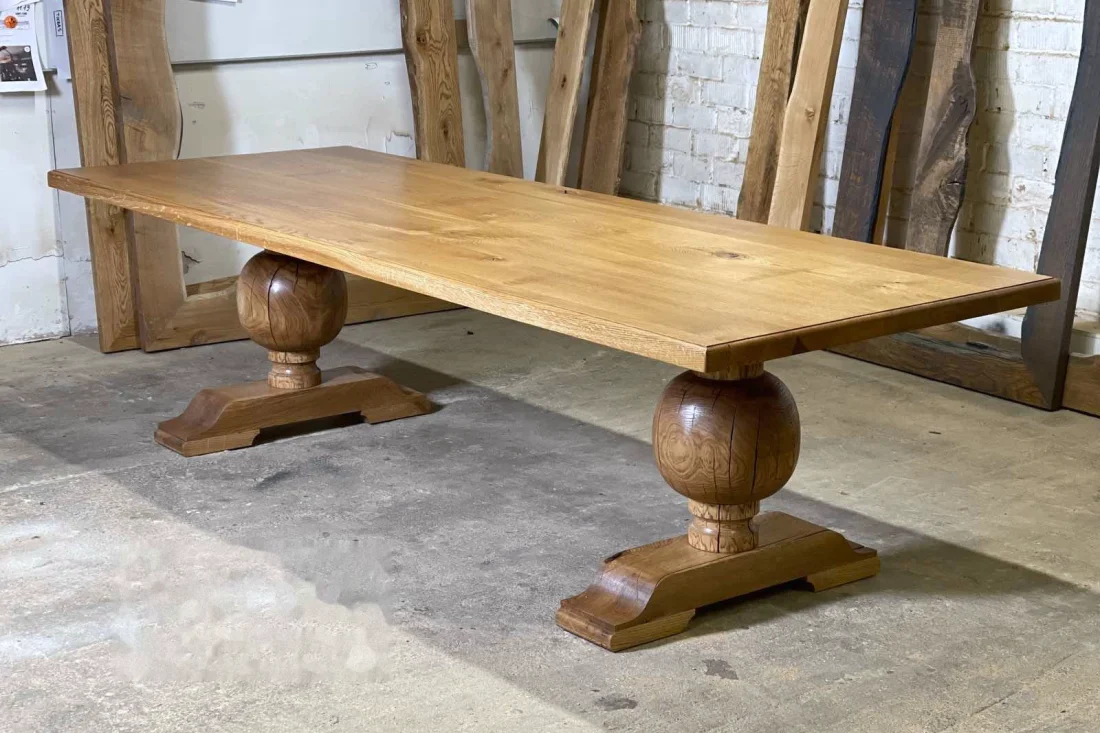
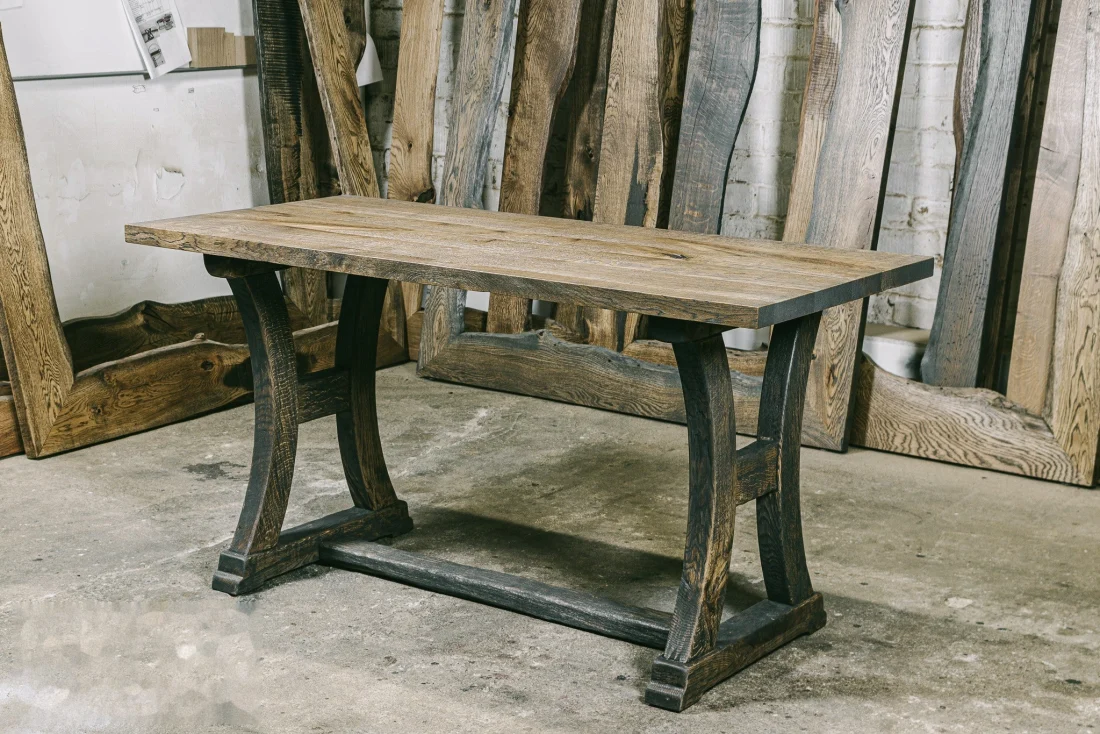
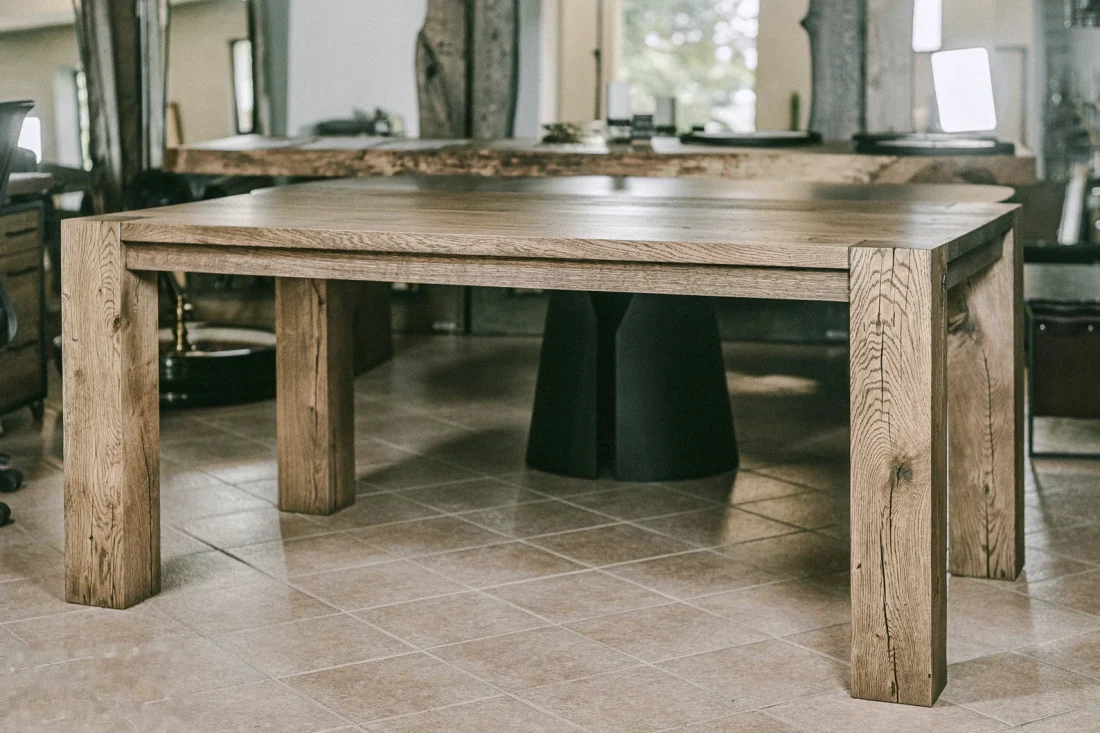
Luberon is a farmhouse table built the way that phrase actually implies: a thick oak top on heavy, square-cut legs joined by a low stretcher, finished to look like it has already survived a few decades of dinners.
Nothing about the construction is decorative; every piece of it is there to hold weight. Six sizes make up the collection, running from a compact version for four up to a long table built for a proper family gathering, all sharing the same trestle-style base. It is forgiving of a crowded table, plates set close, elbows everywhere, because the whole thing was built with exactly that kind of use in mind, not a styled photograph. It wears its first few scratches like a badge rather than a flaw.
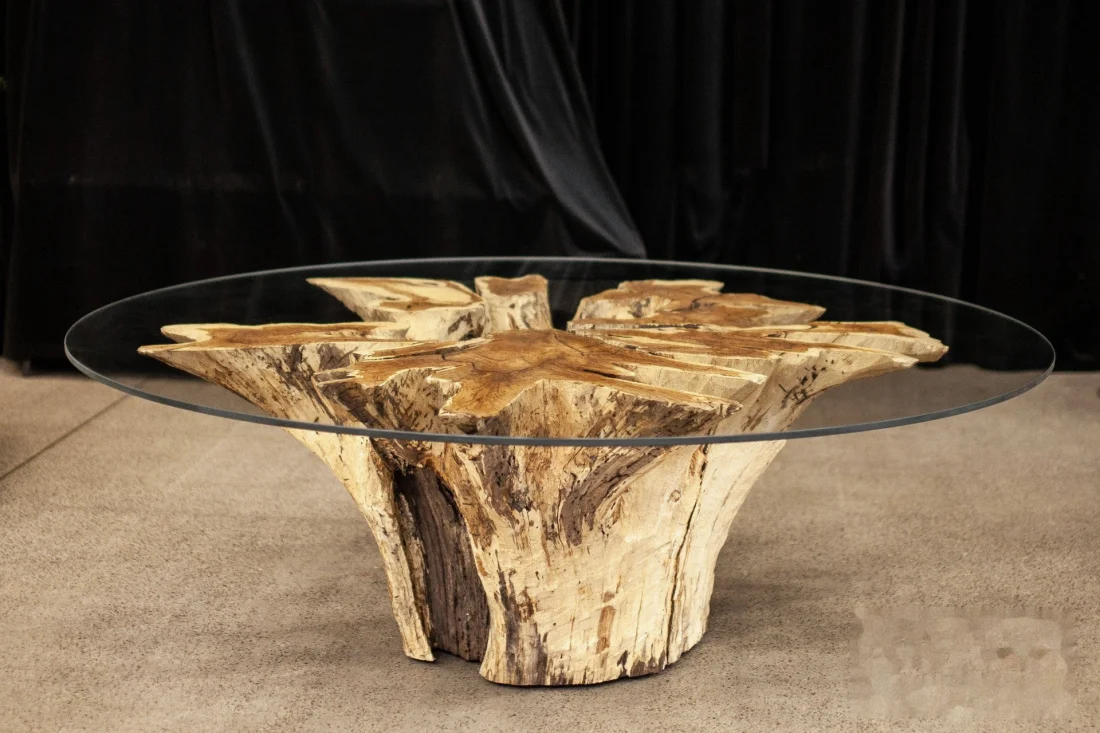
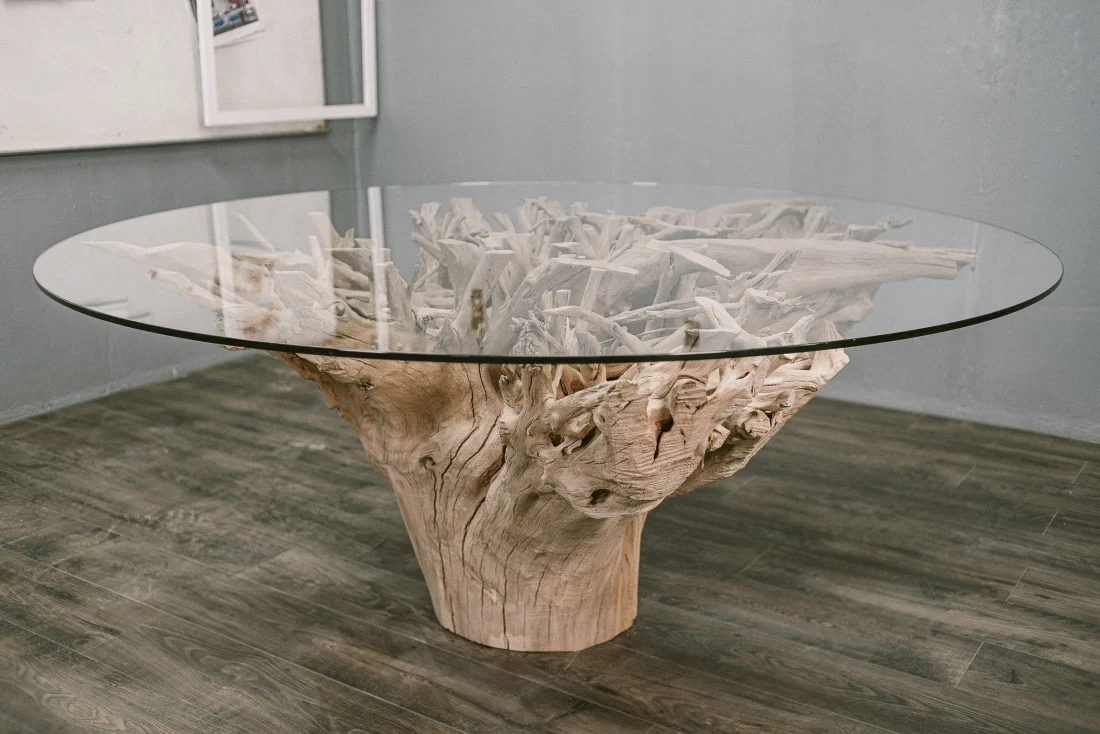
Sequoia takes its name the honest way: the base is a genuine slab of burl, wide and knotted the way only a very old tree produces, left whole rather than cut down to a more manageable shape.
A large round sheet of glass rests on top of it, big enough to seat a proper dinner party around a piece of wood that was never meant to be a table until someone decided it should be. There is only one size, and there could not reasonably be more, a base like this does not come in standard dimensions. It is the collection's largest gesture, a table built around one exceptional piece of material rather than a repeatable design, meant to anchor a room on its own terms.
Teton is built at a scale the name earns: a long, live-edge oak top, the kind that comes from a genuinely wide old tree, set on a base of slender brass-toned steel rods running vertically beneath each end, closer to a fence than a leg in construction.
Two sizes make up the collection, and even the shorter of the two is built for serious seating, since the whole point of a top this size is the number of chairs it can hold around it. It suits a room built around entertaining rather than everyday meals, a great room, a table meant to seat a dozen without anyone squeezing, and the brass rods catch just enough light to keep that much table from reading as heavy.
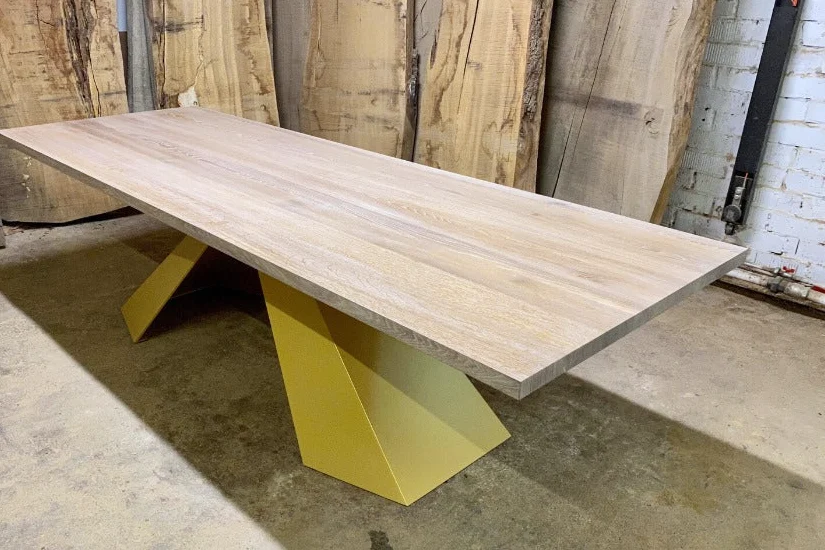
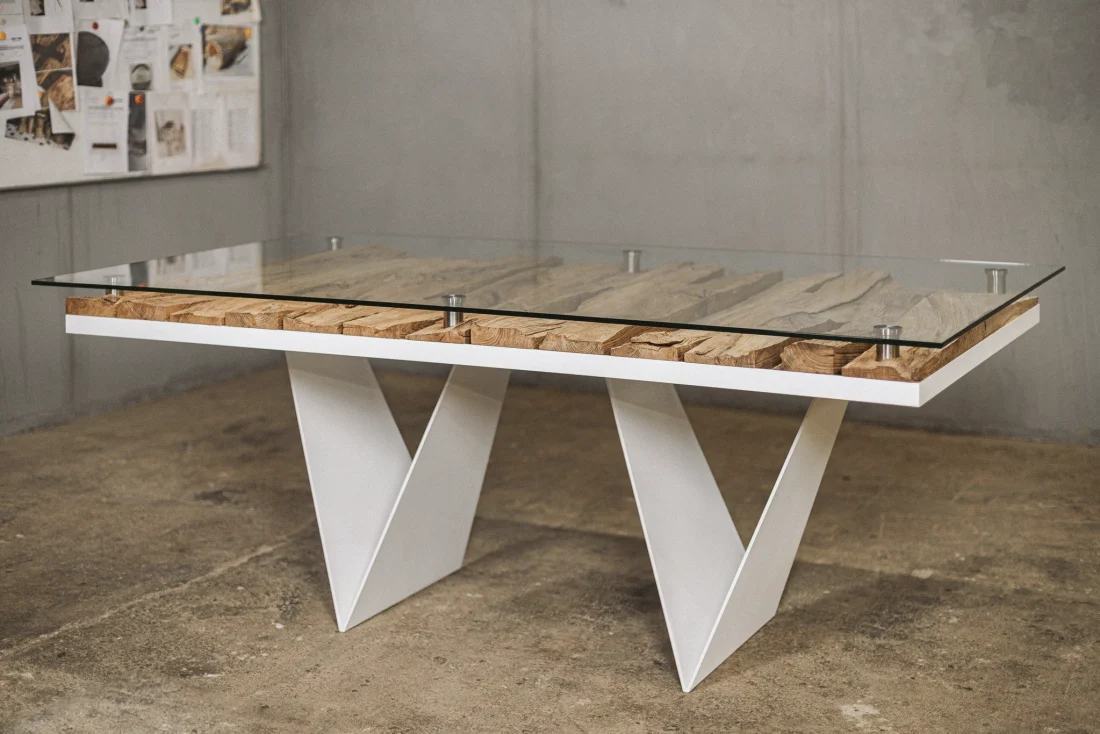
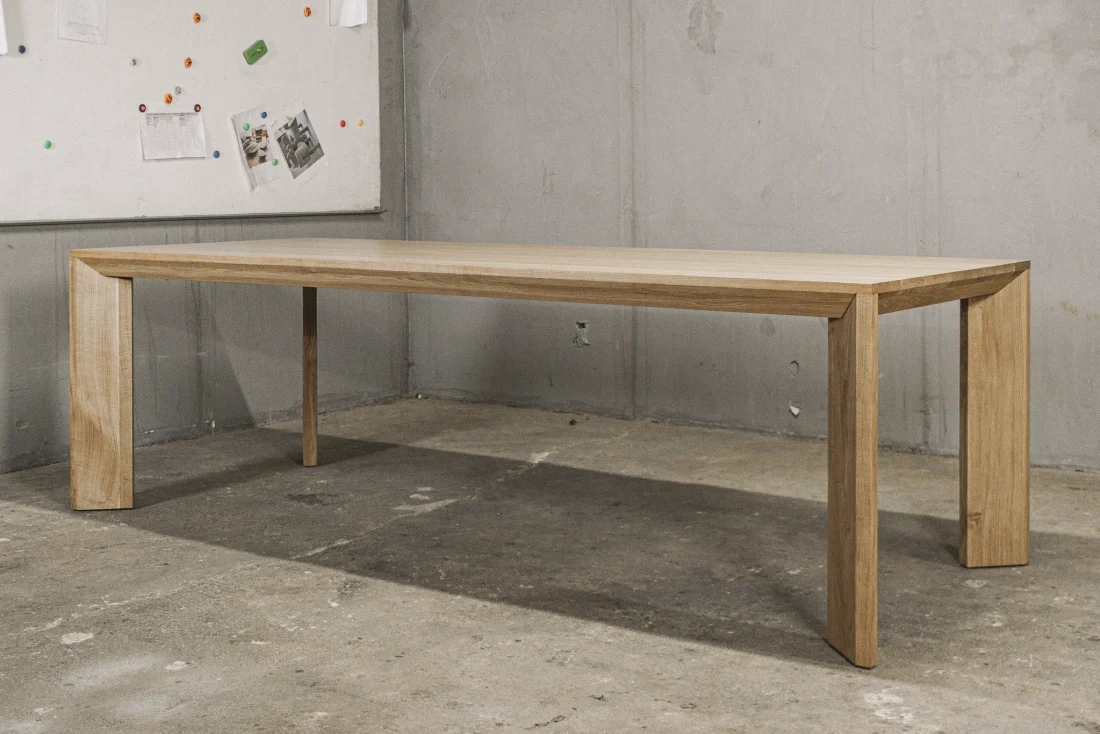
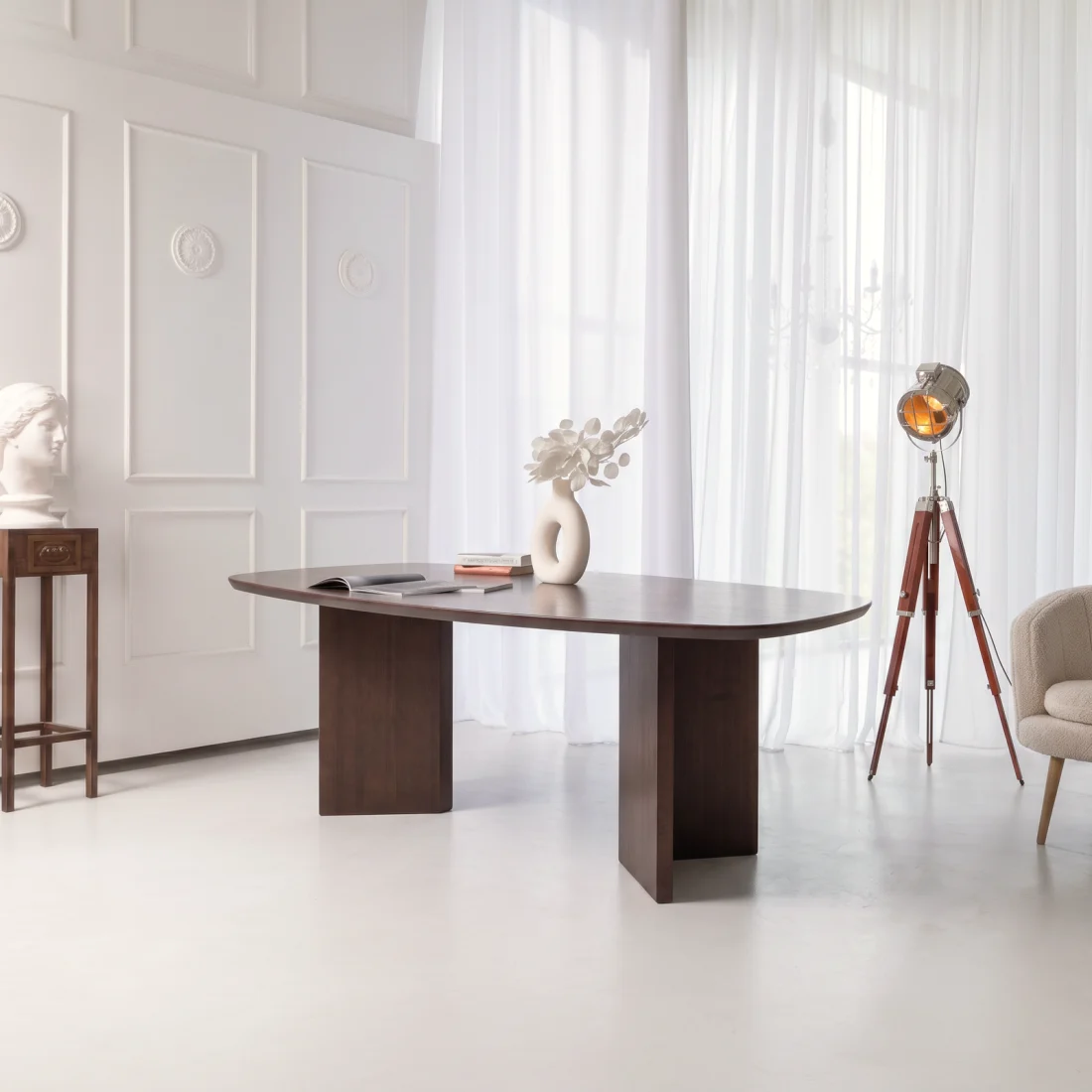
Paros is finished pale enough to be mistaken for quarried stone at a glance, a bleached, almost chalky oak top with a whitewashed edge, set on two flat, block-shaped legs in the same tone.
Look closely and the grain is unmistakably wood; from across a room, the effect reads closer to limestone. Three sizes make up the collection, one considerably longer than the other two, all sharing the same bleached finish and plain block legs. It suits a bright room best, the pale finish wants daylight the way a darker oak does not, and works equally well as a compact dining table or, at its longest size, a proper conference table. Either size handles daily meals without showing wear the way a darker top might.
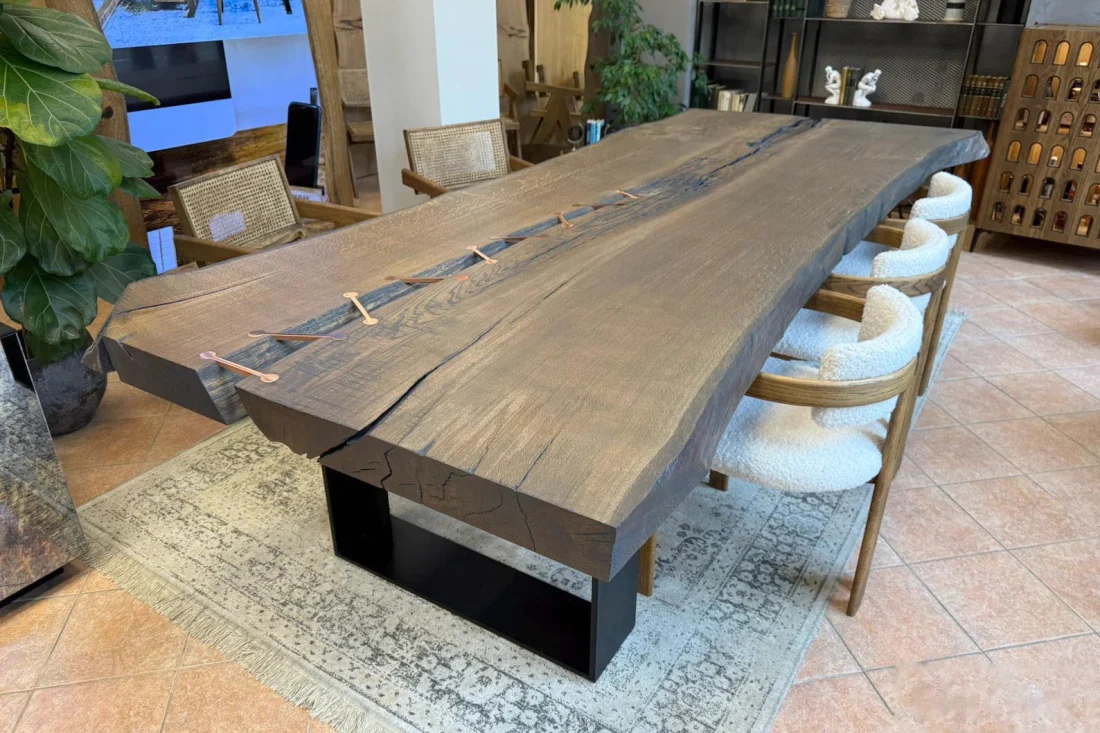
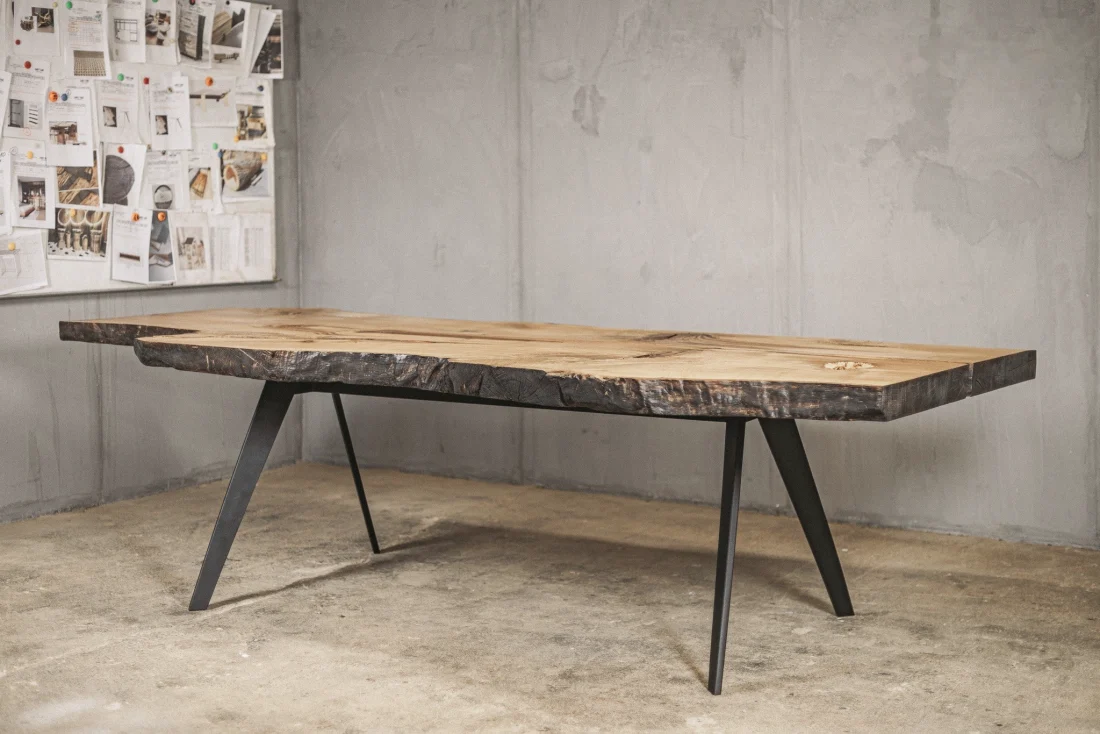
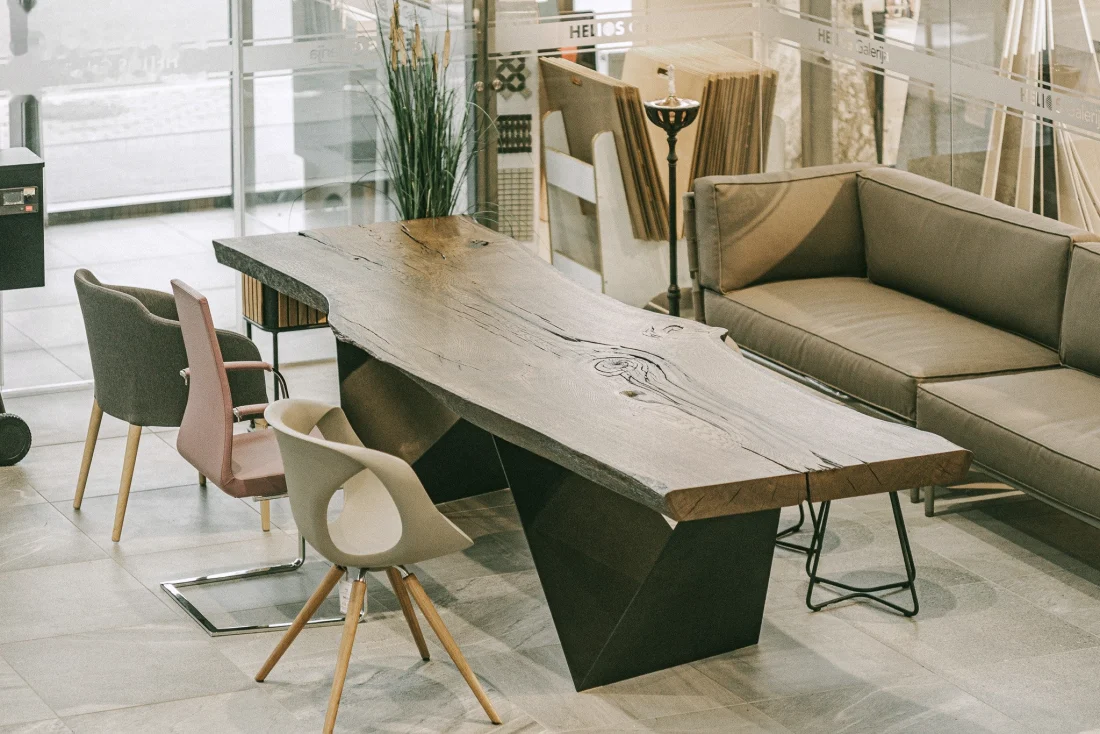
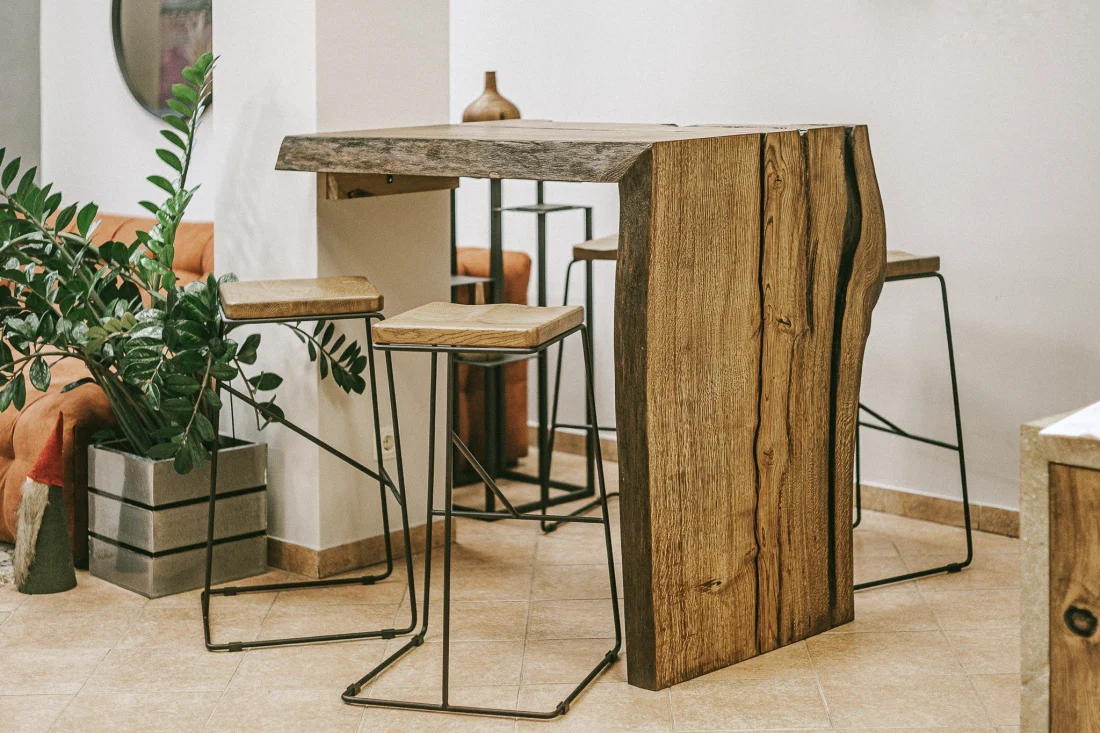
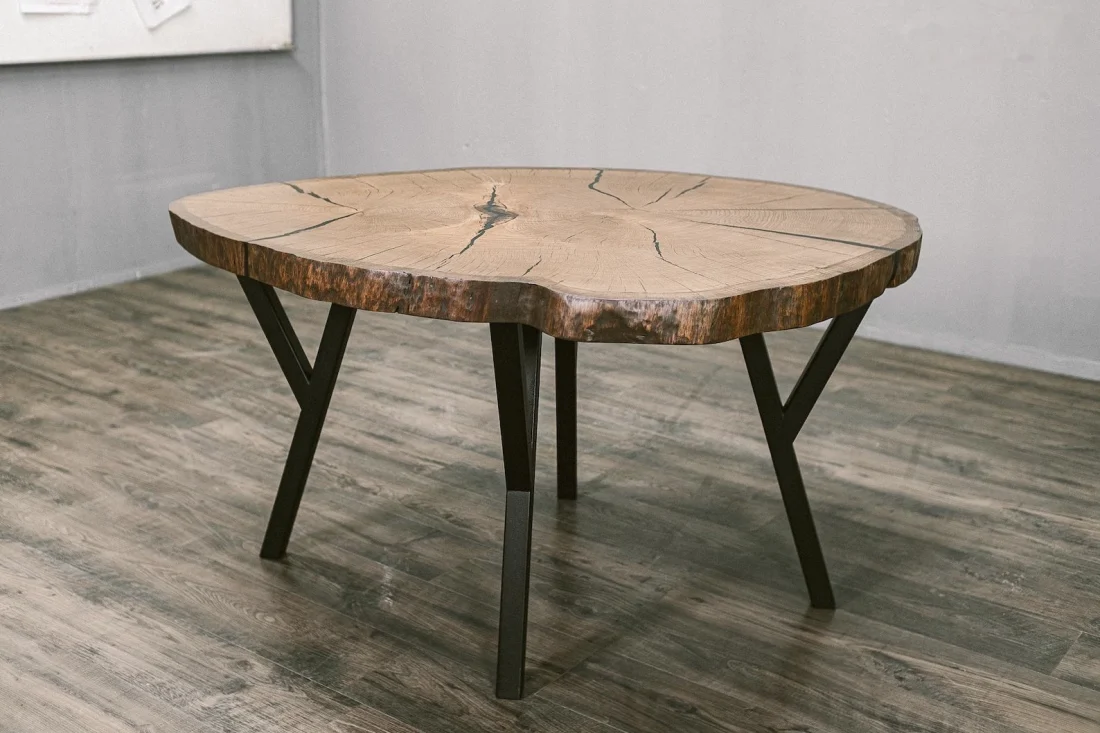
Catskill takes its shape from the landscape it is named for, high ground cut through by water, which shows up literally in the top: a wide, live-edge oak slab with a dark seam running the length of it, like a stream worked into the grain rather than added afterward.
Angled black steel legs, set at a slight lean, carry the weight without hiding the wood. At sixteen sizes, this is the largest collection in the group, running from a compact four-top to a table long enough for a dozen chairs, all keeping the same seamed top and leaning leg. It wants a room built around it rather than the reverse, the kind of table people gather at because the top gives them a reason to look down as much as across.
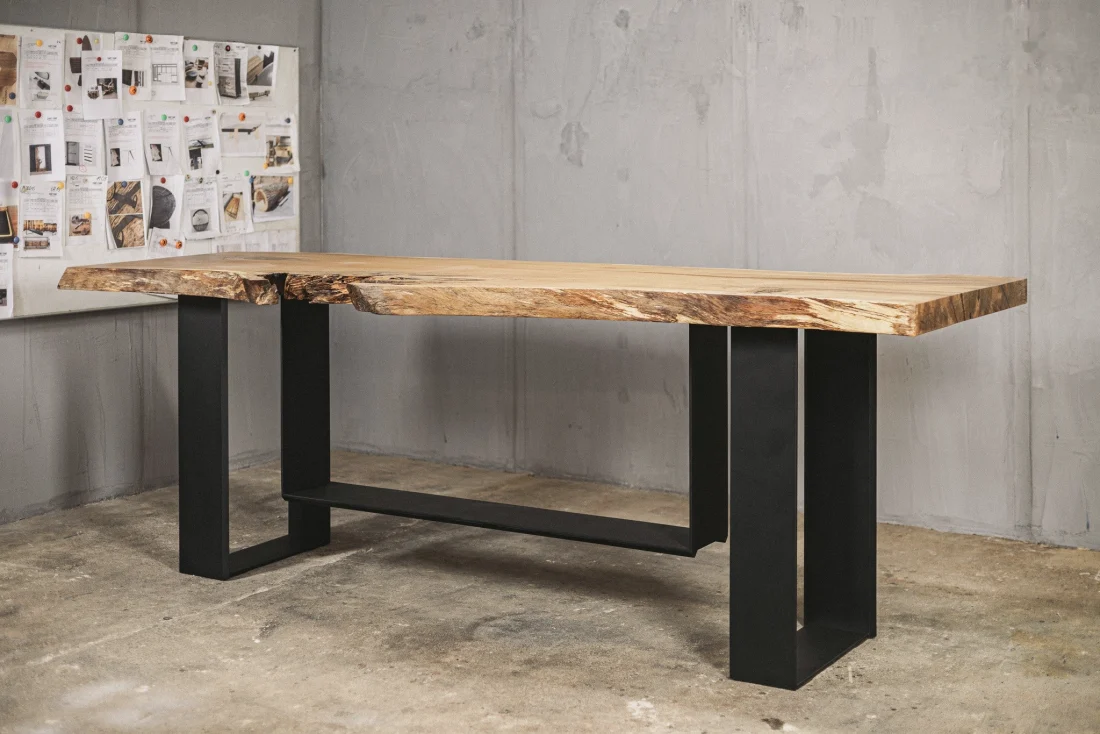
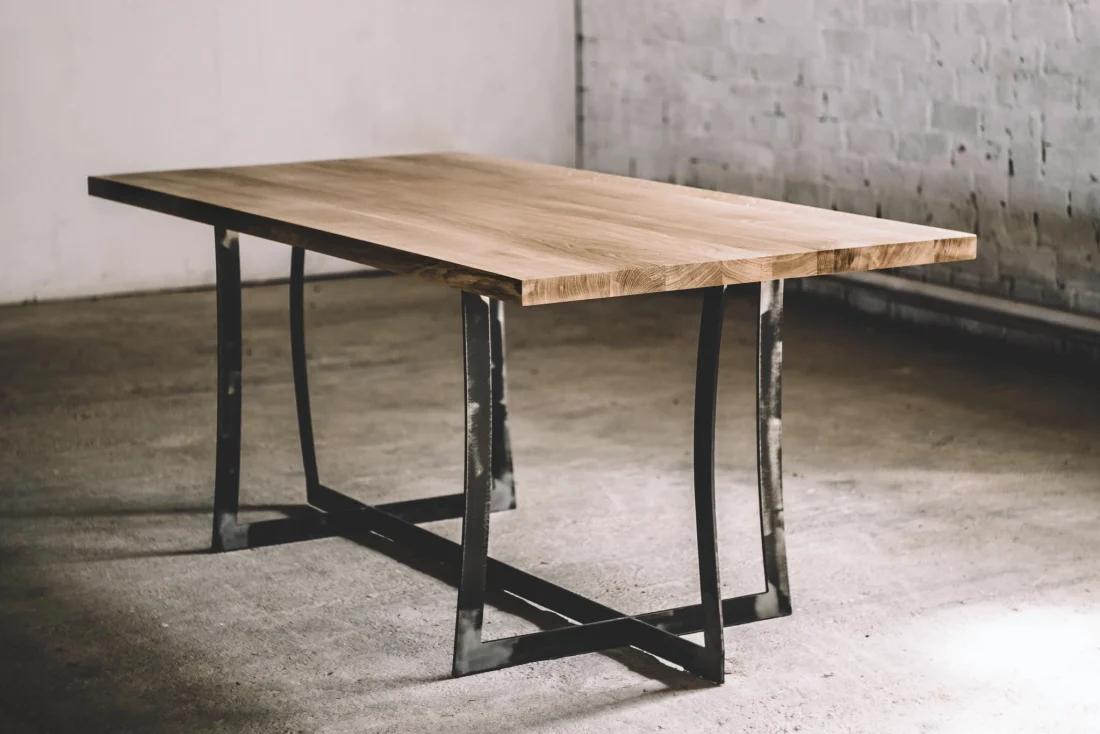
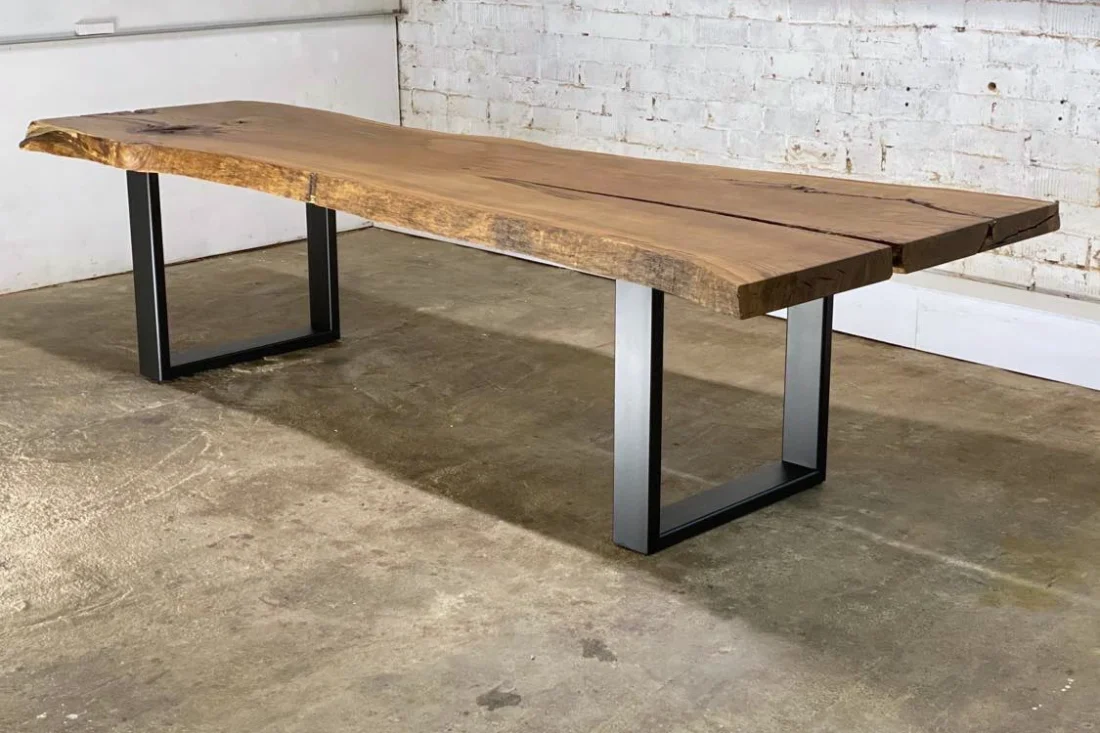
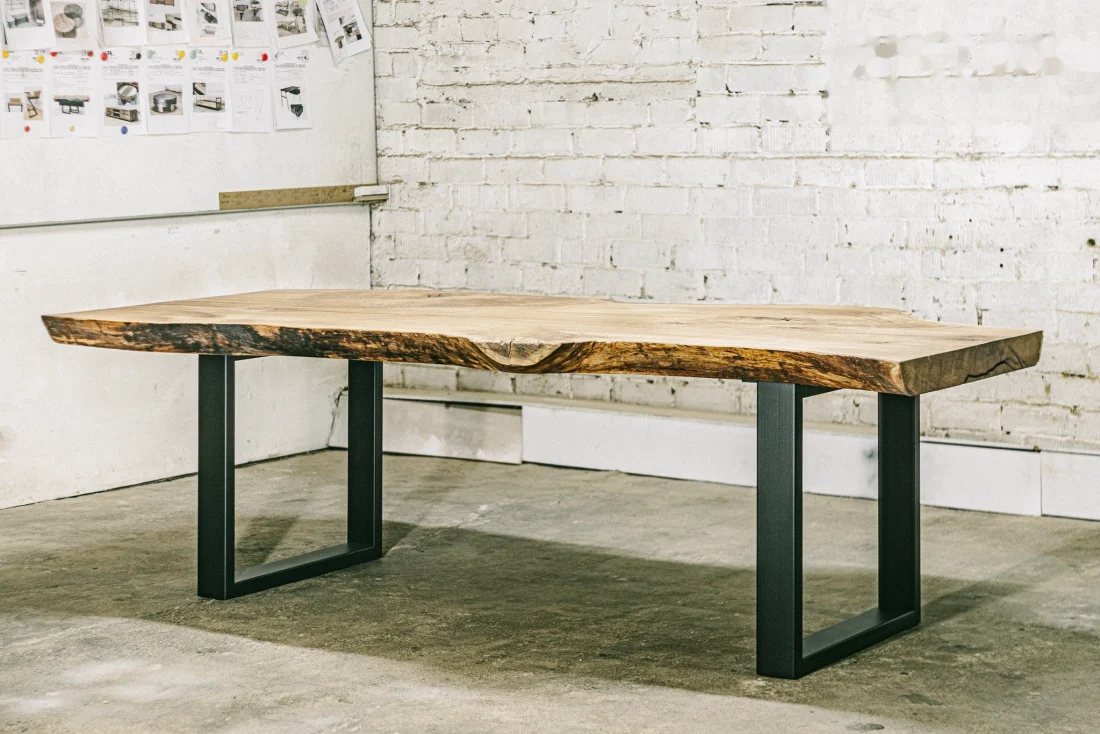
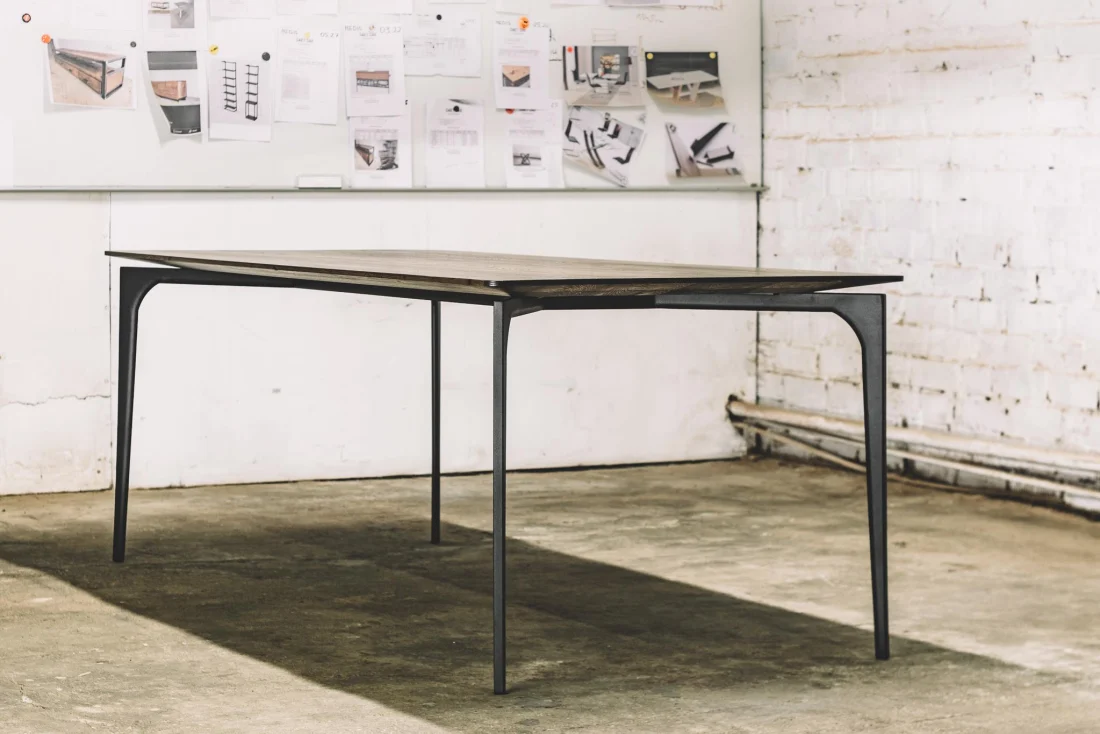
Rotterdam is a long, single board of oak, edges left natural on both sides, set on a pair of black steel legs bent into simple U shapes.
Some versions finish the steel with a deliberate rust patina instead of a flat black, which changes the whole temperature of the piece without touching the wood at all. Seven sizes make up the collection, most running long, built for a proper dining room rather than a breakfast nook, all sharing the same U-leg construction underneath. It photographs best from the end, where the natural edge and the plain steel leg line up into one continuous shape. Ten place settings around it do not feel like a stretch. Either finish ages honestly, showing the marks of actual use over time.
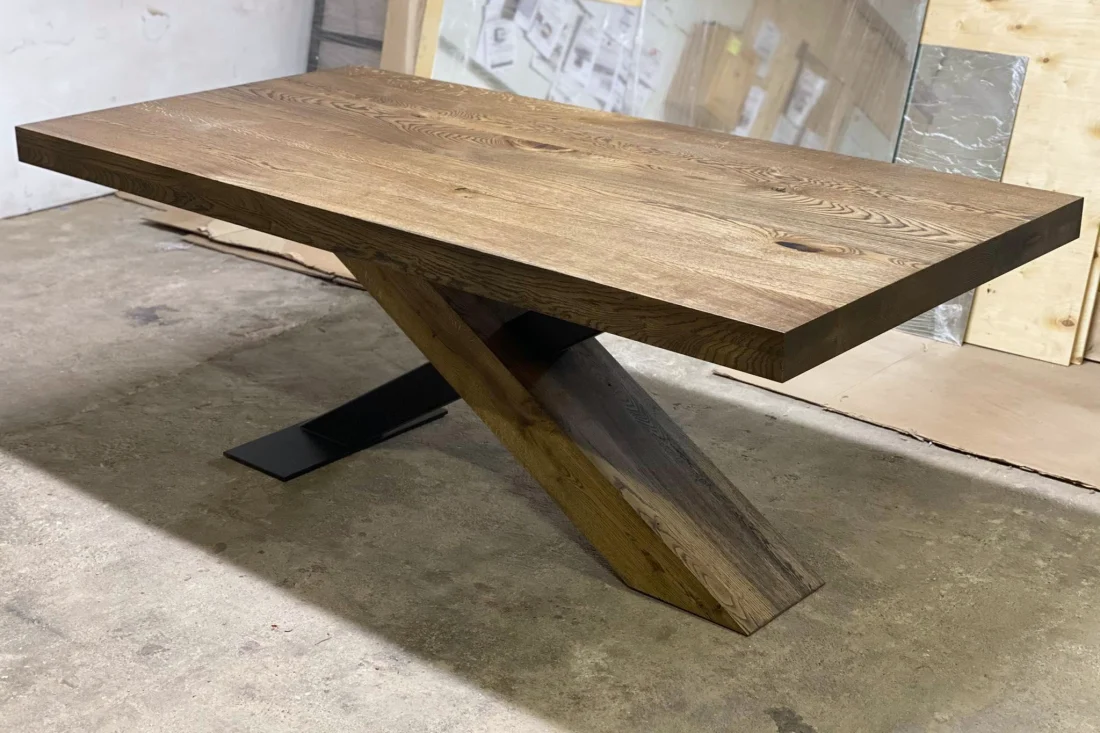
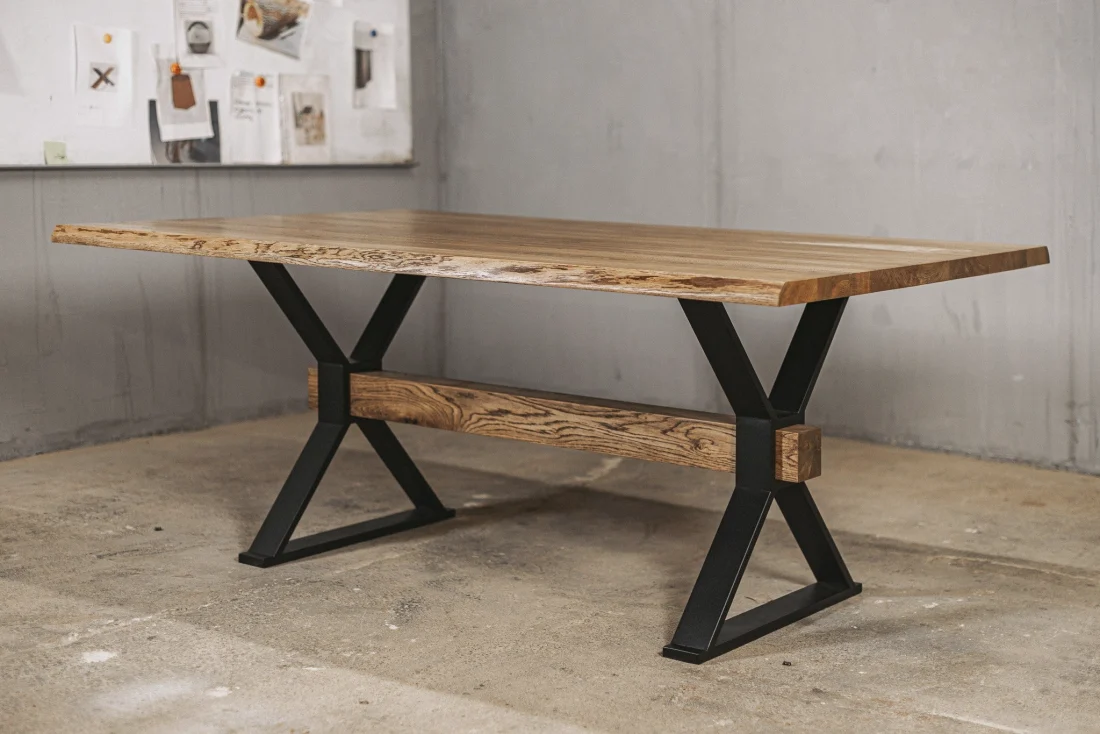
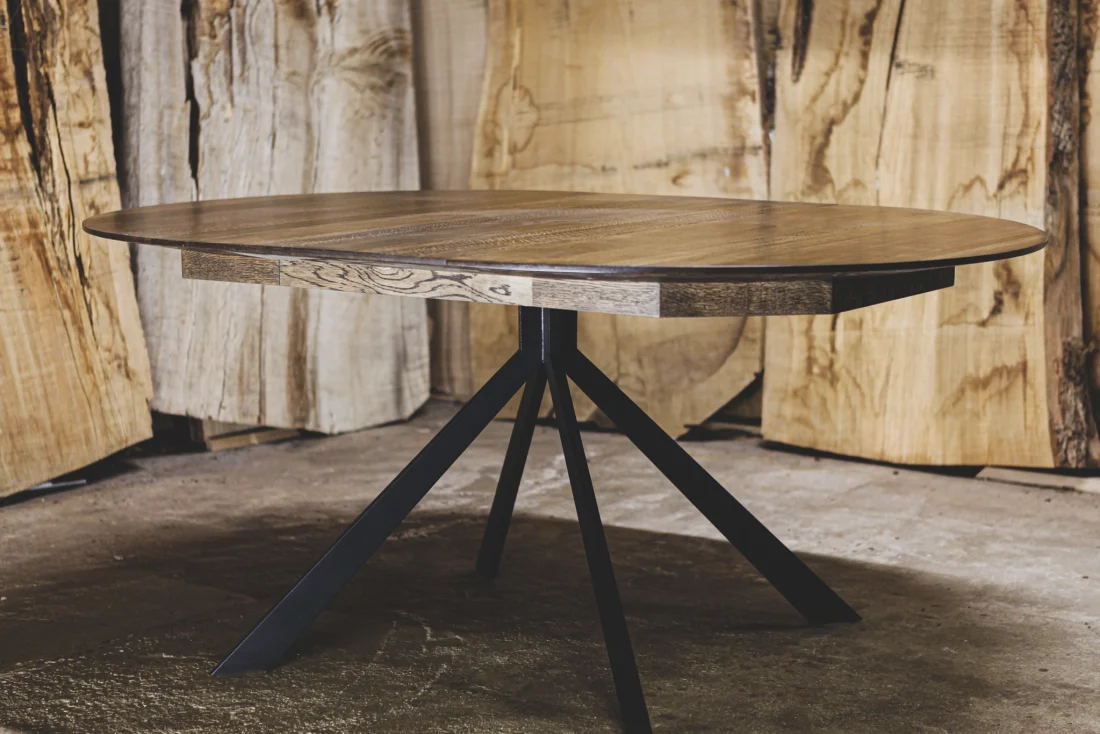
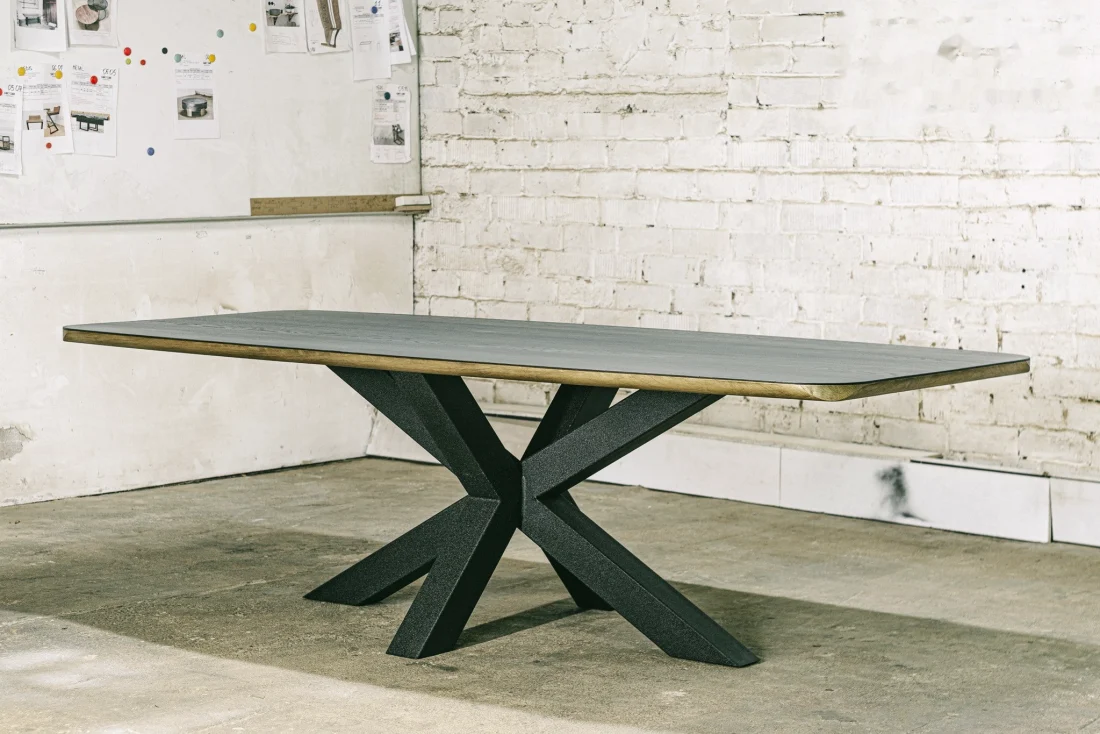
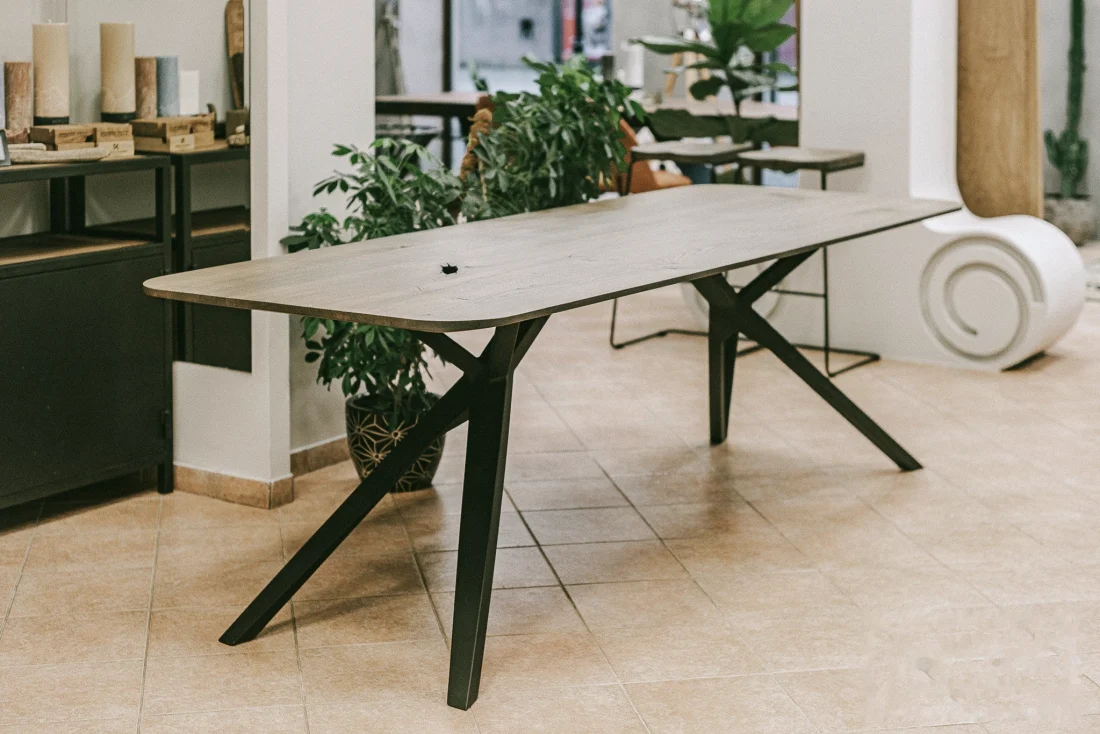
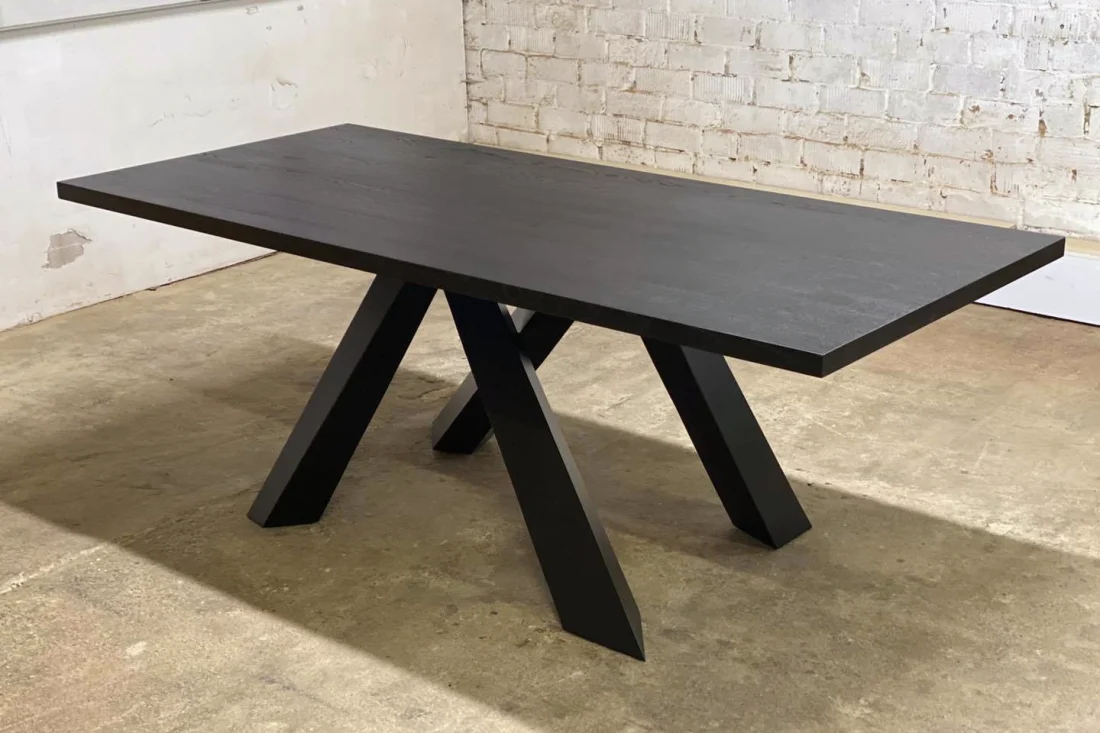
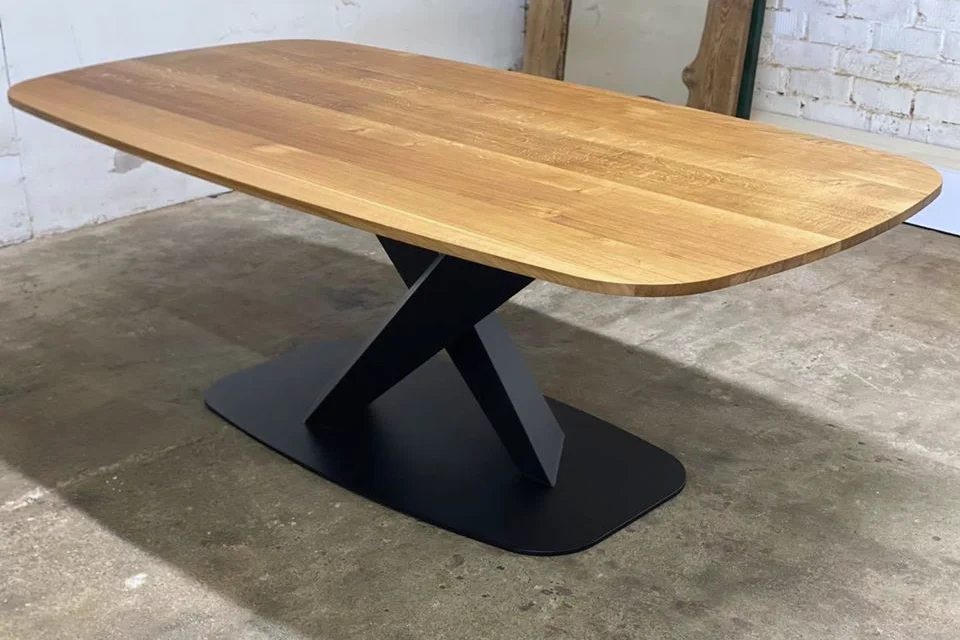
Valencia's base is a simple X, two crossed black steel beams doing the entire job of support beneath an oak top left in a natural or walnut tone depending on the piece.
There is no apron, no additional bracing — the cross does its work in plain sight, which is unusual for a base this stable. Eight sizes make up the collection, round and rectangular both, all built around the same crossed-leg logic underneath. Because the base sits mostly at the center, it leaves the legroom around the edges completely open, which matters more than it sounds like it should once eight people and eight chairs are actually seated around it. It suits a room that hosts often, where the extra chair should never feel like an afterthought.
Beaufort carries the character of a low-country town, old, unhurried, a little overgrown, mostly through the base: a set of black steel legs cast into an irregular, branch-like shape that looks more grown than manufactured.
The oak top stays plain and flat above it, letting the legs read as the sculptural element they were clearly designed to be. Eight sizes run the collection, all keeping the same organic leg casting regardless of tabletop length or finish. It suits a dining room that wants one unmistakably handmade element without turning the whole table into a showpiece — the top still sets and eats like ordinary oak, the legs just happen to look like nothing else in the room. It ages the way old ironwork does, gaining character rather than losing it.
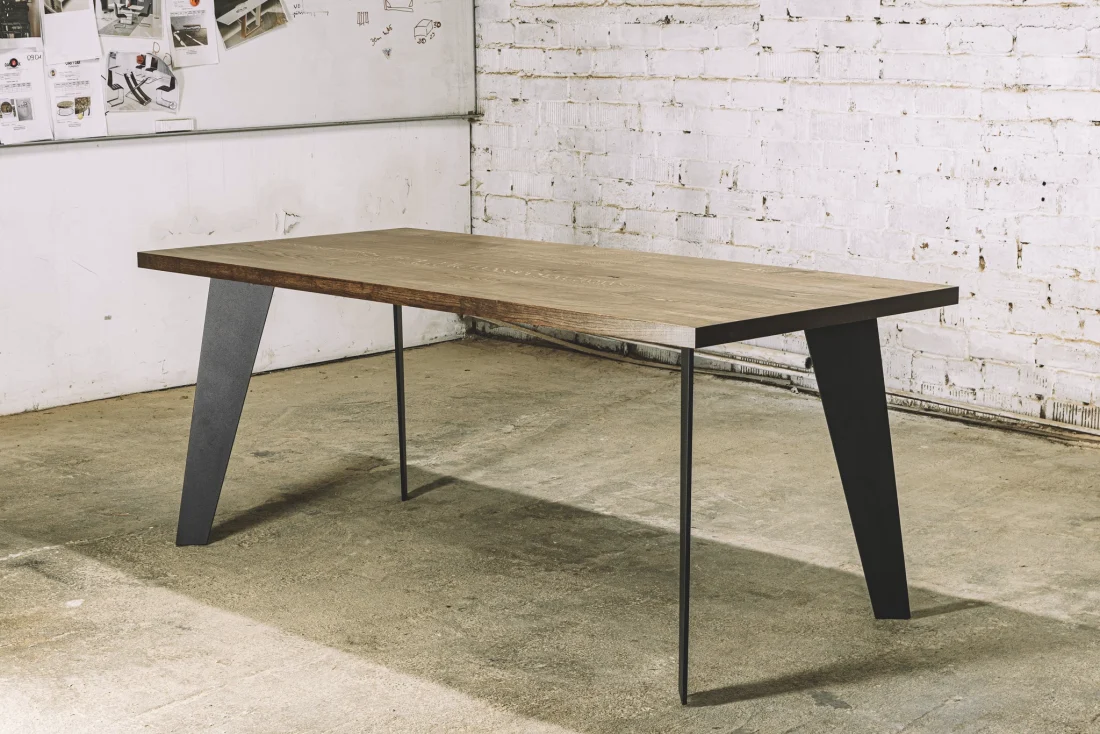
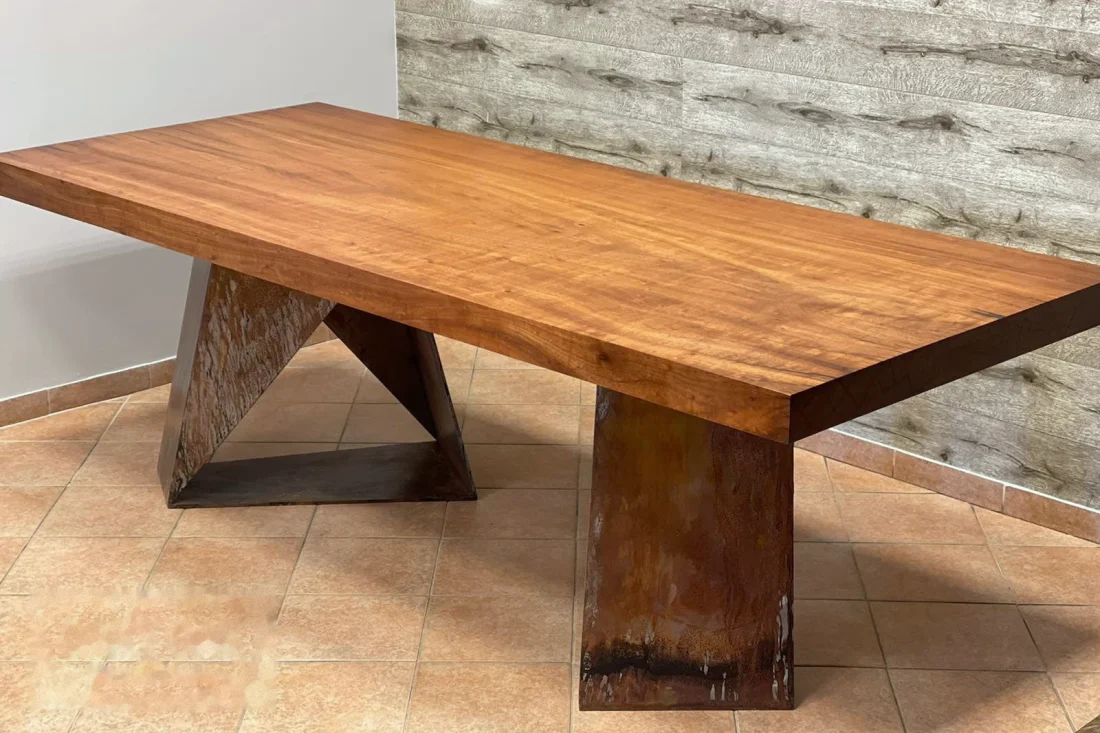
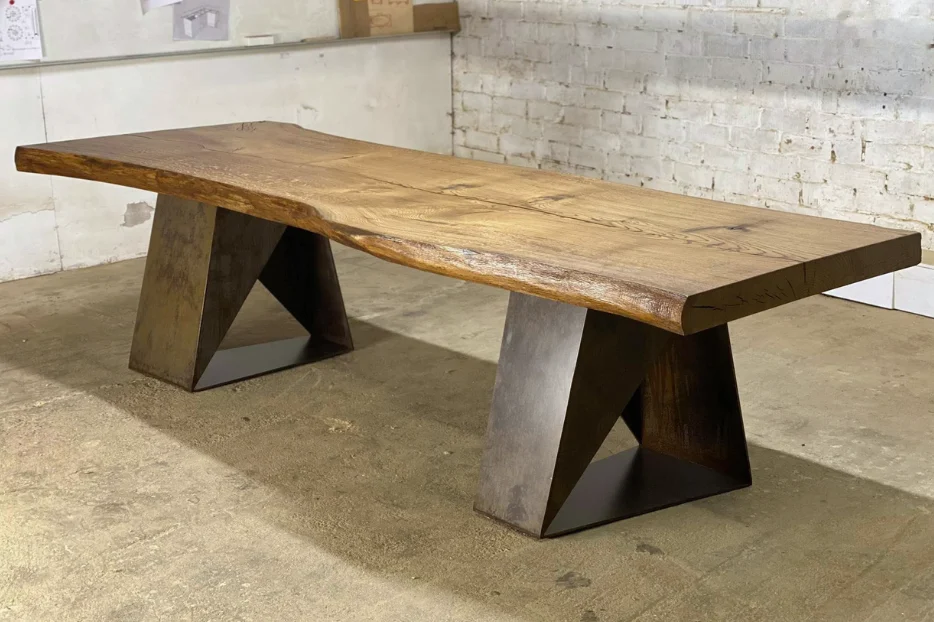
Asheville keeps its live edge honest, the natural, uneven line of the tree left untouched on both long sides of the oak top, and sets it on a pair of black steel legs shaped like flat wedges, angled just enough to feel sculptural without losing stability.
The grain does most of the talking; the legs are there to let it. Four sizes make up the collection, each with its own edge and its own figuring, since the wood dictates the final shape as much as the design does. It suits a room that wants the outdoors acknowledged without actually building around a rustic theme, one true material, left alone, is usually enough on its own. Each edge tells its own story, since the tree it came from never repeats.
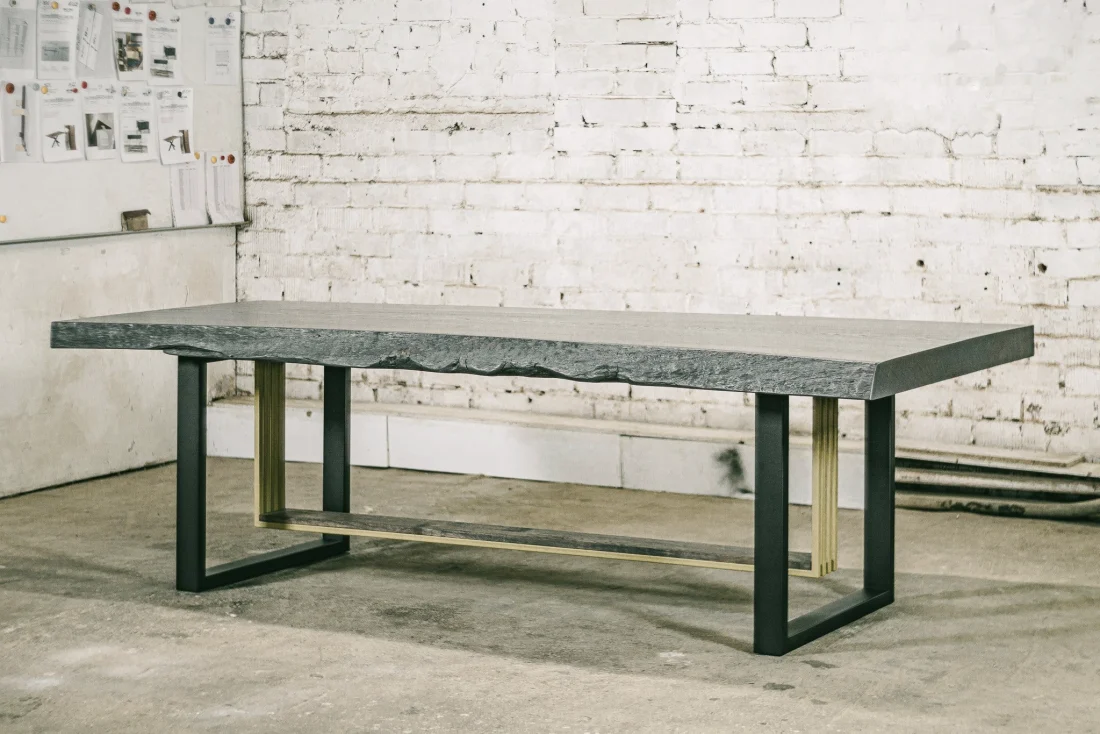
Verona's top looks quarried rather than milled, a rough, stone-gray slab with a fissure worked into one long edge, closer to a piece of broken rock than a sanded board.
Underneath, a black steel frame carries the weight, with a slim brass rail running the length inside it, just visible between the legs, working as a stretcher and a glint of warmth against all that gray. Eight sizes make up the collection, each keeping the same textured top and the same brass detail hidden beneath. It wants a room confident enough to hold a table this heavy-looking, and looks best under low light, when the brass catches something and the stone-toned surface goes nearly black. During the day, in flat light, it reads simply as a solid, quiet slab.
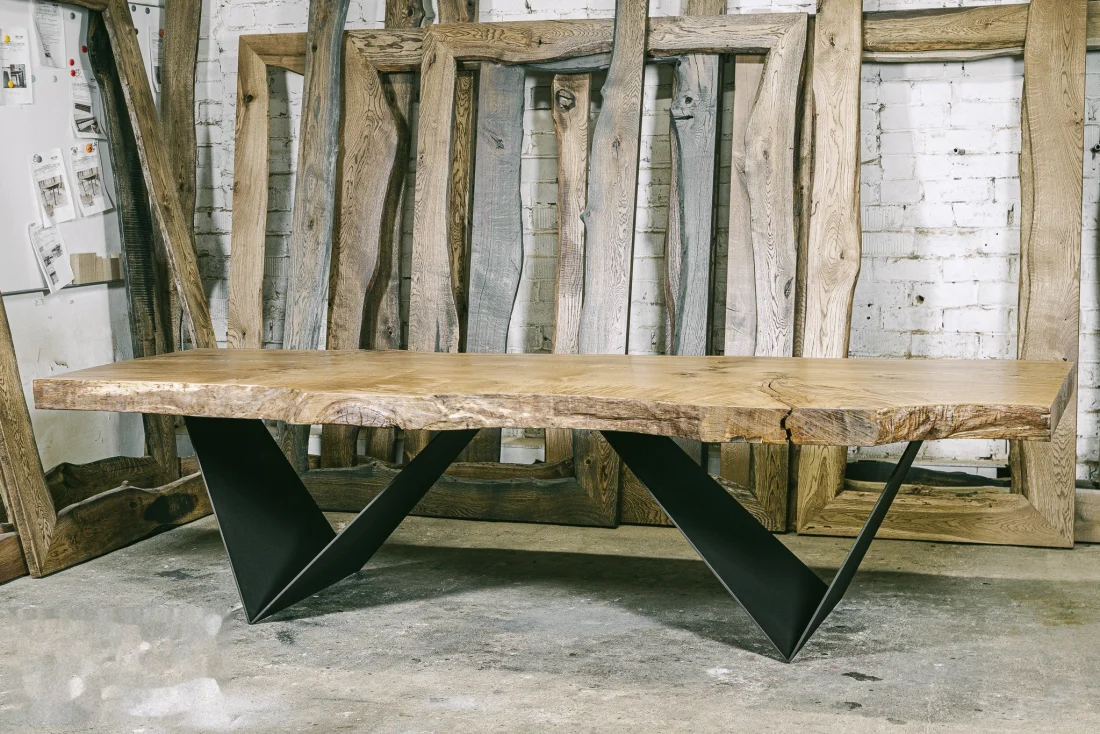
Ardennes pairs a substantially thick oak top, the kind you notice at the corner before you notice anything else, with a pair of black steel legs bent into a sharp V, angled outward for stability like a sawhorse stripped to its essentials.
The contrast between the heavy wood and the thin, sharp steel is the whole design. Five sizes make up the collection, some finished in a deep ebony stain, others left closer to natural, all keeping the same V-leg base underneath. It carries its weight visually as well as literally, a table that looks like it would take four people to move, which, depending on the size, it probably would. It takes a scratch or a water ring the way old, honest oak always has.
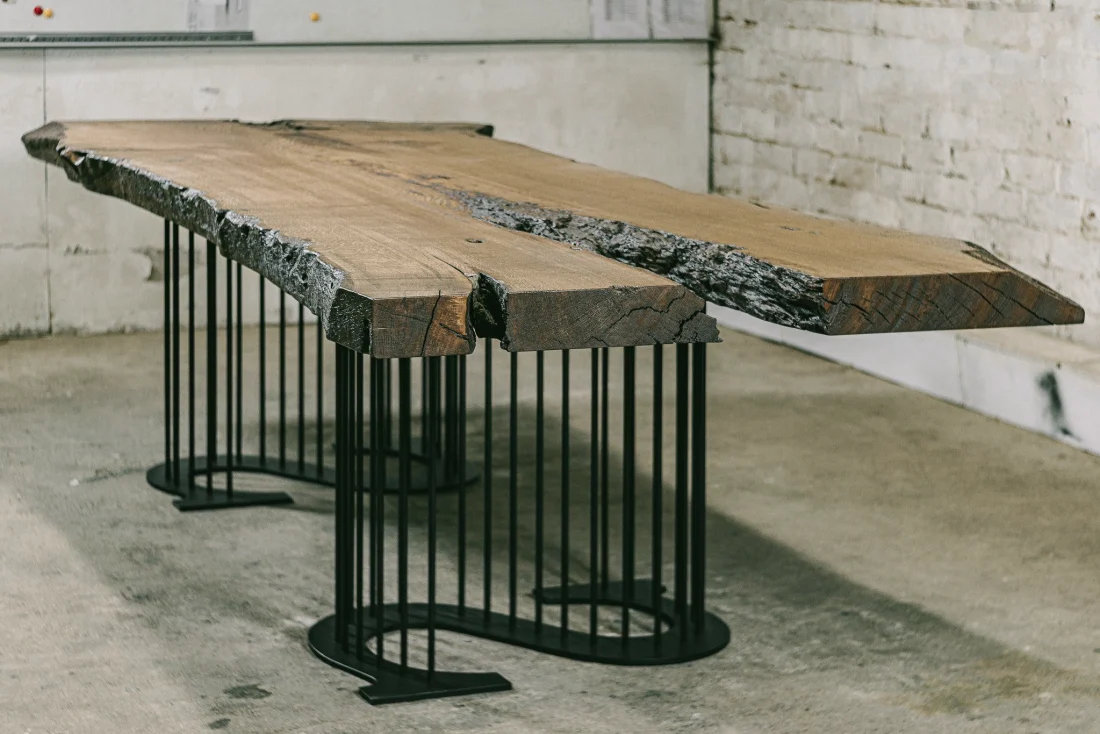
Santa Monica sets a live-edge oak top on a base built from dozens of thin black steel rods, bent into a rounded, wave-like cage at each end rather than standing straight up and down.
The effect underneath is almost aquatic, ribs curving the way a hull's frame does before the planking goes on top. Two sizes make up the collection, both long enough to read as a real dining table rather than a breakfast piece, both sharing the same curved rod base. It suits a room with some drama to spare, high ceilings or a view worth competing with, since the base is built to be seen from underneath as much as from the side. It holds up well near natural light, where the rod shadows shift through the day.
Tirol is built the way a mountain farmhouse table has always been built: a thick oak top set on a trestle of heavy, squared beams, joined without any hardware you can actually see.
The wood is finished dark, close to the color of a beam that has sat near a fireplace for a few decades, and the trestle makes no attempt at delicacy. Nine sizes cover everything from a modest six-seat table to one long enough to seat a dozen, all sharing the same trestle-and-beam construction regardless of length. It belongs in a room with a fireplace, or at least the idea of one, somewhere the table is expected to outlast several rounds of everything else around it. Guests tend to linger longer at this kind of table than at a lighter one.
Vail carries a live-edge oak top on a pair of black steel legs bent into simple A-frames, the kind of angled support you would expect under a mountain cabin bench rather than a dining table.
The natural edge stays rough along both long sides, a reminder of the log it came from. Four sizes make up the collection, all keeping the same A-frame silhouette regardless of overall length or leg finish. It works well in a room with some height to it, vaulted ceilings or exposed beams, since the angled legs echo that kind of structural honesty rather than fighting it. Chairs of almost any style seem to settle comfortably around it. It sets up quickly too, since the two-leg construction leaves little to align.
Denver keeps things simple: a live-edge oak top, natural on both long sides, set on two solid black steel blocks standing in for legs.
There is no taper, no ornament, nothing between the blocks and the floor, just enough mass to feel permanent under a heavy slab of wood. Three sizes make up the collection, the wood and figuring different in every piece since no live edge ever repeats. It suits a room that wants the wood itself to be the entire statement, with a base quiet enough to disappear once anyone actually sits down. Between the two blocks, there is enough open floor for a bench, a dog, or simply nothing at all. The finish only deepens with age, taking on more character with every year of use.
Bruges built its reputation on lace, made by hand in front windows for centuries, and on canals that gather pale light off the water.
This dining set pairs an oak table — straight-lined, warm, unremarkable in the best way — with chairs upholstered head to foot in a heavy white bouclé, textured like the lace the city is known for. The table does the structural work: solid oak, simple legs, nothing to distract from what surrounds it. The chairs, some with arms and some without, carry all the texture, their nubby white fabric catching light the way a lace pattern once did in a shop window. Around a long table, eight of these chairs read as one deliberate, quiet statement rather than eight separate pieces.
Amalfi's coast drops straight into the sea in dark, fluted cliffs, and this dining set takes its base from that geology — a run of vertical ridges in deep, walnut-toned oak holding up a long rectangular top.
The chairs echo it in miniature, each leg and armrest built from the same reeded, upright form. The wood is oak throughout, stained dark enough that the grain recedes and the shape takes over. Seats and backs are upholstered in a plain oatmeal fabric, the only soft note in an otherwise architectural set, with armchairs anchoring each end of the table and side chairs filling the run. It is a table for a room that wants gravity — evening dinners, a bottle open a while, no one rushing to clear the plates.
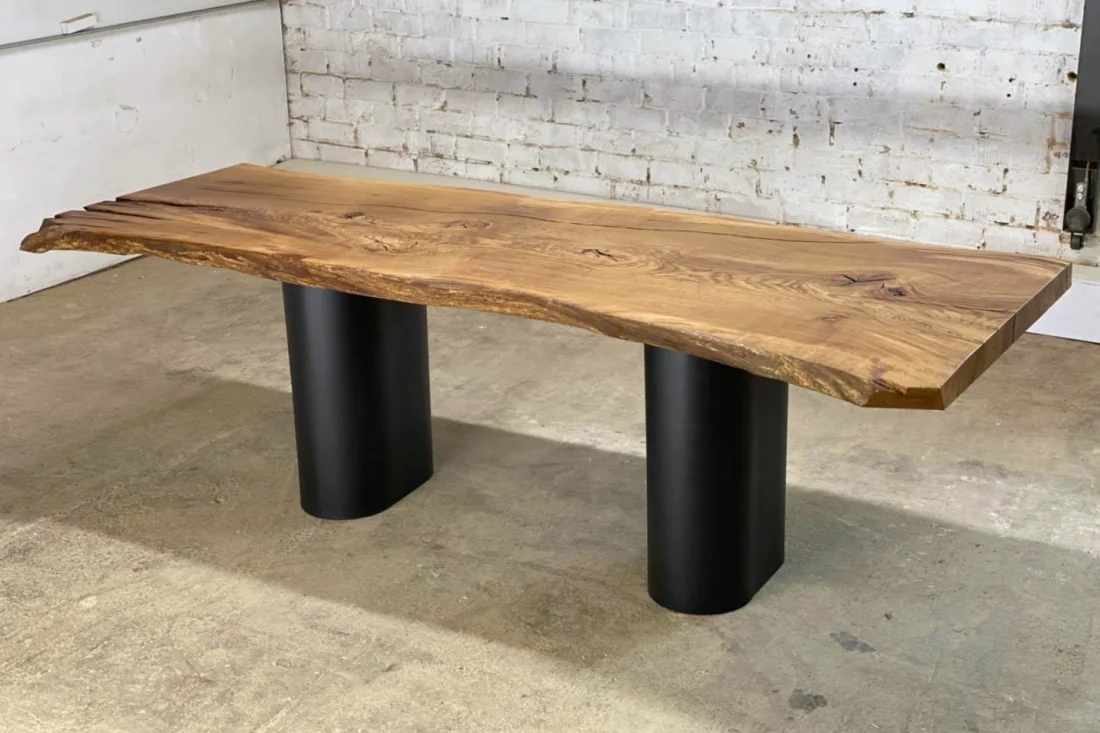
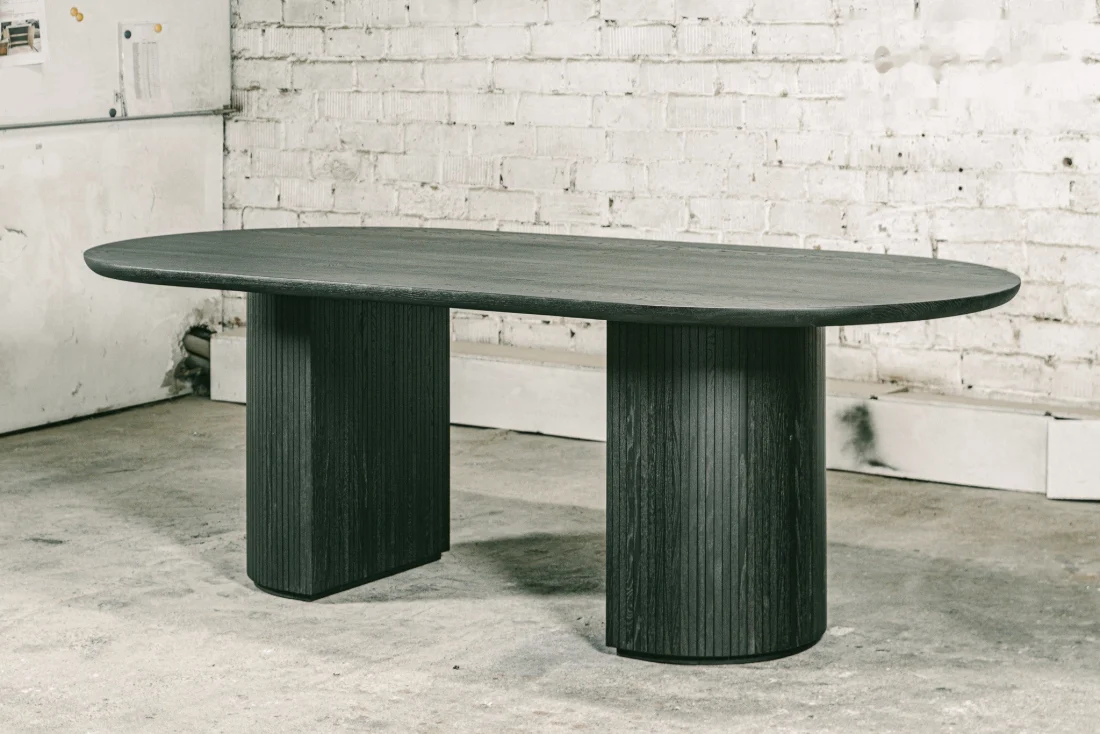
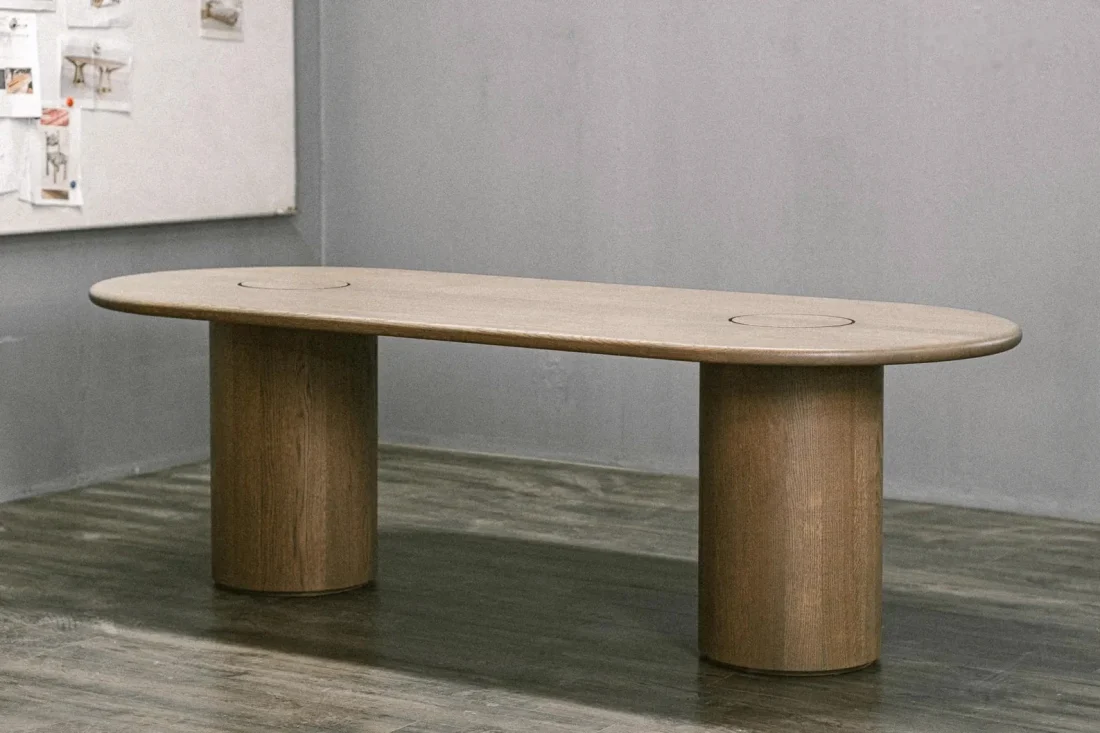
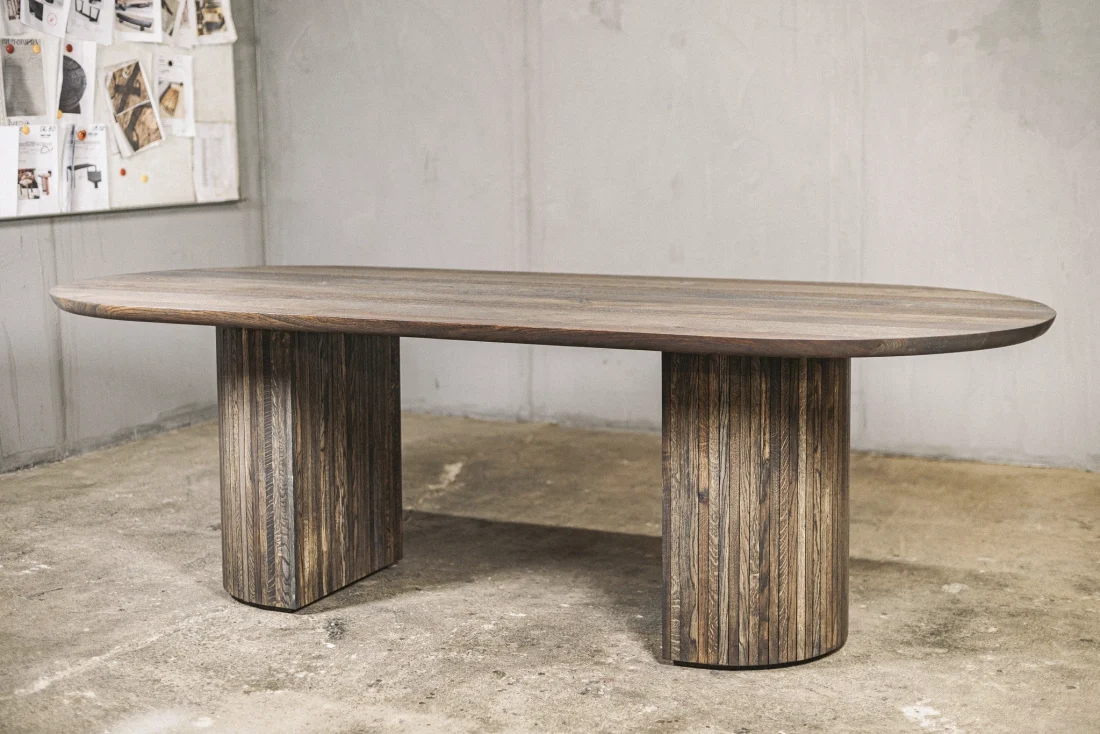
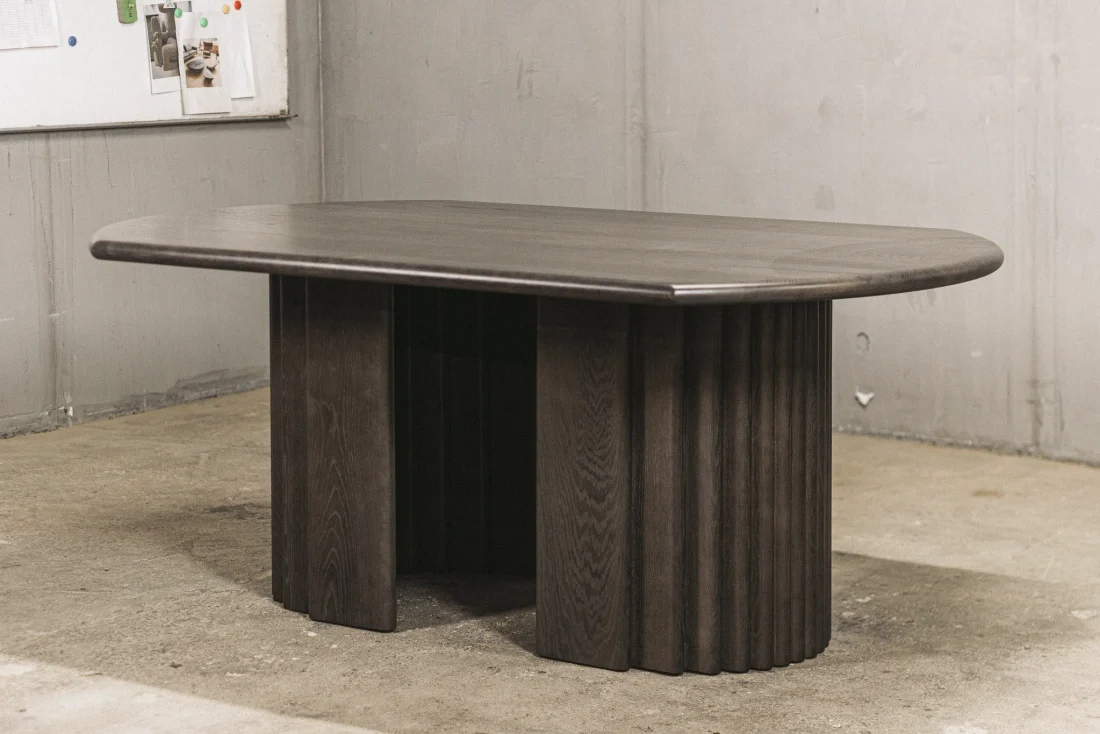
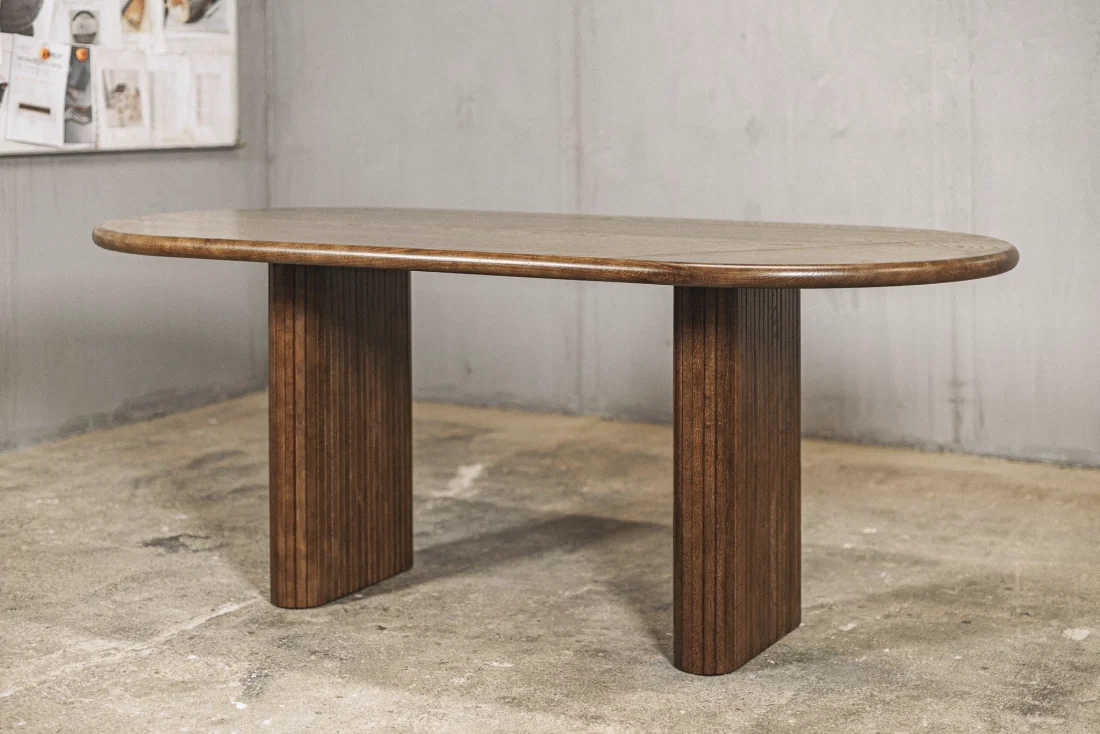
Sorrento's base is two plain cylinders, standing like a pair of columns rather than the usual four legs, wide enough at the footprint to feel stable and finished in the same light oak as the oval top above them.
There is no carving, no taper, just the honesty of a round post doing a round post's job. Six sizes make up the collection, all oval, all sharing the double-cylinder base regardless of overall length. It leaves generous legroom down both long sides, since there is nothing between the two columns to bump a knee against, which matters more at a table built for a long, slow dinner than it does on paper. The light oak tone keeps the whole piece from reading as heavy in a small room.
Budapest sets a round, live-edge oak slab on a base built like a birdcage turned upside down, vertical black steel wires forming a drum beneath the tabletop, open enough to see straight through.
The bark-edged rim of the top stays untouched, so the one perfectly circular element in the piece is the cage, not the wood itself. Six sizes make up the collection, each with its own live edge, since no two slabs come from the same tree. It works best where light can pass through the base from at least one side, near a window or under a pendant, so the wire structure throws its own shadow across the floor along with the table's. No two tables in the run ever throw quite the same pattern of shadow.
Vesuvio's base looks like it survived something, a trunk of oak, charred black and left in its raw, twisting form, flaring out at the top like roots reaching for a tabletop that is not actually wood at all.
A round sheet of glass sits directly on the blackened base, letting every knot and twist show through uninterrupted. Three sizes make up the collection, and because the base starts as raw material rather than a repeatable pattern, no two ever look quite alike. It works best as a centerpiece rather than a workhorse, somewhere it can be looked down into as much as eaten across, ideally under light that catches the char without washing it out. It suits a room built for conversation more than for daily paperwork.
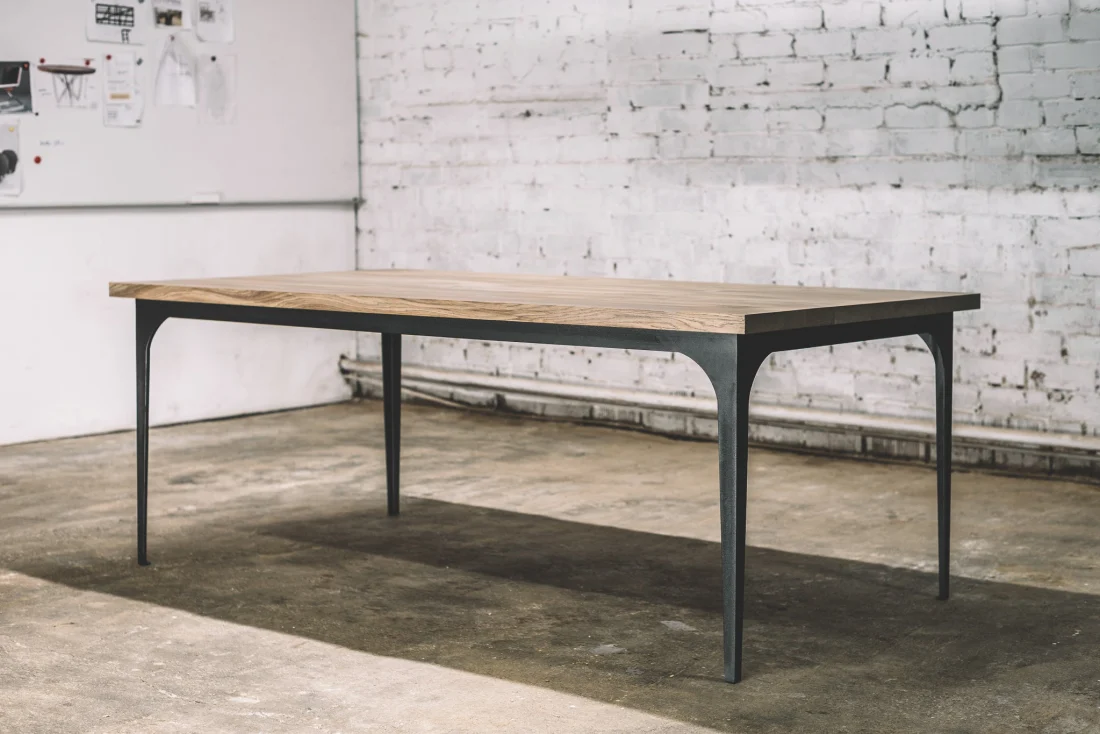
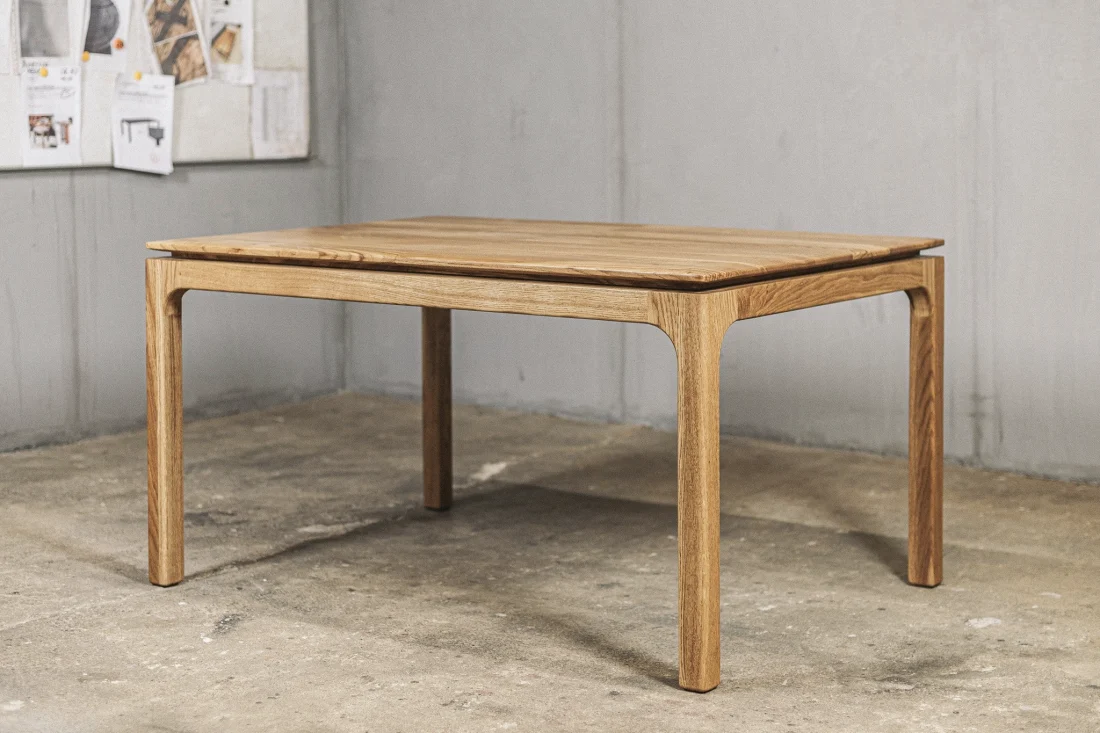
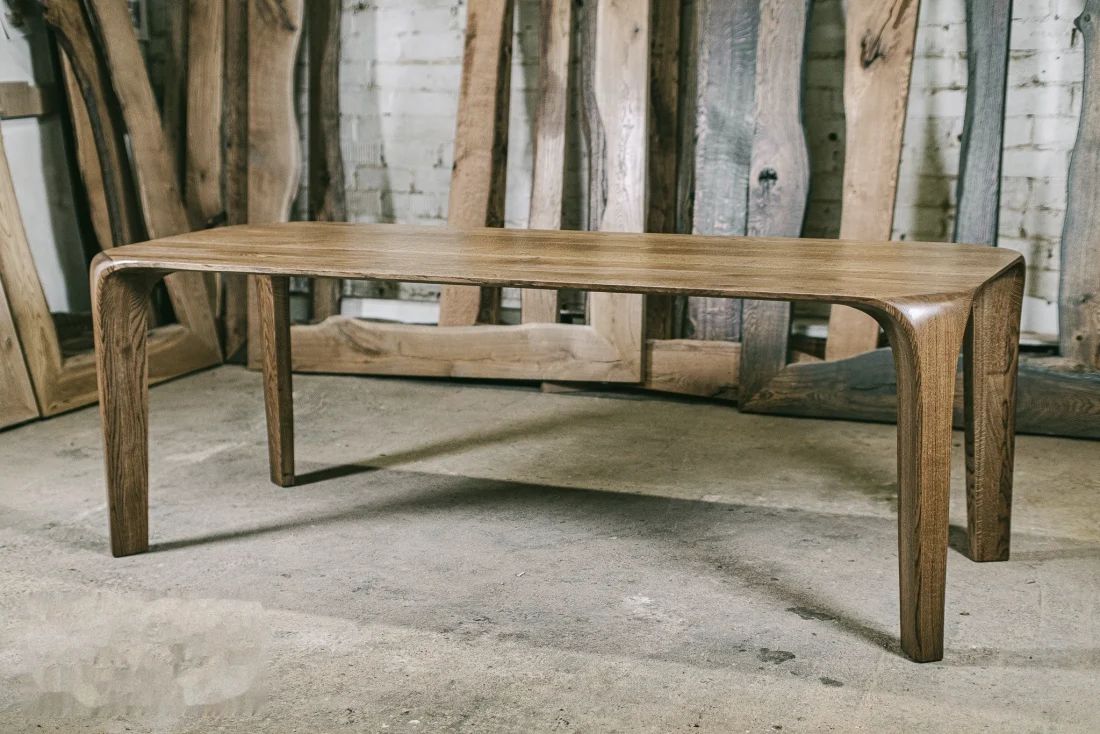
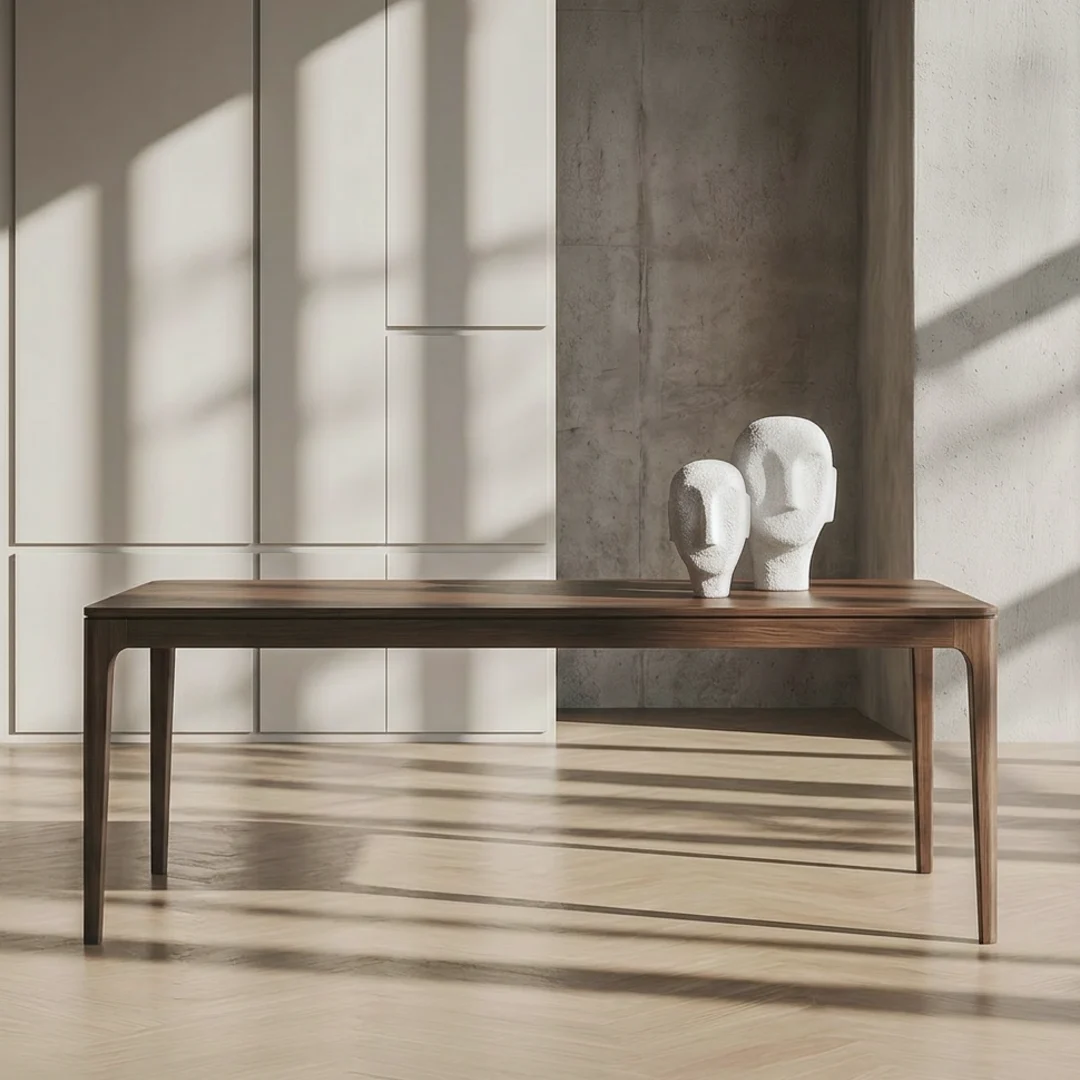
Oxford is the plain, correct answer to what a dining table should look like: a rectangular oak top, rounded gently at the corners, on four straight legs that taper only slightly as they meet the floor.
Nothing about it argues for attention, which turns out to be its actual strength. Seven sizes cover a small breakfast table up to one long enough for ten, all in the same natural or lightly walnut-toned oak, all built the same simple way throughout. It is the table to choose when the room already has a point of view, a bold chair, a strong rug, and needs one steady, unremarkable surface to hold it all together. It also takes a busy family's daily wear without much visible complaint.
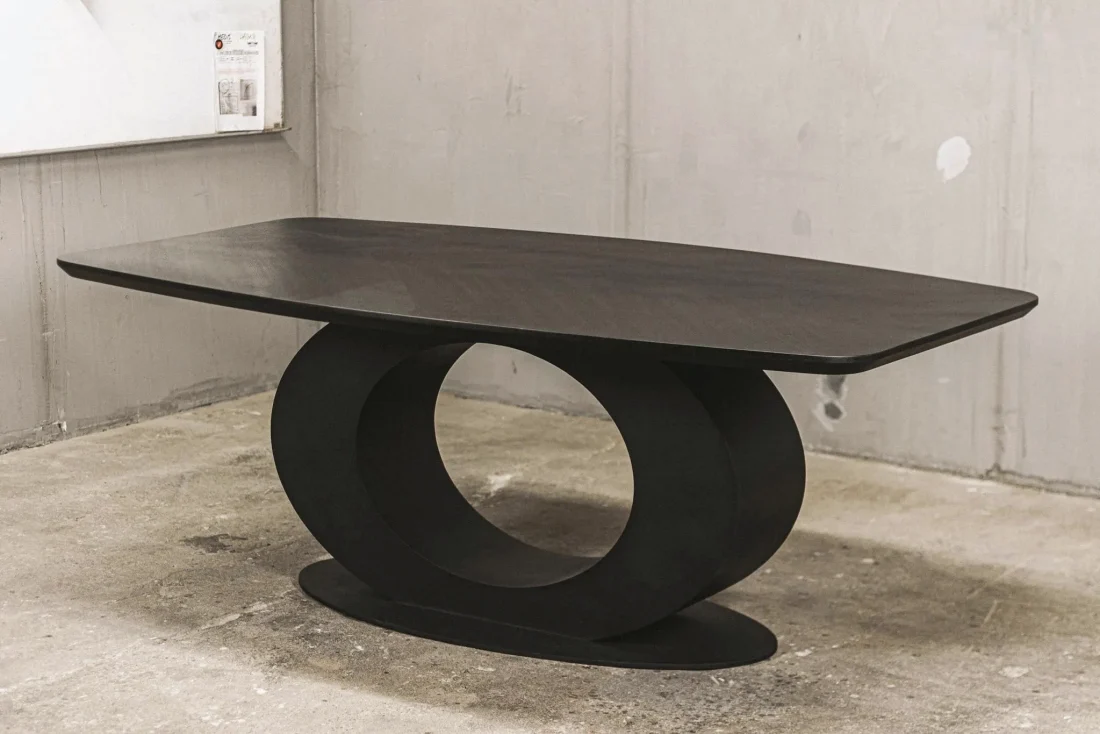
Weimar's base is a single black ring, standing on edge like a wheel with a support running through its center to the tabletop above, more sculpture than furniture engineering, though it holds weight exactly as well as a normal pedestal.
The oval top stays plain, letting the ring underneath carry the entire visual weight of the piece. Two sizes make up the collection, both oval, both built around the same ring-shaped base. It suits a room where the table is meant to be noticed before anyone sits down, a dining area open to a living space, say, since the base reads almost as clearly from ten feet away as it does up close. The ring holds its shape well over years, showing no sign of strain at the joints.
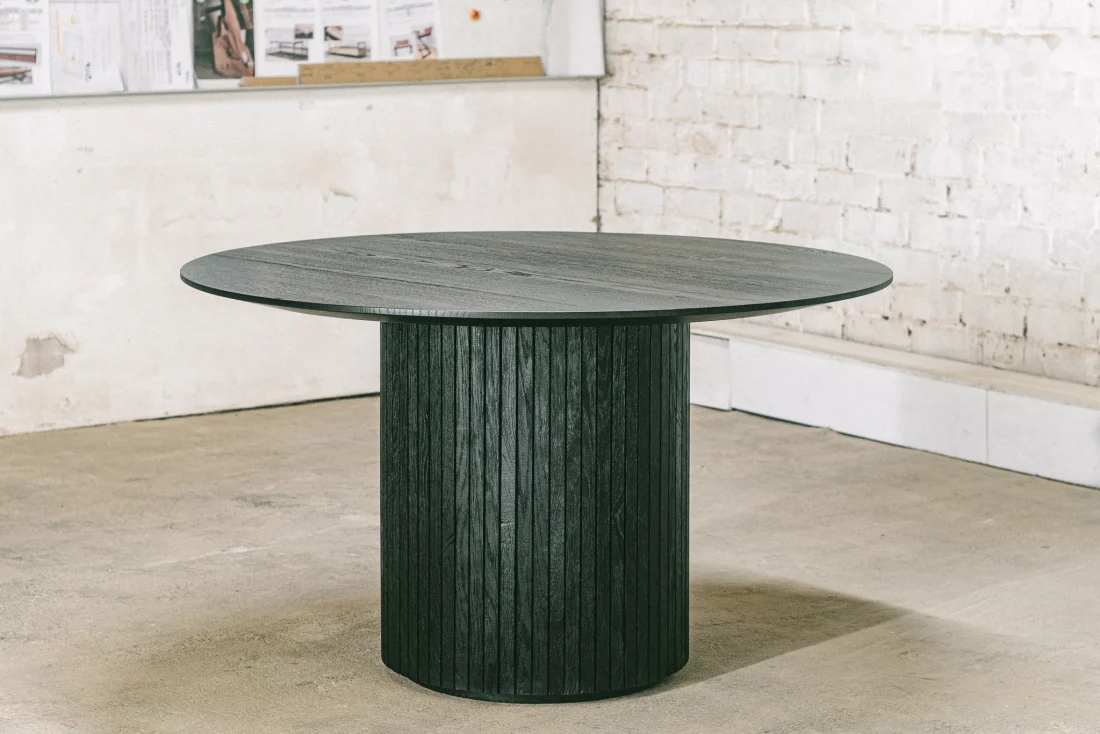
Palermo stands on a single round column, scored top to bottom with fine vertical fluting, the same reeded detail you would find on a piece of classical column work, scaled down and built in oak instead of stone.
The round top above it stays plain, so all the texture in the piece lives in the base. Five sizes make up the collection, all round, all sharing the fluted pedestal at a slightly different scale. Because there is no leg to navigate, seating flexes easily around it, an extra chair squeezes in when it needs to, without anyone hunting for a gap in a four-legged frame. It suits a breakfast nook as easily as a formal dining room, since the column reads at home in either.
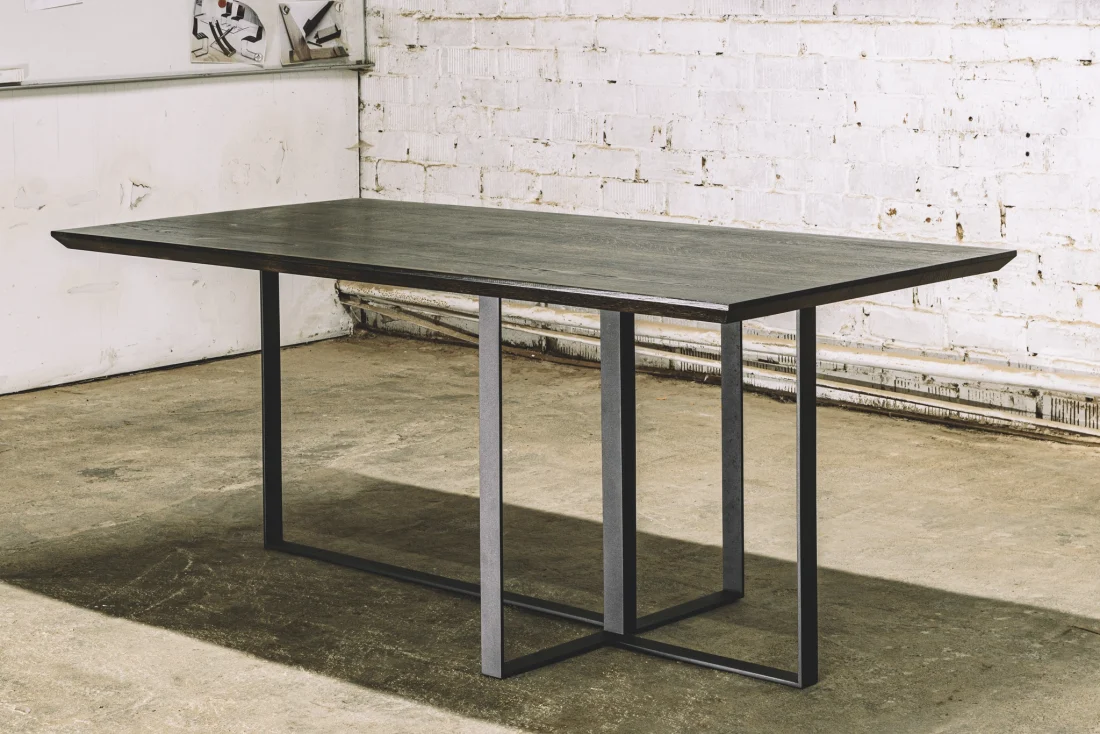
Ghent is built low to the ground in feel if not in fact, a dark, near-black oak top set on four thin steel legs that splay outward at a sharp angle, almost insect-like in how little material they use to do the job.
There is no apron connecting them; the top simply floats above four points. Four sizes make up the collection, all sharing the same splayed-leg base and dark finish throughout. It reads contemporary in a way the other collections here mostly do not, and suits a room already leaning modern, clean walls, little ornament, where a heavier, more traditional base would fight everything else in the space. It suits a small footprint especially well, since the splay eats up almost no floor.
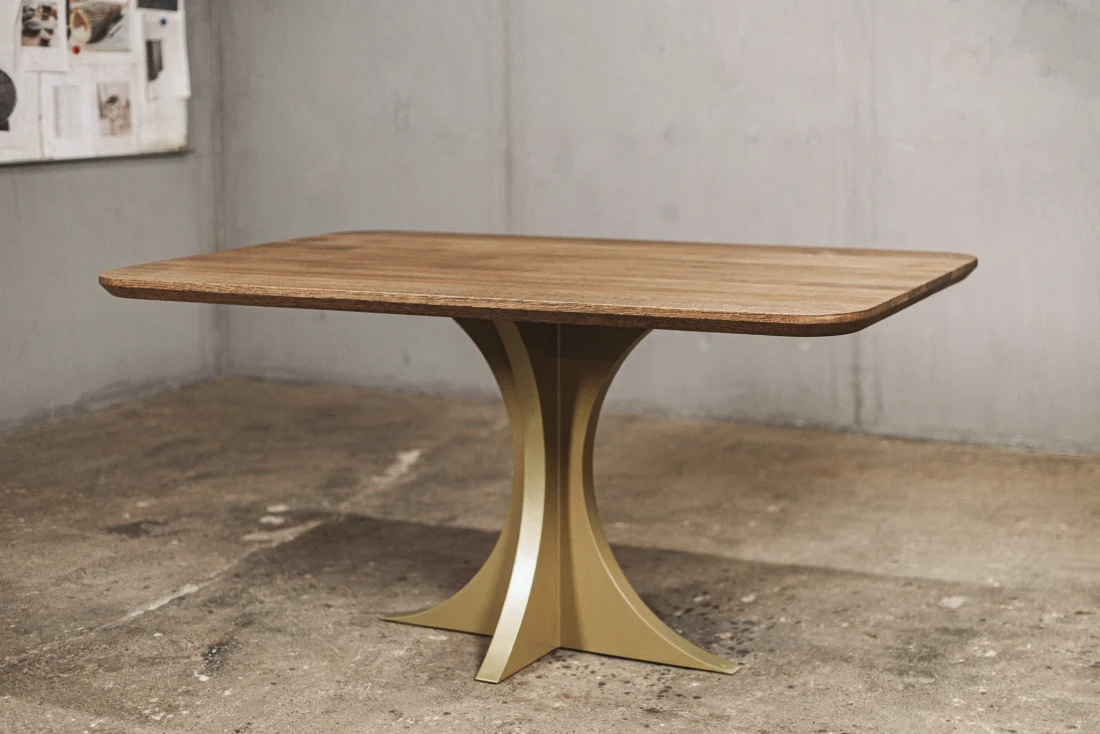
Monaco's base curves where most pedestals go straight, a sculpted, near-black column that bends partway up before straightening again to meet the tabletop, more gesture than structure at first glance.
The top itself stays flat and dark, letting the base read as the one dramatic move in the whole piece. Four sizes make up the collection, all rectangular, all built around the same curved pedestal. It suits a dining area that doubles as a display space, a corner visible from the living room, say, since the base gives the table a profile worth seeing even when nobody is sitting at it. Up close, the curve reads subtler than it photographs. It works equally well lit from above or simply caught by passing daylight.
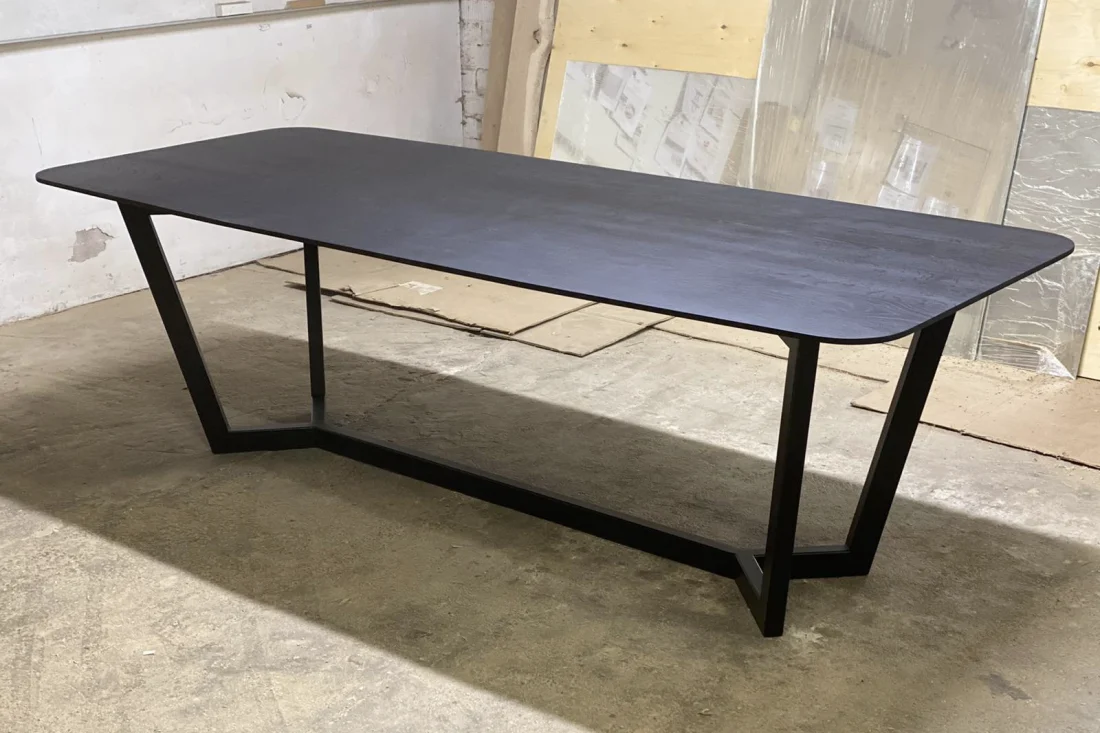
Kildare stands on four legs that taper to almost nothing at the floor, painted a deep, near-black green that reads as its own material rather than a coating over something else.
The top runs narrower than most dining tables in this range, which keeps the legs visually doing more of the work than usual. Seven sizes make up the collection; most carry an oak top, a couple are cut from marble instead, but every one keeps the same tapered green leg regardless of what sits above it. Because it runs narrow, it suits a room where a standard-depth table would crowd the walking space, a galley kitchen or a long room split into zones, without losing any seating length. Either top setting keeps the same low, settled stance at the floor.
Cordoba's base is a single dark column, fluted top to bottom like a piece of classical architecture scaled down to table height, holding up a round top in oak, marble, or a steel-based variant depending on the size.
The fluting is deep enough to cast real shadow, not just suggest texture from a distance. Seven sizes run the collection, from a small breakfast round to a table that seats eight comfortably, all keeping the same fluted pedestal underneath. Because the base sits entirely at the center, there is no leg to work around no matter how many chairs get pulled up, which is, in the end, the entire argument for a pedestal table. The fluted texture also hides the inevitable scuff far better than a flat column would.
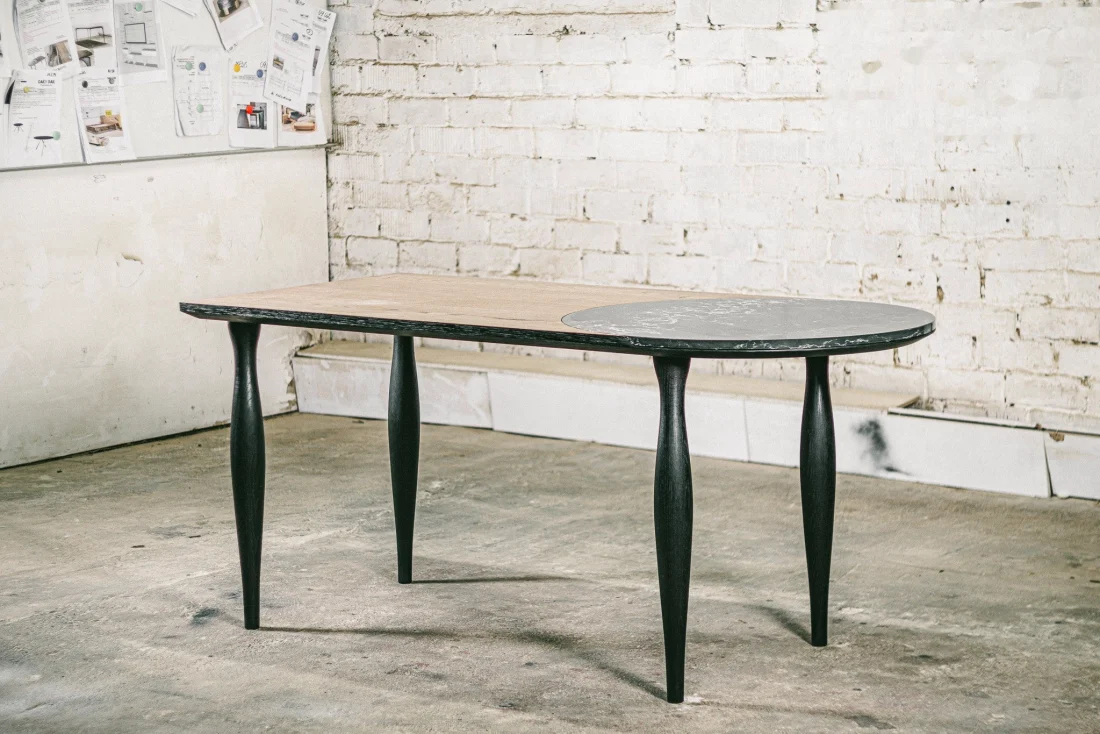
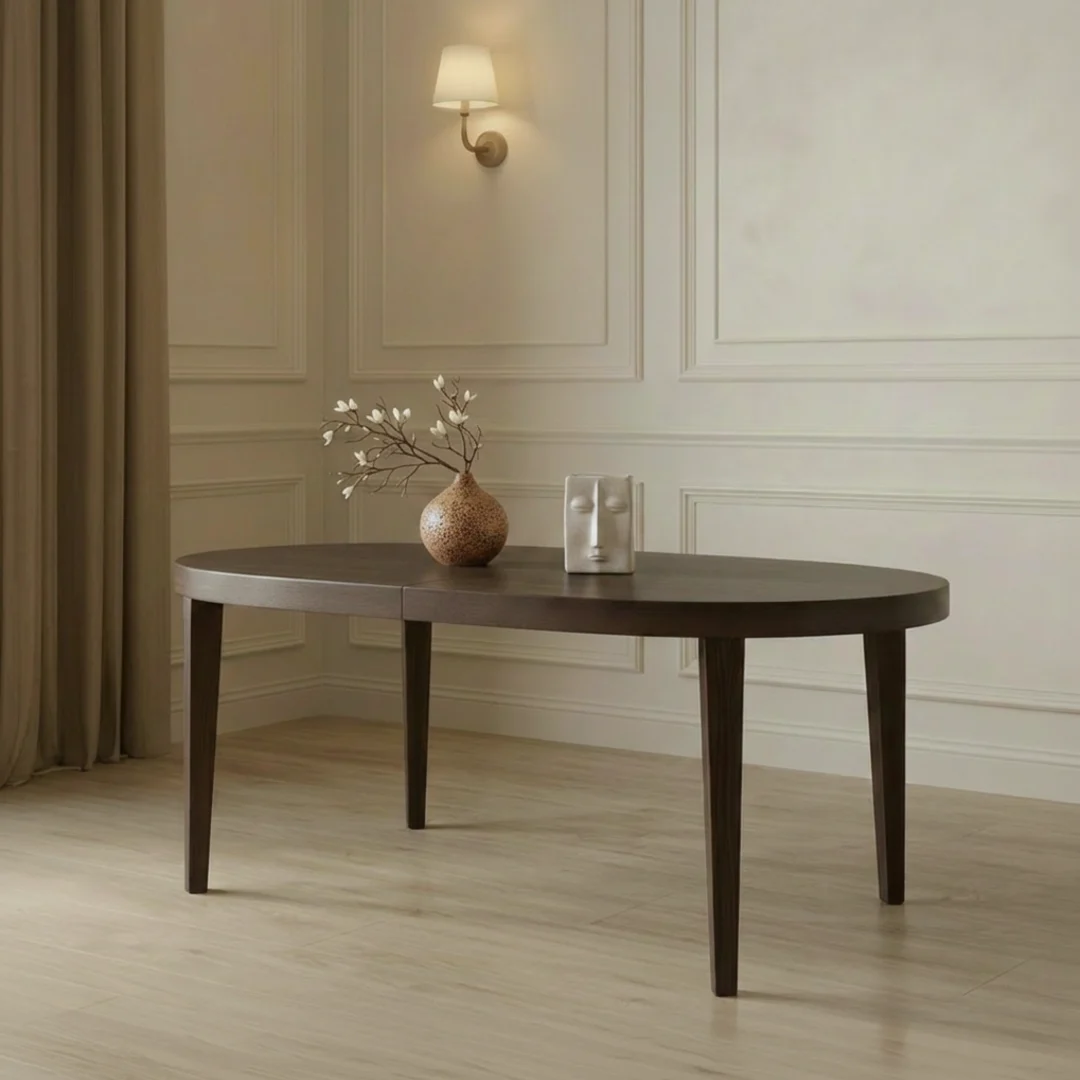
Bologna's legs are simple cones, wide at the floor and narrower where they meet the oval top, painted a deep, near-black green that reads as its own finish rather than a coat over something else.
There is no cross-brace, no stretcher, just two solid forms doing all the work between them. Two sizes make up the collection, one noticeably longer than the other, both sharing the same conical-leg base and oval top. The two-leg arrangement leaves both ends of the table completely open, which matters at an oval shaped for a rounder kind of gathering, where guests tend to spread out rather than line up along the sides. It suits a smaller dining room especially well, since the legs use so little floor.
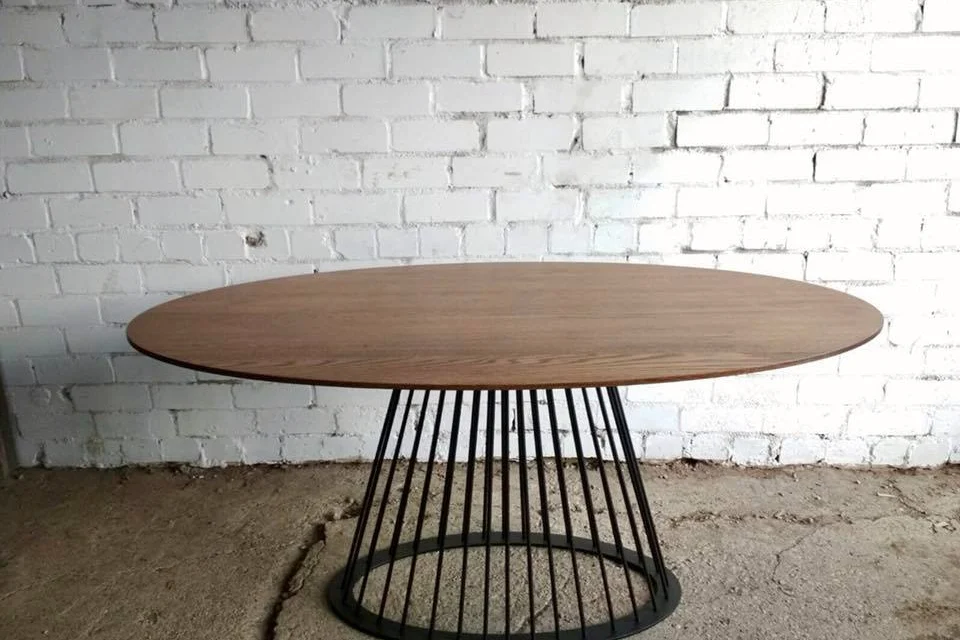
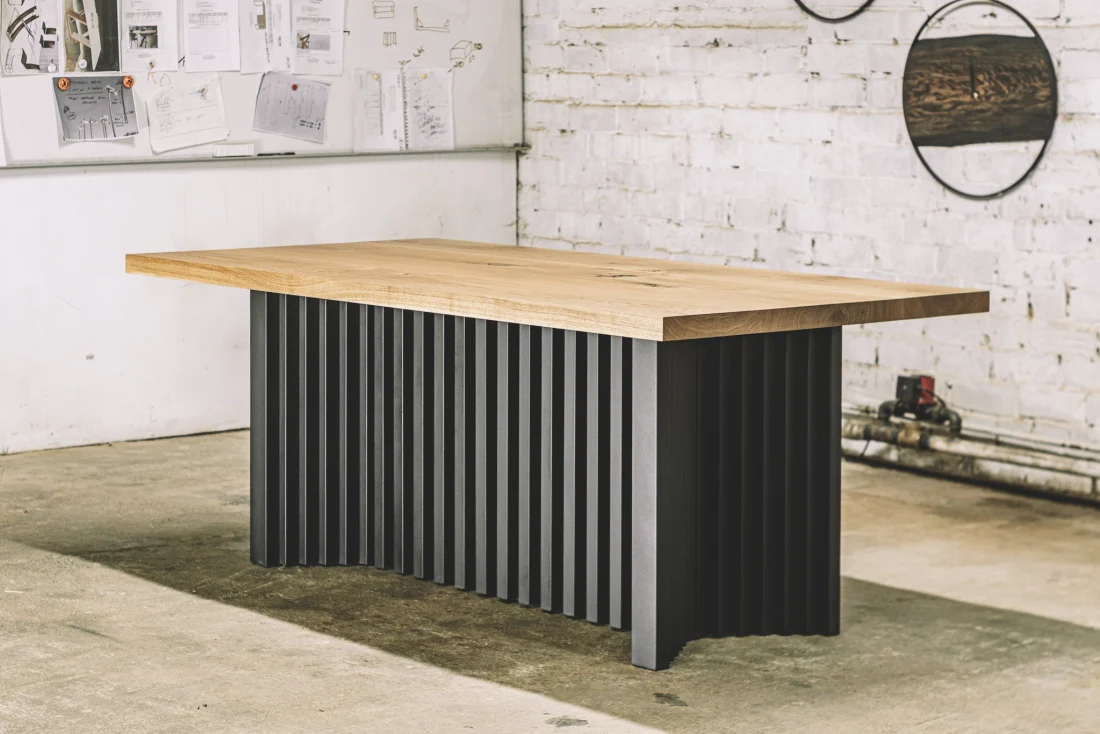
Annapolis carries an old port town's sense of proportion, an oak top of classic, straightforward dimensions, set on a base of tightly spaced black steel rods running the full width beneath it, fluted like the side of a hull.
The rod base hides nothing and needs nothing else added to it. Three sizes make up the collection, all keeping the same rod-paneled base regardless of overall length. It suits a dining room that wants a hint of the nautical without leaning into the theme outright, the vertical lines do that work quietly, and the oak top above them keeps the whole piece from feeling like a costume. It also takes to a coastal or lake house especially well, given the theme.
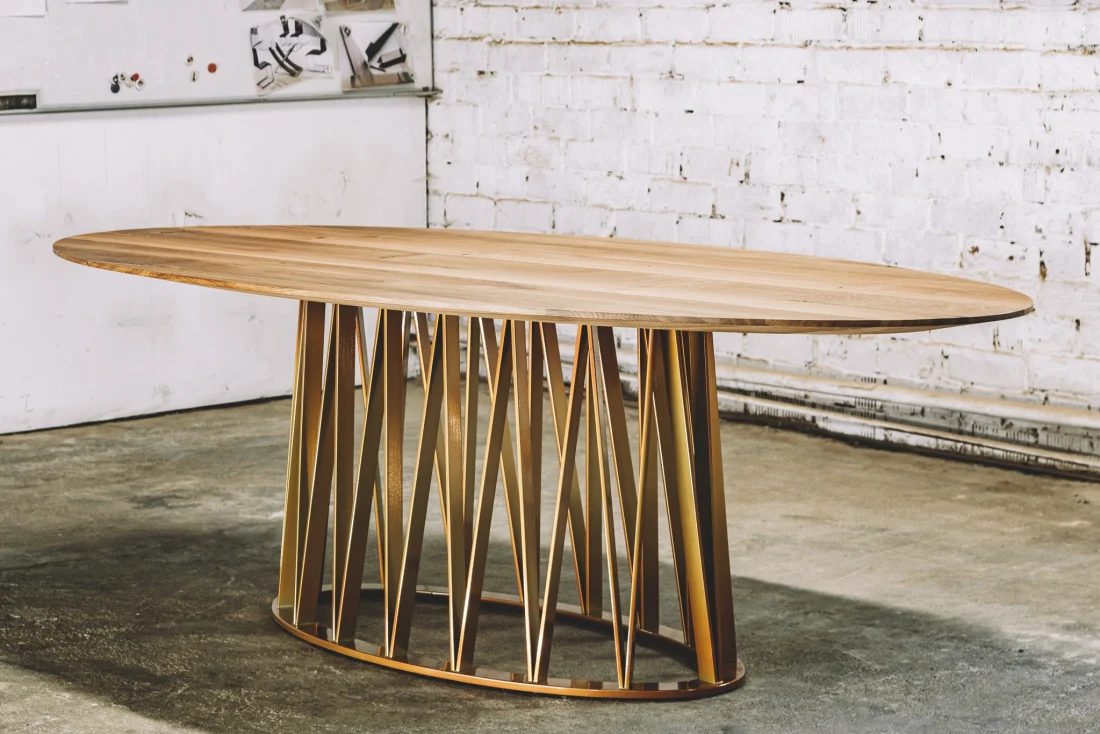
Cannes stands on a base of thin, gold-toned rods set on the diagonal, crossing each other in a tight lattice rather than running straight up and down the way some of its relatives do.
The effect is denser and more decorative, closer to a woven screen than a structural frame, though it holds the oval top just as steadily. Two sizes make up the collection, both oval, both built on the same crosshatched rod base. It suits a room that already leans a little glamorous, brass hardware elsewhere, a mirrored surface nearby, since the base picks up exactly that kind of light without needing anything else in the room to match it outright. It photographs particularly well in the kind of low, warm light a dinner party keeps.
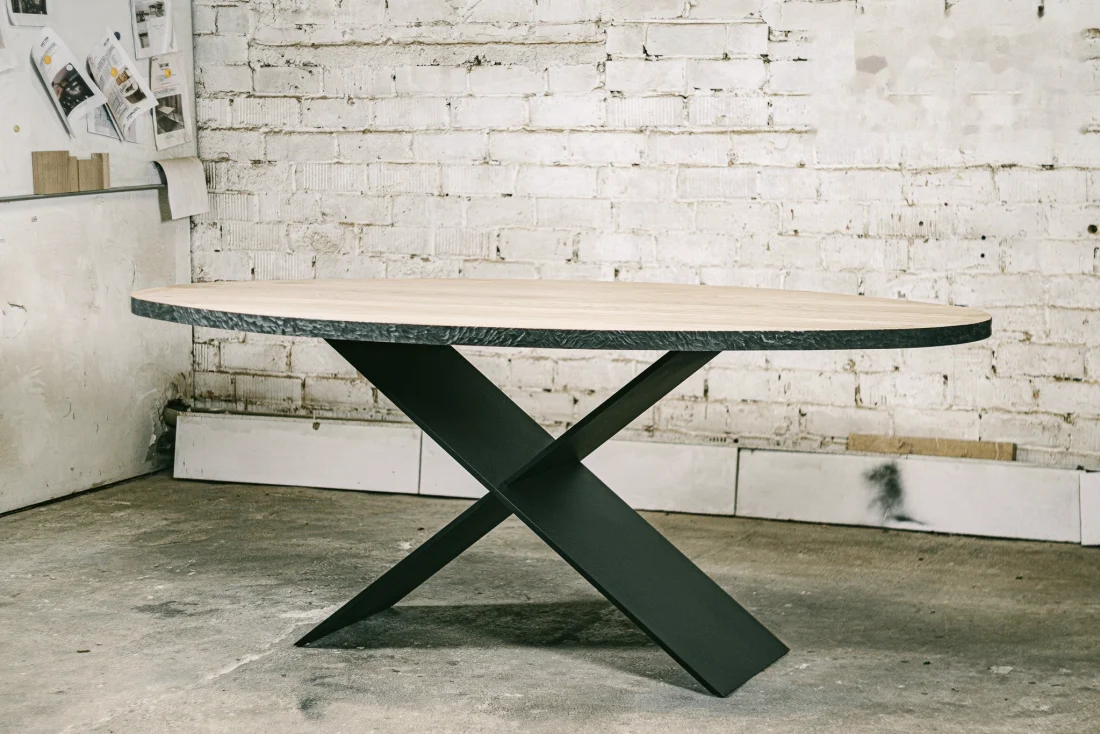
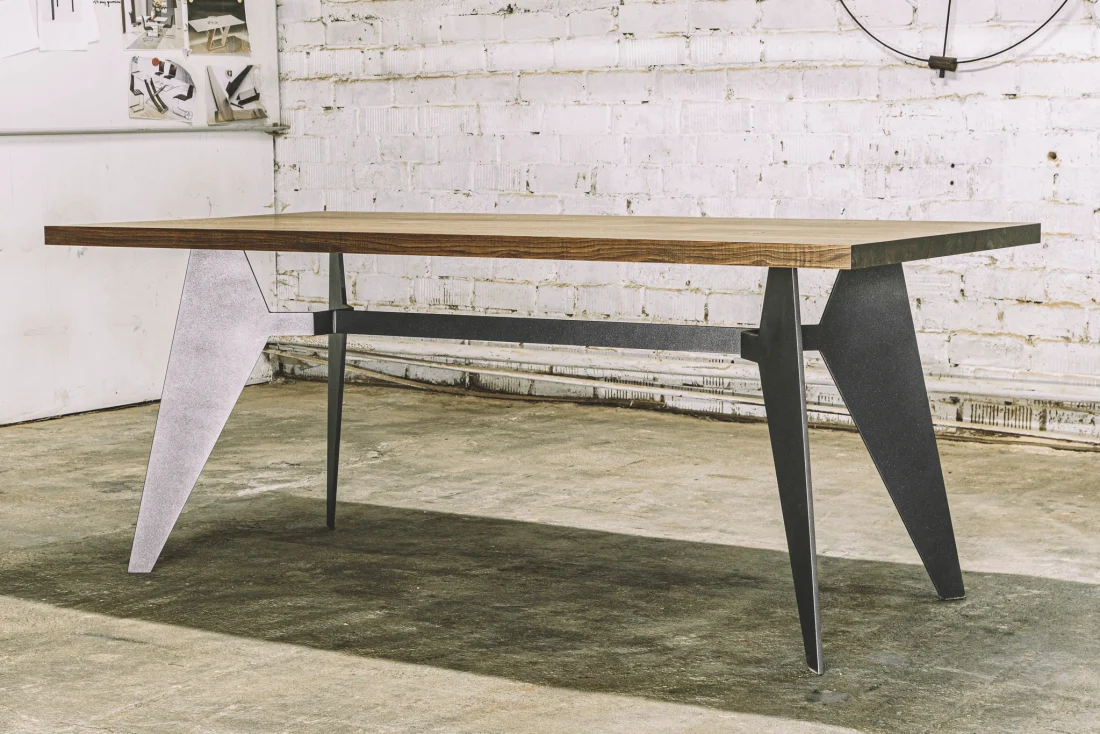
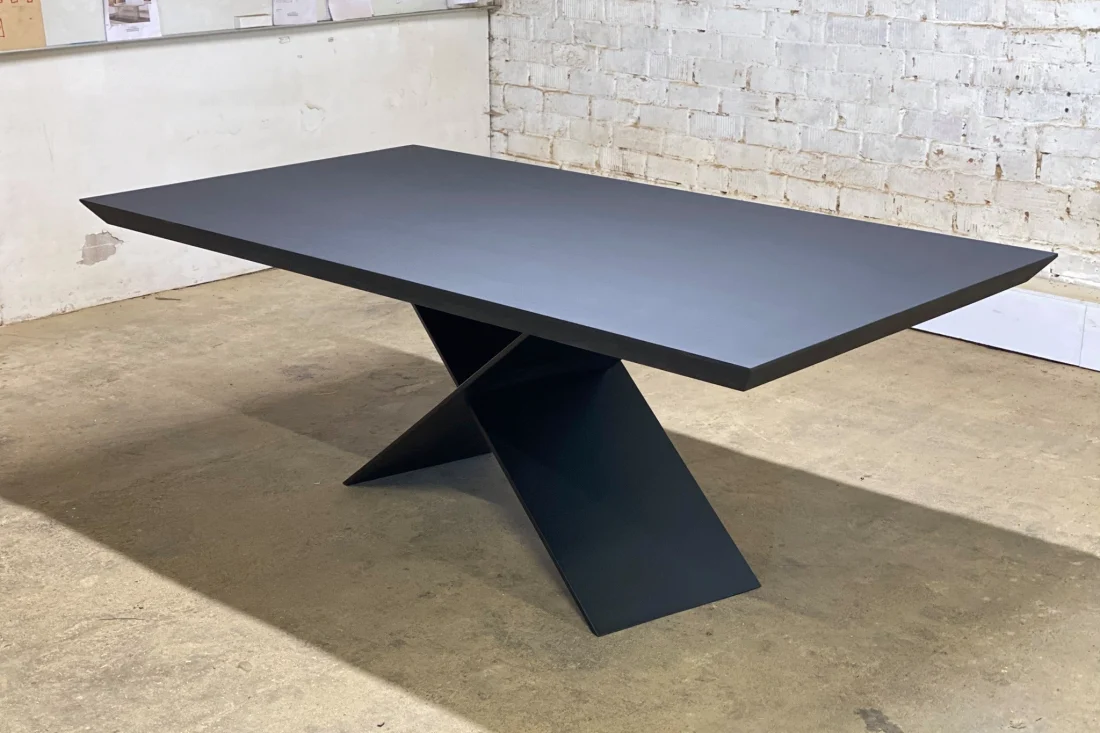
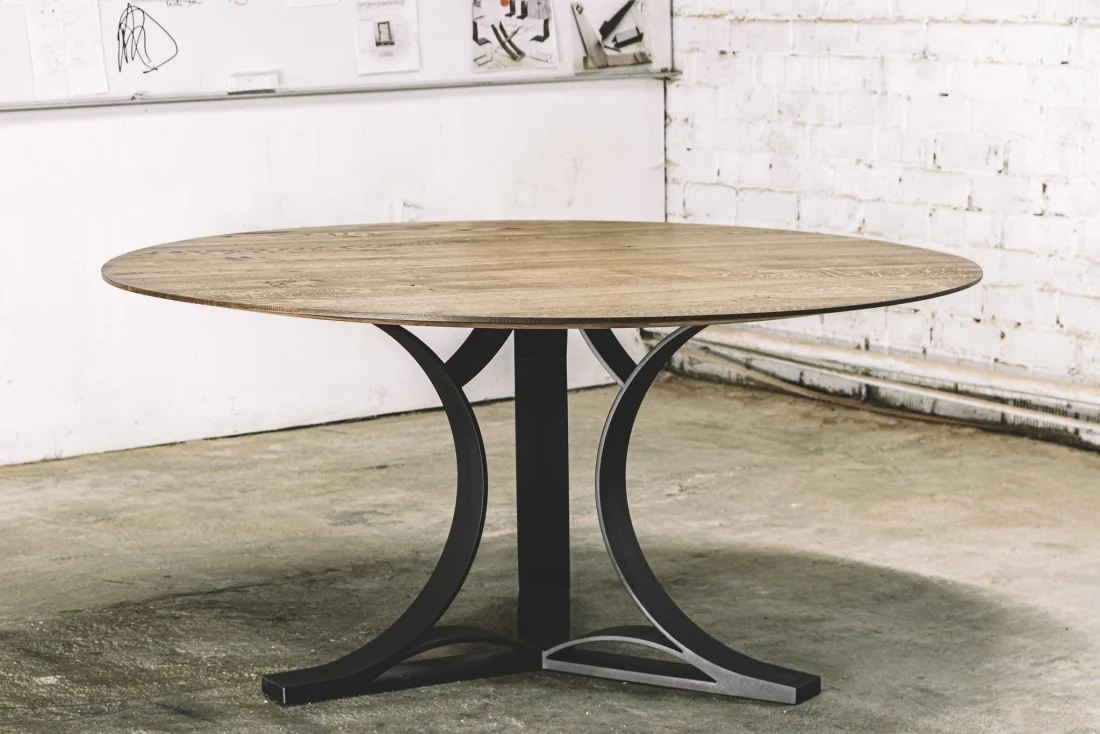
Naples sets an oval oak top on a base built from two crossed black steel blades, an X turned on its side rather than standing upright the way it does elsewhere in this group.
The result reads lighter, more like a base balancing than one bracing against the weight above it. Three sizes make up the collection, all oval, all sharing the same crossed-blade base. The oval shape and the low, wide base make it a comfortable table to walk around, without the sharp corners of a rectangular top or the single center post of a pedestal getting in the way. It suits a room where the table needs to be circled as often as sat at. Either size seats comfortably without a single sharp edge to work around.
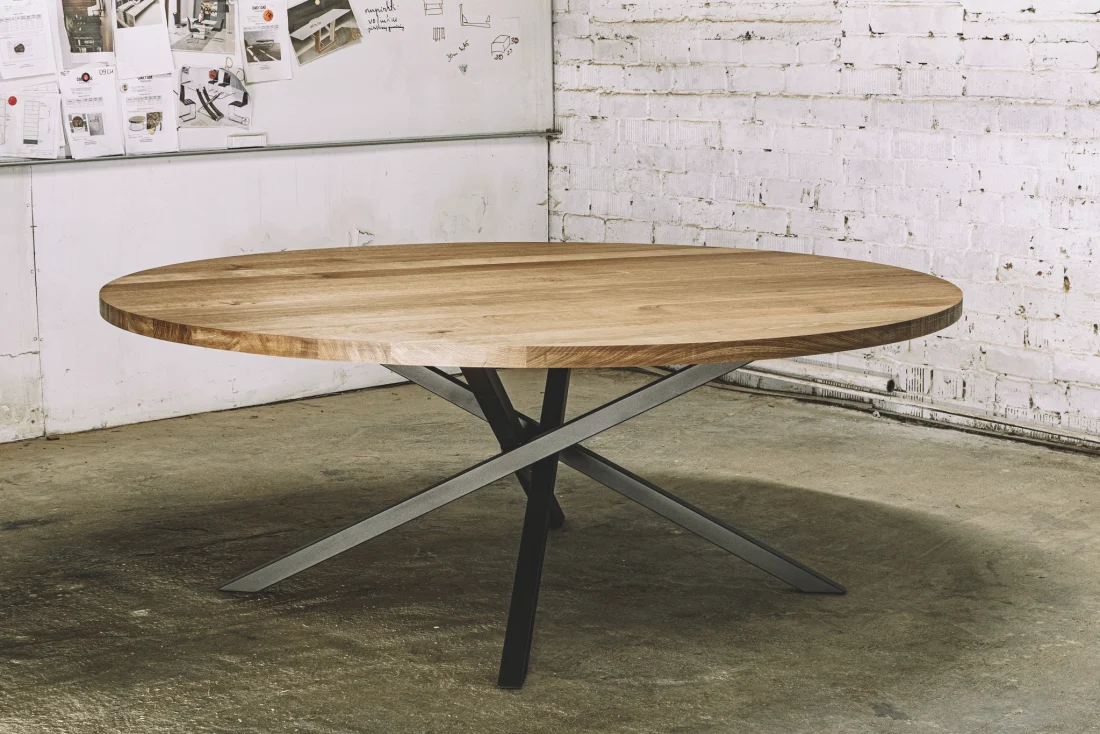
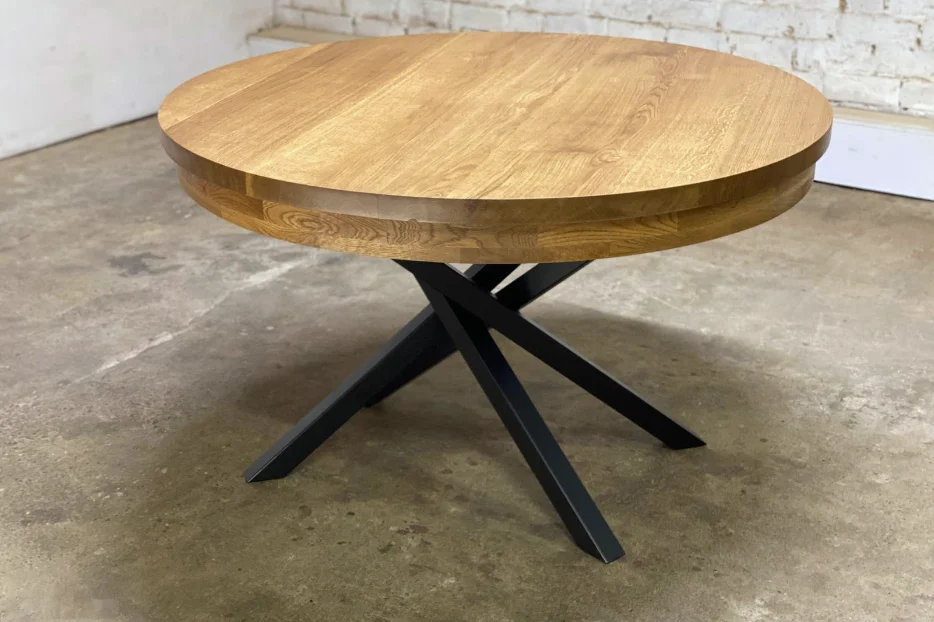
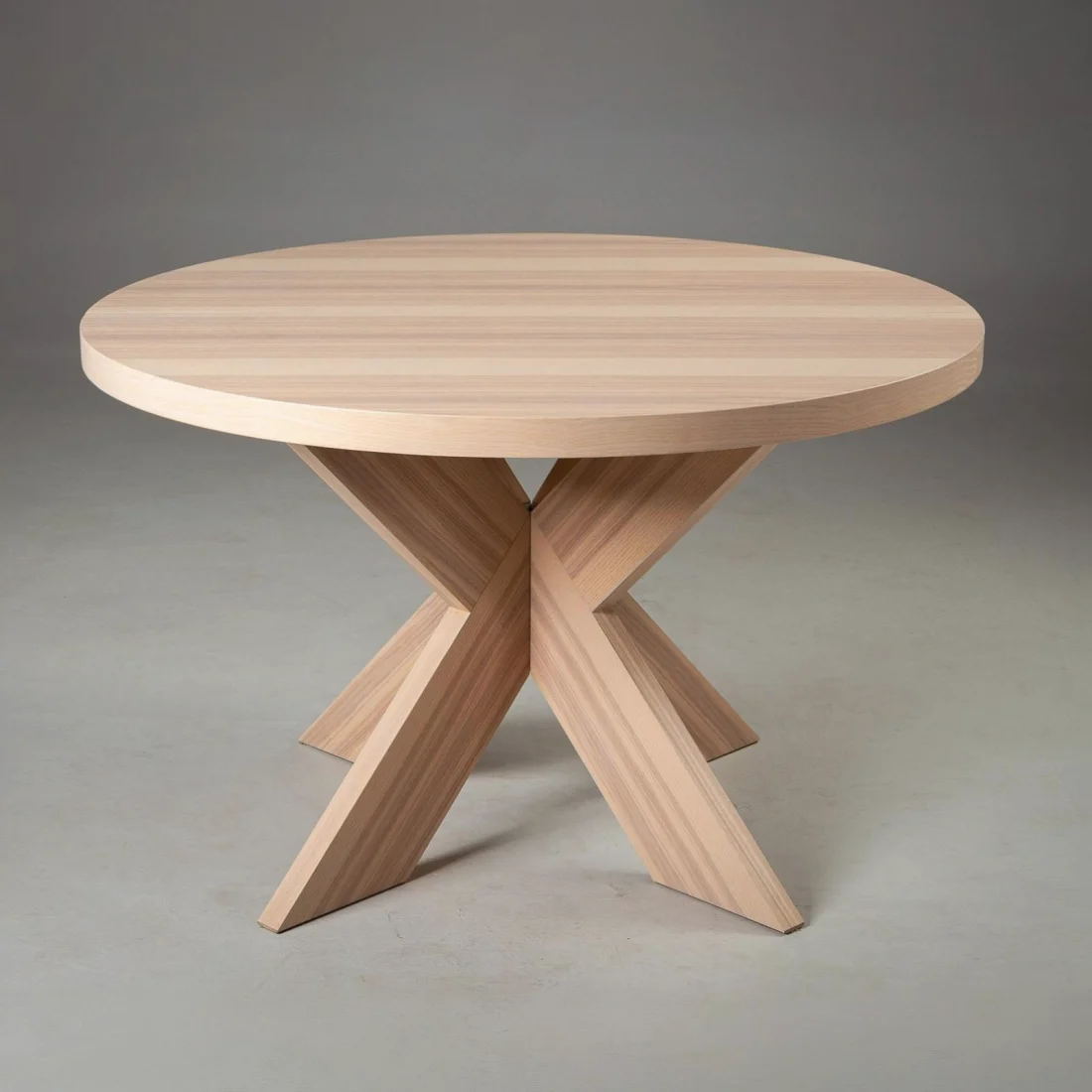
Avignon sets a round oak top on a base that reads like a compass rose, flat black steel blades radiating out from the center point at odd angles, more star than X.
It looks unstable in photographs and is not; the spread of the blades does the same job a wider pedestal would, just with more visual tension. Seven sizes make up the collection, all round, all sharing the same radiating base regardless of diameter. It suits a room where the table gets seen from above as much as from the side, an open kitchen or a dining area visible from a staircase, since the base is half the reason to choose a round table at all. Even fully seated, the floor beneath stays remarkably open and easy to sweep.
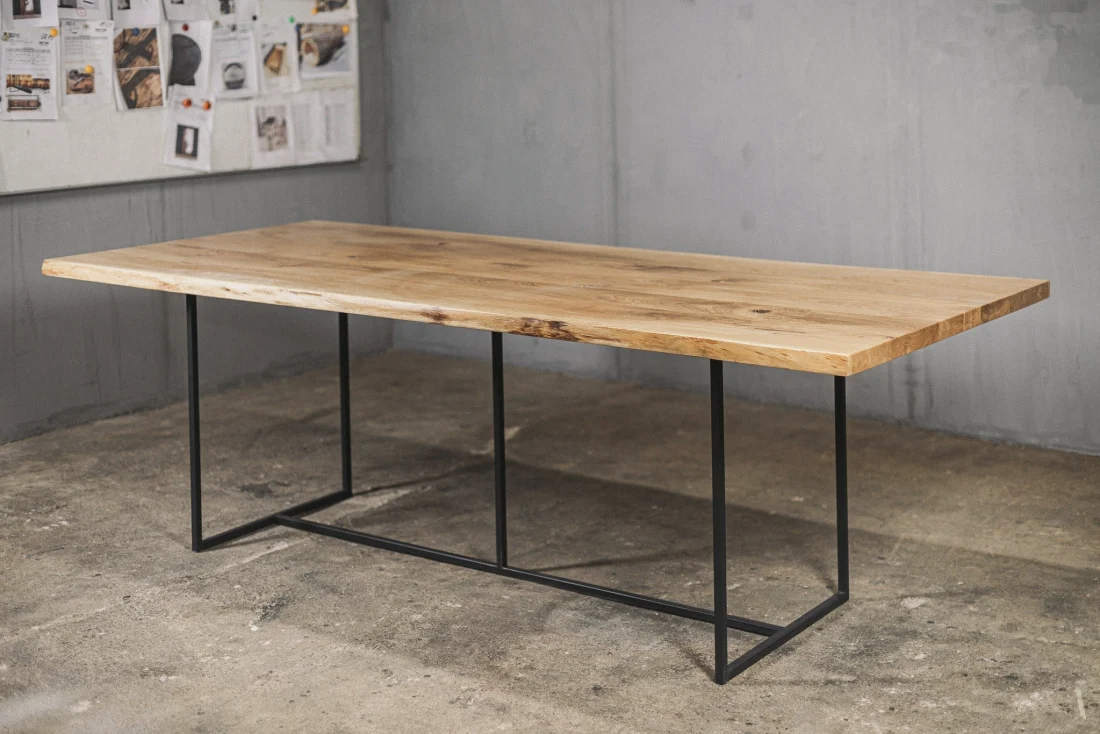
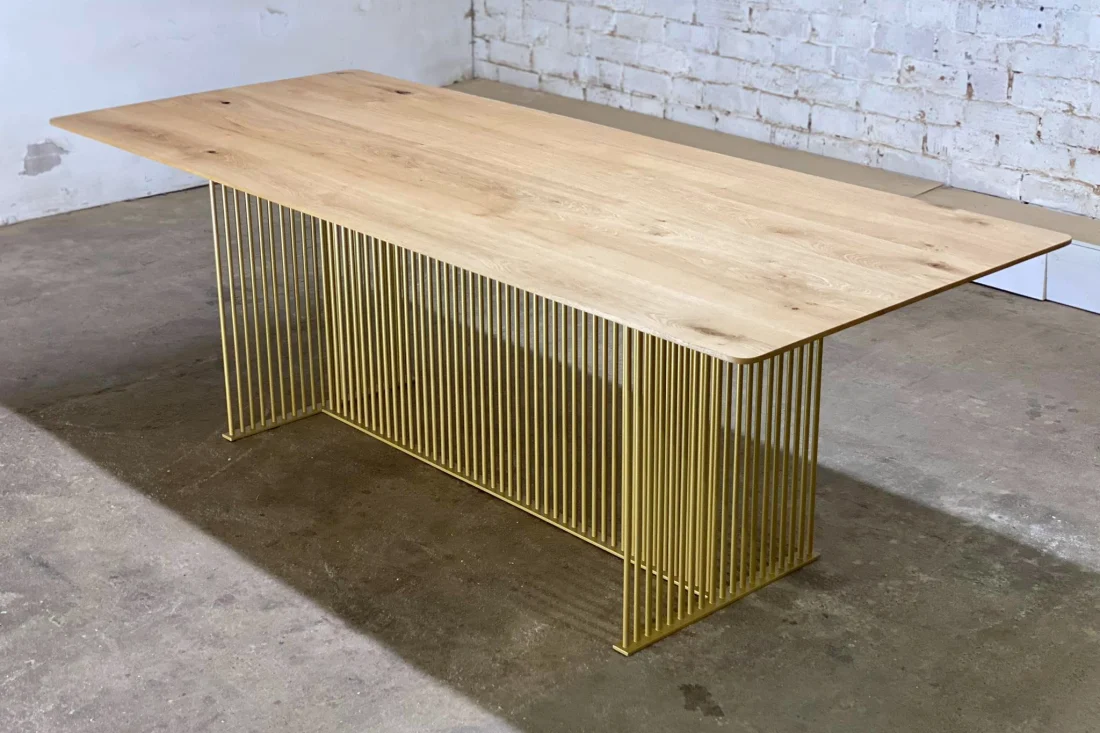
Vienna runs its base the length of the table rather than concentrating it at four points, a continuous screen of thin, gold-toned steel rods standing shoulder to shoulder beneath the oak top, doing the job of a dozen legs with none of the visual weight.
From the end, the table nearly disappears into a row of vertical lines. Two sizes make up the collection, both long, both built around the same rod screen underneath. It suits a room that wants some warmth without much bulk, the brass tone catches light the way a plain black base never would, and the rods leave enough gaps beneath that the base never reads as solid, just present. It pairs naturally with slim dining chairs that will not crowd the rod line below.
Stockholm's base is two black steel loops, interlocked like a chain link scaled up to furniture size, holding the oval top above the floor without a single straight leg anywhere in the construction.
The interlock does the structural work a cross-brace usually handles, just with considerably more visual interest along the way. Two sizes make up the collection, both oval, both sharing the same interlocking base. It photographs unusually well from below, which matters more than it sounds like it should in a room with a glass pendant or open shelving nearby, where the underside of a table actually gets seen. Otherwise, it simply sits quietly under an oval oak top. It suits a dining room already built around a few unexpected details elsewhere.
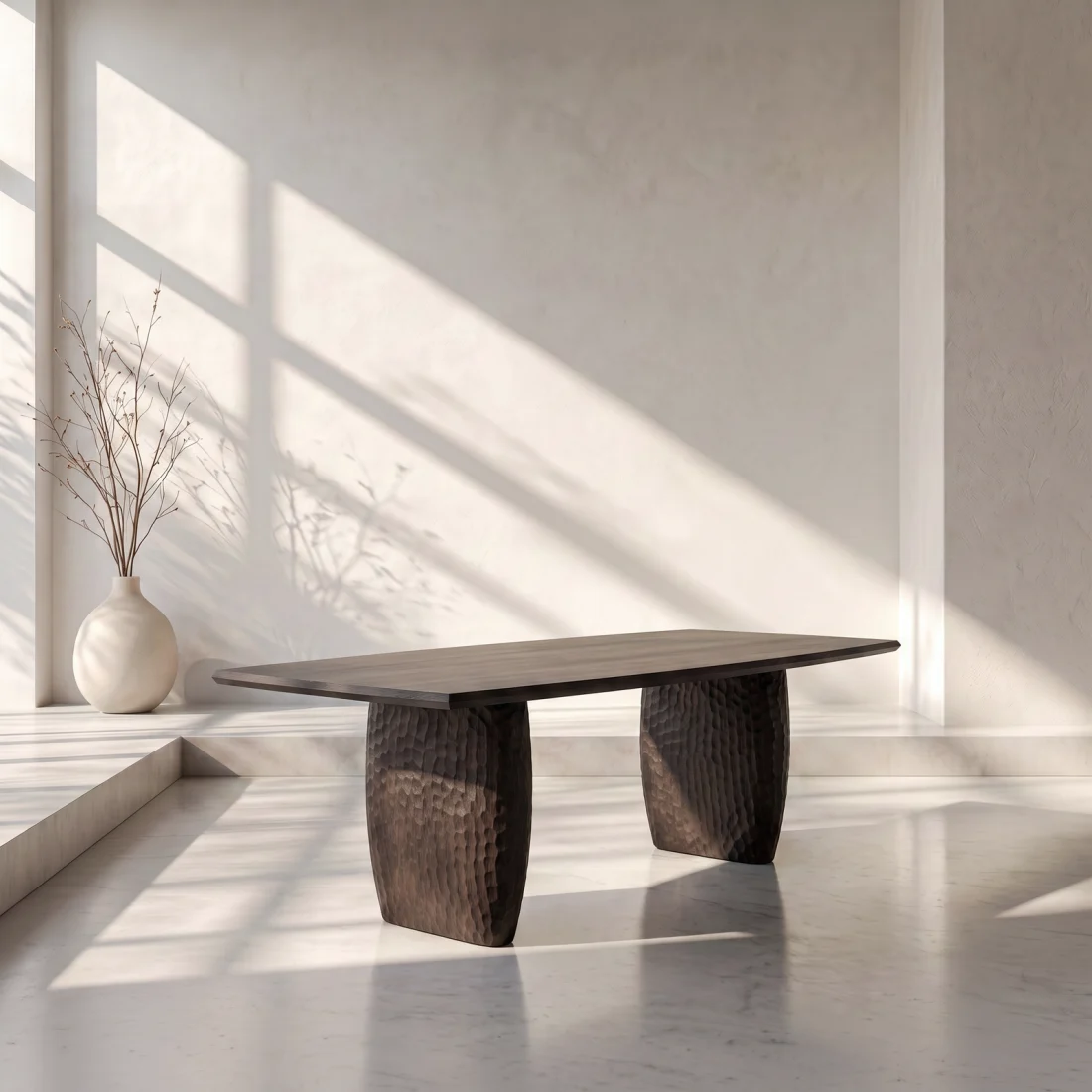
Lucerne sits under dark, close mountains even on its brightest days, and this table borrows that contrast — a deep, dark wood top set into a room full of daylight, with thick, sculpted legs that read almost as carved stone rather than turned wood.
Seven pieces make up the collection, ranging from a long dining table to smaller accent sizes. The wood is worked in heavy, blocky forms rather than slender turned legs, giving each table real visual weight even before anything is set on it. The dark finish stays consistent across sizes, so a smaller side table and the long dining version read as clearly related. Set against a bright room, it becomes the one dark anchor everything else quietly orients around.
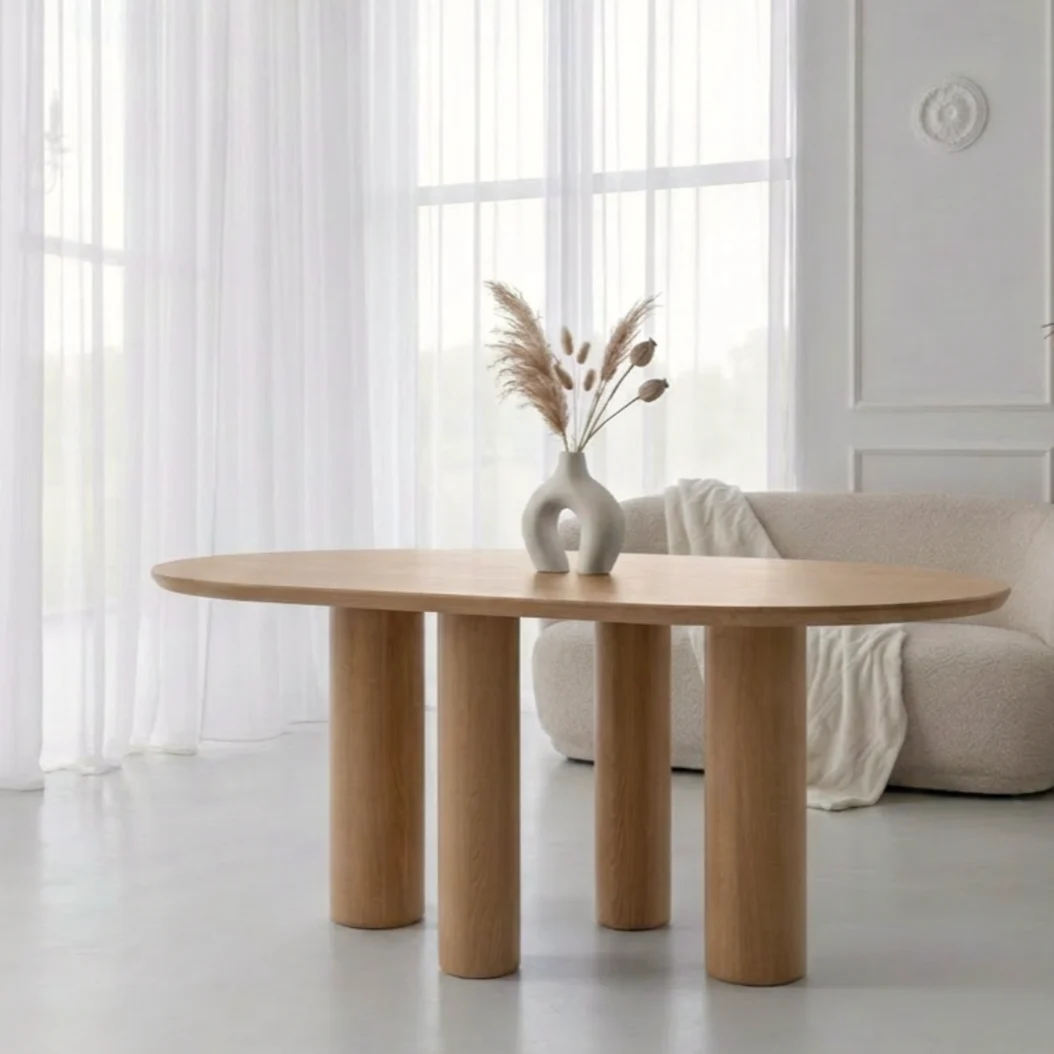
Brussels gave the world Art Nouveau, all sweeping curves pulling straight lines into something softer, and this oval table follows that logic — a long, rounded top in dark walnut-toned wood, held up at each end by a cluster of round wooden legs rather than a single pedestal.
Three sizes make up the collection, the oval shape holding steady while the leg clusters shift proportion to match. The wood is worked into simple cylindrical forms, unadorned beyond the curve itself, letting the shape of the top do the more expressive work. An oval table softens a room's corners the way a round one does but seats more people along its length — practical in the middle of a week, generous on the nights it needs to be.
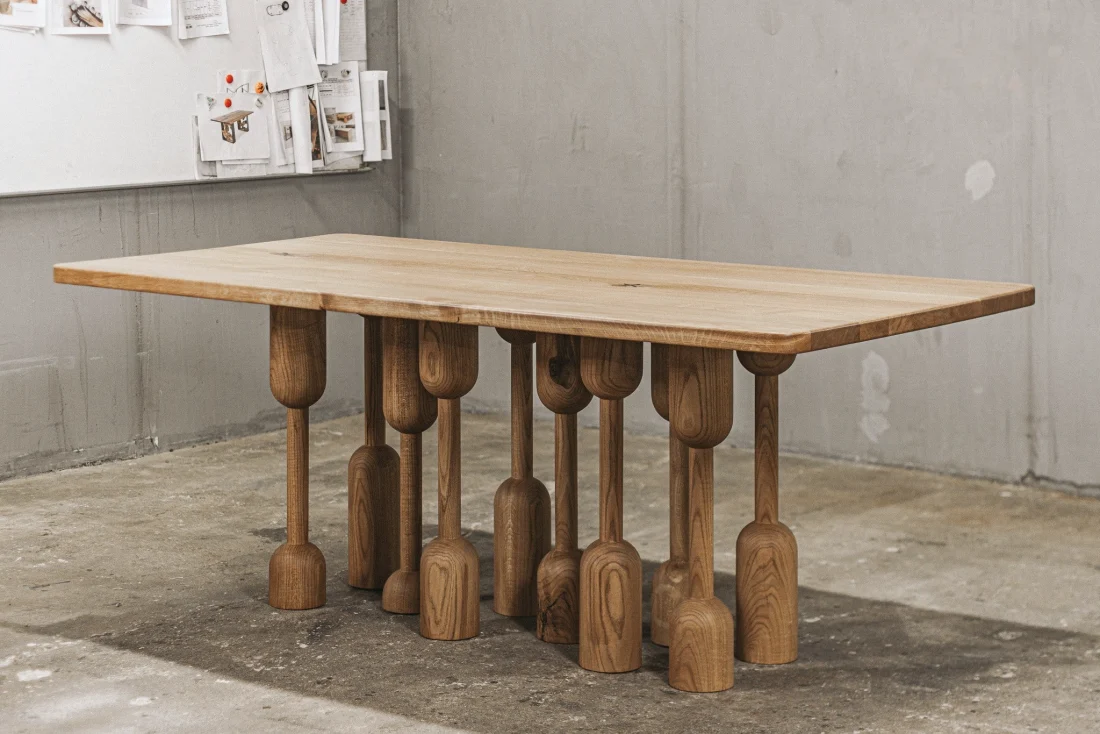
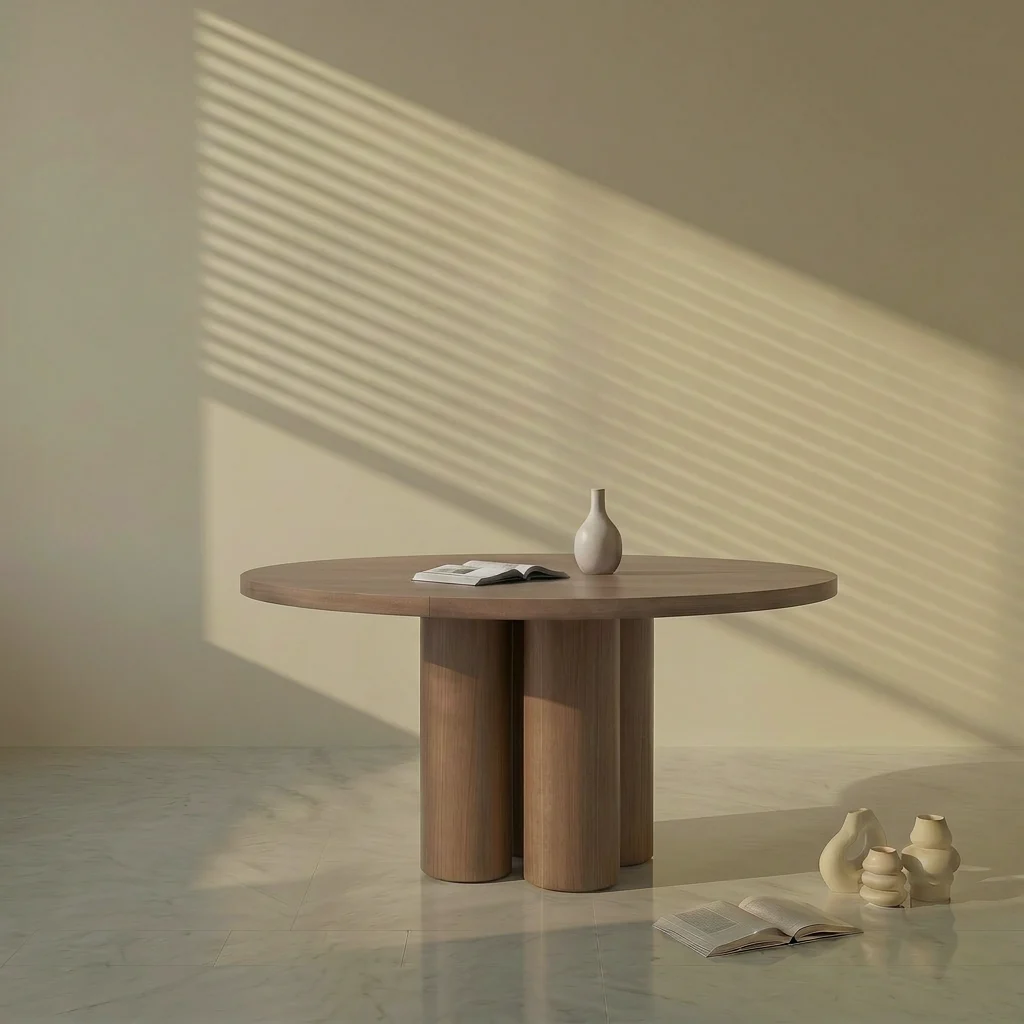
Cambridge built its colleges around round tables and quiet rooms, reading lamps low against the dark — and this dining table keeps that same round, gathering shape.
A wide oak top sits on a cluster of turned oak legs pressed together at the center, more sculpture than pedestal. All ten pieces in the collection share the same solid oak construction and the same clustered-leg base, scaled up or down depending on how many the table needs to seat. The top is left with an open, natural finish, so the grain stays visible under whatever gets set on it. Round tables put everyone within reach of the same conversation — no head of the table, no corner seat, which is rather the point of building one this way.
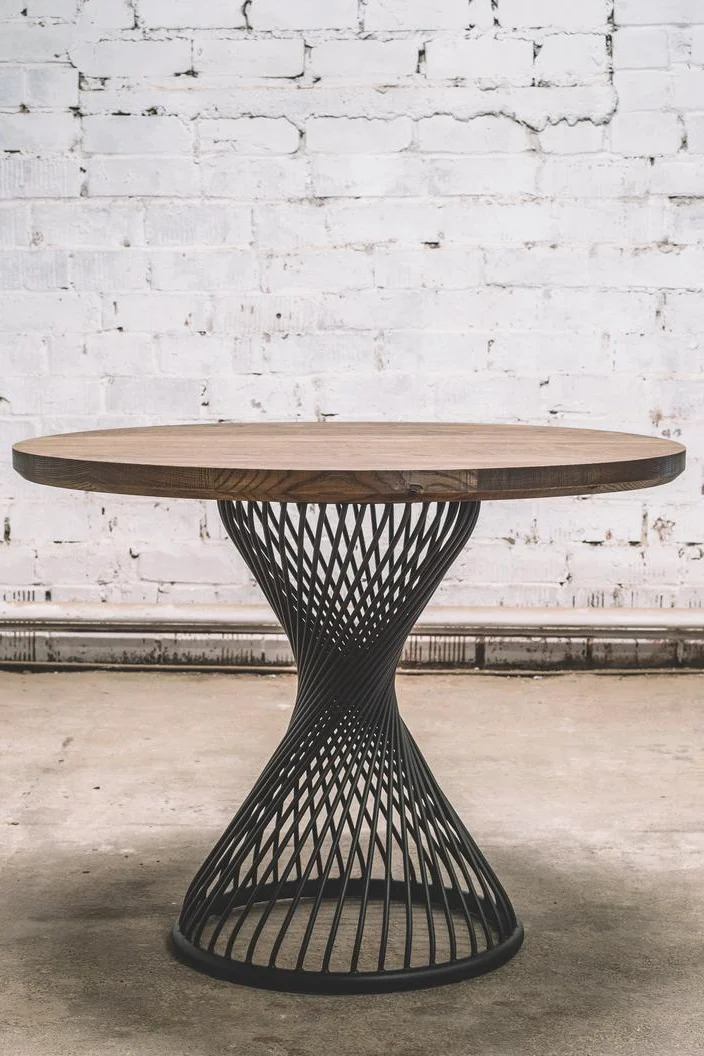
Granada's base twists rather than stands straight, a cone of black steel wire spiraling from a wide foot up to a narrow neck under the round tabletop, like rope wound tight rather than a conventional pedestal.
The spiral catches shadow in a way a solid base never could manage. Two sizes make up the collection, both round, both sharing the same spiraled-wire base at a different scale. It works best lit from the side rather than straight overhead, so the twist in the base actually shows instead of flattening into one dark shape. Around it, chairs sit close, since there is no wide pedestal foot to work seating around. It suits a corner with a window nearby more than a windowless interior room.
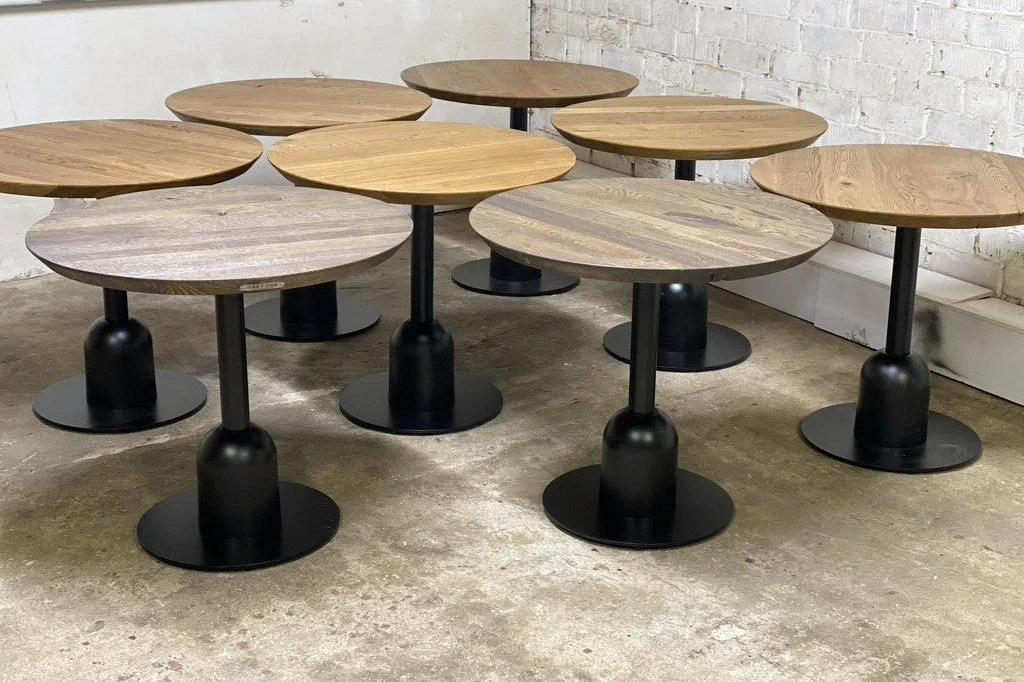
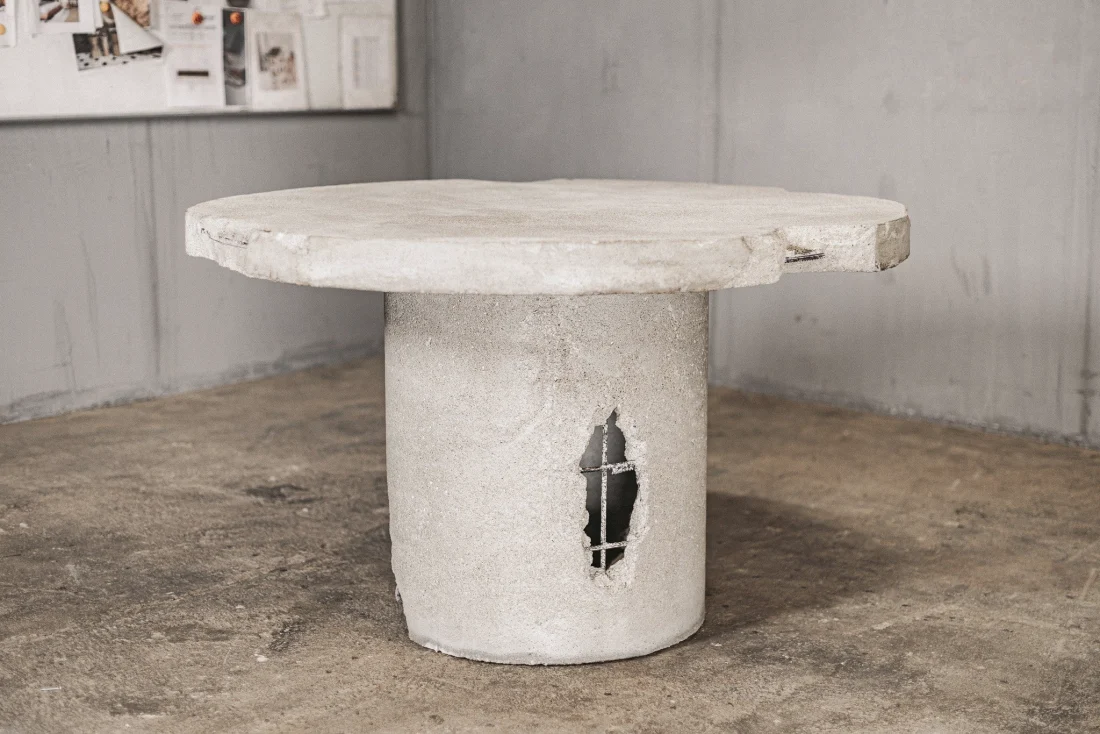
Orvieto's base is cast, not built, a round concrete drum left with the honest surface texture of the mold, holding up a plain oak top above it.
It is the one collection in this group where the load-bearing element is not wood or steel but something poured and cured, and it carries a different kind of weight because of that, literally and visually. Three sizes make up the collection, small enough in every case to work as a bistro-style table rather than a full dining setup. It suits a sunroom or a covered patio as easily as an indoor dining spot, since the concrete does not mind the humidity that would eventually trouble a plain oak top left outdoors. The rough cast surface also forgives water rings better than a sealed wood top would.
Aarhus helped build Denmark's reputation for furniture that does less rather than more, and this table follows that discipline exactly — a light, straight-grained oak top with softly rounded corners, set on four simple, tapered round legs and nothing else.
Two sizes make up the collection, both built from the same pale, natural oak, left with an open finish so the grain stays visible and slightly rough to the touch. There is no skirt, no stretcher, no visible joinery beyond the leg meeting the top — the reduction is deliberate, not an oversight. In a bright room it nearly disappears into the light around it, which is exactly the kind of table that lets whatever surrounds it — chairs, a rug, a view — do the talking instead.
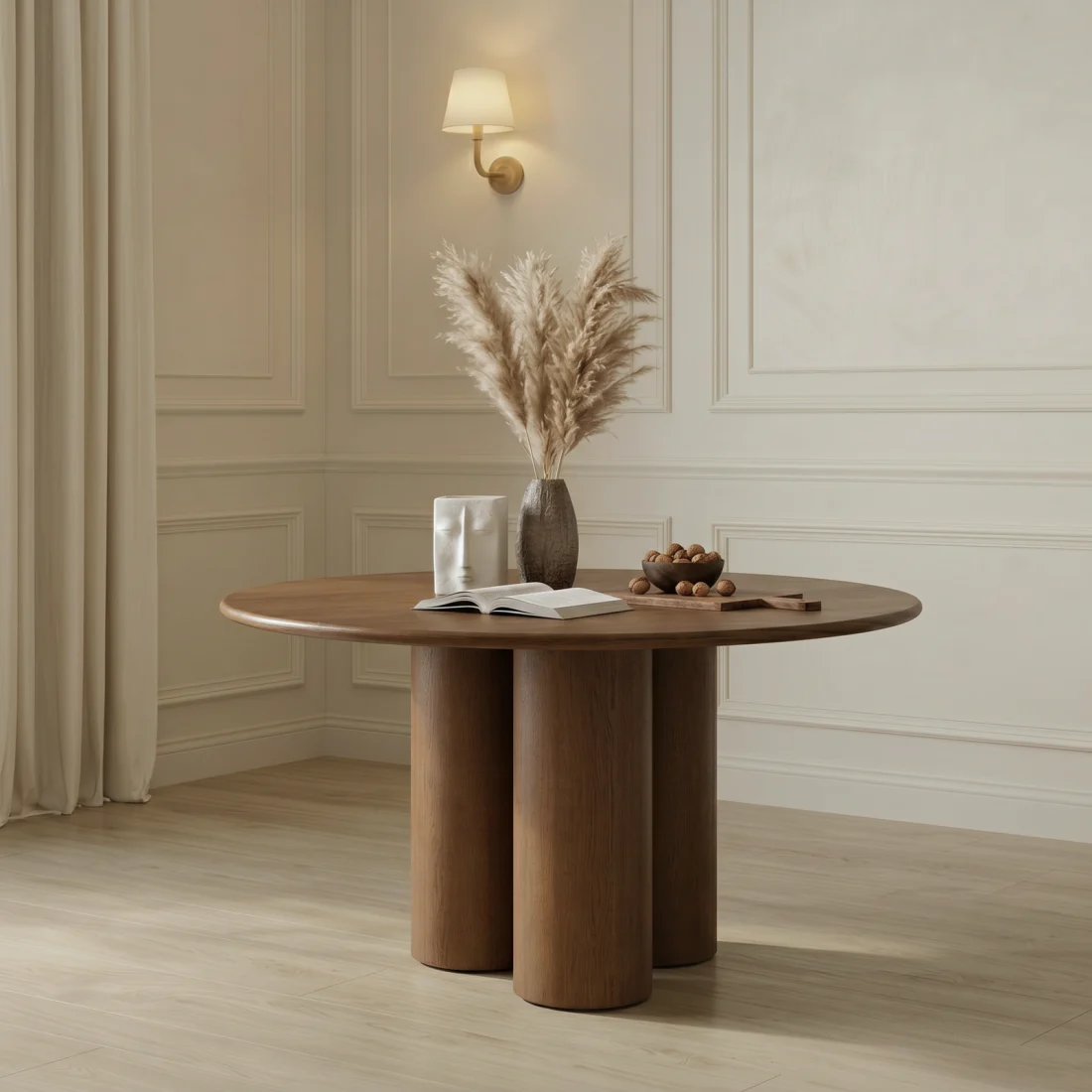
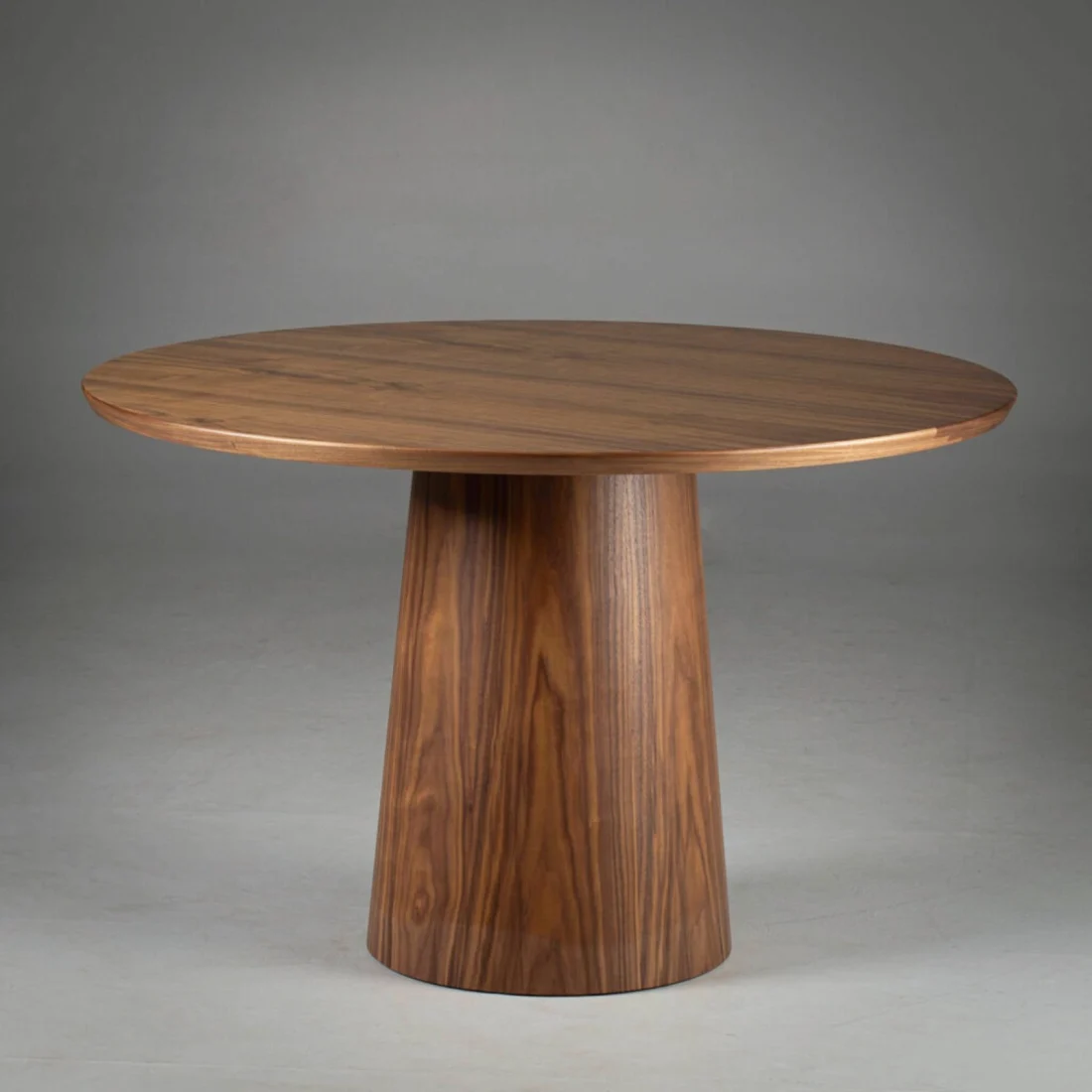
Parma is known for things built in careful, rounded wheels — and this table's base has the same logic, a solid cone of dark walnut-toned wood rising to meet a wide round top, one continuous, tapering form rather than a set of legs.
Both sizes in the collection share the construction: a single turned pedestal, wide at the floor and narrowing toward the underside of the top, in a dark wood finish that reads almost black in low light. There is nothing to assemble beyond top and base — the whole design rests on getting that one taper right. A pedestal table like this clears the floor beneath it entirely, which matters more than it sounds like in a smaller dining space where chair legs need somewhere to go.