 239 444 7833239 444 7833
116 pieces across 27 collections. Solid European oak, built to order in 10–16 weeks.
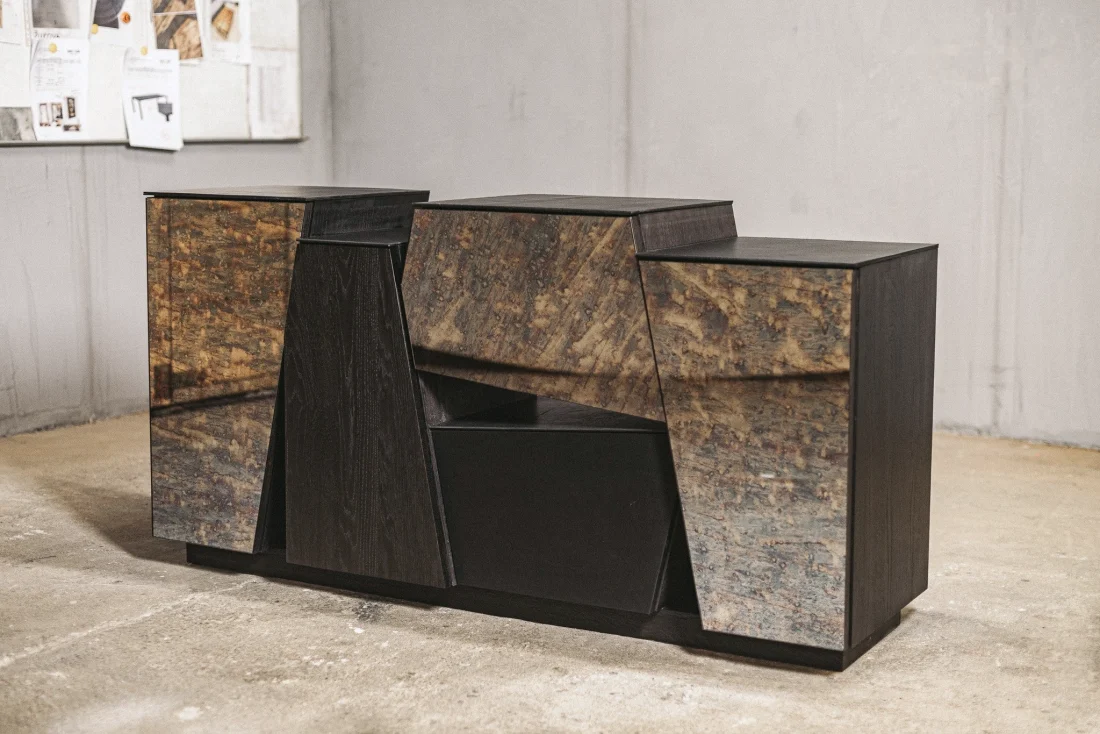
Tile facades in shifting patterns cover half the buildings in this city, and this cabinet borrows that patchwork logic in wood instead of ceramic: mismatched oak tones, walnut and antique and natural side by side, joined into a single frame where no two sections match.
A gold-toned metal base or black steel frame carries the weight underneath. No two pieces in the collection repeat the same arrangement of tones — the wood is reclaimed and sorted by hand, so the pattern stays genuinely unrepeatable rather than printed to look that way. It works as the one loud piece in an otherwise quiet room, the kind of cabinet a guest asks about before asking about anything else. No description quite prepares a visitor for the actual mix of tones up close, which is rather the intent.
Nothing on this cabinet asks to be noticed, and that is the entire design brief.
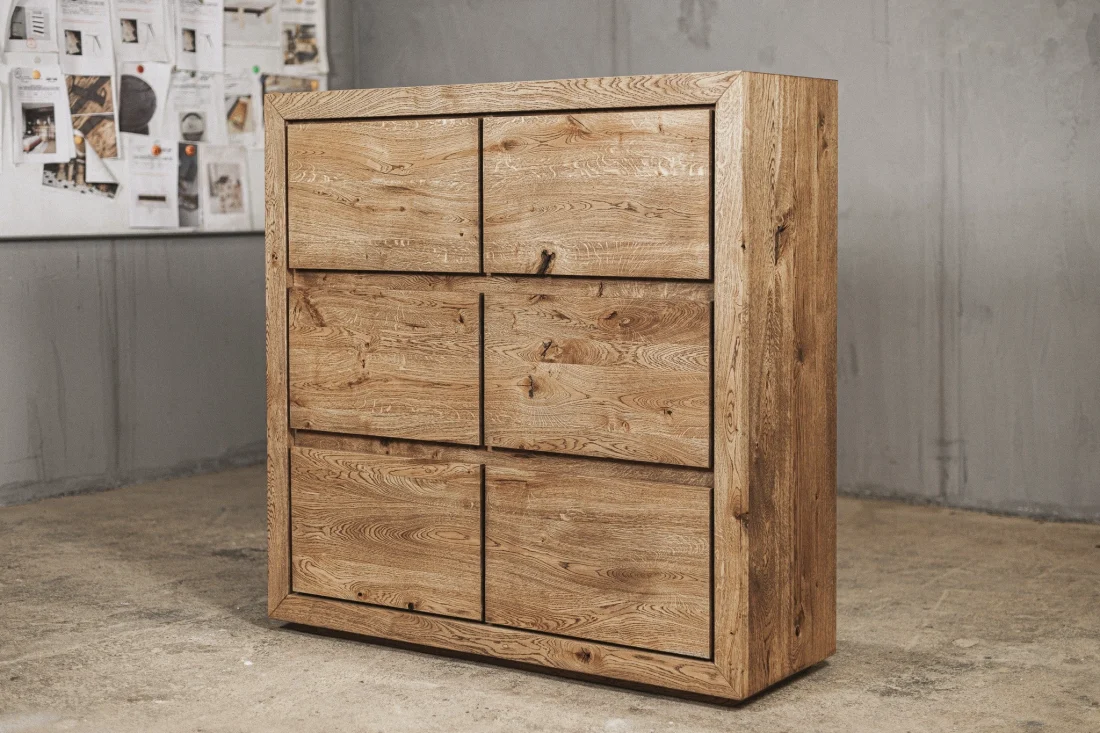
Flat door fronts run edge to edge in a muted black or walnut-toned oak, no visible hardware, no molding, no transition between drawer and door beyond a thin reveal line. A leather-wrapped drawer front appears on one version, oak veneer on another, but the silhouette never changes. It is a tall, narrow piece more than a wide one, built for a hallway or a bedroom corner rather than a main wall. In a room with more decorated furniture around it, this is the piece that lets everything else be the point — which, done well, is its own kind of statement. A room built entirely around restraint needs exactly one piece like this to prove the restraint was intentional.
Marble quarries gave this piece its name and its top: a slab of natural white stone, thick enough to read as solid rather than veneered, set over a cabinet of dark oak.
Two basins can be cut into the stone side by side, plumbing routed through black steel legs that keep the whole cabinet floating just off the floor. The drawers below run wide and shallow, sized for the flat clutter of a bathroom rather than deep storage. Dark wood under white stone is an old contrast, and it still works here — the cabinet recedes, the stone catches every bit of light in the room, and the whole vanity looks lighter than its weight. It suits a primary bathroom built around two people getting ready at once rather than one person passing through.
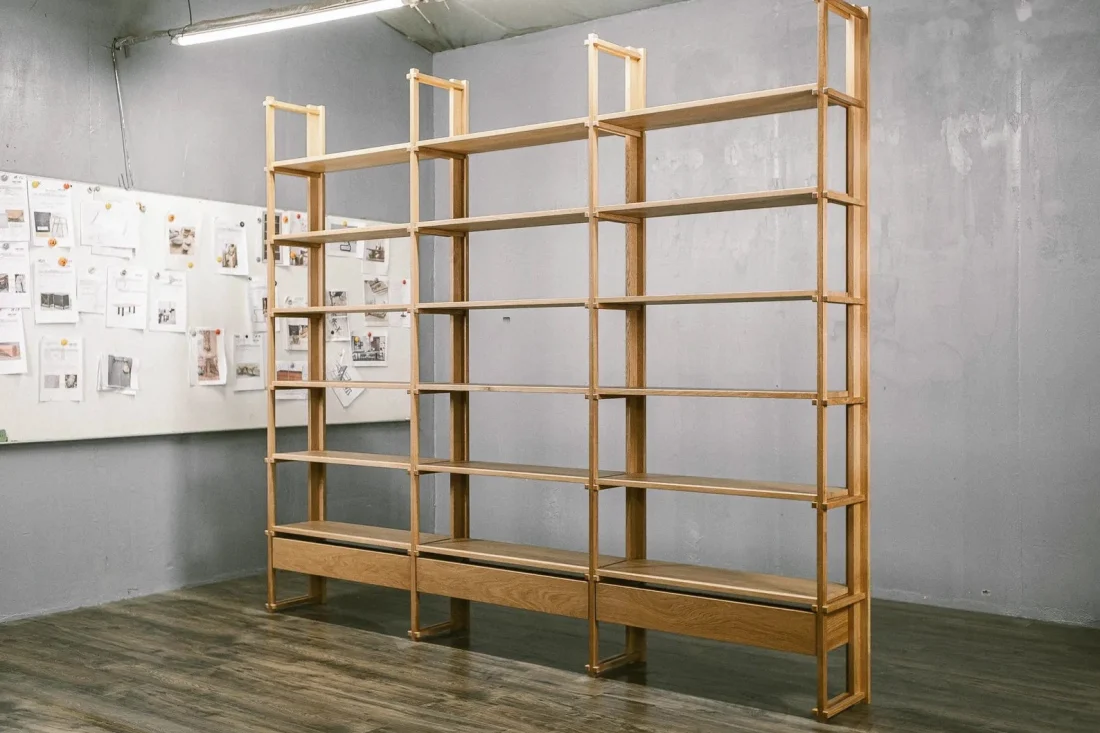
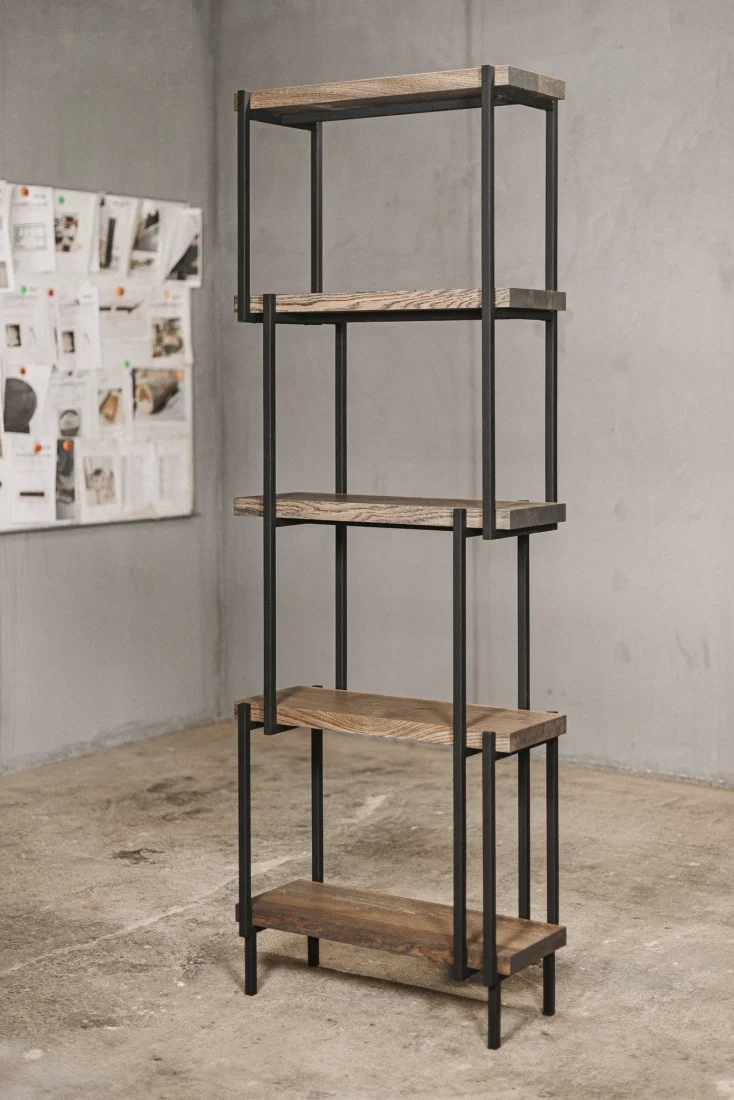
Mayfair's townhouses climb straight up in narrow, elegant rows, tall sash windows stacked floor over floor, and this shelving collection borrows that verticality outright.
Built mostly from solid oak, with select pieces framed in dark steel, the units rise well past head height on slim, ladder-like uprights, open shelves running the full span. The oak is left natural in most pieces, pale and straight-grained, occasionally shifting to a walnut tone with a black steel edge for contrast. Nothing about the construction hides itself — the joinery between shelf and upright is visible by design, the whole thing reading as structure first, storage second. Against a tall wall, one of these fills the height a room actually has rather than stopping short of it.
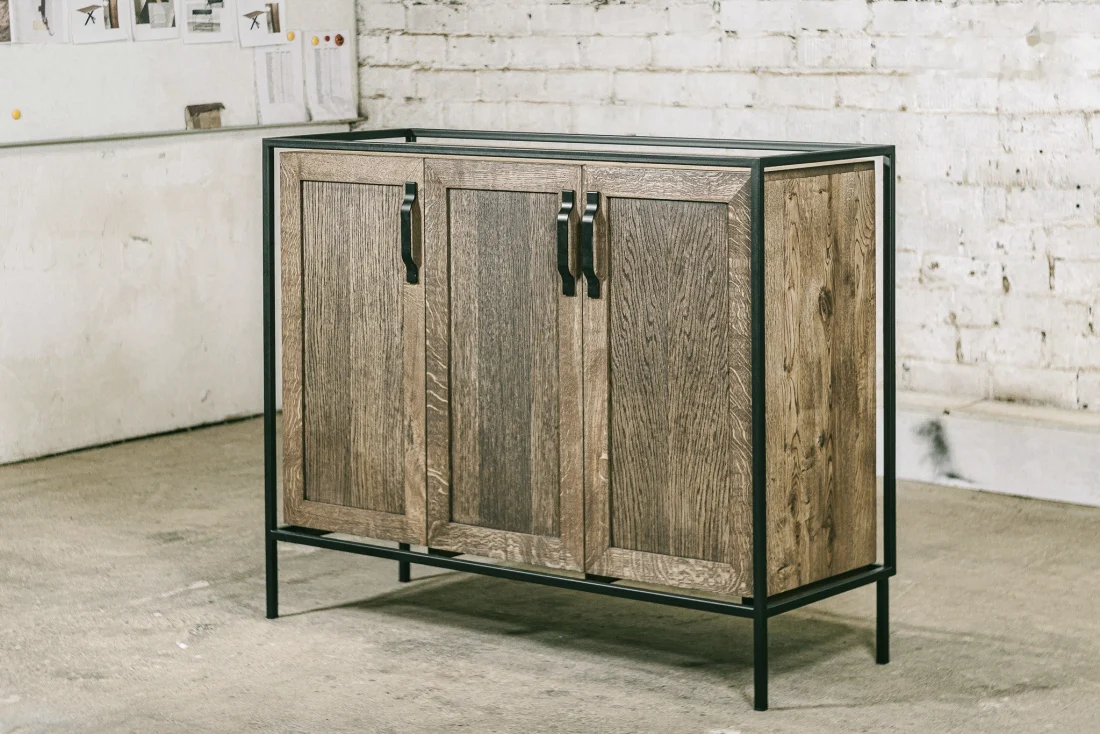
Farmhouse kitchens in old stone villages keep their storage simple — plank doors, visible joinery, wood left close to its natural state — and this sideboard follows the same brief.
Solid oak runs the full length in a natural or lightly oiled finish, knots and grain left uncovered rather than sanded flat, doors built as single wide planks rather than paneled fronts. Tapered legs keep the whole piece light on its feet despite the length. It suits a dining room that wants storage without polish — plates and linens behind plain doors, nothing lacquered, nothing hiding what the wood actually looks like. It ages the way a farmhouse table does: a little more honest every year. Open it up and the interior is finished as plainly as the outside, no lining, no gloss, just more oak.
Coastal light does something particular to a room — it flattens shadows and warms every pale surface — and this console is built in a natural oak that catches exactly that kind of light.
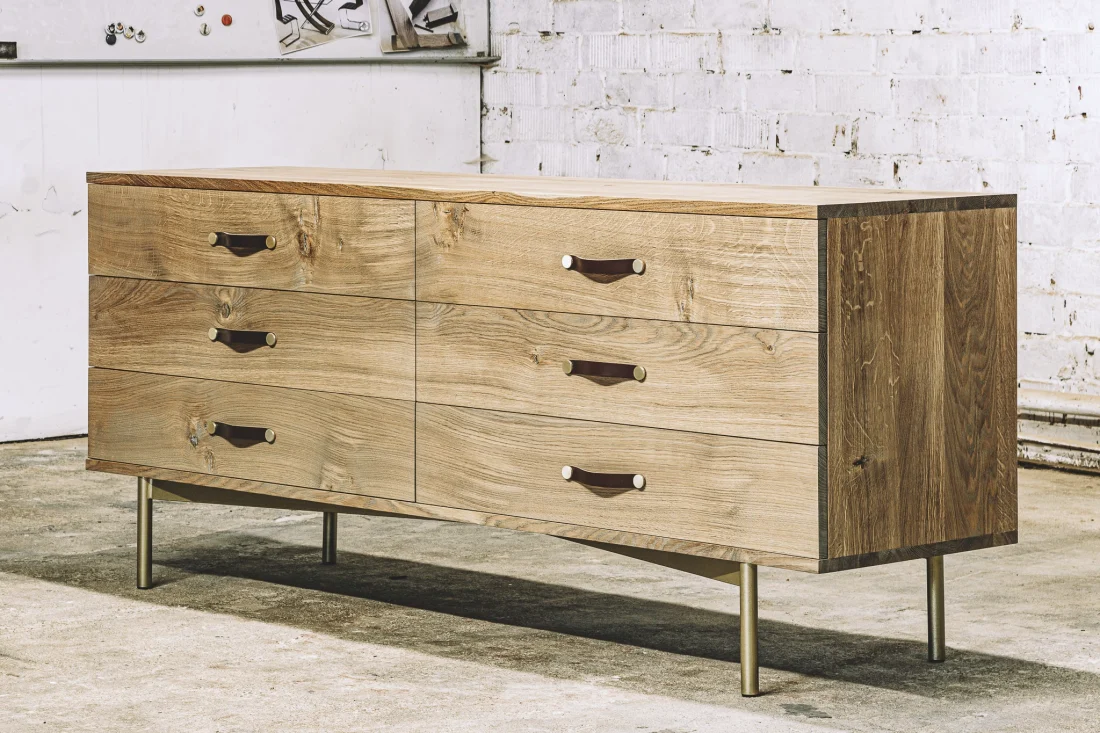
The piece runs long and low, drawers flush across the front, resting on slim black metal legs that keep the visual weight near the floor. A version with a mirrored panel is available for entryways that want to bounce the light further into a room. Otherwise the design stays plain on purpose: no hardware to catch dust, no carved detail to interrupt the run of grain. It reads as the kind of piece that disappears under whatever is hung on the wall above it, which is exactly its job.
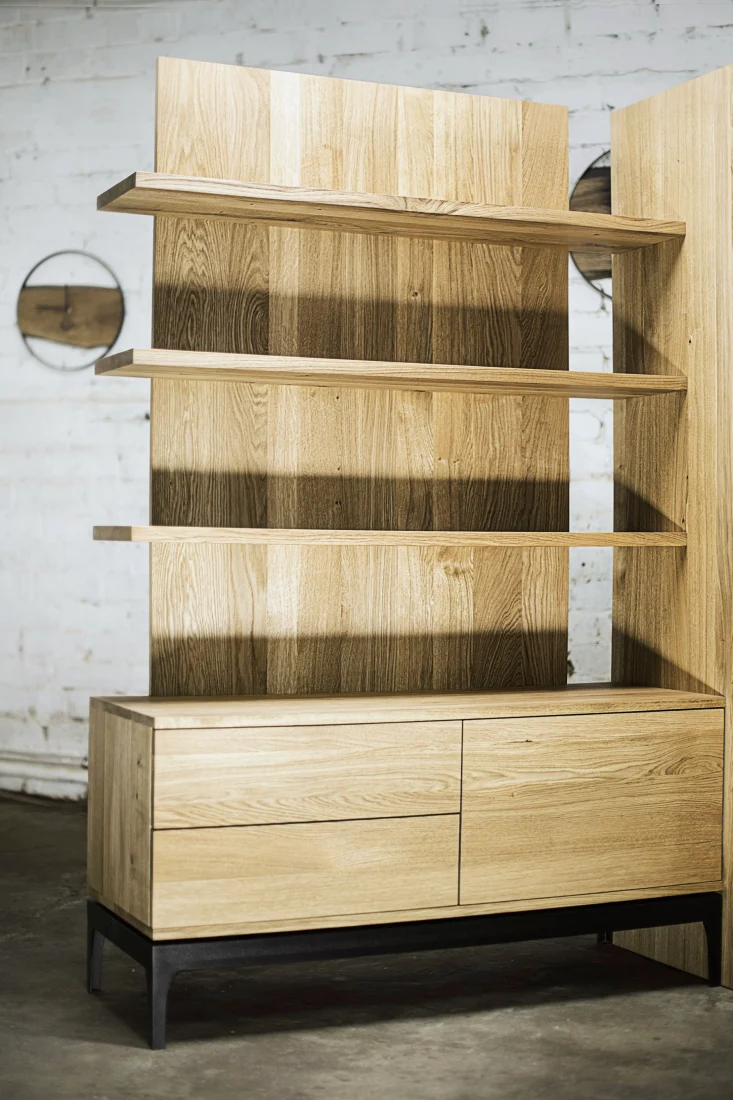
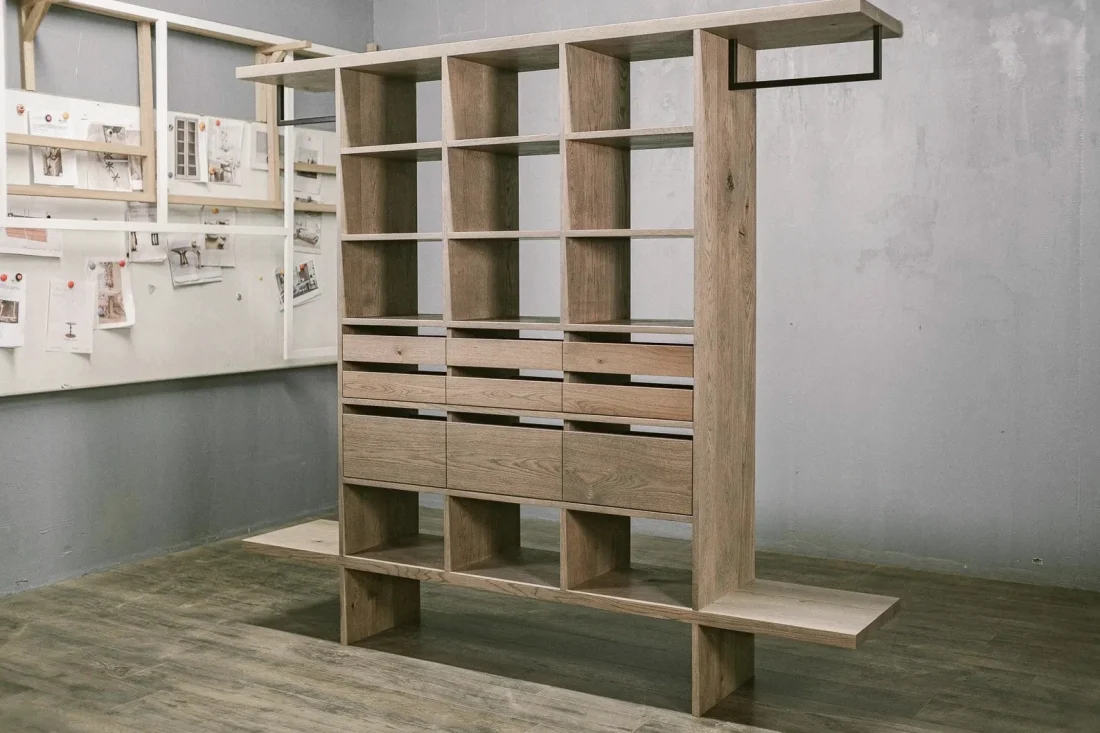
Phoenix takes its name from something that rises renewed out of what came before, and this wardrobe unit has that same open, rebuilt quality — a tall structure of oak compartments and shelving, deliberately left without doors, so the geometry of the piece is visible from every side.
It stands as a single large piece, built from natural oak throughout, with an angled shelf breaking the grid partway up and open bays running the rest of the height. Used as a room divider, it reads the same from either side, which is not true of most storage this tall. Set between two spaces, it separates a room without closing it off — light and conversation still move straight through the openings.
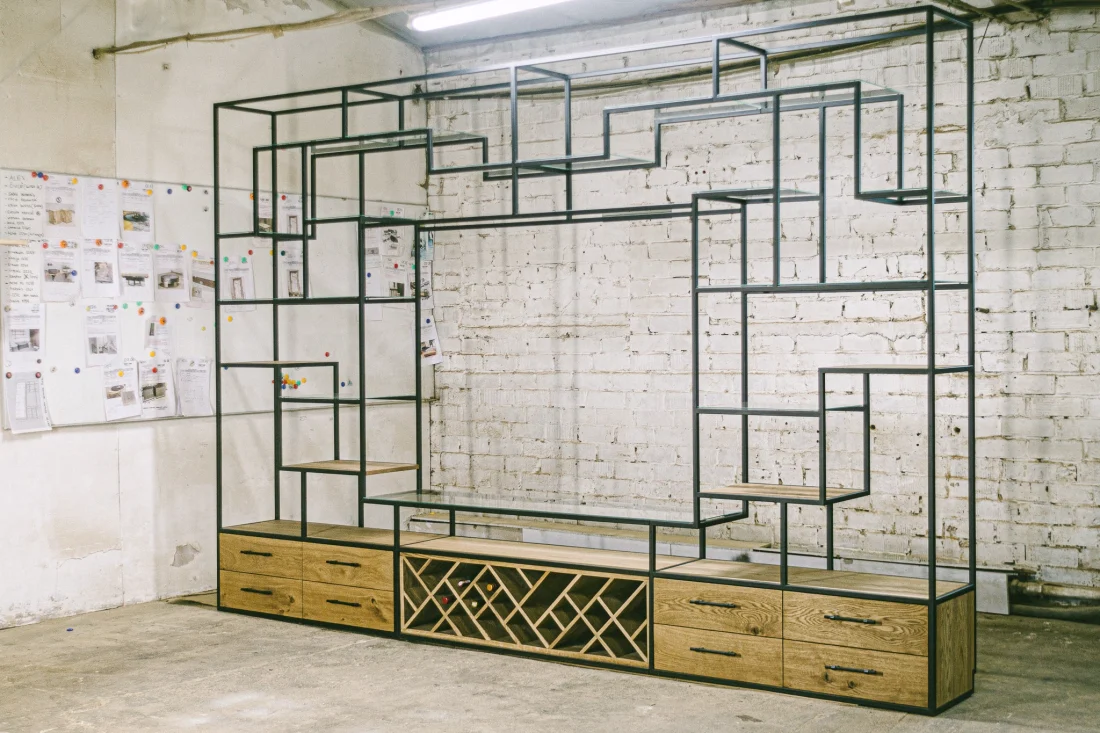
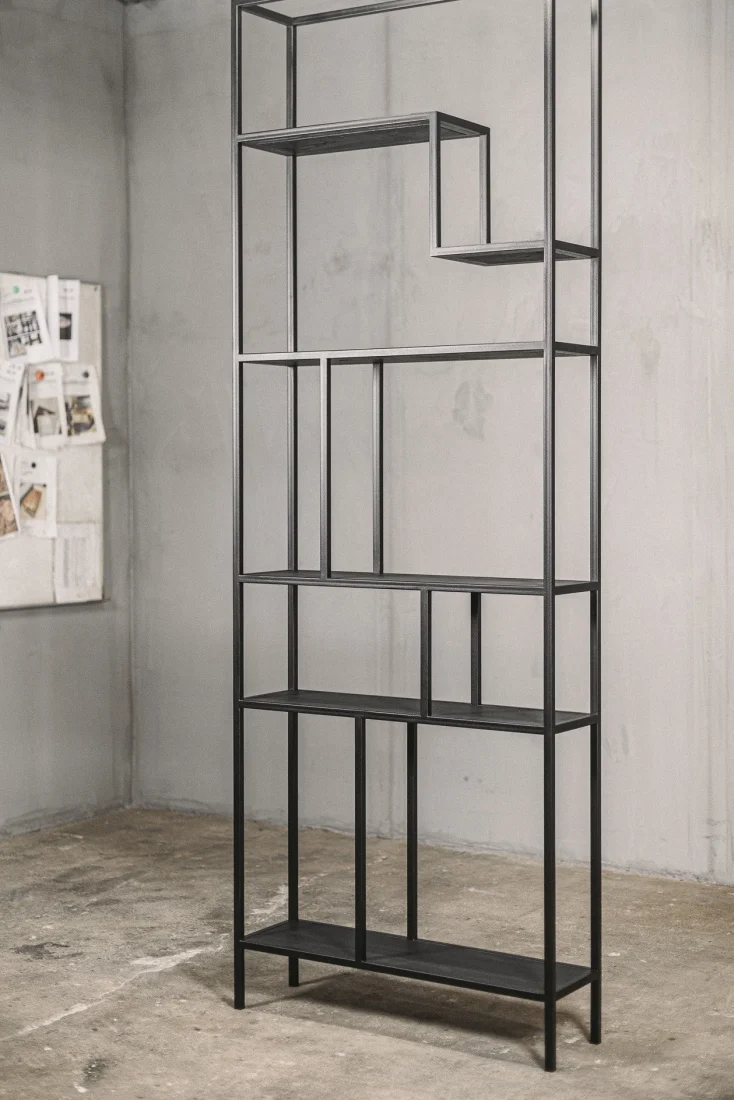
Tribeca's lofts were built as factories first, all exposed steel columns and grid windows, before anyone thought to live in them — and this shelving system keeps that raw, structural logic.
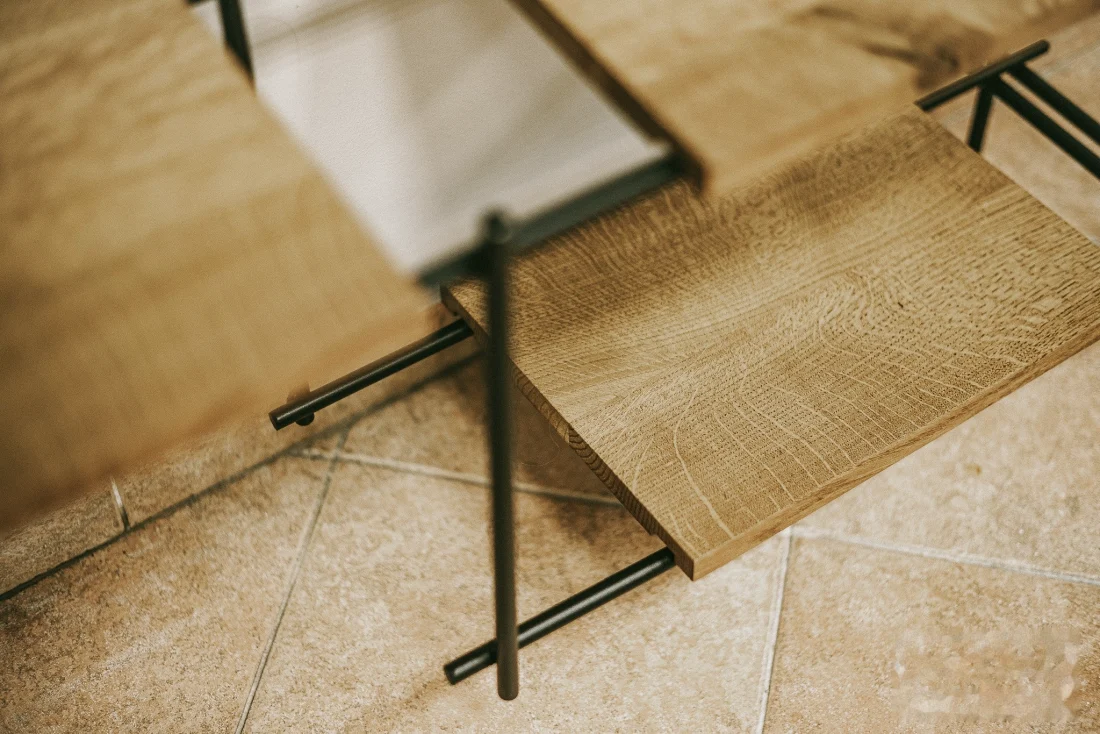
A tall black steel frame branches into an almost maze-like arrangement of verticals and horizontals, with oak shelves, drawers, and in some configurations glass and LED lighting set into the openings. Across the eight pieces, the steel grid is the constant; what fills it changes — a run of oak drawers along the base, a lit glass niche partway up, open bays elsewhere. Natural oak plays against black steel throughout, never fighting for the same attention. It suits a room that wants one dominant, sculptural object rather than a wall of matched furniture.
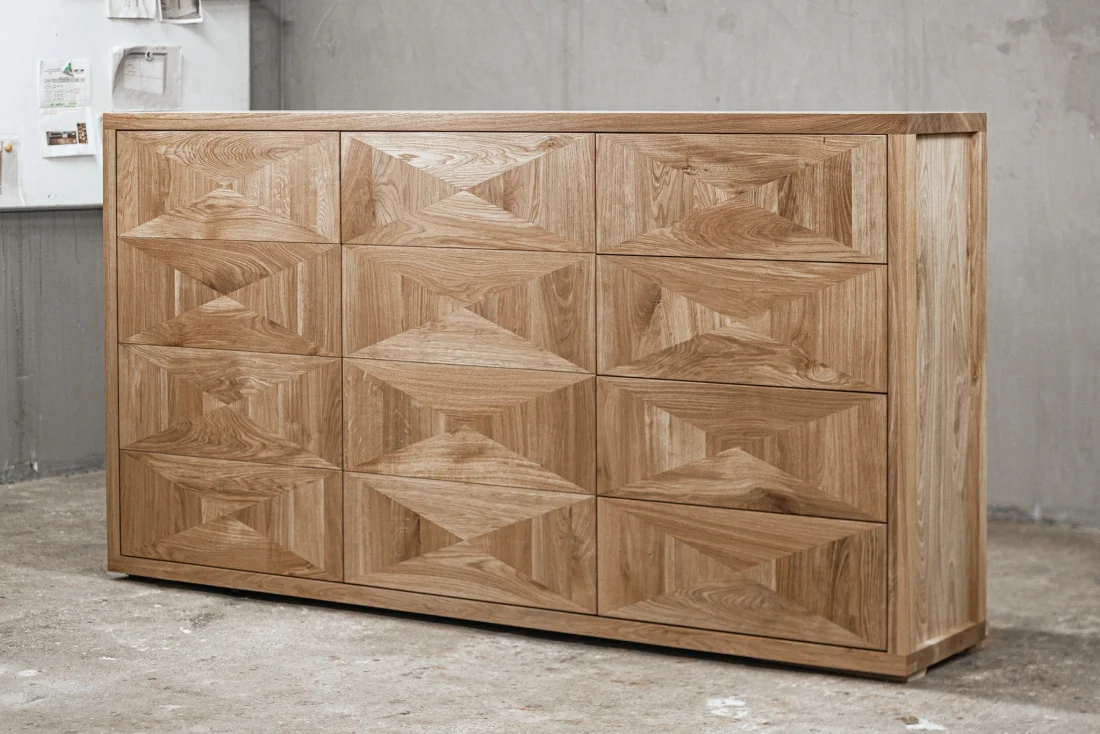
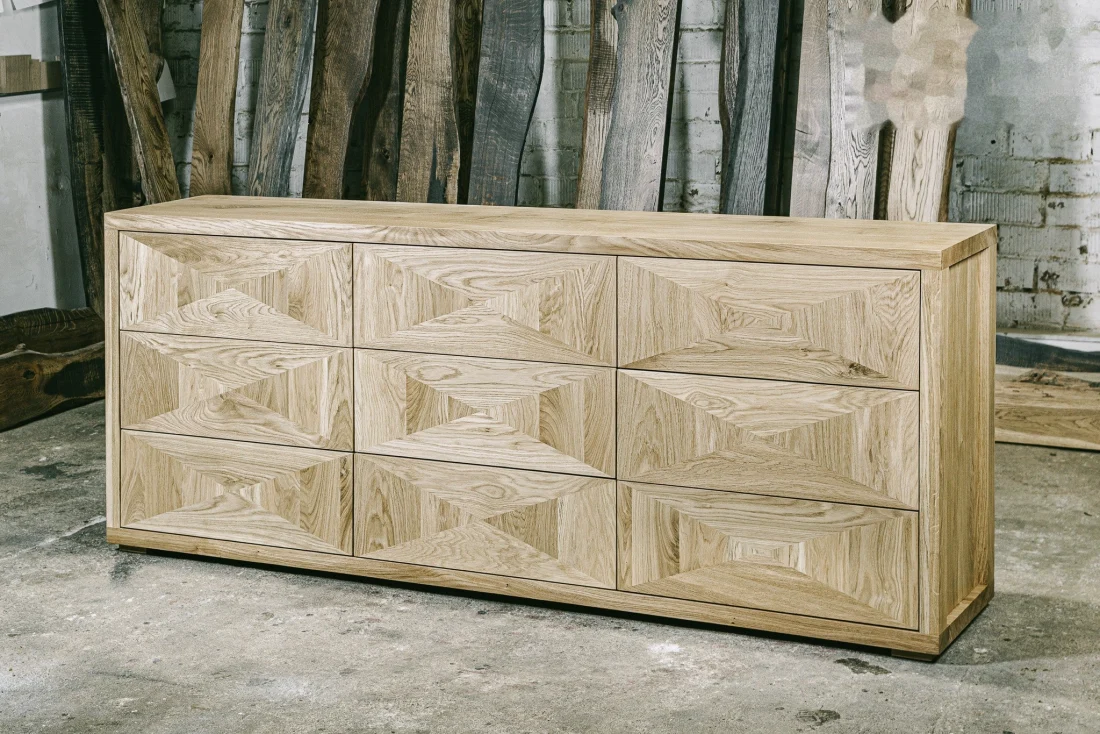
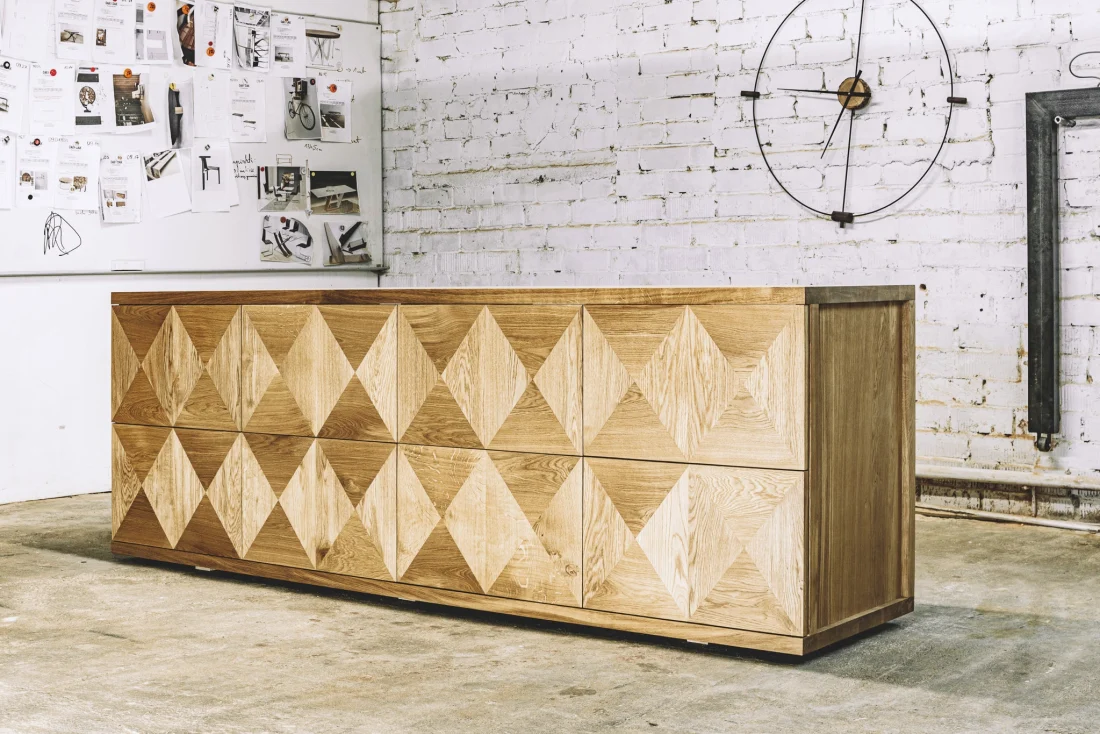
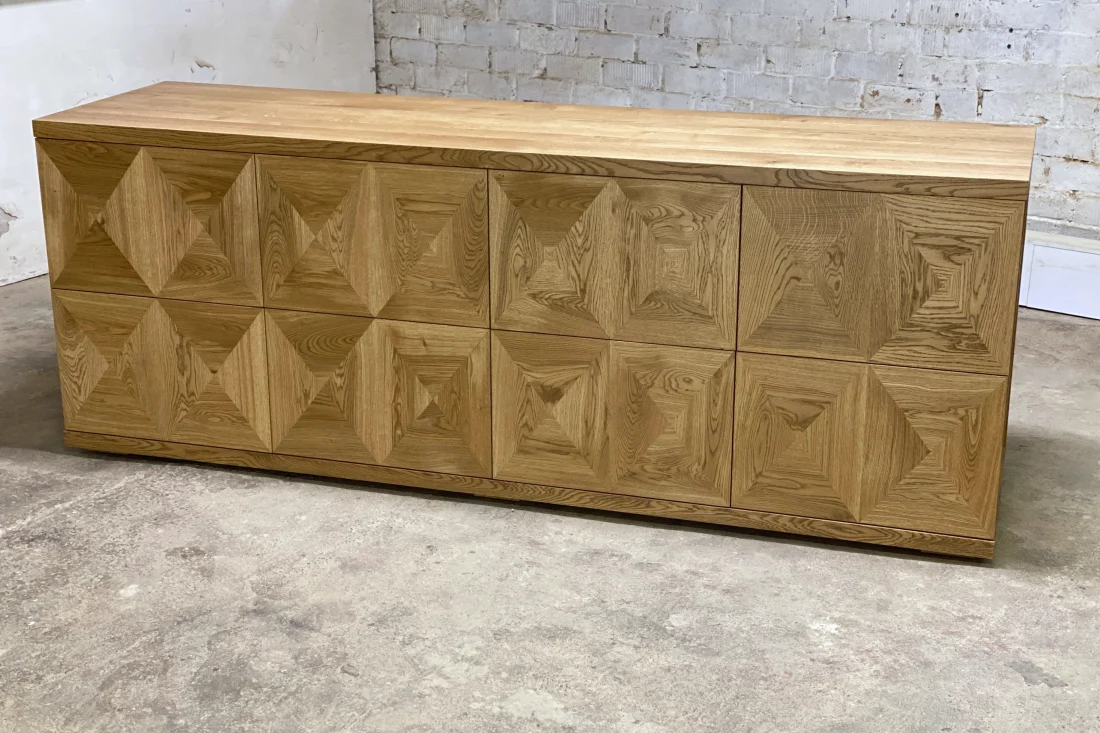
Moorish tilework across this city runs in tight repeating geometry, and this cabinet carves the same idea straight into solid oak: every door front cut into a grid of raised diamond facets, each one catching light from a slightly different angle.
The effect reads almost woven from a distance, more textile than woodwork, until you run a hand across it and feel the carving. Finishes range from a light natural oak to a near-black stain, with metal handles set flush into the pattern rather than breaking it. It works as the one carved piece in a room otherwise kept plain — the geometry does not need a matching table or chair to make its case. Passing a hand across the facets in low light is the best way to notice how deep the carving actually runs.
Cape Cod towns keep their houses pale against gray shingle and bright sky, and this cabinet takes that same light natural oak and sets it on a recessed black base, so the whole piece appears to float a few inches off the floor.
Panelled doors run flush across the front, the wood grain running horizontal and unbroken. A walnut-toned version with a black metal frame is also built for rooms that want more contrast. Either way, the recessed base is the trick: shadow under the cabinet reads as a gap, and a heavy piece of furniture ends up looking like it is barely touching the ground. It suits an entryway or a media wall equally well. Either placement lets the recessed base do its quiet trick of making a solid cabinet look barely there.
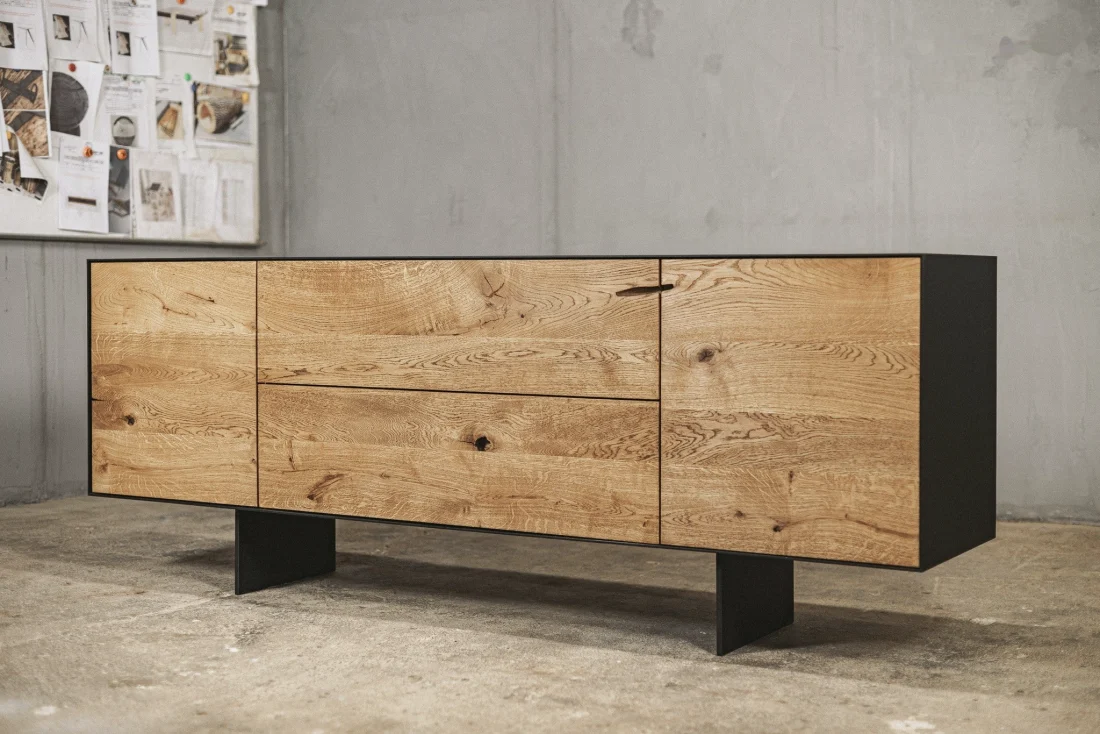
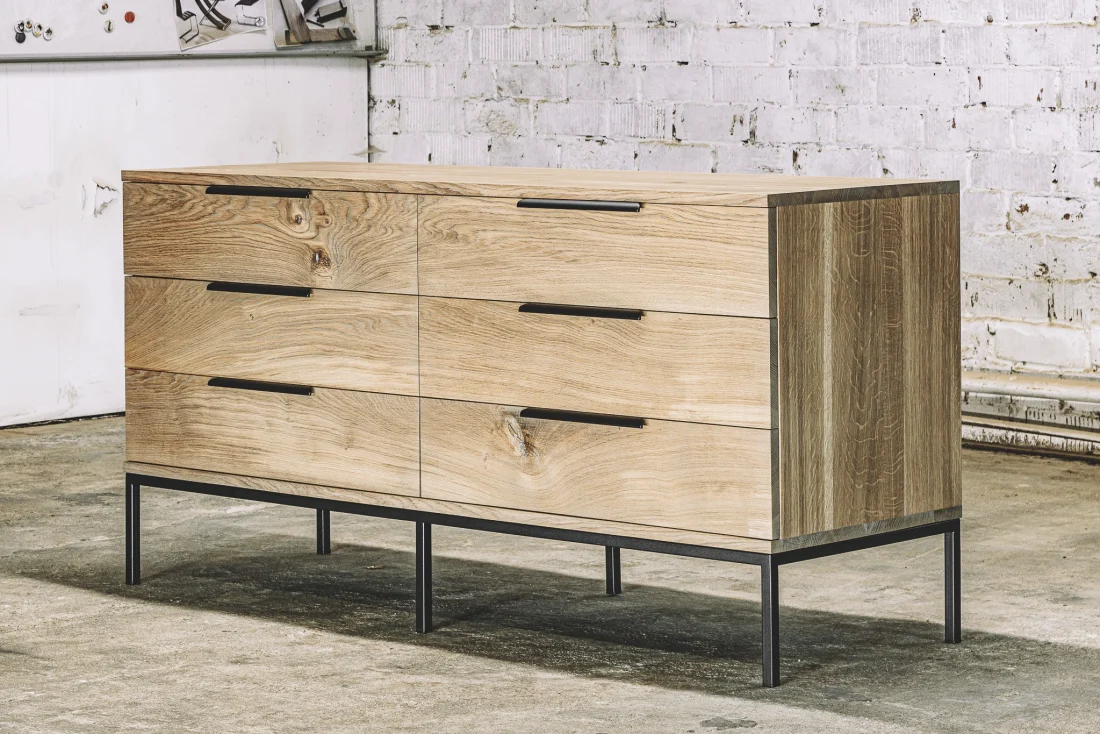
Long Island beach towns keep their houses clean-lined and their furniture cleaner, and this sideboard follows that instinct: a long run of natural oak, drawer fronts flush with no visible pulls, resting on a black steel plinth that lifts the whole piece just off the floor.
A silver-toned oak finish is also available for a cooler room. The plinth base is doing more than looks — it keeps the piece from reading as heavy despite the length, and makes the floor beneath it easy to sweep. In a dining room or a long hallway, it holds linens or serving pieces without announcing itself as storage. The grain is the only decoration it needs. Set against a long dining wall, it holds serving pieces without ever competing with whatever is happening at the table.
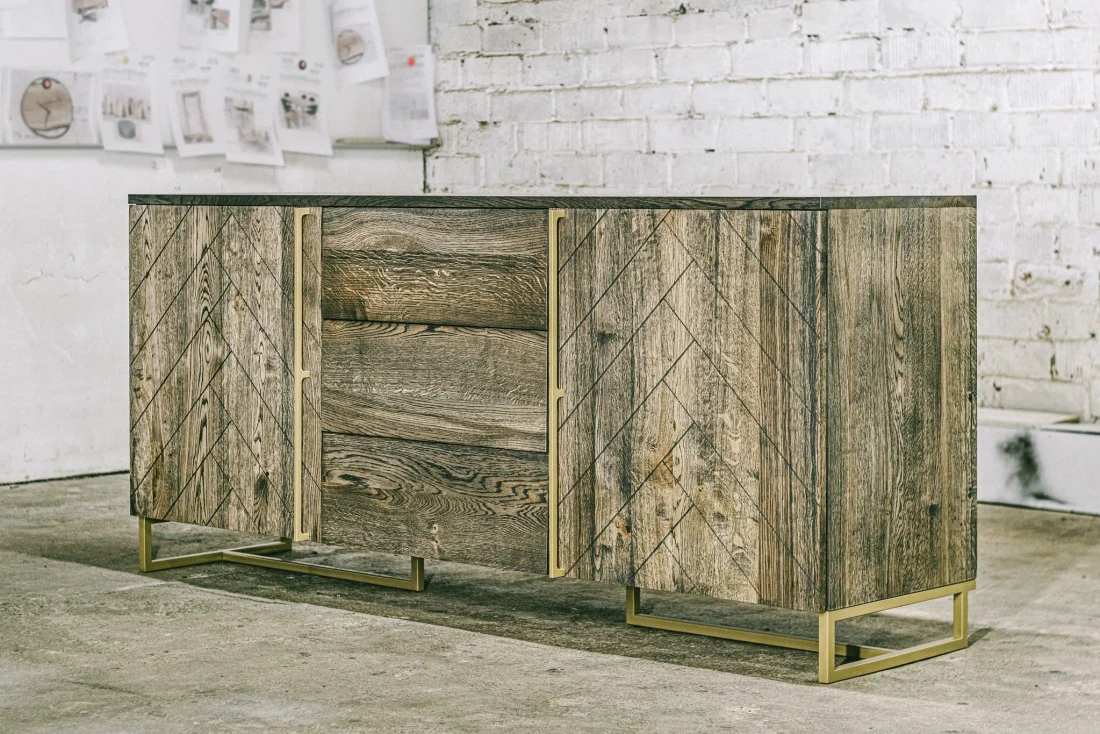
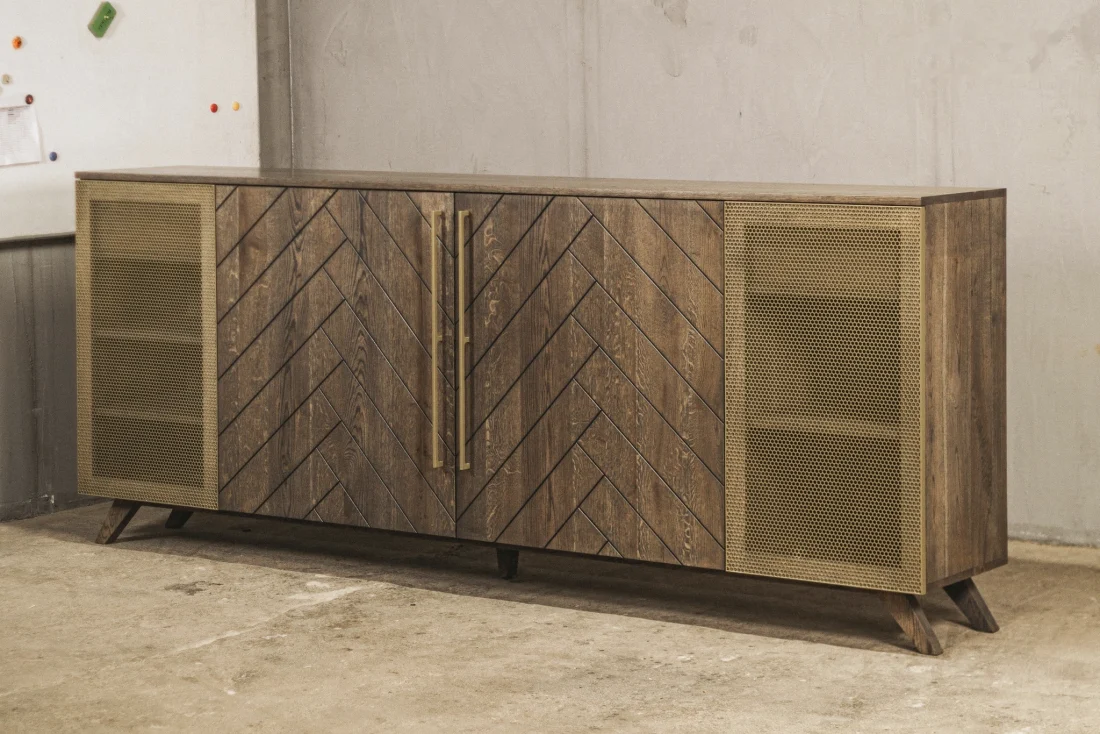
The Basque coast has a long tradition of woven rope work and hand-forged ironwork, both showing up together in this sideboard: door fronts laid in a sharp herringbone of warm oak, flanked by two panels of brass-toned metal mesh, with a single long brass pull running the full height of the doors.
The case is solid oak throughout, the herringbone cut and set by hand rather than printed on, and the mesh panels let light move through the piece instead of sealing it shut on both ends. Nothing about it is subtle, and nothing about it needs to be. At nearly nine feet, it wants a dining room or a wide hallway — a piece substantial enough to anchor a wall on its own.
Amsterdam is a display case first and storage second: tall glass-and-mesh doors over open shelving, finished in an olive-toned oak that reads warmer than a plain natural stain and darker than walnut.
The mesh panels sit behind the glass rather than replacing it, so whatever is kept inside gets a little texture between it and the room. Four sizes run from a narrow bar cabinet to a wide buffet-height piece, all built the same way — black steel door frames, oak carcasses, adjustable interior shelves behind the glass. It wants glassware, ceramics, the things you own but rarely use, objects that can carry a little formality. Leave the interior light on in the evening and it does most of the decorating on its own.
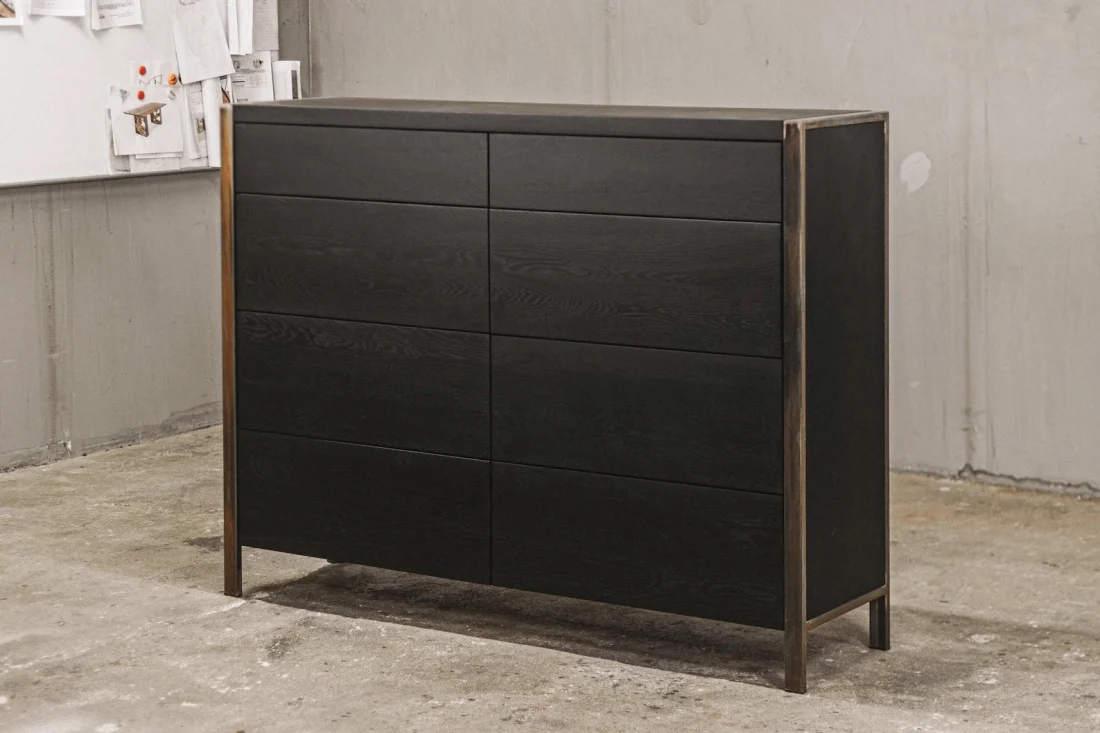
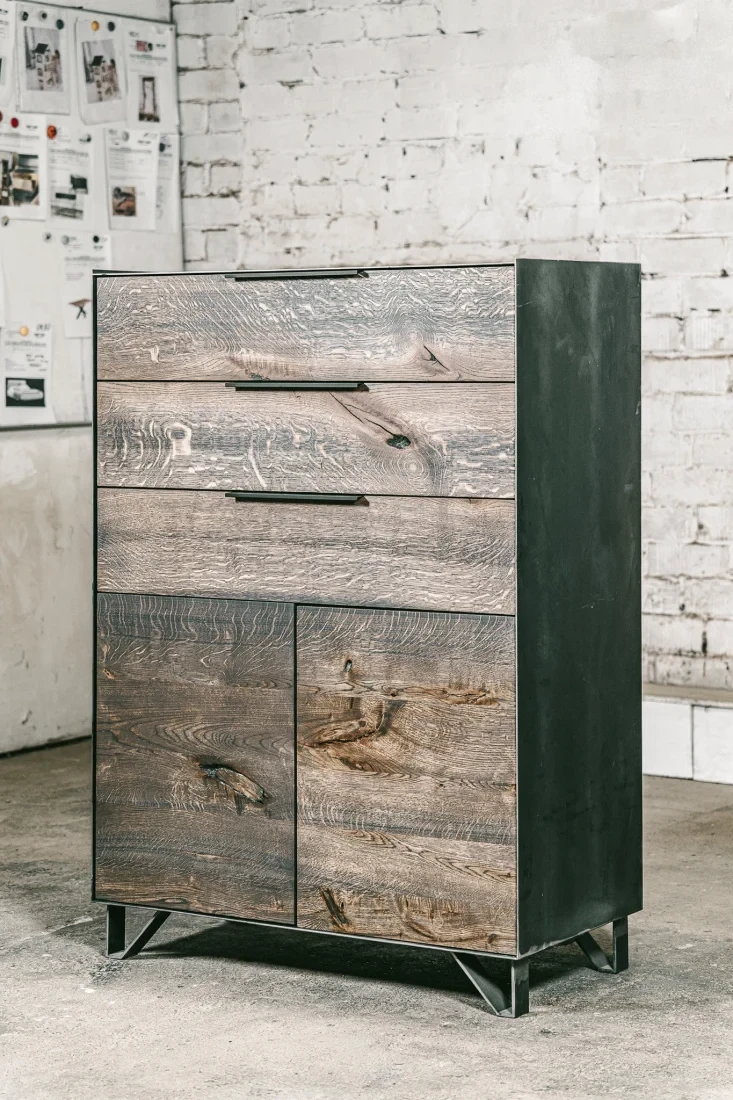
Rowhouse cities build vertical when they cannot build wide, and this dresser does the same: tall rather than long, drawer fronts arranged in an angled, almost herringbone pattern across dark walnut-toned oak.
A black steel frame anchors the base, sculptural handles running the width of each drawer instead of separate pulls. It holds more per square foot of floor than a standard dresser its width, which matters in a bedroom too small for a long run of drawers. The angled fronts catch light differently than a flat panel would, giving the whole piece a texture you notice walking past rather than standing still in front of. Dark wood, small footprint, quiet room — that is the whole equation. It holds its own even next to louder furniture, since the pattern in the fronts needs nothing extra around it.
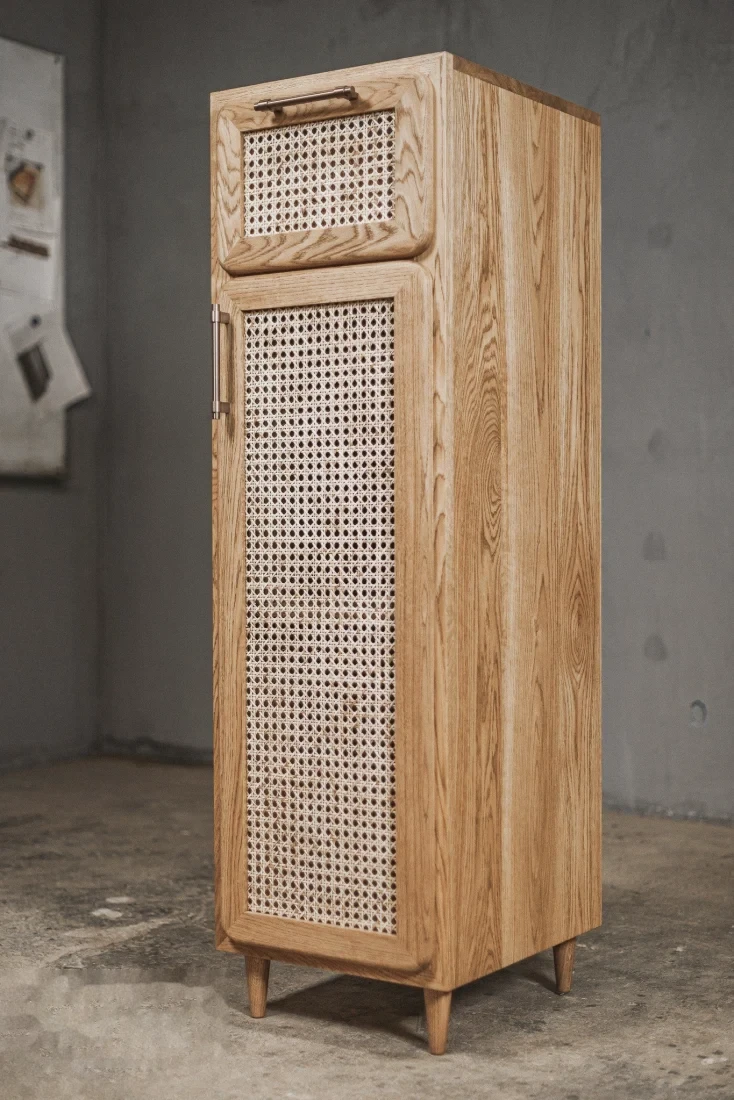
Cortona is the piece that disappears on purpose.
Full-height and paneled in the same woven caning as its shorter relatives, it is built to sit flush with a wall, a hallway or a kitchen corner, so opening it feels less like using furniture and more like finding a room you did not know was there. Five sizes cover everything from a slim linen cupboard to a full pantry-height cabinet, each keeping the same oak frame and mesh-paneled doors, finished light enough to read as part of the wall rather than a piece set against it. Inside, ordinary shelves and drawers do the work. From the outside, it simply looks like architecture that happens to open. It rewards a household that likes a little mystery tucked into a hallway.
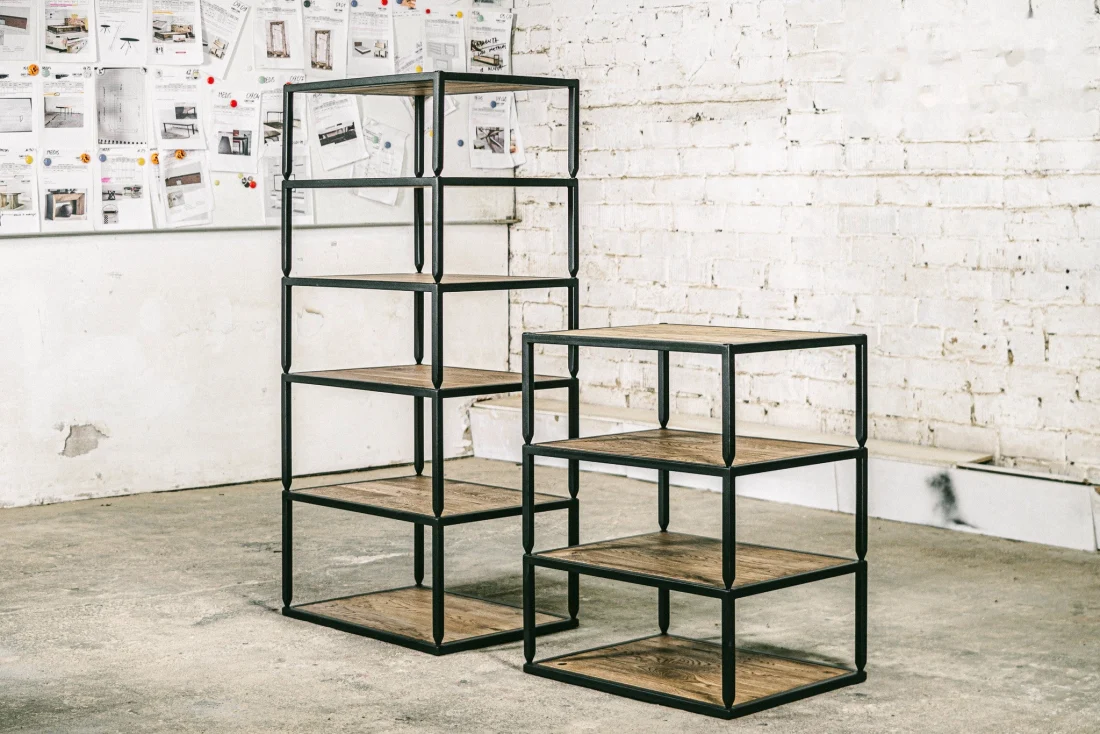
Kew is London's botanical garden, greenhouses and planted beds organized under glass and iron, and this shelving unit is built almost literally from that idea — a black steel frame holding oak planter boxes at different heights, sized to actually take soil and a growing plant rather than just a vase.
The two pieces in the collection share the same logic: oak boxes set into an open steel structure, with the frame doing the visible engineering and the plantings doing the rest. Each unit can be configured with a different finish and box layout, so no two gardens read identically. Set against a window, it becomes a living wall rather than furniture — the plants finish the piece in a way no finish coat could.
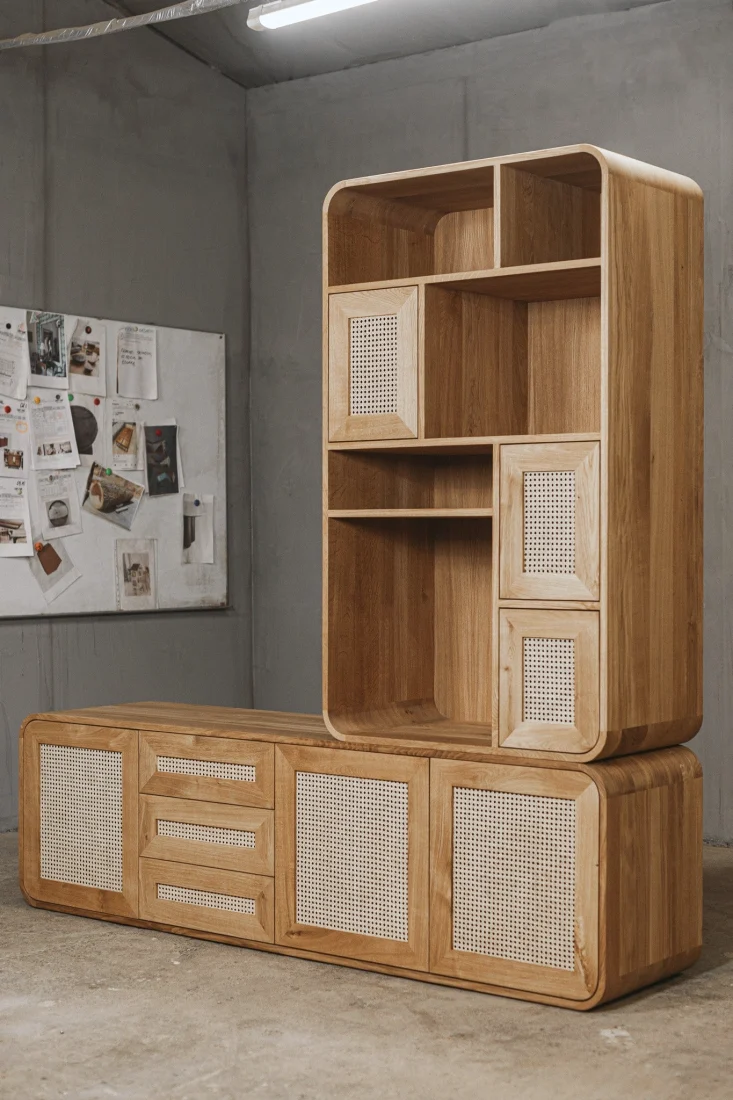
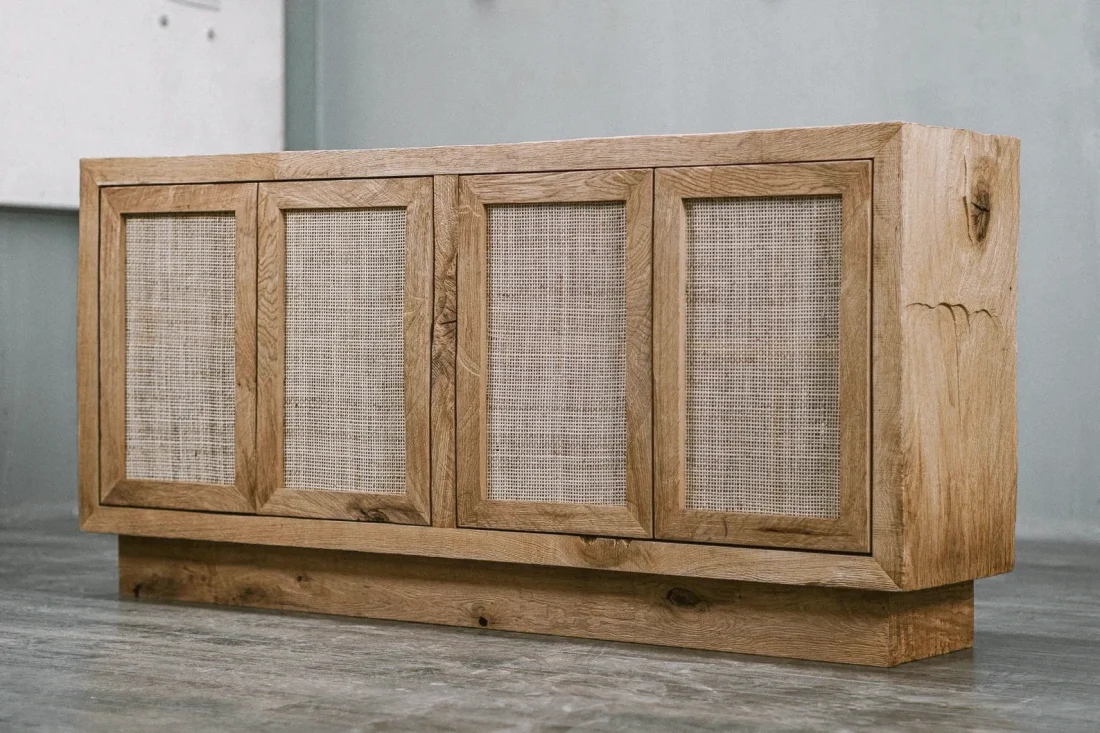
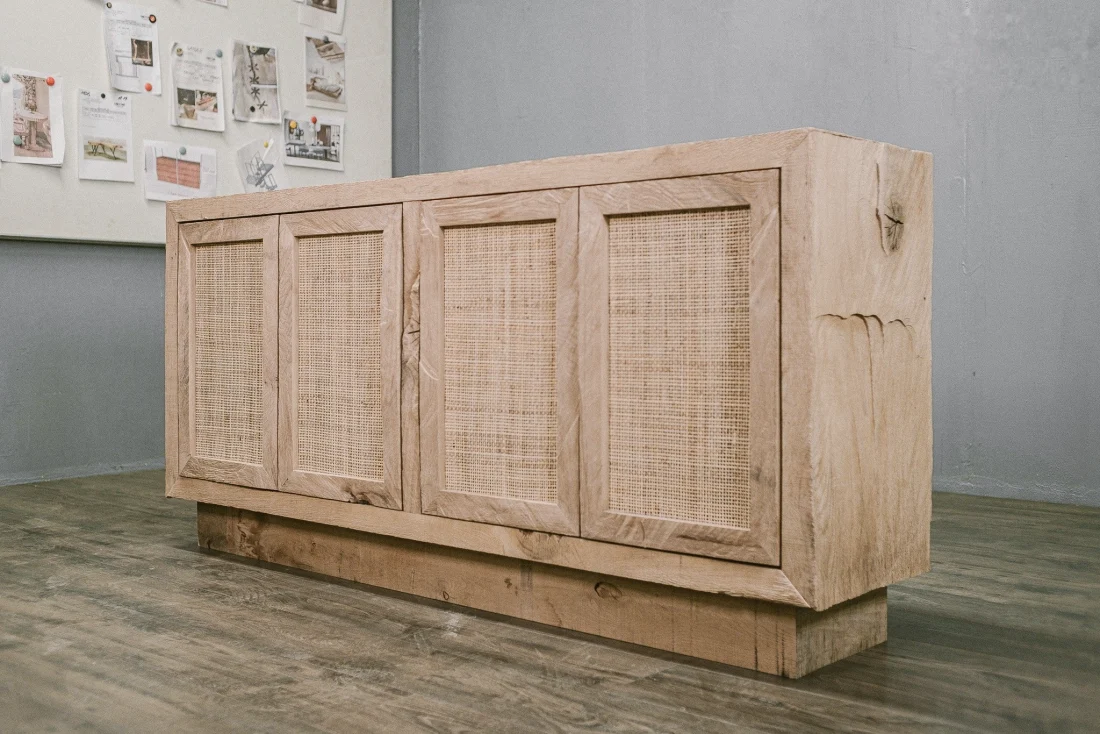
Woven cane doors let air move through a cabinet the way old tropical furniture always did, before anyone worried about humidity indoors.
This piece keeps solid oak for the frame and drawers, natural or dark-oiled, and sets rattan cane panels into the door fronts, framed tight enough that the weave stays taut rather than sagging. An angled black metal accent breaks up the front on some versions, a sharp edge against the softer texture of the cane. It suits a room that wants warmth without heaviness — a dining room sideboard or a media cabinet where the woven doors let a little light and a little air through, even closed. The cane is not a fragile afterthought either — it is set deep enough into the frame to take daily use.
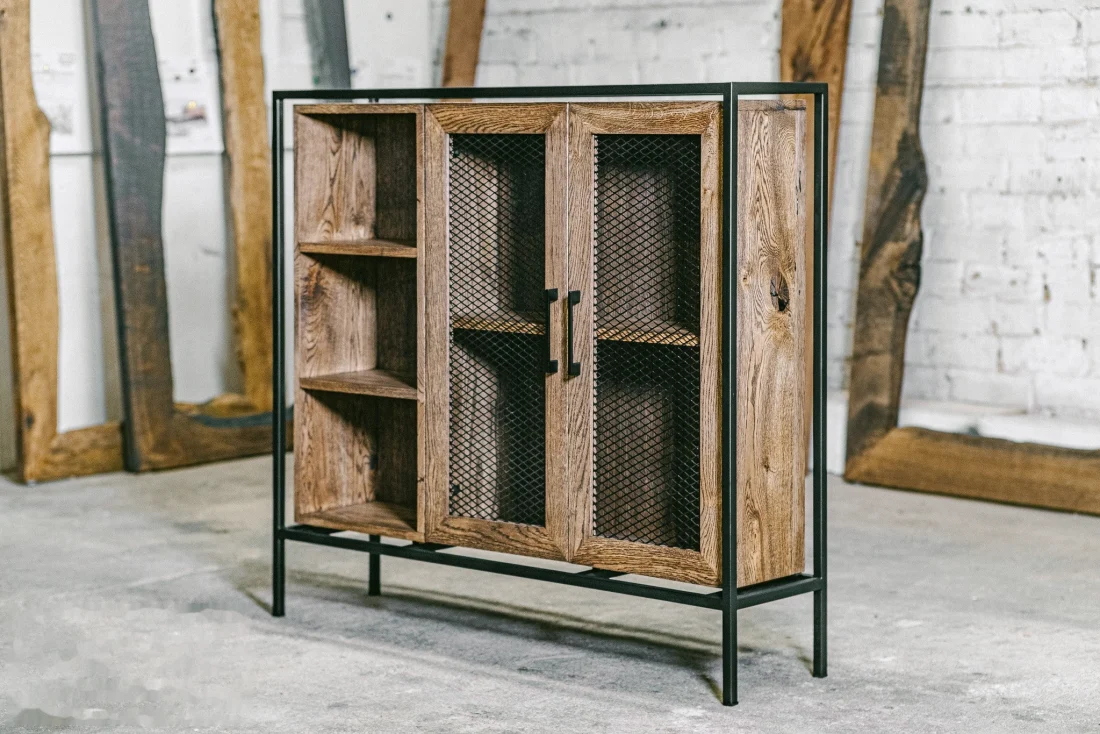
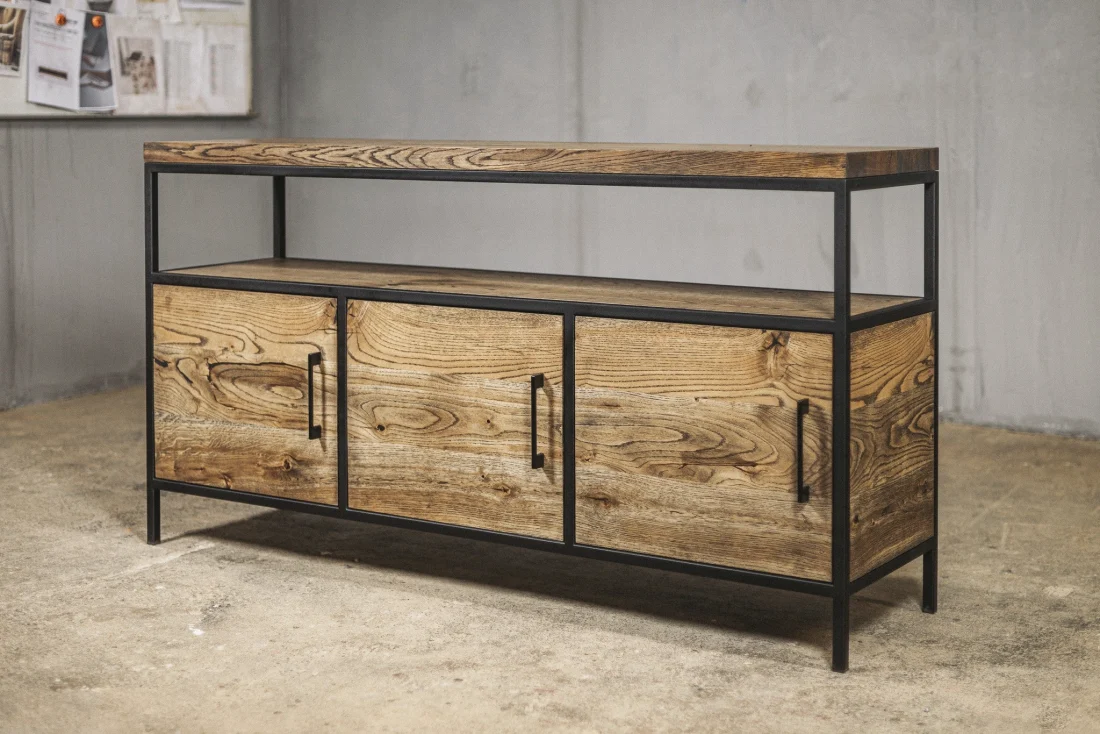
Steel mills built this city's whole identity, and this cabinet keeps a bit of that in its doors: mesh grille panels set into a black steel frame, oak shelving visible through the metal weave.
The wood runs in walnut or natural tones depending on the piece, framed top and bottom in the same black steel that holds the doors. It is built for a media console more than a dresser — the open mesh lets heat and remote signals through without leaving cables in view. Set under a television, it reads as the kind of furniture built for a factory floor before anyone thought to put it in a living room, which is more or less true. Cables and remotes stay tucked behind the mesh, visible in outline but never quite in focus.
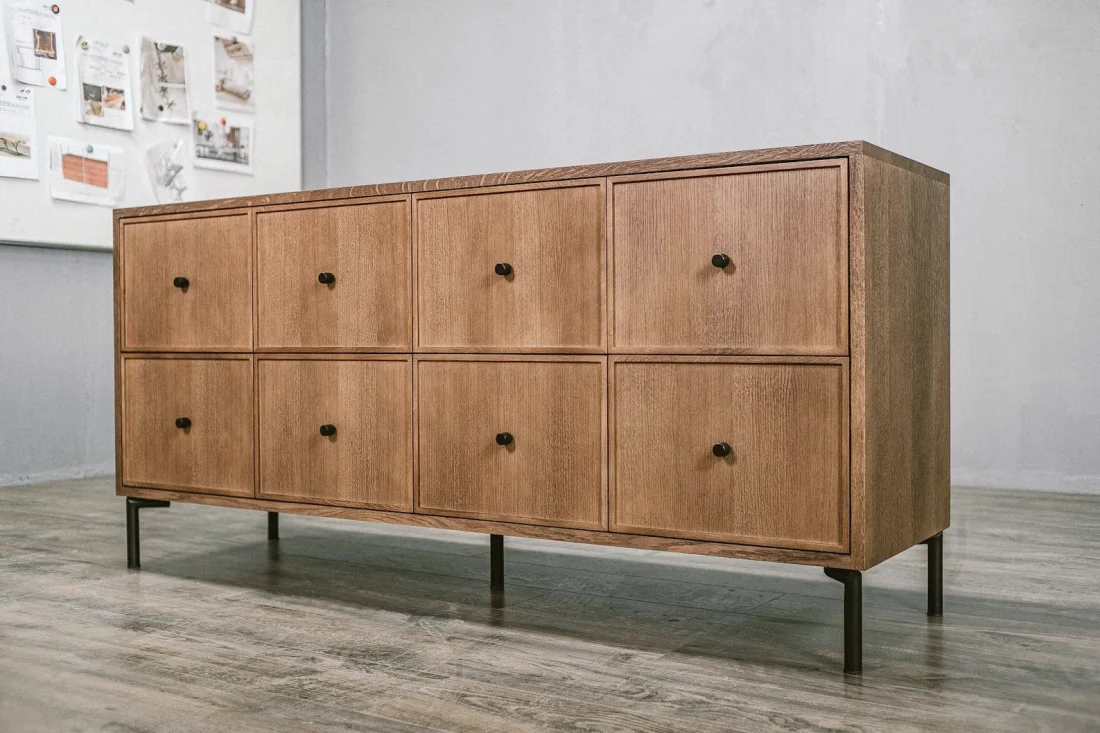
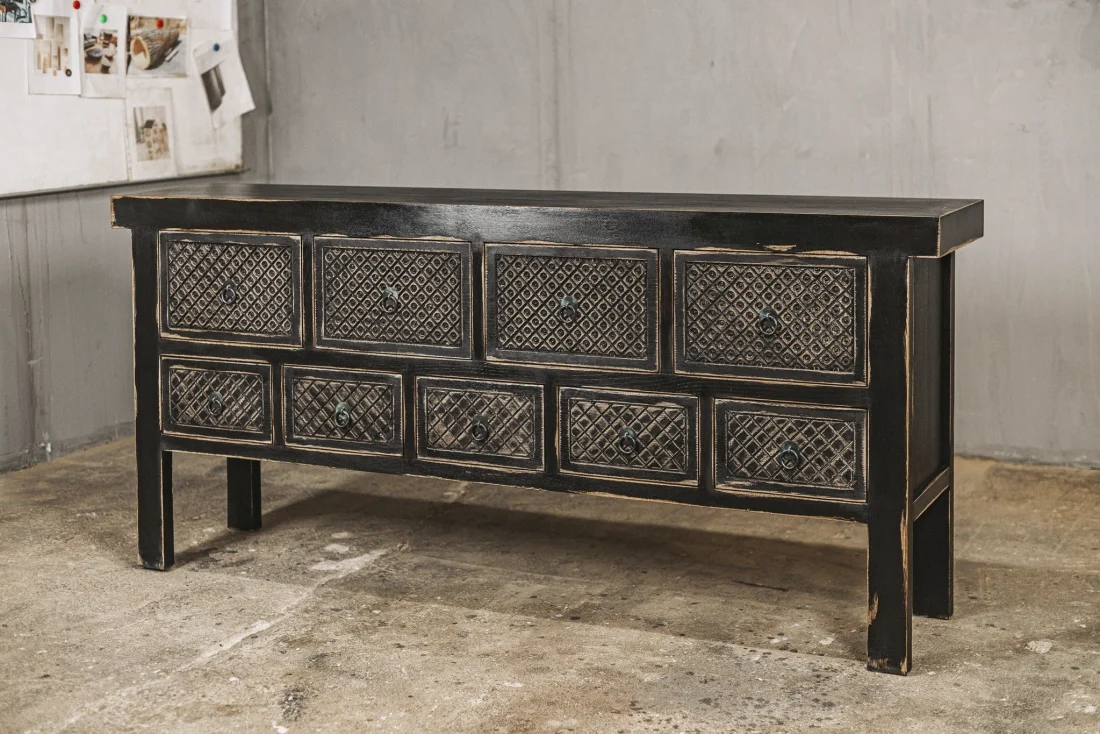
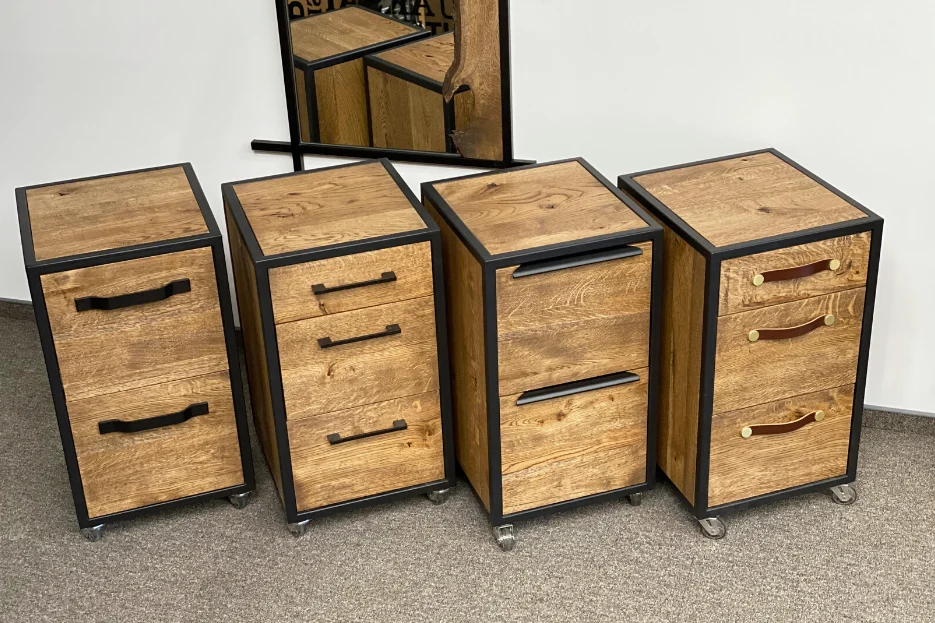
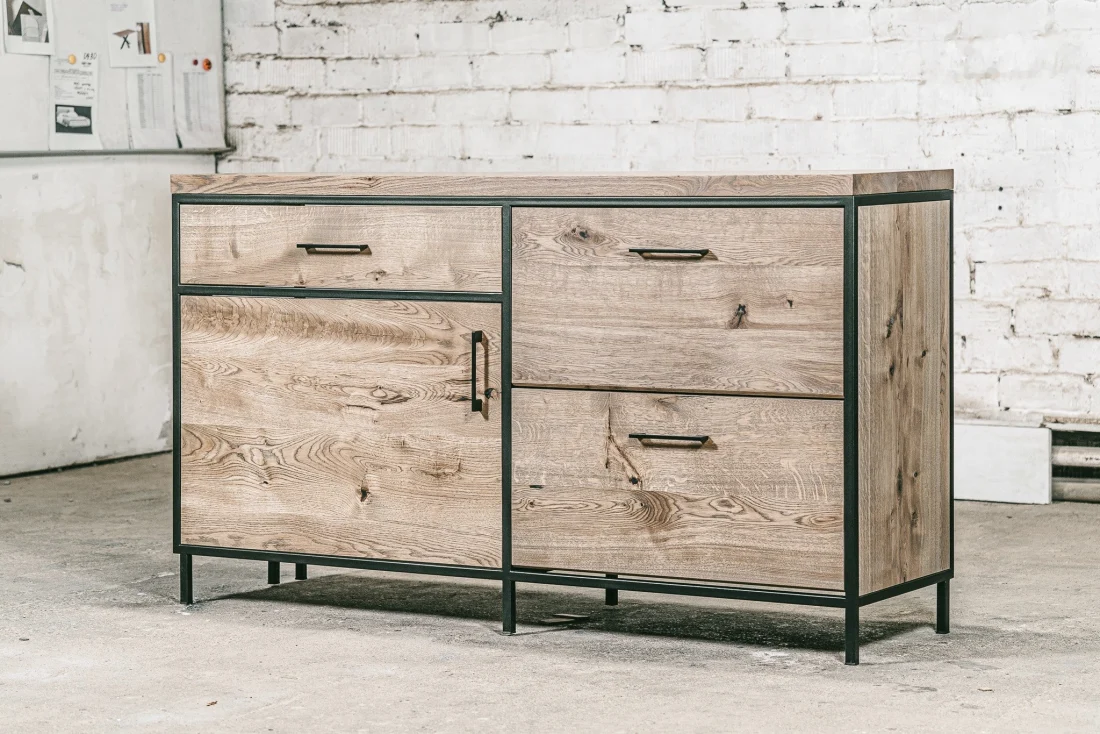
Byzantine mosaics in this city were built from small dark pieces set close together, and this console keeps a version of that density: a low, dark oak body, antique or walnut-toned, drawers stacked tight with black steel pulls, resting on thin black metal legs.
A lacquered finish option gives one version a harder shine than the rest. The proportions stay low on purpose — meant for under a window or against a media wall rather than as a tall dresser. It holds its dark tone in most light, which makes it a natural pairing with a lighter sofa or a paler wall behind it. Understated is the intent; dark wood does the rest of the work. It sits low enough to double as a media console when a room needs one more surface than seats.
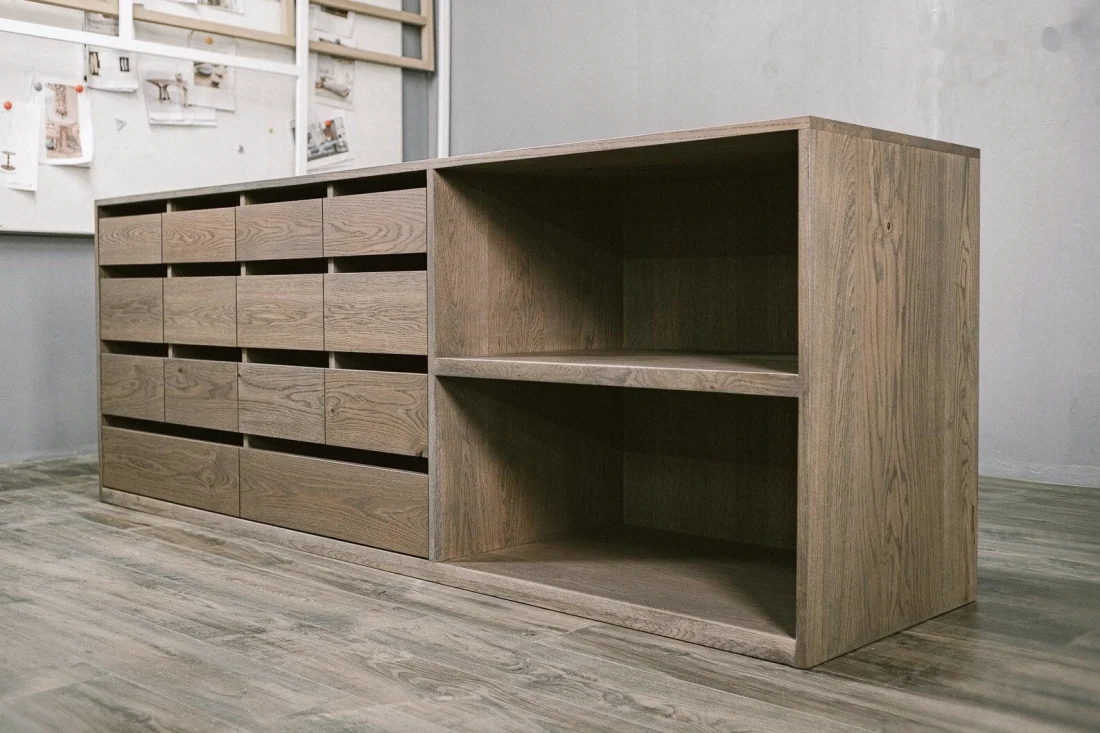
Boise sits where high desert meets old timber country, and its barns and outbuildings have supplied a certain look — mixed, weathered wood pulled from more than one source and put back to work together.
This sideboard follows that logic: solid oak in walnut and black-stained sections side by side, open shelving on one end and drawers on the other, all resting on angled black steel legs. Nothing about the wood is uniform on purpose — tones shift panel to panel, the way reclaimed lumber actually looks when reassembled rather than matched. The steel legs are thin and angled, keeping the case from reading as heavy as its materials are. It suits a room already furnished plainly, where one piece is allowed to carry all the character.
Palma's doors are the point: tall panels of woven caning set into an oak frame, letting light move through the cabinet instead of stopping flat at a solid front.
It is the kind of detail associated with island houses built for cross-breezes, which is likely where the name comes from. The collection covers six pieces, a full-height wardrobe down to a narrow bedside cabinet, all sharing the same paneled-door language and the same light, natural oak tone. Behind the woven fronts, ordinary adjustable shelving does the actual work of storage. In a bedroom or a hallway it reads more like built joinery than a delivered cabinet, something that belongs to the room rather than added afterward. It asks for morning light more than anything else.
Dessau is where the Bauhaus school once stood, teaching that a grid, honestly built, could be its own decoration — and these wall-mounted shelves are a direct descendant.
Open box modules in warm, walnut-toned oak sit inside a dark metal frame, the whole thing reading as applied geometry rather than a conventional shelf. Sizes vary widely across the six pieces, from a compact wall cube to a run over six feet wide, but the formula holds: oak boxes, black-dyed metal edging, no ornament beyond the pattern the modules make together. Mounted at eye level, it turns a blank wall into storage that looks intentional rather than added on — good for a hallway, an office, anywhere a plain wall needs one deliberate gesture.
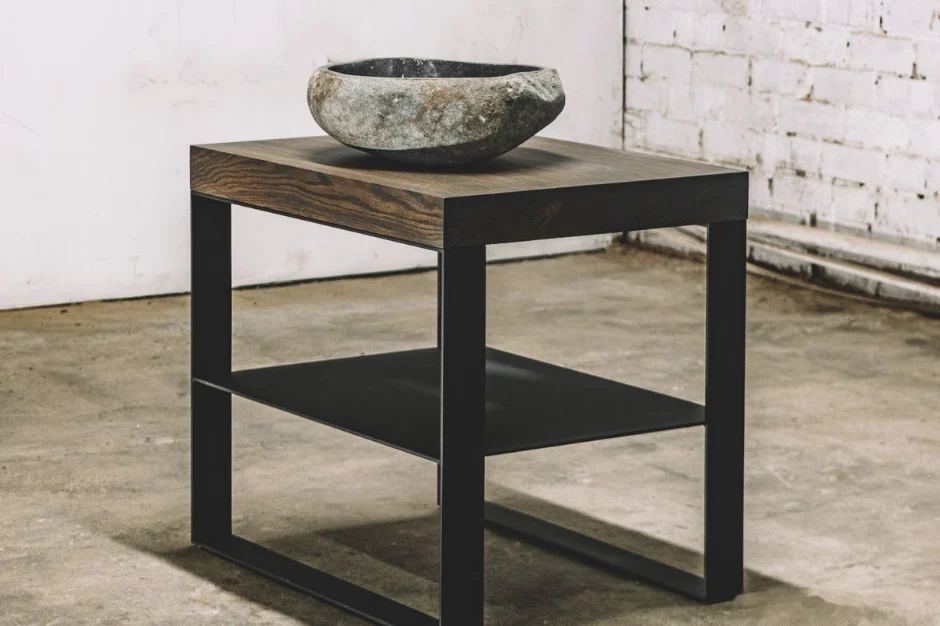
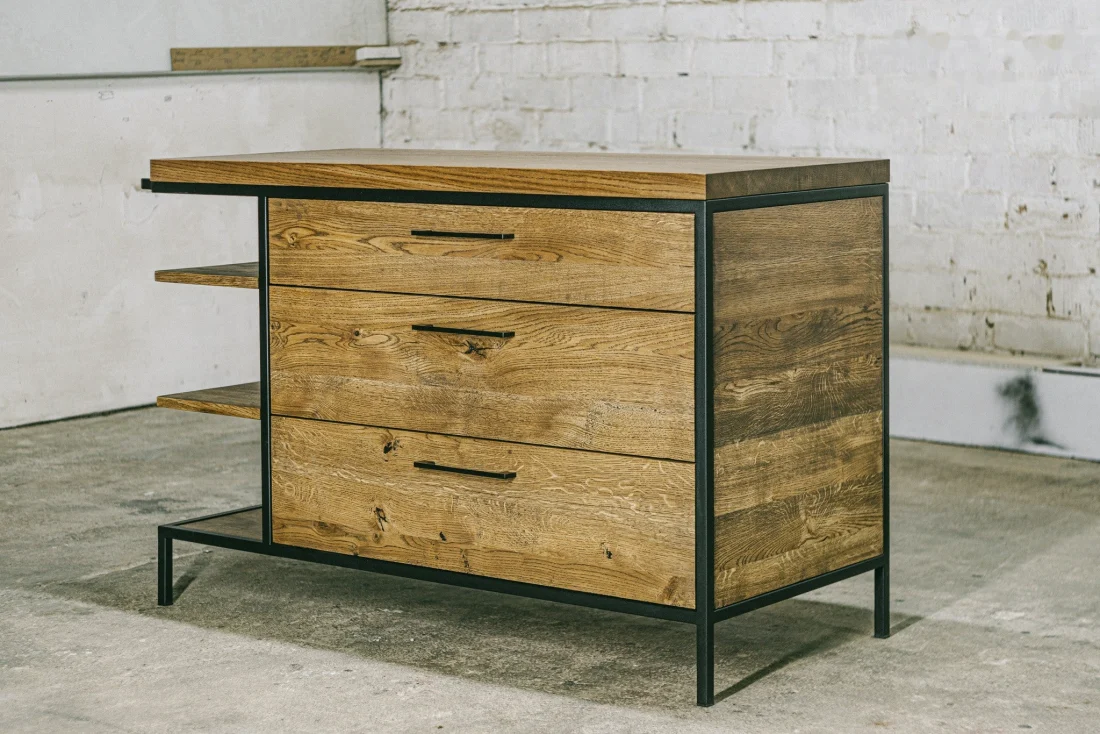
Across the river from every glossy showroom, Hoboken still has old freight elevators and factory windows, and this vanity was built with that in mind.
A black steel frame does the load-bearing, boxed at the corners with the joints left exposed, while oak plank drawers slide inside it like tool drawers in an old workbench. Nothing is hidden: you can see the joinery, the grain running horizontal across every front. It suits a bathroom that wants function over polish — a basin set on top, plumbing left visible below if the room calls for it. It is a vanity that would look at home holding wrenches instead of towels, and somehow that is the point. Even the drawer pulls are left as plain bar stock, nothing decorative added just to soften the look.
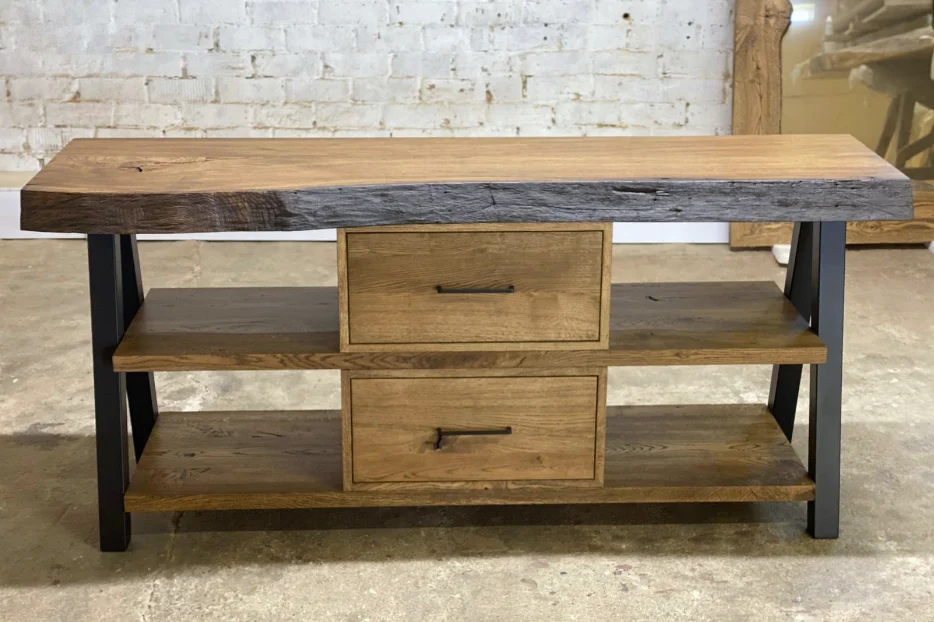
New England barns keep their beams rough on purpose, and this console borrows that logic: a live-edge oak slab on top, bark-line intact along one side, resting over open shelving on a black steel A-frame.
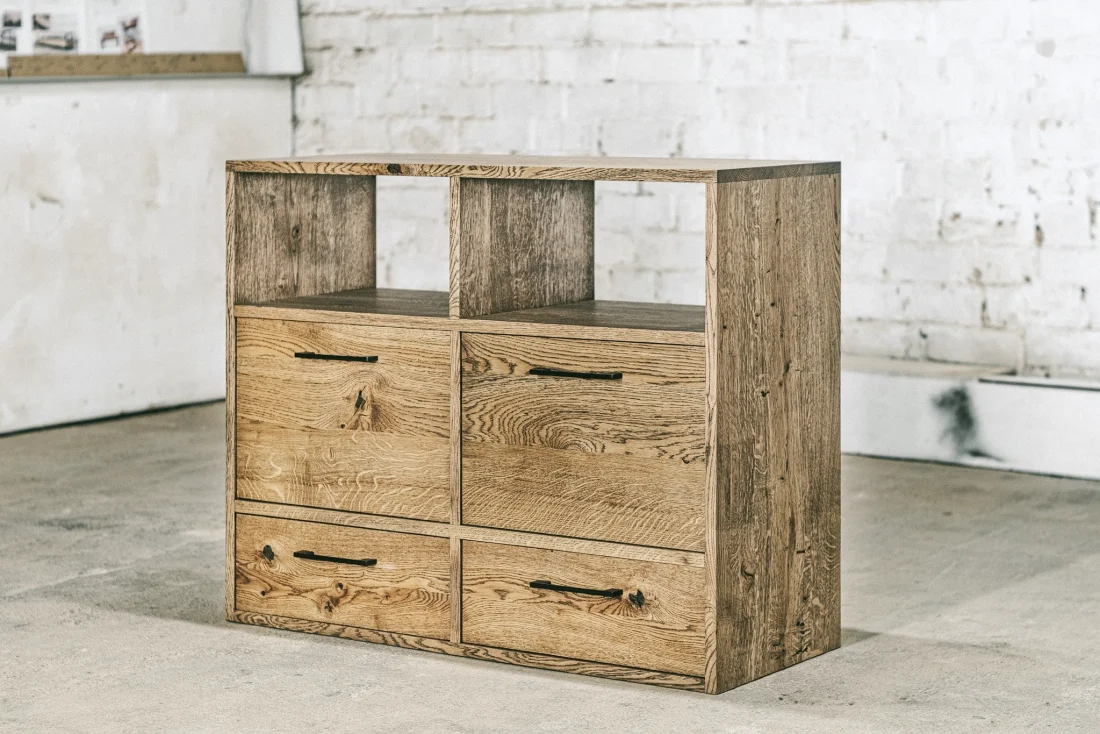
Two drawers sit tucked into the wood itself, finished flush so the storage does not interrupt the grain running the length of the top. It works as a console behind a sofa or a media stand against a long wall — the open shelving below keeps baskets or books in view rather than hidden. The steel frame does the structural work quietly, angled just enough to read as considered rather than merely functional. Set it low behind a sofa and it holds a lamp and a stack of books without ever looking crowded.
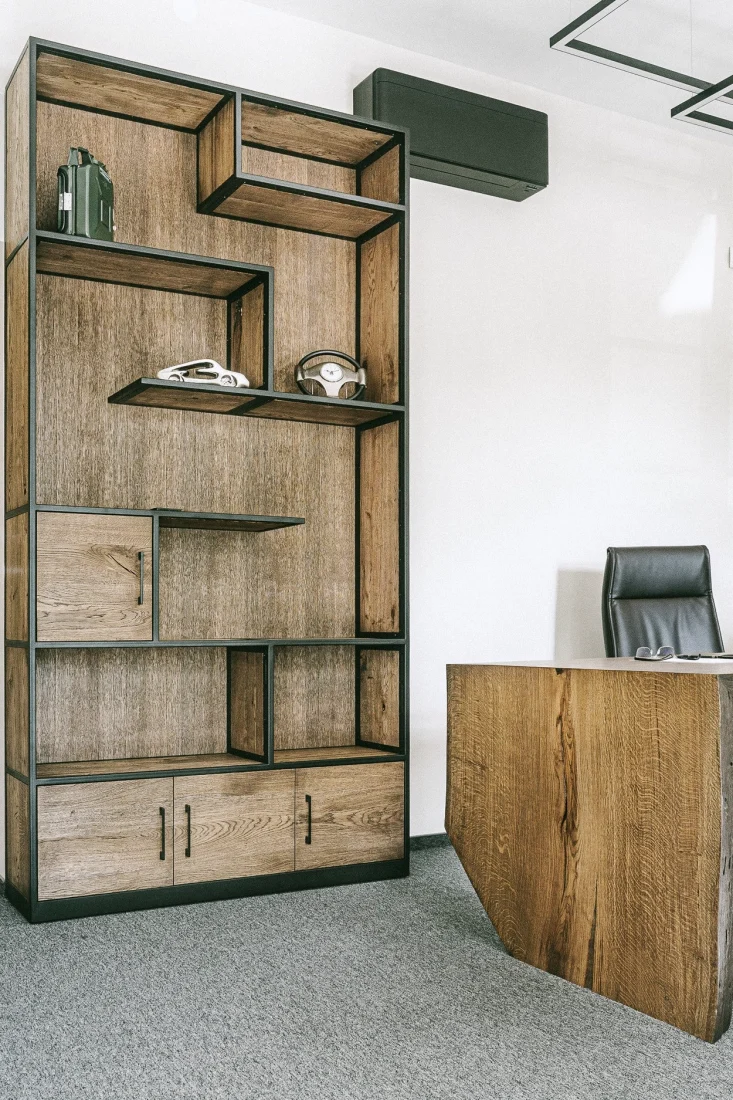
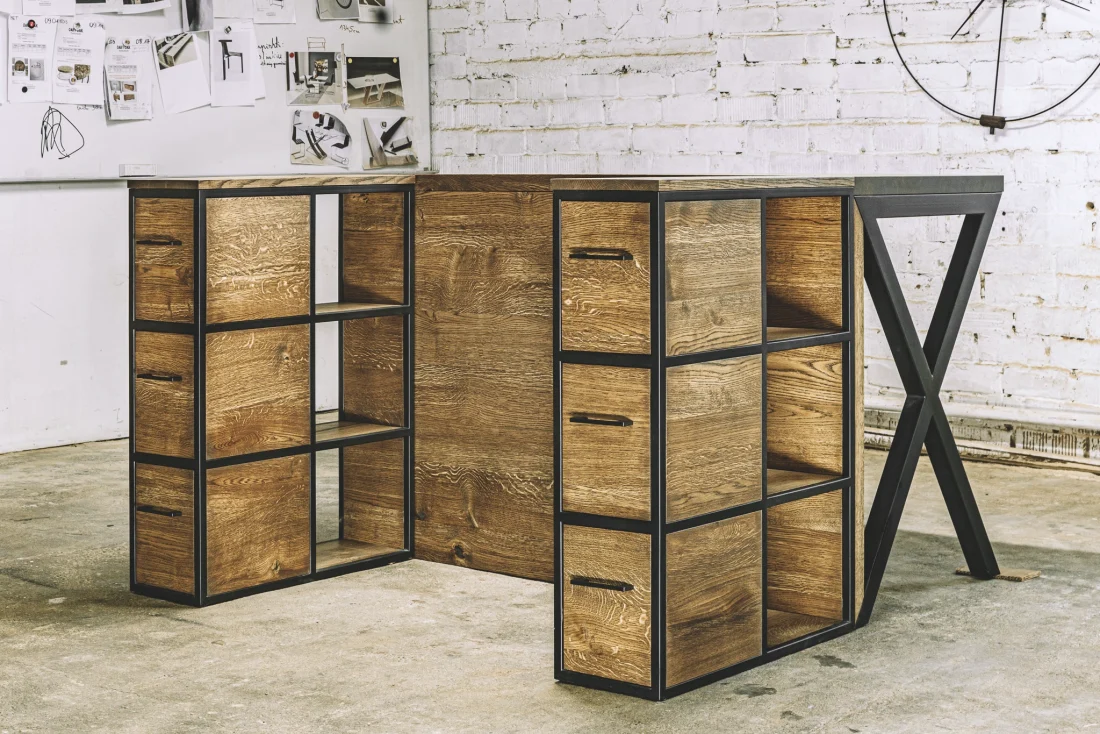
Cleveland grew up around steel mills and warehouse floors, and this shelving system carries that industrial directness — a black steel frame divided into cubes, each one filled with oak in a slightly different tone, walnut here, lighter oak there, so no two openings read quite the same.
The frame does the structural work throughout; the wood fills it in modular blocks rather than running as continuous shelving, which is what gives the six pieces their slightly irregular, stacked-crate look. Sizes range from a low, wide unit to one that climbs past seven feet. It works as a room divider as easily as a bookshelf, since the mixed-tone openings read from both sides — useful in a loft that needs a boundary without a wall.
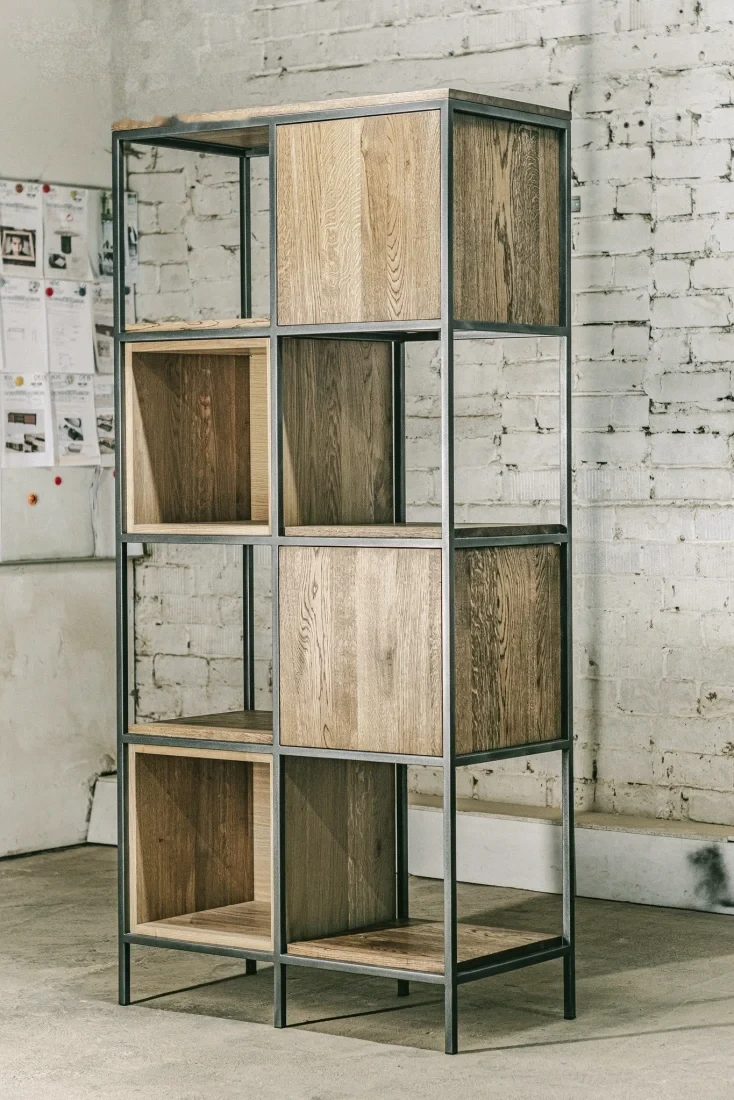
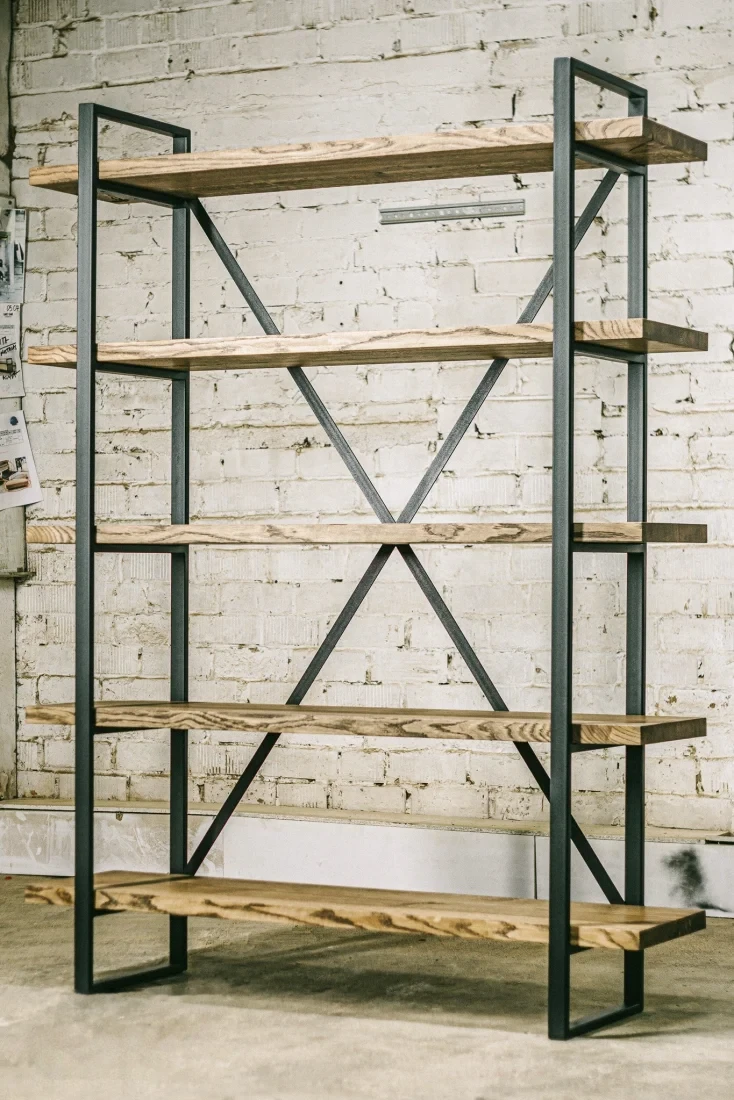
Seattle sits under a low grey sky most of the year, evergreens holding their color regardless, and this tall shelving unit takes that dark, layered green-and-black palette rather than the usual warm oak.
A steel frame in grey and black dyed metal carries oak shelving and a drawer base, rising in a narrow, upright column. Across the three pieces, proportions shift but the frame stays dark and the wood stays a warm walnut-toned oak, giving each unit real visual weight for its footprint. The drawer section at the base keeps smaller items out of sight while the open shelving above stays for display. Against a brick or plain wall, it reads as one tall, quiet object — good for a narrow gap that a wider bookshelf would not fit.
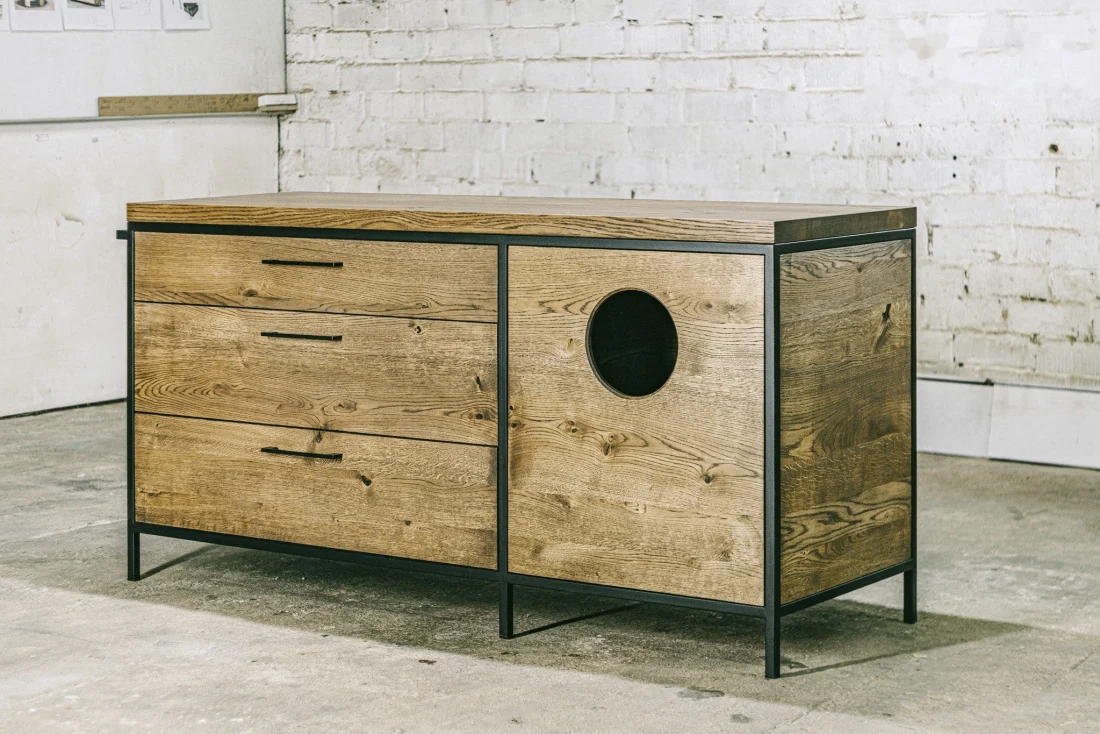
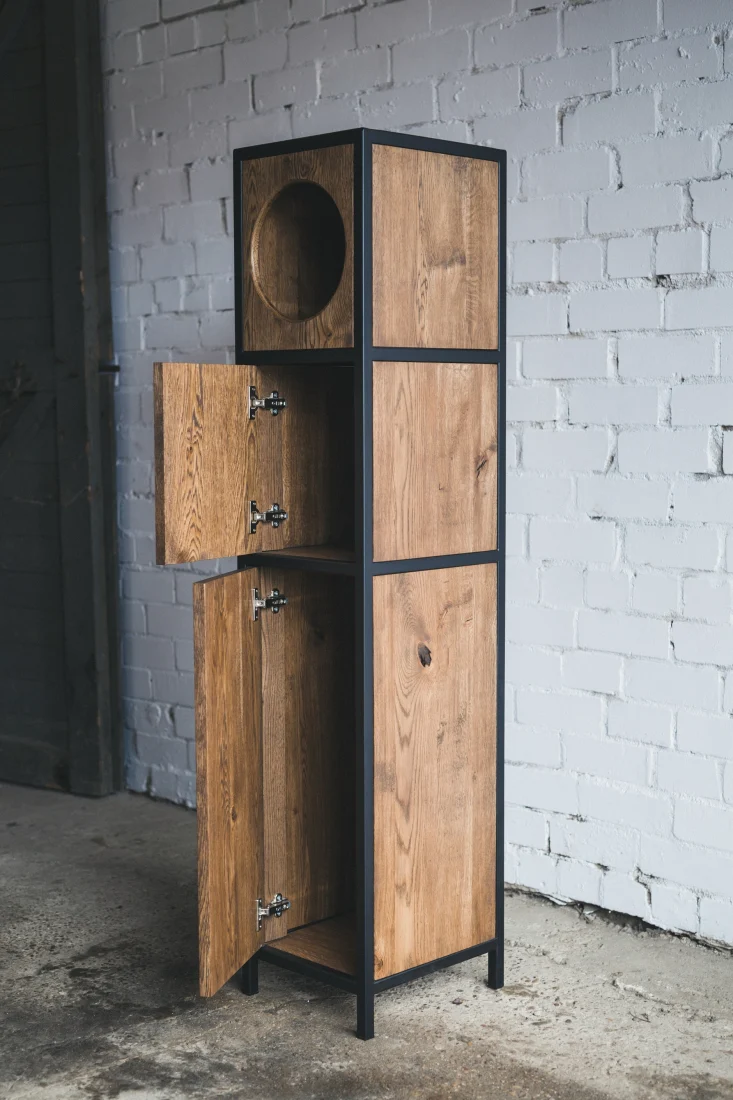
Reno's skyline is built around a single lit circle, and this storage cabinet takes that same shape as its signature — a tall oak cabinet with a round cutout serving as the door pull, cut clean through solid wood rather than applied as hardware.
The frame is black steel, thin enough to disappear against a wall, holding a case of natural oak with the circular door above and a drawer below. The cutout is the whole design statement: no other ornament competes with it, and the oak grain frames the circle rather than distracting from it. Narrow enough for a hallway or a bedroom corner, it holds more than its footprint suggests, and the round door makes it identifiable across a room before anyone reads a label.