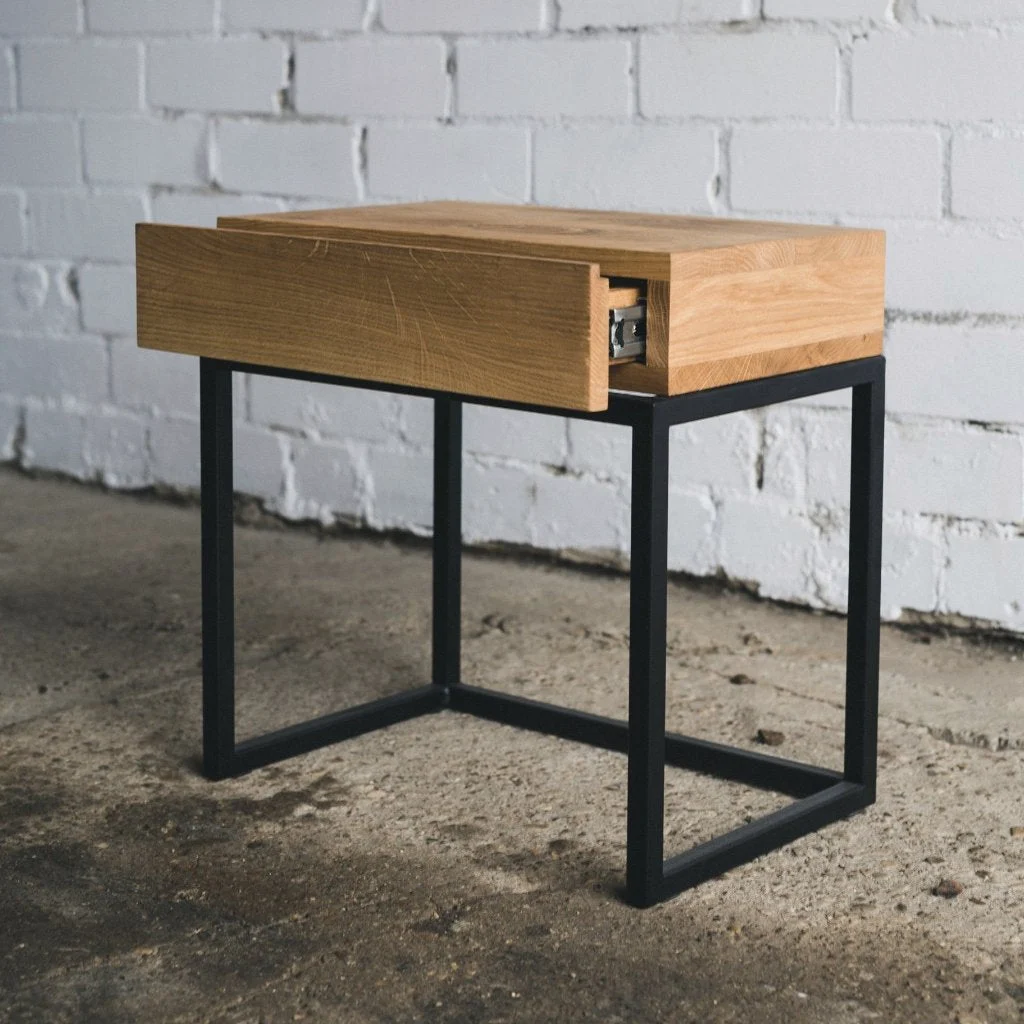
 239 444 7833239 444 7833
628 pieces across 137 collections. Solid European oak, built to order in 10–16 weeks.
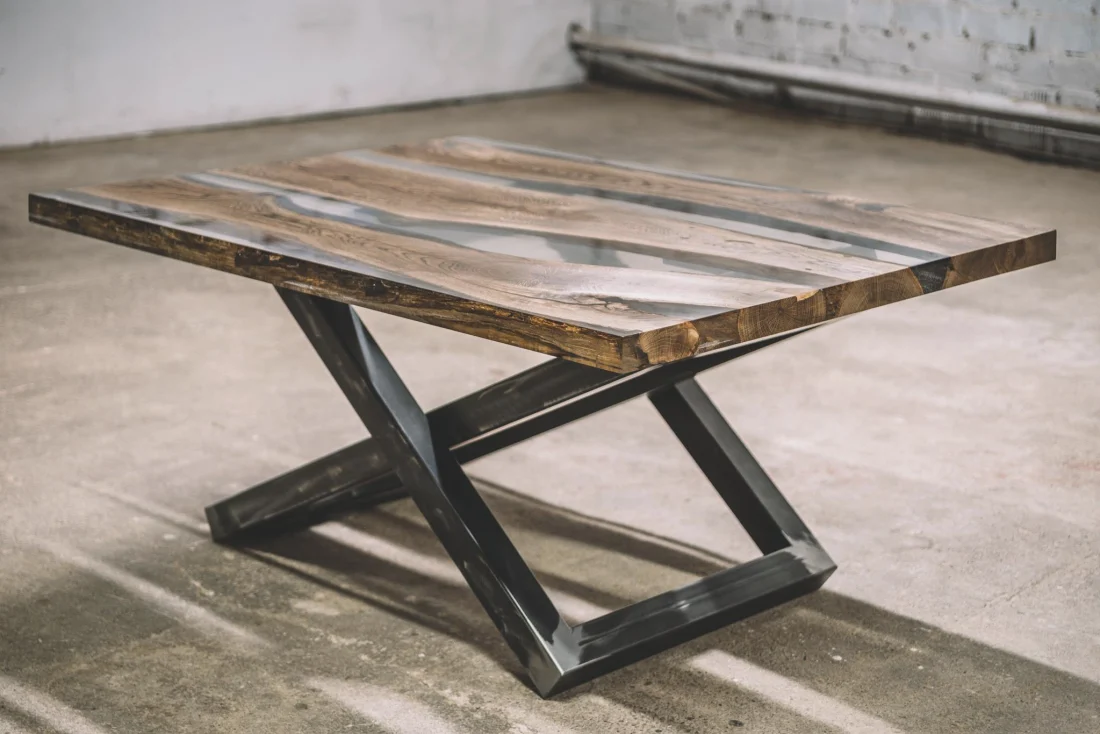
Yellowstone earns the name the same way a hot spring does, mineral color pooling and spreading where you would not expect it.
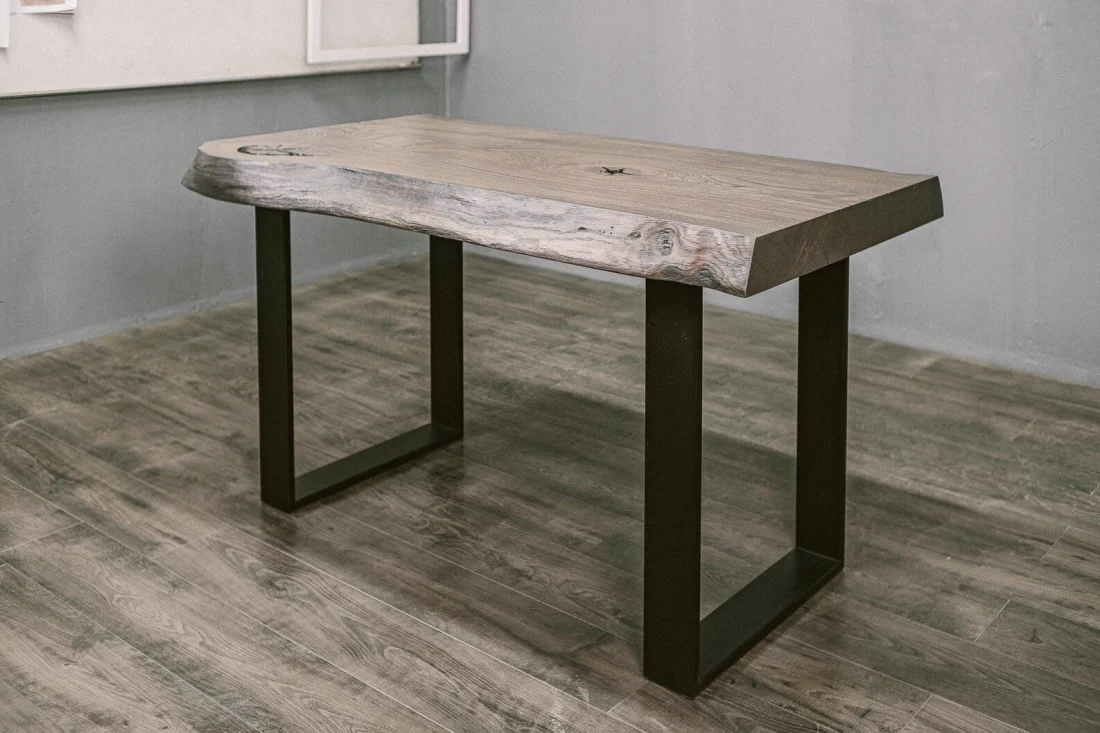
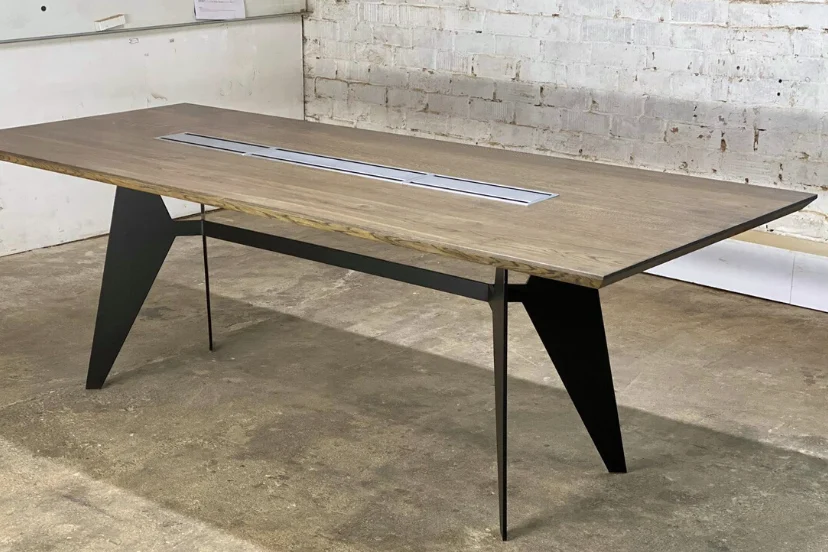
The top mixes a pale oak slab with a run of tinted resin down its center, natural edges left rough on both long sides, sitting on a pair of black steel legs bent into a simple U. Ten sizes make up the collection, from a four-seat table to one long enough for a proper dinner party, each with its own resin pattern since no two pours land the same way. It is a table that argues for itself before anyone even sits down, the kind of top guests lean over to study rather than simply eat across. Each top ships as one true original, not a reproducible pattern run twice.
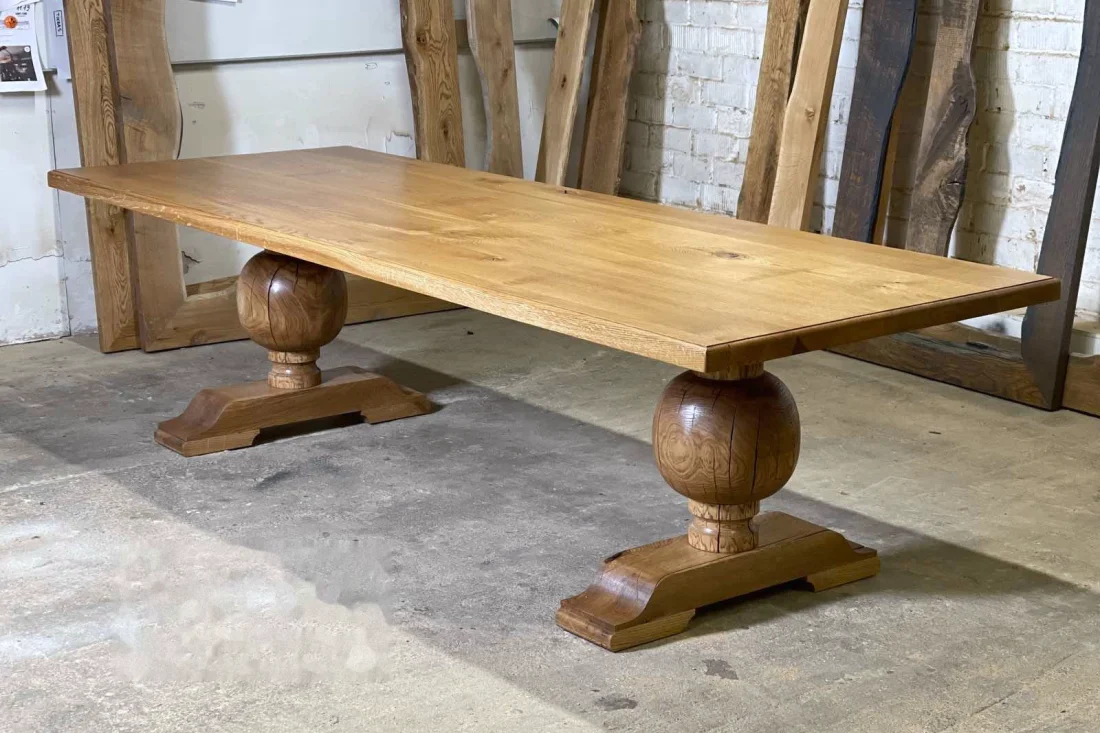
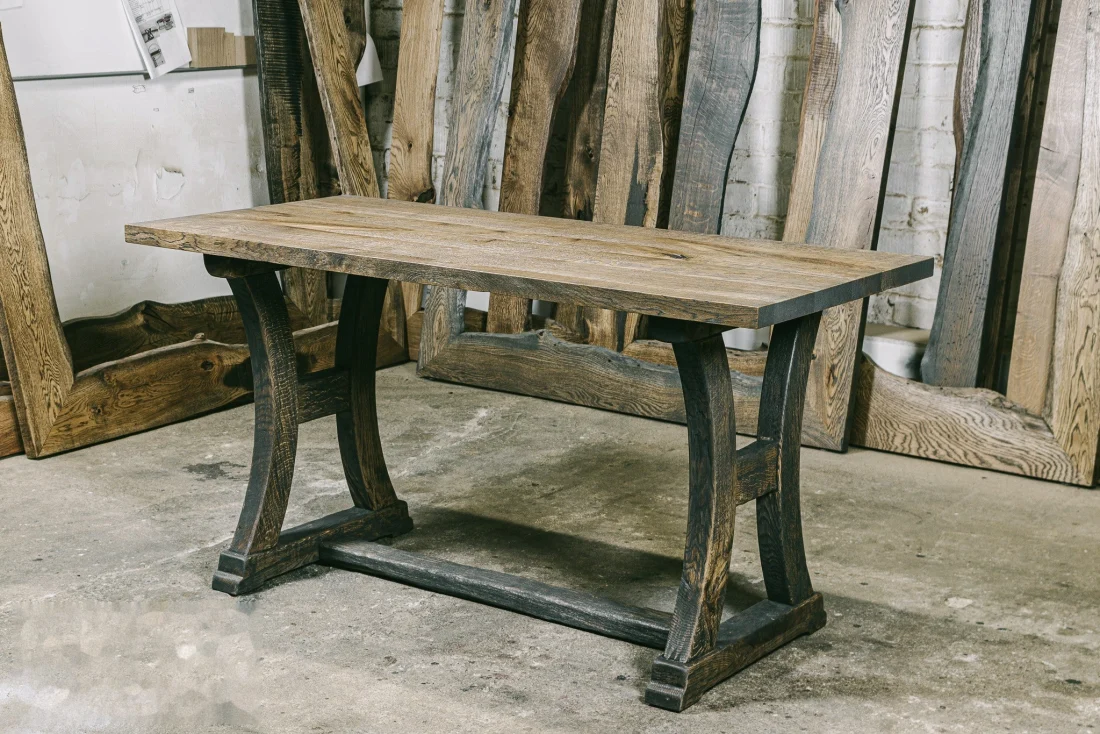
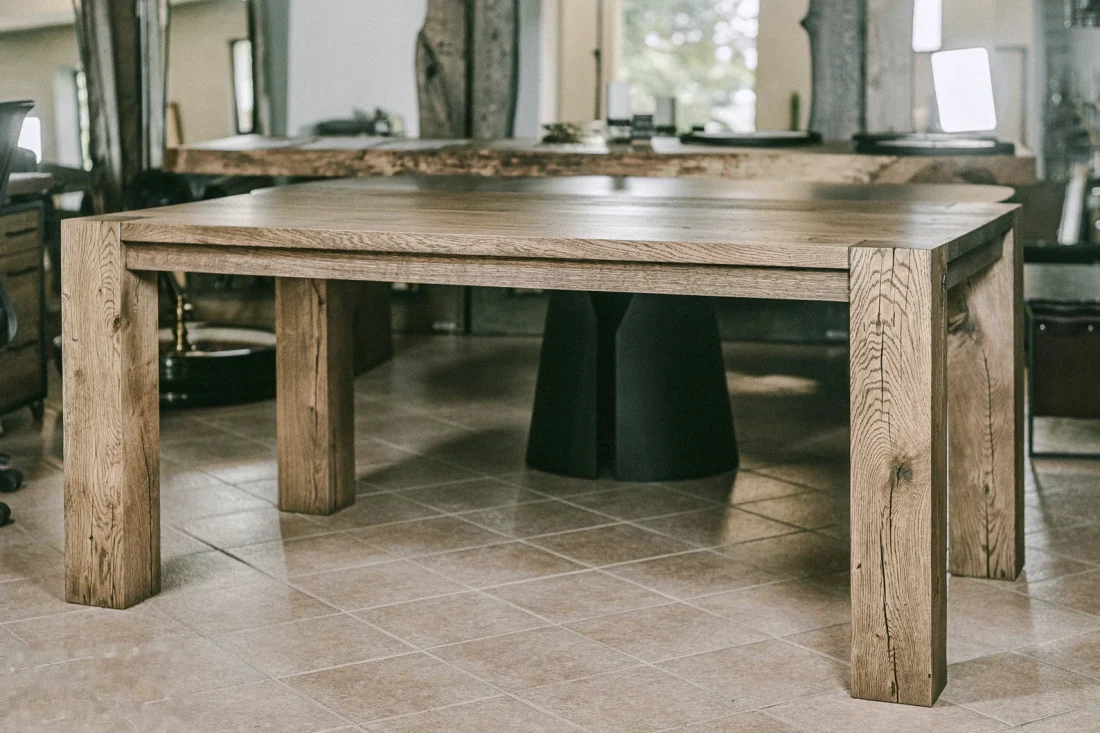
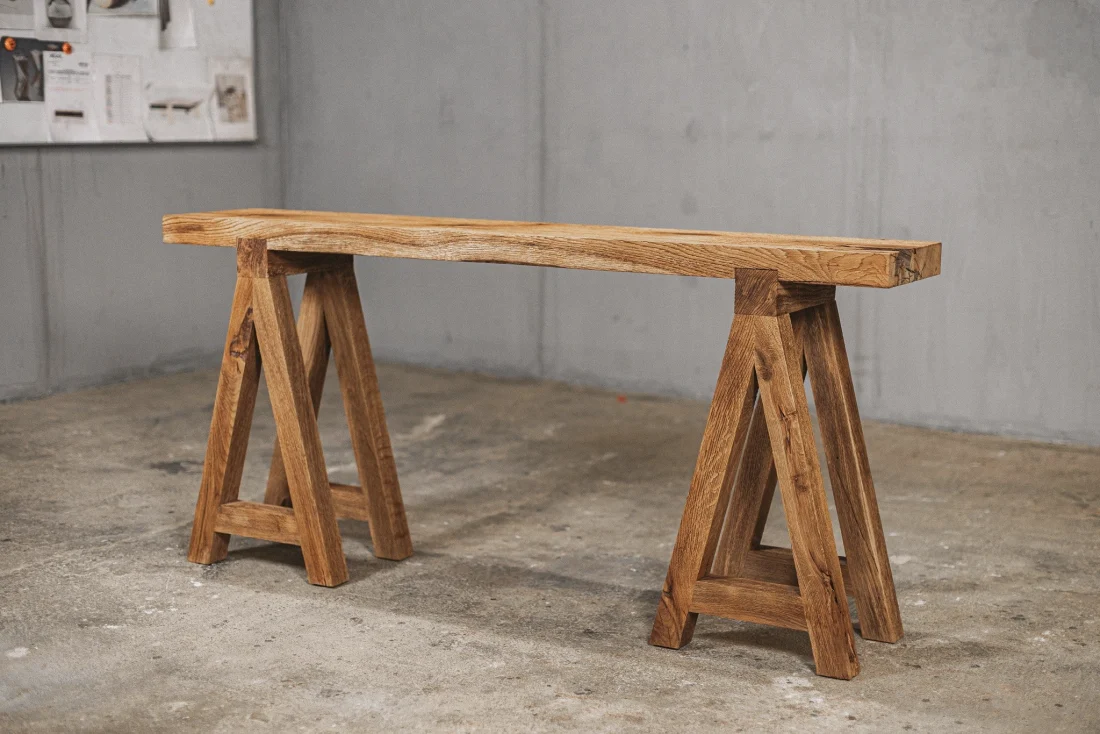
Luberon is a farmhouse table built the way that phrase actually implies: a thick oak top on heavy, square-cut legs joined by a low stretcher, finished to look like it has already survived a few decades of dinners.
Nothing about the construction is decorative; every piece of it is there to hold weight. Six sizes make up the collection, running from a compact version for four up to a long table built for a proper family gathering, all sharing the same trestle-style base. It is forgiving of a crowded table, plates set close, elbows everywhere, because the whole thing was built with exactly that kind of use in mind, not a styled photograph. It wears its first few scratches like a badge rather than a flaw.
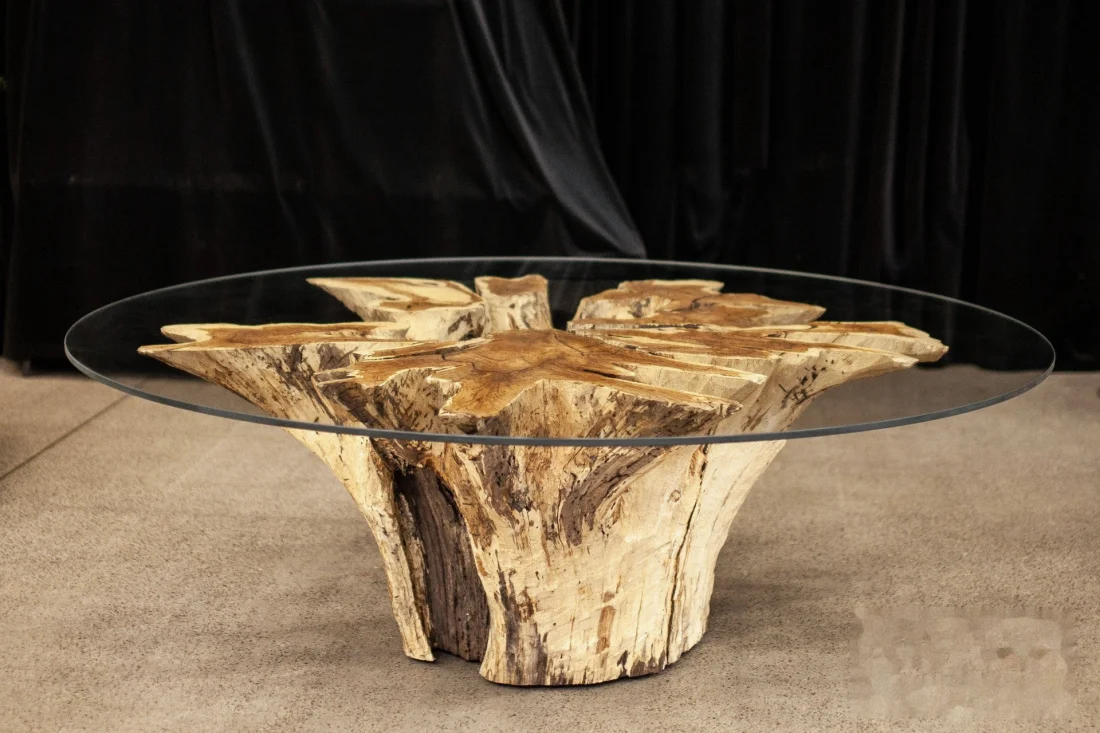
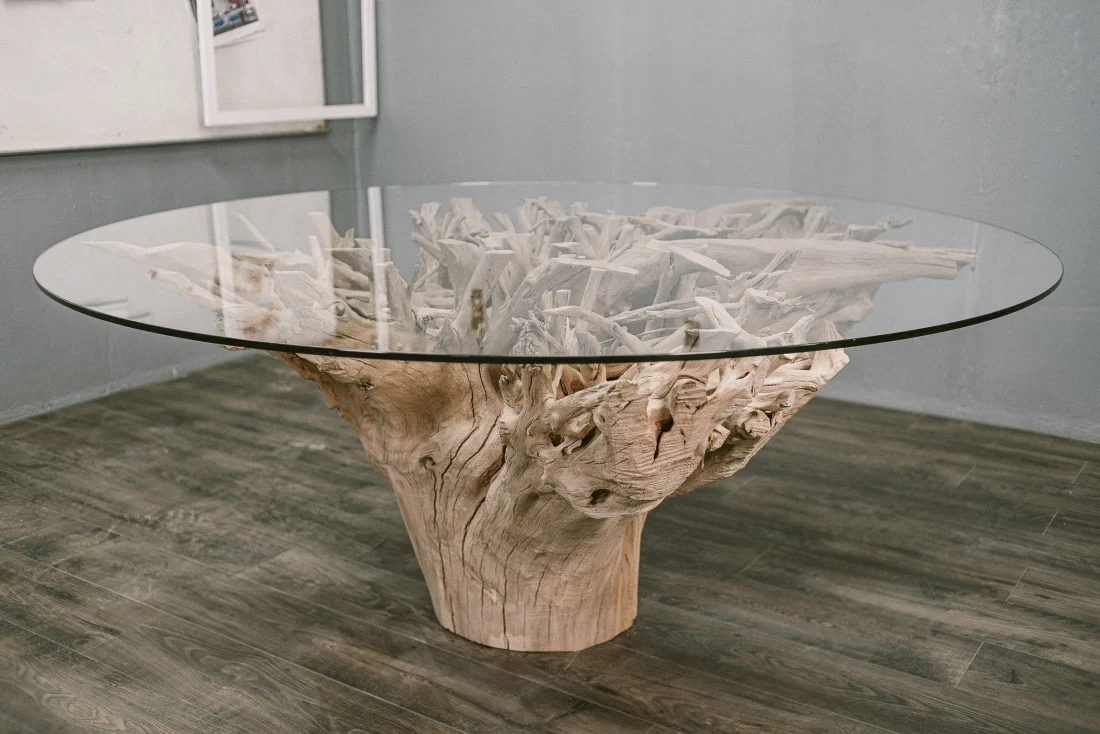
Sequoia takes its name the honest way: the base is a genuine slab of burl, wide and knotted the way only a very old tree produces, left whole rather than cut down to a more manageable shape.
A large round sheet of glass rests on top of it, big enough to seat a proper dinner party around a piece of wood that was never meant to be a table until someone decided it should be. There is only one size, and there could not reasonably be more, a base like this does not come in standard dimensions. It is the collection's largest gesture, a table built around one exceptional piece of material rather than a repeatable design, meant to anchor a room on its own terms.
Teton is built at a scale the name earns: a long, live-edge oak top, the kind that comes from a genuinely wide old tree, set on a base of slender brass-toned steel rods running vertically beneath each end, closer to a fence than a leg in construction.
Two sizes make up the collection, and even the shorter of the two is built for serious seating, since the whole point of a top this size is the number of chairs it can hold around it. It suits a room built around entertaining rather than everyday meals, a great room, a table meant to seat a dozen without anyone squeezing, and the brass rods catch just enough light to keep that much table from reading as heavy.
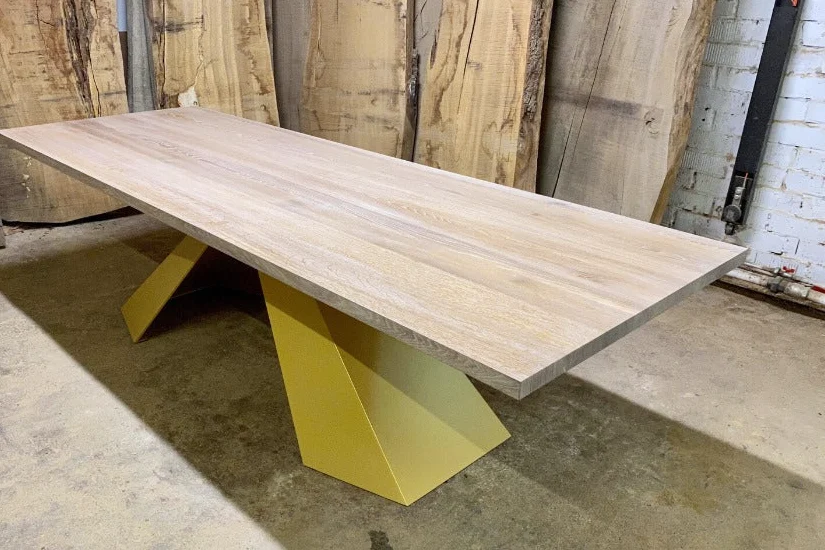
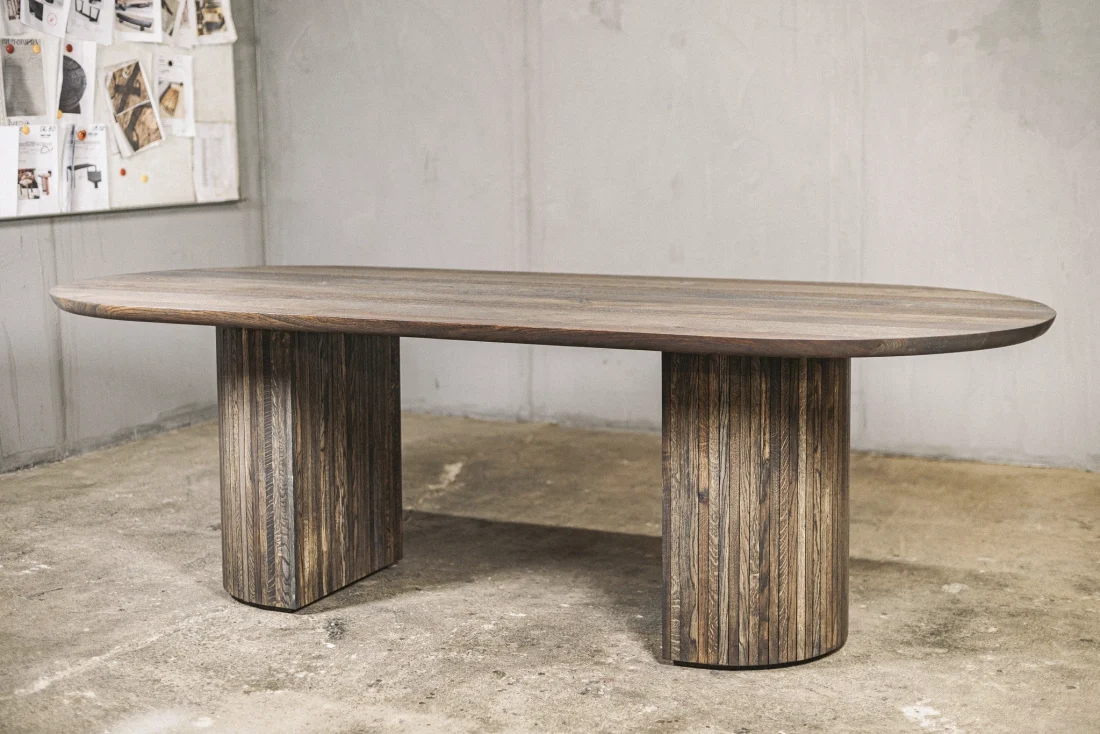
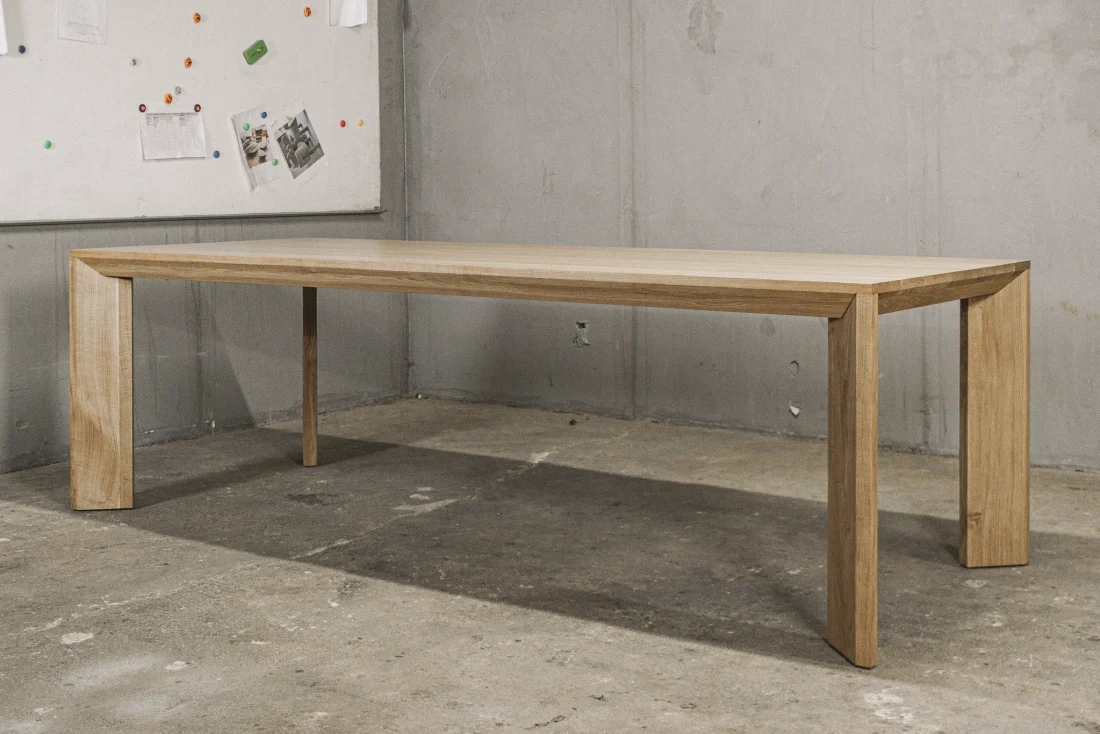
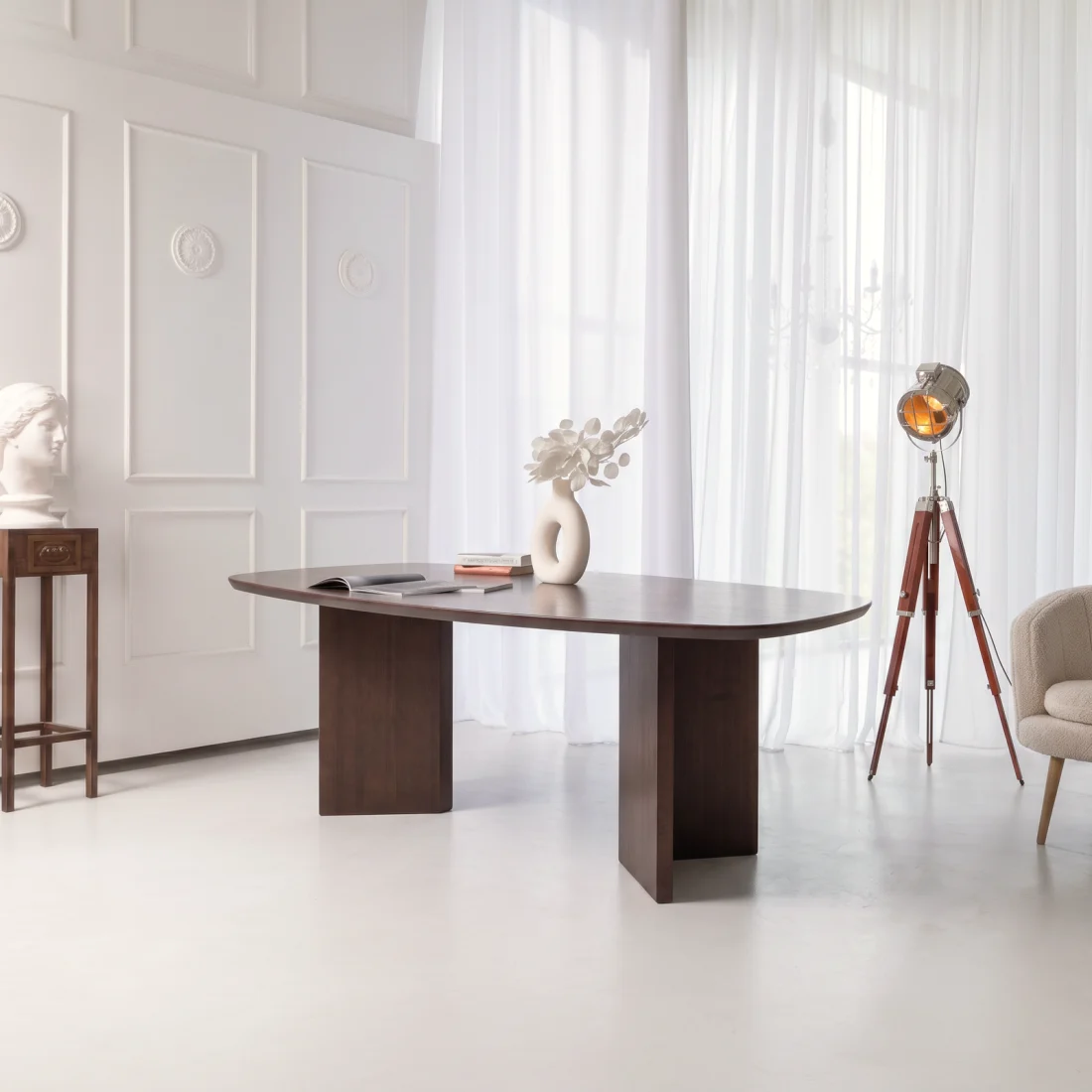
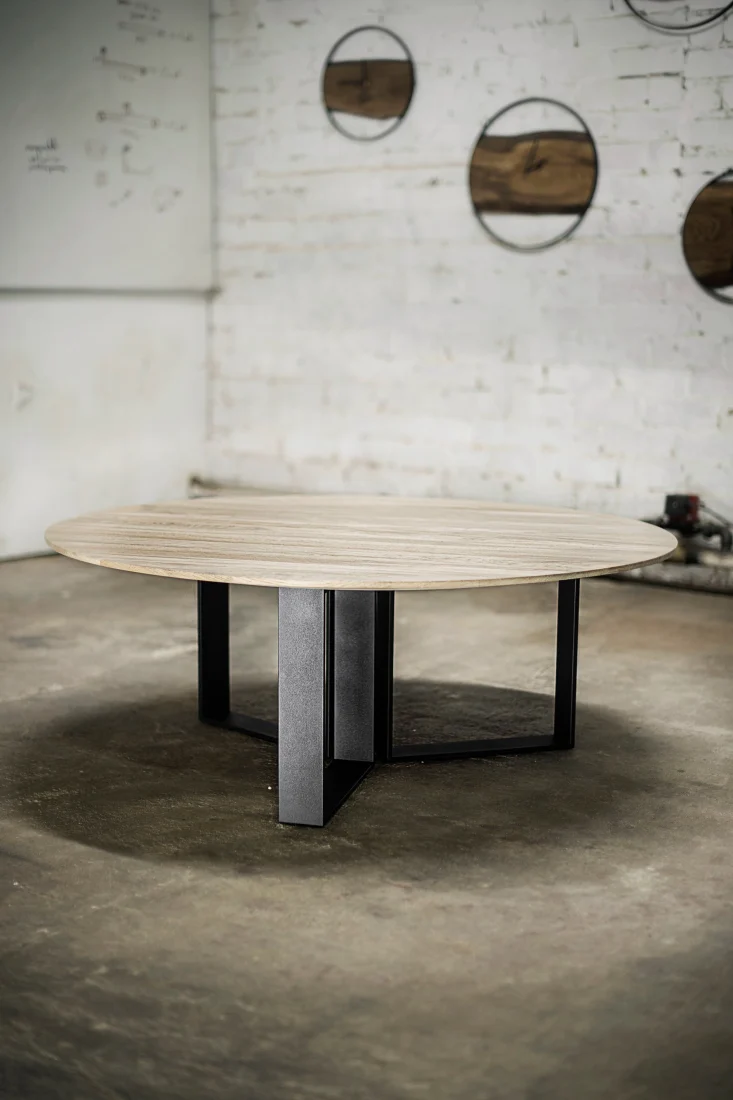
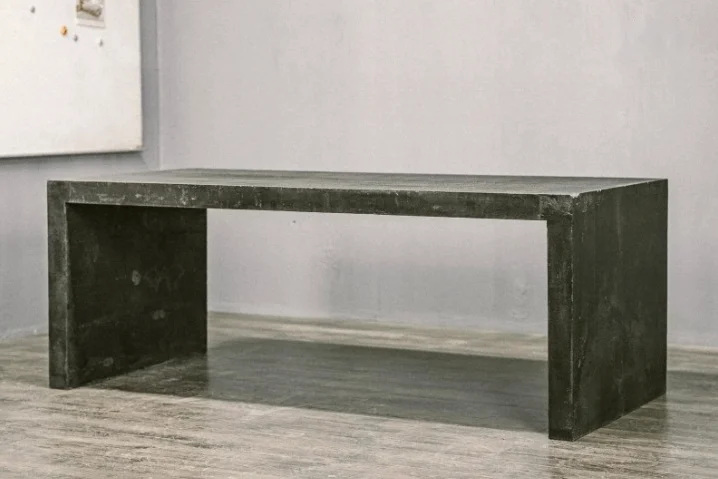
Paros is finished pale enough to be mistaken for quarried stone at a glance, a bleached, almost chalky oak top with a whitewashed edge, set on two flat, block-shaped legs in the same tone.
Look closely and the grain is unmistakably wood; from across a room, the effect reads closer to limestone. Three sizes make up the collection, one considerably longer than the other two, all sharing the same bleached finish and plain block legs. It suits a bright room best, the pale finish wants daylight the way a darker oak does not, and works equally well as a compact dining table or, at its longest size, a proper conference table. Either size handles daily meals without showing wear the way a darker top might.
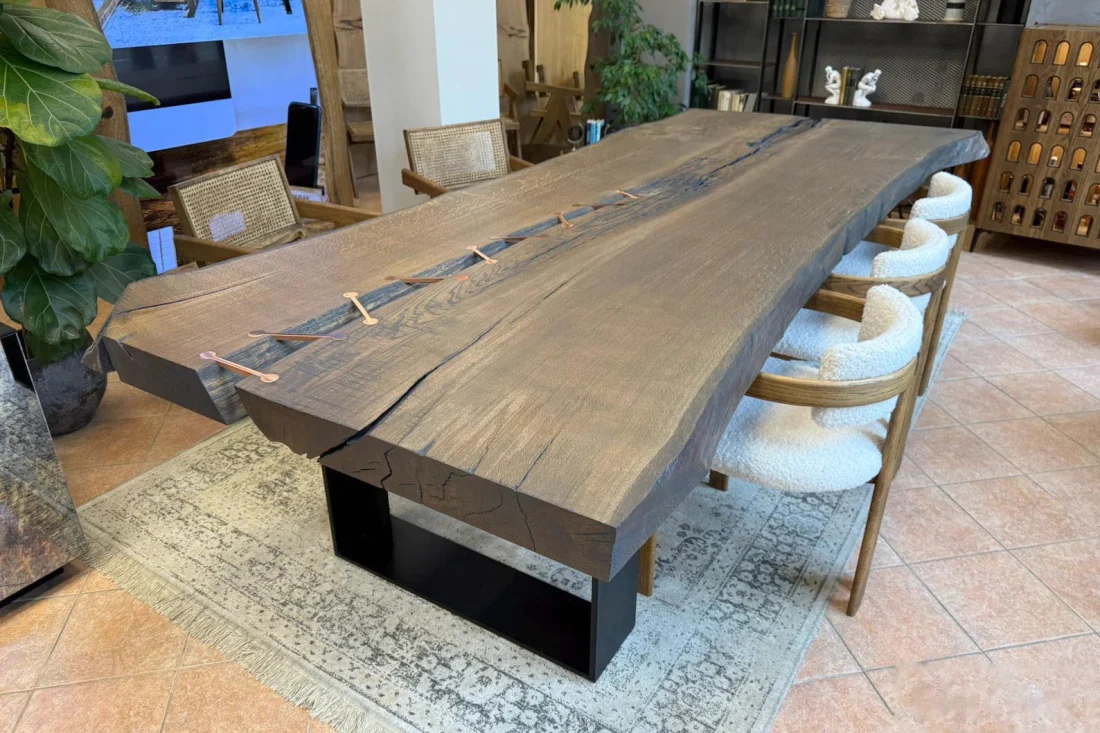
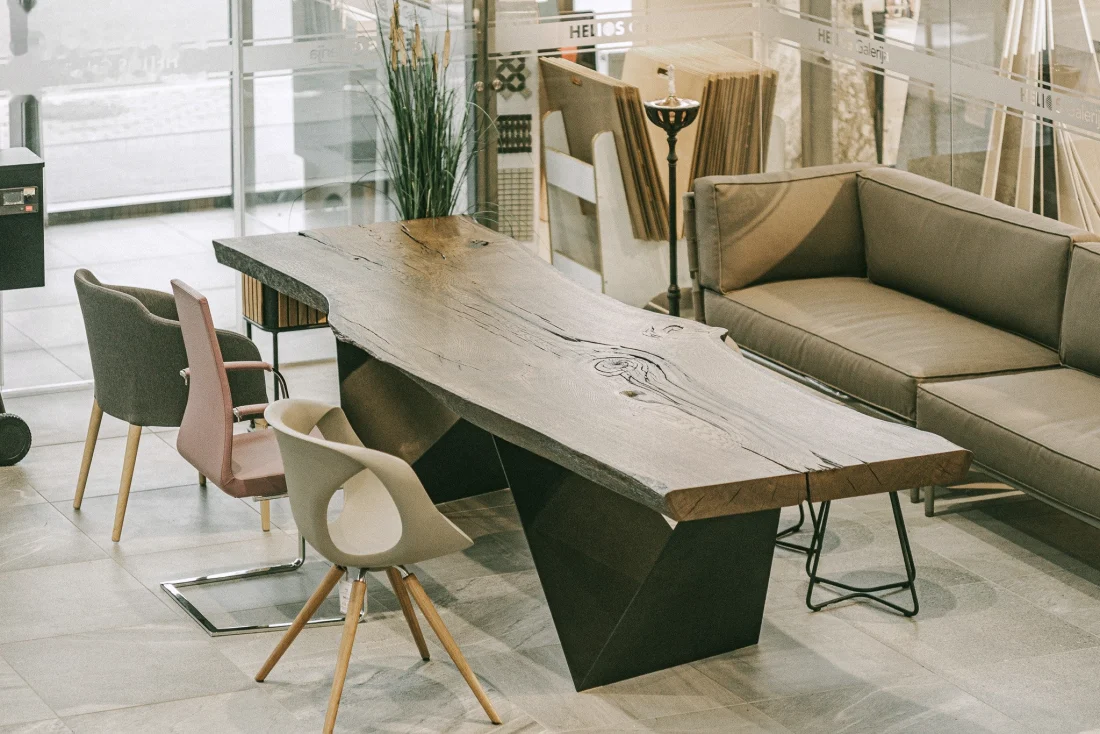
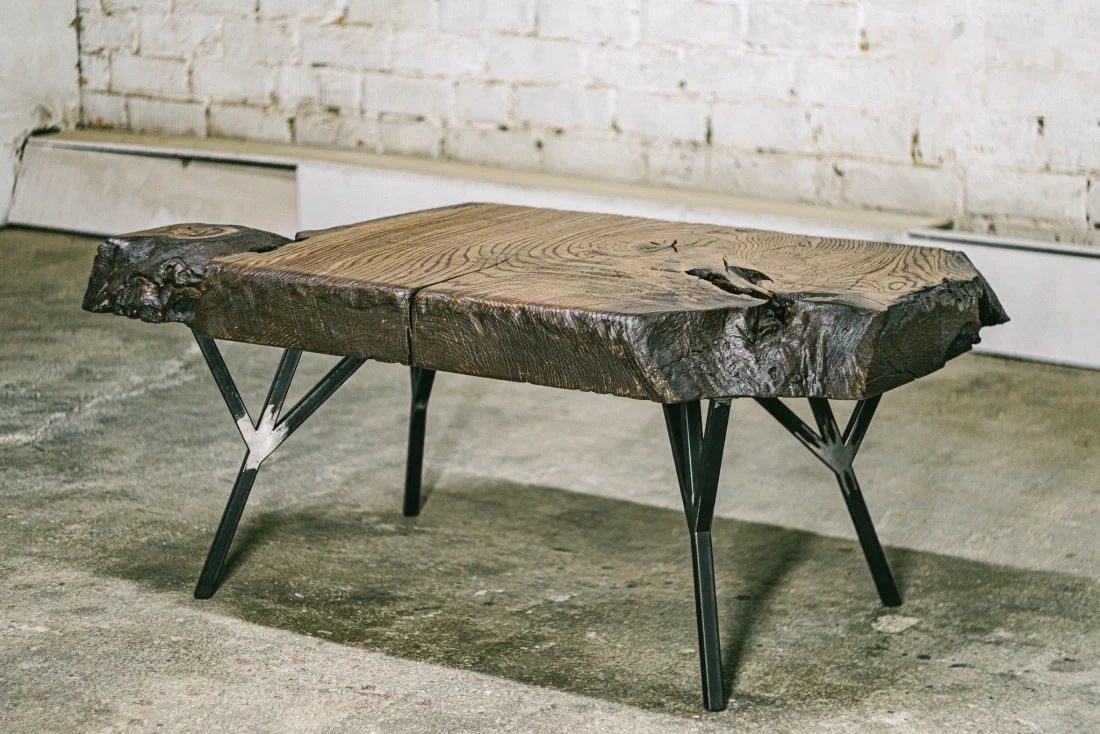
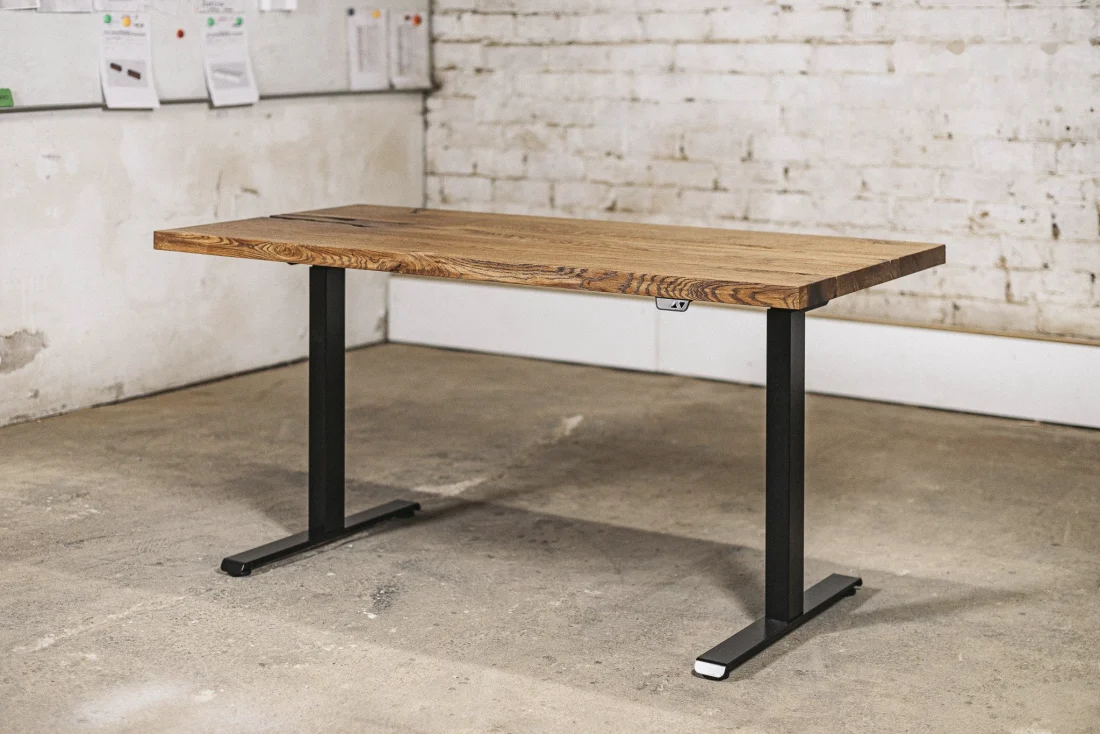
Catskill takes its shape from the landscape it is named for, high ground cut through by water, which shows up literally in the top: a wide, live-edge oak slab with a dark seam running the length of it, like a stream worked into the grain rather than added afterward.
Angled black steel legs, set at a slight lean, carry the weight without hiding the wood. At sixteen sizes, this is the largest collection in the group, running from a compact four-top to a table long enough for a dozen chairs, all keeping the same seamed top and leaning leg. It wants a room built around it rather than the reverse, the kind of table people gather at because the top gives them a reason to look down as much as across.
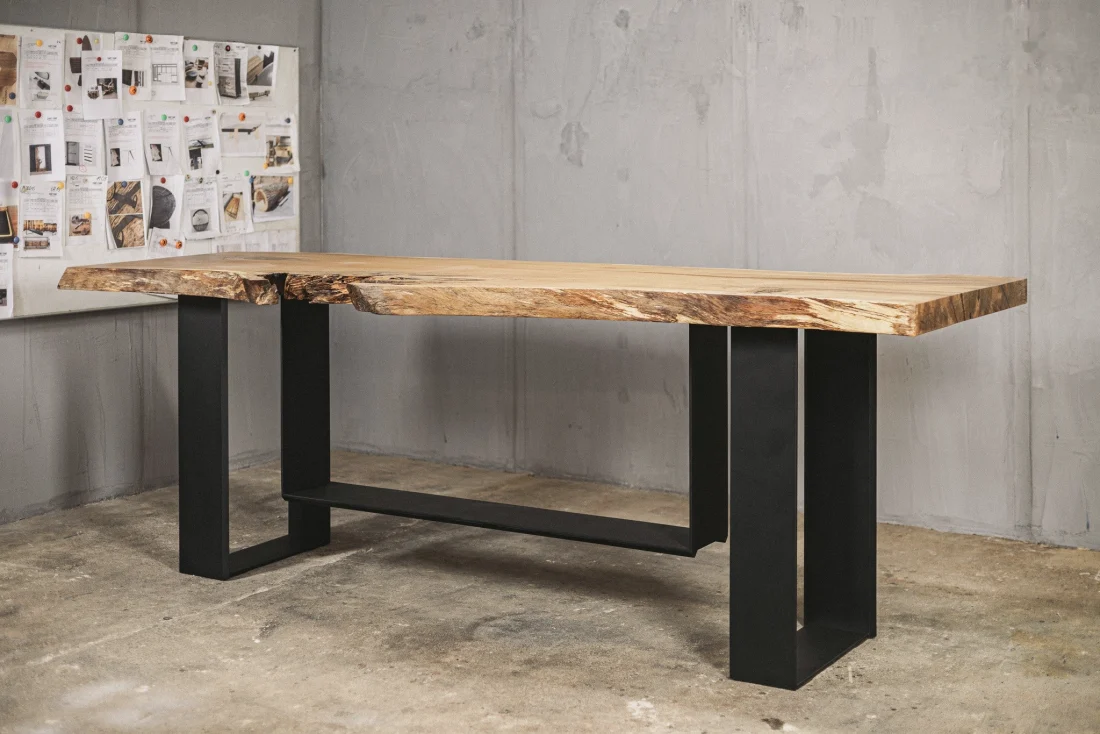
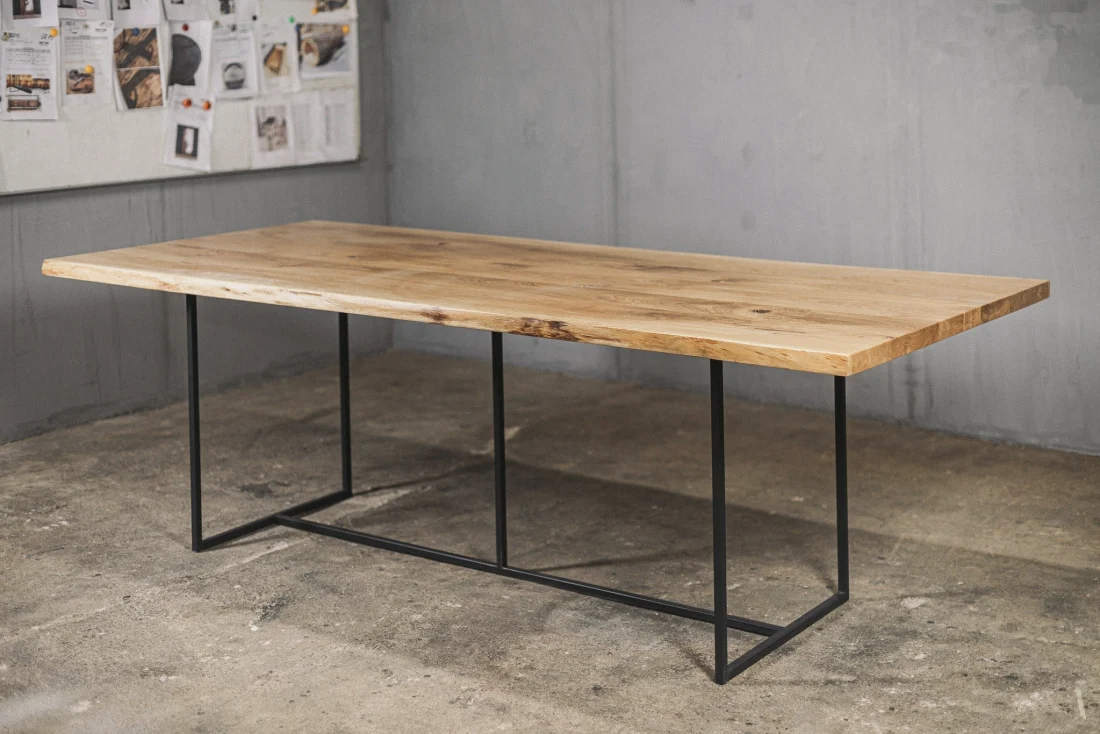
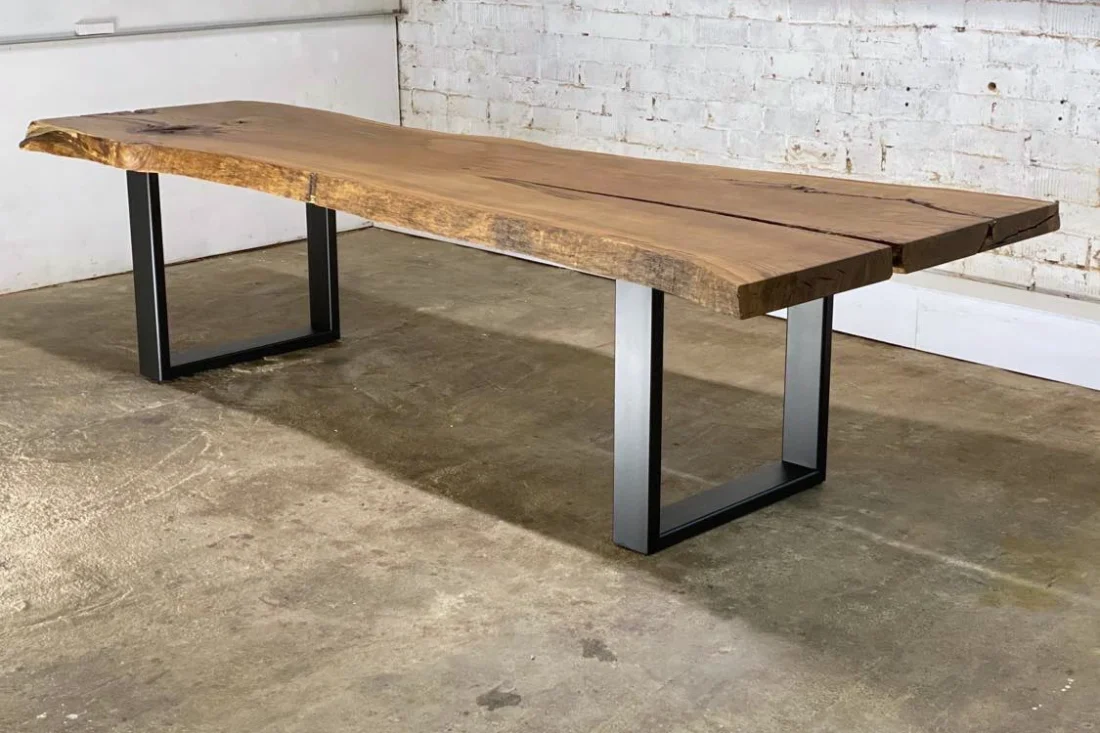
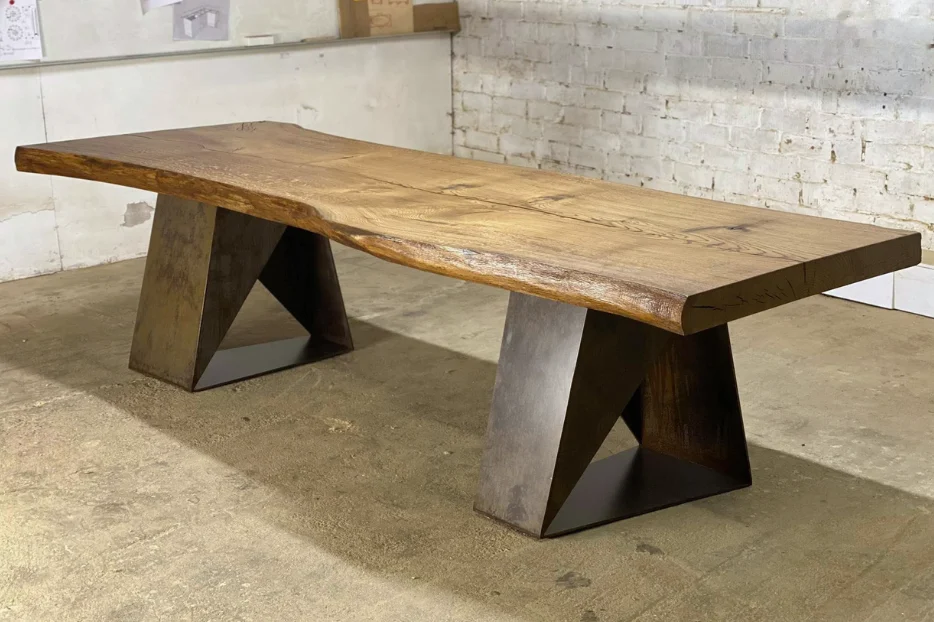
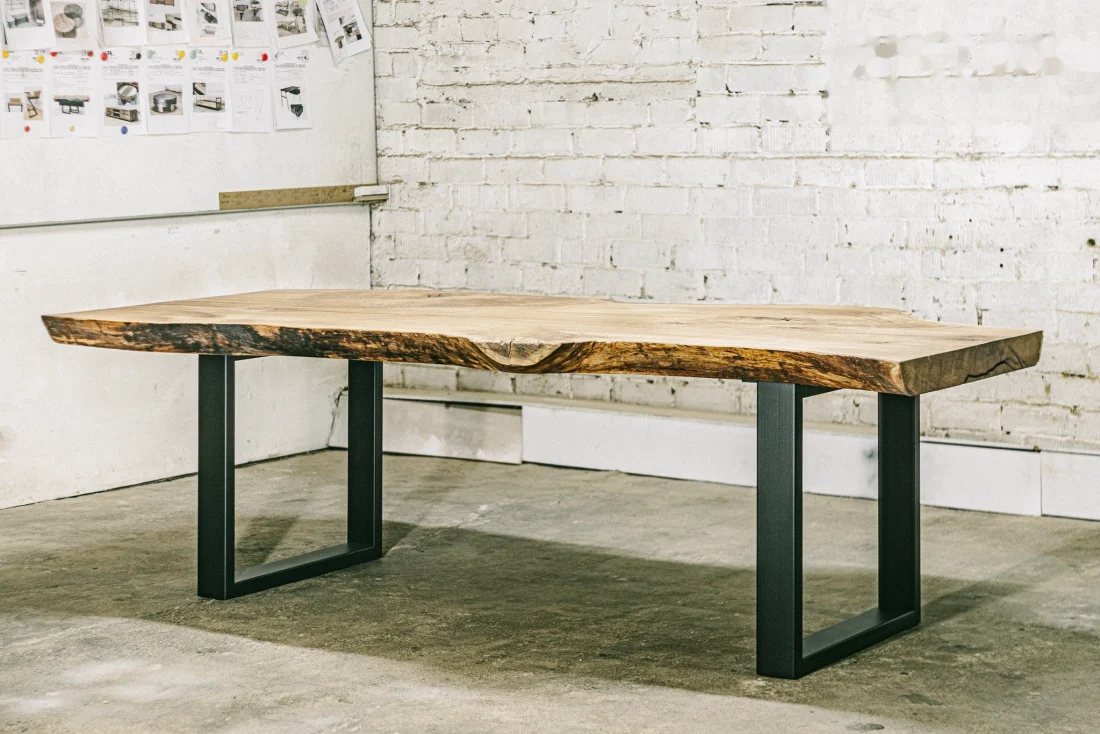
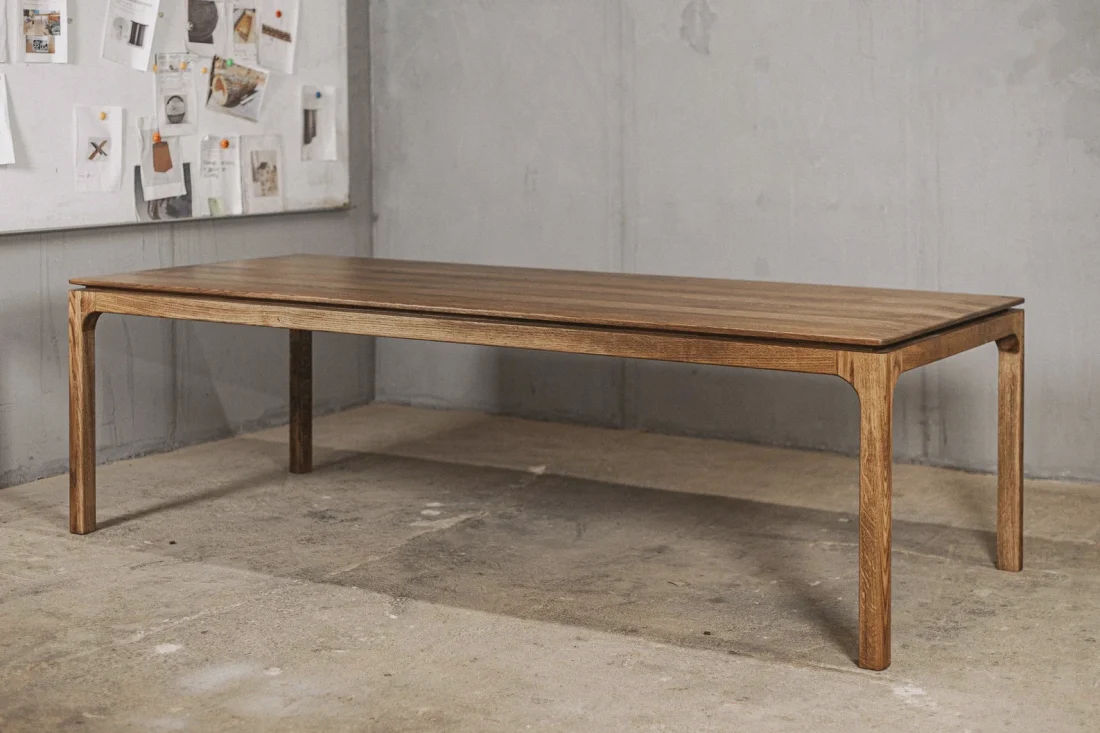
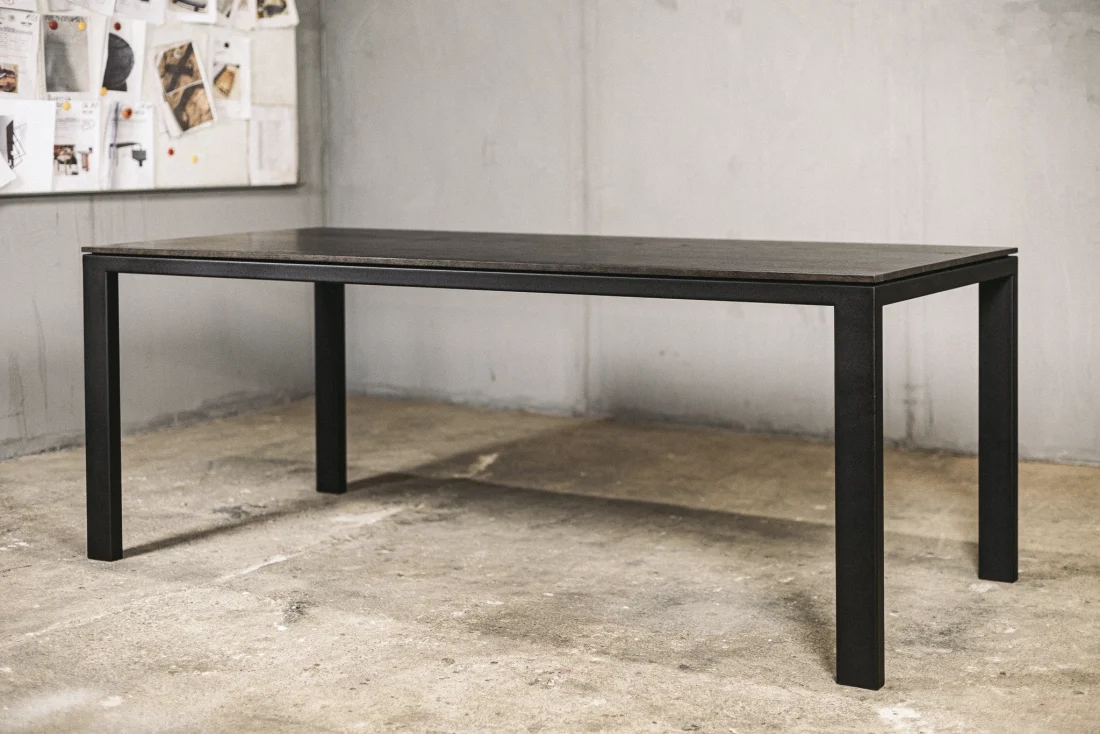
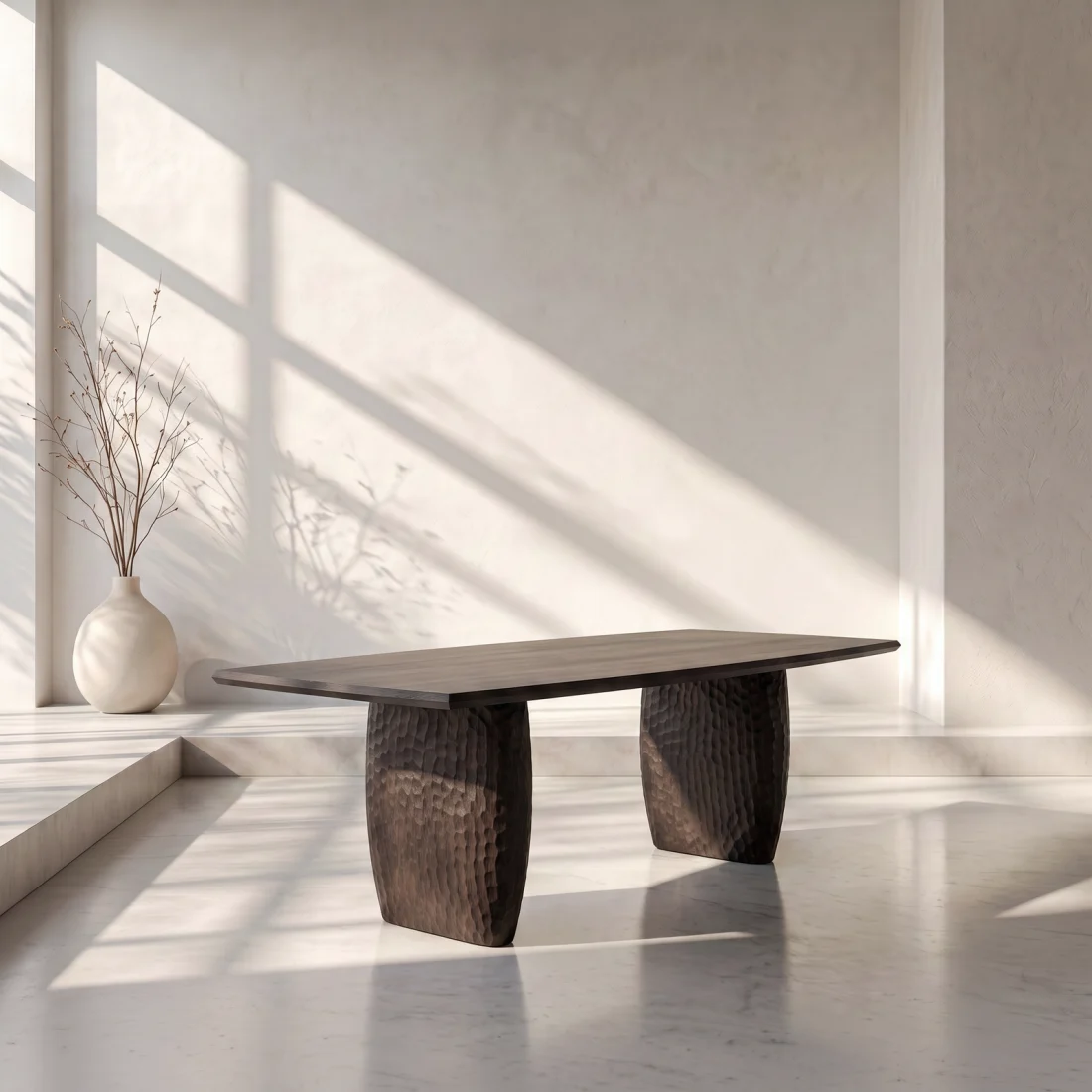
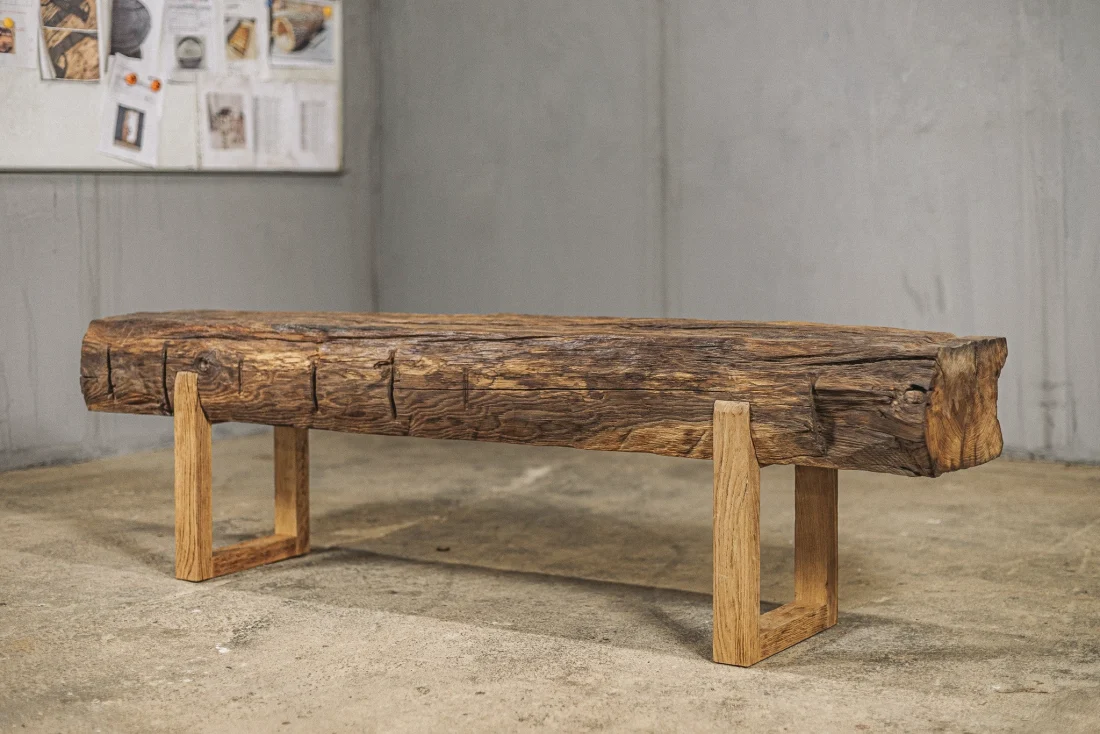
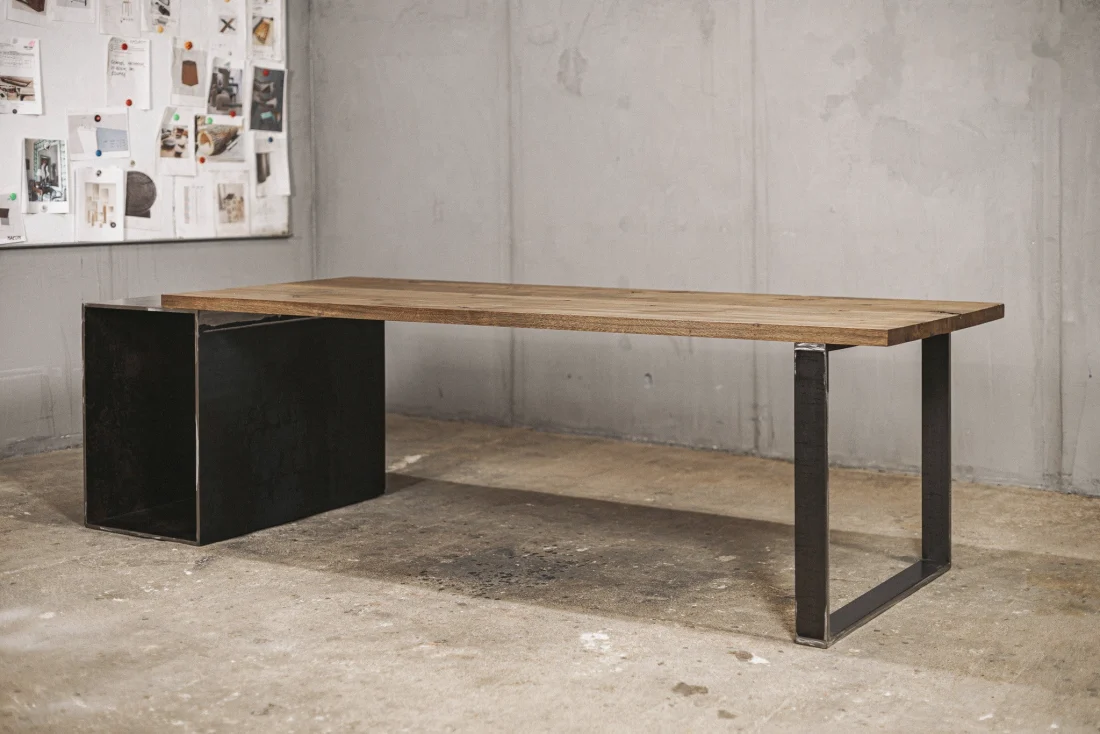
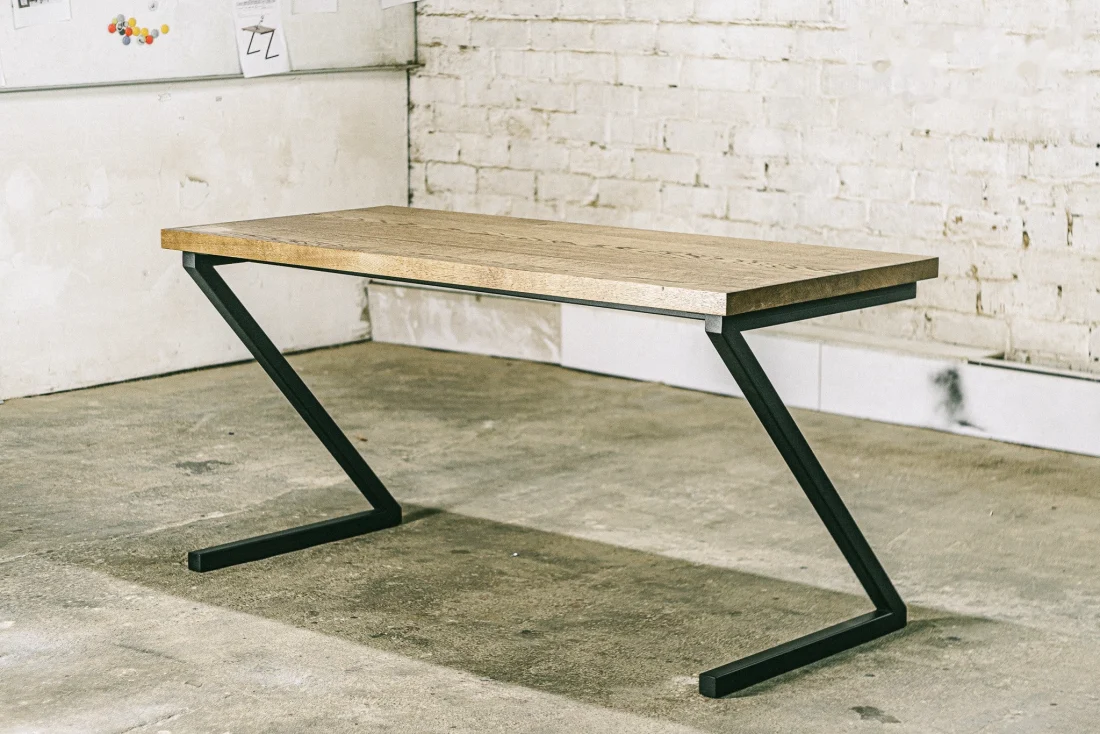
Rotterdam is a long, single board of oak, edges left natural on both sides, set on a pair of black steel legs bent into simple U shapes.
Some versions finish the steel with a deliberate rust patina instead of a flat black, which changes the whole temperature of the piece without touching the wood at all. Seven sizes make up the collection, most running long, built for a proper dining room rather than a breakfast nook, all sharing the same U-leg construction underneath. It photographs best from the end, where the natural edge and the plain steel leg line up into one continuous shape. Ten place settings around it do not feel like a stretch. Either finish ages honestly, showing the marks of actual use over time.
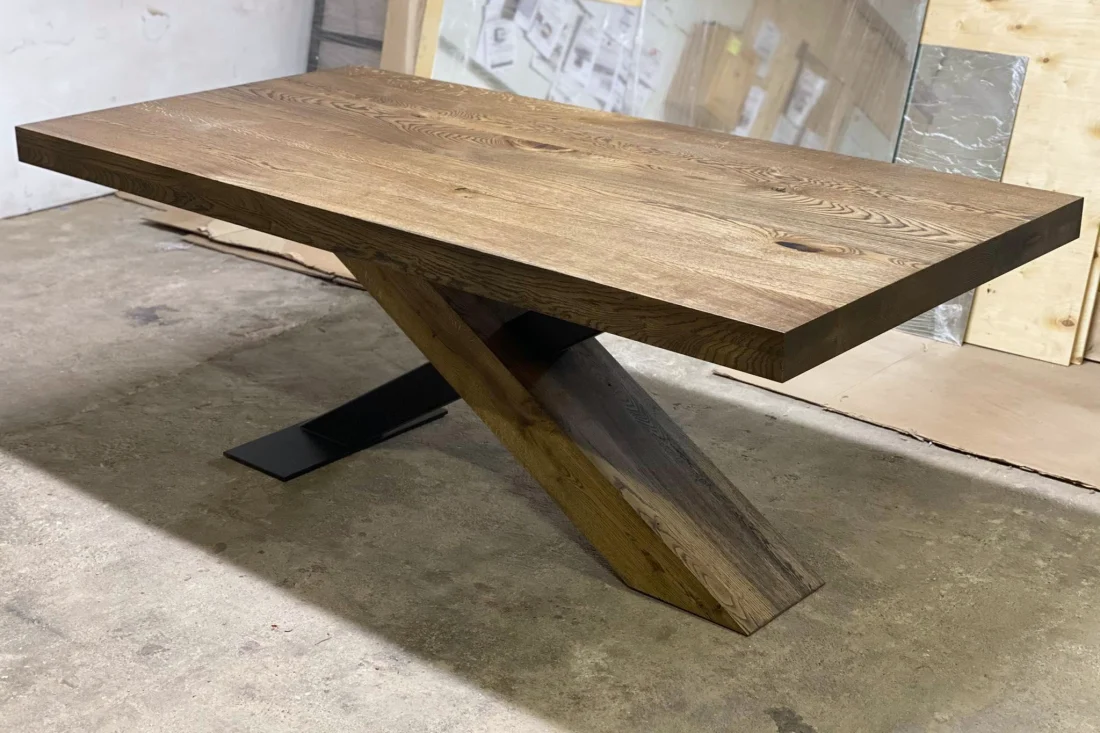
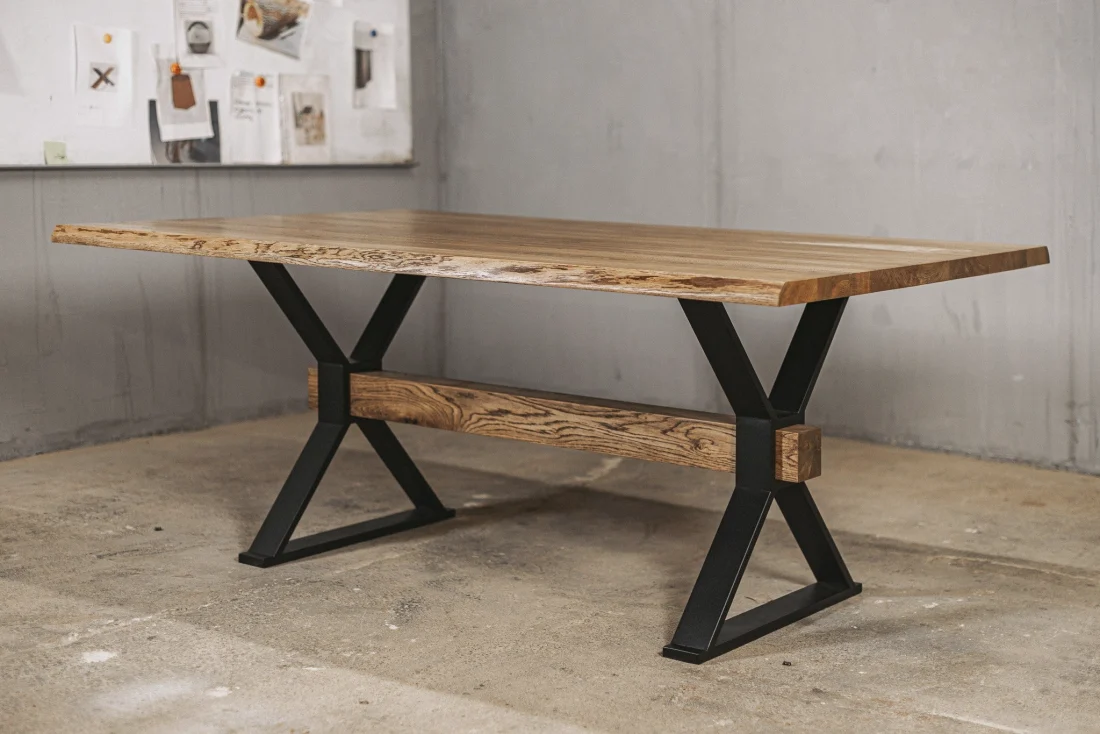
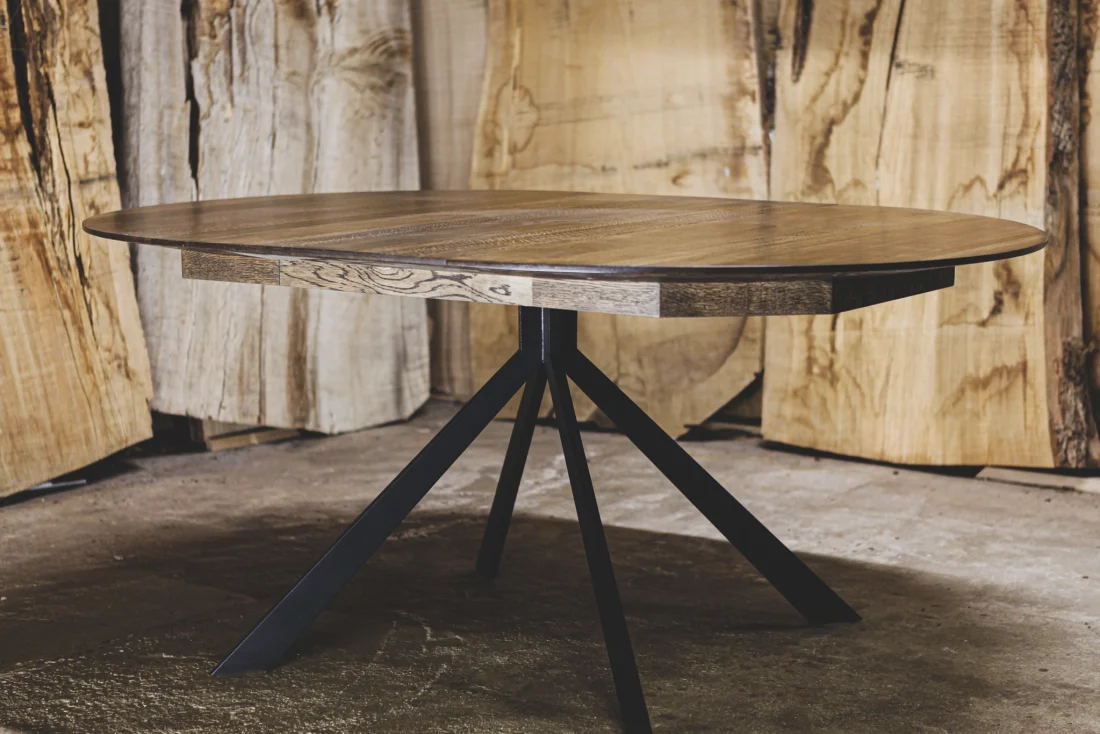
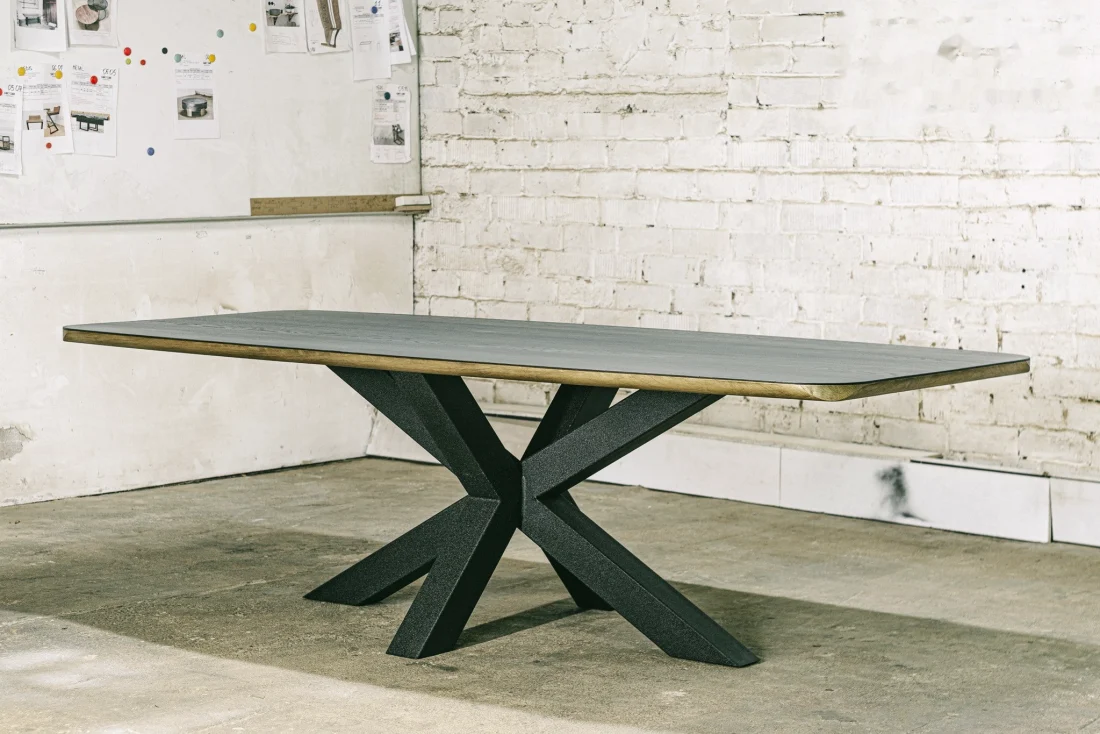
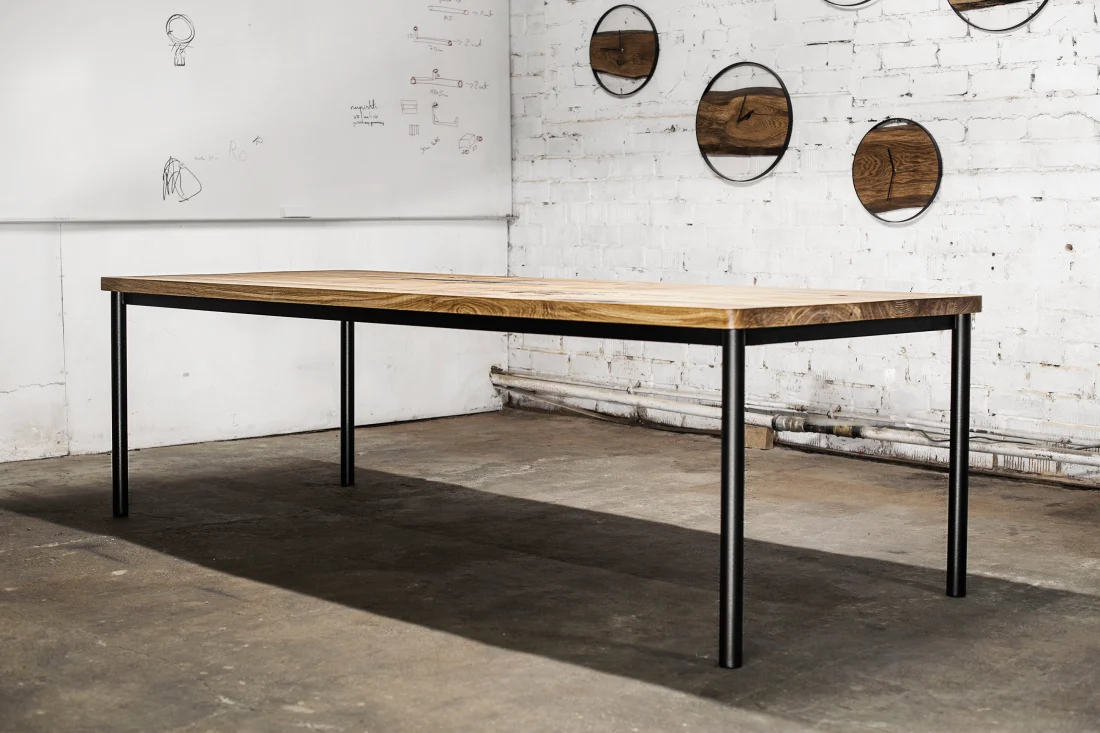
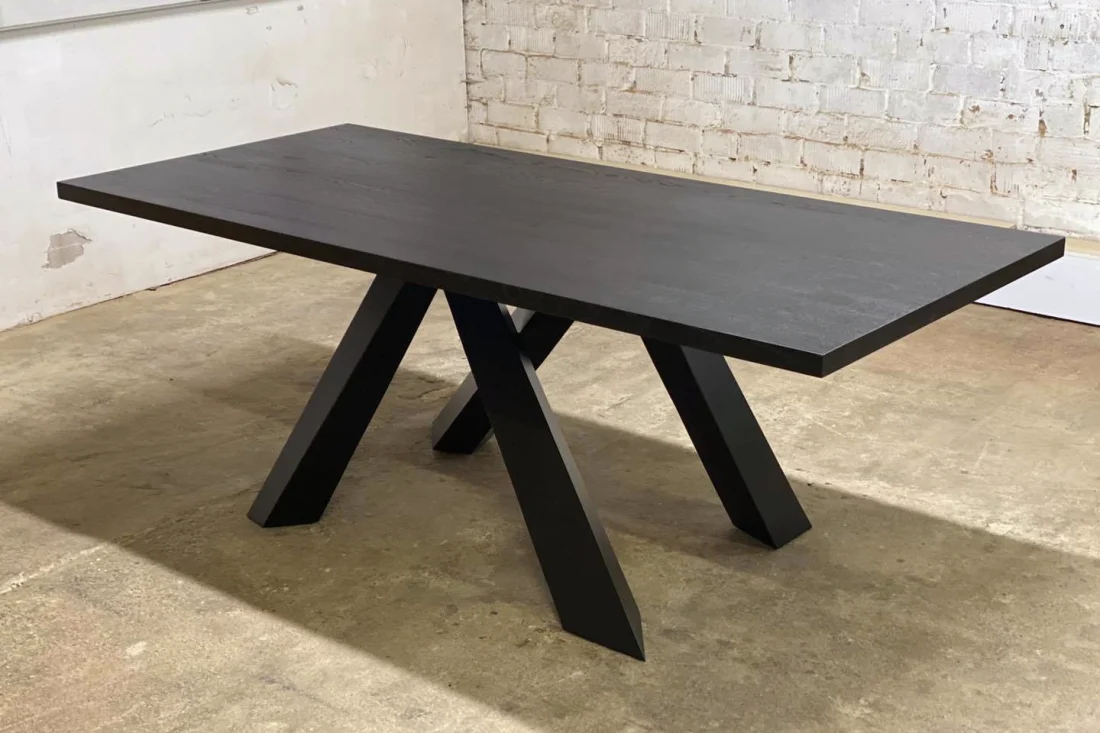
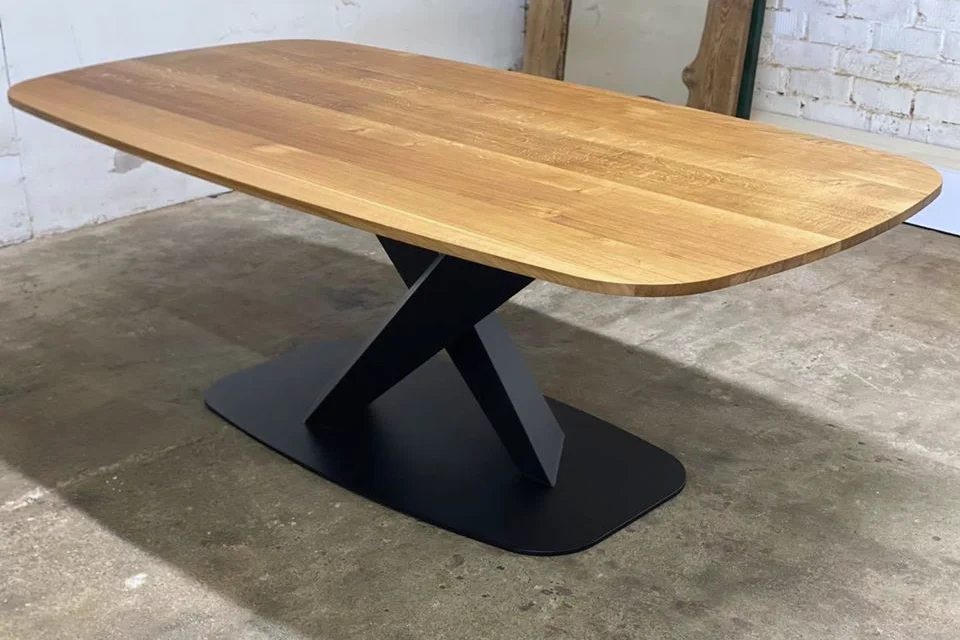
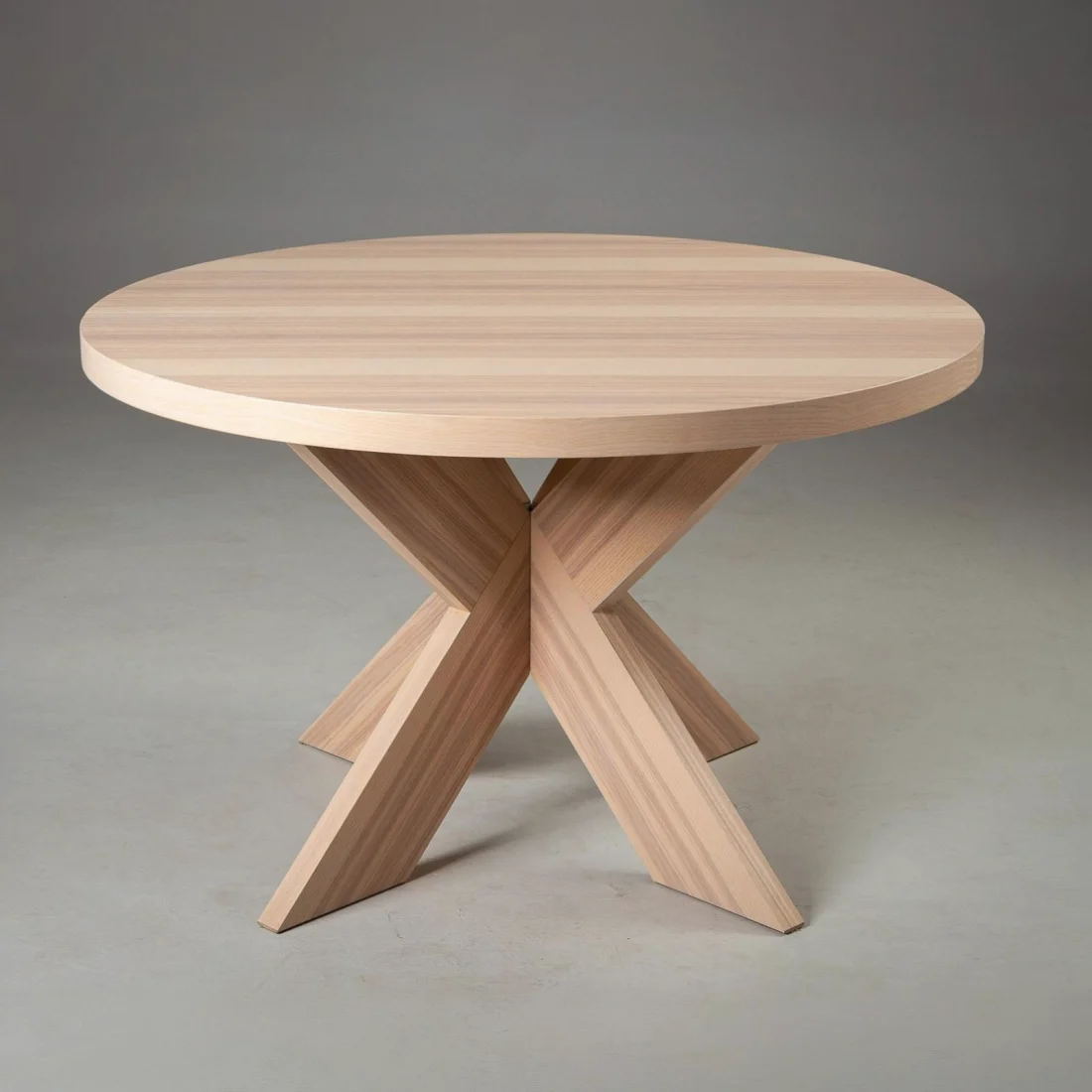
Valencia's base is a simple X, two crossed black steel beams doing the entire job of support beneath an oak top left in a natural or walnut tone depending on the piece.
There is no apron, no additional bracing — the cross does its work in plain sight, which is unusual for a base this stable. Eight sizes make up the collection, round and rectangular both, all built around the same crossed-leg logic underneath. Because the base sits mostly at the center, it leaves the legroom around the edges completely open, which matters more than it sounds like it should once eight people and eight chairs are actually seated around it. It suits a room that hosts often, where the extra chair should never feel like an afterthought.
Beaufort carries the character of a low-country town, old, unhurried, a little overgrown, mostly through the base: a set of black steel legs cast into an irregular, branch-like shape that looks more grown than manufactured.
The oak top stays plain and flat above it, letting the legs read as the sculptural element they were clearly designed to be. Eight sizes run the collection, all keeping the same organic leg casting regardless of tabletop length or finish. It suits a dining room that wants one unmistakably handmade element without turning the whole table into a showpiece — the top still sets and eats like ordinary oak, the legs just happen to look like nothing else in the room. It ages the way old ironwork does, gaining character rather than losing it.
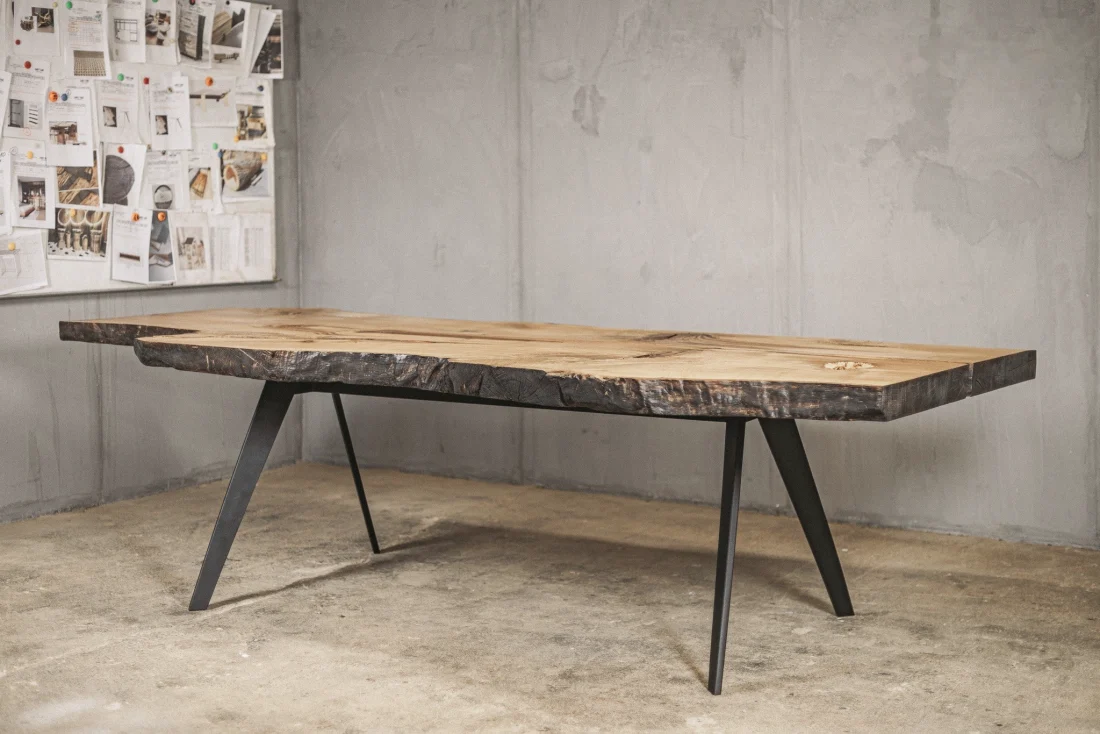
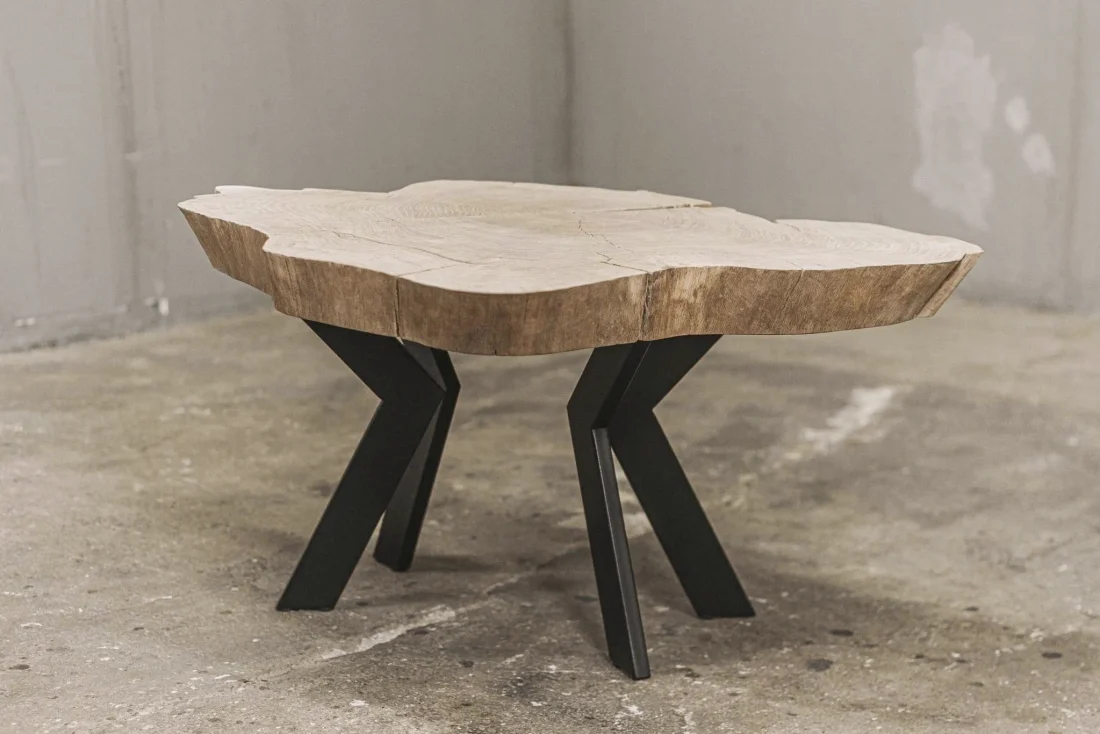
Asheville keeps its live edge honest, the natural, uneven line of the tree left untouched on both long sides of the oak top, and sets it on a pair of black steel legs shaped like flat wedges, angled just enough to feel sculptural without losing stability.
The grain does most of the talking; the legs are there to let it. Four sizes make up the collection, each with its own edge and its own figuring, since the wood dictates the final shape as much as the design does. It suits a room that wants the outdoors acknowledged without actually building around a rustic theme, one true material, left alone, is usually enough on its own. Each edge tells its own story, since the tree it came from never repeats.
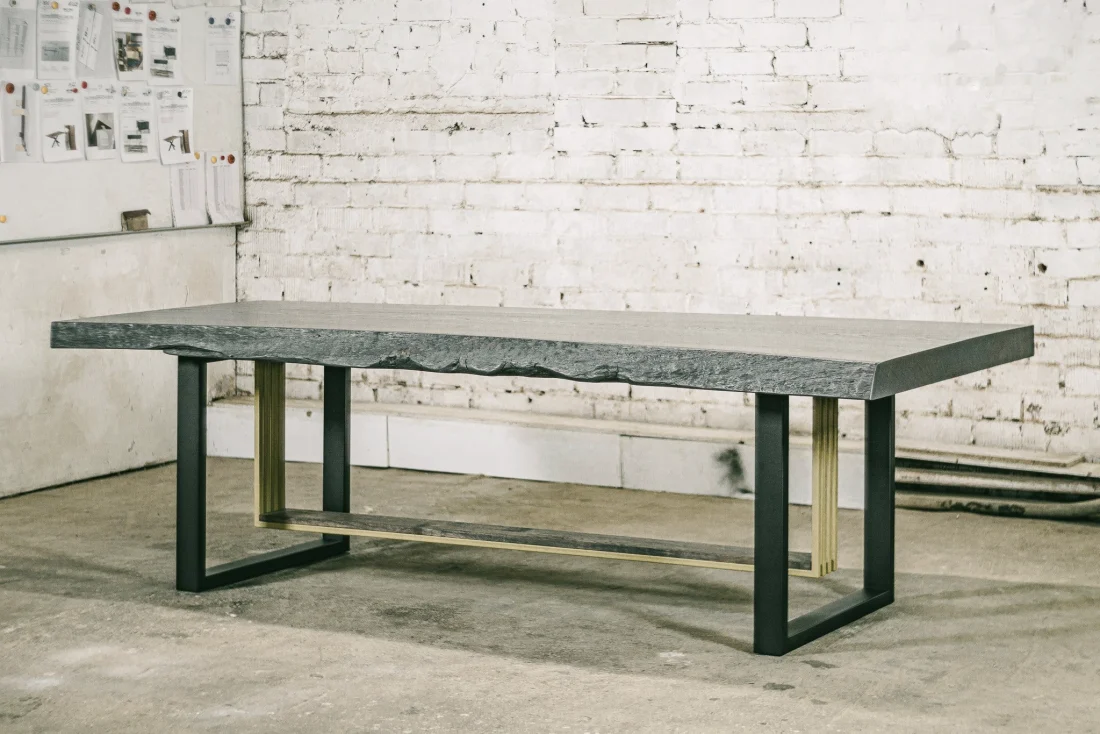
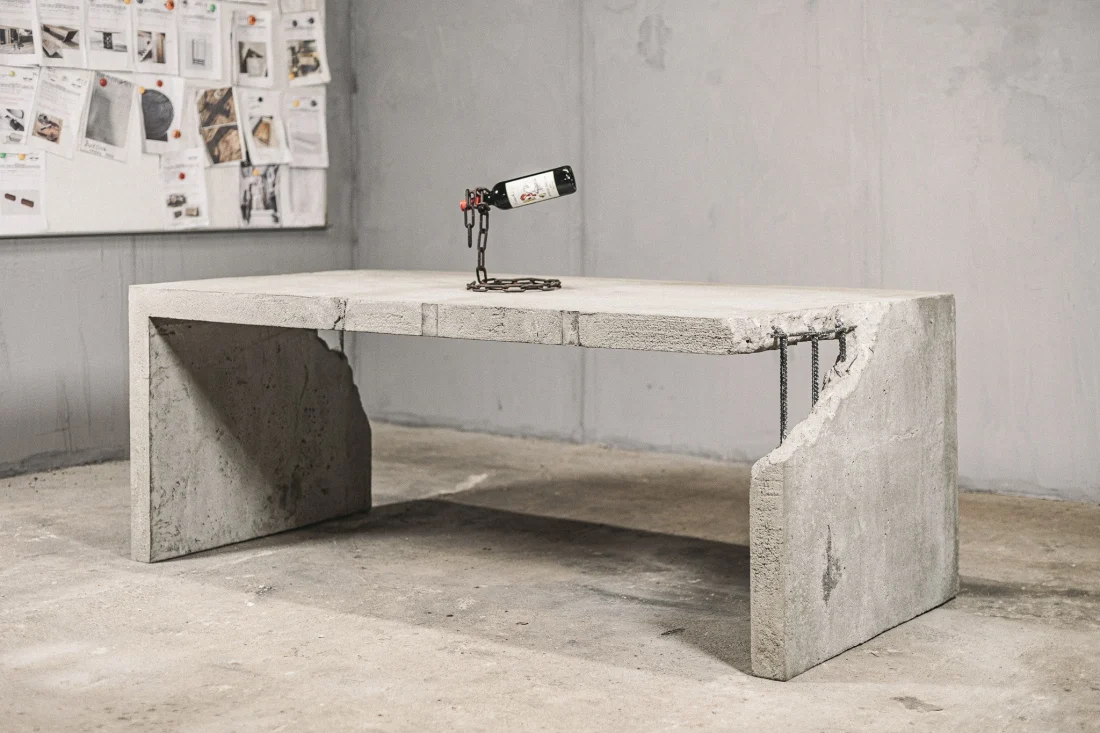
Verona's top looks quarried rather than milled, a rough, stone-gray slab with a fissure worked into one long edge, closer to a piece of broken rock than a sanded board.
Underneath, a black steel frame carries the weight, with a slim brass rail running the length inside it, just visible between the legs, working as a stretcher and a glint of warmth against all that gray. Eight sizes make up the collection, each keeping the same textured top and the same brass detail hidden beneath. It wants a room confident enough to hold a table this heavy-looking, and looks best under low light, when the brass catches something and the stone-toned surface goes nearly black. During the day, in flat light, it reads simply as a solid, quiet slab.
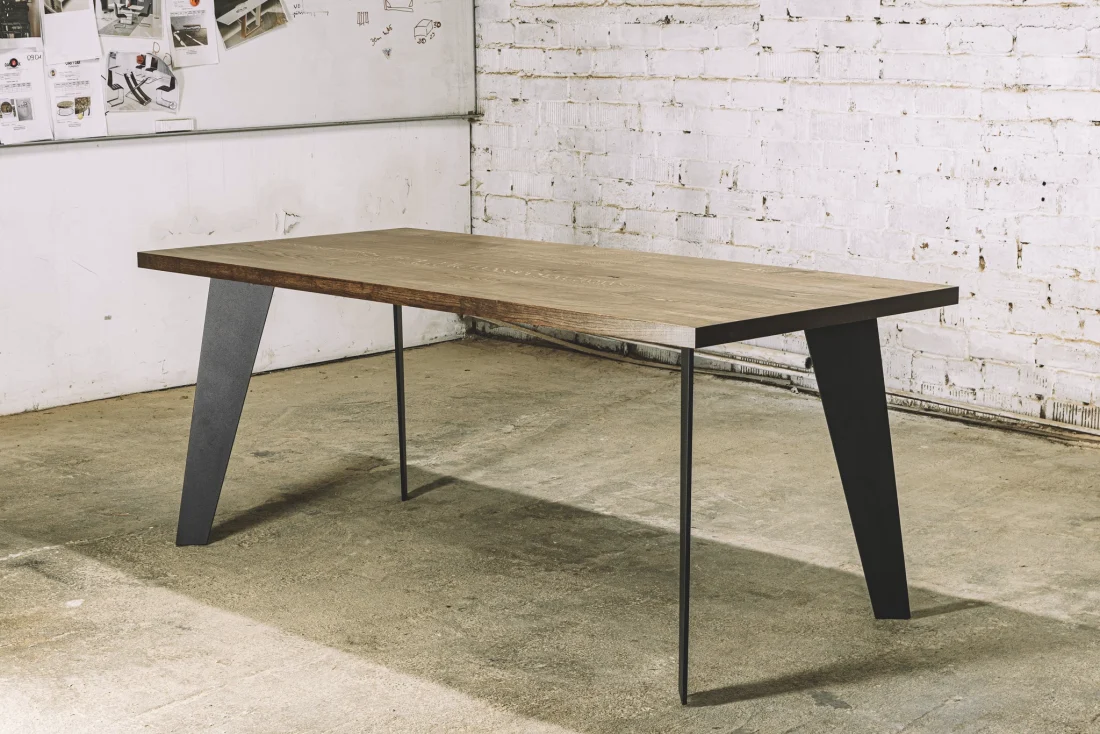
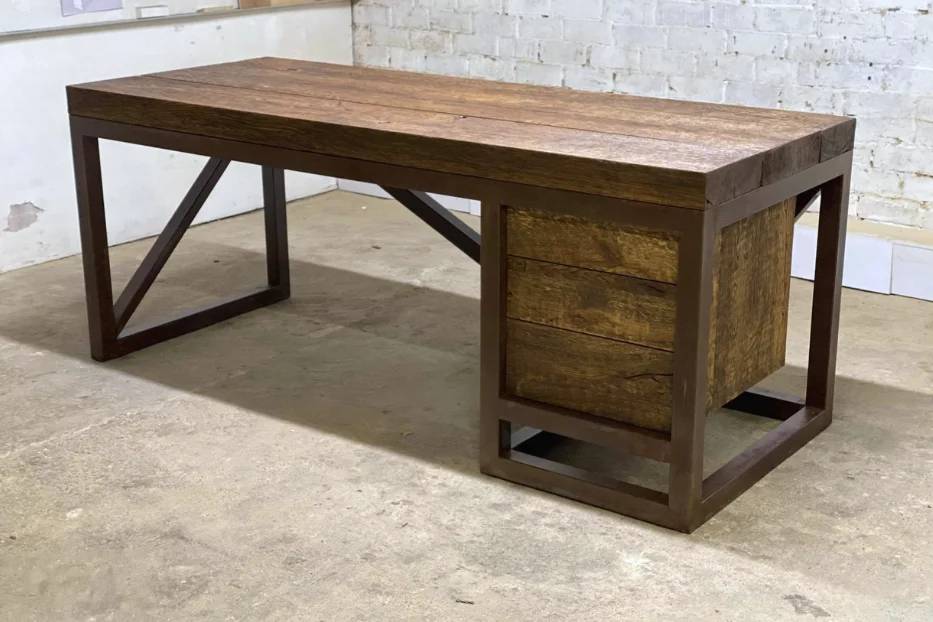
Ardennes pairs a substantially thick oak top, the kind you notice at the corner before you notice anything else, with a pair of black steel legs bent into a sharp V, angled outward for stability like a sawhorse stripped to its essentials.
The contrast between the heavy wood and the thin, sharp steel is the whole design. Five sizes make up the collection, some finished in a deep ebony stain, others left closer to natural, all keeping the same V-leg base underneath. It carries its weight visually as well as literally, a table that looks like it would take four people to move, which, depending on the size, it probably would. It takes a scratch or a water ring the way old, honest oak always has.
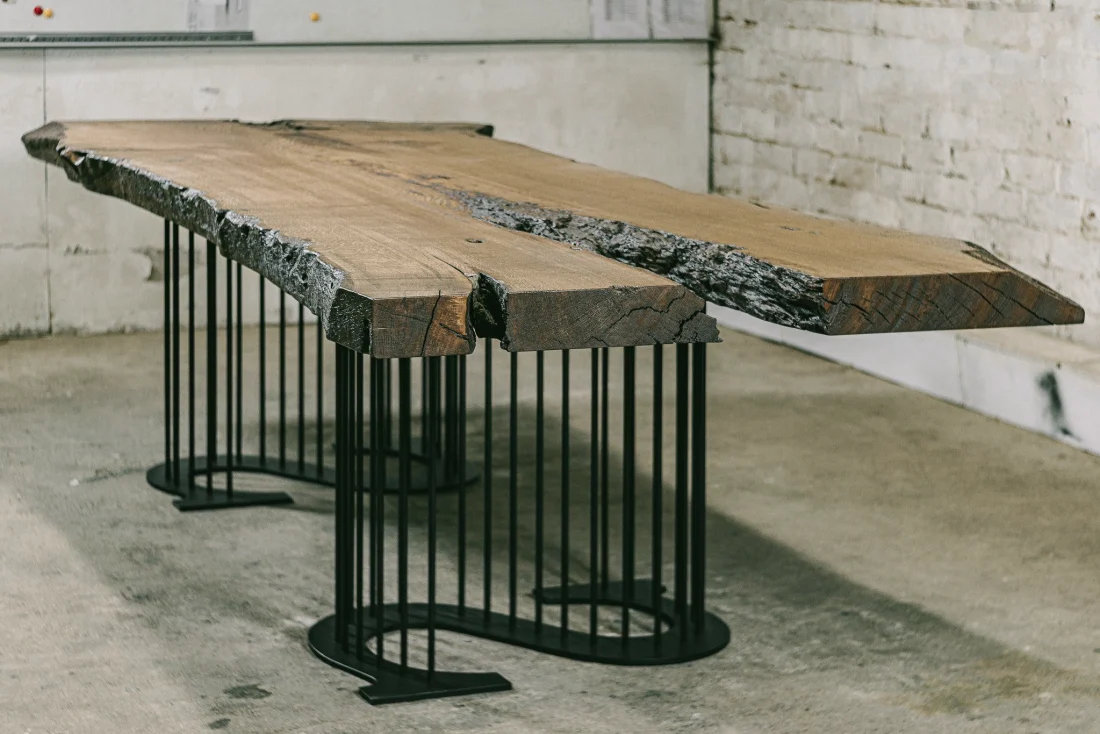
Santa Monica sets a live-edge oak top on a base built from dozens of thin black steel rods, bent into a rounded, wave-like cage at each end rather than standing straight up and down.
The effect underneath is almost aquatic, ribs curving the way a hull's frame does before the planking goes on top. Two sizes make up the collection, both long enough to read as a real dining table rather than a breakfast piece, both sharing the same curved rod base. It suits a room with some drama to spare, high ceilings or a view worth competing with, since the base is built to be seen from underneath as much as from the side. It holds up well near natural light, where the rod shadows shift through the day.
Tirol is built the way a mountain farmhouse table has always been built: a thick oak top set on a trestle of heavy, squared beams, joined without any hardware you can actually see.
The wood is finished dark, close to the color of a beam that has sat near a fireplace for a few decades, and the trestle makes no attempt at delicacy. Nine sizes cover everything from a modest six-seat table to one long enough to seat a dozen, all sharing the same trestle-and-beam construction regardless of length. It belongs in a room with a fireplace, or at least the idea of one, somewhere the table is expected to outlast several rounds of everything else around it. Guests tend to linger longer at this kind of table than at a lighter one.
Vail carries a live-edge oak top on a pair of black steel legs bent into simple A-frames, the kind of angled support you would expect under a mountain cabin bench rather than a dining table.
The natural edge stays rough along both long sides, a reminder of the log it came from. Four sizes make up the collection, all keeping the same A-frame silhouette regardless of overall length or leg finish. It works well in a room with some height to it, vaulted ceilings or exposed beams, since the angled legs echo that kind of structural honesty rather than fighting it. Chairs of almost any style seem to settle comfortably around it. It sets up quickly too, since the two-leg construction leaves little to align.
Denver keeps things simple: a live-edge oak top, natural on both long sides, set on two solid black steel blocks standing in for legs.
There is no taper, no ornament, nothing between the blocks and the floor, just enough mass to feel permanent under a heavy slab of wood. Three sizes make up the collection, the wood and figuring different in every piece since no live edge ever repeats. It suits a room that wants the wood itself to be the entire statement, with a base quiet enough to disappear once anyone actually sits down. Between the two blocks, there is enough open floor for a bench, a dog, or simply nothing at all. The finish only deepens with age, taking on more character with every year of use.
Bruges built its reputation on lace, made by hand in front windows for centuries, and on canals that gather pale light off the water.
This dining set pairs an oak table — straight-lined, warm, unremarkable in the best way — with chairs upholstered head to foot in a heavy white bouclé, textured like the lace the city is known for. The table does the structural work: solid oak, simple legs, nothing to distract from what surrounds it. The chairs, some with arms and some without, carry all the texture, their nubby white fabric catching light the way a lace pattern once did in a shop window. Around a long table, eight of these chairs read as one deliberate, quiet statement rather than eight separate pieces.
Amalfi's coast drops straight into the sea in dark, fluted cliffs, and this dining set takes its base from that geology — a run of vertical ridges in deep, walnut-toned oak holding up a long rectangular top.
The chairs echo it in miniature, each leg and armrest built from the same reeded, upright form. The wood is oak throughout, stained dark enough that the grain recedes and the shape takes over. Seats and backs are upholstered in a plain oatmeal fabric, the only soft note in an otherwise architectural set, with armchairs anchoring each end of the table and side chairs filling the run. It is a table for a room that wants gravity — evening dinners, a bottle open a while, no one rushing to clear the plates.
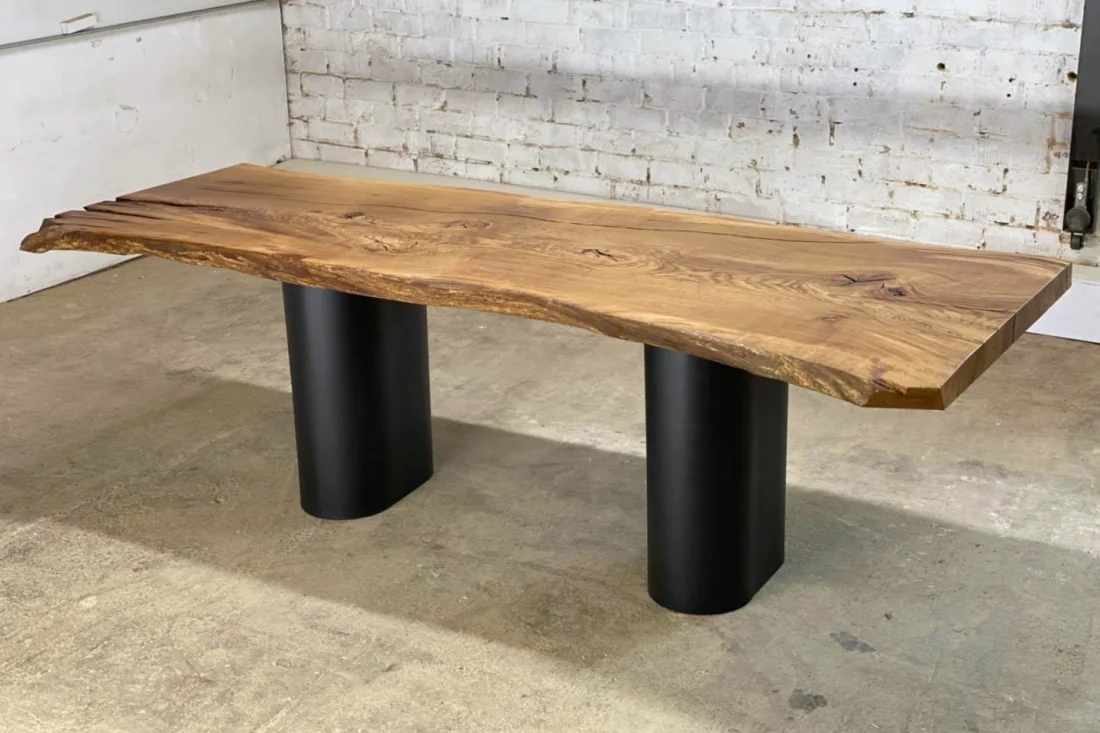
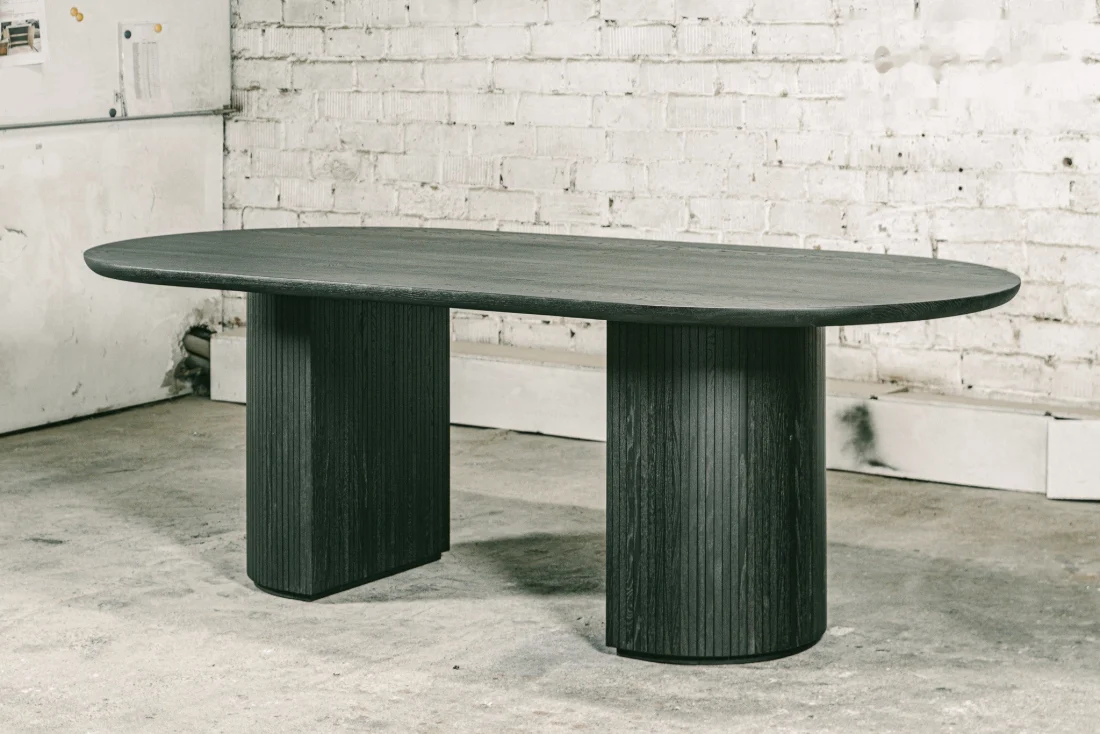
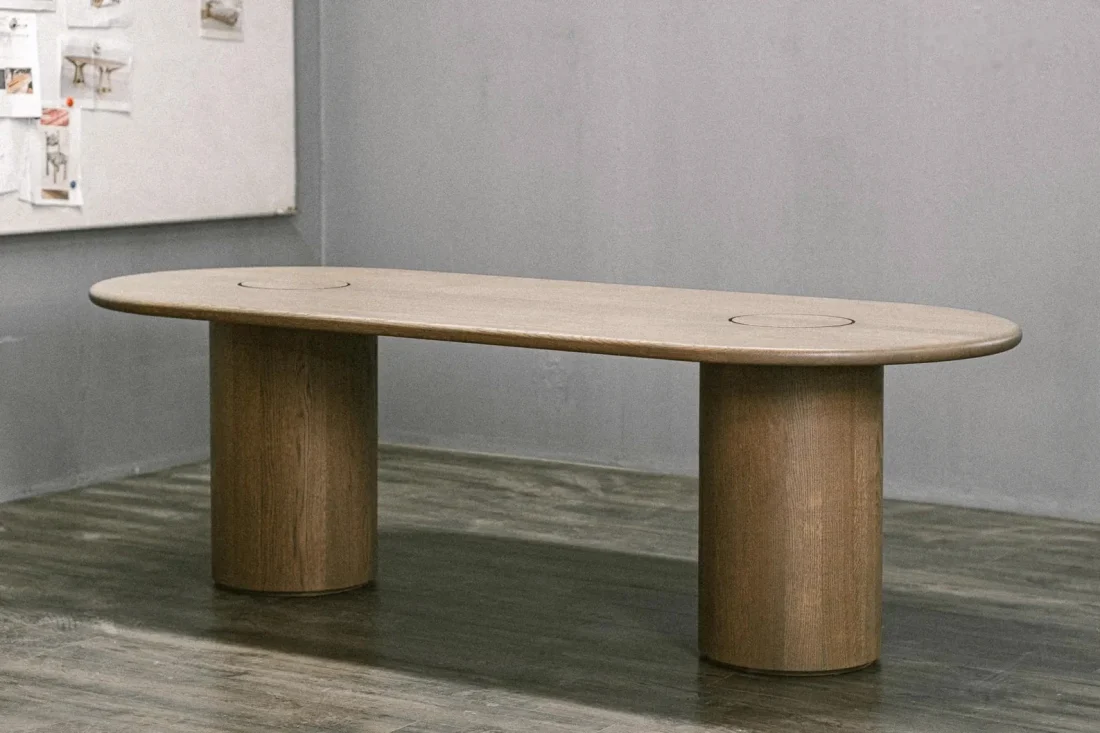
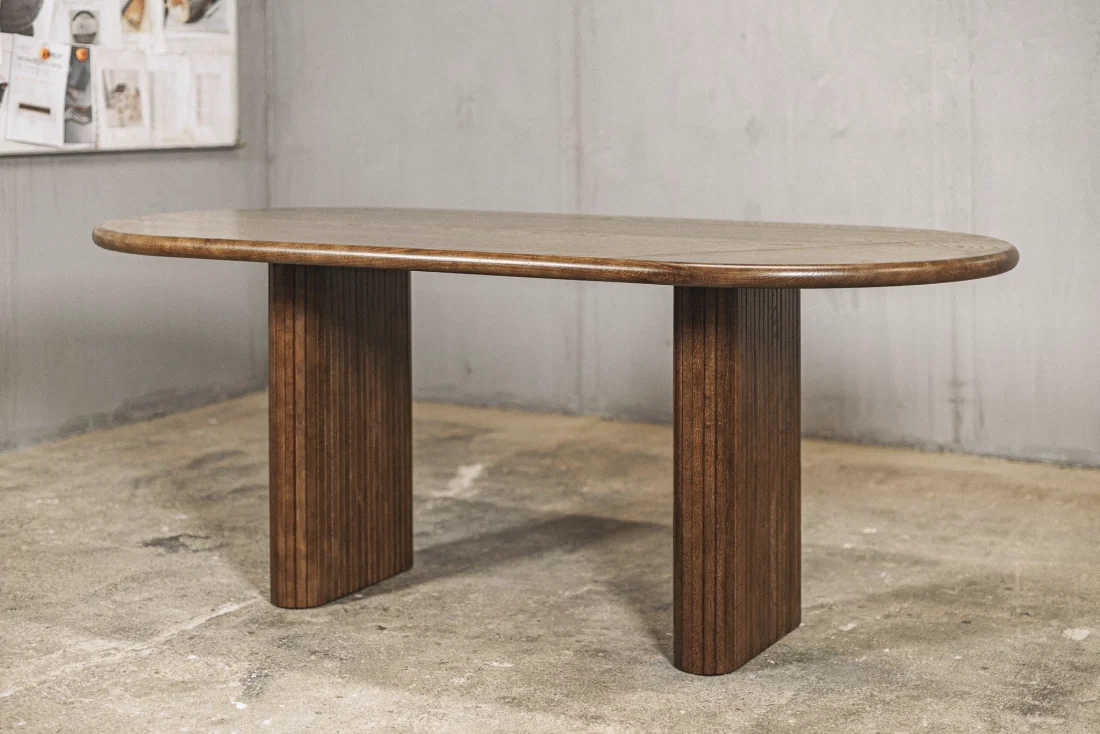
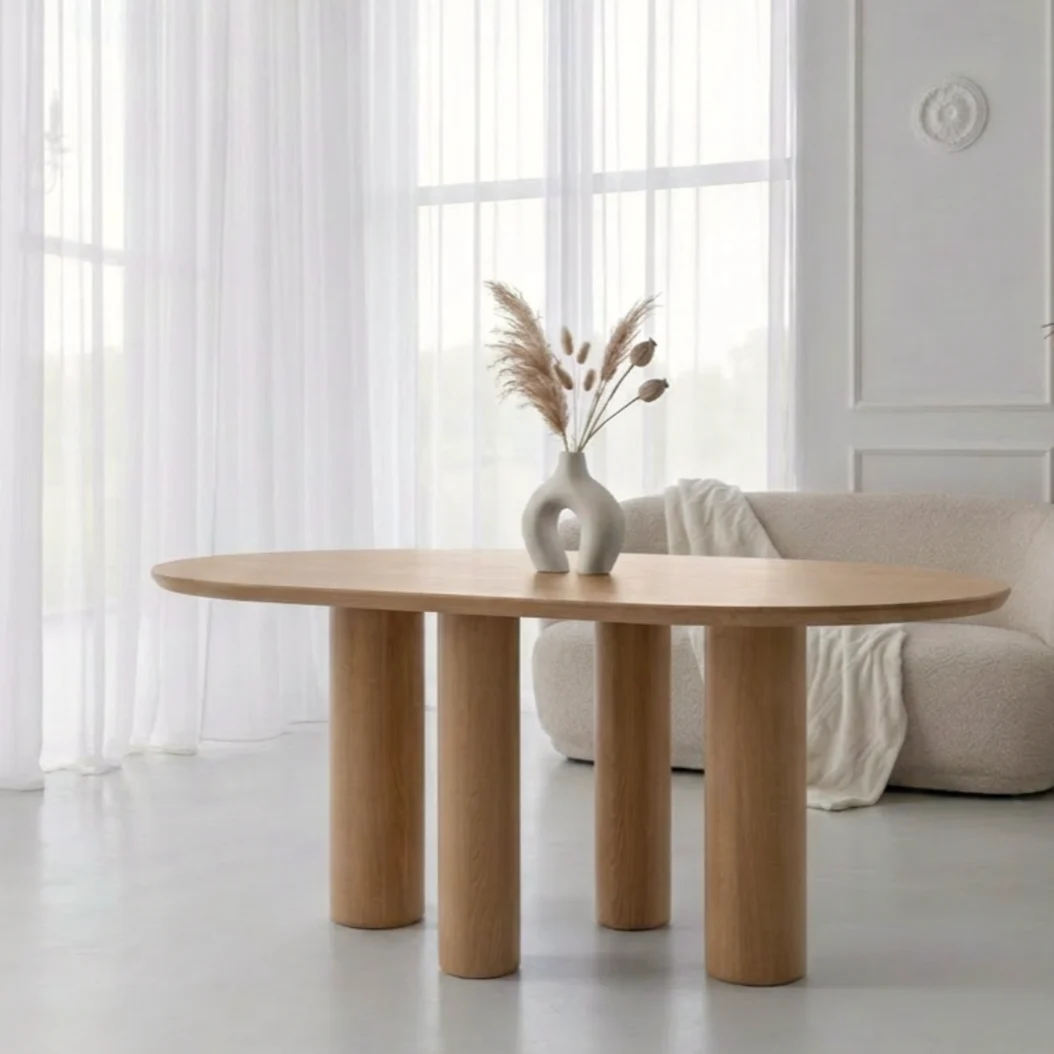
Sorrento's base is two plain cylinders, standing like a pair of columns rather than the usual four legs, wide enough at the footprint to feel stable and finished in the same light oak as the oval top above them.
There is no carving, no taper, just the honesty of a round post doing a round post's job. Six sizes make up the collection, all oval, all sharing the double-cylinder base regardless of overall length. It leaves generous legroom down both long sides, since there is nothing between the two columns to bump a knee against, which matters more at a table built for a long, slow dinner than it does on paper. The light oak tone keeps the whole piece from reading as heavy in a small room.
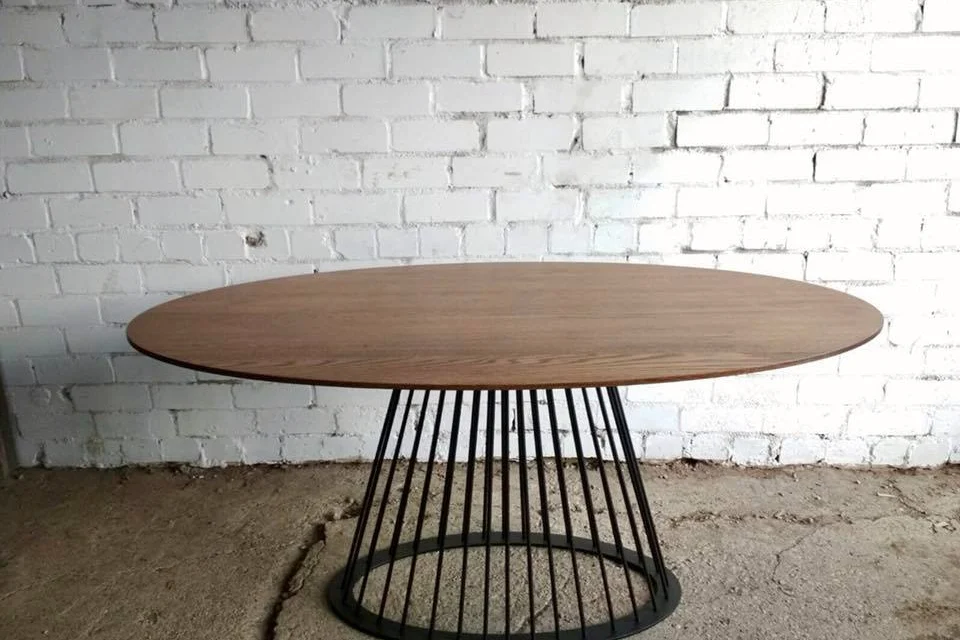
Budapest sets a round, live-edge oak slab on a base built like a birdcage turned upside down, vertical black steel wires forming a drum beneath the tabletop, open enough to see straight through.
The bark-edged rim of the top stays untouched, so the one perfectly circular element in the piece is the cage, not the wood itself. Six sizes make up the collection, each with its own live edge, since no two slabs come from the same tree. It works best where light can pass through the base from at least one side, near a window or under a pendant, so the wire structure throws its own shadow across the floor along with the table's. No two tables in the run ever throw quite the same pattern of shadow.
Vesuvio's base looks like it survived something, a trunk of oak, charred black and left in its raw, twisting form, flaring out at the top like roots reaching for a tabletop that is not actually wood at all.
A round sheet of glass sits directly on the blackened base, letting every knot and twist show through uninterrupted. Three sizes make up the collection, and because the base starts as raw material rather than a repeatable pattern, no two ever look quite alike. It works best as a centerpiece rather than a workhorse, somewhere it can be looked down into as much as eaten across, ideally under light that catches the char without washing it out. It suits a room built for conversation more than for daily paperwork.
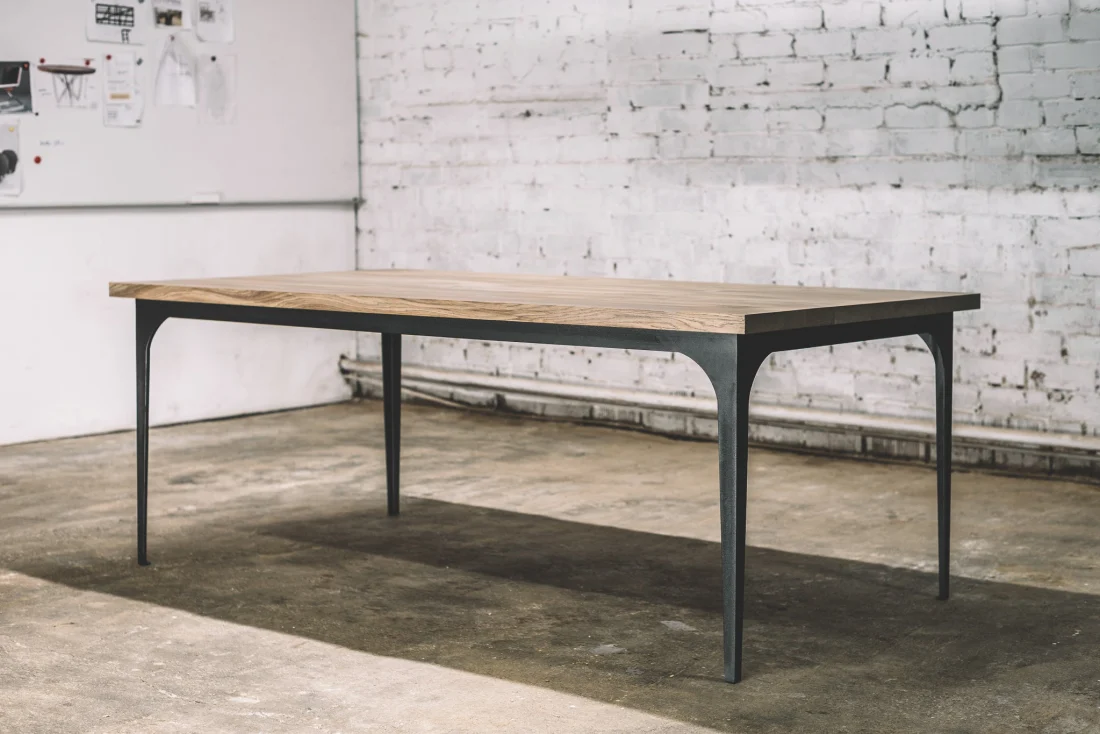
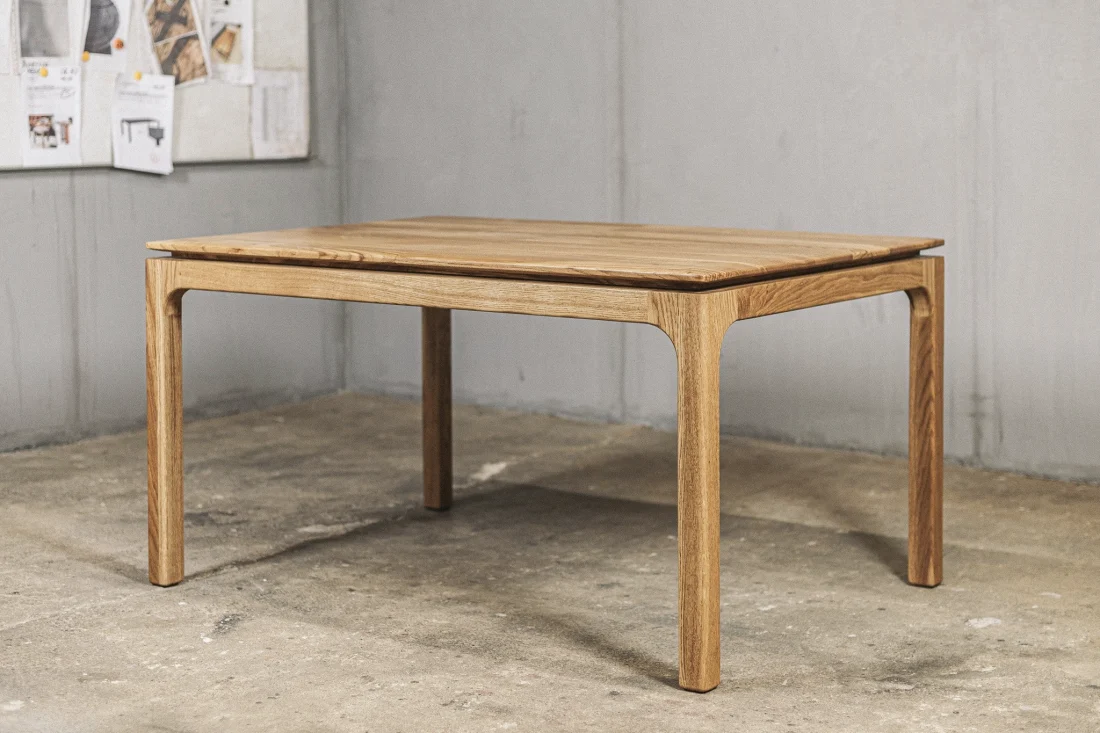
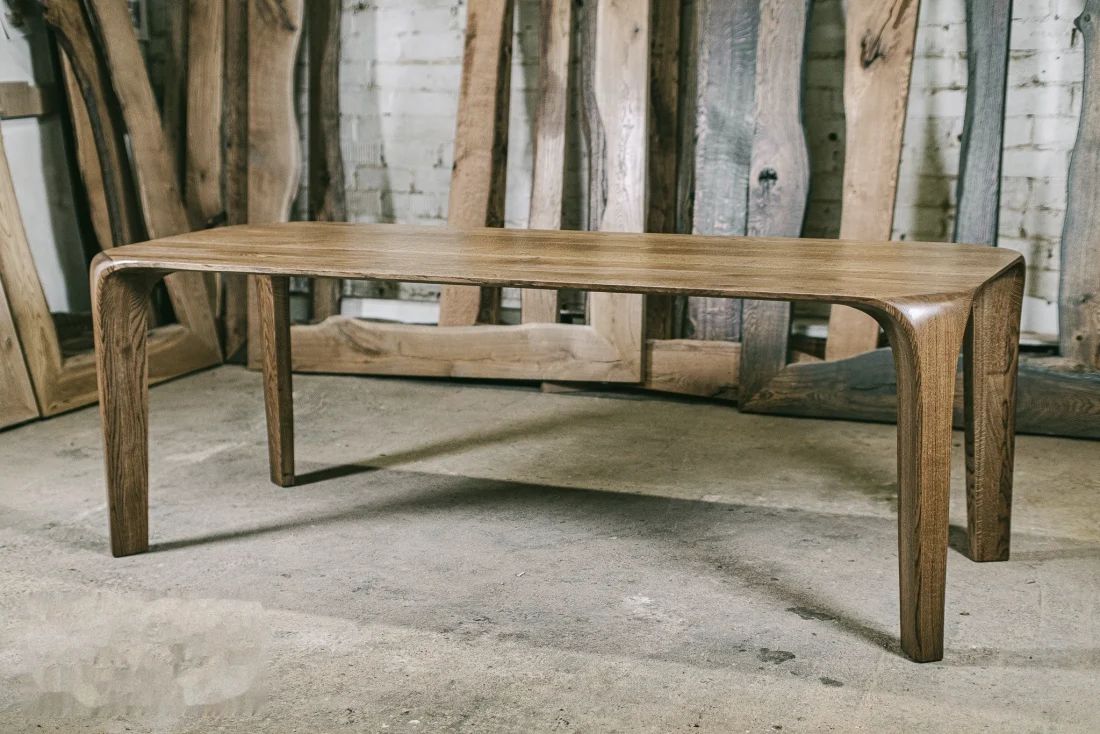
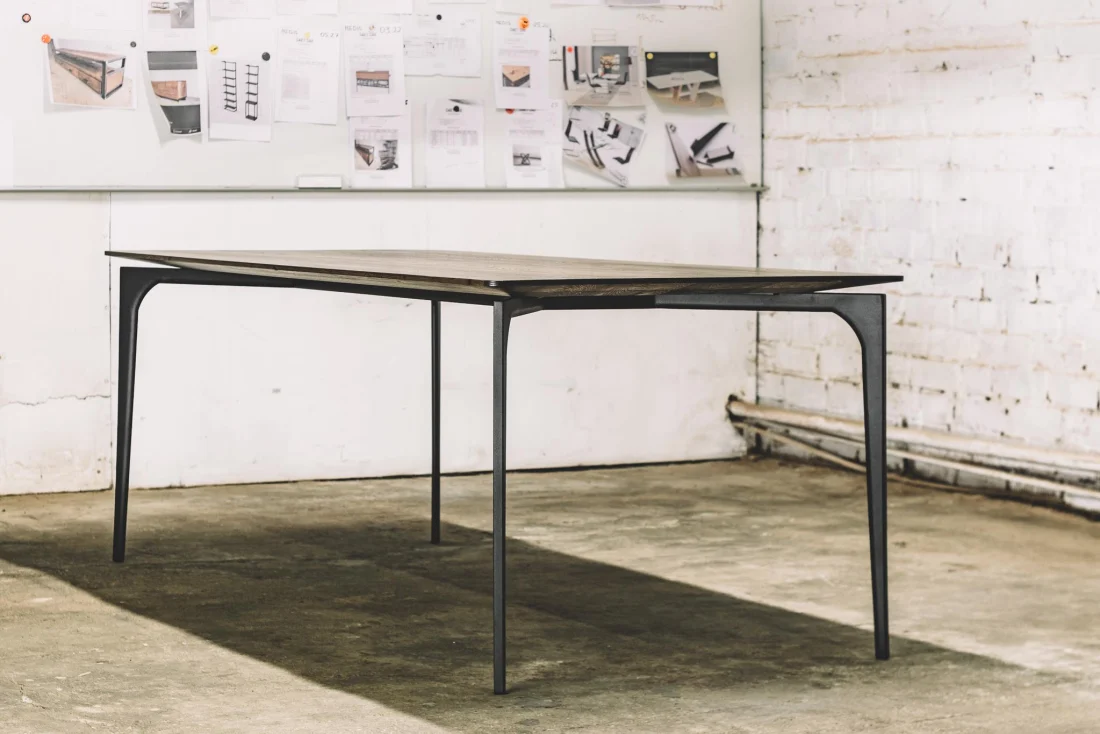
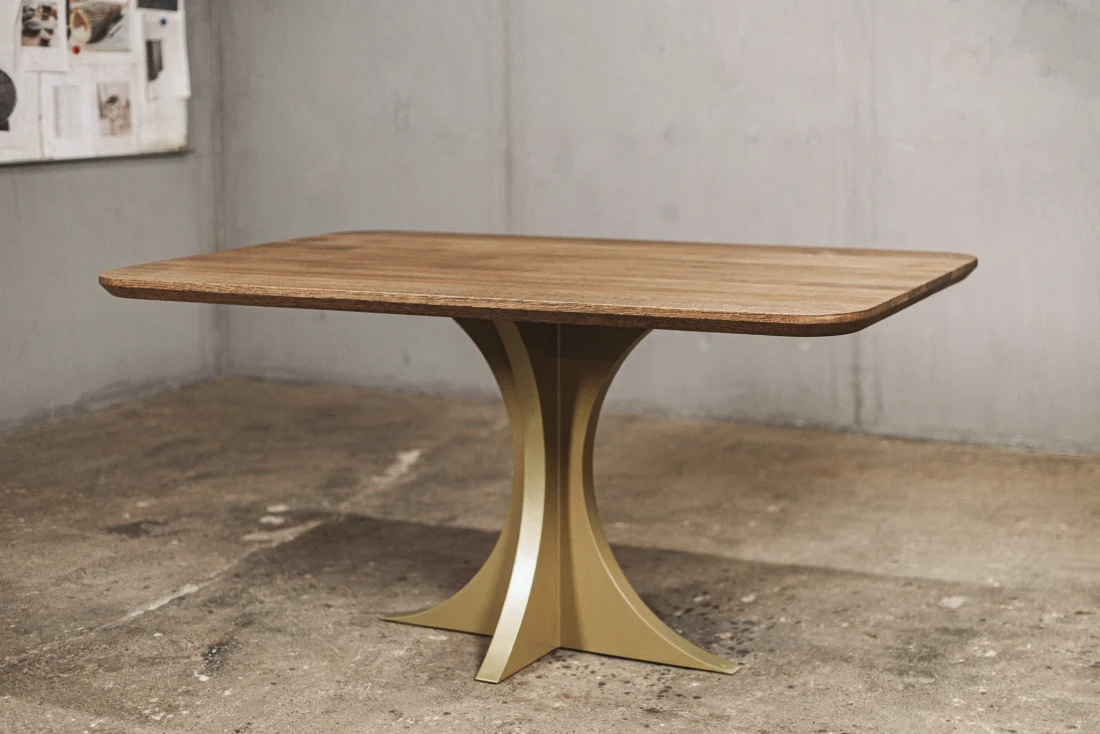
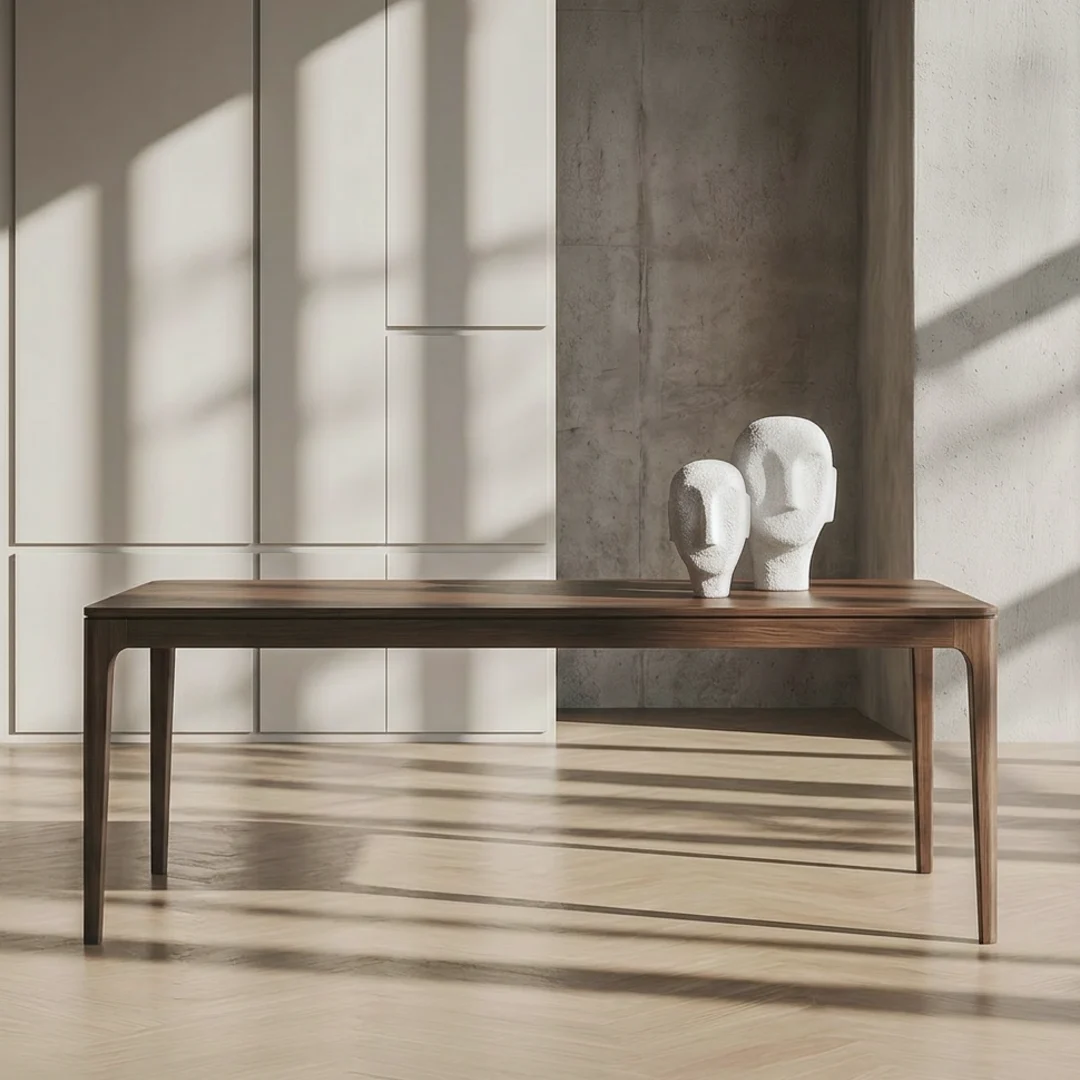
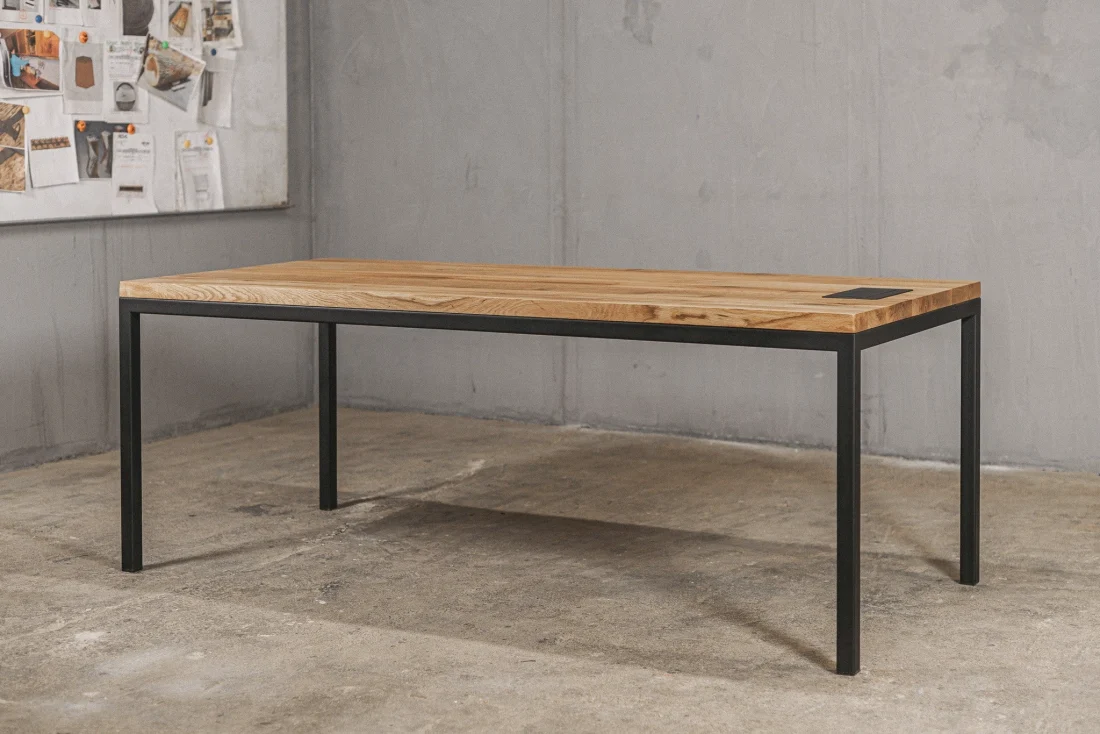
Oxford is the plain, correct answer to what a dining table should look like: a rectangular oak top, rounded gently at the corners, on four straight legs that taper only slightly as they meet the floor.
Nothing about it argues for attention, which turns out to be its actual strength. Seven sizes cover a small breakfast table up to one long enough for ten, all in the same natural or lightly walnut-toned oak, all built the same simple way throughout. It is the table to choose when the room already has a point of view, a bold chair, a strong rug, and needs one steady, unremarkable surface to hold it all together. It also takes a busy family's daily wear without much visible complaint.
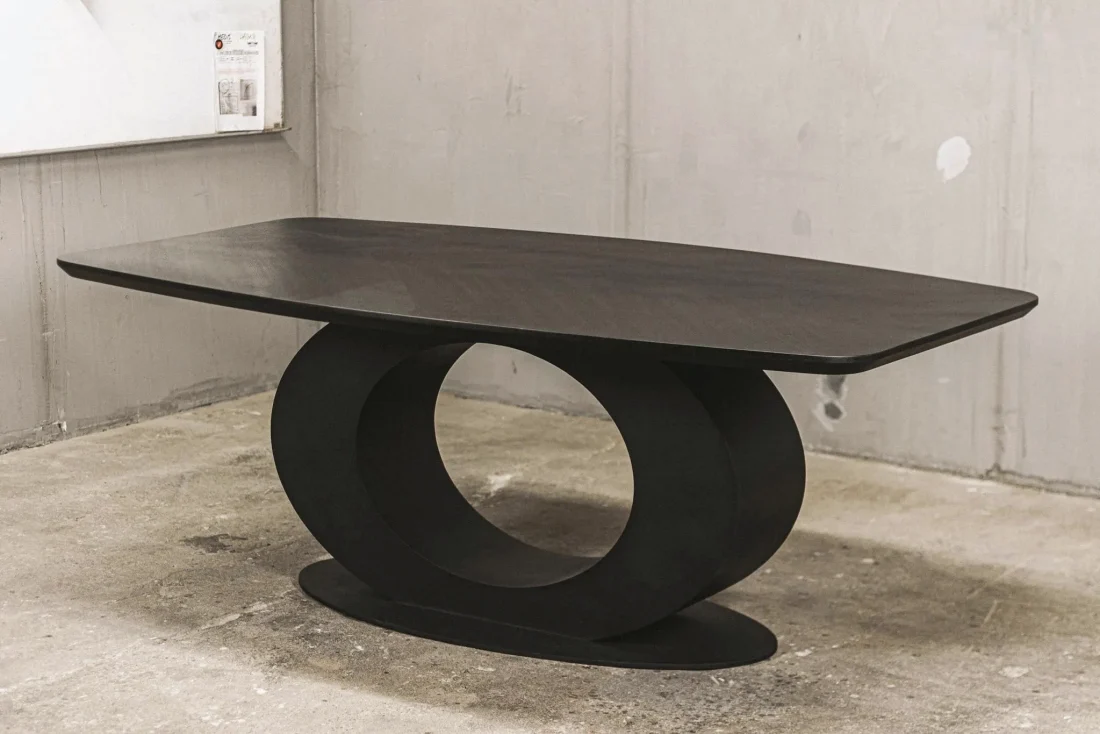
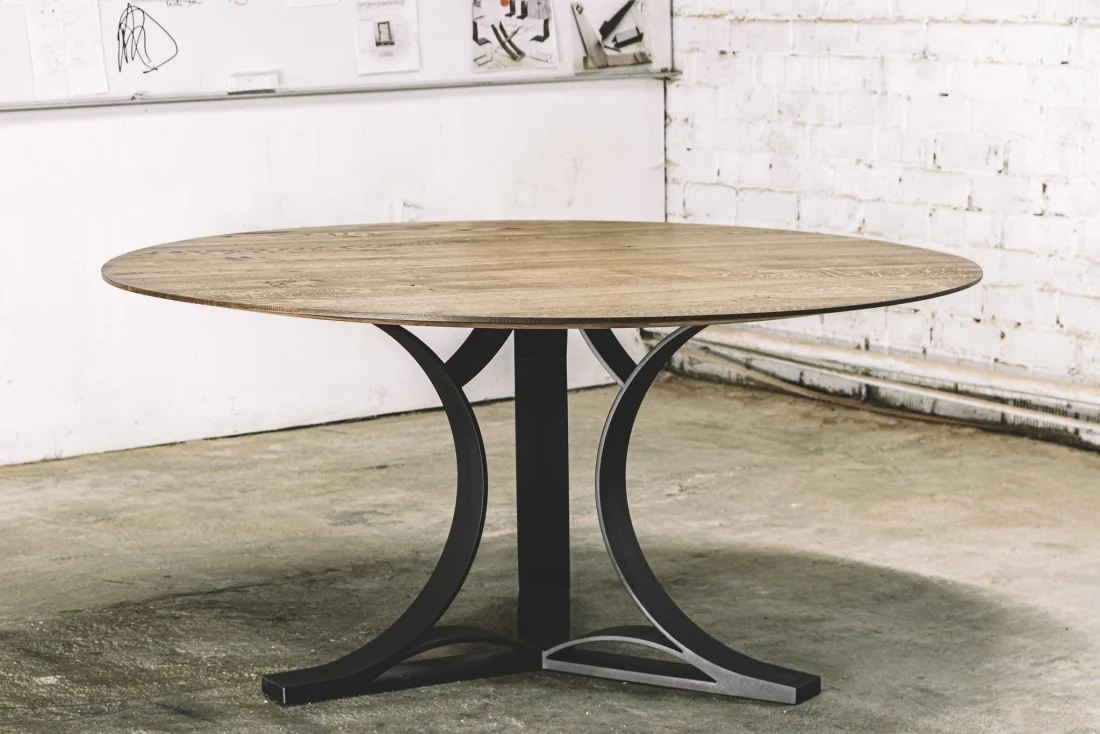
Weimar's base is a single black ring, standing on edge like a wheel with a support running through its center to the tabletop above, more sculpture than furniture engineering, though it holds weight exactly as well as a normal pedestal.
The oval top stays plain, letting the ring underneath carry the entire visual weight of the piece. Two sizes make up the collection, both oval, both built around the same ring-shaped base. It suits a room where the table is meant to be noticed before anyone sits down, a dining area open to a living space, say, since the base reads almost as clearly from ten feet away as it does up close. The ring holds its shape well over years, showing no sign of strain at the joints.
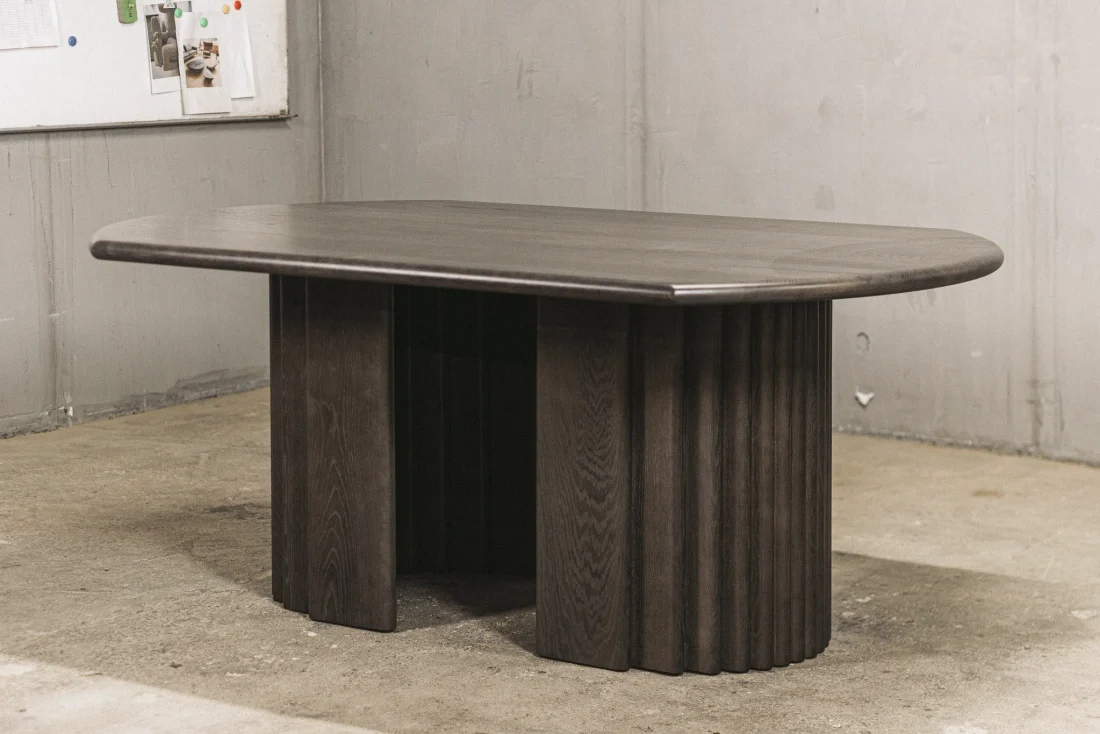
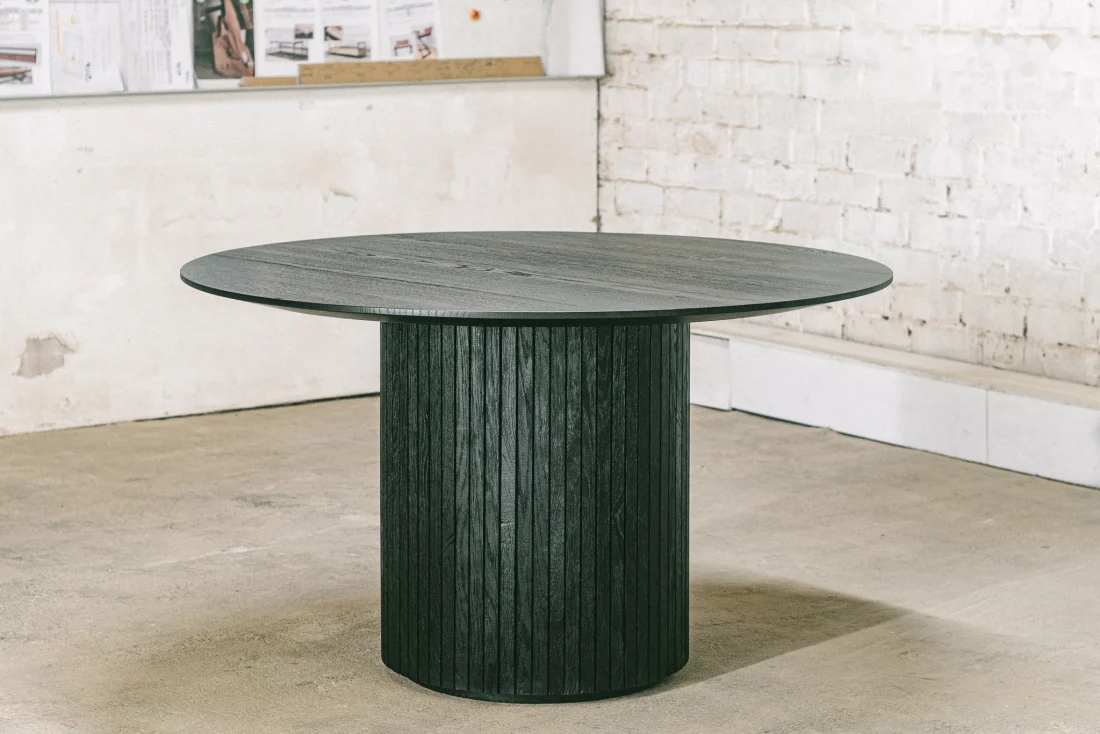
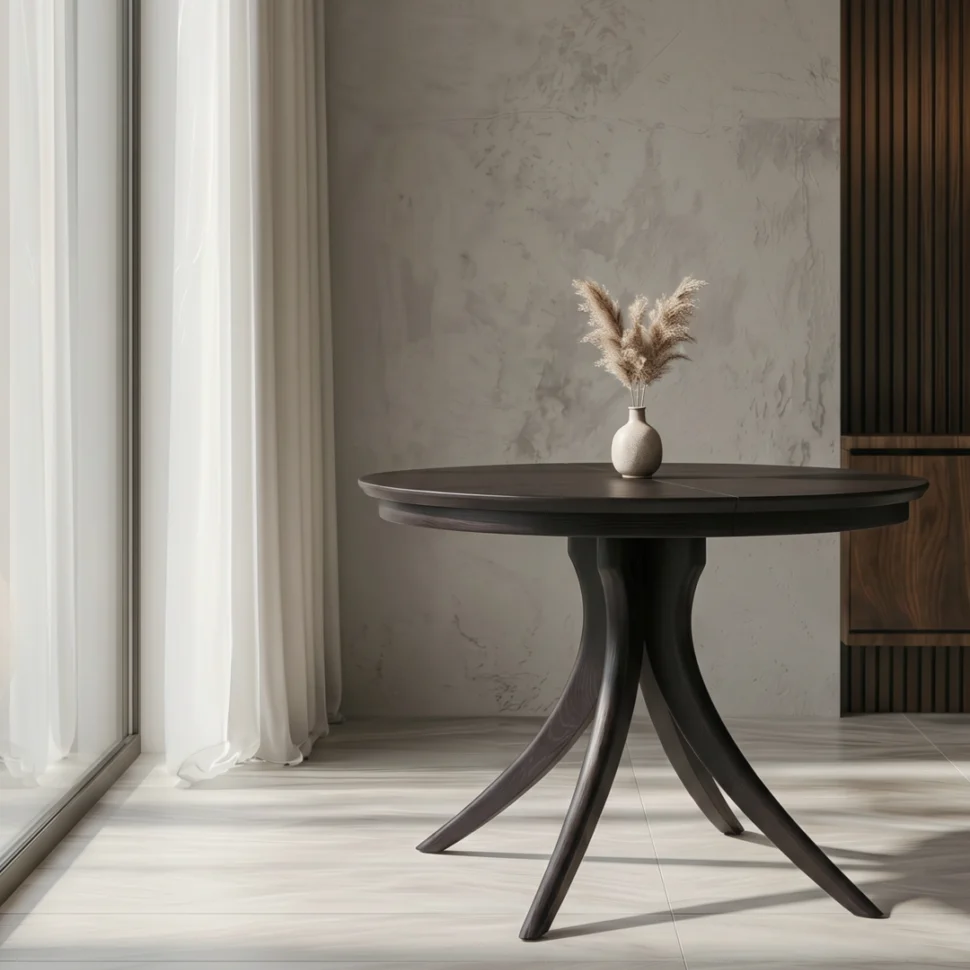
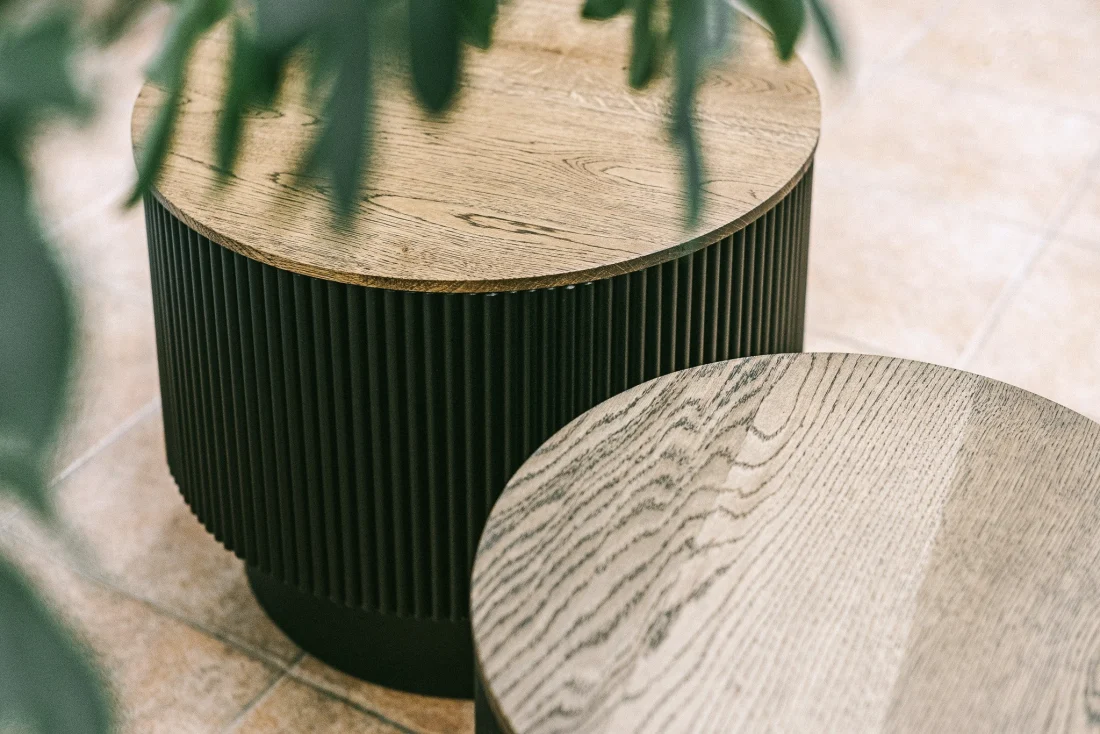
Palermo stands on a single round column, scored top to bottom with fine vertical fluting, the same reeded detail you would find on a piece of classical column work, scaled down and built in oak instead of stone.
The round top above it stays plain, so all the texture in the piece lives in the base. Five sizes make up the collection, all round, all sharing the fluted pedestal at a slightly different scale. Because there is no leg to navigate, seating flexes easily around it, an extra chair squeezes in when it needs to, without anyone hunting for a gap in a four-legged frame. It suits a breakfast nook as easily as a formal dining room, since the column reads at home in either.
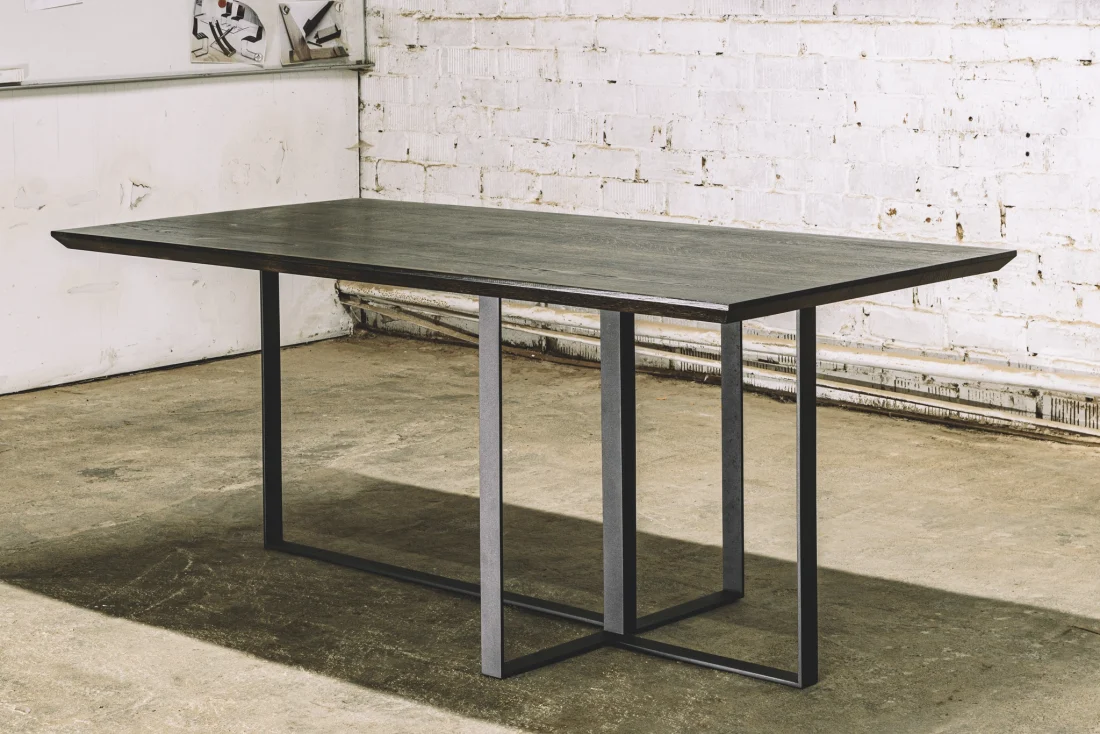
Ghent is built low to the ground in feel if not in fact, a dark, near-black oak top set on four thin steel legs that splay outward at a sharp angle, almost insect-like in how little material they use to do the job.
There is no apron connecting them; the top simply floats above four points. Four sizes make up the collection, all sharing the same splayed-leg base and dark finish throughout. It reads contemporary in a way the other collections here mostly do not, and suits a room already leaning modern, clean walls, little ornament, where a heavier, more traditional base would fight everything else in the space. It suits a small footprint especially well, since the splay eats up almost no floor.
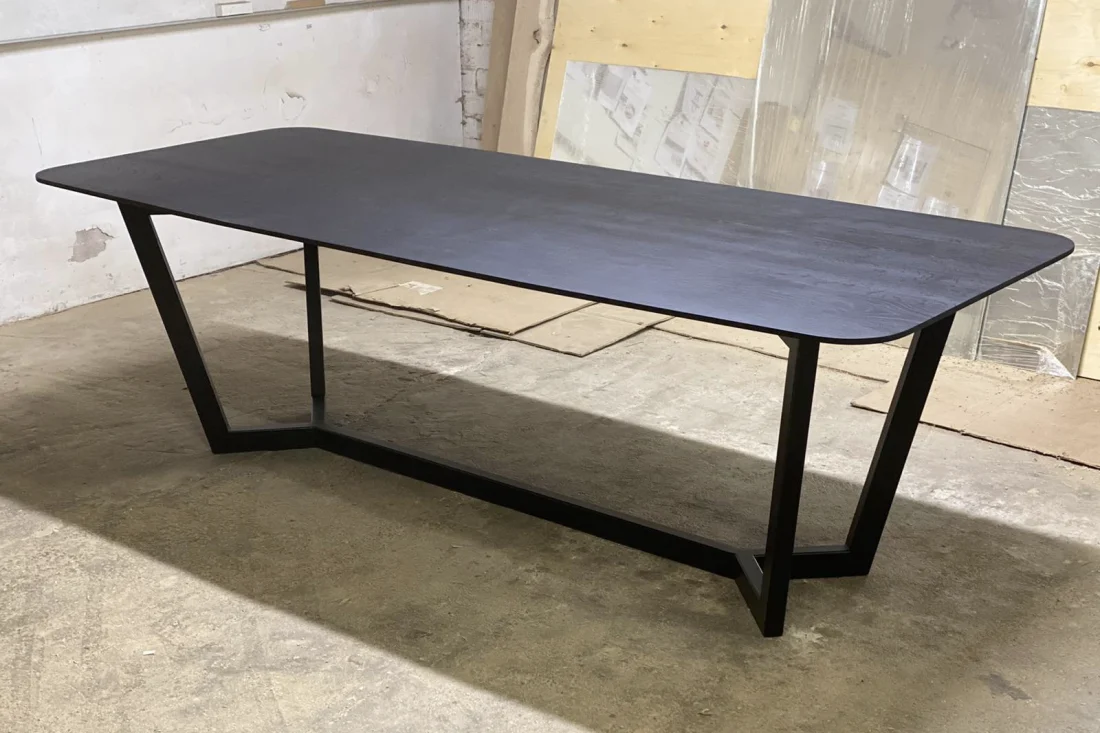
Monaco's base curves where most pedestals go straight, a sculpted, near-black column that bends partway up before straightening again to meet the tabletop, more gesture than structure at first glance.
The top itself stays flat and dark, letting the base read as the one dramatic move in the whole piece. Four sizes make up the collection, all rectangular, all built around the same curved pedestal. It suits a dining area that doubles as a display space, a corner visible from the living room, say, since the base gives the table a profile worth seeing even when nobody is sitting at it. Up close, the curve reads subtler than it photographs. It works equally well lit from above or simply caught by passing daylight.
Kildare stands on four legs that taper to almost nothing at the floor, painted a deep, near-black green that reads as its own material rather than a coating over something else.
The top runs narrower than most dining tables in this range, which keeps the legs visually doing more of the work than usual. Seven sizes make up the collection; most carry an oak top, a couple are cut from marble instead, but every one keeps the same tapered green leg regardless of what sits above it. Because it runs narrow, it suits a room where a standard-depth table would crowd the walking space, a galley kitchen or a long room split into zones, without losing any seating length. Either top setting keeps the same low, settled stance at the floor.
Cordoba's base is a single dark column, fluted top to bottom like a piece of classical architecture scaled down to table height, holding up a round top in oak, marble, or a steel-based variant depending on the size.
The fluting is deep enough to cast real shadow, not just suggest texture from a distance. Seven sizes run the collection, from a small breakfast round to a table that seats eight comfortably, all keeping the same fluted pedestal underneath. Because the base sits entirely at the center, there is no leg to work around no matter how many chairs get pulled up, which is, in the end, the entire argument for a pedestal table. The fluted texture also hides the inevitable scuff far better than a flat column would.
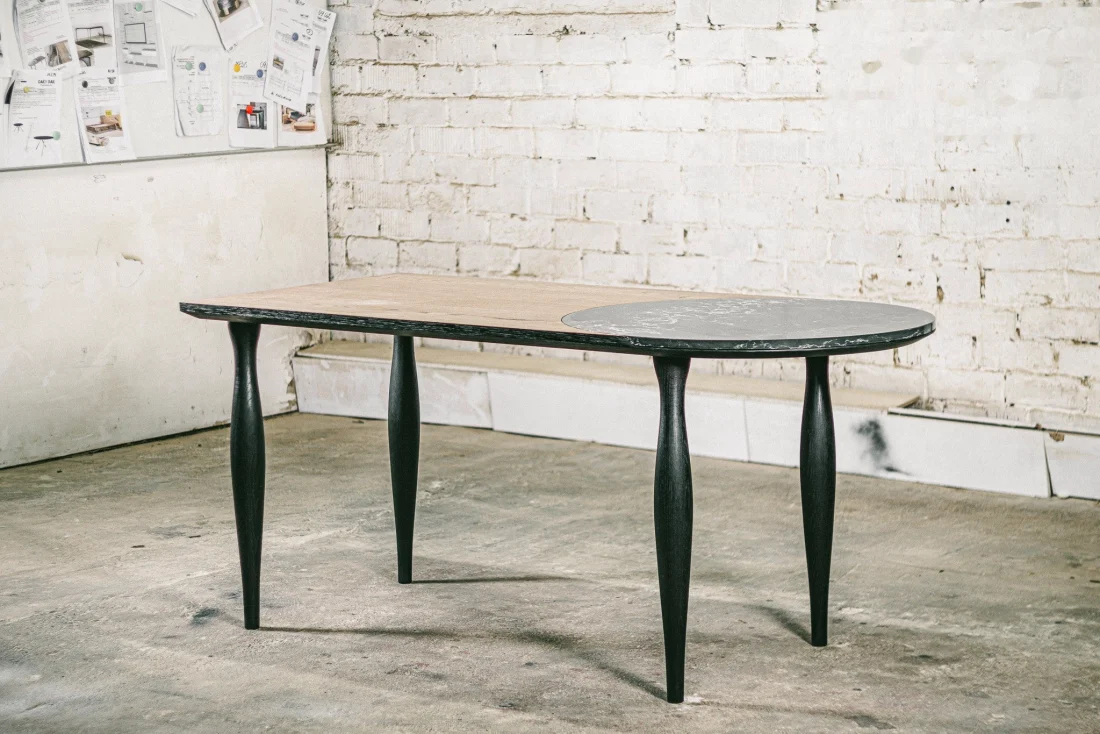
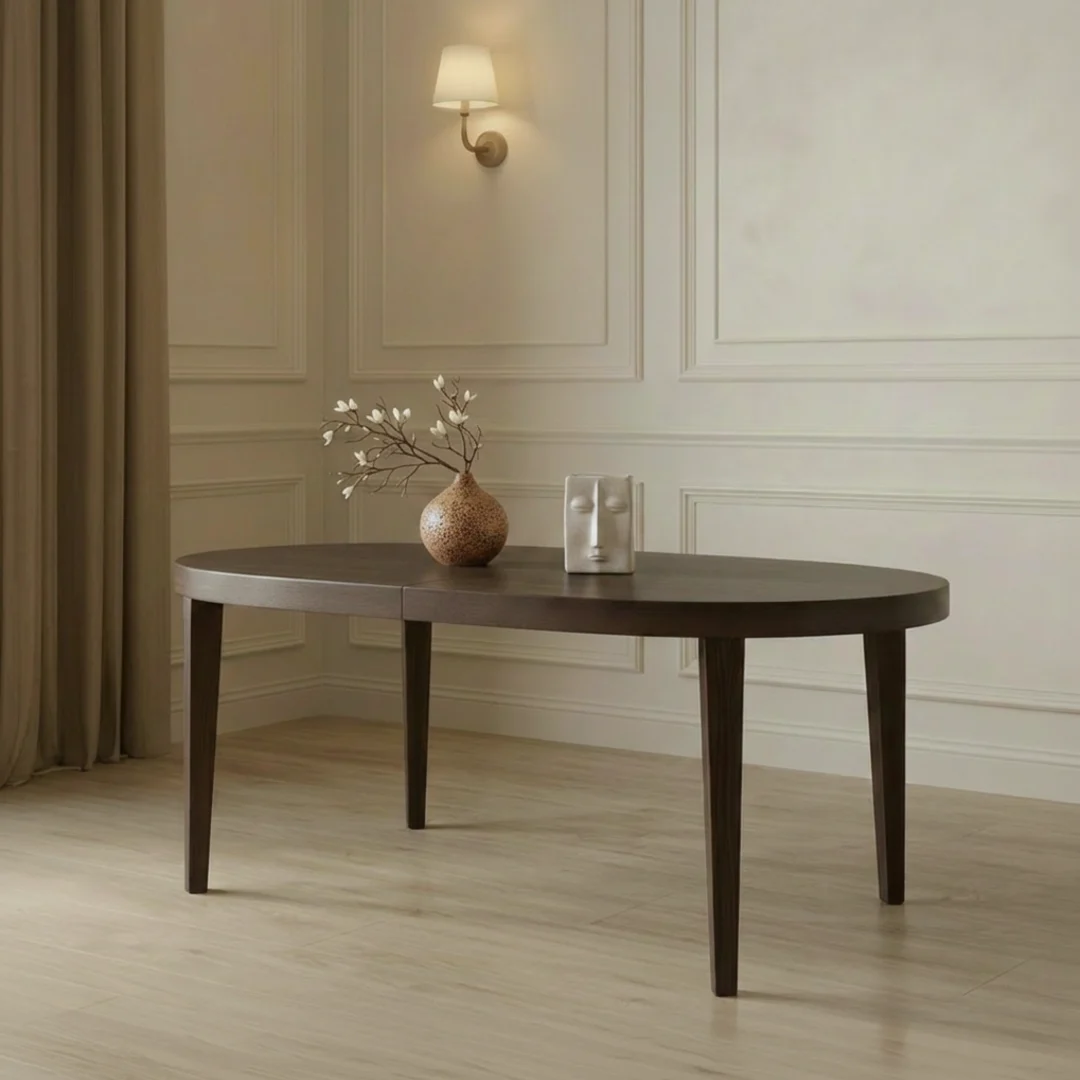
Bologna's legs are simple cones, wide at the floor and narrower where they meet the oval top, painted a deep, near-black green that reads as its own finish rather than a coat over something else.
There is no cross-brace, no stretcher, just two solid forms doing all the work between them. Two sizes make up the collection, one noticeably longer than the other, both sharing the same conical-leg base and oval top. The two-leg arrangement leaves both ends of the table completely open, which matters at an oval shaped for a rounder kind of gathering, where guests tend to spread out rather than line up along the sides. It suits a smaller dining room especially well, since the legs use so little floor.
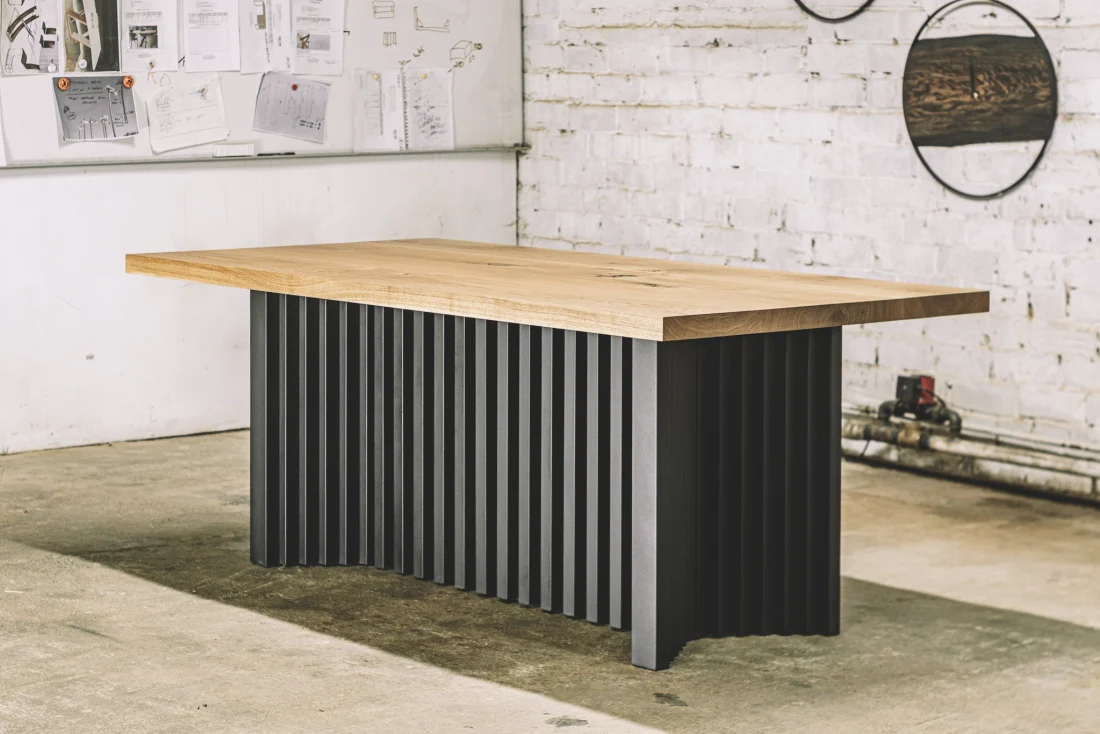
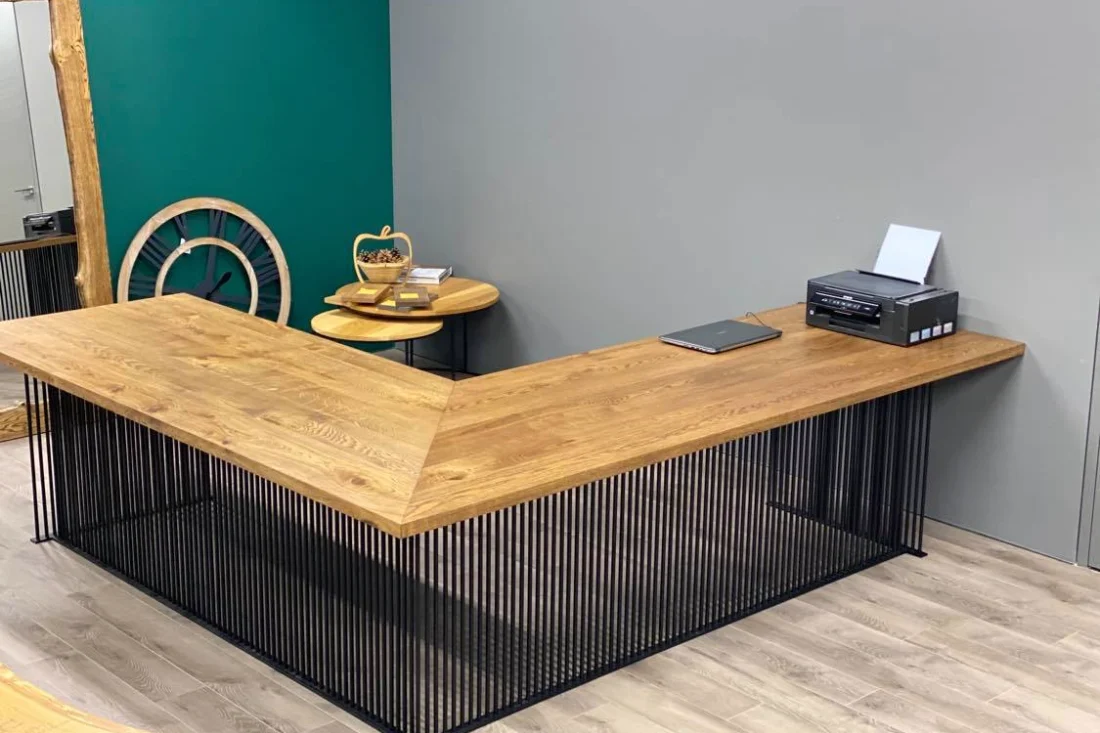
Annapolis carries an old port town's sense of proportion, an oak top of classic, straightforward dimensions, set on a base of tightly spaced black steel rods running the full width beneath it, fluted like the side of a hull.
The rod base hides nothing and needs nothing else added to it. Three sizes make up the collection, all keeping the same rod-paneled base regardless of overall length. It suits a dining room that wants a hint of the nautical without leaning into the theme outright, the vertical lines do that work quietly, and the oak top above them keeps the whole piece from feeling like a costume. It also takes to a coastal or lake house especially well, given the theme.
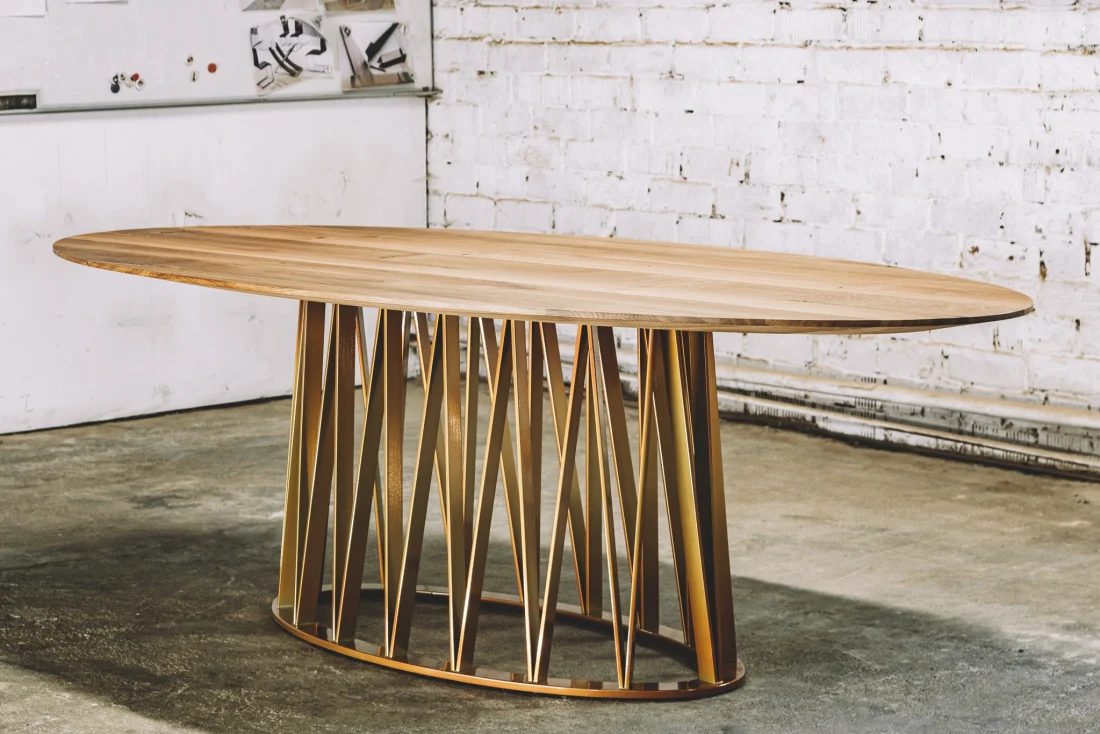
Cannes stands on a base of thin, gold-toned rods set on the diagonal, crossing each other in a tight lattice rather than running straight up and down the way some of its relatives do.
The effect is denser and more decorative, closer to a woven screen than a structural frame, though it holds the oval top just as steadily. Two sizes make up the collection, both oval, both built on the same crosshatched rod base. It suits a room that already leans a little glamorous, brass hardware elsewhere, a mirrored surface nearby, since the base picks up exactly that kind of light without needing anything else in the room to match it outright. It photographs particularly well in the kind of low, warm light a dinner party keeps.
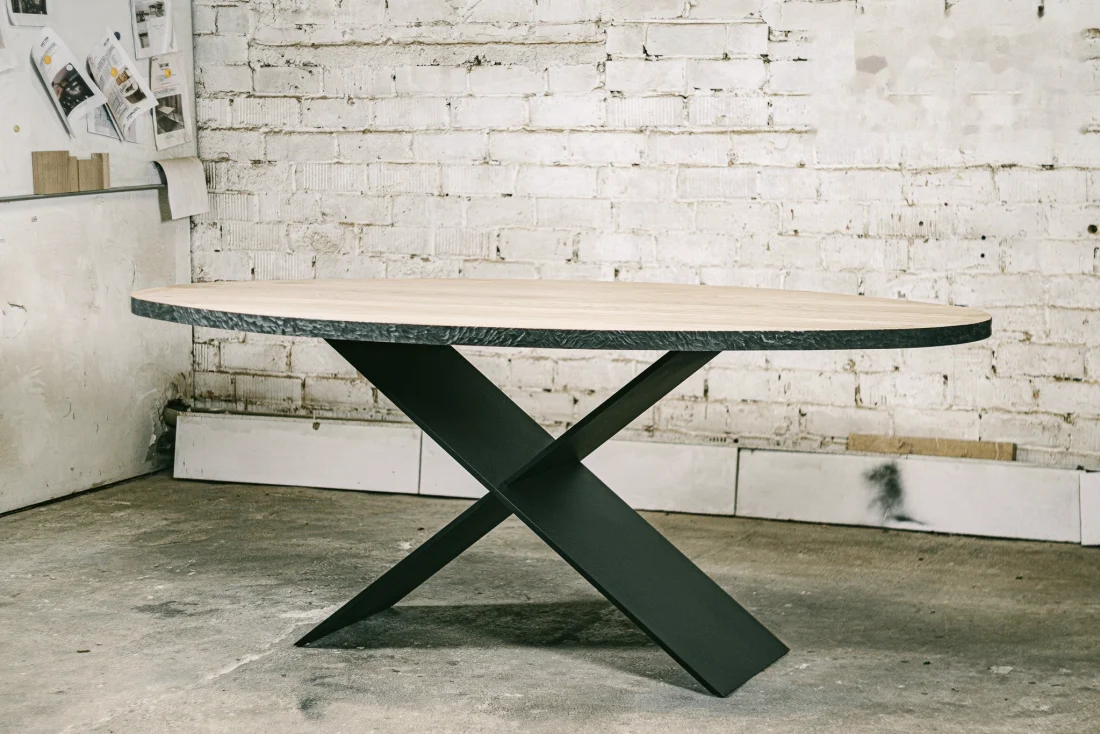
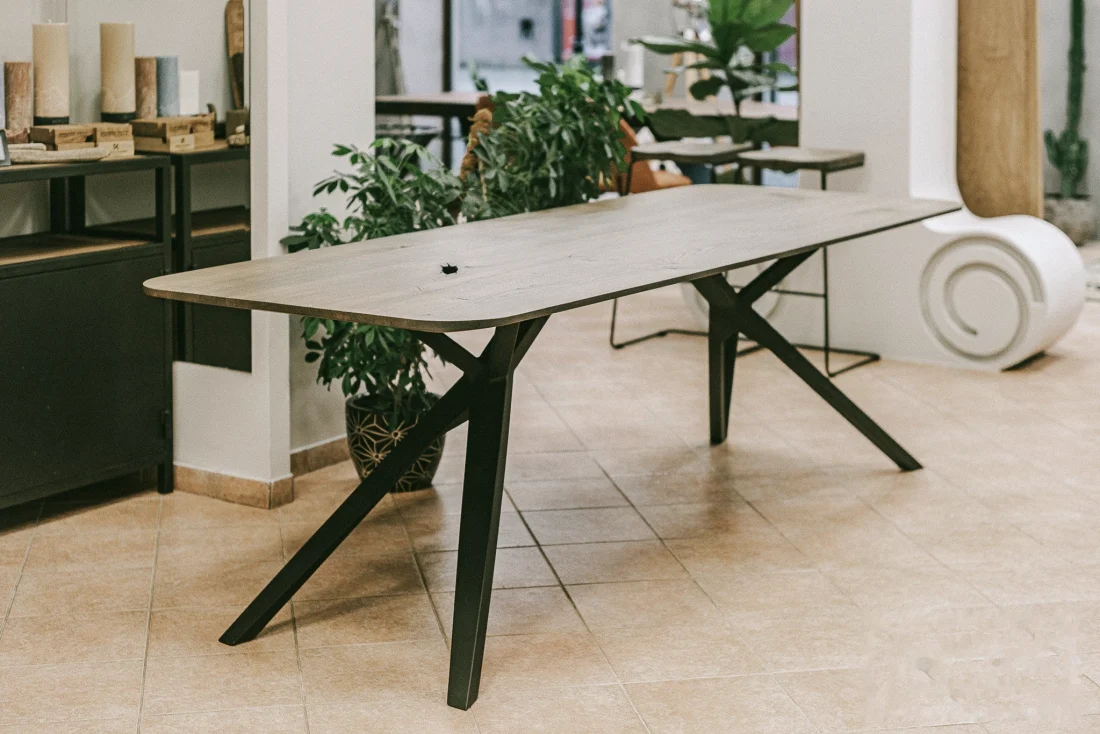
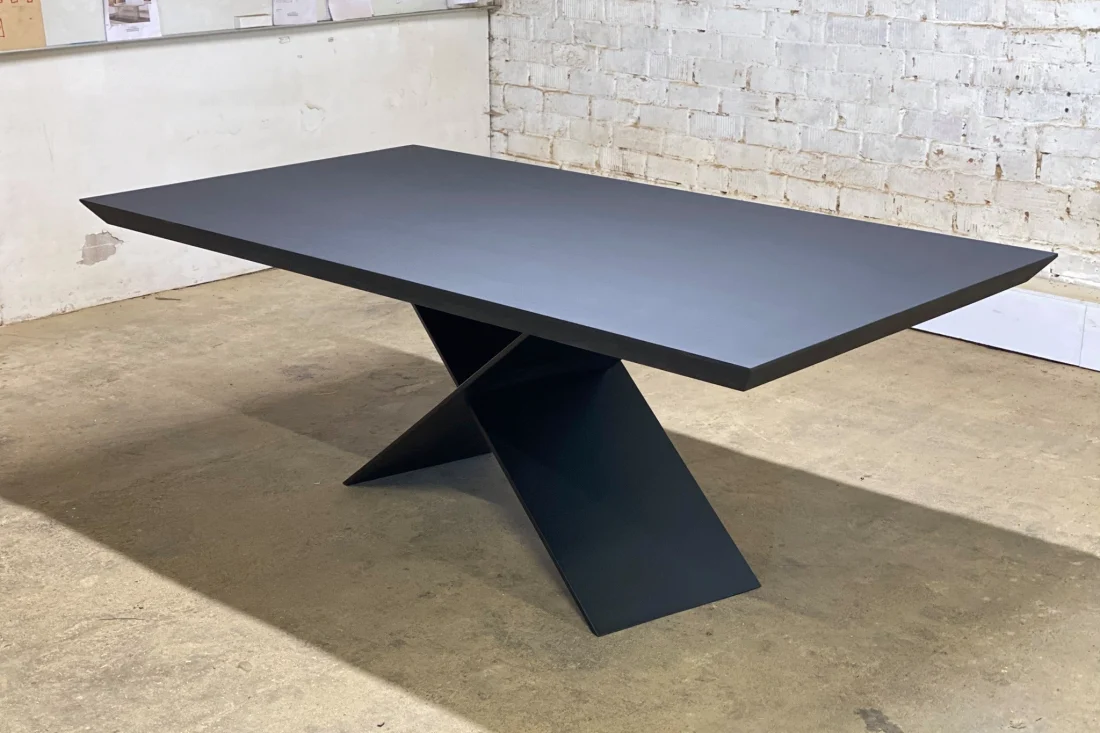
Naples sets an oval oak top on a base built from two crossed black steel blades, an X turned on its side rather than standing upright the way it does elsewhere in this group.
The result reads lighter, more like a base balancing than one bracing against the weight above it. Three sizes make up the collection, all oval, all sharing the same crossed-blade base. The oval shape and the low, wide base make it a comfortable table to walk around, without the sharp corners of a rectangular top or the single center post of a pedestal getting in the way. It suits a room where the table needs to be circled as often as sat at. Either size seats comfortably without a single sharp edge to work around.
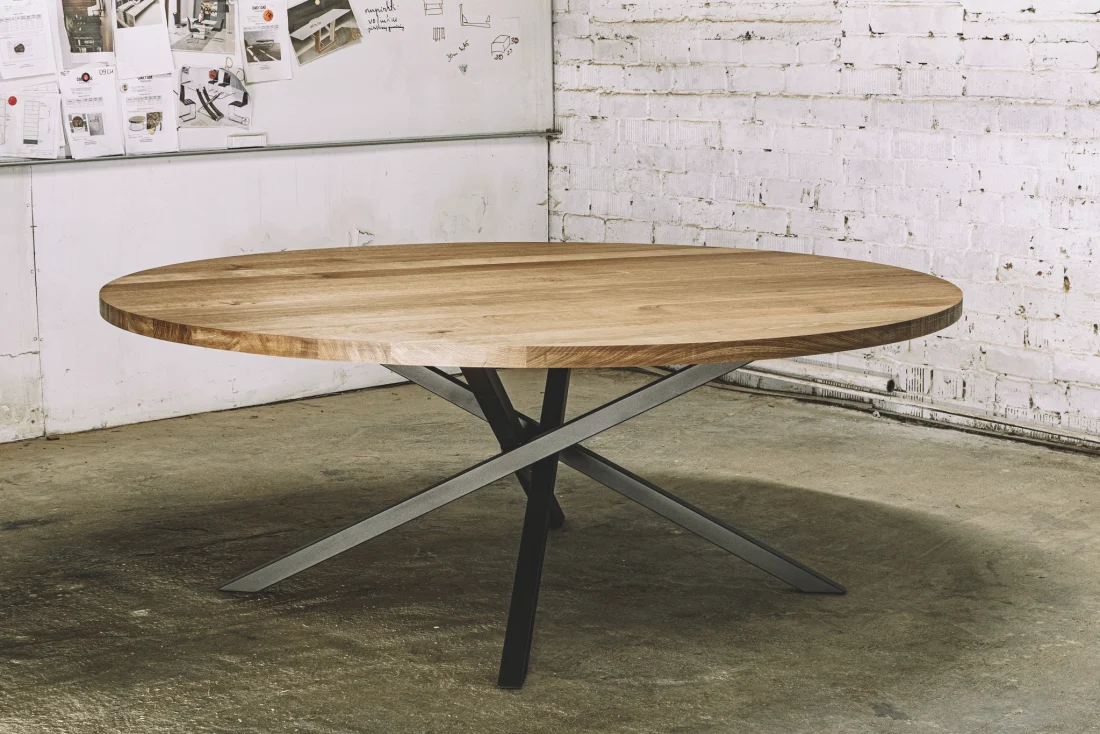
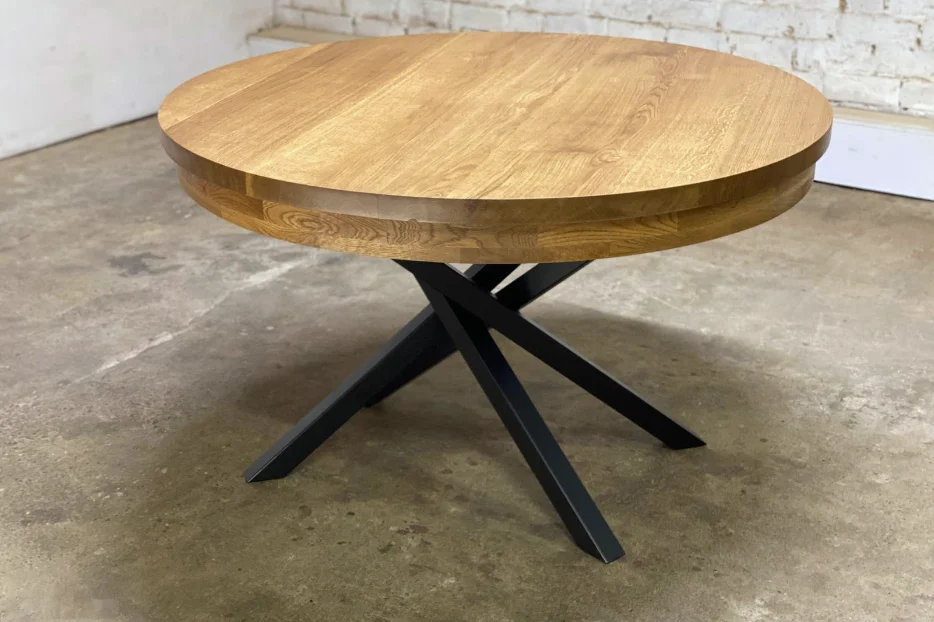
Avignon sets a round oak top on a base that reads like a compass rose, flat black steel blades radiating out from the center point at odd angles, more star than X.
It looks unstable in photographs and is not; the spread of the blades does the same job a wider pedestal would, just with more visual tension. Seven sizes make up the collection, all round, all sharing the same radiating base regardless of diameter. It suits a room where the table gets seen from above as much as from the side, an open kitchen or a dining area visible from a staircase, since the base is half the reason to choose a round table at all. Even fully seated, the floor beneath stays remarkably open and easy to sweep.
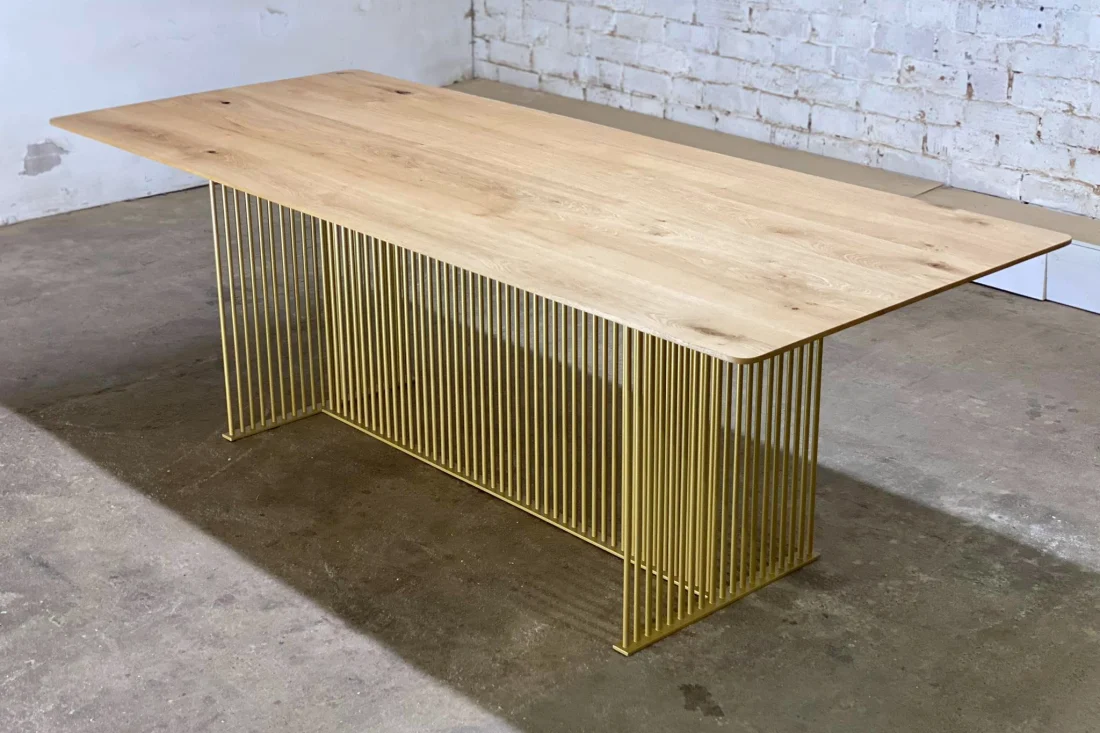
Vienna runs its base the length of the table rather than concentrating it at four points, a continuous screen of thin, gold-toned steel rods standing shoulder to shoulder beneath the oak top, doing the job of a dozen legs with none of the visual weight.
From the end, the table nearly disappears into a row of vertical lines. Two sizes make up the collection, both long, both built around the same rod screen underneath. It suits a room that wants some warmth without much bulk, the brass tone catches light the way a plain black base never would, and the rods leave enough gaps beneath that the base never reads as solid, just present. It pairs naturally with slim dining chairs that will not crowd the rod line below.
Stockholm's base is two black steel loops, interlocked like a chain link scaled up to furniture size, holding the oval top above the floor without a single straight leg anywhere in the construction.
The interlock does the structural work a cross-brace usually handles, just with considerably more visual interest along the way. Two sizes make up the collection, both oval, both sharing the same interlocking base. It photographs unusually well from below, which matters more than it sounds like it should in a room with a glass pendant or open shelving nearby, where the underside of a table actually gets seen. Otherwise, it simply sits quietly under an oval oak top. It suits a dining room already built around a few unexpected details elsewhere.
Lucerne sits under dark, close mountains even on its brightest days, and this table borrows that contrast — a deep, dark wood top set into a room full of daylight, with thick, sculpted legs that read almost as carved stone rather than turned wood.
Seven pieces make up the collection, ranging from a long dining table to smaller accent sizes. The wood is worked in heavy, blocky forms rather than slender turned legs, giving each table real visual weight even before anything is set on it. The dark finish stays consistent across sizes, so a smaller side table and the long dining version read as clearly related. Set against a bright room, it becomes the one dark anchor everything else quietly orients around.
Brussels gave the world Art Nouveau, all sweeping curves pulling straight lines into something softer, and this oval table follows that logic — a long, rounded top in dark walnut-toned wood, held up at each end by a cluster of round wooden legs rather than a single pedestal.
Three sizes make up the collection, the oval shape holding steady while the leg clusters shift proportion to match. The wood is worked into simple cylindrical forms, unadorned beyond the curve itself, letting the shape of the top do the more expressive work. An oval table softens a room's corners the way a round one does but seats more people along its length — practical in the middle of a week, generous on the nights it needs to be.
Cambridge built its colleges around round tables and quiet rooms, reading lamps low against the dark — and this dining table keeps that same round, gathering shape.
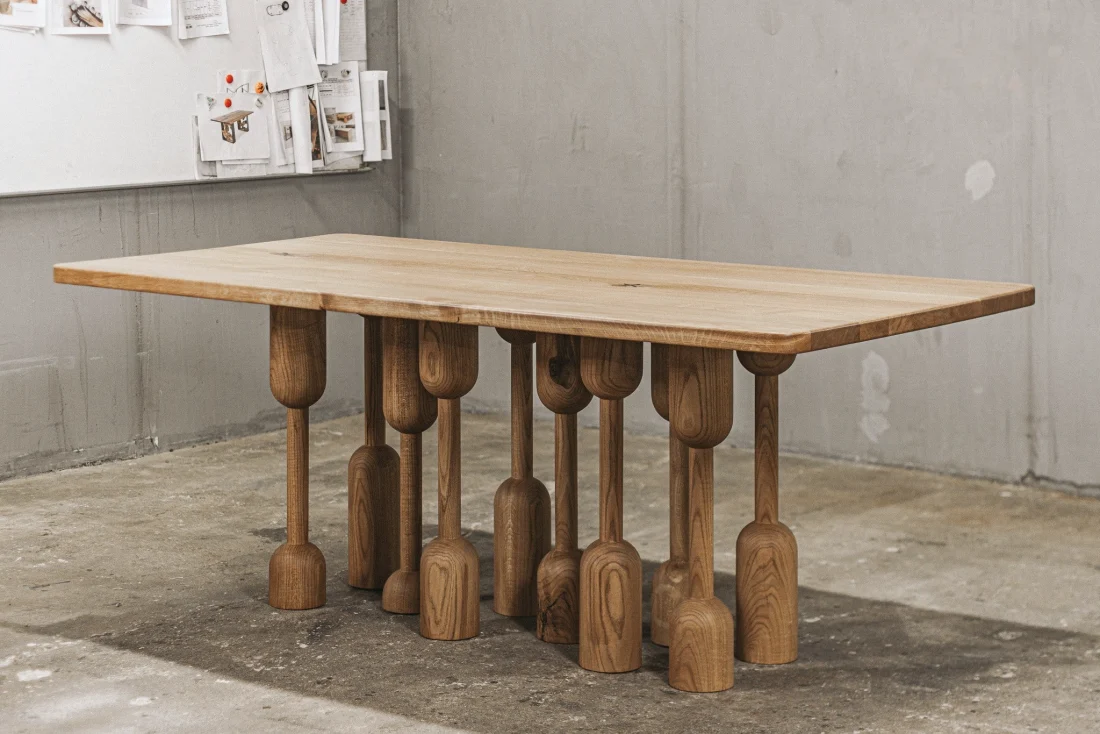
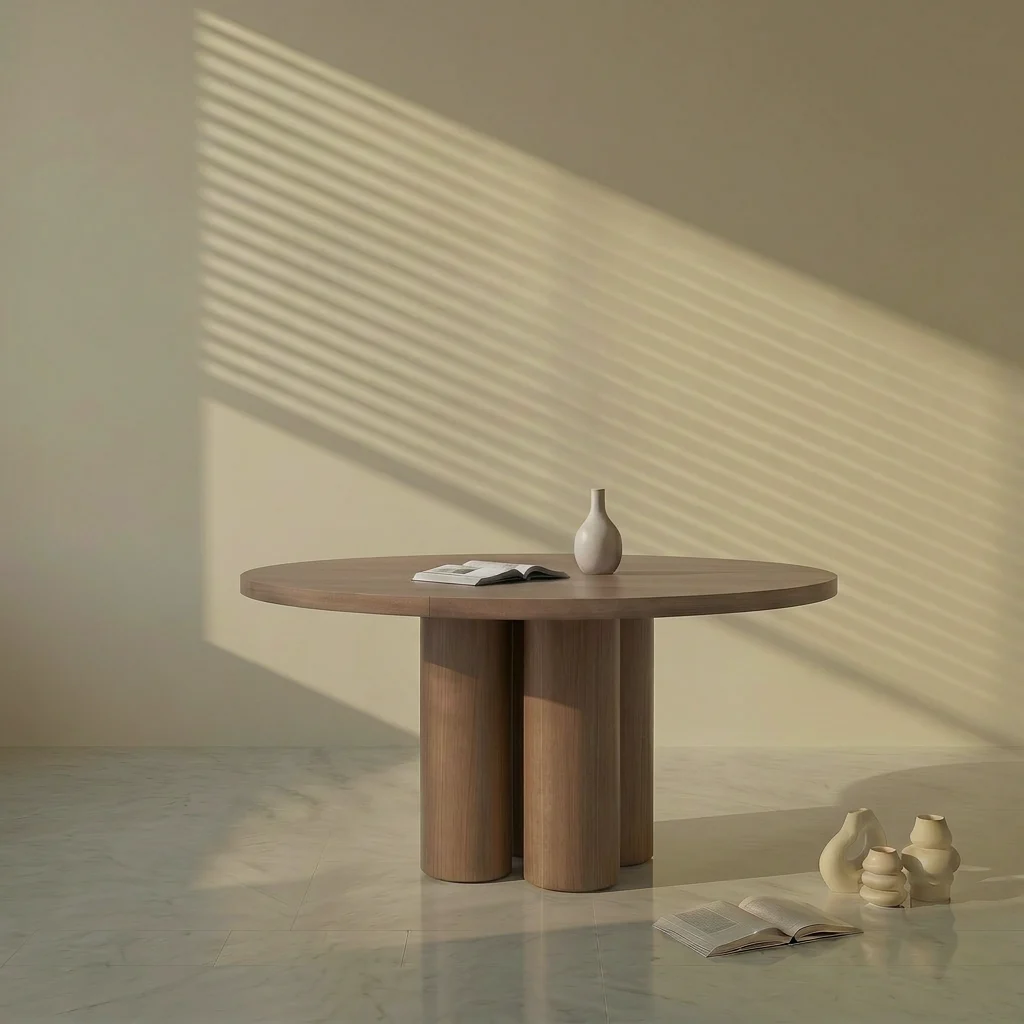
A wide oak top sits on a cluster of turned oak legs pressed together at the center, more sculpture than pedestal. All ten pieces in the collection share the same solid oak construction and the same clustered-leg base, scaled up or down depending on how many the table needs to seat. The top is left with an open, natural finish, so the grain stays visible under whatever gets set on it. Round tables put everyone within reach of the same conversation — no head of the table, no corner seat, which is rather the point of building one this way.
Granada's base twists rather than stands straight, a cone of black steel wire spiraling from a wide foot up to a narrow neck under the round tabletop, like rope wound tight rather than a conventional pedestal.
The spiral catches shadow in a way a solid base never could manage. Two sizes make up the collection, both round, both sharing the same spiraled-wire base at a different scale. It works best lit from the side rather than straight overhead, so the twist in the base actually shows instead of flattening into one dark shape. Around it, chairs sit close, since there is no wide pedestal foot to work seating around. It suits a corner with a window nearby more than a windowless interior room.
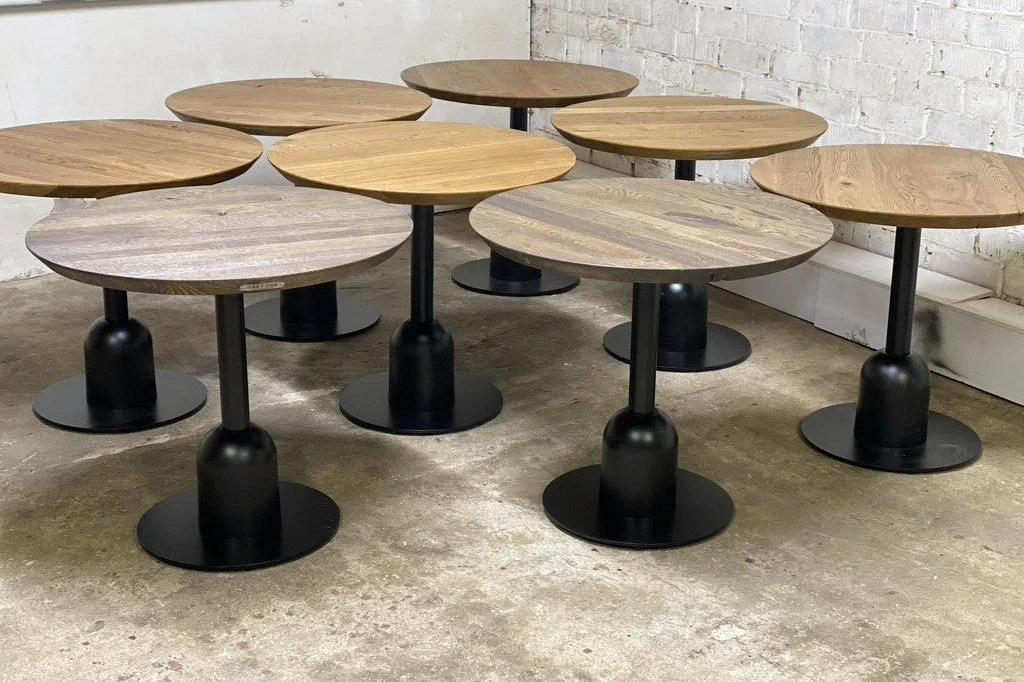
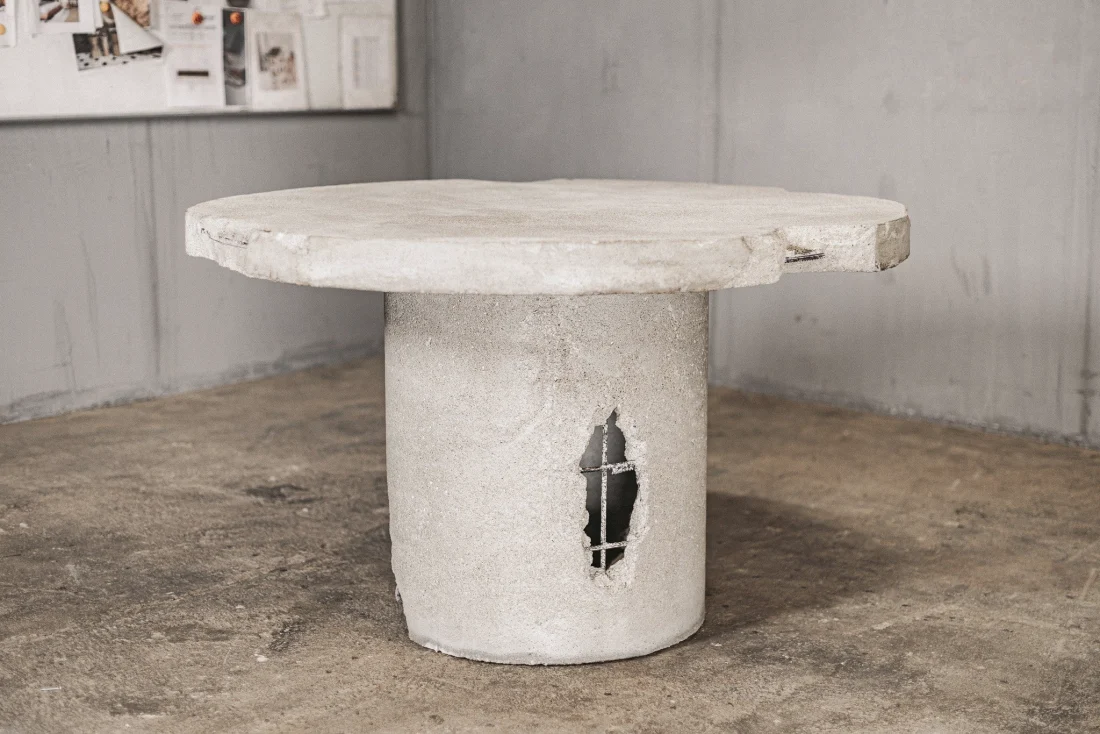
Orvieto's base is cast, not built, a round concrete drum left with the honest surface texture of the mold, holding up a plain oak top above it.
It is the one collection in this group where the load-bearing element is not wood or steel but something poured and cured, and it carries a different kind of weight because of that, literally and visually. Three sizes make up the collection, small enough in every case to work as a bistro-style table rather than a full dining setup. It suits a sunroom or a covered patio as easily as an indoor dining spot, since the concrete does not mind the humidity that would eventually trouble a plain oak top left outdoors. The rough cast surface also forgives water rings better than a sealed wood top would.
Aarhus helped build Denmark's reputation for furniture that does less rather than more, and this table follows that discipline exactly — a light, straight-grained oak top with softly rounded corners, set on four simple, tapered round legs and nothing else.
Two sizes make up the collection, both built from the same pale, natural oak, left with an open finish so the grain stays visible and slightly rough to the touch. There is no skirt, no stretcher, no visible joinery beyond the leg meeting the top — the reduction is deliberate, not an oversight. In a bright room it nearly disappears into the light around it, which is exactly the kind of table that lets whatever surrounds it — chairs, a rug, a view — do the talking instead.
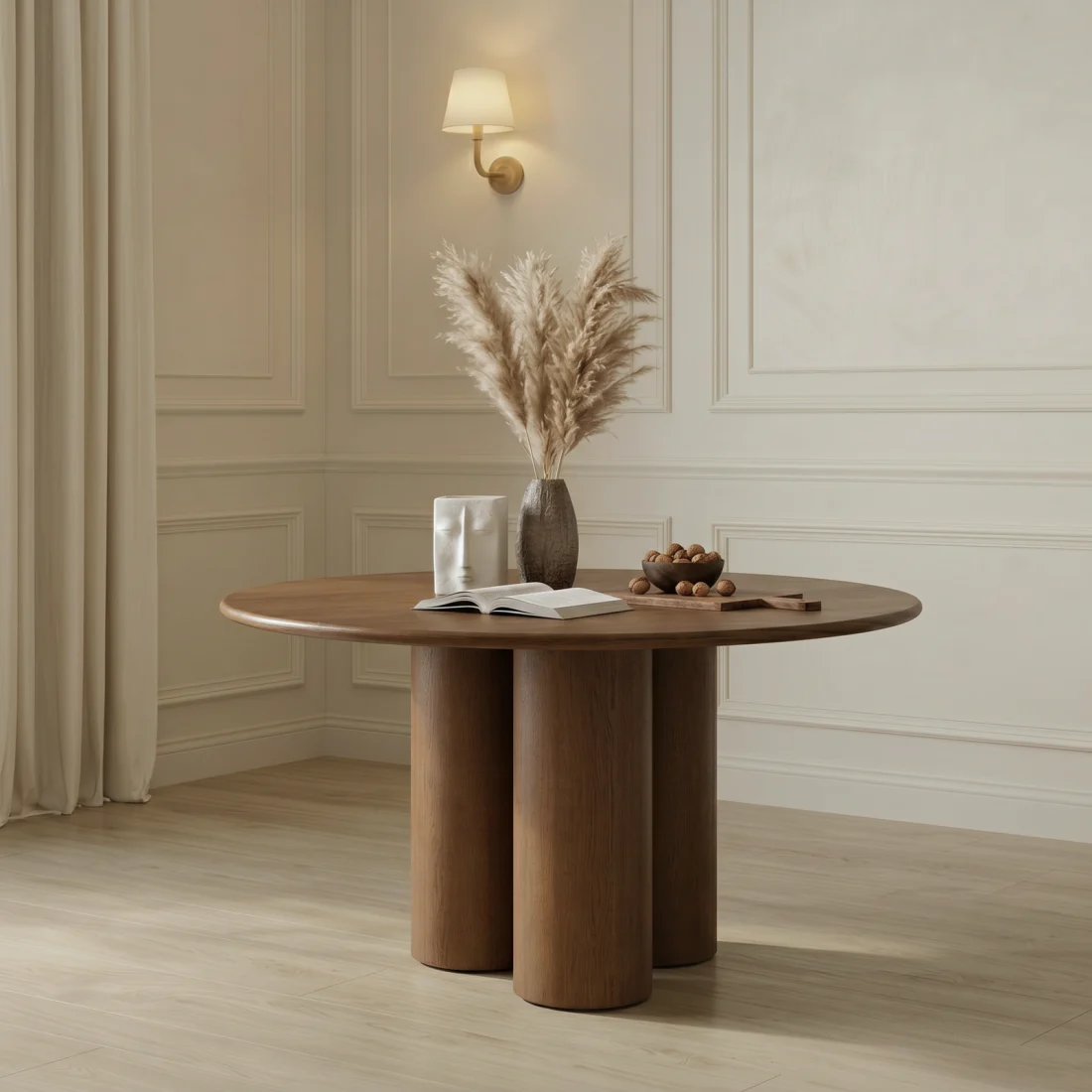
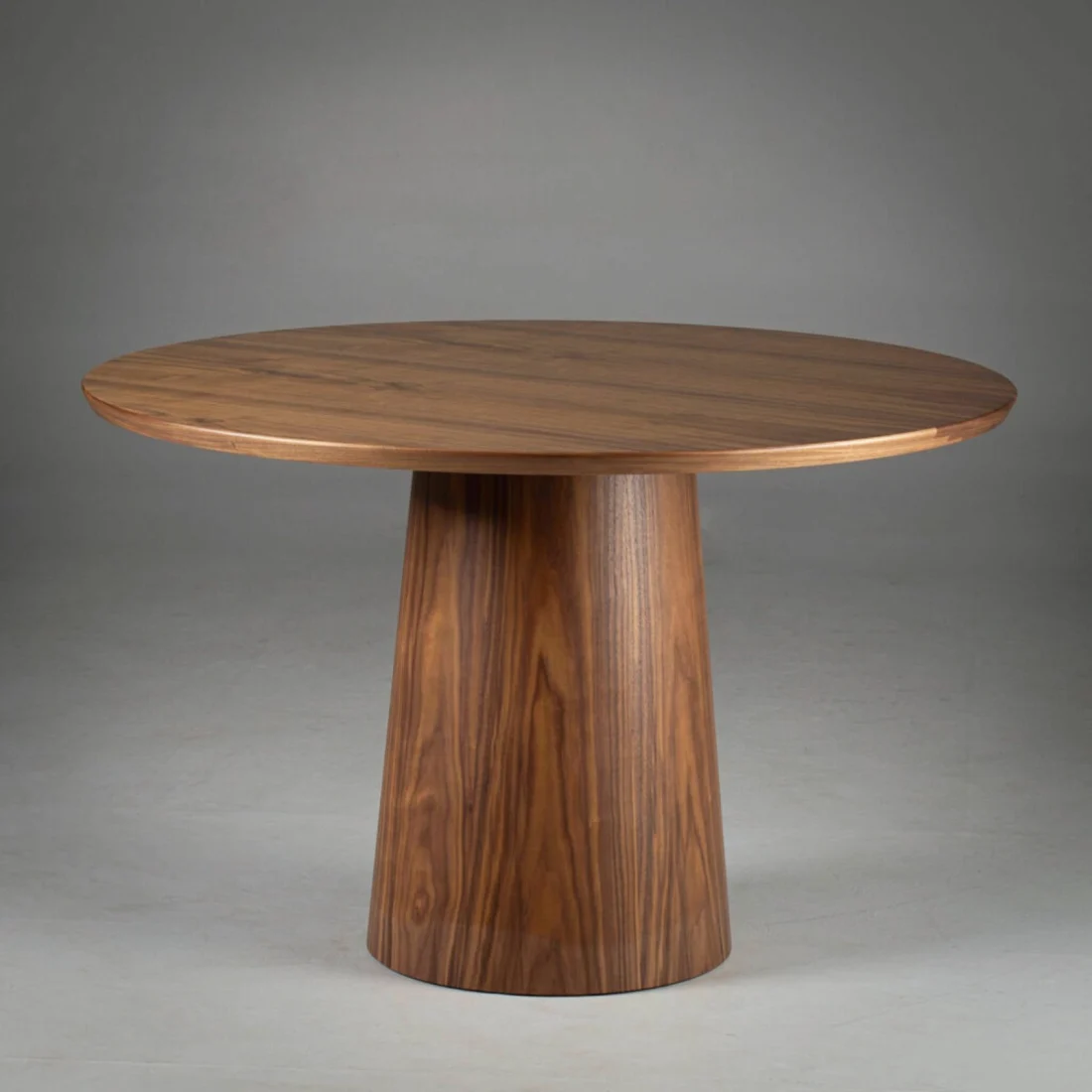
Parma is known for things built in careful, rounded wheels — and this table's base has the same logic, a solid cone of dark walnut-toned wood rising to meet a wide round top, one continuous, tapering form rather than a set of legs.
Both sizes in the collection share the construction: a single turned pedestal, wide at the floor and narrowing toward the underside of the top, in a dark wood finish that reads almost black in low light. There is nothing to assemble beyond top and base — the whole design rests on getting that one taper right. A pedestal table like this clears the floor beneath it entirely, which matters more than it sounds like in a smaller dining space where chair legs need somewhere to go.
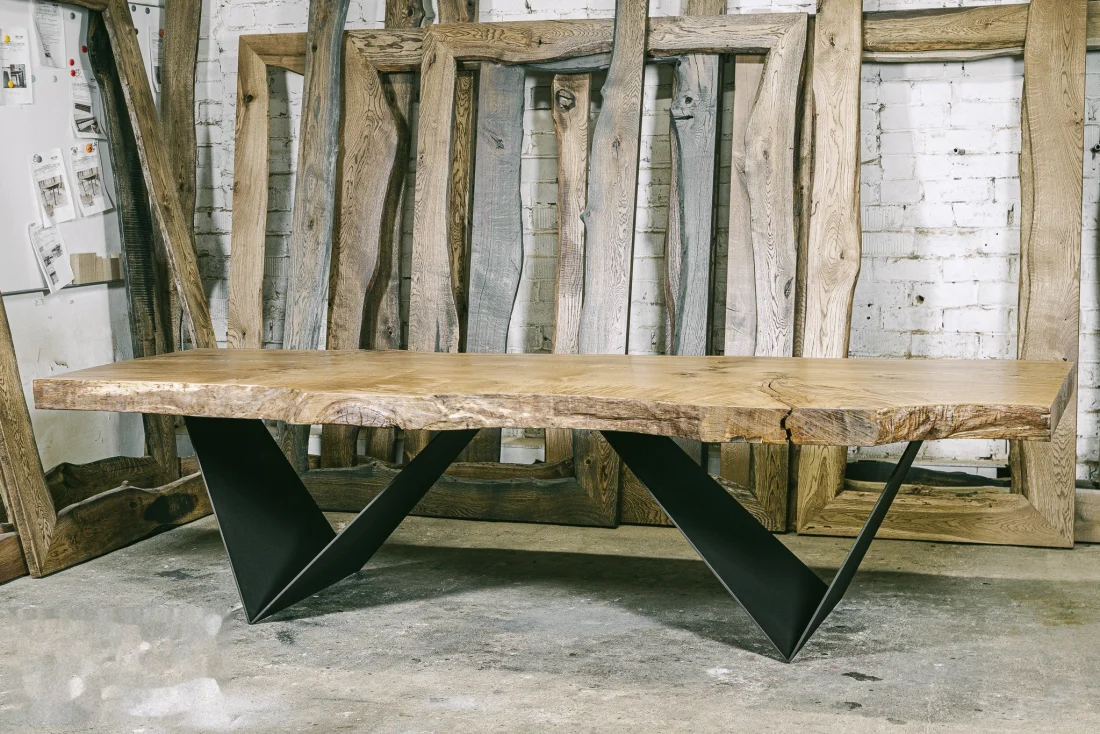
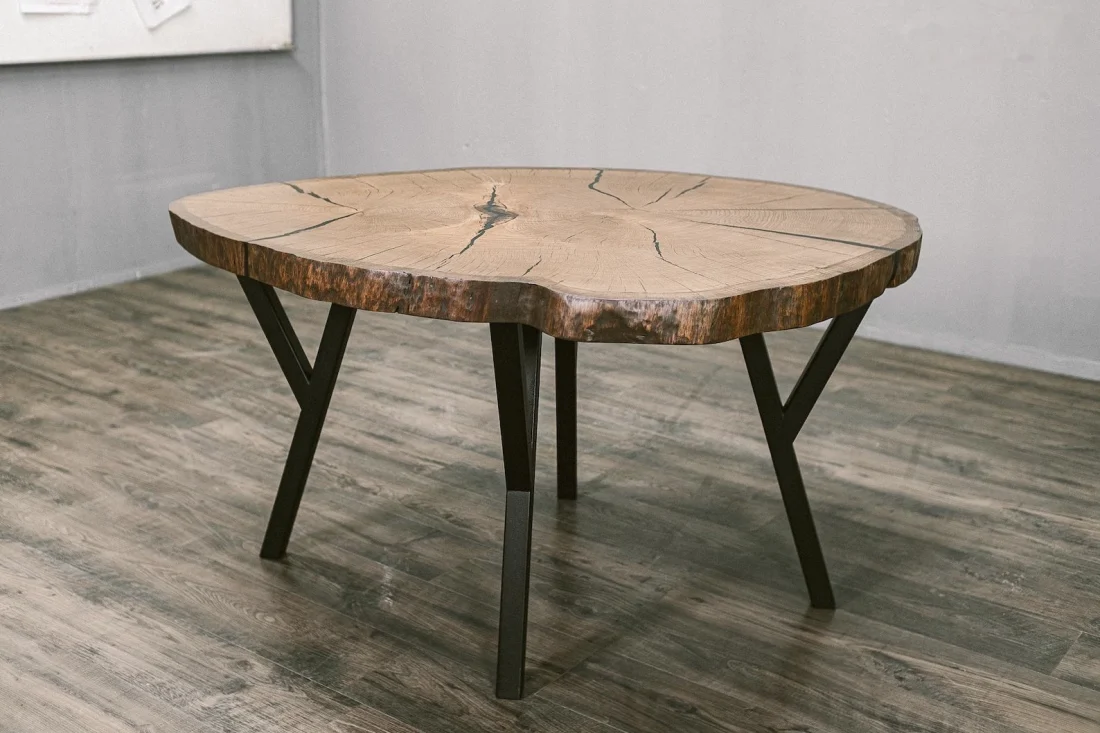
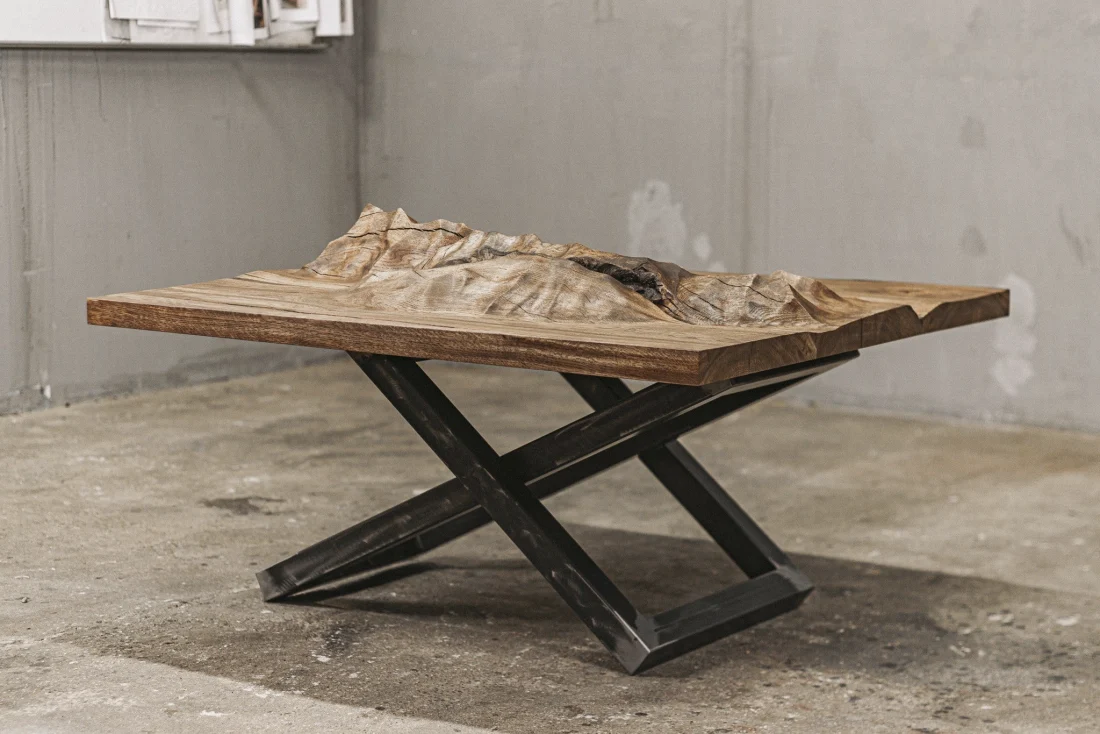
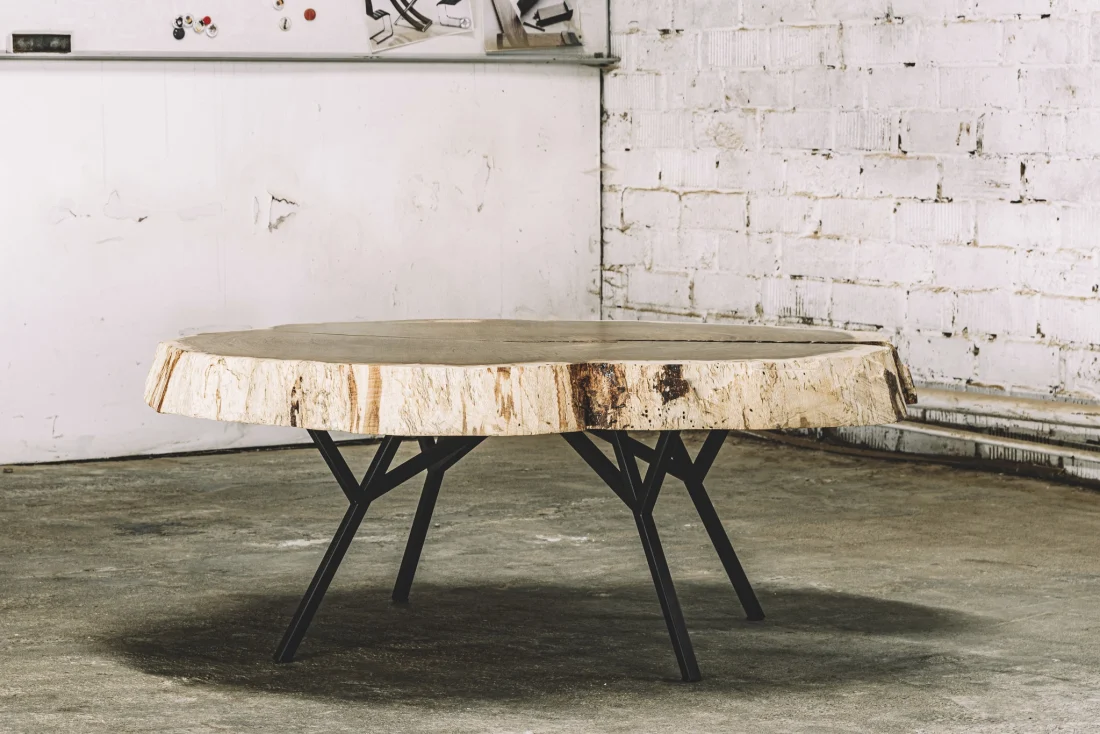
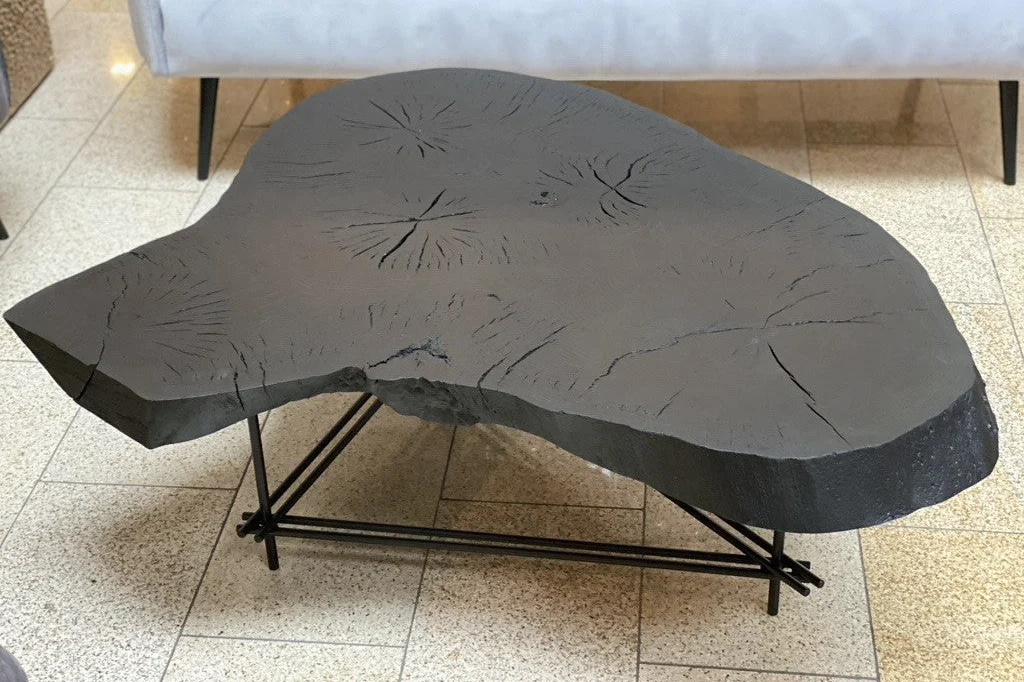
Granite valleys wear their history in cracks and weathered faces, and this table's top does something similar: a live-edge oak slab, its surface textured and burled, with veins of resin run through wherever the wood had split.
Black steel legs, bent into a sharp V on each end, hold it with no stretcher bar breaking up the view underneath. The resin is functional as much as decorative — it stabilizes a slab that would otherwise be too fractured to use as a tabletop, and it catches light differently than the oak around it. Centered in front of a sofa, it reads as one solid piece of landscape brought indoors rather than a table built to look rustic. No two tops in the collection show quite the same crack pattern, since no two slabs split the same way.
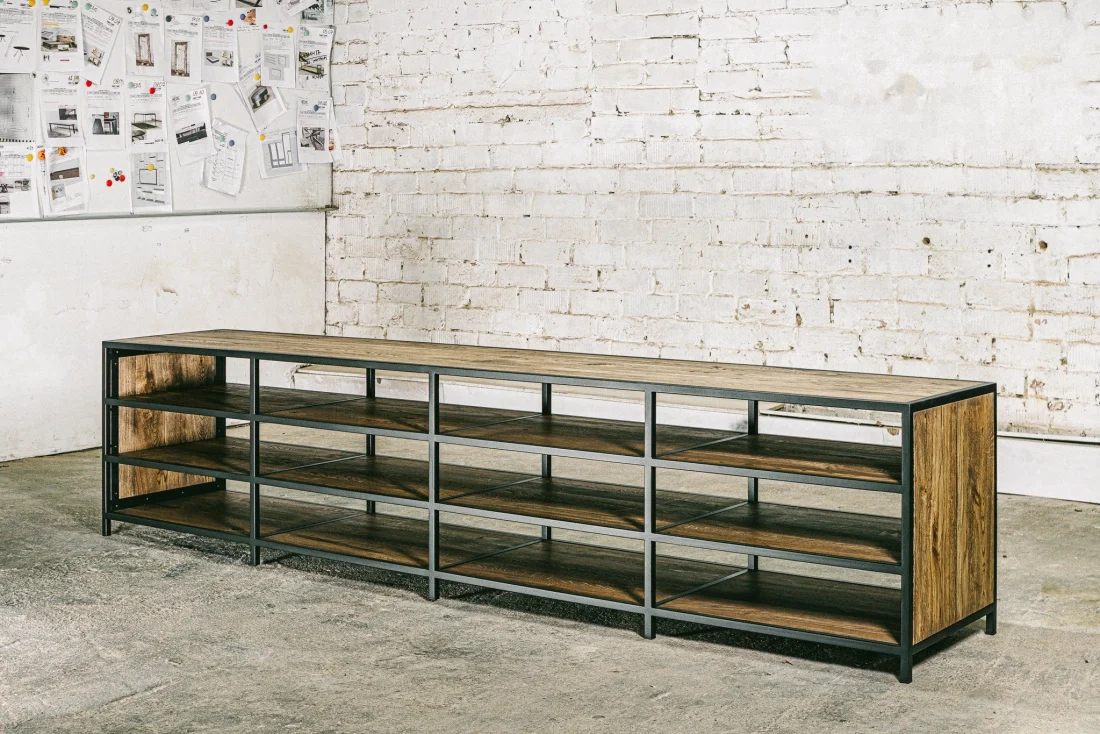
Trieste sits where the Adriatic runs unusually deep and dark right up to the shoreline, and this console takes that same deep, near-black tone — solid oak finished in a dark, almost olive-black stain, built as a run of open cubbies rather than closed doors.
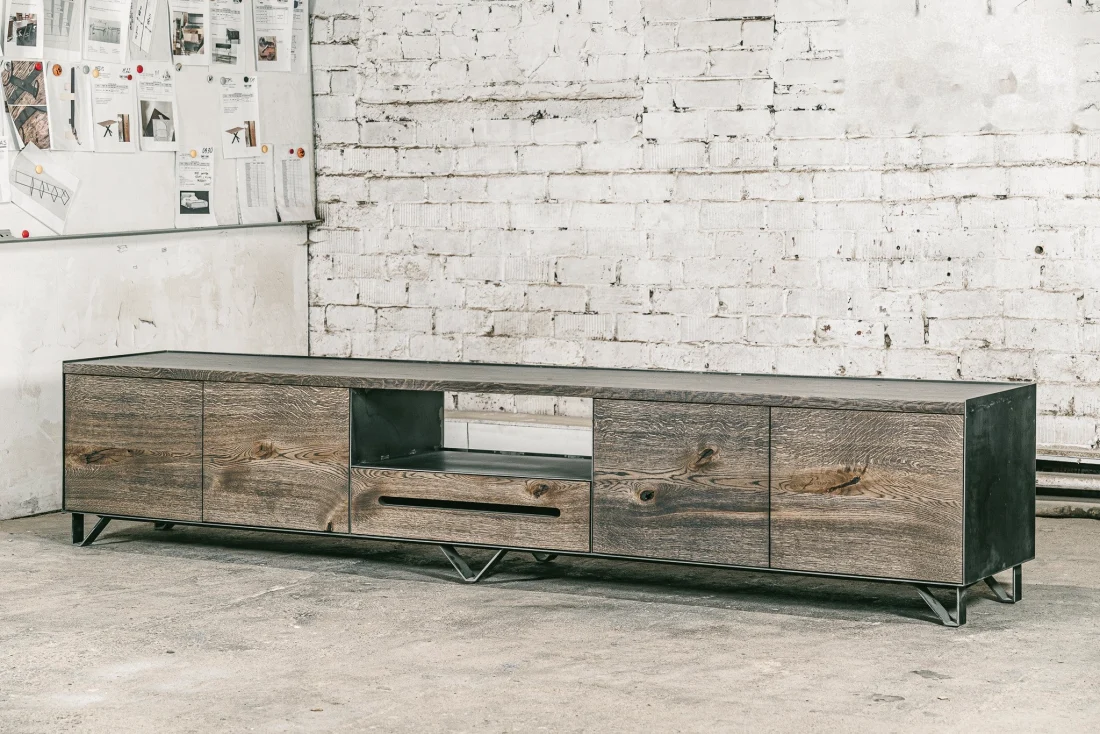
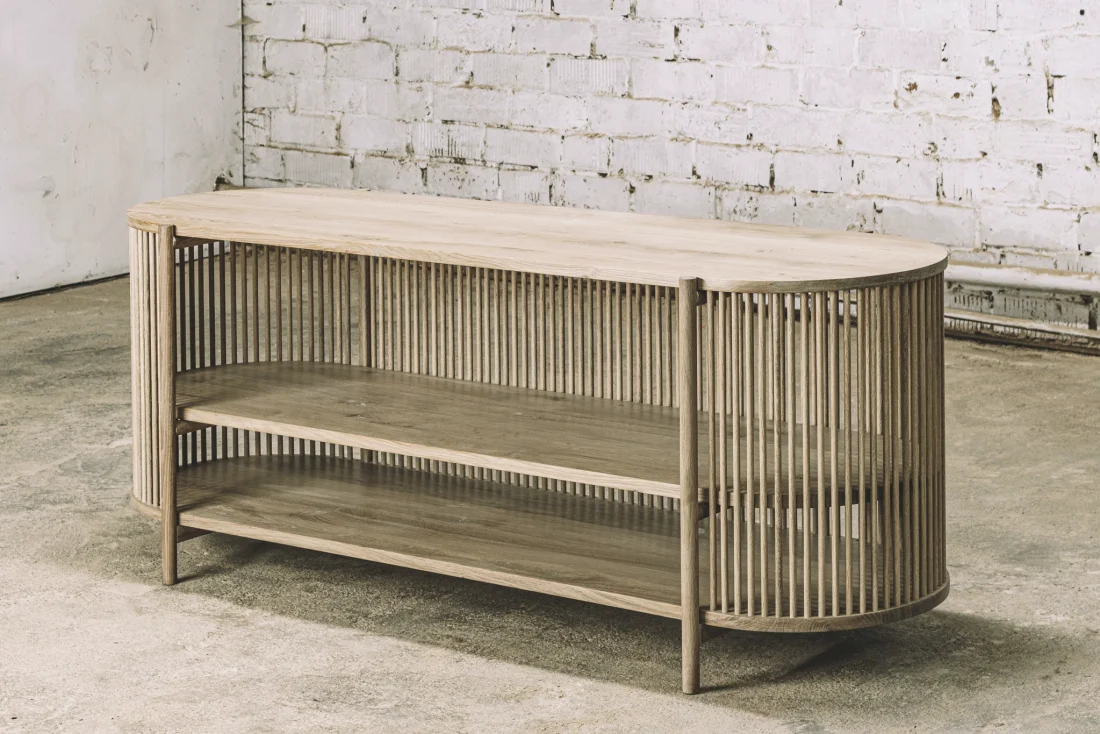
Five sizes make up the collection, from a compact unit to one stretching well past six feet, but the finish and the open-box construction hold constant throughout. Without doors, the piece reads lighter than its dark color would suggest, each compartment visible and easy to reach into rather than hidden. Set below a television or along a media wall, the dark tone keeps it from competing with whatever is on the screen, which is precisely the job a piece like this has to do.
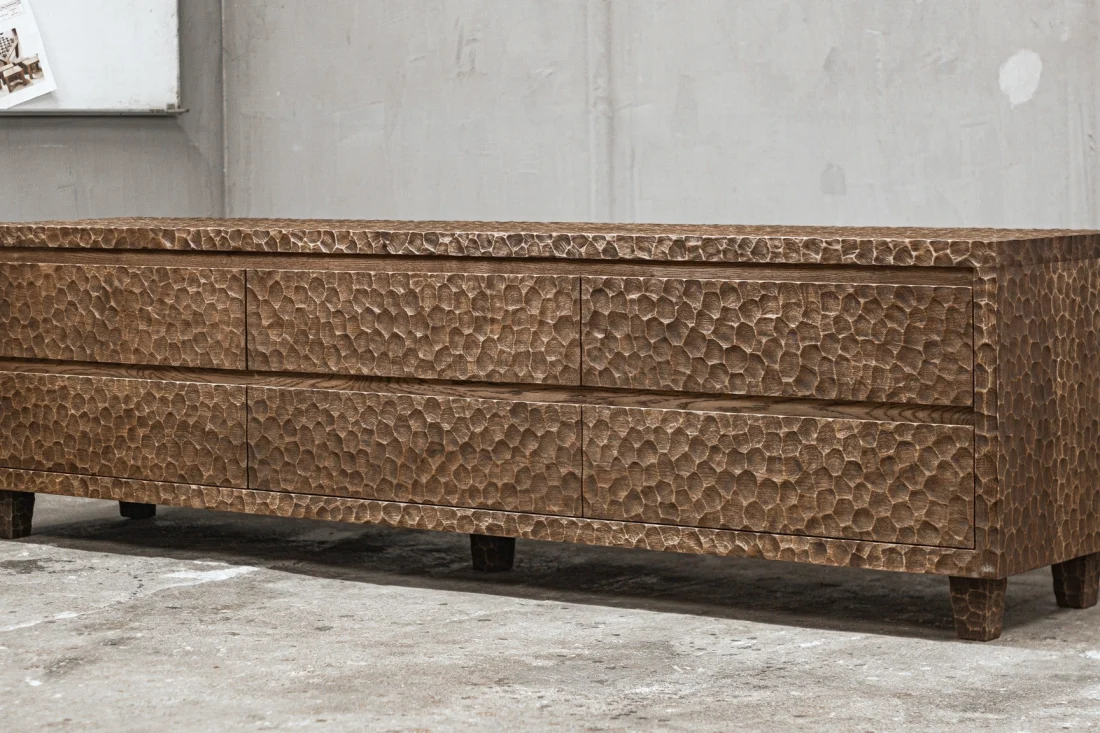
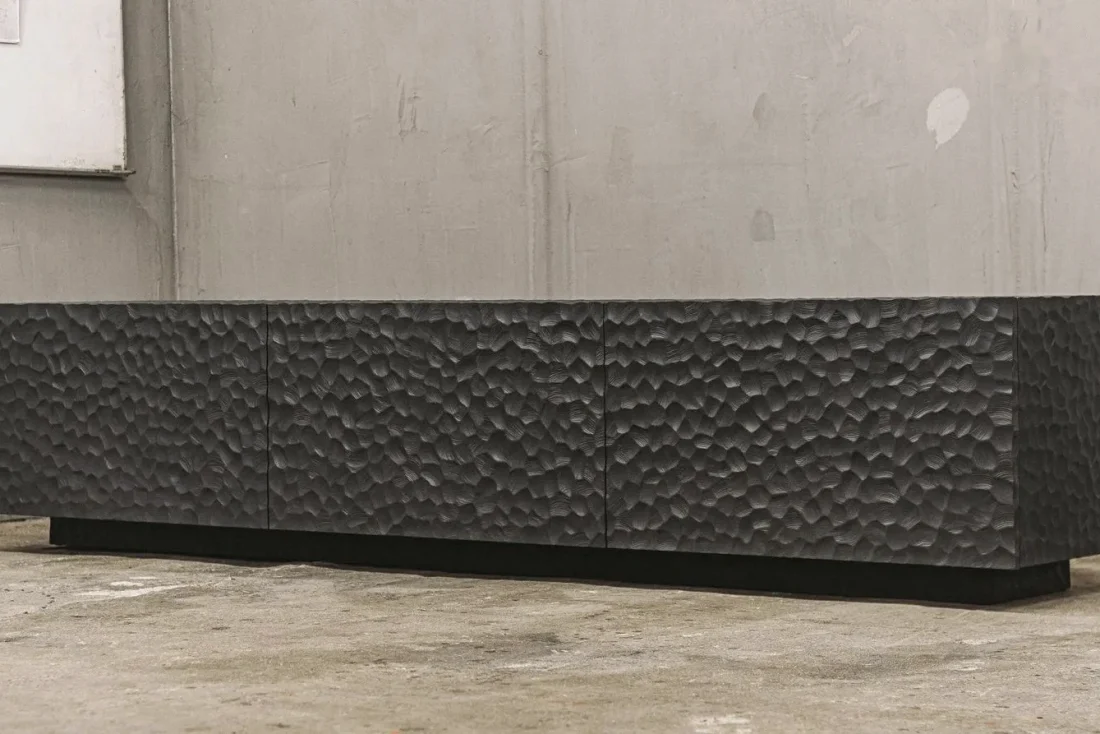
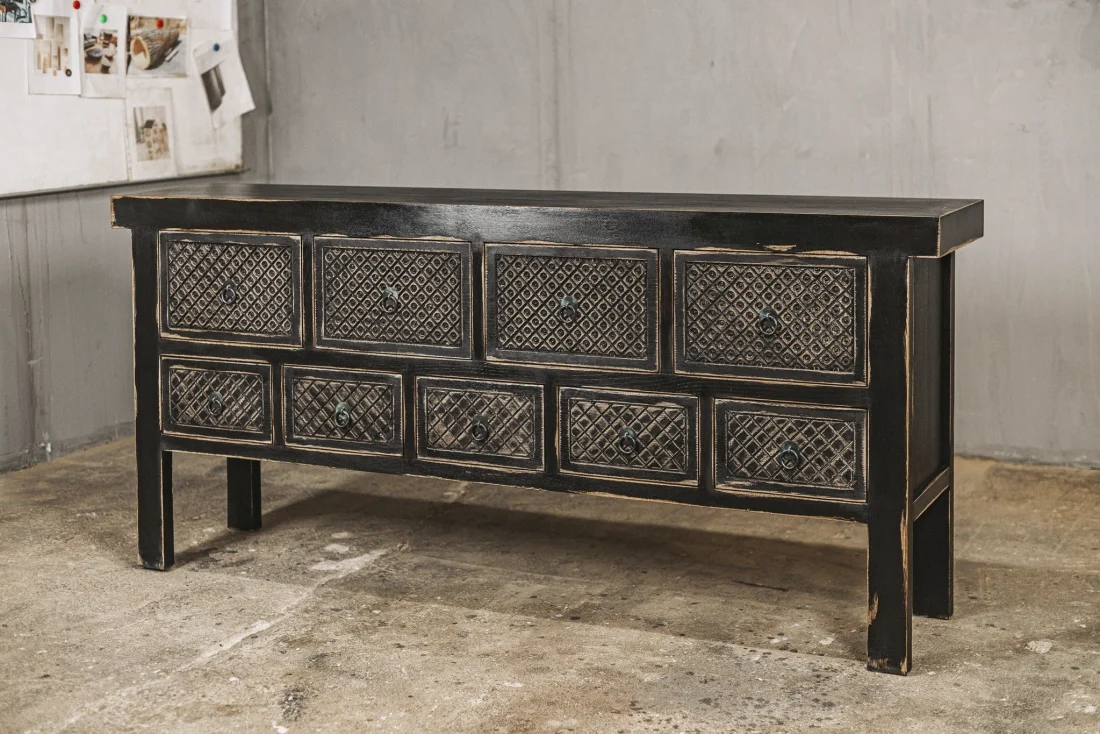
Biscayne Bay catches the sun in constantly shifting texture, no two patches of water lit quite the same, and this console's face does something similar — a deep, hand-worked texture across solid oak, hammered or dimpled so light catches differently panel to panel rather than lying flat.
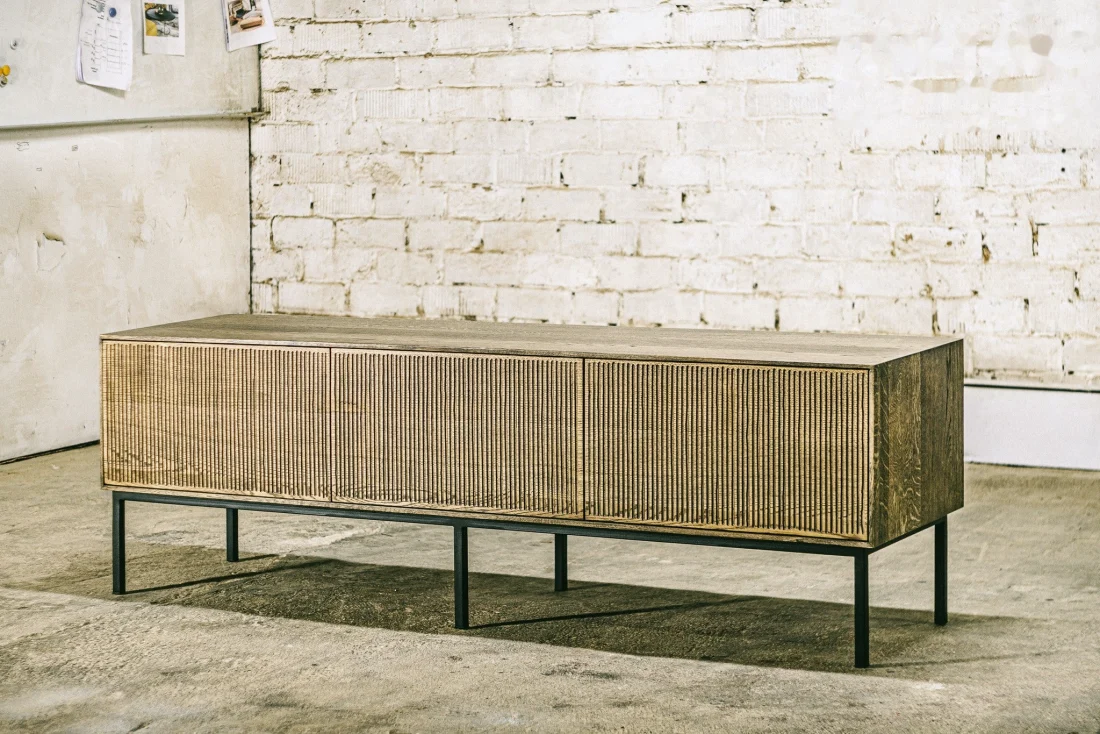
Across the eight pieces, the frame is oak or oak on black steel, with the walnut-toned wood taking the textured treatment on drawer fronts while the case stays plain. Lengths run from a compact media stand to one stretching over ten feet. Set below a television or along a long wall, the texture reads from across a room the way a plain oak grain would not — a piece that keeps giving something to look at once the screen is off.
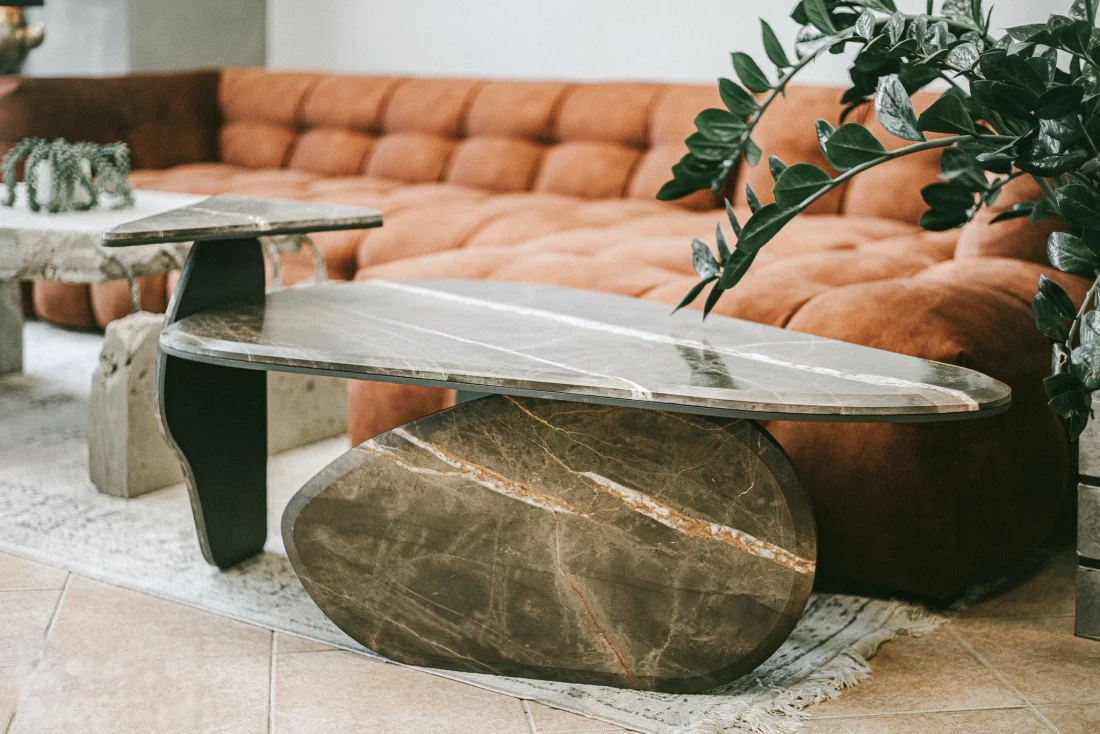
Red rock country wears its boulders out in the open, rounded by wind rather than carved by hand, and this table's base does the same: a solid, organically shaped support in concrete or marble, holding up an oval oak or stone top with no visible joinery between the two.
Sizes and heights vary enough that two placed together read as a pair of boulders rather than a matched set. Set in front of a sofa, the base reads as sculpture that happens to hold a table up, not the other way around. It suits a room that already leans warm — rust, terracotta, deep greens — since the stone-toned base pulls those colors down toward the floor. No two bases weigh quite the same either, which keeps each piece feeling more found than manufactured.
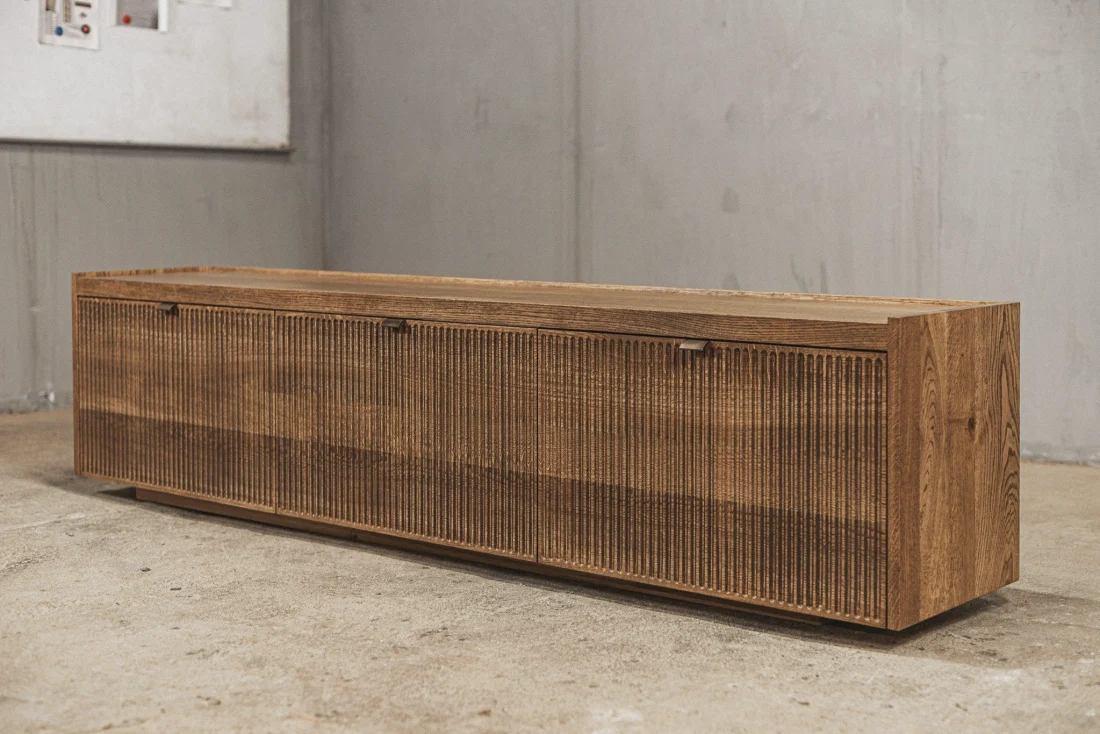
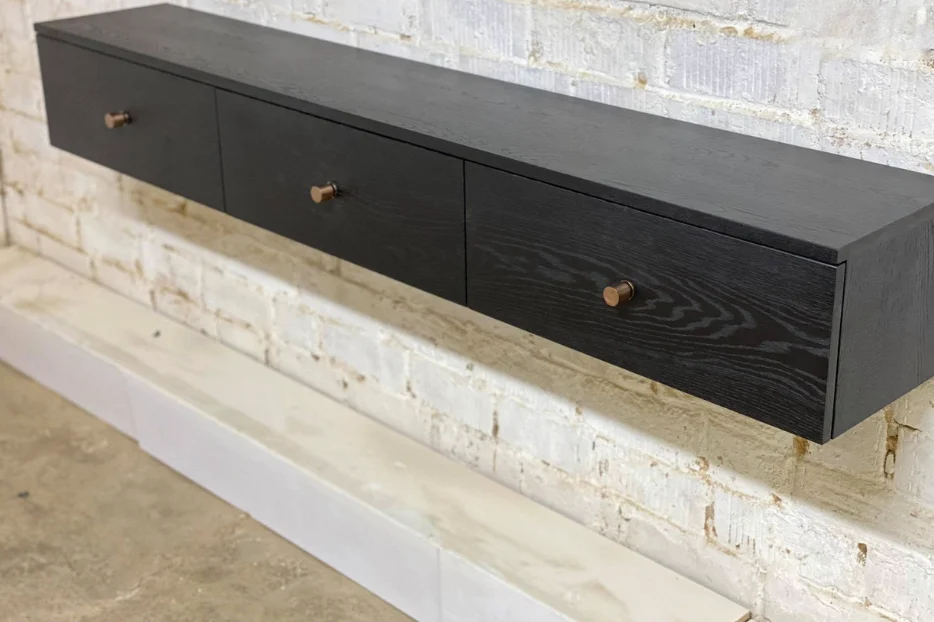
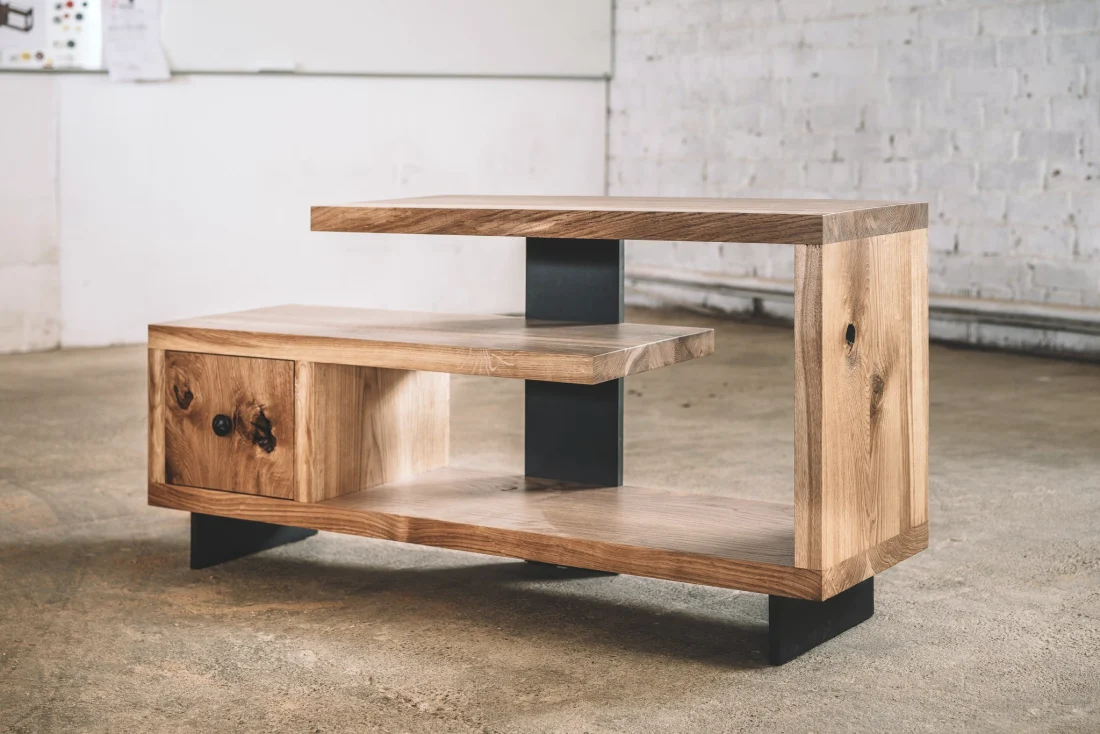
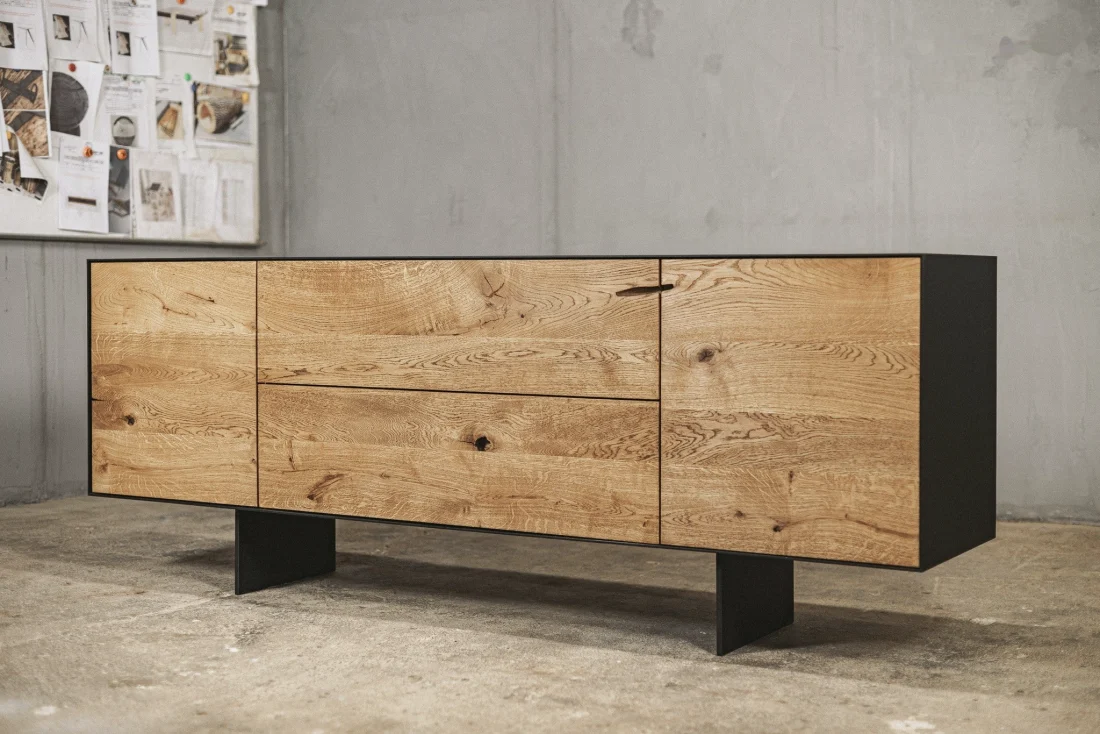
Ojai sits in a valley known for unusually clean, still light, and this console keeps to that same calm register — a long, low run of solid oak in a natural tone, flush doors, no hardware on display, legs set at a slight outward angle for stability rather than style.
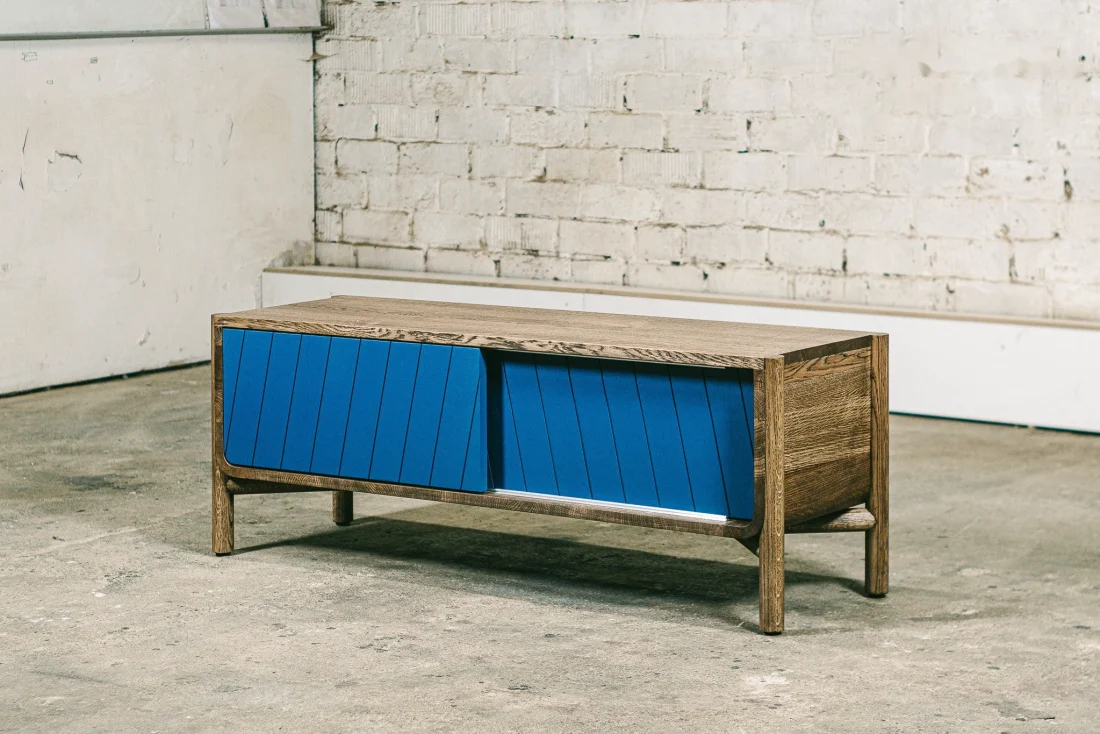
Six sizes make up the collection, some on oak legs alone and others lifted on a black steel frame, but the restraint holds across all of them: no carving, no applied texture, just good proportion and a warm, natural finish. Nothing on the piece asks to be noticed before the room around it. It suits a room already doing enough visually — a piece meant to hold a television and disappear, rather than compete with whatever else is on the wall.
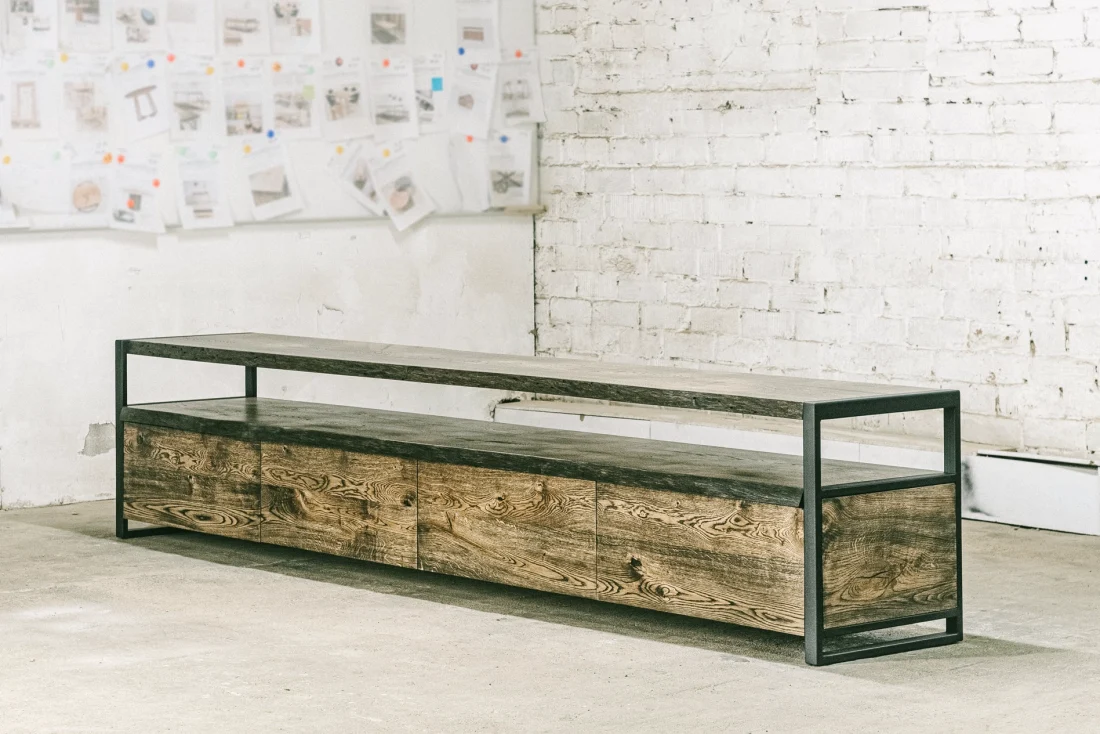
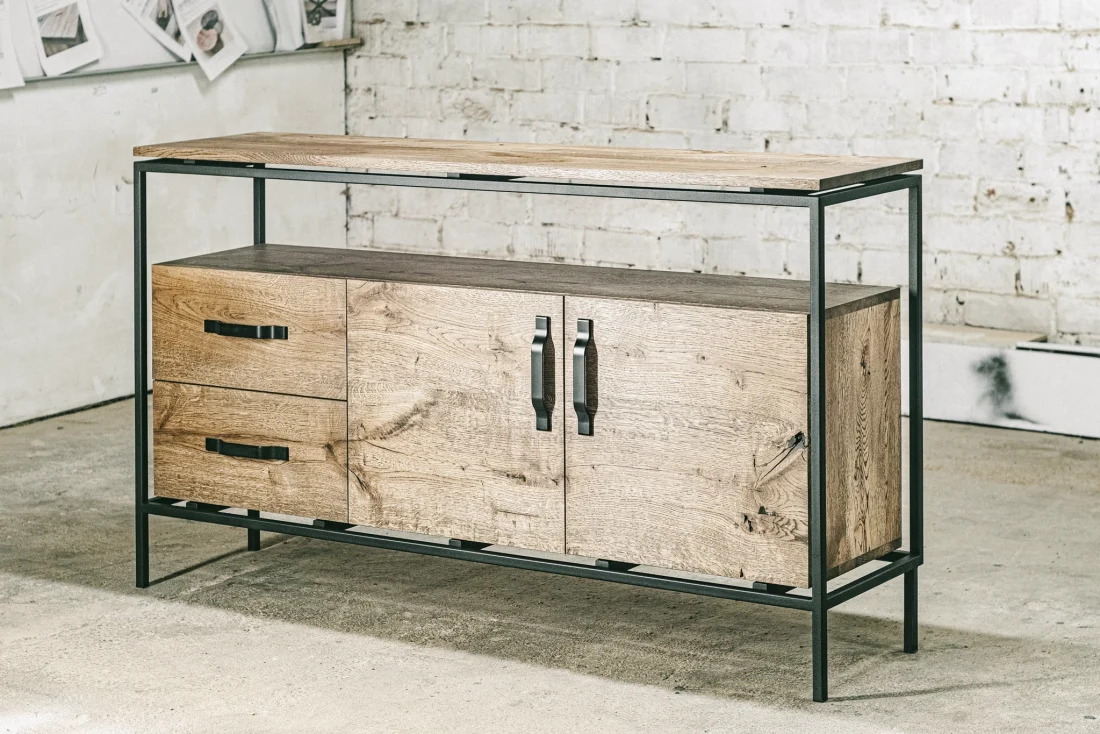
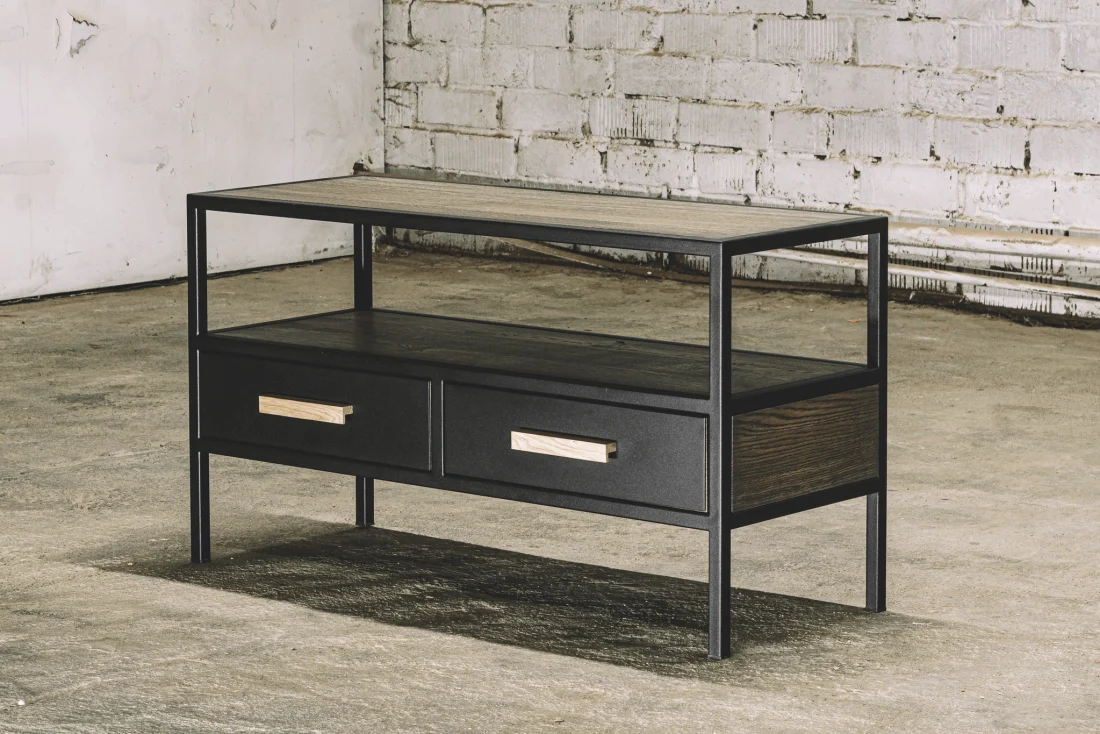
Lucca is still ringed by its old walls, slender towers rising above them at odd intervals, and this console's thin black steel frame has that same upright, minimal quality — a light structure holding oak shelving and a single drawer rather than a heavy case.
Five sizes fill out the collection, the frame staying thin and dark throughout while the oak shifts between a natural tone and a deeper walnut. Because so much of the piece is open steel rather than solid panel, it reads much lighter in a room than its length would suggest. It suits a room that wants storage without visual weight — a piece that holds what it needs to without ever blocking the wall or the window behind it.
Pisa is known for stone that has weathered unevenly over centuries, and this console's door fronts have that same rough, worked texture — solid oak left in a deliberately uneven, hand-finished surface, set inside a slim black or dark green lacquered metal frame.
Four sizes make up the collection, from a compact unit to one over nine feet long, with the wood shifting between an antique tone and a darker walnut oil finish depending on the piece. The frame stays thin throughout, letting the textured doors carry the visual weight rather than the structure around them. Below a television or along a media wall, the texture keeps the piece interesting even from a distance, in a way a flat, smooth door front would not manage.
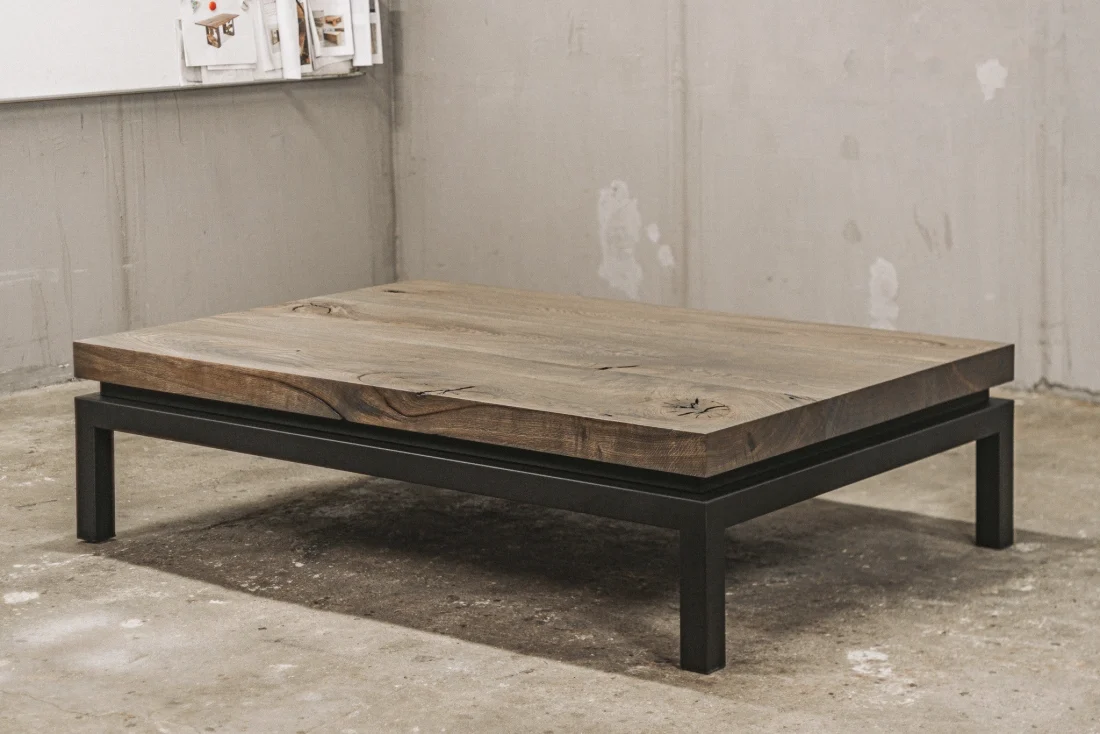
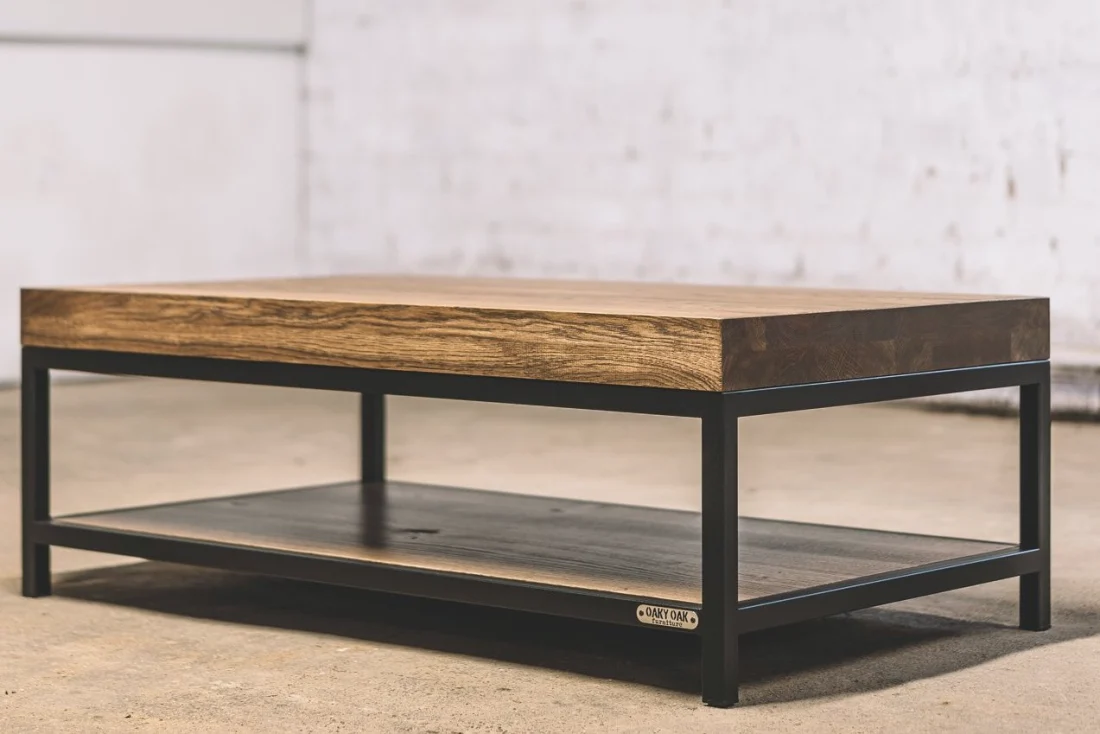
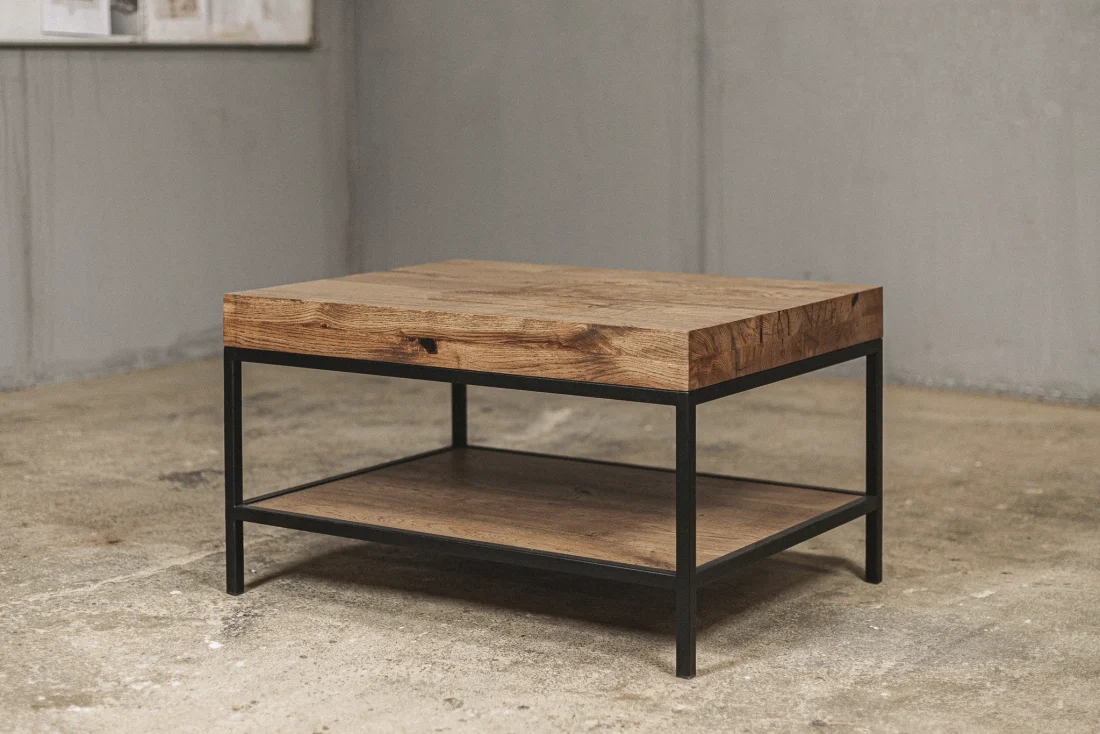
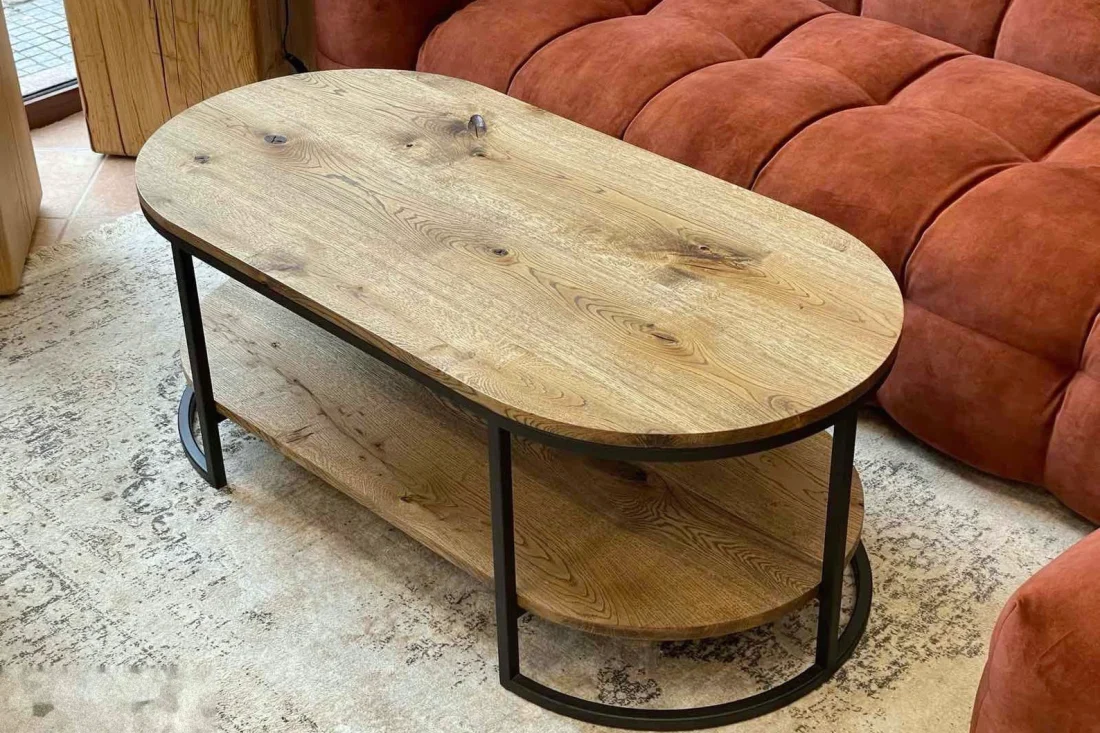
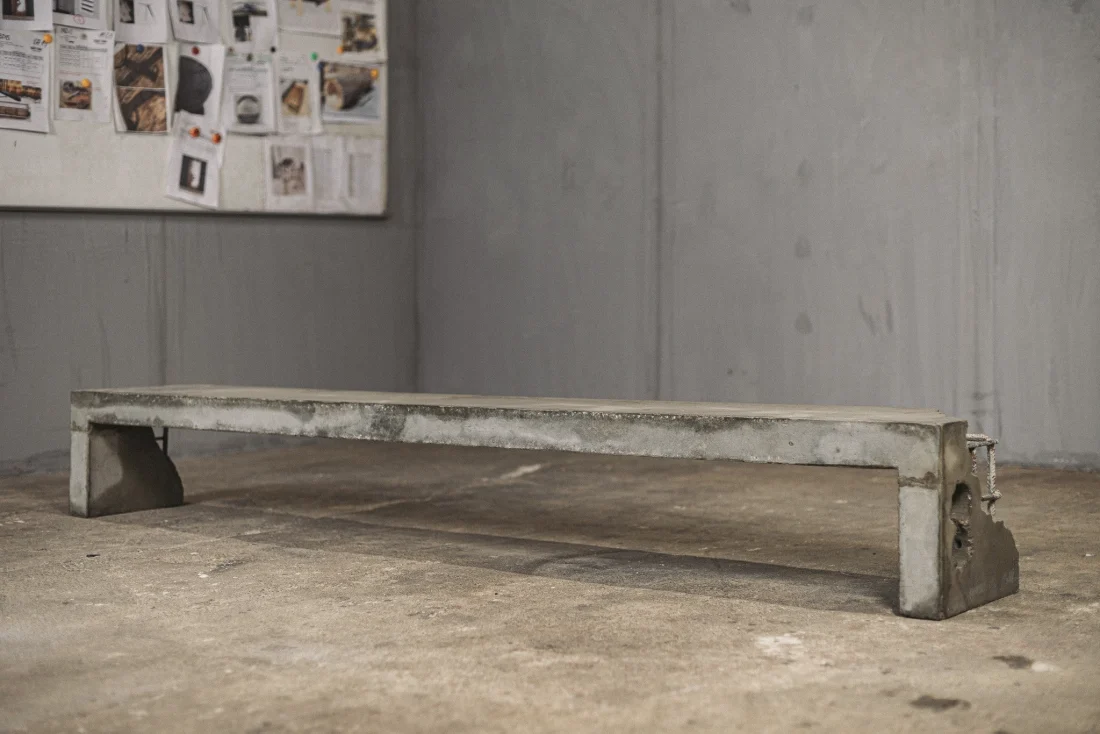
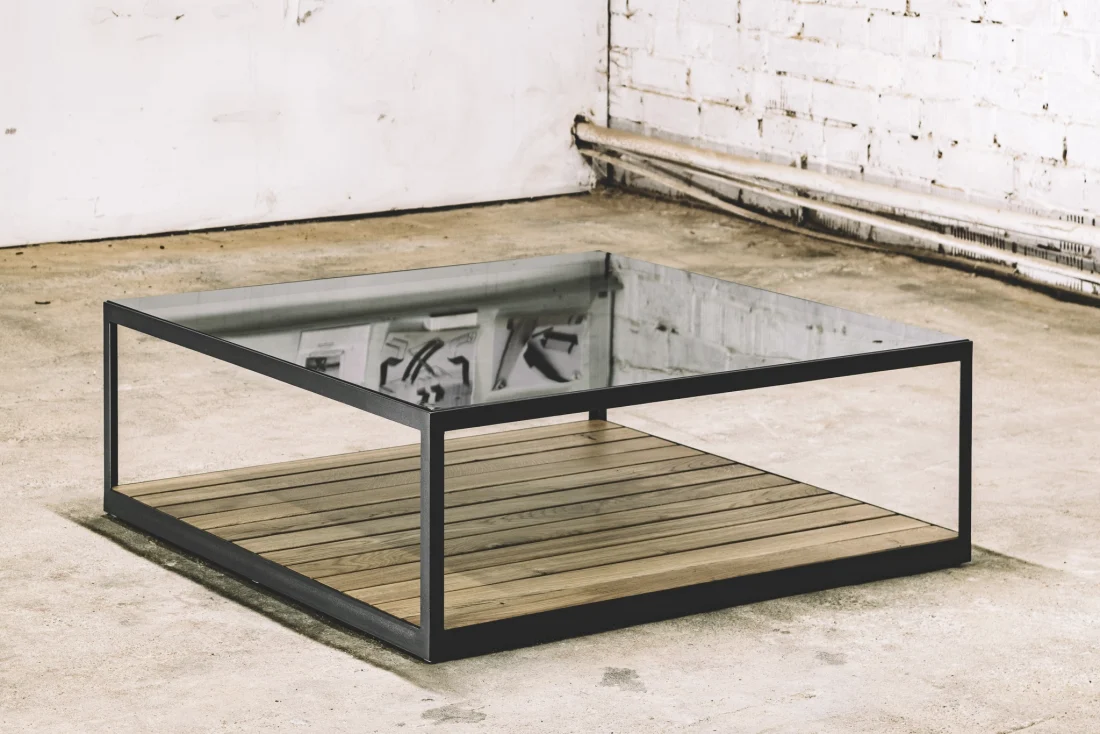
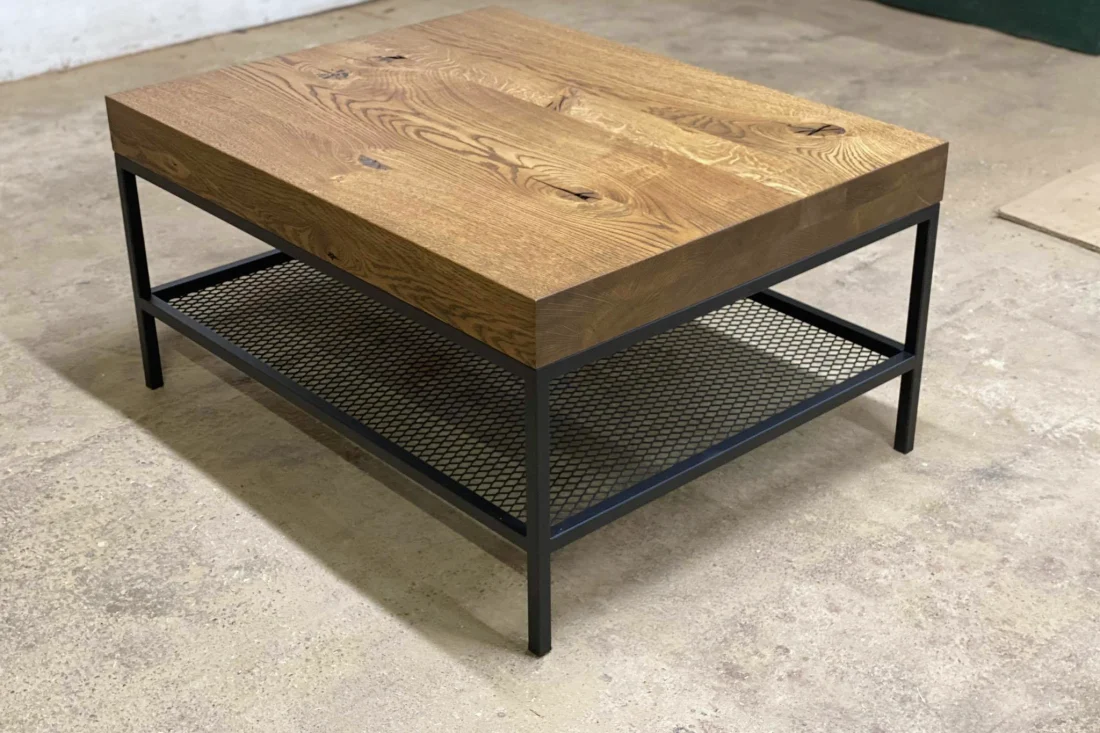
Dutch canal warehouses were built for function first, and this table follows the same instinct: a thick plank top in solid oak, natural or walnut-toned, set into a black steel box frame with no wasted material anywhere in the joinery.
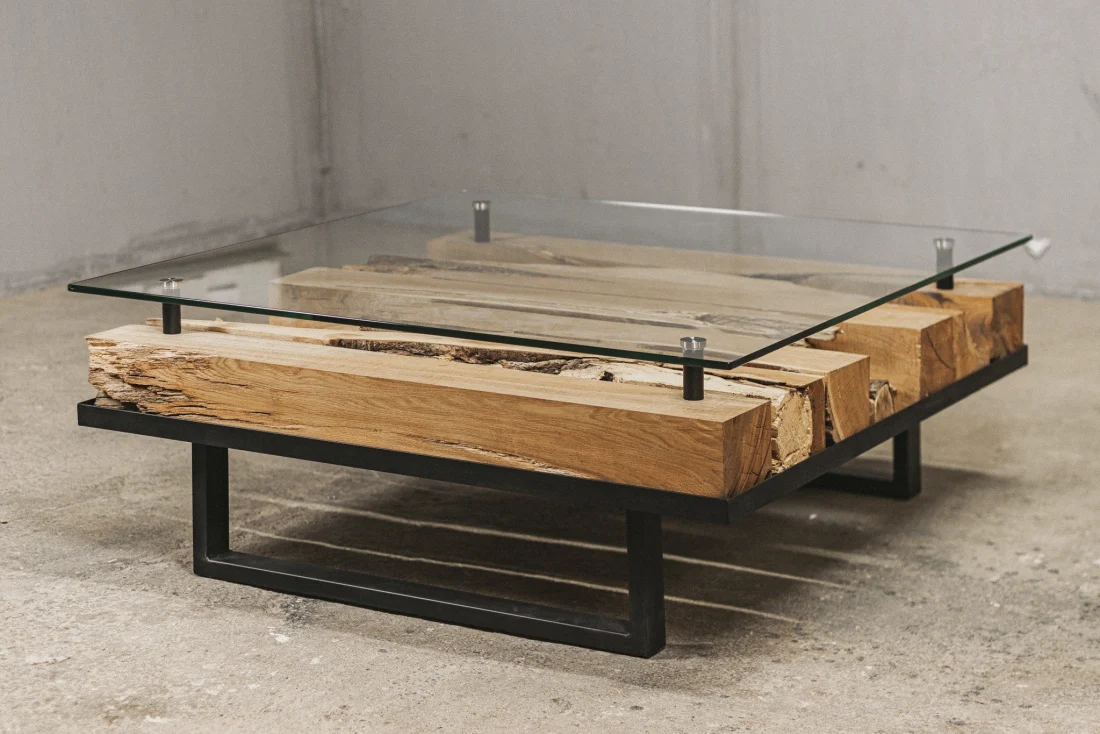
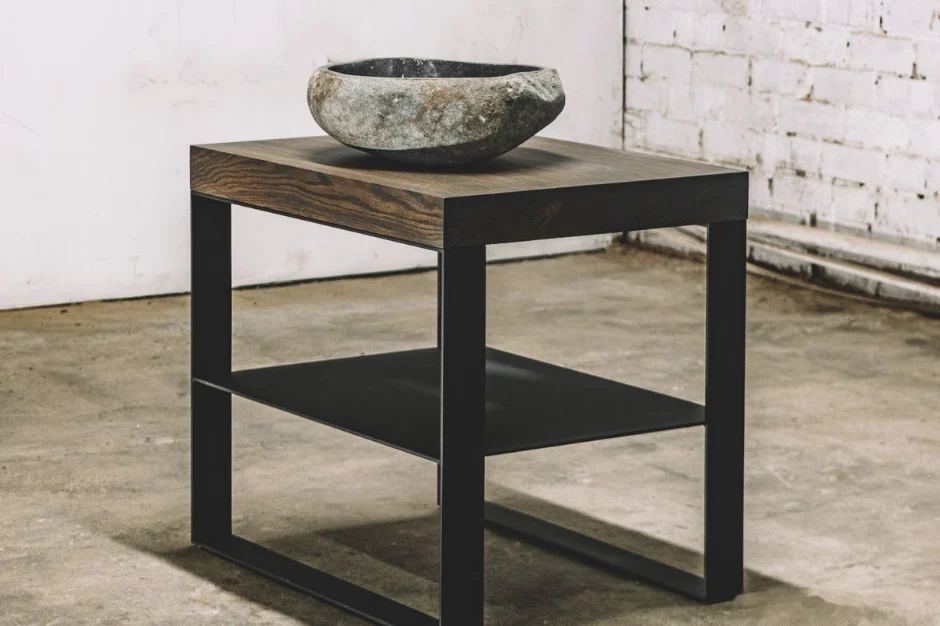
Some versions add a shelf below in matching wood, others swap the top for tempered glass over the same frame. It sits low and square, built to take the daily weight of a living room without complaint — trays, feet, stacks of the mail nobody has opened yet. The steel frame is doing the structural work quietly, leaving the oak plank to be the only thing anyone actually looks at. A family gathering around it for an evening leaves exactly the kind of wear the wood is built to take.
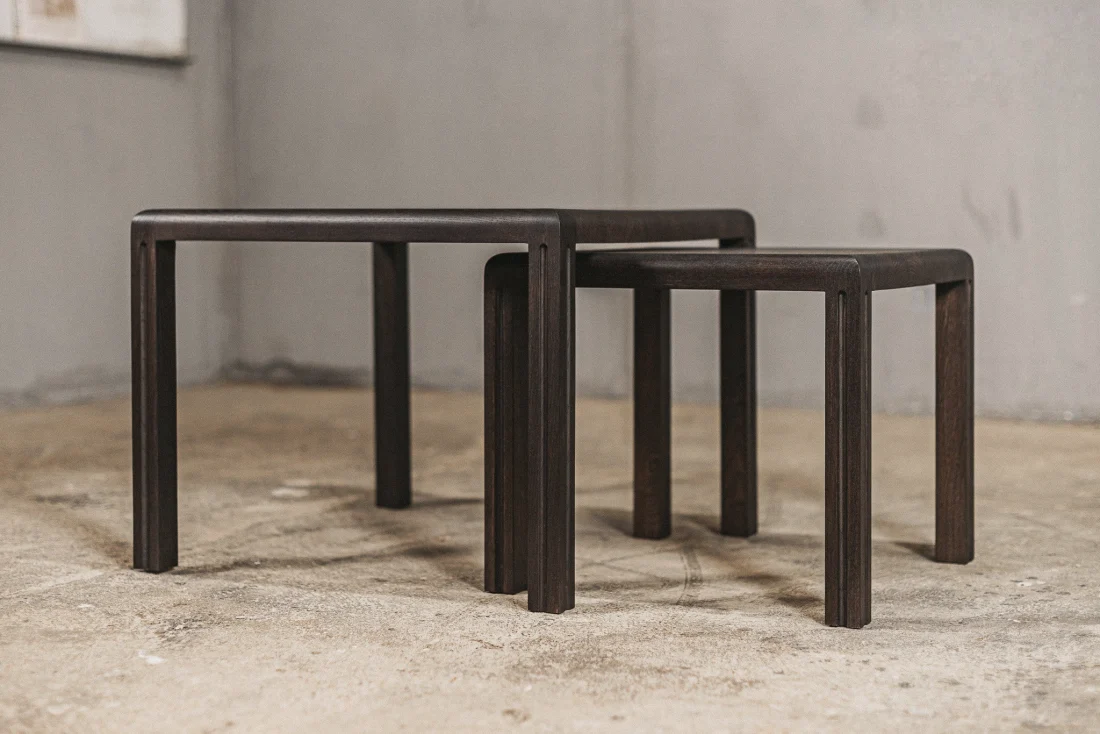
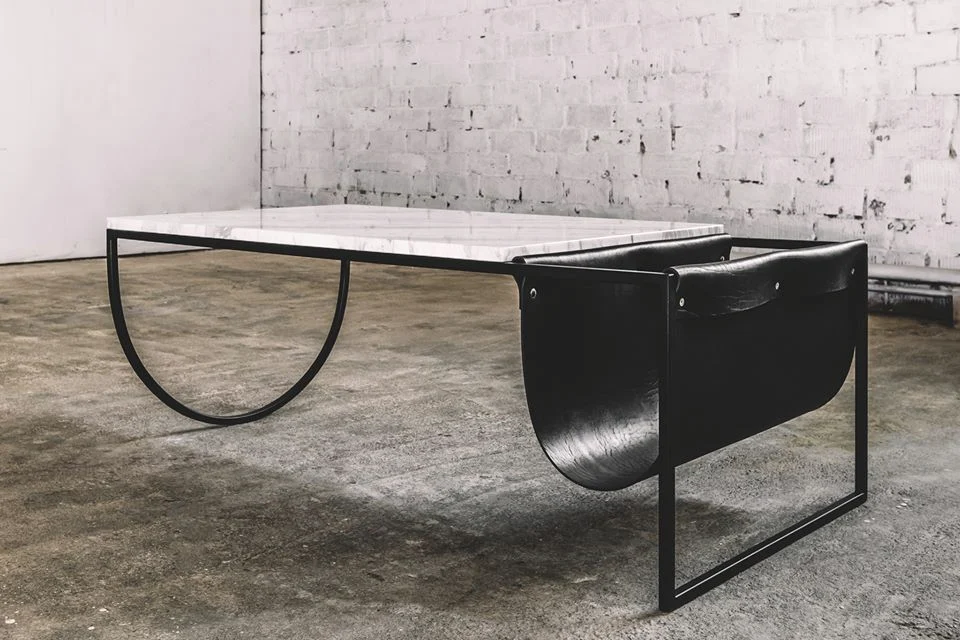
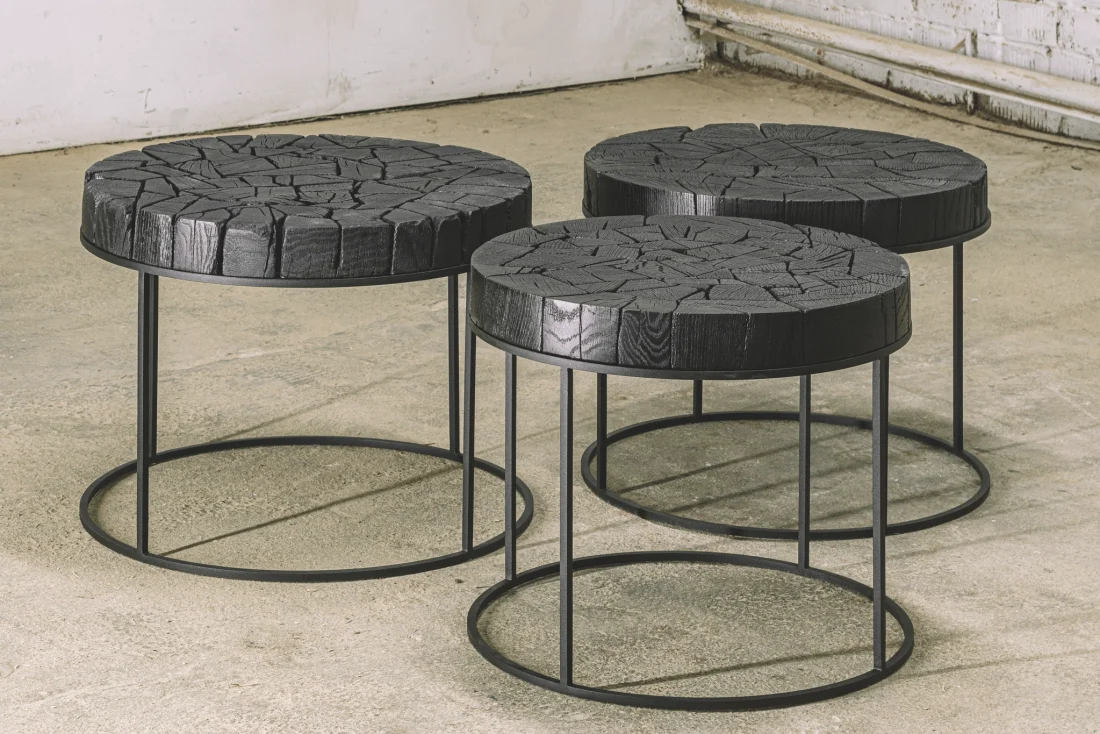
Waves breaking along this coast gave surfers their whole vocabulary, and this set of nesting tables curves the same way: wood-grain tops on legs bent into a single sweeping arc, each table sized to tuck under the next when the room needs to open up.
A marble top replaces wood on some versions, still riding the same curved base. Pull all three out for a gathering and push them back together after — the nesting is not decorative, it genuinely collapses the footprint by half. The curve is the whole design vocabulary here: no straight leg anywhere in the set, which makes it read soft next to a room full of squarer furniture. Pulled apart for a crowd or pushed back together for a quiet evening, the set adapts to whoever shows up.
Prague earns its name from the legs, not the top — four tall, dark shapes turned and carved until they read almost architectural, the kind of ornament that used to take a craftsman a full day per leg.
Ours are oak, stained down to near-black, paired with a long, narrow top that stays deliberately plain so the base can do the talking. The collection runs to seven pieces, mostly wall consoles, one long enough to anchor an entryway, one narrower built for a hallway. All keep the same turned leg regardless of overall size. Set a lamp and a stack of books on top and let the legs be the reason people stop walking through the hall. The joinery underneath the finish is ordinary and sound, built to be leaned on for years.
Richmond's old tobacco warehouses have been rebuilt more than once, their timber reused and reassembled rather than replaced, and this console keeps that patched, reclaimed look — solid oak with visible knots and grain shifts, set into a black steel frame with an open cubby breaking up the run.
Across six pieces, wood tone varies deliberately, from natural oak to a darker walnut, so no two units look machine-matched, and the steel frame stays a constant dark line underneath. The open center section keeps a router or a stack of records visible rather than shut away. It works best in a room that already leans a little rustic, where a too-perfect piece would actually look out of place beside everything else.
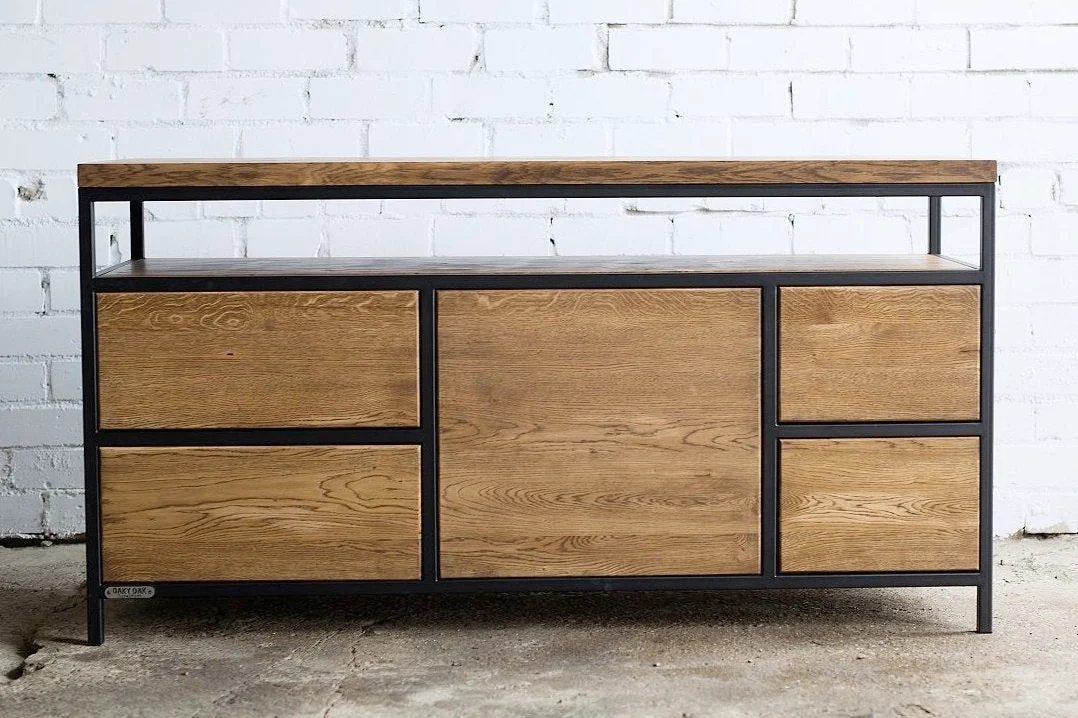
Queens is New York's patchwork borough, block after block of different textures sitting right next to each other without apology, and this media console is built the same way — a long oak case broken into alternating sections: open shelving, slatted black-framed niches, solid panels, no single rhythm repeating twice.
The carcass is light, honey-toned oak; the frame and slat inserts are finished in black metal, giving the piece a clear structural grid to organize what could otherwise feel busy. At nearly eight feet long, it reads as one console built from several different ideas rather than a repeated module. It holds a television without centering on one, since half its length is doing something else — books, a record player, whatever else lives in a living room.
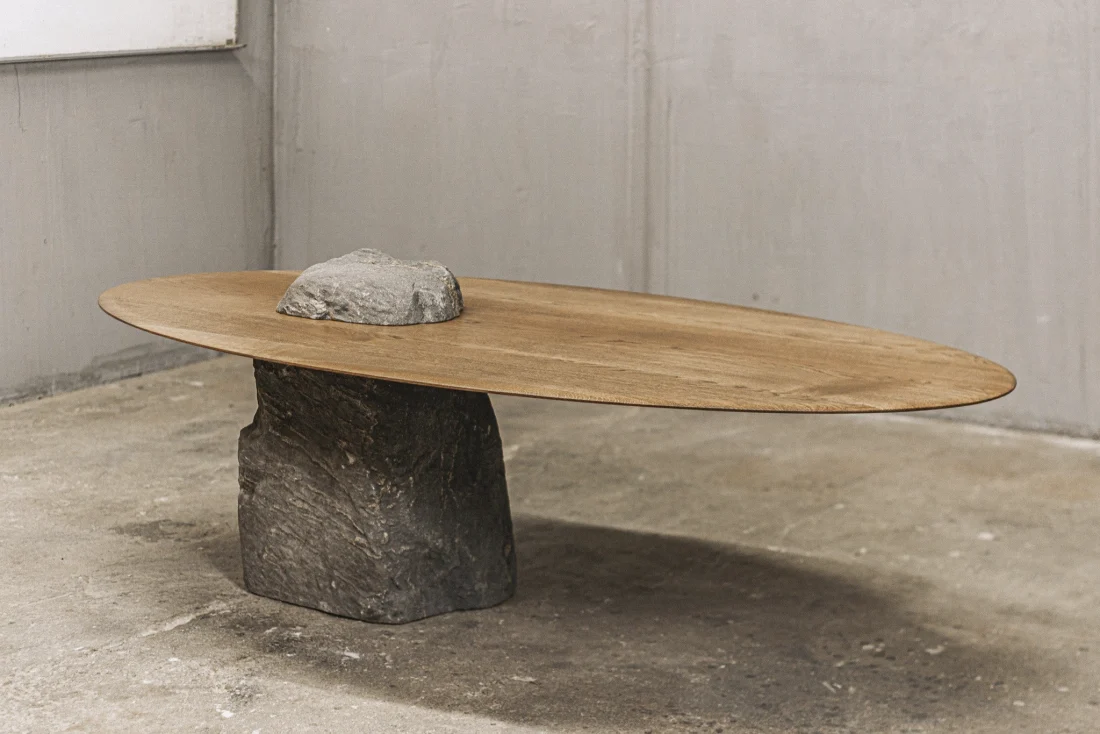
Sandstone walls rise straight out of the canyon floor in places like this, no gradual transition, and this table's base works the same way: a single natural stone support, left rough-textured, holding up a long oval top in walnut-toned oak with nothing bridging the two materials but contact.
The oval shape keeps the stone from feeling like the whole point. It reads as a found object more than a manufactured one, which makes it a natural fit in a room with a similarly organic sofa or an oversized plant nearby. There is no matching side table for this one — the stone base is too particular to repeat, and it does not need repeating. Set at the center of a seating arrangement, it pulls every other piece toward its one point of contact with the floor.
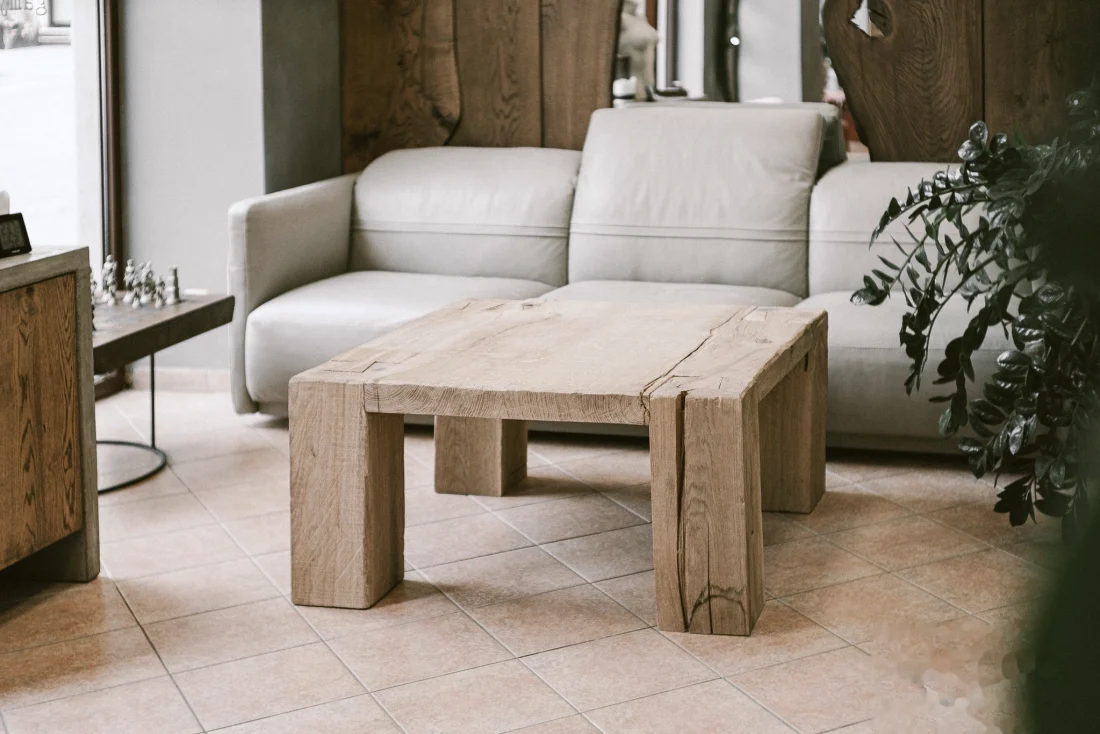
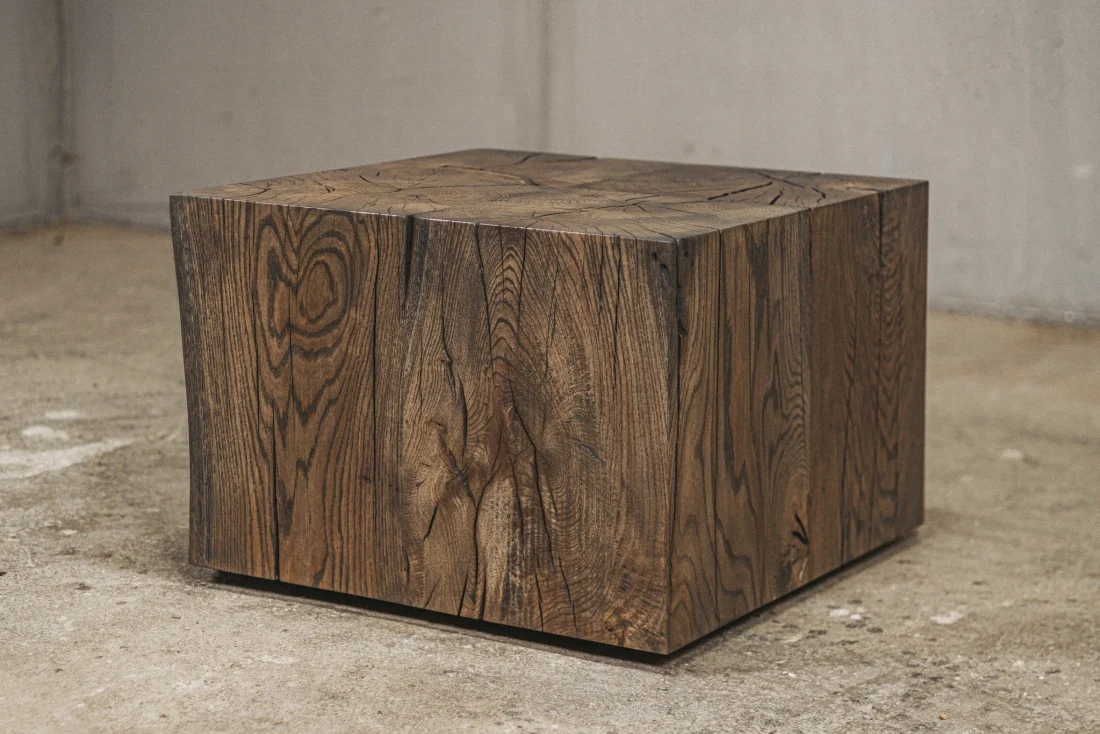
Timber-framed buildings in the Alps have always been built from beams too heavy to hide, and this table keeps that same scale: legs cut from thick, natural-edge oak, left with visible grain, cracks, and knots rather than sanded into anything uniform.
A black metal accent occasionally braces the joinery, but the wood is doing almost all the structural work itself. Sized as a nesting pair, a smaller table often tucks beside the larger one, both sharing the same heavy-beam language at different scales. It suits a room that wants furniture with genuine weight to it — not visual weight, actual weight, the kind you notice the first time you try to move it alone. Two people, not one, is the realistic way to reposition it once it has found its spot.
Bronze catches water light better than almost any other metal, which may be why this table's base looks poured rather than built: a fluid, curved support in a dark bronze-toned finish, holding a clear glass top with nothing else interrupting the shape.
A version in solid oak and tempered glass offers the same silhouette in wood instead of metal. The curve does all the work here — there is no straight line anywhere in the base, and the glass top lets that shape stay visible from above as well as from the side. It reads sculptural first and functional second, which suits a room where the coffee table is meant to be looked at nearly as often as it is used.
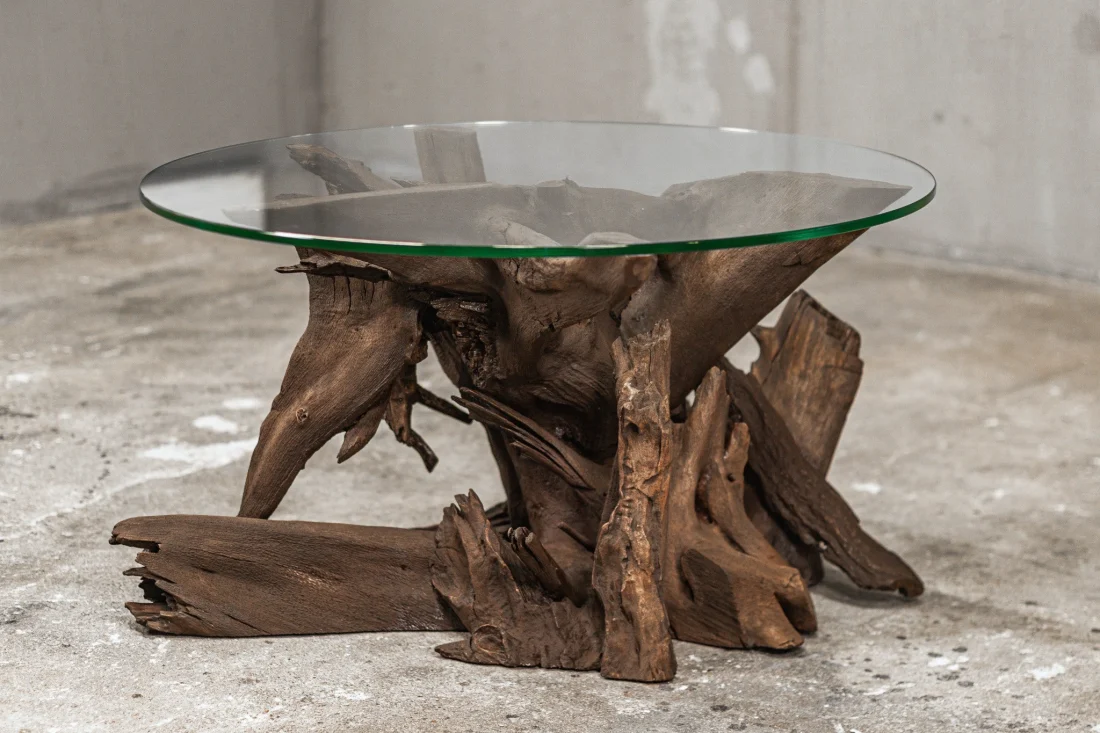
Roots tangle at the surface in wetlands like these, more visible above ground than below it, and this table's base copies that exact form: reclaimed root and branch wood, left in its raw tangled shape, topped with a clear glass slab that lets the whole structure show through.
No two bases are shaped quite the same, since no two root systems ever are. A version in solid oak or poured concrete trades the tangle for a smoother column, for a room that wants the same silhouette with less texture. Either way, the glass is the point: it turns what would be a heavy base into something you can see clean through, table and root both on display at once. It works best where there is room to walk around it, since the base rewards a look from more than one angle.
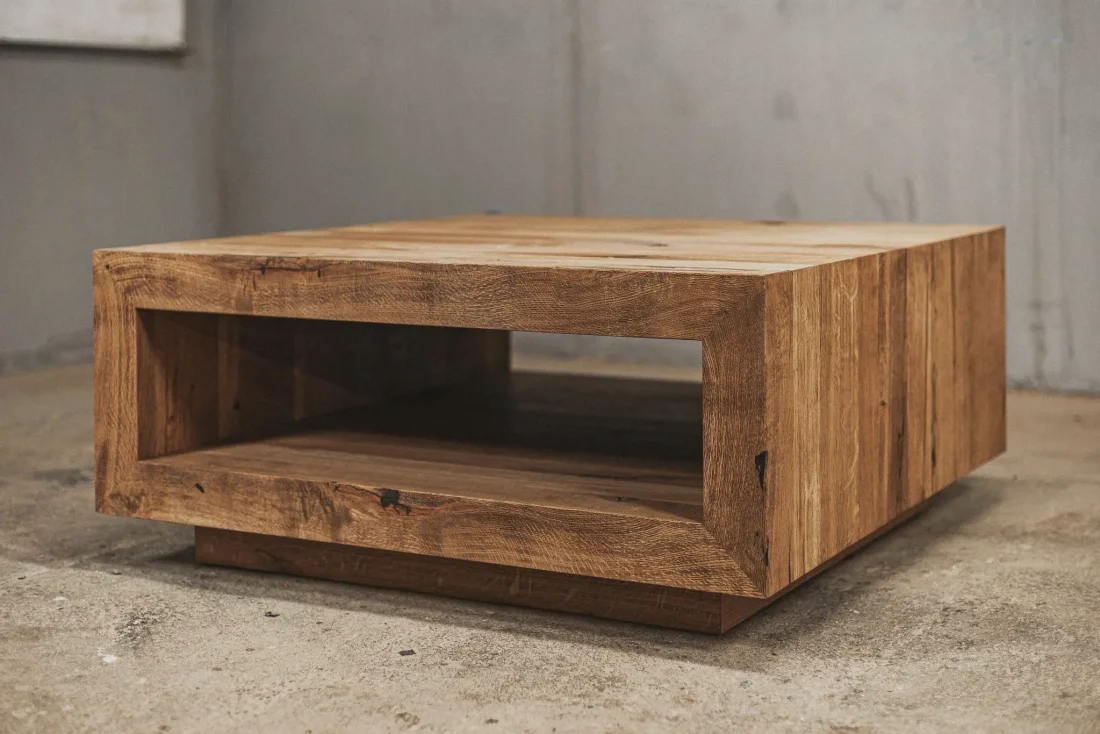
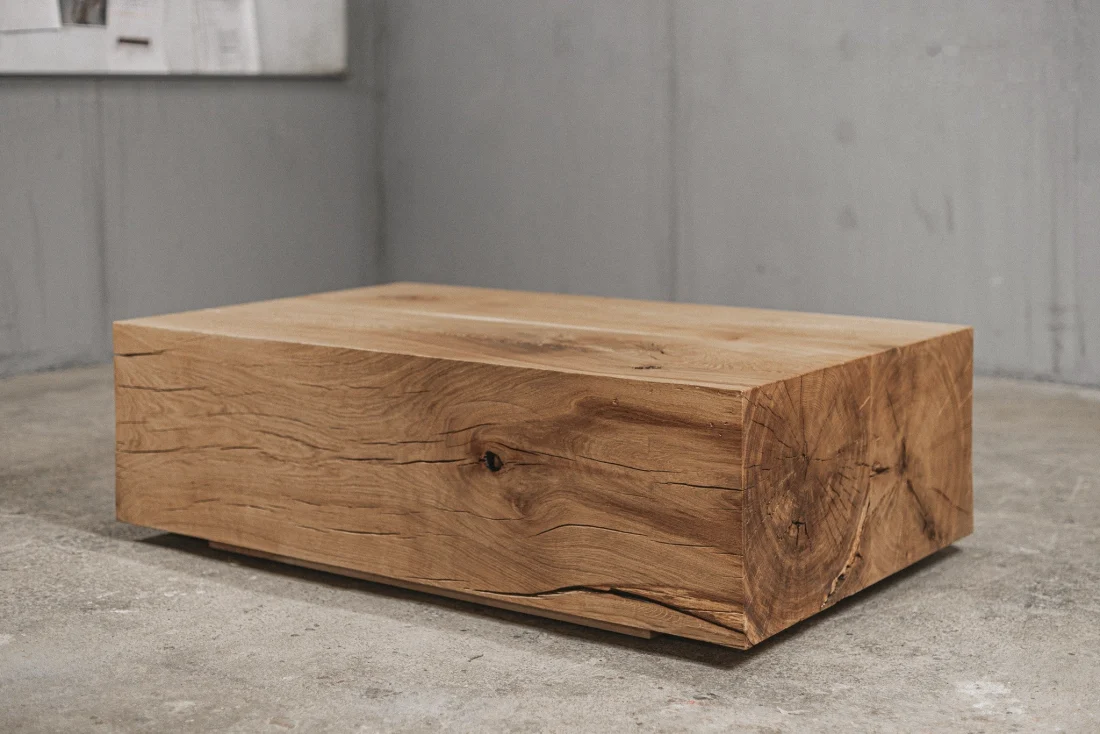
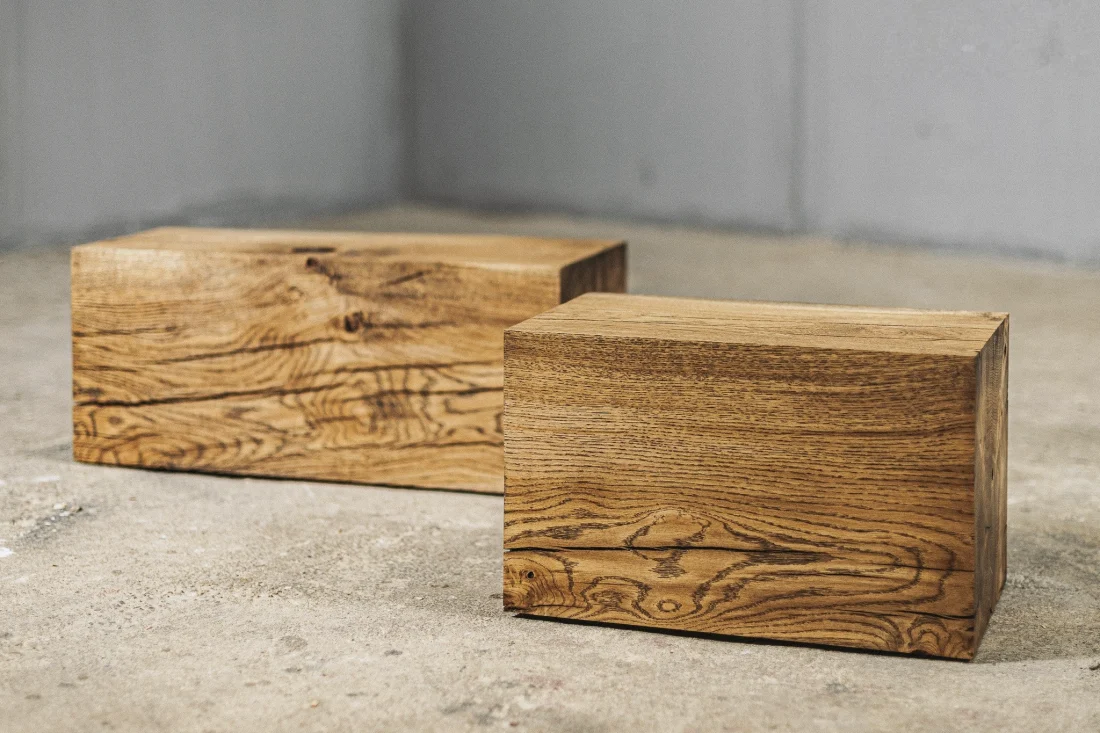
A single block of oak, left mostly as it was cut, does not need much explanation, and this table does not offer much: a rectangular mass of solid wood, corners rounded slightly, a natural crack in the grain left open rather than filled.
Some versions rest that block directly on the floor; others lift it onto a black steel frame at standard coffee-table height. There are no drawers, no shelf, no second material competing with the oak. It works as the one heavy, quiet object in a room otherwise full of lighter furniture — something a room can be arranged around rather than something arranged to fit a room. Sit on it, put your feet on it. The wood can take either.
Camargue takes its name from a delta where rivers braid and tangle before reaching the sea, which is exactly what the base of this table looks like: a knot of oak root, left in its raw, twisting form and simply sealed rather than shaped.
A round sheet of glass rests directly on top of it, thick enough to feel permanent, thin enough to disappear and let the root show through whole. There is only the one table in the collection, and there needs to be only one — no two roots grow alike, so no two ever look quite the same. It works as a centerpiece more than a work surface, something to set a drink on while you study what is actually holding it up.
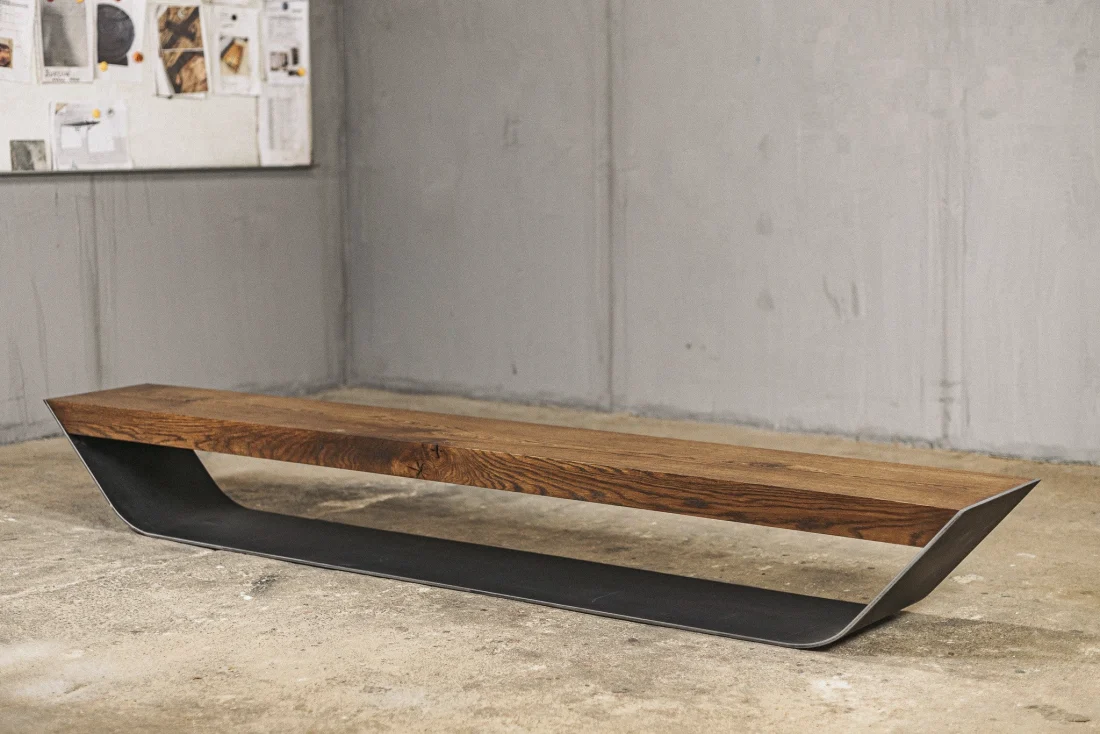
Halifax was built by shipwrights, and this table's base looks pulled straight from that trade — a long, curved black steel form like the hull of a boat, holding up a live-edge oak top that keeps the natural, uneven line of the tree it came from.
Two sizes make up the collection, the sculptural steel base a constant while the oak top varies in length. The wood is left with its bark-edge silhouette intact along one side, a clear contrast to the smooth, engineered curve of the base beneath it. Set as a coffee table, it works as a genuine centerpiece — something to walk around and look at from more than one angle rather than a surface people forget is there.
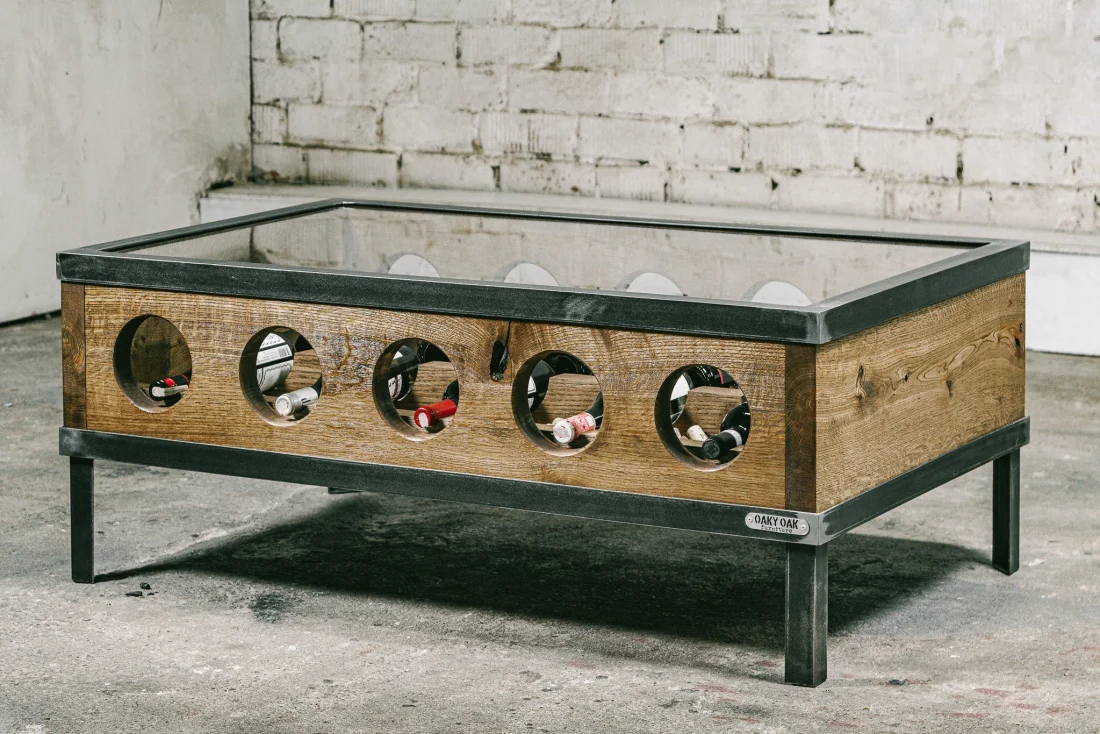
Rivets and gauges built this city's ships and its reputation, and this table borrows both: a black steel and glass frame with round dial faces set into the side panels, like instruments salvaged from an old engine room.
A wood shelf sits below the glass top, burnt oak or natural depending on the finish, gold-toned steel on one version instead of black. The dials do not tell you anything useful — they are decorative, not functional — but they give the piece a presence a plain glass table would not have. It suits a room already leaning industrial, brick or exposed duct work overhead, where a coffee table can afford to look like salvage rather than furniture. The glass top keeps the whole assembly from feeling heavier than a coffee table should.
Loft windows in old steel-frame buildings let this city's furniture borrow the same materials: a black steel frame here, glass top set flush into it, with a slatted oak shelf underneath doing double duty as a display surface.
Some versions swap the black frame for gold, or trade natural oak for a warmer walnut tone. The glass keeps the piece visually light despite the steel structure underneath — you see through the top to the shelf below rather than losing that space to a solid slab. It works in a room that wants an industrial edge without the bulk that usually comes with it, useful in an apartment where floor space matters more than statement. The shelf underneath does real work too, holding magazines or a stack of coasters within easy reach of the sofa.
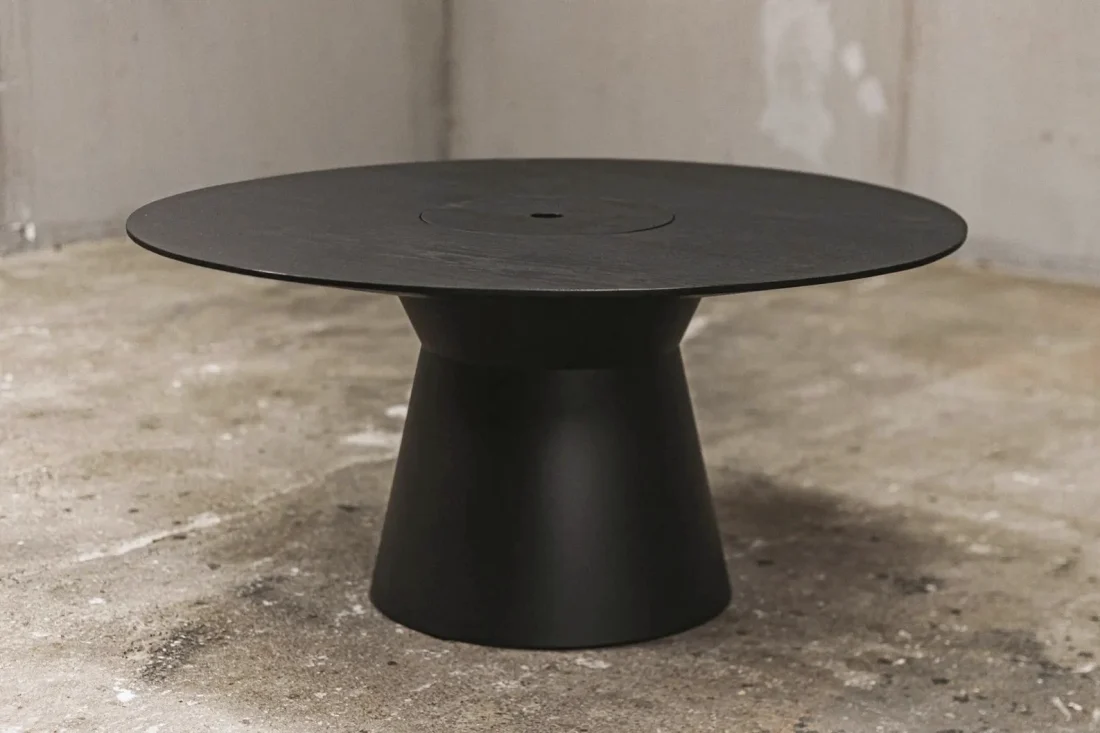
Matte black paint on a precision-built machine reads differently than gloss does — quieter, more serious — and this table's pedestal base borrows that same finish: a solid black cylindrical support, tapering slightly, holding up a round top in solid oak, sometimes stained black to match.
There is no visible seam between base and top. The single-pedestal design means no legs to work around, which matters more than it sounds like in a small room where every table leg is something to step past. It suits a minimal room that already trusts a little negative space — one dark, quiet object doing the job four legs would otherwise do. The finish resists fingerprints better than a glossy black would, which matters for a piece touched daily.
Chess games move slowly on an island built for slow afternoons, and this table is built around exactly that pace: an organically shaped stone-toned slab top with a checkerboard inlaid directly into the surface, resting on a simple cylindrical base.
The board is not an accessory sitting on the table — it is cut into it, permanent, always ready. A version in dark walnut-toned oak swaps the pale stone look for a warmer material, same inlaid board. It works less as a coffee table that occasionally hosts a game and more as a game table that happens to also hold coffee, which is a fair trade in a room that actually plays. Pieces can be stored in a shallow drawer built into the base, so the board never sits empty for long.
Finnish design keeps ornament to a minimum and lets structure be the decoration, and this table's base does exactly that: black steel rods radiate from a narrow waist like spokes, widening again to meet a round top in burnt or walnut-toned oak.
From across a room it reads almost as a spinning top caught mid-motion. There is no surface on the base at all — just the rods themselves, open enough to see through to the floor beyond. It works best alone, centered on a rug, since the sculptural base loses its effect crowded against other furniture. A single dark top on that pale structure of black steel is the whole statement, and it does not need another one nearby.
Plain has its own kind of appeal in a state that built its reputation on function over decoration, and this table keeps to that: a square oak top, straight tapered legs, no metal, no glass, no second material anywhere in the piece.
The grain runs visibly across the top, natural or walnut-toned, and that is the entire decoration. It works as a side table more often than a centerpiece, sized to sit beside a chair rather than command the middle of a room. There is nothing to maintain beyond what oak always needs — a little oil now and then — which suits a piece meant to be useful for decades rather than noticed for one season. Set beside an armchair, it holds a lamp and a mug without asking for any attention of its own.
Tivoli is the town outside Rome where emperors built their gardens — fountains, stone, and unhurried afternoons.
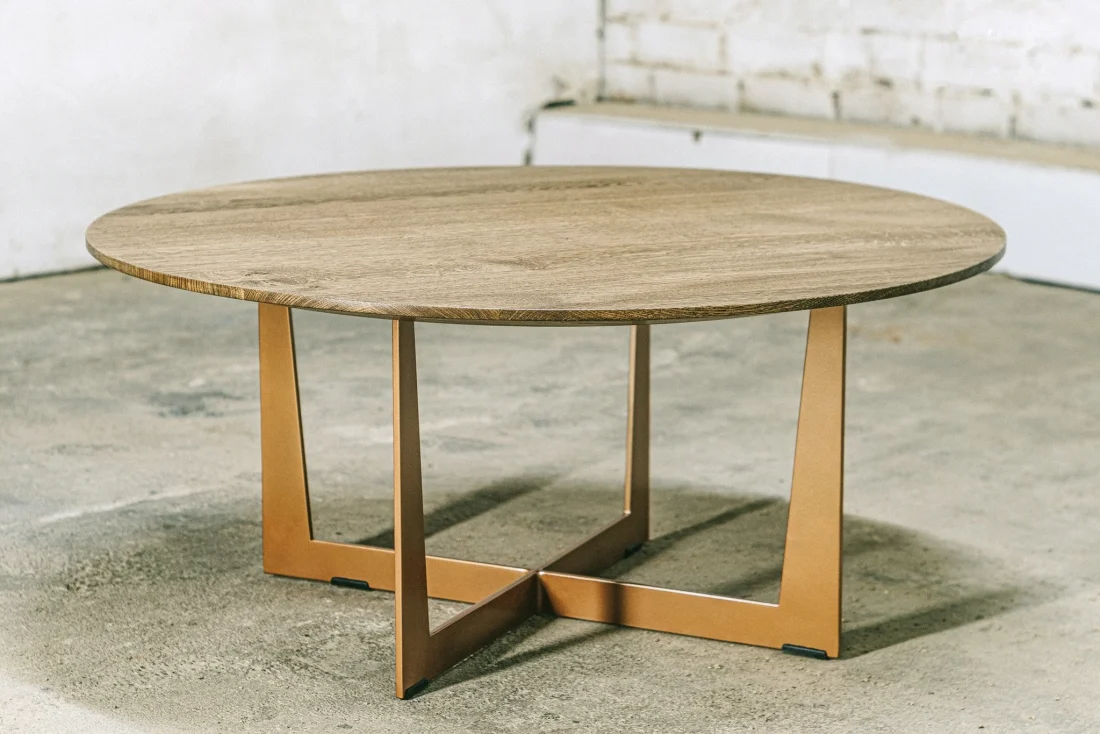
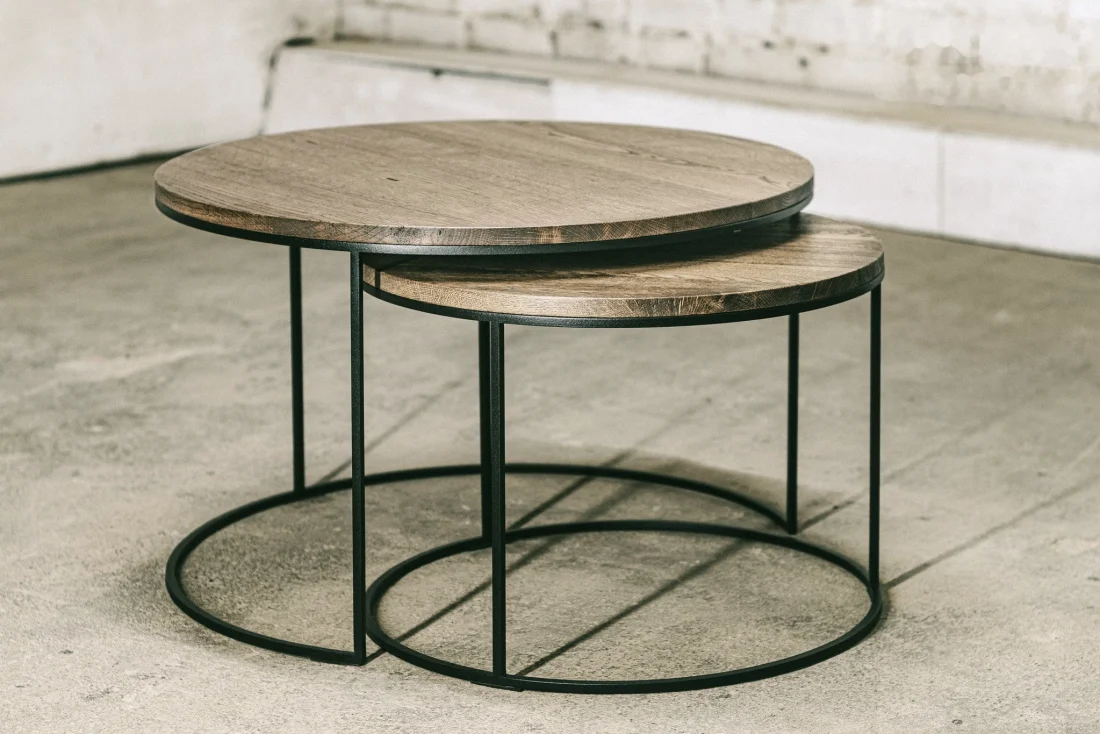
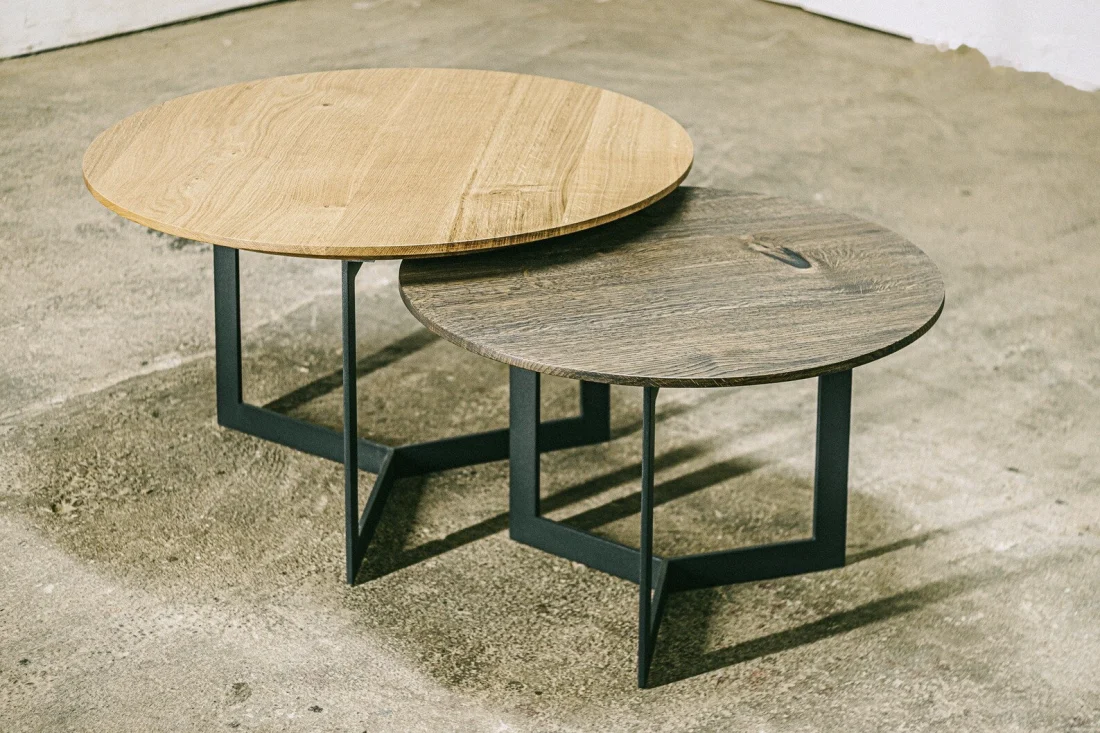
The name fit: these are low, round tables that organize a room the way a fountain organizes a square. Everyone ends up around them. Each table in the collection pairs a smooth oak top with a sculptural metal base — crossed blades of copper or blackened steel that hold the round the way a pedestal holds a bowl. Some come as nesting pairs, one sliding under the other when the evening gets crowded. They sit low, at coffee height, and take the daily traffic of a living room — books, glasses, feet at the end of the day — without asking to be treated carefully. The oak darkens a shade over the first year. That is the point.
Berlin's coffee tables take their name from the city's flatter instincts — squared plazas, unornamented modernist blocks, glass and steel kept honest and dark.
Each piece is a plain square top in oak stained down to near black, set on four legs that taper just enough to keep the whole thing from looking like a plinth. There is no carving, no visible joinery flourish — the discipline is the point. What varies across the eight pieces is scale and proportion: some sit low and wide for a sectional, others narrower, made to slide beside a single chair. They hold what a coffee table actually holds — a stack of books, a tray, a pair of feet — without competing for attention with whatever hangs on the walls around them.
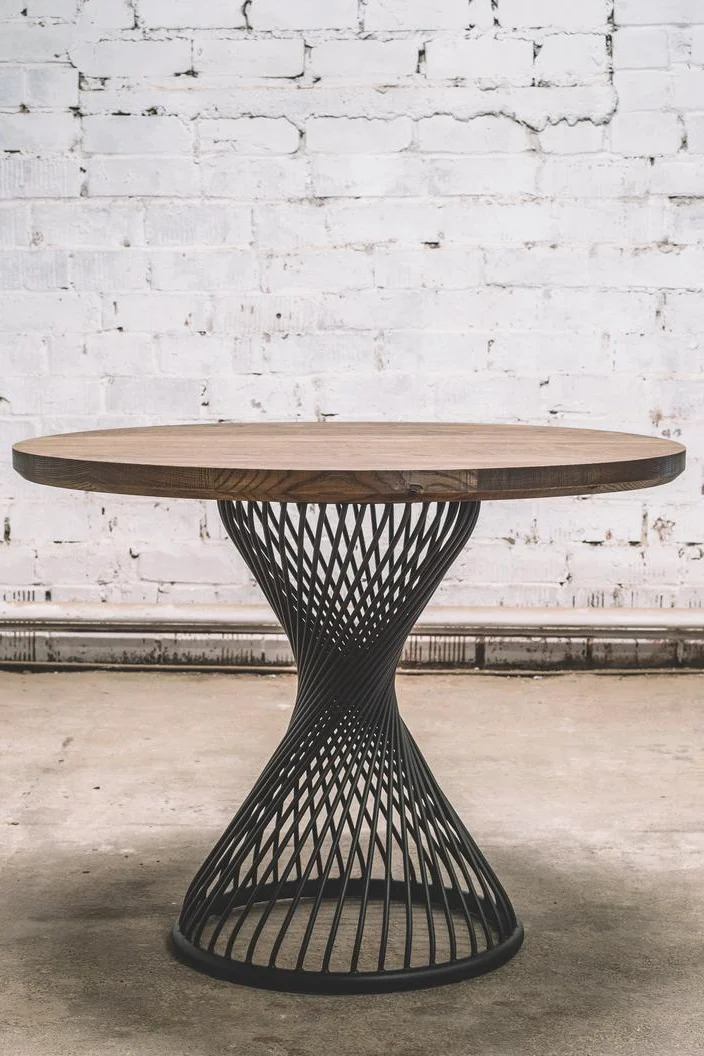
Copenhagen's base is two wire cones welded point to point, pinched into an hourglass at the center — the kind of engineering that looks impossible until you notice how much weight actually rests on that narrow waist.
Oak sits flat across the top, finished dark, almost black, so the wirework below reads as the real subject of the piece. Four sizes make up the collection, from a narrow hall table to a proper console long enough for two lamps and a bowl of keys, and the base scales without ever losing its tension. It photographs like sculpture and works like furniture — set against a wall, it holds its own without holding very much at all. It holds a lamp and a stack of mail without complaint, day after day.
Salzburg says long winter evenings before it says anything else.
The tabletop is inlaid in a checkerboard of light and dark oak, sized for an actual game rather than a decoration, and it sits on three stout, turned legs that look shaped on a lathe rather than milled by machine — a walnut-stained oak set against natural, so the contrast reads even from across the room. Two sizes make up the collection, a square version for a game corner and a slightly larger one for a proper sit-down match, both built the same way: thick oak top, honest joinery, nothing added purely for show. It wants a chair on either side and does not mind daily use. Leave the pieces out between games — watching a board age slowly is half the pleasure of owning one.
Umbria's hill towns are built from stone that seems to grow in clusters — columns, arches, and trunks of old olive trees bunched together rather than standing alone.
This round coffee table borrows that logic: a wide, dark oak top sits on a base of several cylindrical legs pressed side by side, like a small stand of trees holding up a tabletop. The wood is oak throughout, finished nearly black, so the grain reads only up close, in raking light. The clustered base is the whole design argument — no single leg could hold this table with the same quiet confidence. Two sizes exist in the collection, one just large enough for a sofa's reach, the other sized for a smaller chair grouping, but the gesture stays identical.
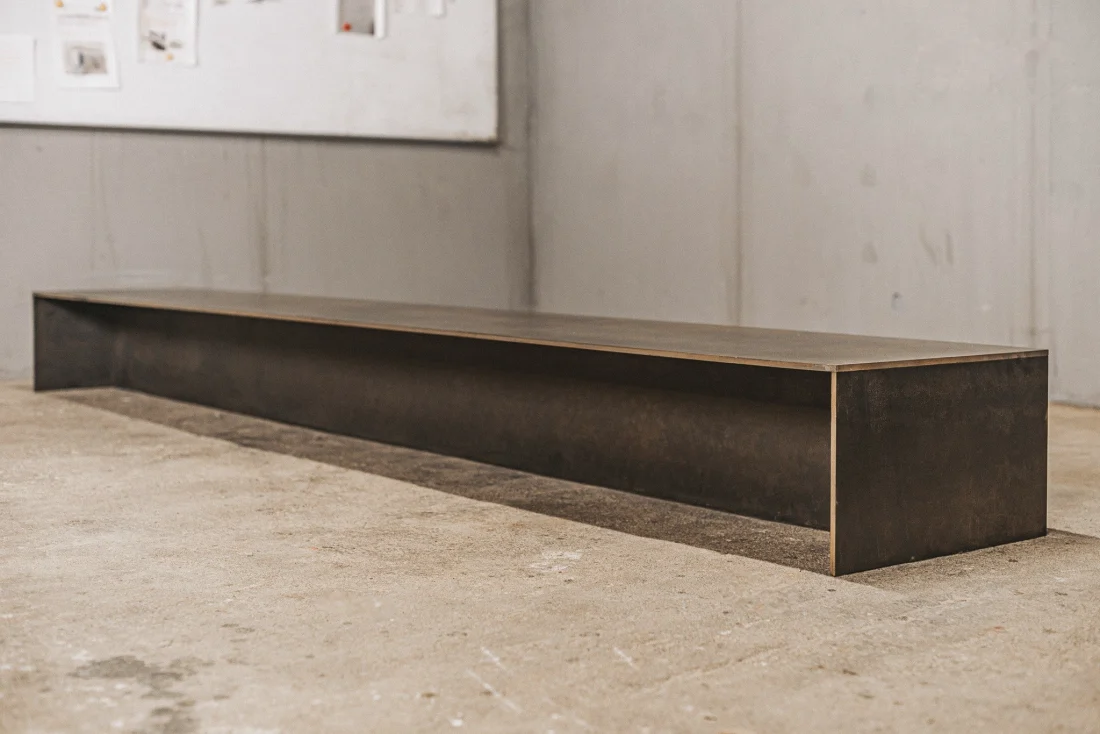
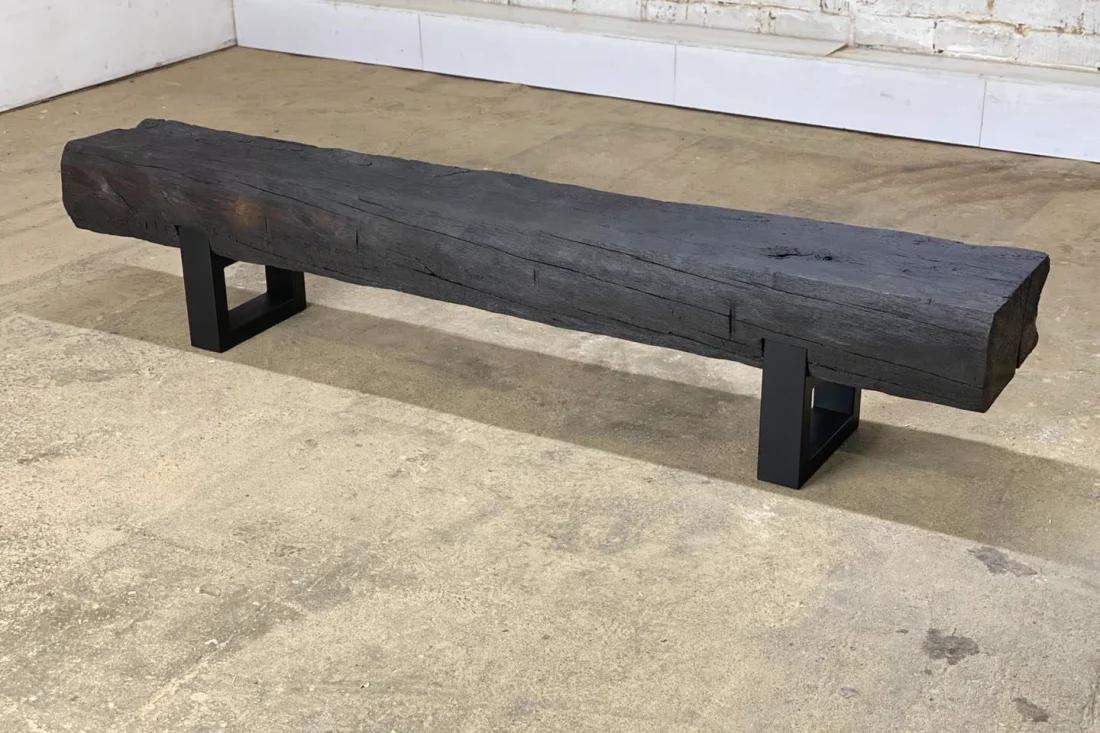
Pompeii was sealed in ash in a single afternoon, and this bench looks like something pulled directly from that story — one solid length of oak, charred black across its entire surface, set on two simple black steel legs and nothing else.
Three sizes make up the collection, but the construction never changes: a single heavy timber, burned and sealed rather than stained, so the char is structural rather than cosmetic. There is no drawer, no shelf, nothing to distract from the material itself doing all the work. It reads as sculpture as easily as furniture — a low bench at the foot of a bed, or a long one doing the work of a coffee table in a room that wants one dramatic, dark object instead of several quiet ones.
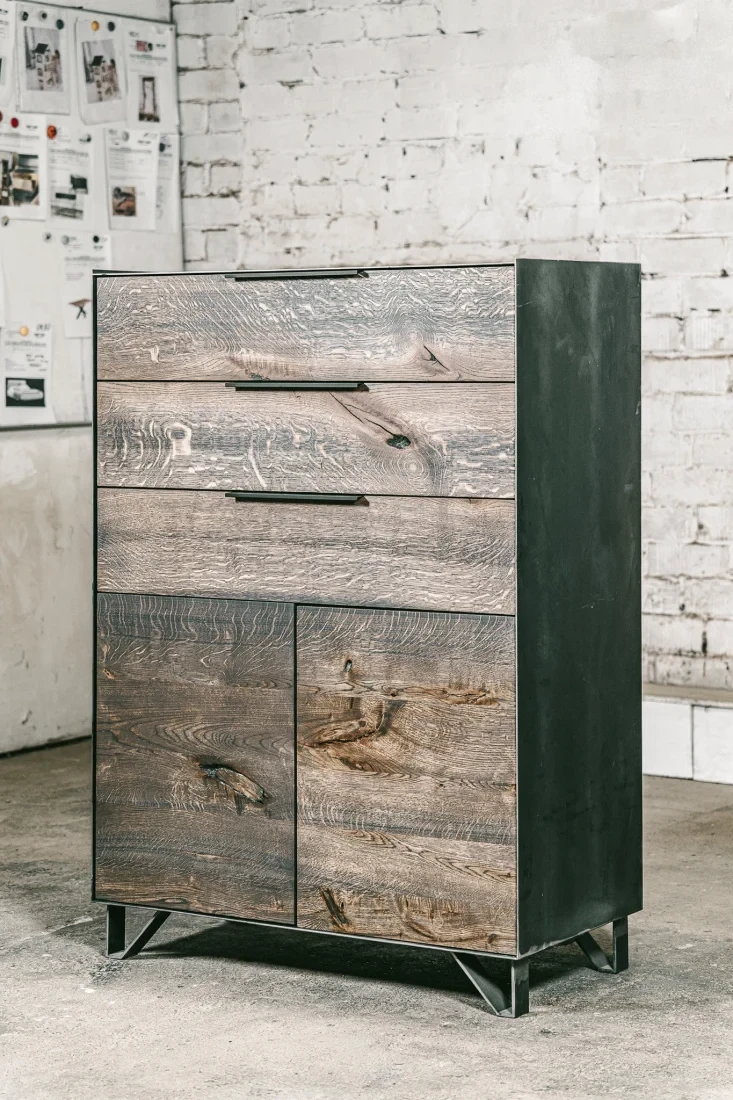
Bilbao is built around one idea: a heavy, dark front panel, scored and burnt so the grain stands up in ridges you can feel with a thumb, held inside a frame so thin it barely seems capable of the job.
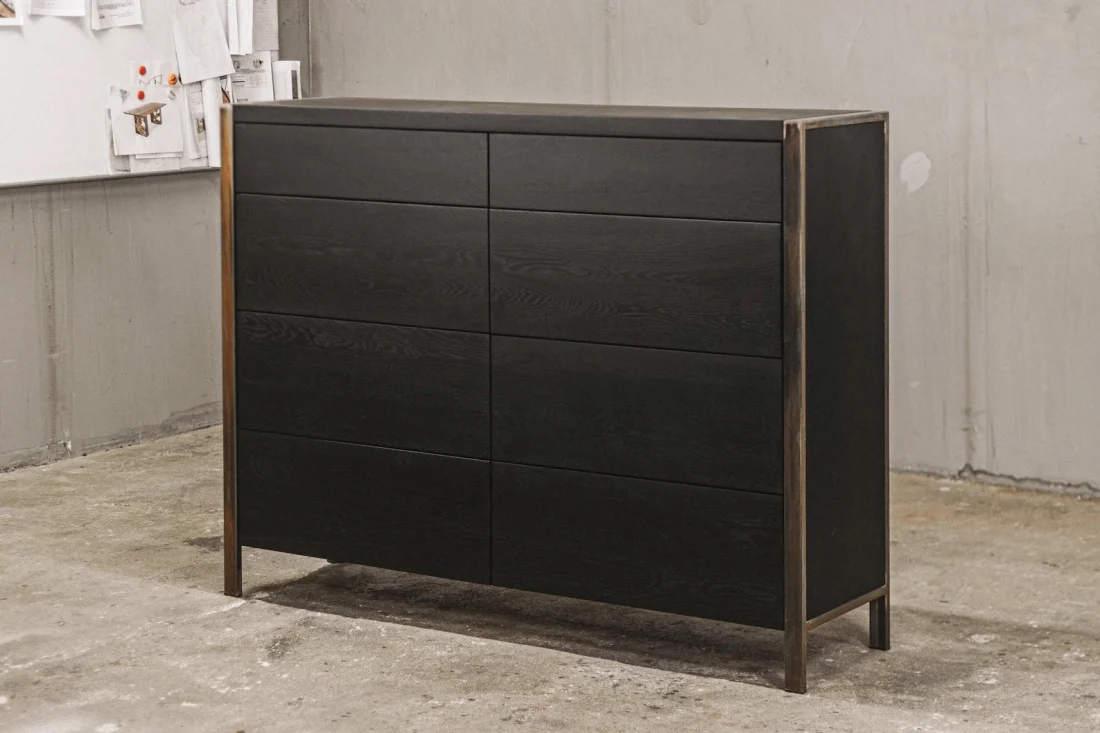
Oak in a burnt, near-black finish makes the drawer fronts; a slim black steel frame carries the whole thing on four bar legs. Three widths cover most entryways and hallways, each keeping the same proportion between the heavy front and the light frame surrounding it. It reads industrial at a glance and warmer up close, once you notice the texture is wood and not metal. A single drawer is usually enough for keys, mail, and the everyday clutter of coming home.
Tile facades in shifting patterns cover half the buildings in this city, and this cabinet borrows that patchwork logic in wood instead of ceramic: mismatched oak tones, walnut and antique and natural side by side, joined into a single frame where no two sections match.
A gold-toned metal base or black steel frame carries the weight underneath. No two pieces in the collection repeat the same arrangement of tones — the wood is reclaimed and sorted by hand, so the pattern stays genuinely unrepeatable rather than printed to look that way. It works as the one loud piece in an otherwise quiet room, the kind of cabinet a guest asks about before asking about anything else. No description quite prepares a visitor for the actual mix of tones up close, which is rather the intent.
Nothing on this cabinet asks to be noticed, and that is the entire design brief.
Flat door fronts run edge to edge in a muted black or walnut-toned oak, no visible hardware, no molding, no transition between drawer and door beyond a thin reveal line. A leather-wrapped drawer front appears on one version, oak veneer on another, but the silhouette never changes. It is a tall, narrow piece more than a wide one, built for a hallway or a bedroom corner rather than a main wall. In a room with more decorated furniture around it, this is the piece that lets everything else be the point — which, done well, is its own kind of statement. A room built entirely around restraint needs exactly one piece like this to prove the restraint was intentional.
Marble quarries gave this piece its name and its top: a slab of natural white stone, thick enough to read as solid rather than veneered, set over a cabinet of dark oak.
Two basins can be cut into the stone side by side, plumbing routed through black steel legs that keep the whole cabinet floating just off the floor. The drawers below run wide and shallow, sized for the flat clutter of a bathroom rather than deep storage. Dark wood under white stone is an old contrast, and it still works here — the cabinet recedes, the stone catches every bit of light in the room, and the whole vanity looks lighter than its weight. It suits a primary bathroom built around two people getting ready at once rather than one person passing through.
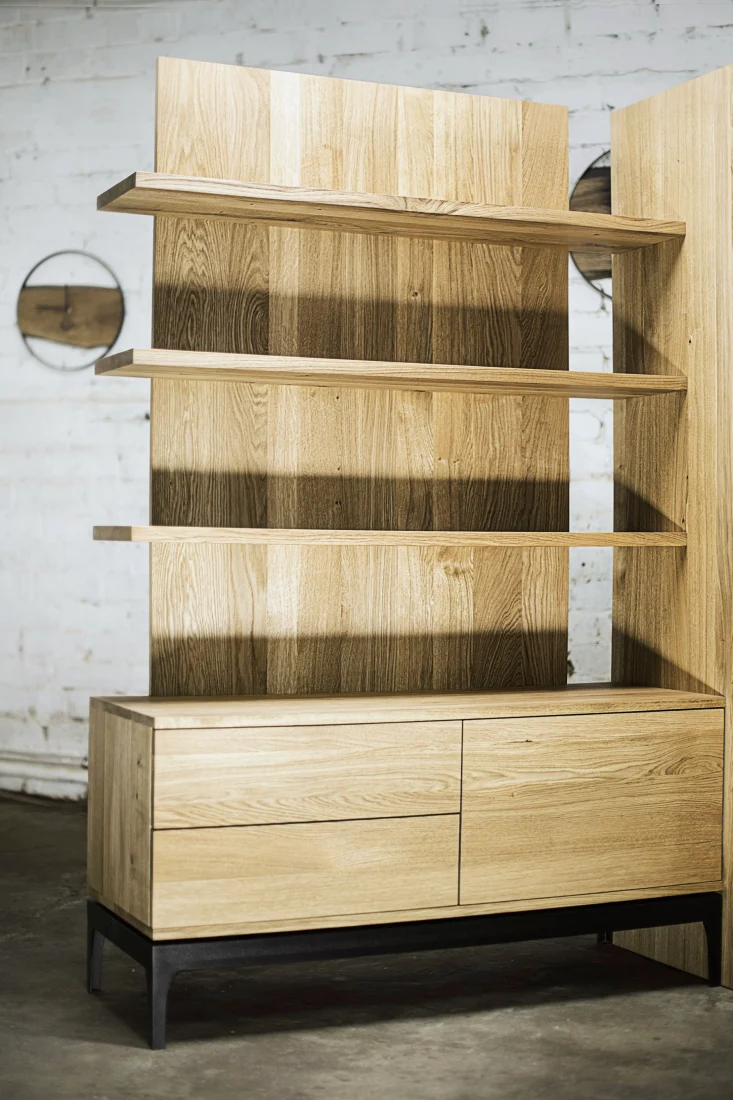
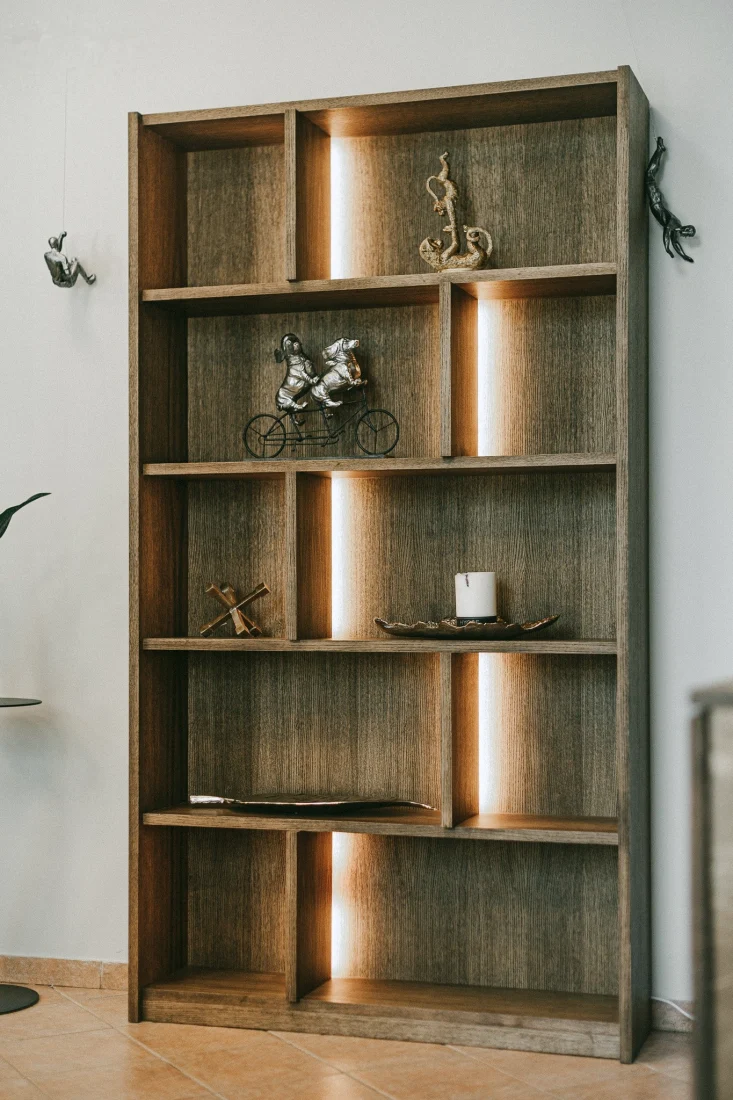
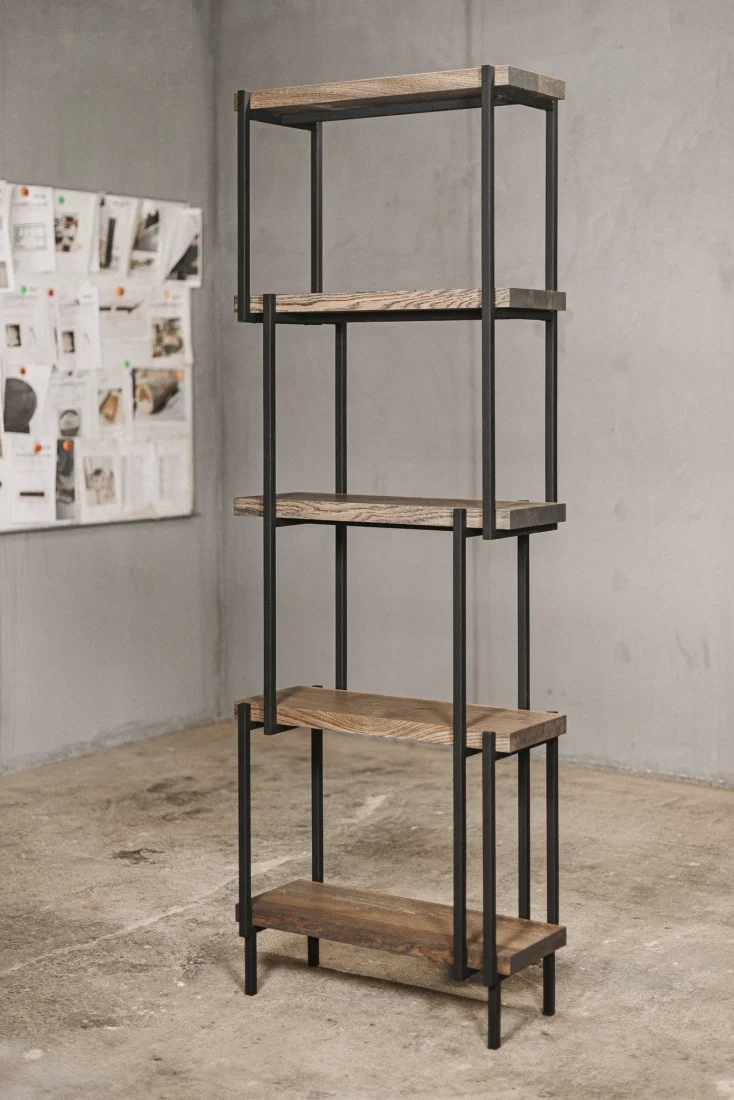
Mayfair's townhouses climb straight up in narrow, elegant rows, tall sash windows stacked floor over floor, and this shelving collection borrows that verticality outright.
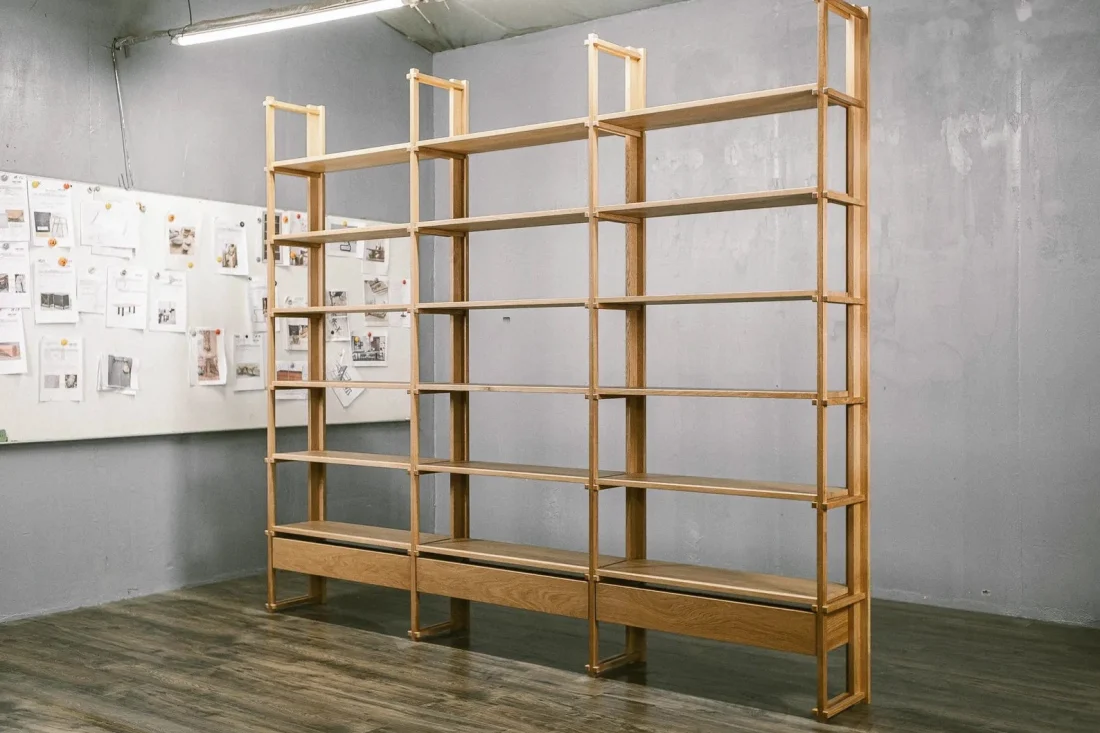
Built mostly from solid oak, with select pieces framed in dark steel, the units rise well past head height on slim, ladder-like uprights, open shelves running the full span. The oak is left natural in most pieces, pale and straight-grained, occasionally shifting to a walnut tone with a black steel edge for contrast. Nothing about the construction hides itself — the joinery between shelf and upright is visible by design, the whole thing reading as structure first, storage second. Against a tall wall, one of these fills the height a room actually has rather than stopping short of it.
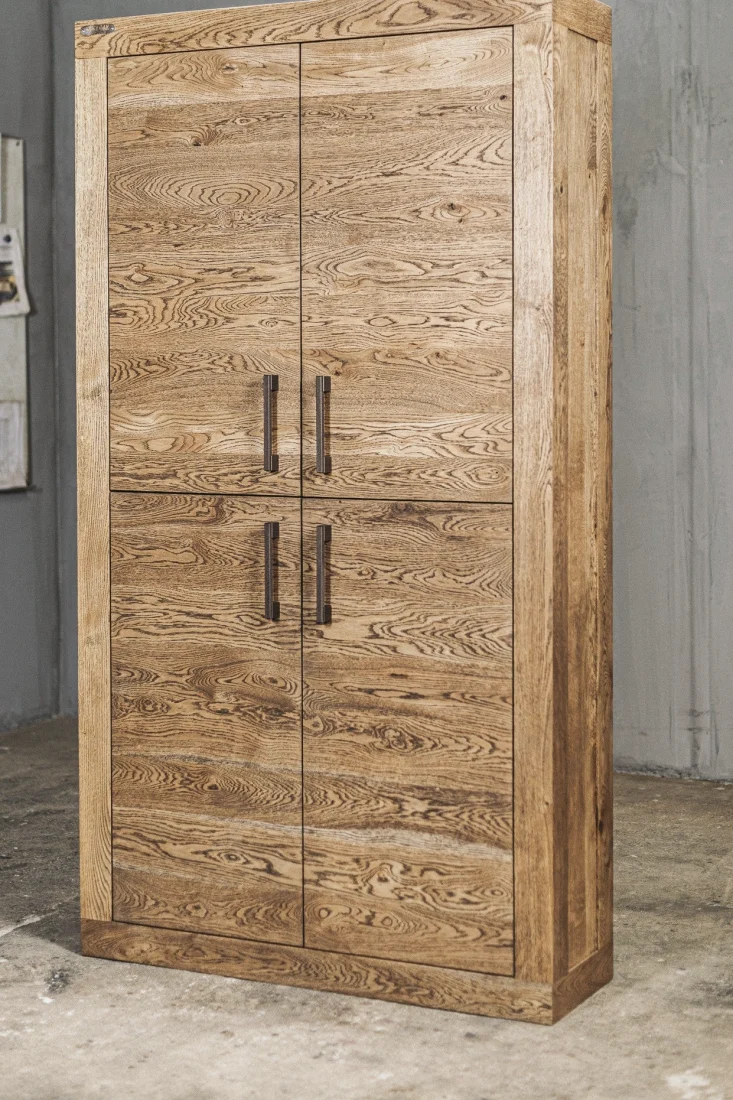
Farmhouse kitchens in old stone villages keep their storage simple — plank doors, visible joinery, wood left close to its natural state — and this sideboard follows the same brief.
Solid oak runs the full length in a natural or lightly oiled finish, knots and grain left uncovered rather than sanded flat, doors built as single wide planks rather than paneled fronts. Tapered legs keep the whole piece light on its feet despite the length. It suits a dining room that wants storage without polish — plates and linens behind plain doors, nothing lacquered, nothing hiding what the wood actually looks like. It ages the way a farmhouse table does: a little more honest every year. Open it up and the interior is finished as plainly as the outside, no lining, no gloss, just more oak.
Coastal light does something particular to a room — it flattens shadows and warms every pale surface — and this console is built in a natural oak that catches exactly that kind of light.
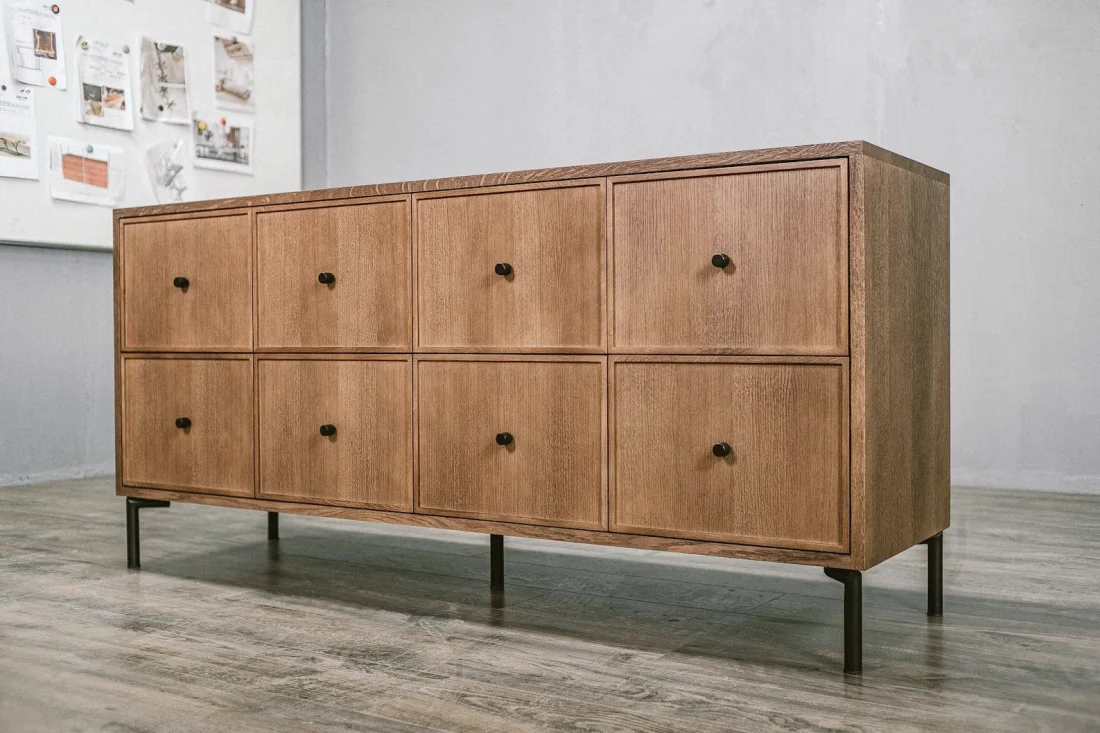
The piece runs long and low, drawers flush across the front, resting on slim black metal legs that keep the visual weight near the floor. A version with a mirrored panel is available for entryways that want to bounce the light further into a room. Otherwise the design stays plain on purpose: no hardware to catch dust, no carved detail to interrupt the run of grain. It reads as the kind of piece that disappears under whatever is hung on the wall above it, which is exactly its job.
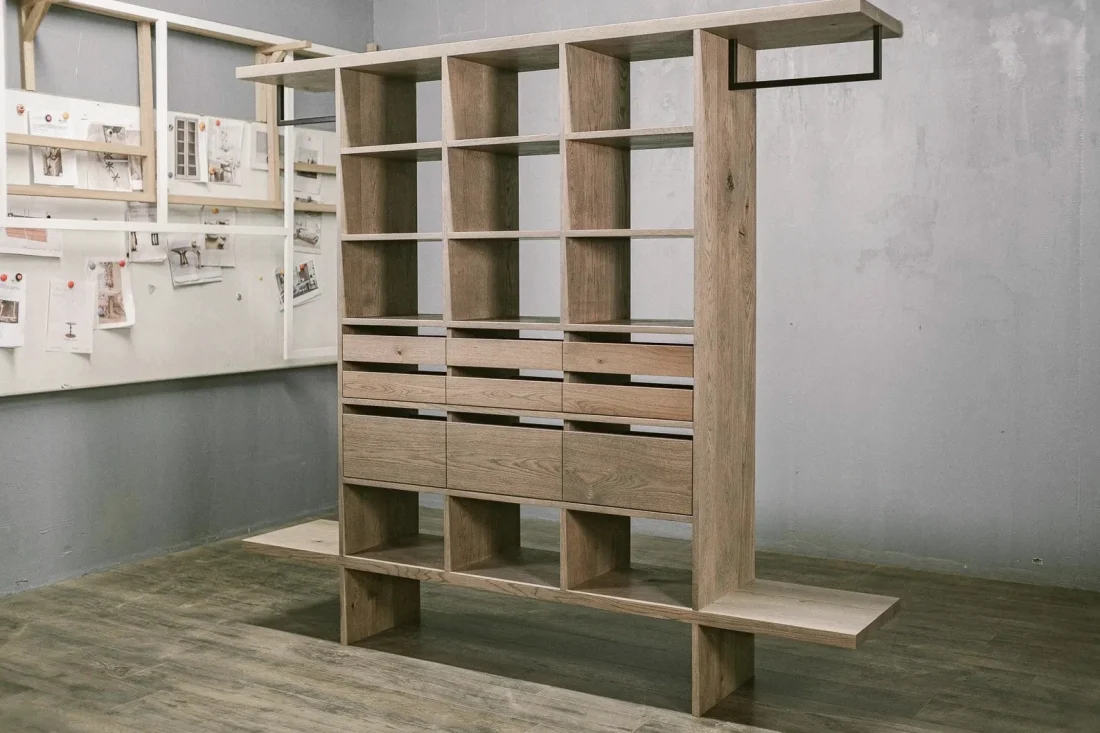
Phoenix takes its name from something that rises renewed out of what came before, and this wardrobe unit has that same open, rebuilt quality — a tall structure of oak compartments and shelving, deliberately left without doors, so the geometry of the piece is visible from every side.
It stands as a single large piece, built from natural oak throughout, with an angled shelf breaking the grid partway up and open bays running the rest of the height. Used as a room divider, it reads the same from either side, which is not true of most storage this tall. Set between two spaces, it separates a room without closing it off — light and conversation still move straight through the openings.
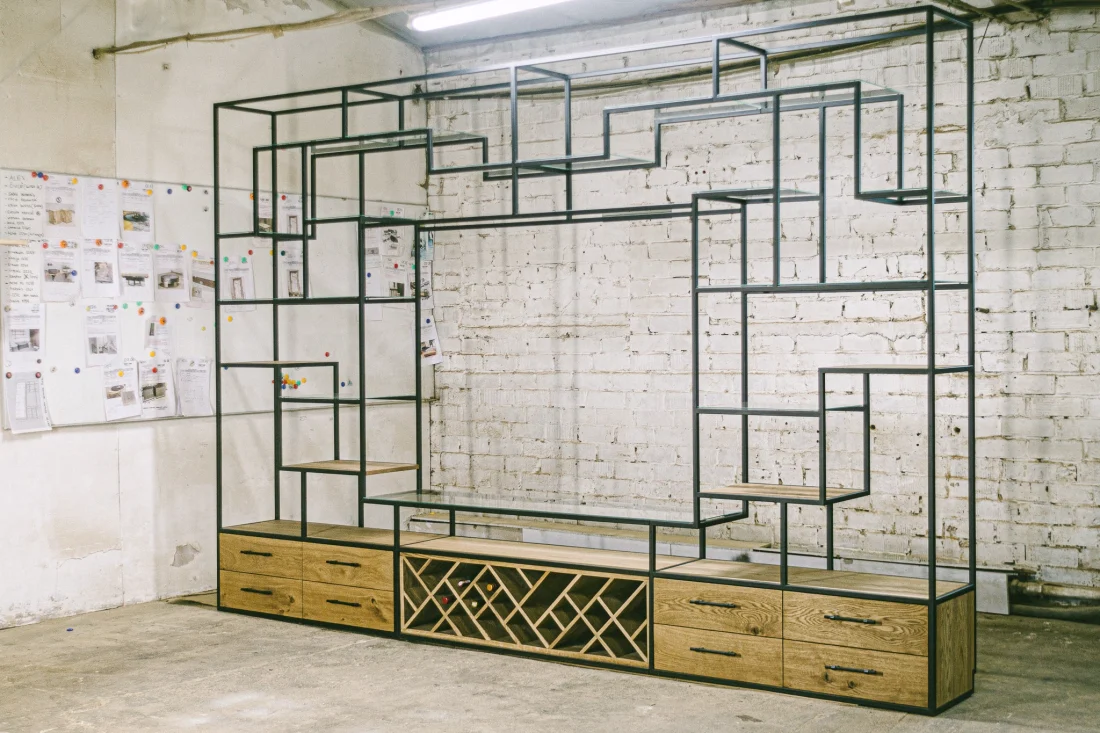
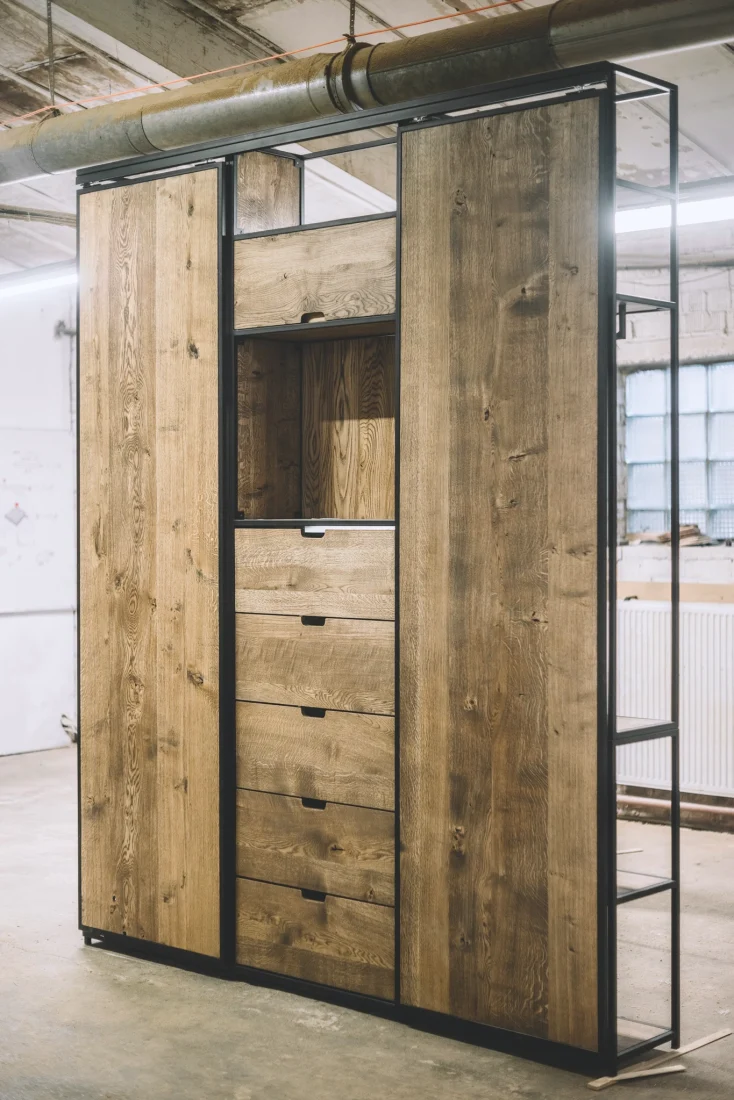
Tribeca's lofts were built as factories first, all exposed steel columns and grid windows, before anyone thought to live in them — and this shelving system keeps that raw, structural logic.
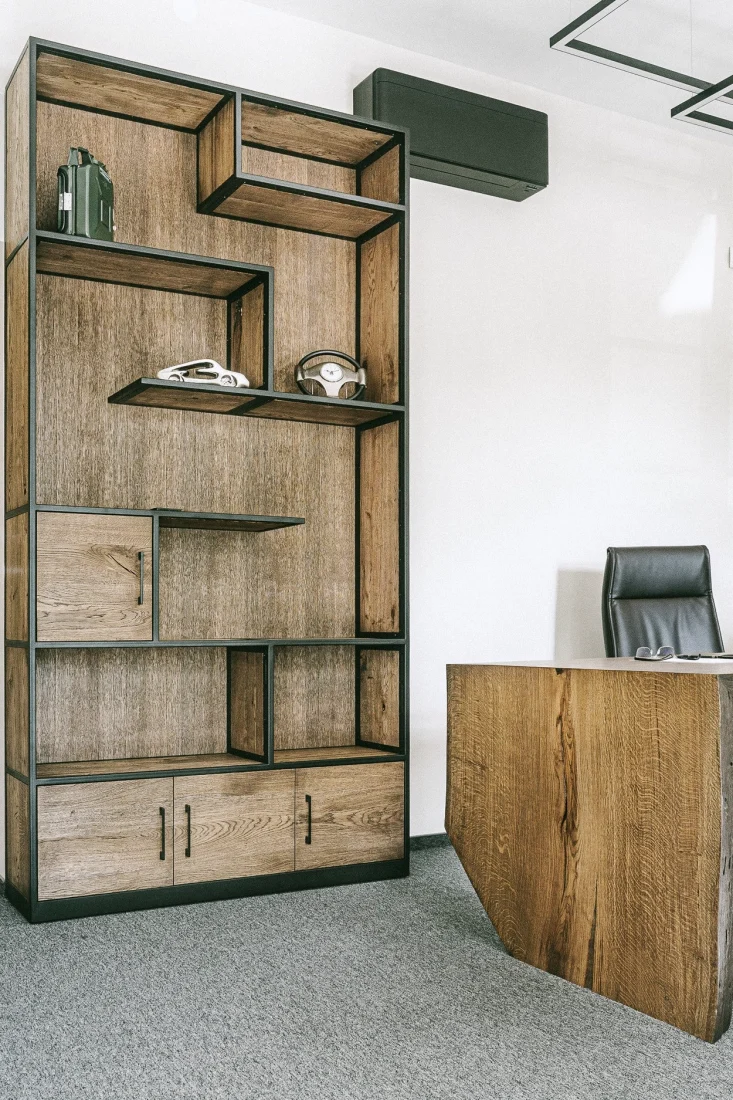
A tall black steel frame branches into an almost maze-like arrangement of verticals and horizontals, with oak shelves, drawers, and in some configurations glass and LED lighting set into the openings. Across the eight pieces, the steel grid is the constant; what fills it changes — a run of oak drawers along the base, a lit glass niche partway up, open bays elsewhere. Natural oak plays against black steel throughout, never fighting for the same attention. It suits a room that wants one dominant, sculptural object rather than a wall of matched furniture.
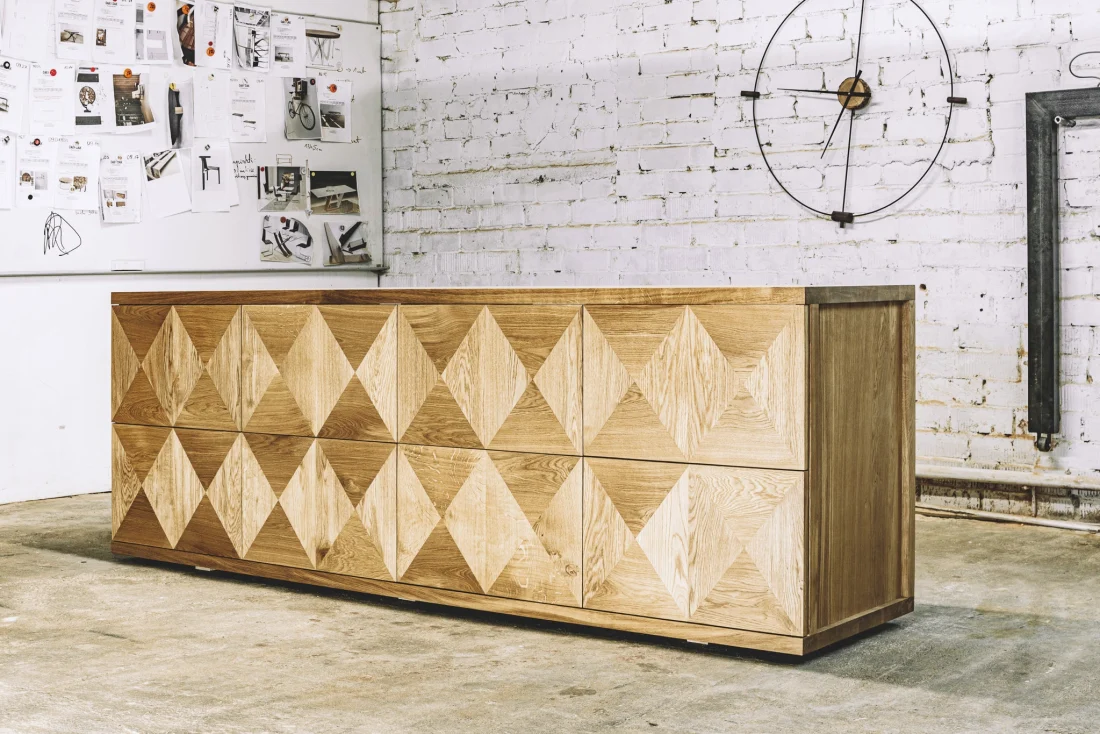
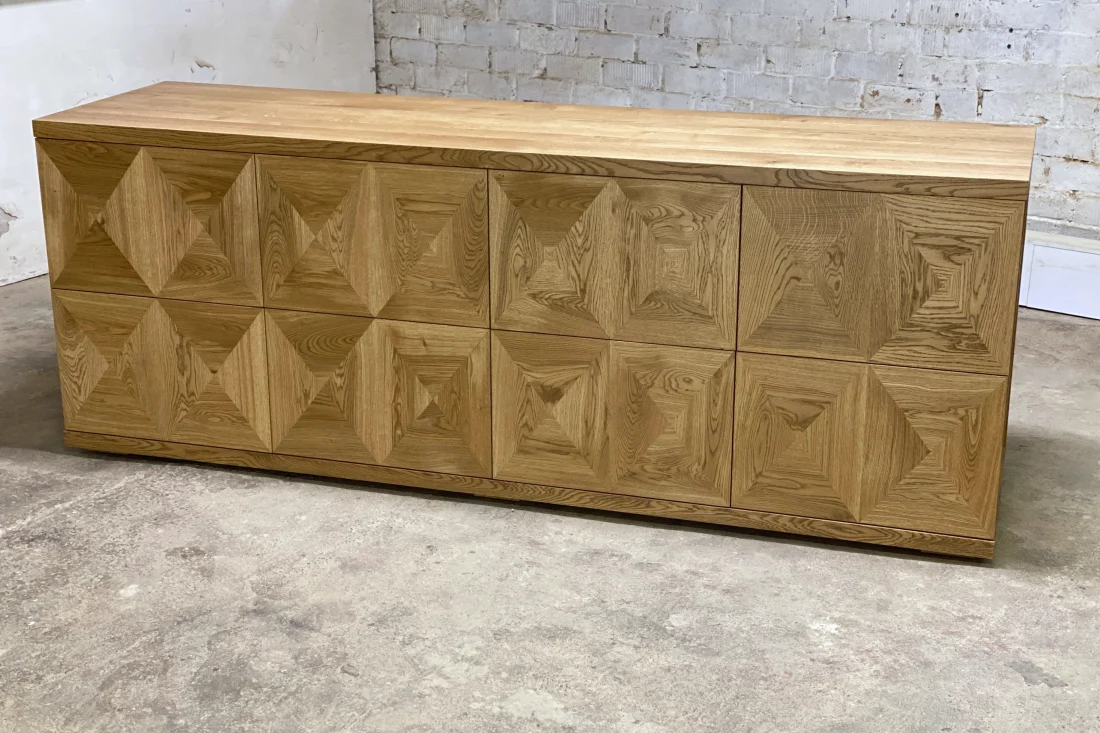
Moorish tilework across this city runs in tight repeating geometry, and this cabinet carves the same idea straight into solid oak: every door front cut into a grid of raised diamond facets, each one catching light from a slightly different angle.
The effect reads almost woven from a distance, more textile than woodwork, until you run a hand across it and feel the carving. Finishes range from a light natural oak to a near-black stain, with metal handles set flush into the pattern rather than breaking it. It works as the one carved piece in a room otherwise kept plain — the geometry does not need a matching table or chair to make its case. Passing a hand across the facets in low light is the best way to notice how deep the carving actually runs.
Cape Cod towns keep their houses pale against gray shingle and bright sky, and this cabinet takes that same light natural oak and sets it on a recessed black base, so the whole piece appears to float a few inches off the floor.
Panelled doors run flush across the front, the wood grain running horizontal and unbroken. A walnut-toned version with a black metal frame is also built for rooms that want more contrast. Either way, the recessed base is the trick: shadow under the cabinet reads as a gap, and a heavy piece of furniture ends up looking like it is barely touching the ground. It suits an entryway or a media wall equally well. Either placement lets the recessed base do its quiet trick of making a solid cabinet look barely there.
Long Island beach towns keep their houses clean-lined and their furniture cleaner, and this sideboard follows that instinct: a long run of natural oak, drawer fronts flush with no visible pulls, resting on a black steel plinth that lifts the whole piece just off the floor.
A silver-toned oak finish is also available for a cooler room. The plinth base is doing more than looks — it keeps the piece from reading as heavy despite the length, and makes the floor beneath it easy to sweep. In a dining room or a long hallway, it holds linens or serving pieces without announcing itself as storage. The grain is the only decoration it needs. Set against a long dining wall, it holds serving pieces without ever competing with whatever is happening at the table.
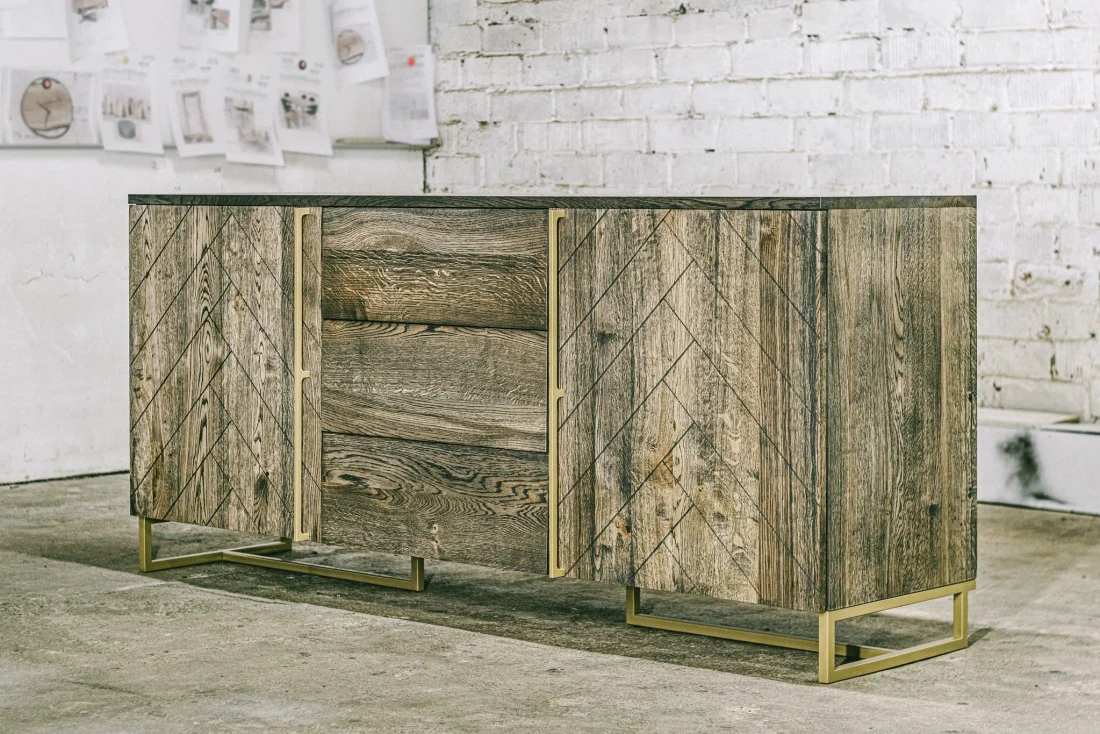
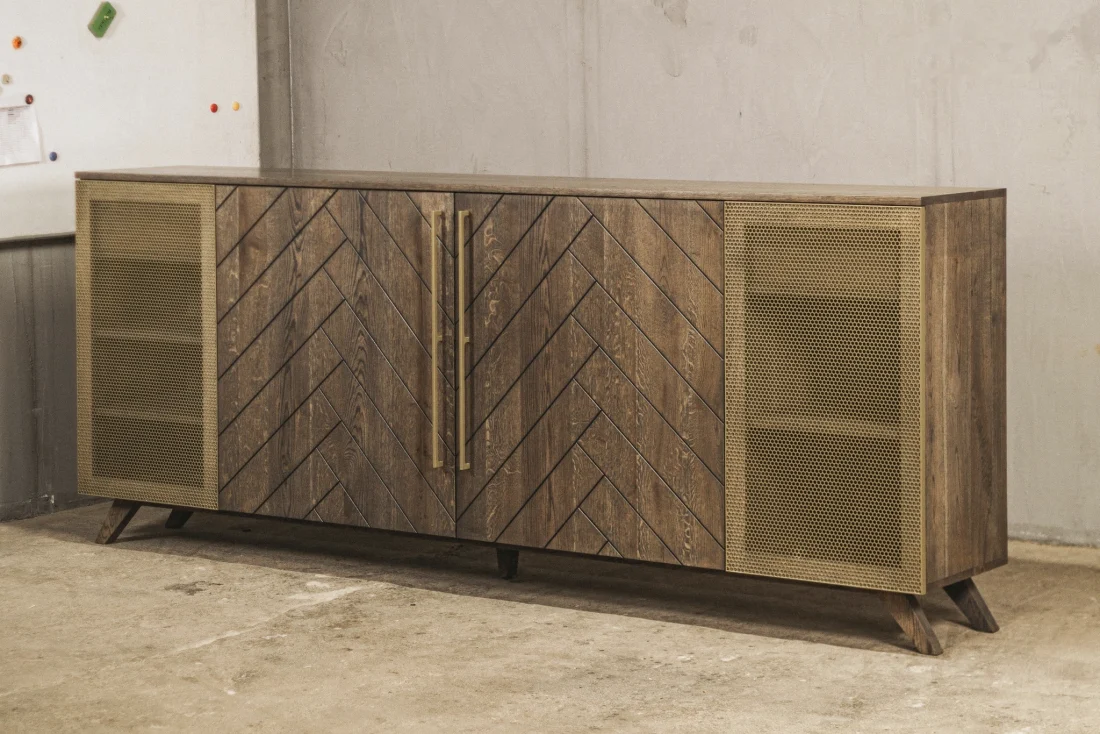
The Basque coast has a long tradition of woven rope work and hand-forged ironwork, both showing up together in this sideboard: door fronts laid in a sharp herringbone of warm oak, flanked by two panels of brass-toned metal mesh, with a single long brass pull running the full height of the doors.
The case is solid oak throughout, the herringbone cut and set by hand rather than printed on, and the mesh panels let light move through the piece instead of sealing it shut on both ends. Nothing about it is subtle, and nothing about it needs to be. At nearly nine feet, it wants a dining room or a wide hallway — a piece substantial enough to anchor a wall on its own.
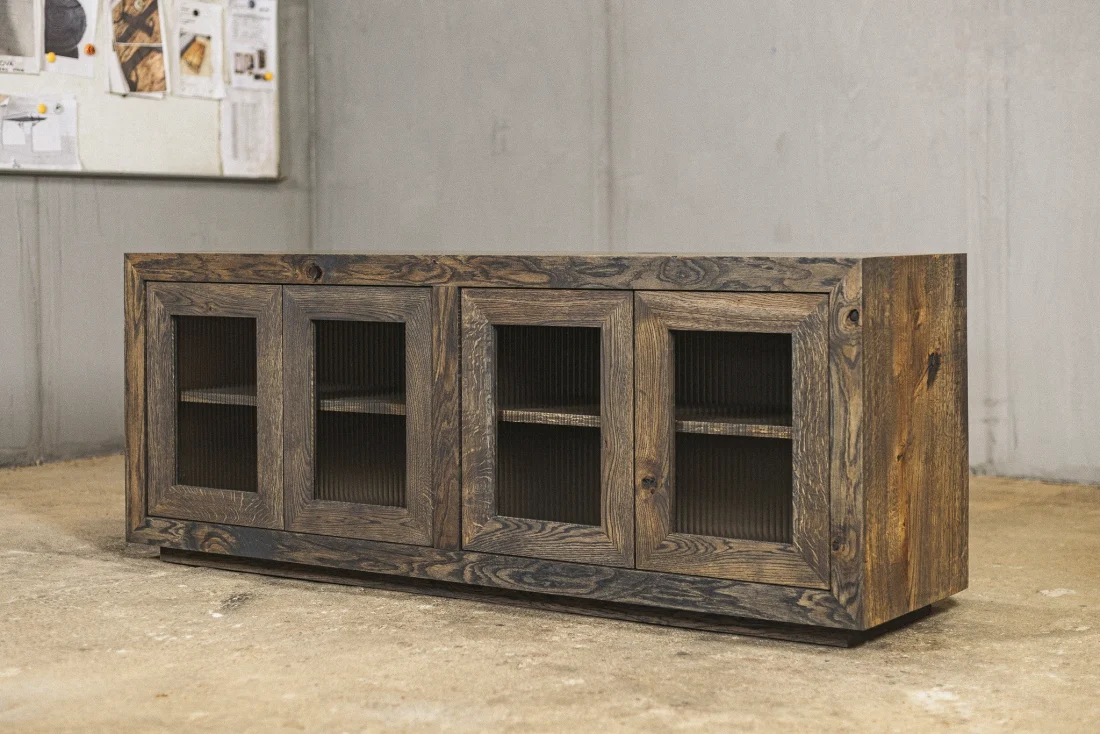
Amsterdam is a display case first and storage second: tall glass-and-mesh doors over open shelving, finished in an olive-toned oak that reads warmer than a plain natural stain and darker than walnut.
The mesh panels sit behind the glass rather than replacing it, so whatever is kept inside gets a little texture between it and the room. Four sizes run from a narrow bar cabinet to a wide buffet-height piece, all built the same way — black steel door frames, oak carcasses, adjustable interior shelves behind the glass. It wants glassware, ceramics, the things you own but rarely use, objects that can carry a little formality. Leave the interior light on in the evening and it does most of the decorating on its own.
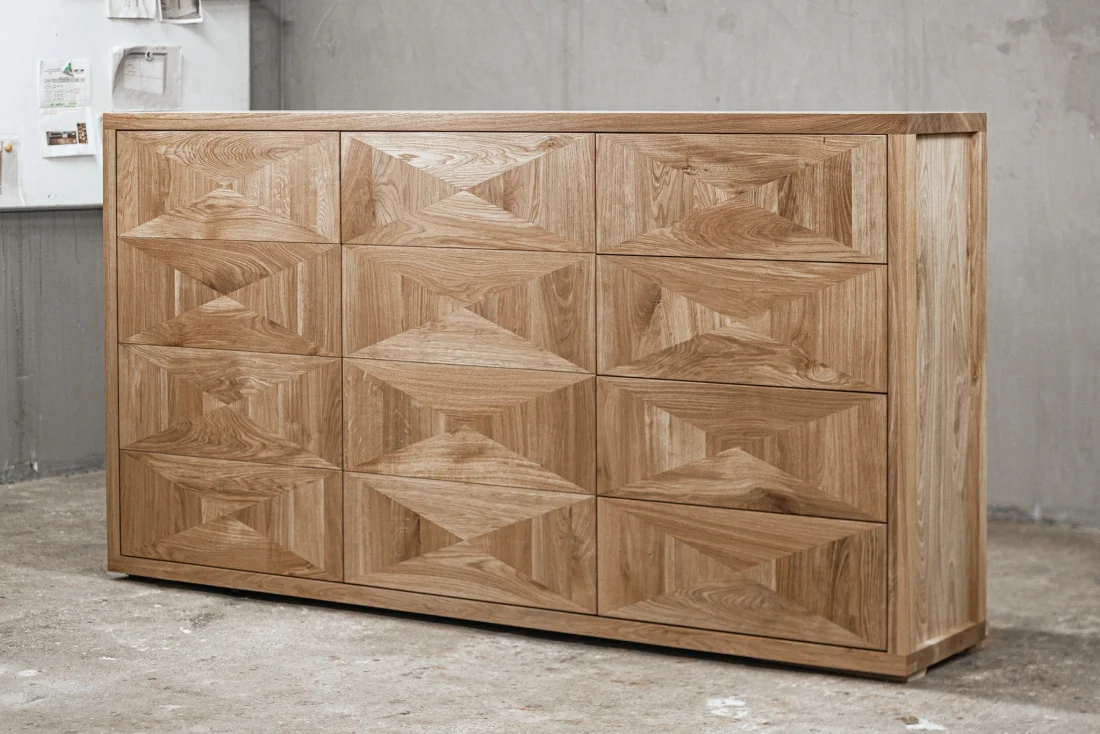
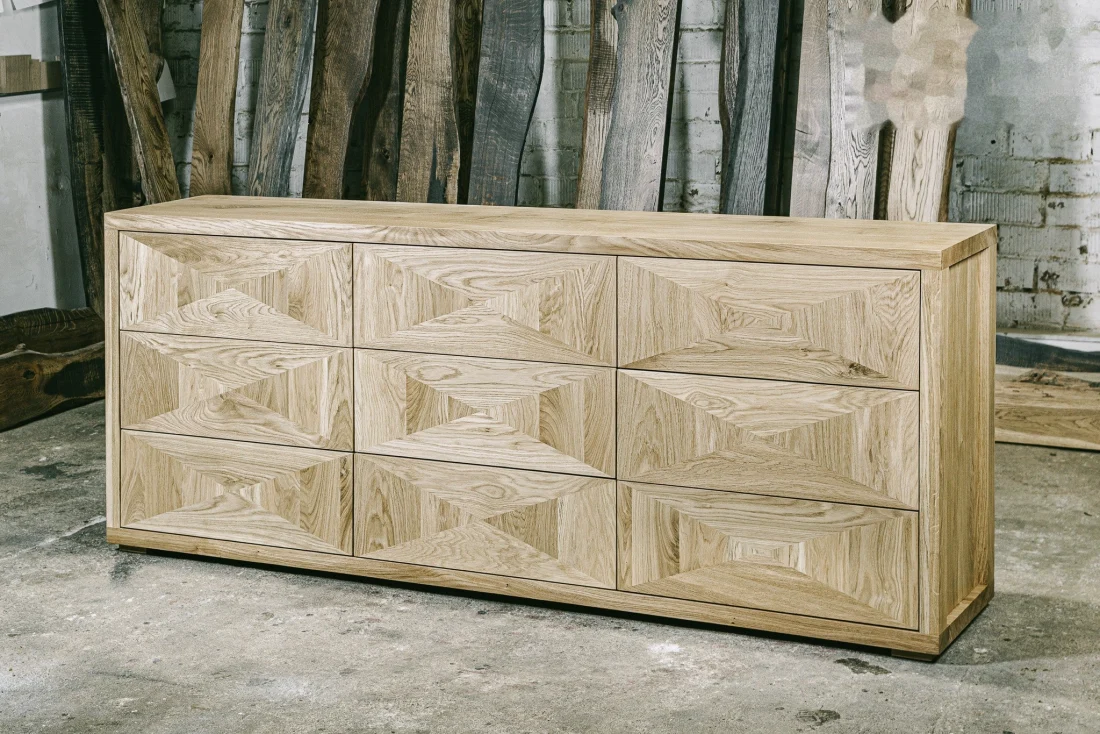
Rowhouse cities build vertical when they cannot build wide, and this dresser does the same: tall rather than long, drawer fronts arranged in an angled, almost herringbone pattern across dark walnut-toned oak.
A black steel frame anchors the base, sculptural handles running the width of each drawer instead of separate pulls. It holds more per square foot of floor than a standard dresser its width, which matters in a bedroom too small for a long run of drawers. The angled fronts catch light differently than a flat panel would, giving the whole piece a texture you notice walking past rather than standing still in front of. Dark wood, small footprint, quiet room — that is the whole equation. It holds its own even next to louder furniture, since the pattern in the fronts needs nothing extra around it.
Cortona is the piece that disappears on purpose.
Full-height and paneled in the same woven caning as its shorter relatives, it is built to sit flush with a wall, a hallway or a kitchen corner, so opening it feels less like using furniture and more like finding a room you did not know was there. Five sizes cover everything from a slim linen cupboard to a full pantry-height cabinet, each keeping the same oak frame and mesh-paneled doors, finished light enough to read as part of the wall rather than a piece set against it. Inside, ordinary shelves and drawers do the work. From the outside, it simply looks like architecture that happens to open. It rewards a household that likes a little mystery tucked into a hallway.
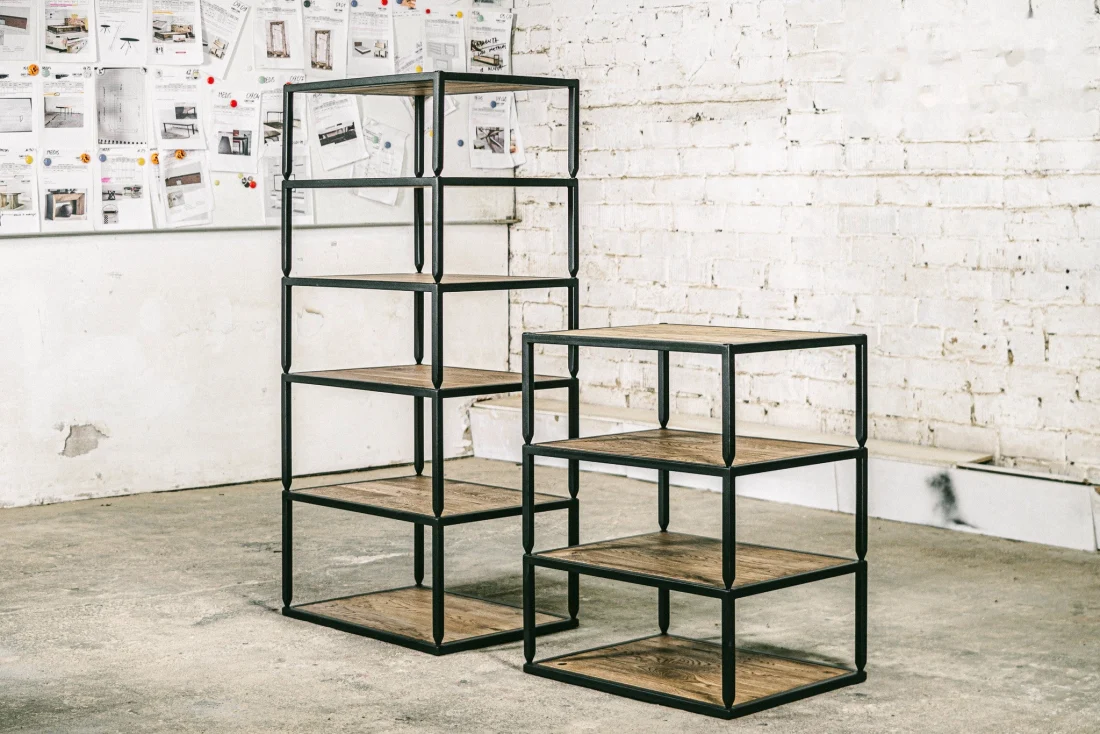
Kew is London's botanical garden, greenhouses and planted beds organized under glass and iron, and this shelving unit is built almost literally from that idea — a black steel frame holding oak planter boxes at different heights, sized to actually take soil and a growing plant rather than just a vase.
The two pieces in the collection share the same logic: oak boxes set into an open steel structure, with the frame doing the visible engineering and the plantings doing the rest. Each unit can be configured with a different finish and box layout, so no two gardens read identically. Set against a window, it becomes a living wall rather than furniture — the plants finish the piece in a way no finish coat could.
Woven cane doors let air move through a cabinet the way old tropical furniture always did, before anyone worried about humidity indoors.
This piece keeps solid oak for the frame and drawers, natural or dark-oiled, and sets rattan cane panels into the door fronts, framed tight enough that the weave stays taut rather than sagging. An angled black metal accent breaks up the front on some versions, a sharp edge against the softer texture of the cane. It suits a room that wants warmth without heaviness — a dining room sideboard or a media cabinet where the woven doors let a little light and a little air through, even closed. The cane is not a fragile afterthought either — it is set deep enough into the frame to take daily use.
Steel mills built this city's whole identity, and this cabinet keeps a bit of that in its doors: mesh grille panels set into a black steel frame, oak shelving visible through the metal weave.
The wood runs in walnut or natural tones depending on the piece, framed top and bottom in the same black steel that holds the doors. It is built for a media console more than a dresser — the open mesh lets heat and remote signals through without leaving cables in view. Set under a television, it reads as the kind of furniture built for a factory floor before anyone thought to put it in a living room, which is more or less true. Cables and remotes stay tucked behind the mesh, visible in outline but never quite in focus.
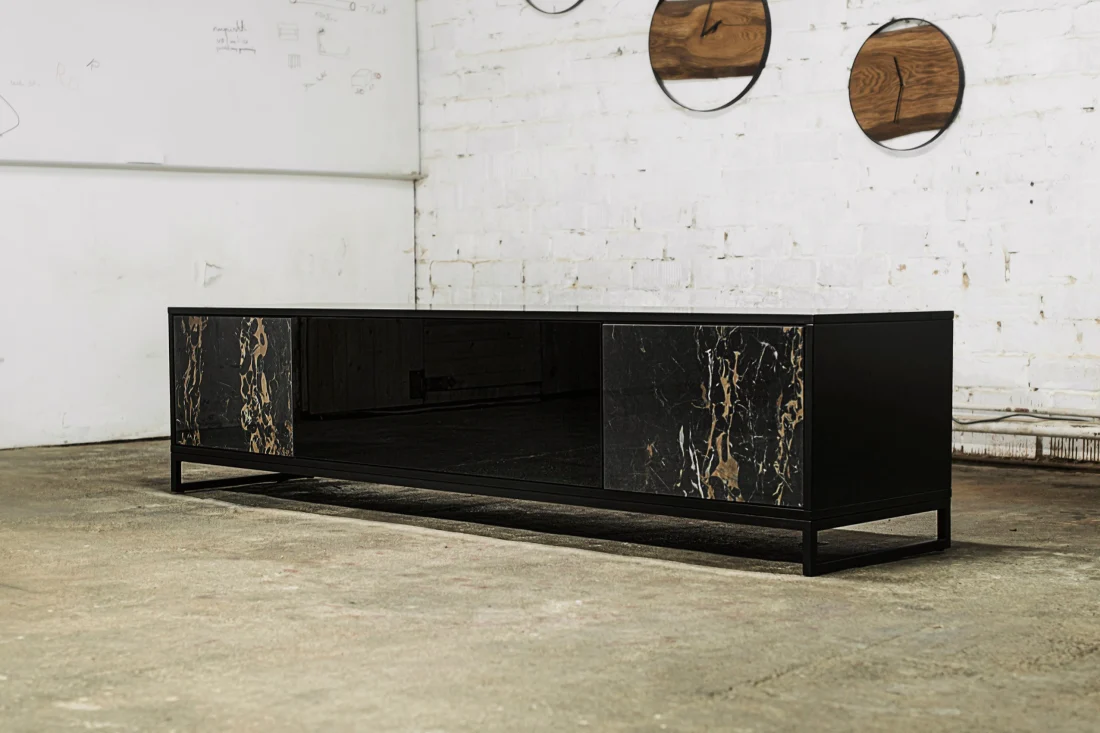
Byzantine mosaics in this city were built from small dark pieces set close together, and this console keeps a version of that density: a low, dark oak body, antique or walnut-toned, drawers stacked tight with black steel pulls, resting on thin black metal legs.
A lacquered finish option gives one version a harder shine than the rest. The proportions stay low on purpose — meant for under a window or against a media wall rather than as a tall dresser. It holds its dark tone in most light, which makes it a natural pairing with a lighter sofa or a paler wall behind it. Understated is the intent; dark wood does the rest of the work. It sits low enough to double as a media console when a room needs one more surface than seats.
Boise sits where high desert meets old timber country, and its barns and outbuildings have supplied a certain look — mixed, weathered wood pulled from more than one source and put back to work together.
This sideboard follows that logic: solid oak in walnut and black-stained sections side by side, open shelving on one end and drawers on the other, all resting on angled black steel legs. Nothing about the wood is uniform on purpose — tones shift panel to panel, the way reclaimed lumber actually looks when reassembled rather than matched. The steel legs are thin and angled, keeping the case from reading as heavy as its materials are. It suits a room already furnished plainly, where one piece is allowed to carry all the character.
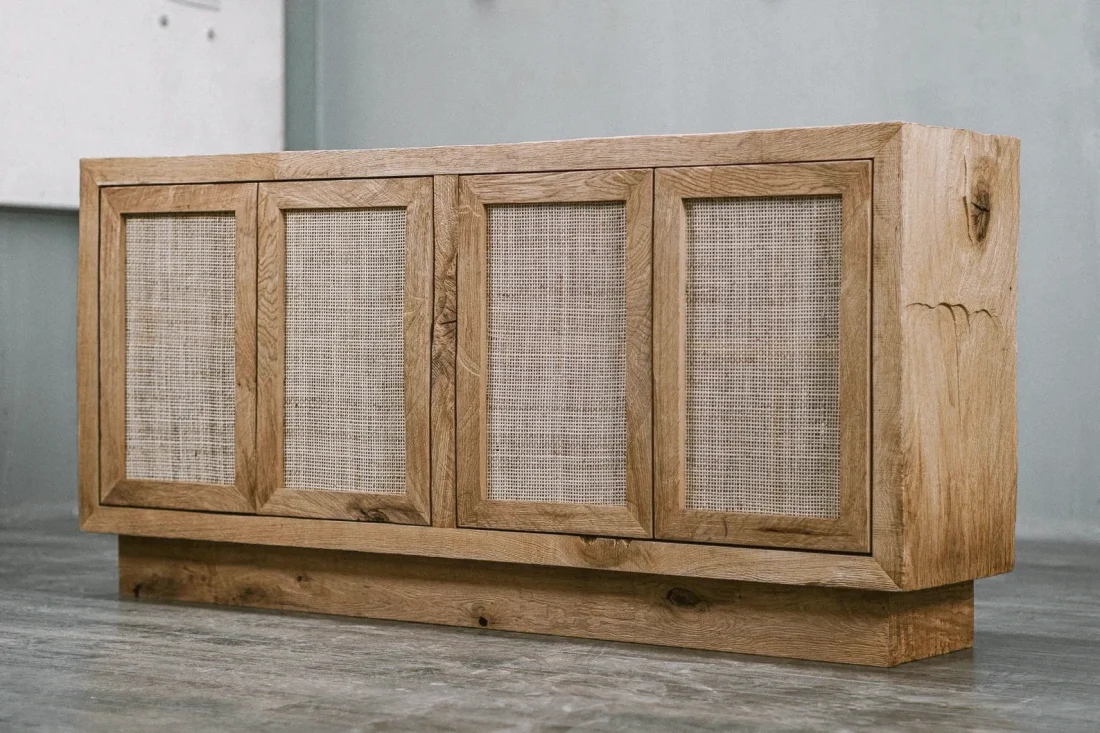
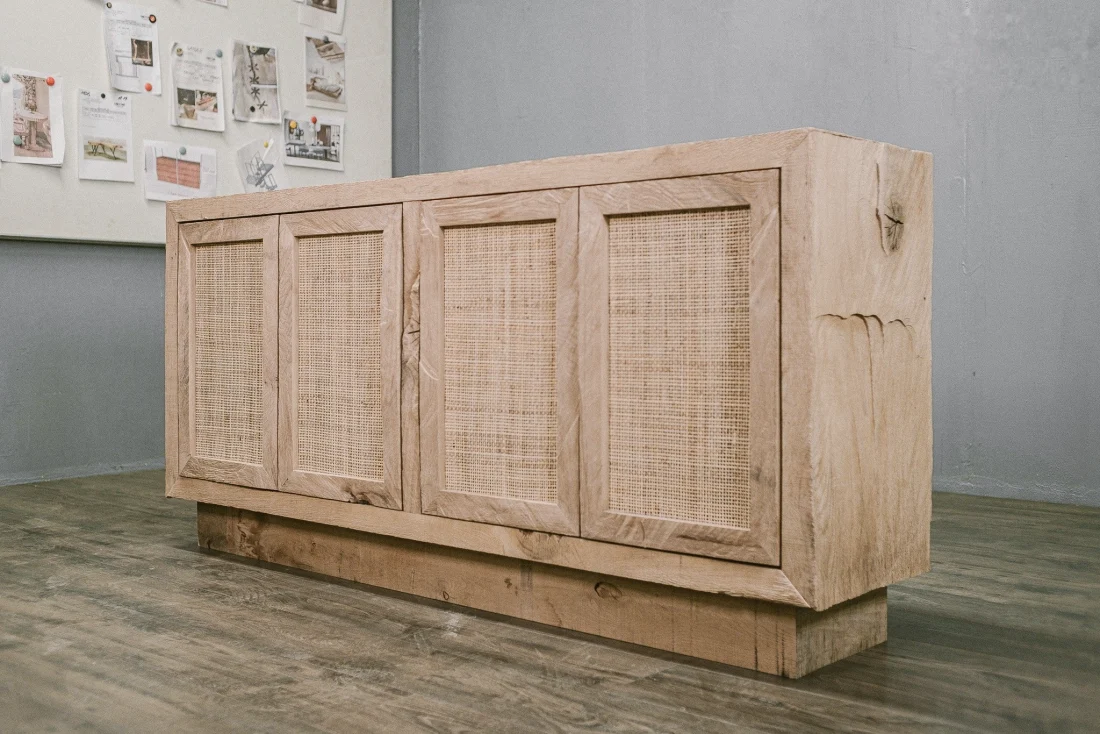
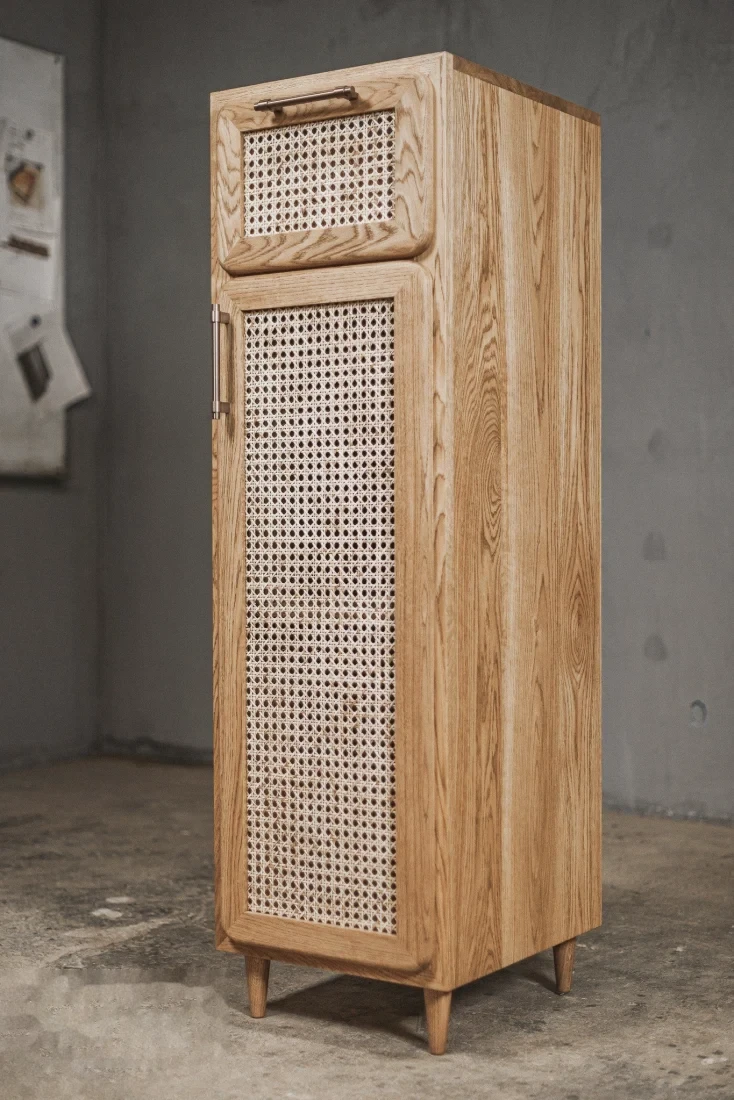
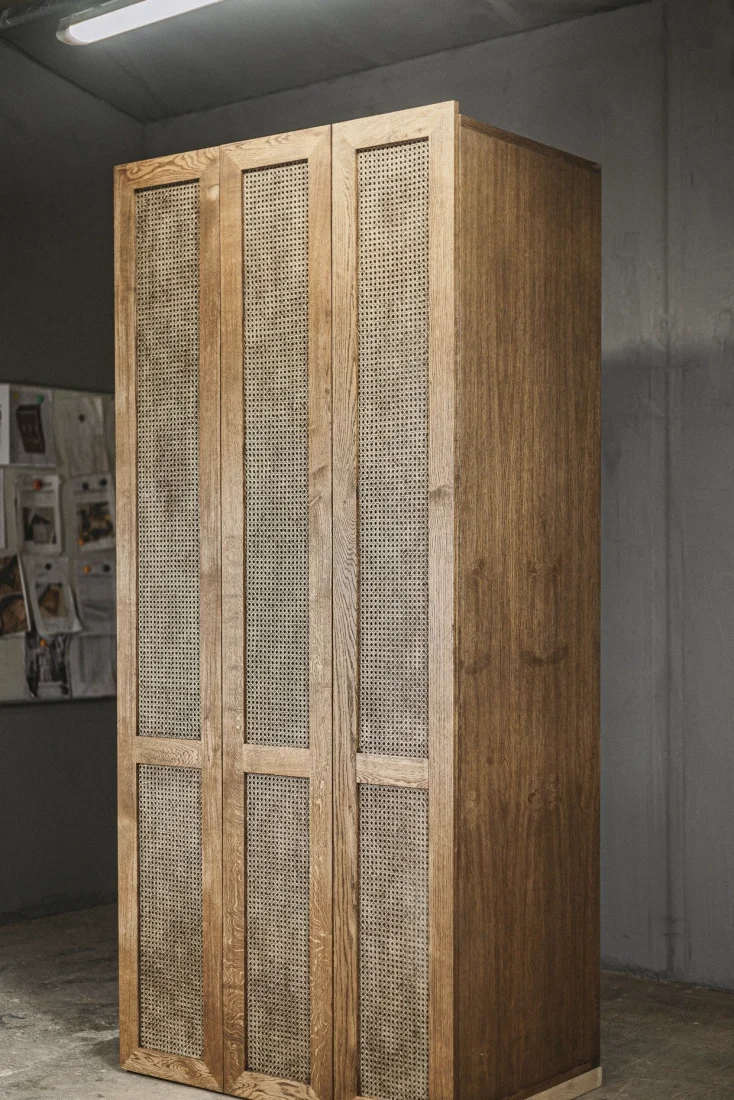
Palma's doors are the point: tall panels of woven caning set into an oak frame, letting light move through the cabinet instead of stopping flat at a solid front.
It is the kind of detail associated with island houses built for cross-breezes, which is likely where the name comes from. The collection covers six pieces, a full-height wardrobe down to a narrow bedside cabinet, all sharing the same paneled-door language and the same light, natural oak tone. Behind the woven fronts, ordinary adjustable shelving does the actual work of storage. In a bedroom or a hallway it reads more like built joinery than a delivered cabinet, something that belongs to the room rather than added afterward. It asks for morning light more than anything else.
Dessau is where the Bauhaus school once stood, teaching that a grid, honestly built, could be its own decoration — and these wall-mounted shelves are a direct descendant.
Open box modules in warm, walnut-toned oak sit inside a dark metal frame, the whole thing reading as applied geometry rather than a conventional shelf. Sizes vary widely across the six pieces, from a compact wall cube to a run over six feet wide, but the formula holds: oak boxes, black-dyed metal edging, no ornament beyond the pattern the modules make together. Mounted at eye level, it turns a blank wall into storage that looks intentional rather than added on — good for a hallway, an office, anywhere a plain wall needs one deliberate gesture.
Across the river from every glossy showroom, Hoboken still has old freight elevators and factory windows, and this vanity was built with that in mind.
A black steel frame does the load-bearing, boxed at the corners with the joints left exposed, while oak plank drawers slide inside it like tool drawers in an old workbench. Nothing is hidden: you can see the joinery, the grain running horizontal across every front. It suits a bathroom that wants function over polish — a basin set on top, plumbing left visible below if the room calls for it. It is a vanity that would look at home holding wrenches instead of towels, and somehow that is the point. Even the drawer pulls are left as plain bar stock, nothing decorative added just to soften the look.
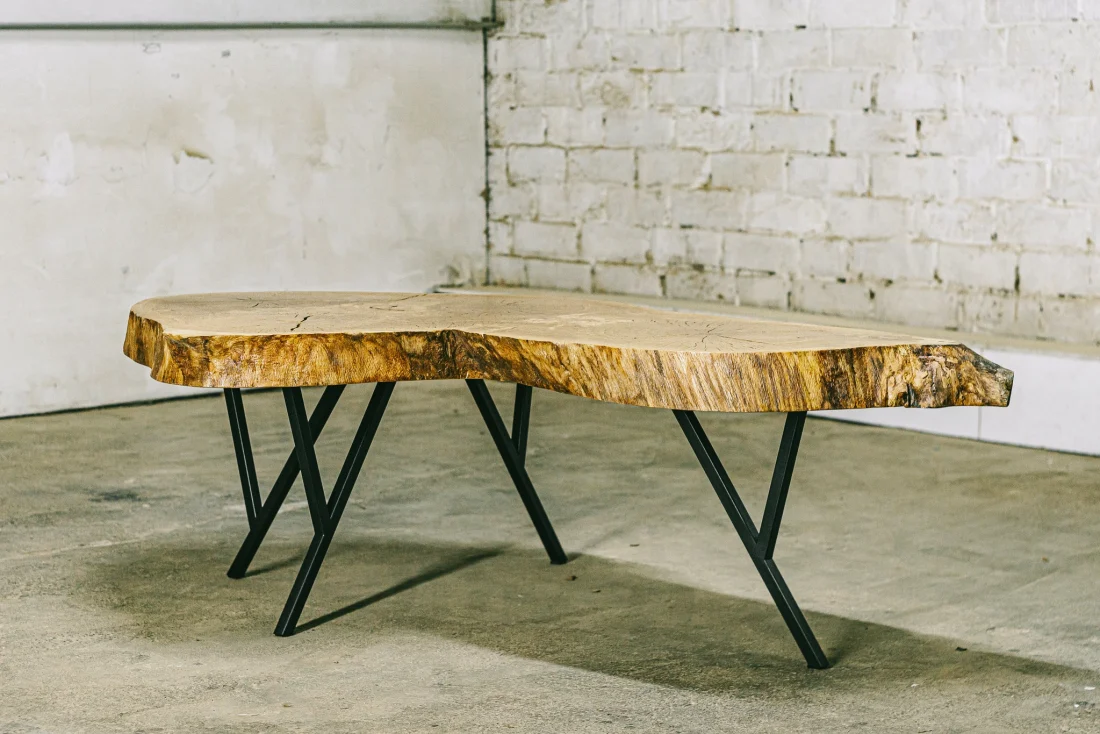
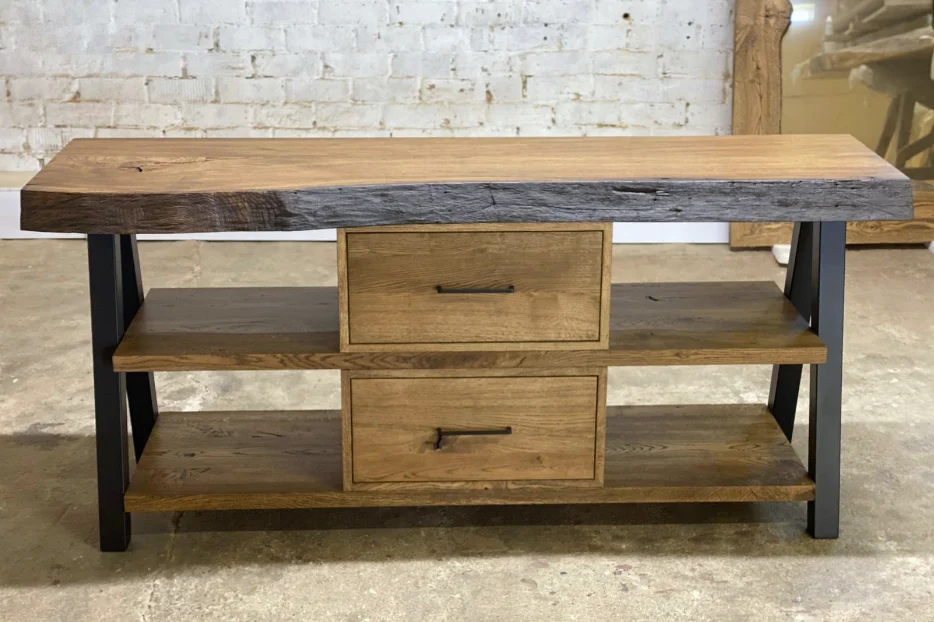
New England barns keep their beams rough on purpose, and this console borrows that logic: a live-edge oak slab on top, bark-line intact along one side, resting over open shelving on a black steel A-frame.
Two drawers sit tucked into the wood itself, finished flush so the storage does not interrupt the grain running the length of the top. It works as a console behind a sofa or a media stand against a long wall — the open shelving below keeps baskets or books in view rather than hidden. The steel frame does the structural work quietly, angled just enough to read as considered rather than merely functional. Set it low behind a sofa and it holds a lamp and a stack of books without ever looking crowded.
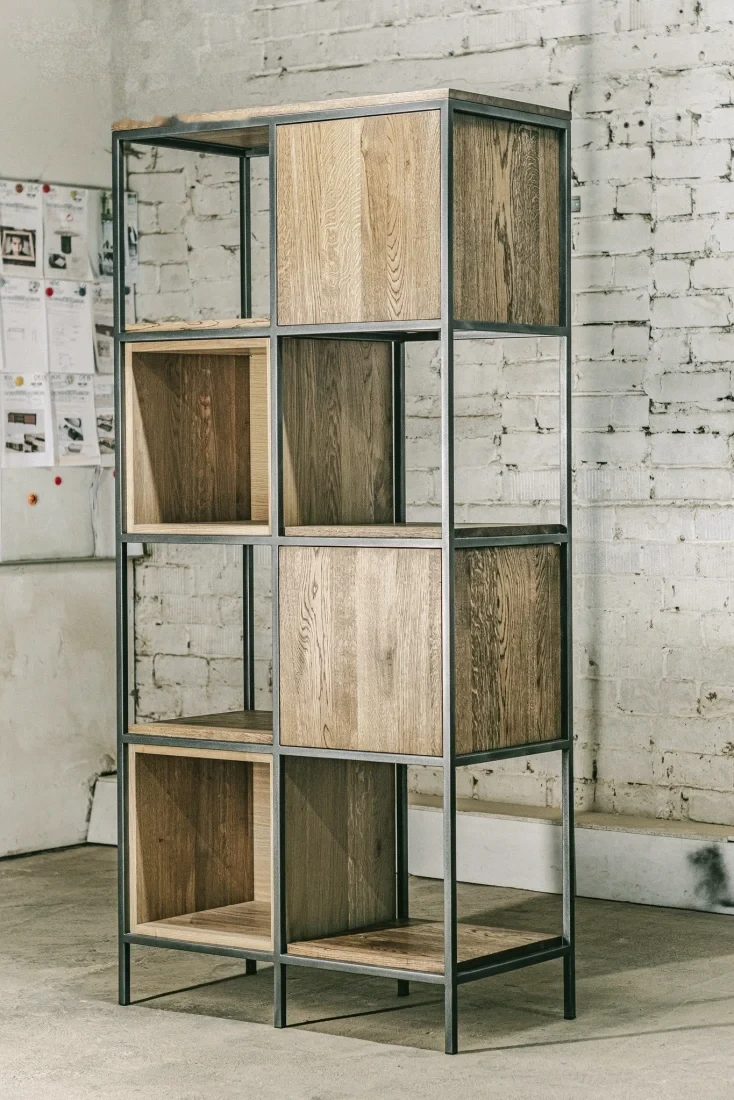
Cleveland grew up around steel mills and warehouse floors, and this shelving system carries that industrial directness — a black steel frame divided into cubes, each one filled with oak in a slightly different tone, walnut here, lighter oak there, so no two openings read quite the same.
The frame does the structural work throughout; the wood fills it in modular blocks rather than running as continuous shelving, which is what gives the six pieces their slightly irregular, stacked-crate look. Sizes range from a low, wide unit to one that climbs past seven feet. It works as a room divider as easily as a bookshelf, since the mixed-tone openings read from both sides — useful in a loft that needs a boundary without a wall.
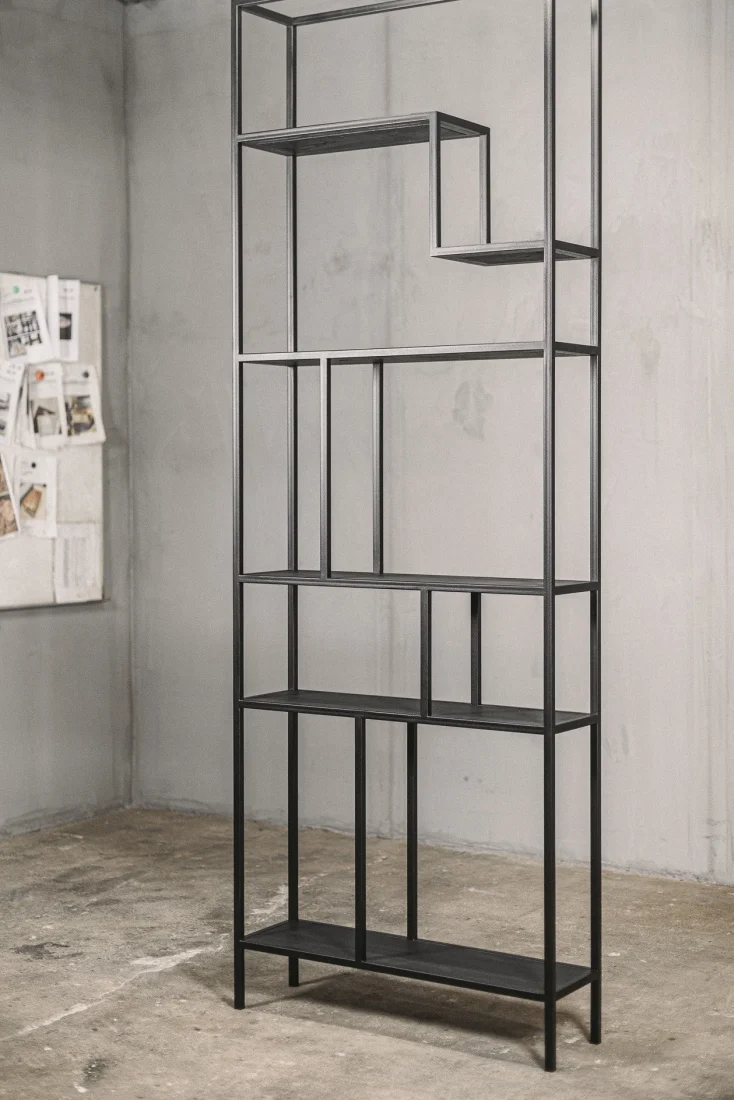
Seattle sits under a low grey sky most of the year, evergreens holding their color regardless, and this tall shelving unit takes that dark, layered green-and-black palette rather than the usual warm oak.
A steel frame in grey and black dyed metal carries oak shelving and a drawer base, rising in a narrow, upright column. Across the three pieces, proportions shift but the frame stays dark and the wood stays a warm walnut-toned oak, giving each unit real visual weight for its footprint. The drawer section at the base keeps smaller items out of sight while the open shelving above stays for display. Against a brick or plain wall, it reads as one tall, quiet object — good for a narrow gap that a wider bookshelf would not fit.
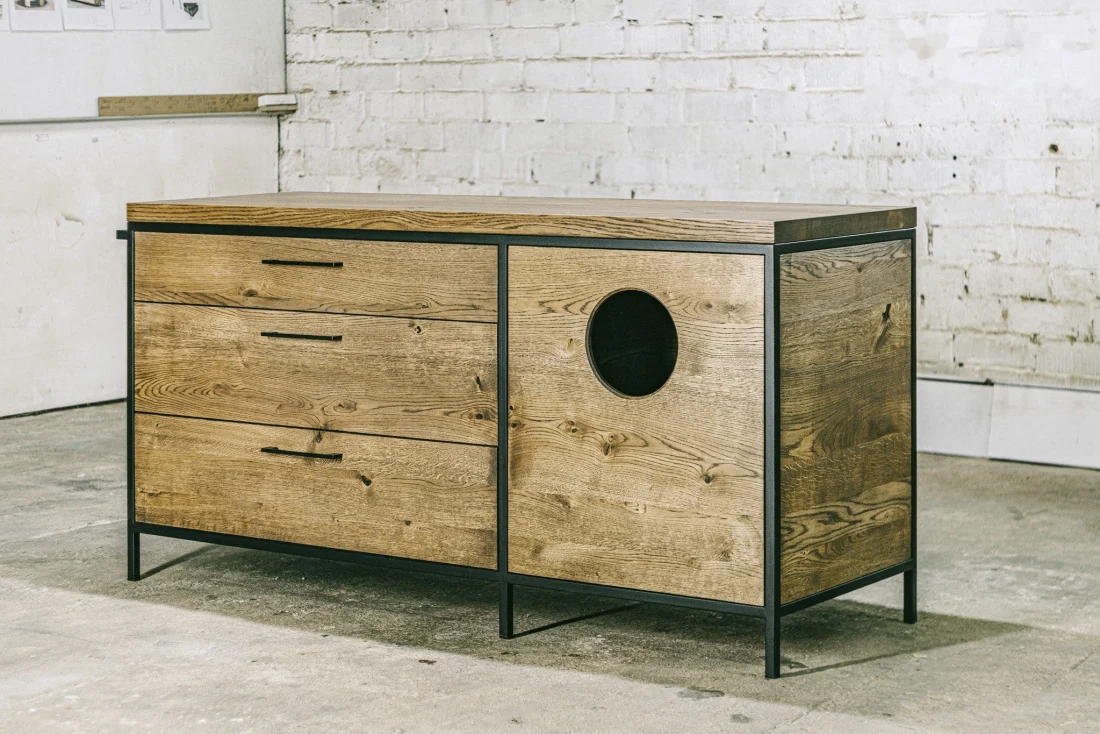
Reno's skyline is built around a single lit circle, and this storage cabinet takes that same shape as its signature — a tall oak cabinet with a round cutout serving as the door pull, cut clean through solid wood rather than applied as hardware.
The frame is black steel, thin enough to disappear against a wall, holding a case of natural oak with the circular door above and a drawer below. The cutout is the whole design statement: no other ornament competes with it, and the oak grain frames the circle rather than distracting from it. Narrow enough for a hallway or a bedroom corner, it holds more than its footprint suggests, and the round door makes it identifiable across a room before anyone reads a label.
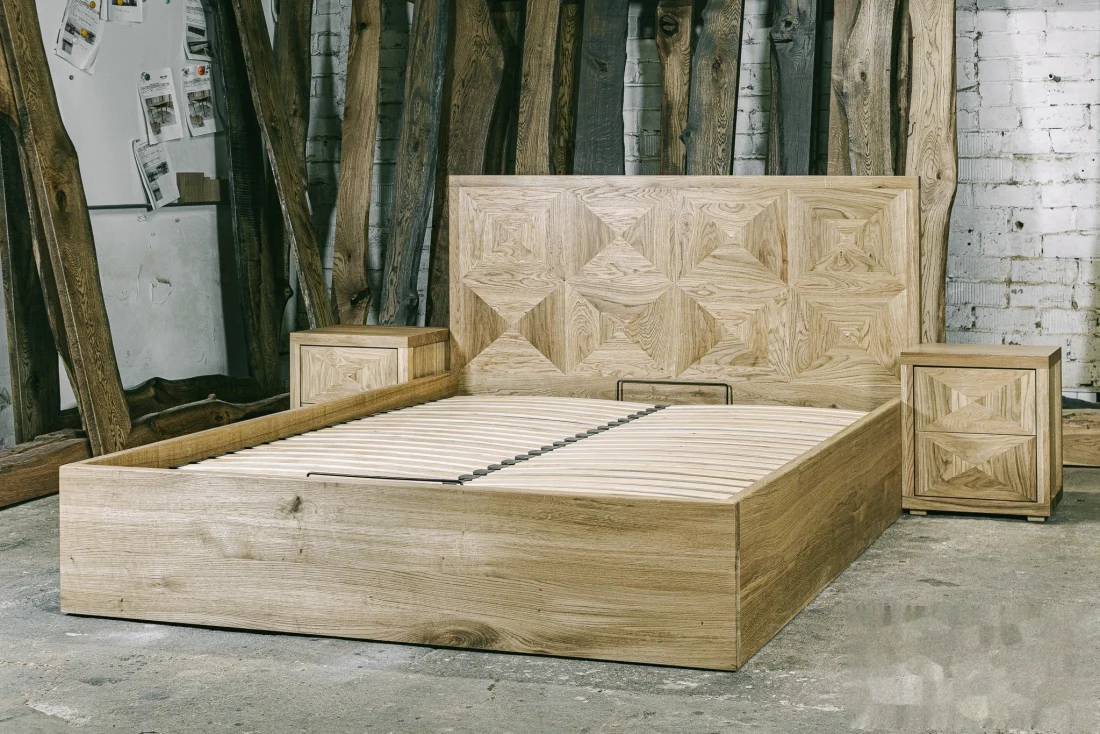
Ouray is a small town high in the Colorado mountains, the kind of place where a bedroom means heavy timber, deep quiet, and cold air outside the blankets.
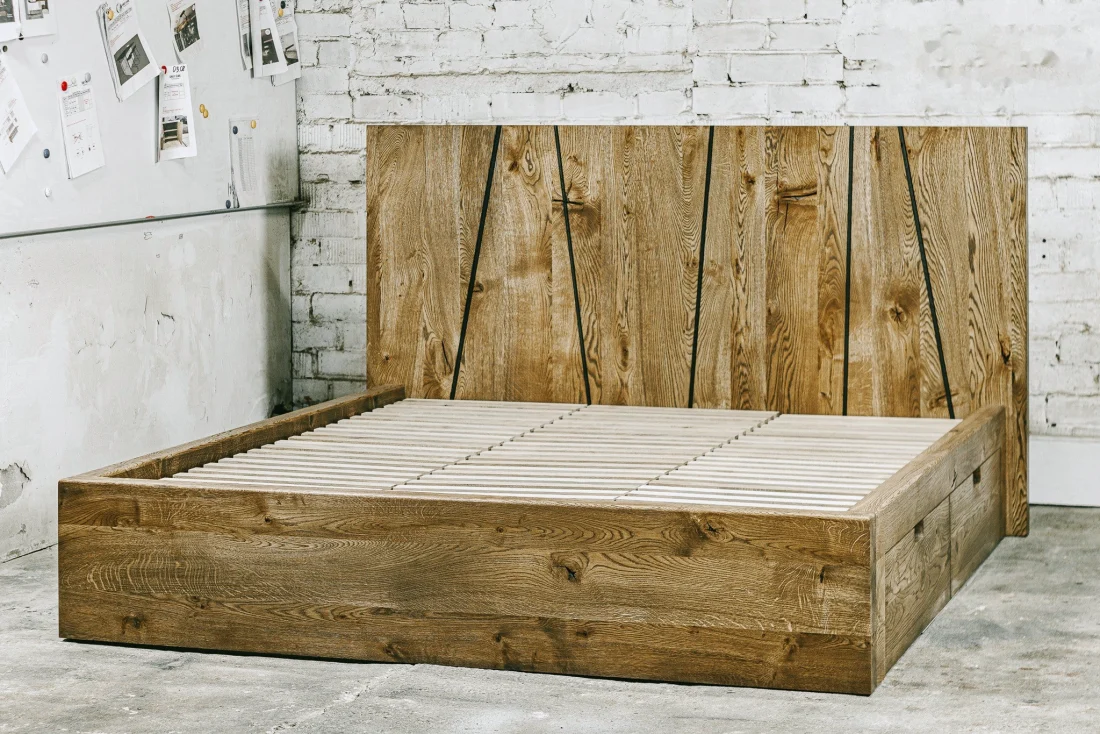
These beds carry that feeling. Wide oak platforms, low to the floor, with headboards that read as architecture — full panelled walls of oak, some with leather cushions set in where you actually lean. There is nothing decorative about the construction. The frames are solid oak throughout, joined to be slept on for decades and moved between houses without complaint. Several include floating nightstands built into the headboard wall itself, so the whole end of the room becomes one piece. A bed is the last thing you see at night and the first thing in the morning. This one earns both moments.
Menorca has a long history of hand-woven rope and cane work, made for boats and houses alike, and this wardrobe's door panels carry that craft directly — solid oak frames set with woven cane inserts instead of flat wood or glass, letting light and air move through even when the doors are shut.
Seven sizes make up the collection, in both natural oak and a deeper walnut tone, but the woven cane panel stays the identifying feature throughout, framed simply so the weave itself provides all the pattern. The oak carries the structural load; the cane does the rest. In a bedroom, it reads lighter than a solid-doored wardrobe of the same size, and it keeps what is inside from ever feeling completely sealed away.
Fluted columns and old arcades give this city's architecture its rhythm, and this closet borrows the same vertical grooving: a tall black metal frame scored with narrow channels, glass and open shelving mixed with oak-toned drawer sections, interior lighting built into the frame itself.
Nothing about it reads as a plain wardrobe box. It functions closer to a dressing room condensed into one piece — open display for what you want to see, drawers below for what you do not. The lighting matters more here than in most closets: switch it on and the piece reads as a small shop window built into a bedroom wall, which is more or less the intended effect. Positioned along a hallway rather than tucked in a corner, it turns a walk to the bedroom into something worth pausing for.
Big sky country builds barns to last generations, sliding doors and all, and this closet keeps that same logic at bedroom scale.
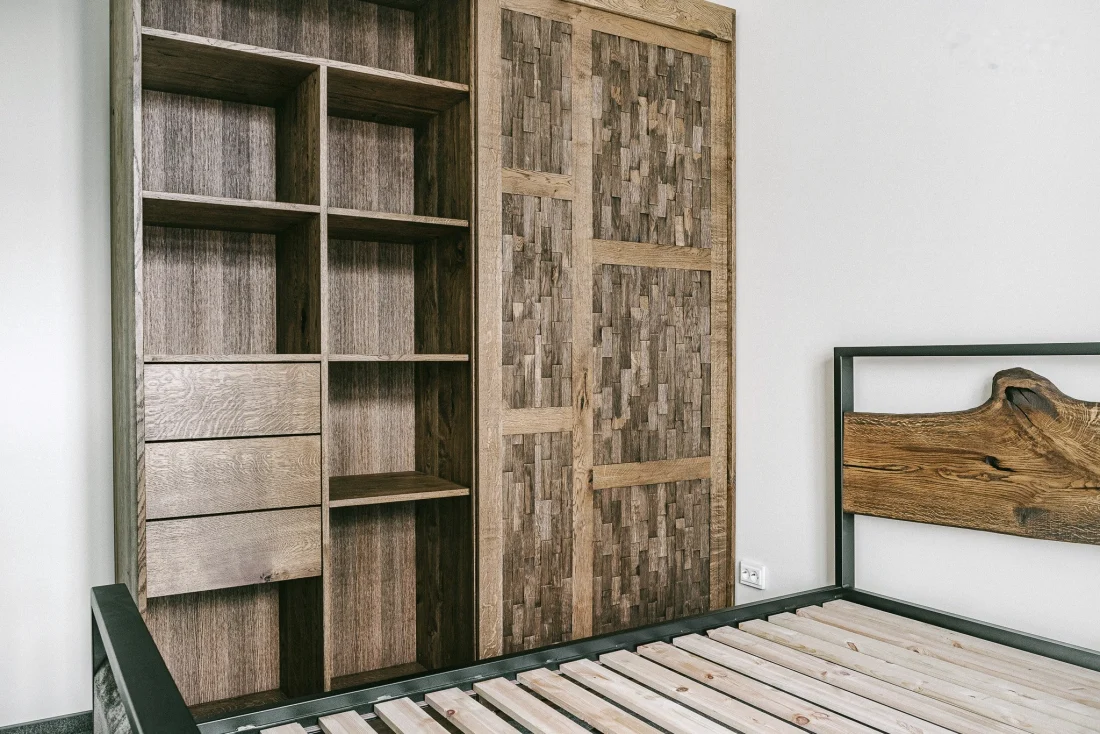
A black steel frame carries mixed wood sections — solid oak drawers below, open glass shelving above — with a walnut-toned sliding door running the width of the piece on a visible track. The mixed materials do double duty as storage and display: folded clothes and drawers stay hidden, while the open shelves above hold what you actually want to see each morning. It suits a room with high ceilings, since the piece reads tall rather than wide. Nothing about the hardware is disguised — the track and frame are part of the design, not an afterthought. It works best in a room built around exactly this kind of contrast — hidden storage below, open display above.
Limestone islands and long pale summers give Gotland its color, and this bed keeps that bleached, sun-worn look in solid oak.
The headboard is cut in one continuous wave, rising and falling like a coastline, sanded until the pale finish reads almost white. Underneath, the platform holds its own storage — drawers built into the base rather than added on. Some frames come in a natural, ungrained oak; others go dark, walnut-toned, for a room that wants contrast instead of calm. Either way the wave stays. A bed like this asks for plain linens and not much else on the walls — it is already the room's one gesture. Even the hardware stays hidden, worked into the drawer fronts so nothing metal interrupts the pale wood.
Whitewashed walls and a horizon that never seems to end — Santorini lends its color, not its shape, to this bed.
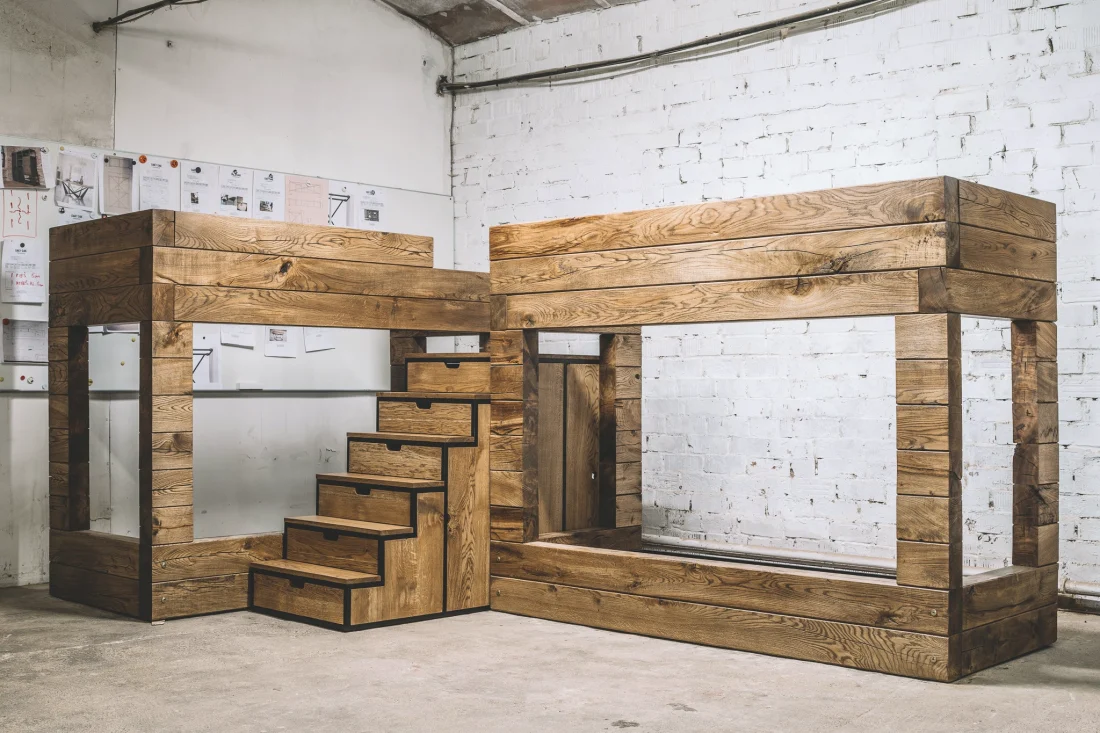
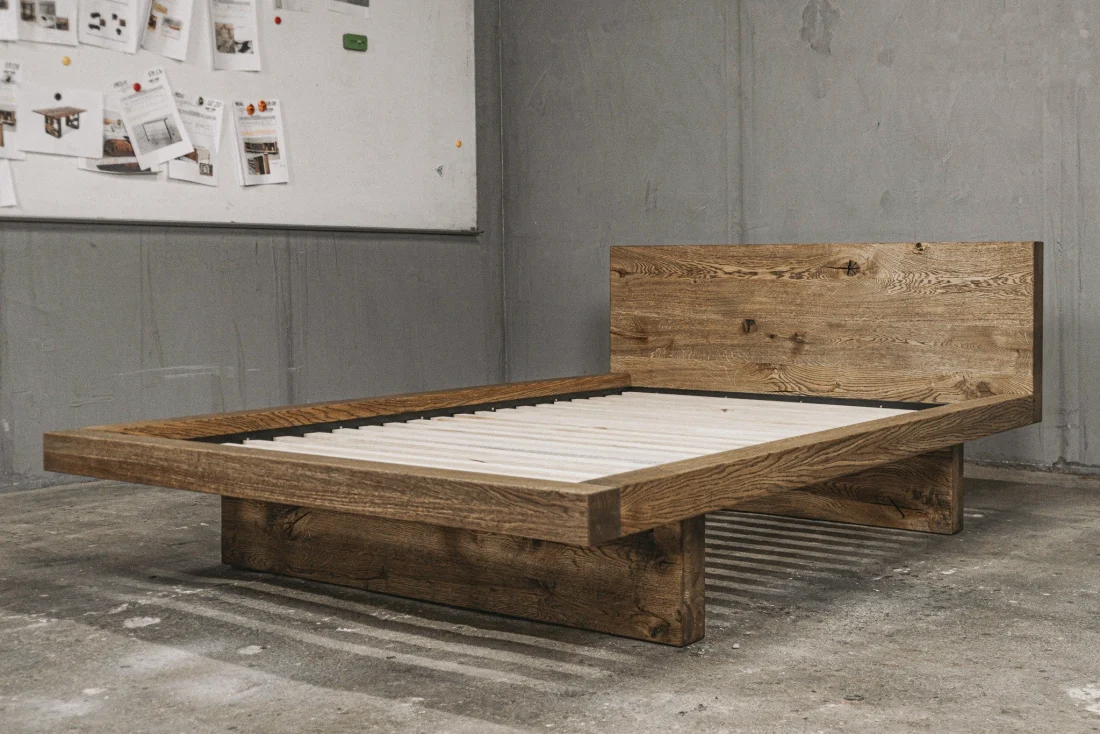
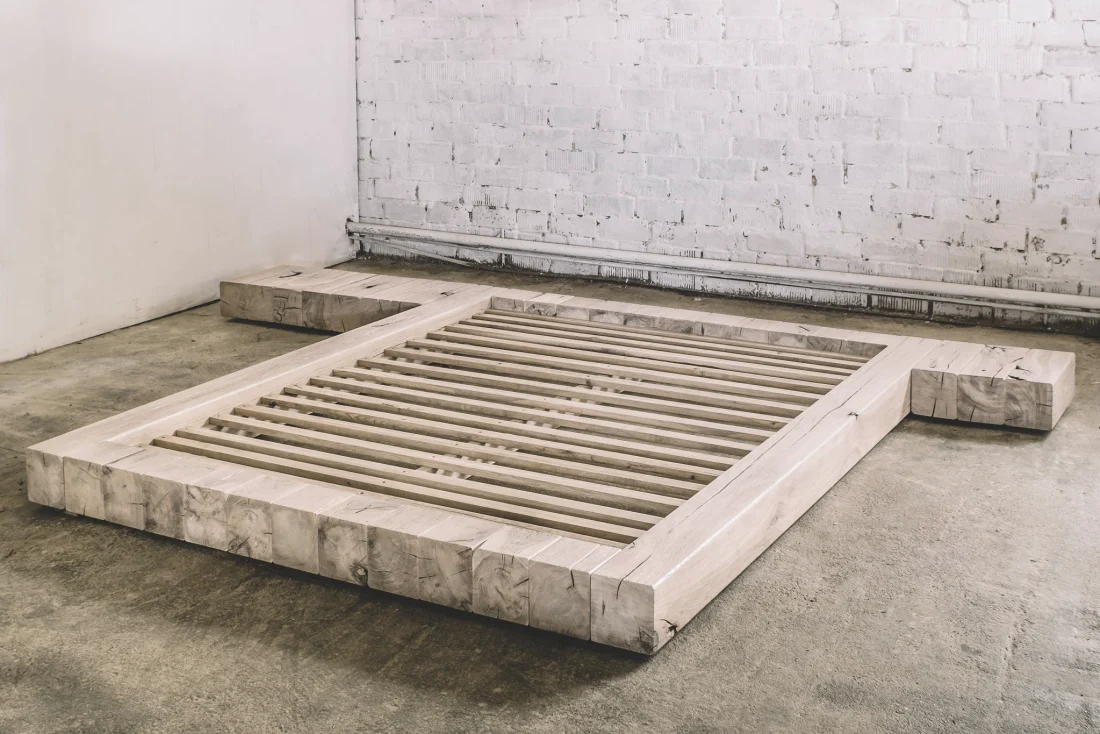
The platform sits low, built from chunky oak beams left with a pale, almost bleached finish, slatted through the center so the mattress breathes. A black steel frame carries some versions, oak legs the rest. There is little to it beyond that: no headboard doing extra work, no carved detail competing with the wood itself. It reads as calm the way a whitewashed room reads as calm — one material, one tone, nothing arguing with anything else. Set it low in a bedroom with bare walls and morning light does the rest. There is no footboard to speak of, so the platform reads as one long, low horizontal line across the room.
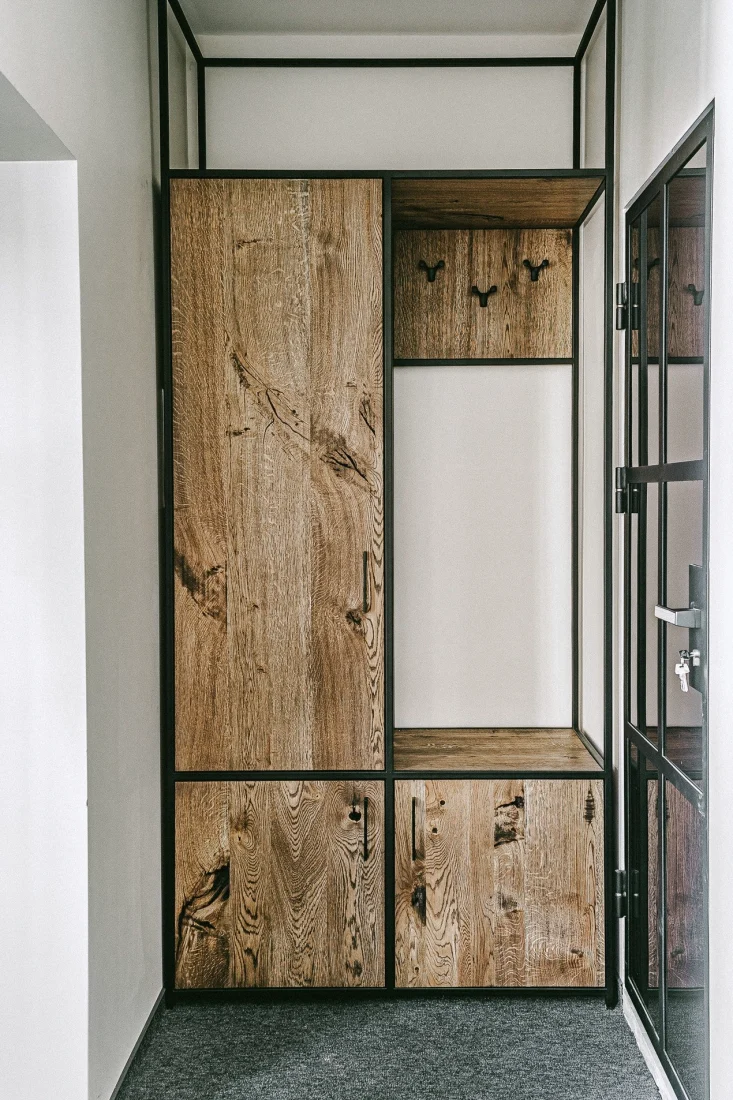
Austin's houses tend to blur the line between inside and outside, entries built as much for boots and bikes as for coats, and this open wardrobe unit is built for exactly that kind of arrival — a black steel frame holding oak shelving, a hanging rod, and a bench with drawers below, all left open rather than closed behind doors.
Two sizes make up the collection, both in natural oak against the black steel structure, with cubbies sized for shoes and baskets built into the base. Nothing is hidden here by design; the point is to see everything at a glance on the way in or out. It works best right inside a door, doing the sorting a closet usually leaves to a pile on the floor.
Lake towns in the mountains keep their timber rough, and the Tahoe headboard is the roughest thing in this bed: a single live-edge oak slab, the bark line still visible along one side, a knot left in rather than filled.
The platform below runs on a black steel frame, slatted, with no upholstery anywhere to soften the contrast between raw wood and machined metal. It works as the one statement in an otherwise plain room — the frame disappears into shadow at night, and the headboard is what catches morning light first. A bed like this does not ask for a matching nightstand. It asks for a room willing to let one slab of oak be the whole point. Everything else in the bedroom can change around it without the bed ever looking out of place.
Seaside towns with piers built for looking, not just walking, have a soft spot for curves, and these nightstands are all curve: round drum bodies in black oak, a single drawer set into the face, resting on legs bent in a deco sweep of black steel.
A few come finished in a deep blue oak instead of black, the kind of blue you get off water at dusk. They stand rather than sit — the metal legs lift the drum well clear of the floor, so the whole table reads lighter than a solid box would. One beside a bed does more work as sculpture than storage, and looks it. Two together, mirrored either side of a headboard, turn a plain bedroom wall into something worth walking past.
Quiet college towns keep their furniture understated, and this pair of nightstands follows that instinct: two drawers each, dark walnut-toned oak, no hardware louder than a small integrated pull.
They are built to flank a bed and be forgotten during the day, noticed only at the exact moment you reach for a lamp switch or a glass of water in the dark. A whitened-oak version exists for lighter rooms, paired with a black steel frame instead of solid legs, but the proportions stay the same across both. Set as a pair, they give a bedroom the kind of symmetry that makes the whole room feel settled rather than decorated. A concrete-topped version exists too, for a room that wants one cooler material against all that dark oak.
Mystic is a harbor town where fog softens every hard edge by midmorning, and the grain in this nightstand's oak drawer fronts has that same soft, blurred quality — walnut-toned wood set inside a spare black steel frame.
Two units are sized to flank a bed as a pair, a third stands taller and alone. The construction is direct: solid oak fronts and top, joined into a steel frame that does the structural work and stays visually out of the way, finished flat black rather than polished to shine. Drawers close with a quiet weight rather than a rattle. Beside a bed, one holds a lamp and whatever gets read before sleep; stacked as a pair, they frame the whole headboard wall evenly.
Thin black steel, bent into open rectangles, is the whole architecture of this table — legs and frame drawn as one continuous line, the way an Italian furniture sketch stays mostly white space.
A single oak drawer or leather-wrapped shelf sits inside that frame, walnut-toned or natural, the wood doing the only soft thing in the piece. It reads taller and lighter than its footprint, which makes it useful where a bedroom has no room to spare. Two side by side, mismatched heights, work as an off-kilter nightstand pairing — one for the lamp, one for whatever book did not make it to the shelf. Either way, the frame stays the true subject, with the wood or leather playing a supporting role.
Sweden's old university town runs pale stone against dark timber, and this pair of nightstands does the same trade in miniature — one box in natural oak, one in black oak, both low and wide rather than tall.
Each is built as a single drawer the width of the whole top, deep enough to swallow a stack of books instead of just a phone charger. Metal legs lift some versions off the floor; solid oak carries the rest. Put the light one on your side of the bed and the dark one on your partner's, and the asymmetry reads as deliberate rather than mismatched — which, built this way, it is. The scale keeps both tables useful as more than a place to set a lamp down at night.
Pastel colors on a cliffside harbor are Portofino's whole reputation, and this stool borrows one shade of it: a round cushioned seat in sage or dusty mint, set on a turned oak pedestal that widens like a mushroom cap toward the base.
A metal ring near the floor doubles as a footrest, the only hard edge on an otherwise soft silhouette. Some versions swap the wood for ash, lighter in tone, and the seat fabric runs through a small palette rather than one fixed color. It reads playful without trying hard at it — the kind of stool that works at a kitchen island where the rest of the room is being serious. It photographs almost like a toy, and that lightness is entirely intentional against more serious pieces nearby.
London's quieter streets keep their furniture reserved, and this bench matches that mood: a solid oak frame, storage box built into the base, topped with a cushion of genuine leather in cognac brown or black.
The proportions run long and low, meant for an entryway or the foot of a bed rather than a table. Lift the seat and the whole top hinges up — shoes, blankets, whatever a hallway needs to hide go inside the box itself. The leather takes a shine with use rather than losing one, which suits a piece that gets sat on daily while boots come off. It asks for nothing else nearby, just a wall and a hook. Over the years the leather picks up a faint darkening at the edges, exactly where hands and knees meet it most.
Lava cooling into rock gives a landscape edges that look poured rather than cut, and this bench is carved with the same logic: a single block of oak, finished black or in a dark tobacco tone, shaped into a curved seat that seems to flow rather than join at corners.
There is no frame underneath — the form itself is the structure, solid the whole way through. It reads more like sculpture than seating until someone sits on it, at which point the carving turns out to fit a body better than a flat bench ever would. One at the end of a hallway or beside a window does the work of a piece meant to be looked at first, used second.
Motor cities build things to outlast their upholstery, and this chair leans into that logic: a welded black steel frame, drawn in clean rectangles with no curve softening the joints, carrying a seat and back upholstered in velvet, usually dark grey against the black metal.
A version in solid oak and steel trades the velvet for a firmer bench seat. It sits lower and wider than a standard dining chair, closer to a lounge piece, so it earns a spot at the head of a table or on its own against a wall. The geometry is the whole decoration — nothing carved, nothing curved, just steel doing what steel does best. Two facing each other across a narrow console read like a conversation nook rather than a dining arrangement.
Siena is a city of curves — the shell-shaped square, the arched brickwork, the streets that bend instead of turning.
These chairs earned the name. The back and armrests are one continuous sweep of oak, carved and sanded until the joint is something you feel for rather than see. A chair is the hardest piece of furniture to build honestly: it has to be light enough to pull out with one hand and strong enough to hold a person leaning back on two legs. The Siena does both with no visible hardware — just shaped wood, a seat of leather or woven rattan, and the patience of someone who has made a few hundred of them. They pair with almost any table in our collection, which is exactly what a good chair should do.
The Riviera earned its name from leisure — chairs built for terraces, for reading in the sun with nowhere particular to be.
This one leans into that history with a sculpted silhouette: a high, curved back, crossed wooden legs in a warm walnut tone, and an angle set for lounging rather than sitting up straight. Across the eight pieces in the collection, the frame stays constant while the upholstery shifts — leather on some, a soft, heavy wool on others — but the shape is unmistakably one design, mid-century in spirit, with the joinery of the crossed legs left fully visible rather than hidden underneath. It wants a corner near a window, a reading lamp, a low table within reach — a single good chair rather than a matched pair.
Warehouse floors and repurposed factory hardware gave Brooklyn its furniture look before it was a look anywhere else, and this chair is built from exactly that instinct: a welded steel mesh cube, black wire on every face, holding a thick cushioned seat in burnt orange.
A burnt-oak trim appears on select frames, a warm note against all that black wire. It photographs like an object before it registers as seating, which is rather the point of pulling one into a room that already has enough soft furniture. Set alone in a corner or paired at a small table, it reads as industrial with a single loud color doing all the talking, and the mesh lets a room show through it rather than block the view.
Norwegian coastal towns build their houses light-toned and their furniture the same way, and this chair keeps to that palette: a slim ladder-style back in natural oak, a seat of Italian leather stretched tight, legs turned thin enough to slide under a table without a sound.
A walnut-toned version pairs the same frame with black leather for a darker room. There is nothing extra in the design — no arms, no carved splat, just the vertical lines of the back rail doing the only visual work. Six of them around a long table read as understated rather than plain, which is exactly the balance a simple chair like this is built to hold. One alone at a writing desk holds up just as well, the thin legs disappearing under the surface.
Alsace's houses are built from exposed timber frames, dark beams set at deliberate angles against pale plaster, structure left in plain view rather than covered over.
These armchairs borrow that honesty: a dark wood frame, legs and arms meeting at visible angles, with a single cushioned seat and back set into the structure rather than layered on top. The wood is a warm, walnut-toned oak, worked into flat, architectural planes rather than turned or carved. The cushions are a plain oatmeal fabric, just enough softness to make the chair livable without hiding the frame that does the actual work of holding you up. Three chairs make a set small enough for a breakfast nook or a reading corner, each one clearly built rather than merely upholstered.
Antibes is a single, generously curved shell of a chair, molded leather in a deep brown stretched over a seat shape that wraps the lower back the way a real shell wraps whatever grew inside it.
Slim black steel legs, angled outward for stability, are the only hard edges anywhere on the piece. There is one version, one leather, one frame color, and no real need for more — the shape is the design, and it does not improve with variation. It sits happily at a dining table but does not require one; pulled up to a desk or set alone in a reading corner, it works as an actual chair, meant to be sat in rather than simply looked at.
Chantilly is remembered for cream and for lace, two things defined by softness held to a shape, and these counter-height chairs work the same trick.
A light, unadorned wood frame carries a seat and back wrapped entirely in a pale, nubby bouclé, cream enough to earn the name honestly. Construction is straightforward and stays out of the way: tapered wooden legs, a simple frame, no exposed hardware. The fabric is the whole personality here — thick, looped, soft to the hand, the kind of texture that photographs warm even in a stark kitchen. Set in a row along an island or a counter, six of these turn a purely functional stretch of cabinetry into somewhere people actually want to sit and linger over coffee.
Oregon's forests have burned and regrown for longer than anyone has kept records, and this stool wears that history on its surface — a solid block of oak with one face left deeply charred, dark and textured, against the pale, untouched grain of the sides.
It is a single piece, cut and finished as one cube rather than assembled from parts, so the contrast between burnt and bare wood runs straight through the material rather than sitting on top of it as a stain. The scorched face is rough enough to feel the grain lift under a hand. Used as a stool, a side table, or a plinth for something else entirely, it works because it commits fully to the contrast rather than softening it.
One line of black steel, bent twice, holds up a block of oak — that is the whole design, and it is enough.
The Camden stool skips the four-legged logic entirely: a single frame reads more like a drawn diagram than a support, negative space doing as much visual work as the metal itself. The seat is solid oak, left as a plain rectangular block, no cushion, no curve. Pull it up to a kitchen island and it disappears under the counter when you are done with it — nothing to catch a knee, nothing to trip over. It is the stool you buy when you want the room to read as steel and air, not furniture. A pair at a kitchen counter reads as two sketches rather than two seats, and the room feels less crowded for it.
Mendocino sits on the Northern California coast, where wind and surf have spent centuries rounding the headlands into soft, deliberate curves.
This desk works the same way — a single oak plane bent into a wide, rounded rectangle, its corners eased rather than cut, resting on two thick drum-shaped legs. Everything about it reads as one continuous form: no hard edges, no applied trim, just solid oak shaped and sanded until the curve feels inevitable. A cable pass-through disappears into the surface rather than announcing itself, and a bank of drawers rides low along one flank, out of the way of your knees. It asks for a room with space around it — an office, a library corner — somewhere it can be walked around and appreciated from more than one angle before the papers pile on.
Portland pairs a top left close to raw — natural edges, visible knots, the color variation of a board that was never sanded into uniformity — with a base painted in a matte, olive-toned lacquer that reads more workshop than office.
It is an unusual combination, rustic wood over a distinctly modern-colored frame, and the contrast is the entire idea behind it. Only two sizes exist, a compact desk and a considerably larger one, both keeping the same raw-edged top and painted metal legs. It suits a room that wants one clearly handmade object at its center, a studio or a den, somewhere the desk can look like it arrived from a more interesting place than a showroom. It ages well too, since raw wood shows use as character rather than damage.
Dallas is built for a corner: an L-shaped oak top wrapping around a base of tightly spaced black steel rods, fluted like the front of a reception desk built to be seen from every side.
The rod screen hides the legs entirely and turns what could be a plain support structure into the visual anchor of the whole piece. Four sizes cover a single L-return up to a full wraparound configuration, each keeping the same vertical rod base regardless of footprint. It was built with a reception area in mind but works just as well anchoring a home office, especially in a room where the desk needs to look finished from the doorway and not only from the chair. Cable routing keeps to the rod screen instead of running loose beneath the desk.
Geneva's top is cut into facets rather than left as a plain rectangle, a hexagon of oak boards meeting at angles sharp enough to notice, softened only by the grain running through them.
Black steel legs, some built to adjust in height, carry it without ever competing for attention. Seven sizes make up the collection, several tall enough to work standing, and all keep the faceted top as the one constant regardless of frame height or finish. It is a desk built for a room where the desk is also part of the view, a loft or an open-plan office, anywhere the top gets seen from more than one angle. Papers stack oddly on the angled edges, which is possibly the point.
Pittsburgh pairs a plain oak board — thick, straight-grained, barely finished — with a solid black steel block standing in for a leg.
There is no taper, no ornament to the base, just a rectangle of blackened metal doing the structural work while the wood stays raw and warm above it. The collection is the largest of this group, running nine sizes from a compact writing desk to a conference-length table, all sharing the same block-and-board logic regardless of scale. It suits a room that already has enough softness elsewhere, plaster walls or linen curtains, and needs one plain, weighty surface to work from. Nothing about it asks to be decorated around. The block never wobbles, even under the weight of stacked reference books.
Normandy is the plainest piece in this group, and that is entirely the point: a square oak top on four splayed, tapering legs, with none of the ornament the other collections carry.
The proportions do the work — legs set wide enough at the base to feel sturdy, narrow enough at the top to feel light on their feet. Two sizes make up the collection, a small side table and a larger occasional table, both built to the same simple joinery throughout. It fits wherever a room needs one more surface and cannot afford one more design statement, beside a chair, at the end of a sofa, somewhere used constantly and photographed rarely. That is a compliment, in this particular case.
Dublin's grey stone terraces and dark iron railings gave this desk collection its palette — poured concrete in a deep charcoal grey paired with oak, both set on black steel frames kept as thin as the engineering allows.
Some desks take the concrete top, others solid oak, but the steel legs and proportions stay consistent across all three. The concrete is left honestly textured rather than polished smooth, and the oak carries a walnut tone that reads dark from across a room. Neither material asks the other to match it — the pairing is the point. Set against a plain wall, any one of these reads less like office furniture and more like a piece of architecture that happens to hold a laptop.
Boston is a desk built like a small suite of furniture rather than a single slab: a dark, tapered top on four angled legs, with a low filing cabinet standing separately alongside it, close enough to function as a return.
Both pieces share the same near-black oak and the same fine, mid-century taper through the legs. Five configurations make up the collection, some sold as the desk alone, others with the cabinet paired in, so a home office can start small and grow into itself. It reads formal without reading corporate, the kind of desk that works as well against a bedroom wall as in a dedicated study. The drawers are where the cables and the clutter go to disappear.
Gilt frames and a shape that curves back on itself — that is the Versailles idea, borrowed from a palace built to be looked at from every angle.
These mirrors carve their frames from oak, then finish them in a metal tone that reads as gold across a room, edges scalloped and pointed like a hall of mirrors shrunk down to hallway size. A few come with a companion clock face built into the same silhouette. Hang one over a console and the wall stops being blank. The ornament is doing real work: catching light at odd hours, throwing it back into a room that would otherwise fall dark by four. In a front hall, that reflected light is often the first thing a guest notices, before the room around it.
Wine here means Bordeaux, and the collection is built the way a good wine rack should be: for holding bottles at an angle so the cork stays wet, tier after tier.
Each rack is welded black steel, thin rods bent into shelves that hold their own weight and nothing else — no back panel, no clutter, just angled slots. A few pieces trade the open steel for a solid oak shelf, walnut-toned, when a surface is wanted alongside the bottles. It works in a kitchen corner or a dining room wall, low enough to reach the last bottle without a stool. The bottles do the decorating. The rack just holds them up. Fill it as you buy and empty it as you drink, and the collection never looks half finished the way a cabinet with doors can.