 239 444 7833239 444 7833
91 pieces across 42 collections. Solid European oak, built to order in 10–16 weeks.
Yellowstone earns the name the same way a hot spring does, mineral color pooling and spreading where you would not expect it.
The top mixes a pale oak slab with a run of tinted resin down its center, natural edges left rough on both long sides, sitting on a pair of black steel legs bent into a simple U. Ten sizes make up the collection, from a four-seat table to one long enough for a proper dinner party, each with its own resin pattern since no two pours land the same way. It is a table that argues for itself before anyone even sits down, the kind of top guests lean over to study rather than simply eat across. Each top ships as one true original, not a reproducible pattern run twice.
Luberon is a farmhouse table built the way that phrase actually implies: a thick oak top on heavy, square-cut legs joined by a low stretcher, finished to look like it has already survived a few decades of dinners.
Nothing about the construction is decorative; every piece of it is there to hold weight. Six sizes make up the collection, running from a compact version for four up to a long table built for a proper family gathering, all sharing the same trestle-style base. It is forgiving of a crowded table, plates set close, elbows everywhere, because the whole thing was built with exactly that kind of use in mind, not a styled photograph. It wears its first few scratches like a badge rather than a flaw.
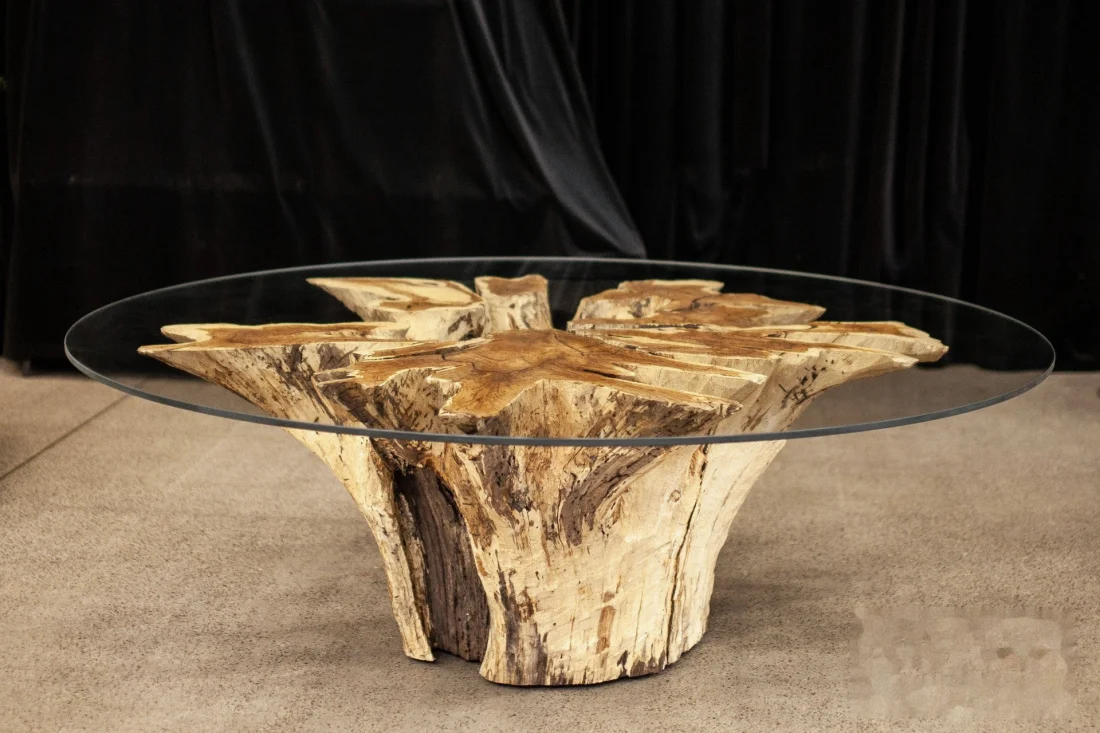
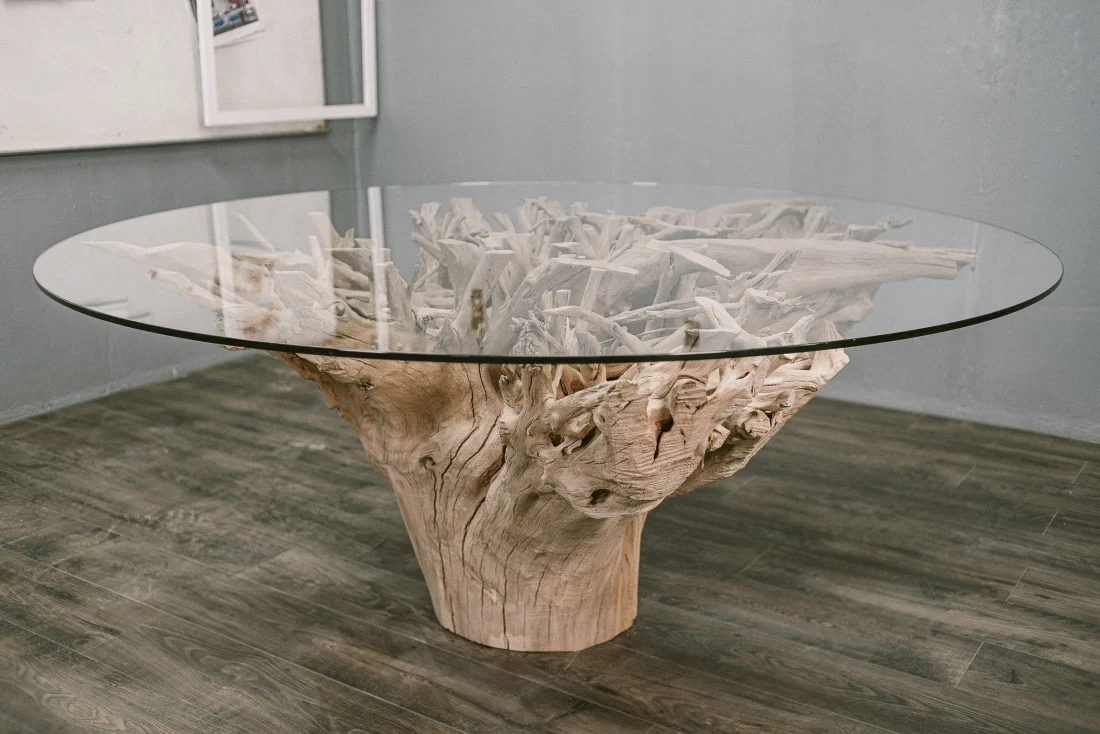
Sequoia takes its name the honest way: the base is a genuine slab of burl, wide and knotted the way only a very old tree produces, left whole rather than cut down to a more manageable shape.
A large round sheet of glass rests on top of it, big enough to seat a proper dinner party around a piece of wood that was never meant to be a table until someone decided it should be. There is only one size, and there could not reasonably be more, a base like this does not come in standard dimensions. It is the collection's largest gesture, a table built around one exceptional piece of material rather than a repeatable design, meant to anchor a room on its own terms.
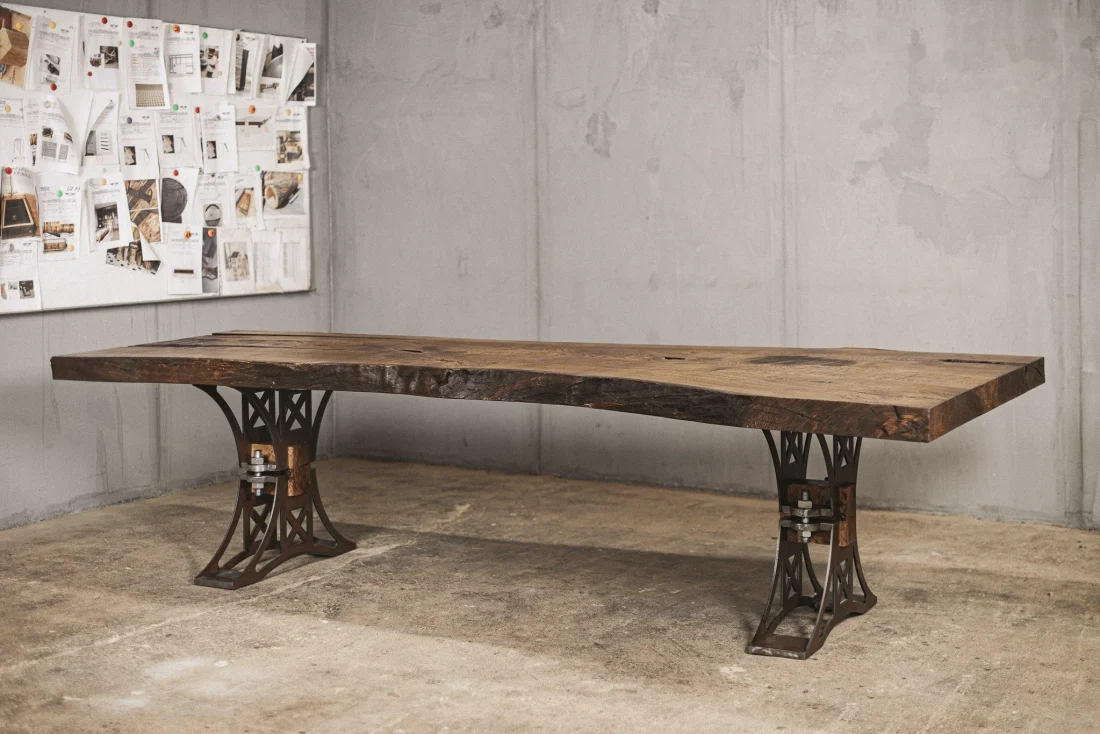
Teton is built at a scale the name earns: a long, live-edge oak top, the kind that comes from a genuinely wide old tree, set on a base of slender brass-toned steel rods running vertically beneath each end, closer to a fence than a leg in construction.
Two sizes make up the collection, and even the shorter of the two is built for serious seating, since the whole point of a top this size is the number of chairs it can hold around it. It suits a room built around entertaining rather than everyday meals, a great room, a table meant to seat a dozen without anyone squeezing, and the brass rods catch just enough light to keep that much table from reading as heavy.
Paros is finished pale enough to be mistaken for quarried stone at a glance, a bleached, almost chalky oak top with a whitewashed edge, set on two flat, block-shaped legs in the same tone.
Look closely and the grain is unmistakably wood; from across a room, the effect reads closer to limestone. Three sizes make up the collection, one considerably longer than the other two, all sharing the same bleached finish and plain block legs. It suits a bright room best, the pale finish wants daylight the way a darker oak does not, and works equally well as a compact dining table or, at its longest size, a proper conference table. Either size handles daily meals without showing wear the way a darker top might.
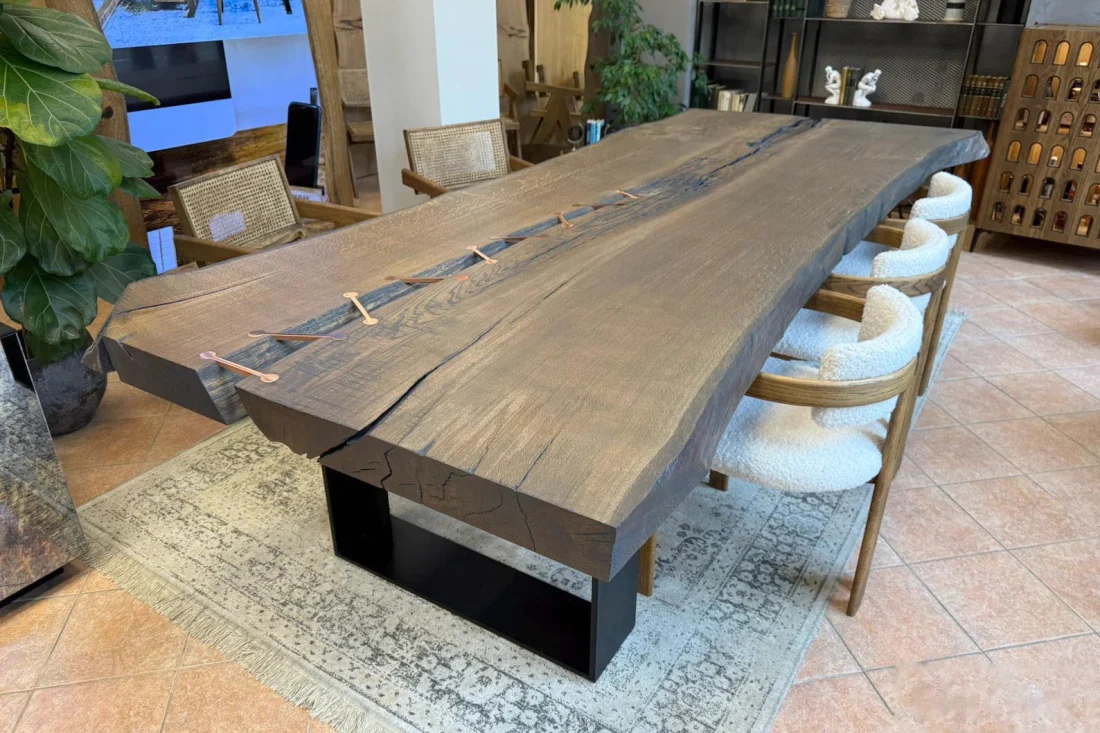
Catskill takes its shape from the landscape it is named for, high ground cut through by water, which shows up literally in the top: a wide, live-edge oak slab with a dark seam running the length of it, like a stream worked into the grain rather than added afterward.
Angled black steel legs, set at a slight lean, carry the weight without hiding the wood. At sixteen sizes, this is the largest collection in the group, running from a compact four-top to a table long enough for a dozen chairs, all keeping the same seamed top and leaning leg. It wants a room built around it rather than the reverse, the kind of table people gather at because the top gives them a reason to look down as much as across.
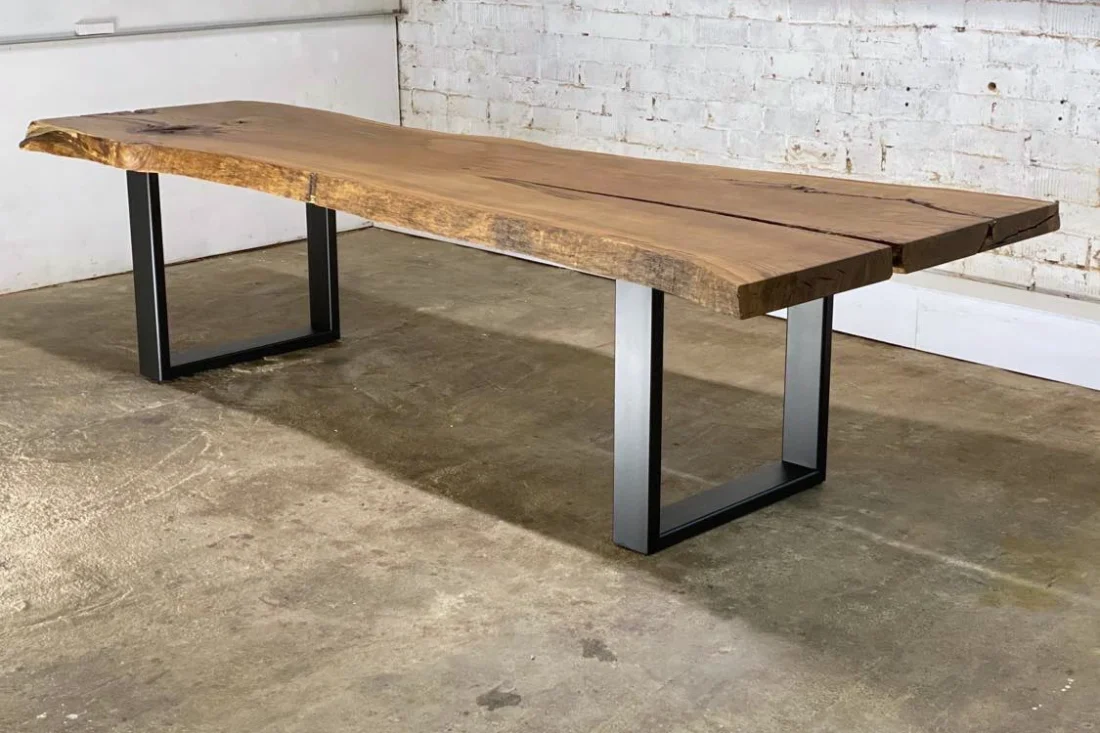
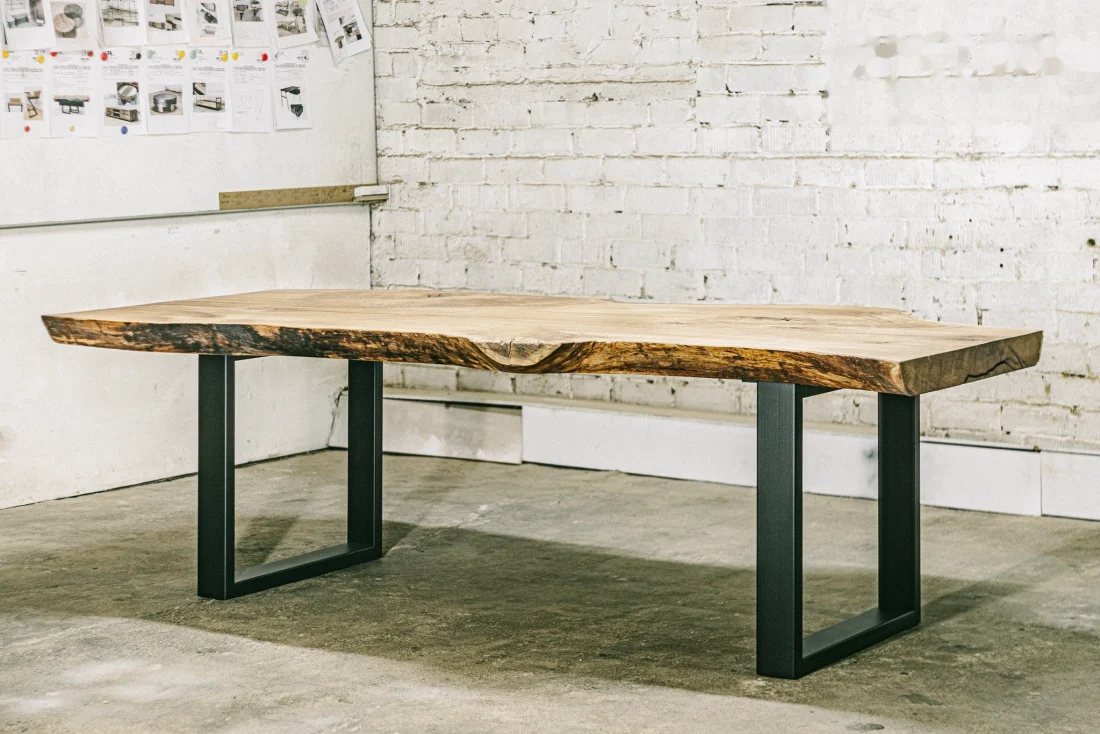
Rotterdam is a long, single board of oak, edges left natural on both sides, set on a pair of black steel legs bent into simple U shapes.
Some versions finish the steel with a deliberate rust patina instead of a flat black, which changes the whole temperature of the piece without touching the wood at all. Seven sizes make up the collection, most running long, built for a proper dining room rather than a breakfast nook, all sharing the same U-leg construction underneath. It photographs best from the end, where the natural edge and the plain steel leg line up into one continuous shape. Ten place settings around it do not feel like a stretch. Either finish ages honestly, showing the marks of actual use over time.
Valencia's base is a simple X, two crossed black steel beams doing the entire job of support beneath an oak top left in a natural or walnut tone depending on the piece.
There is no apron, no additional bracing — the cross does its work in plain sight, which is unusual for a base this stable. Eight sizes make up the collection, round and rectangular both, all built around the same crossed-leg logic underneath. Because the base sits mostly at the center, it leaves the legroom around the edges completely open, which matters more than it sounds like it should once eight people and eight chairs are actually seated around it. It suits a room that hosts often, where the extra chair should never feel like an afterthought.
Beaufort carries the character of a low-country town, old, unhurried, a little overgrown, mostly through the base: a set of black steel legs cast into an irregular, branch-like shape that looks more grown than manufactured.
The oak top stays plain and flat above it, letting the legs read as the sculptural element they were clearly designed to be. Eight sizes run the collection, all keeping the same organic leg casting regardless of tabletop length or finish. It suits a dining room that wants one unmistakably handmade element without turning the whole table into a showpiece — the top still sets and eats like ordinary oak, the legs just happen to look like nothing else in the room. It ages the way old ironwork does, gaining character rather than losing it.
Asheville keeps its live edge honest, the natural, uneven line of the tree left untouched on both long sides of the oak top, and sets it on a pair of black steel legs shaped like flat wedges, angled just enough to feel sculptural without losing stability.
The grain does most of the talking; the legs are there to let it. Four sizes make up the collection, each with its own edge and its own figuring, since the wood dictates the final shape as much as the design does. It suits a room that wants the outdoors acknowledged without actually building around a rustic theme, one true material, left alone, is usually enough on its own. Each edge tells its own story, since the tree it came from never repeats.
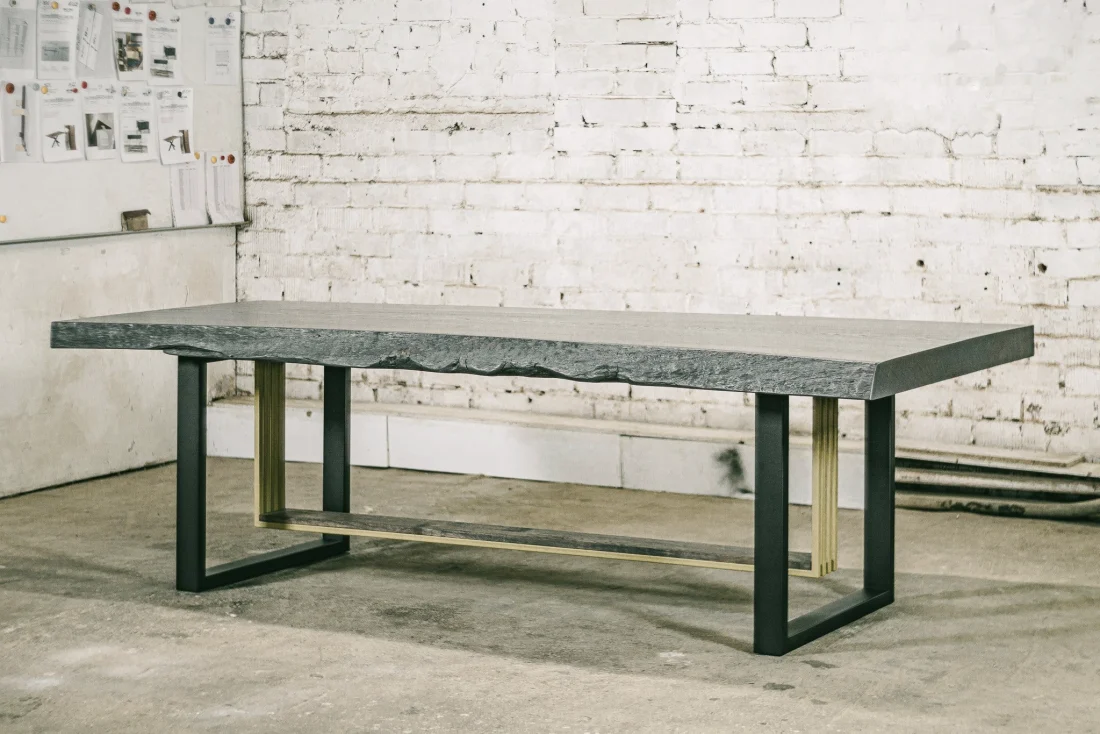
Verona's top looks quarried rather than milled, a rough, stone-gray slab with a fissure worked into one long edge, closer to a piece of broken rock than a sanded board.
Underneath, a black steel frame carries the weight, with a slim brass rail running the length inside it, just visible between the legs, working as a stretcher and a glint of warmth against all that gray. Eight sizes make up the collection, each keeping the same textured top and the same brass detail hidden beneath. It wants a room confident enough to hold a table this heavy-looking, and looks best under low light, when the brass catches something and the stone-toned surface goes nearly black. During the day, in flat light, it reads simply as a solid, quiet slab.
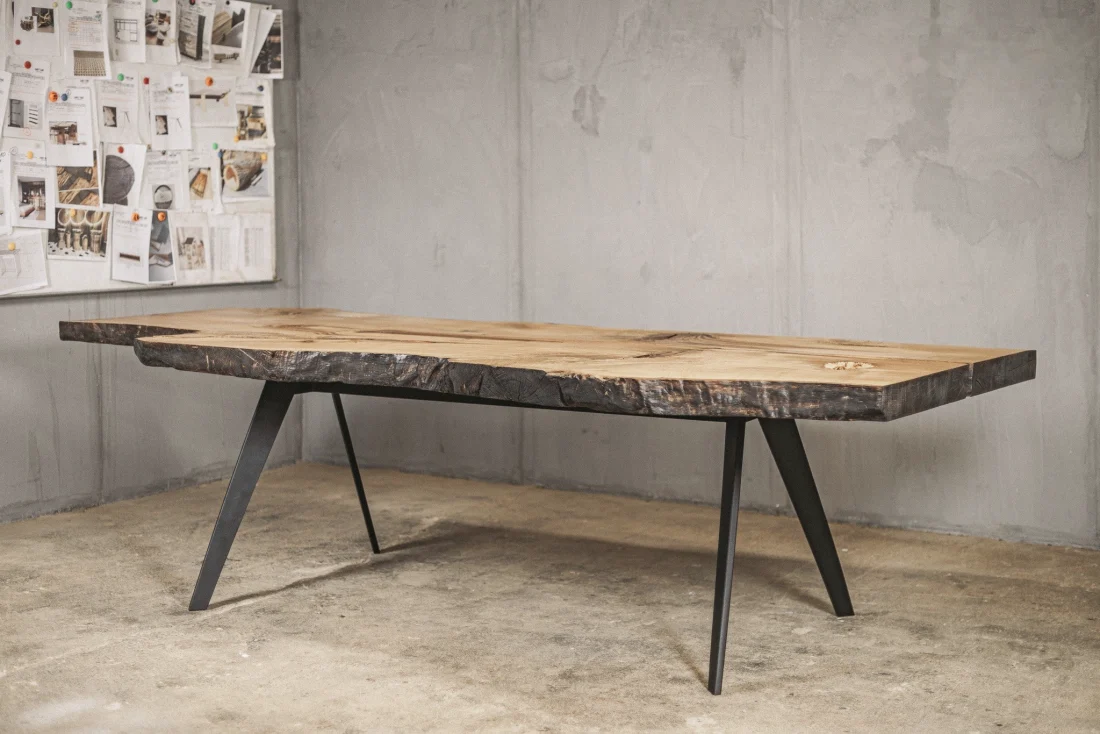
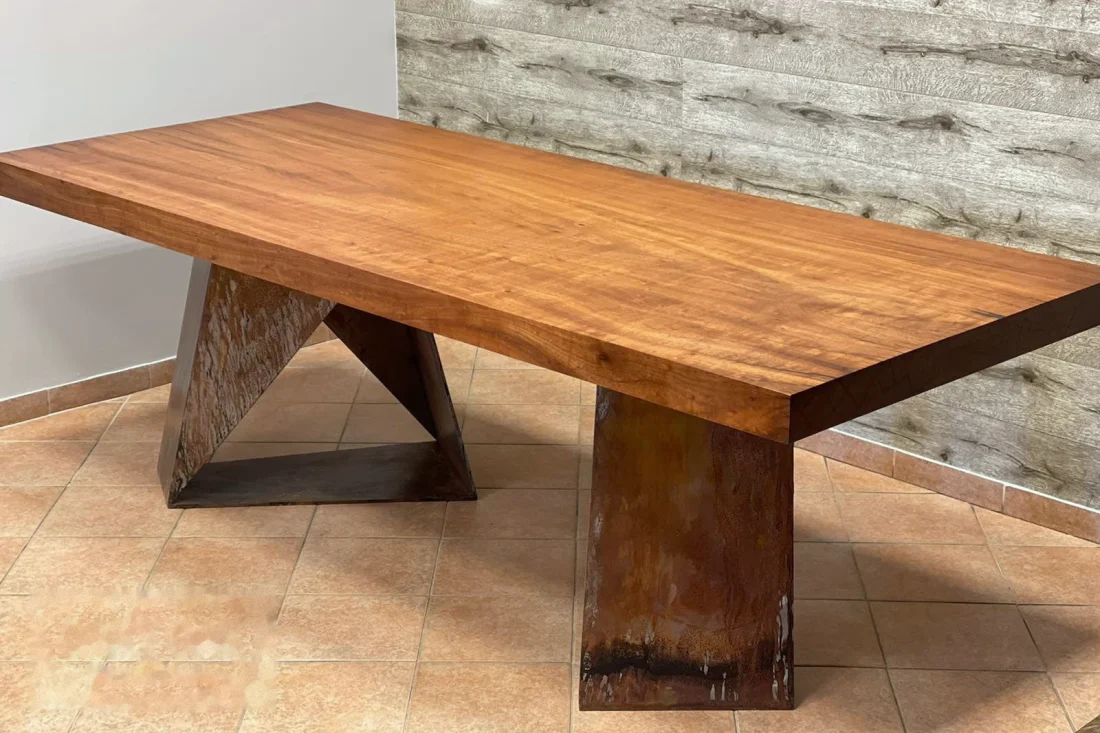
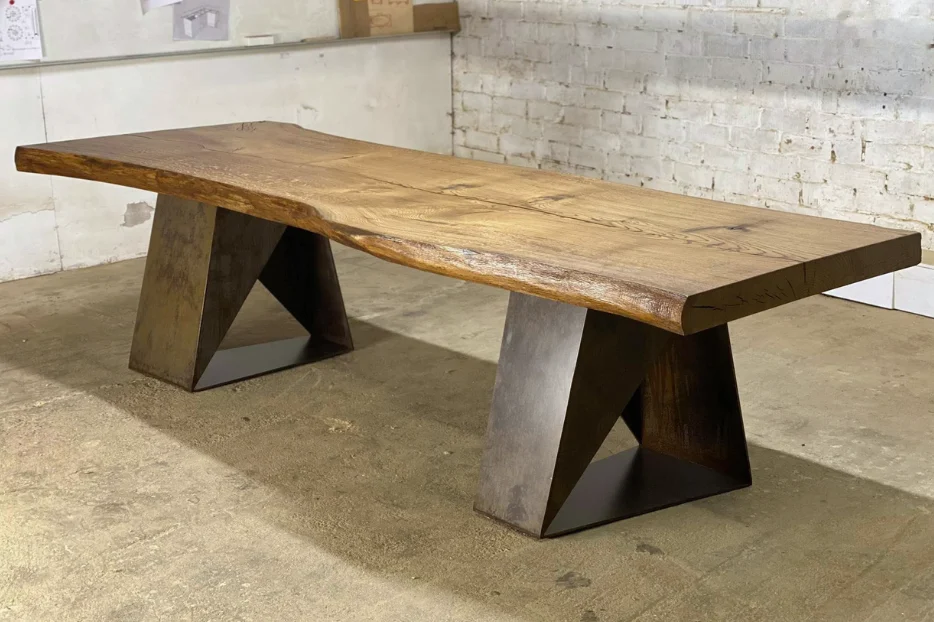
Ardennes pairs a substantially thick oak top, the kind you notice at the corner before you notice anything else, with a pair of black steel legs bent into a sharp V, angled outward for stability like a sawhorse stripped to its essentials.
The contrast between the heavy wood and the thin, sharp steel is the whole design. Five sizes make up the collection, some finished in a deep ebony stain, others left closer to natural, all keeping the same V-leg base underneath. It carries its weight visually as well as literally, a table that looks like it would take four people to move, which, depending on the size, it probably would. It takes a scratch or a water ring the way old, honest oak always has.
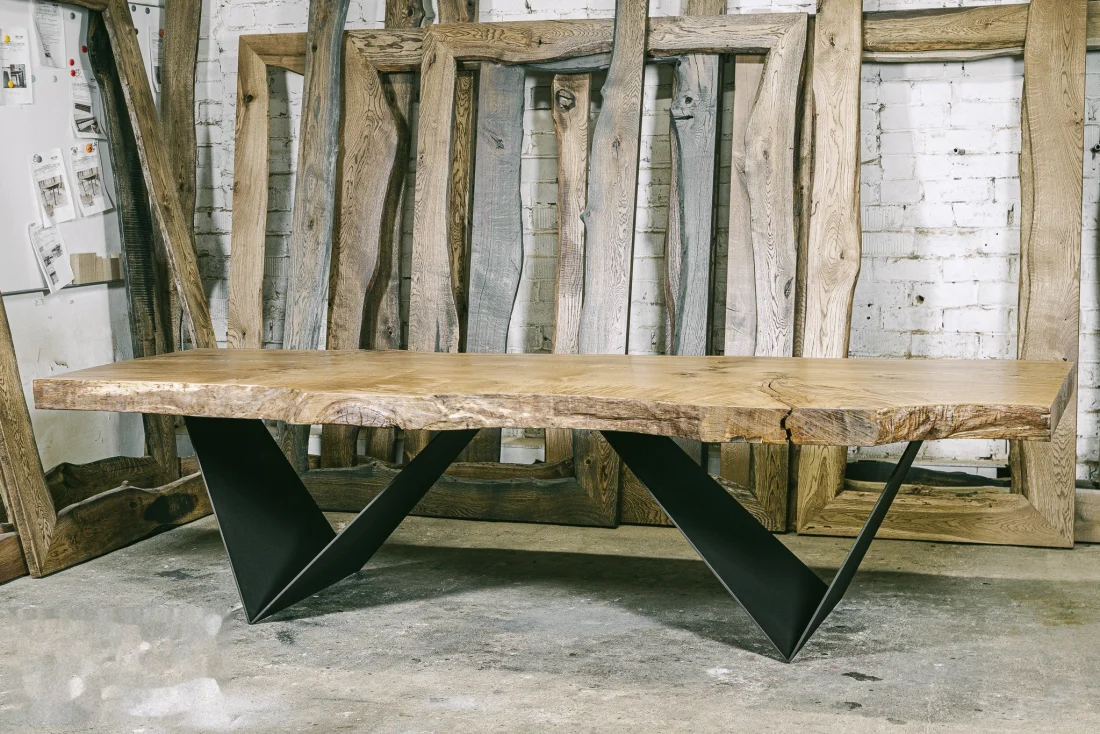
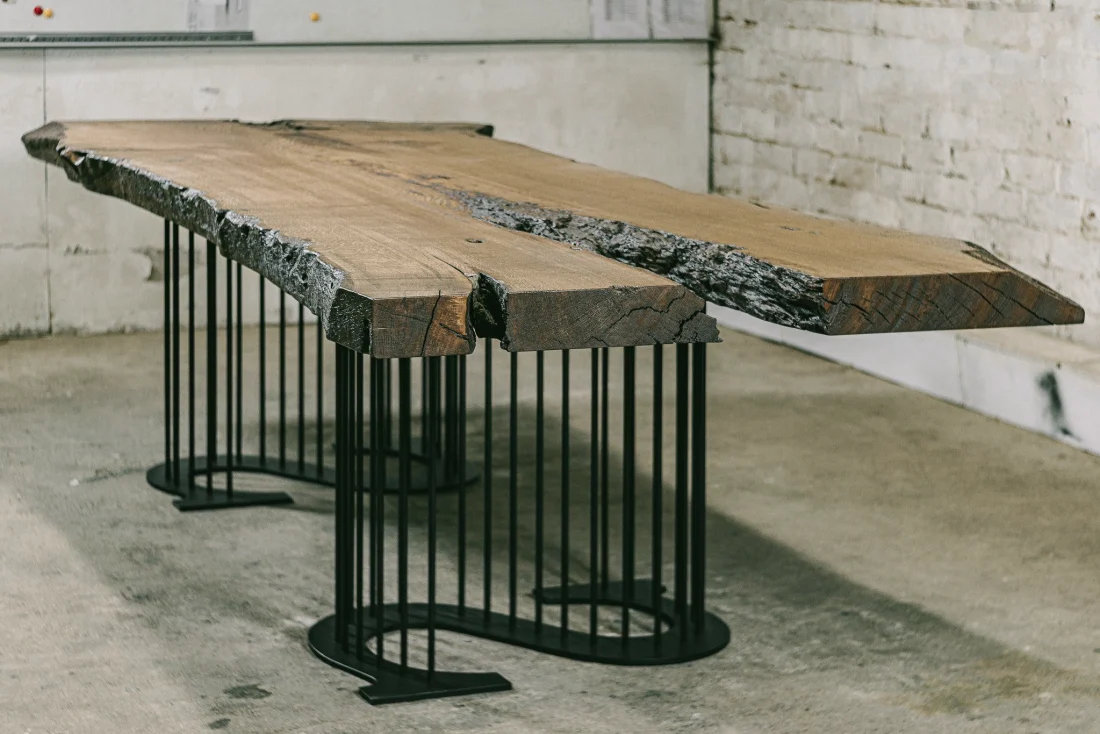
Santa Monica sets a live-edge oak top on a base built from dozens of thin black steel rods, bent into a rounded, wave-like cage at each end rather than standing straight up and down.
The effect underneath is almost aquatic, ribs curving the way a hull's frame does before the planking goes on top. Two sizes make up the collection, both long enough to read as a real dining table rather than a breakfast piece, both sharing the same curved rod base. It suits a room with some drama to spare, high ceilings or a view worth competing with, since the base is built to be seen from underneath as much as from the side. It holds up well near natural light, where the rod shadows shift through the day.
Tirol is built the way a mountain farmhouse table has always been built: a thick oak top set on a trestle of heavy, squared beams, joined without any hardware you can actually see.
The wood is finished dark, close to the color of a beam that has sat near a fireplace for a few decades, and the trestle makes no attempt at delicacy. Nine sizes cover everything from a modest six-seat table to one long enough to seat a dozen, all sharing the same trestle-and-beam construction regardless of length. It belongs in a room with a fireplace, or at least the idea of one, somewhere the table is expected to outlast several rounds of everything else around it. Guests tend to linger longer at this kind of table than at a lighter one.
Vail carries a live-edge oak top on a pair of black steel legs bent into simple A-frames, the kind of angled support you would expect under a mountain cabin bench rather than a dining table.
The natural edge stays rough along both long sides, a reminder of the log it came from. Four sizes make up the collection, all keeping the same A-frame silhouette regardless of overall length or leg finish. It works well in a room with some height to it, vaulted ceilings or exposed beams, since the angled legs echo that kind of structural honesty rather than fighting it. Chairs of almost any style seem to settle comfortably around it. It sets up quickly too, since the two-leg construction leaves little to align.
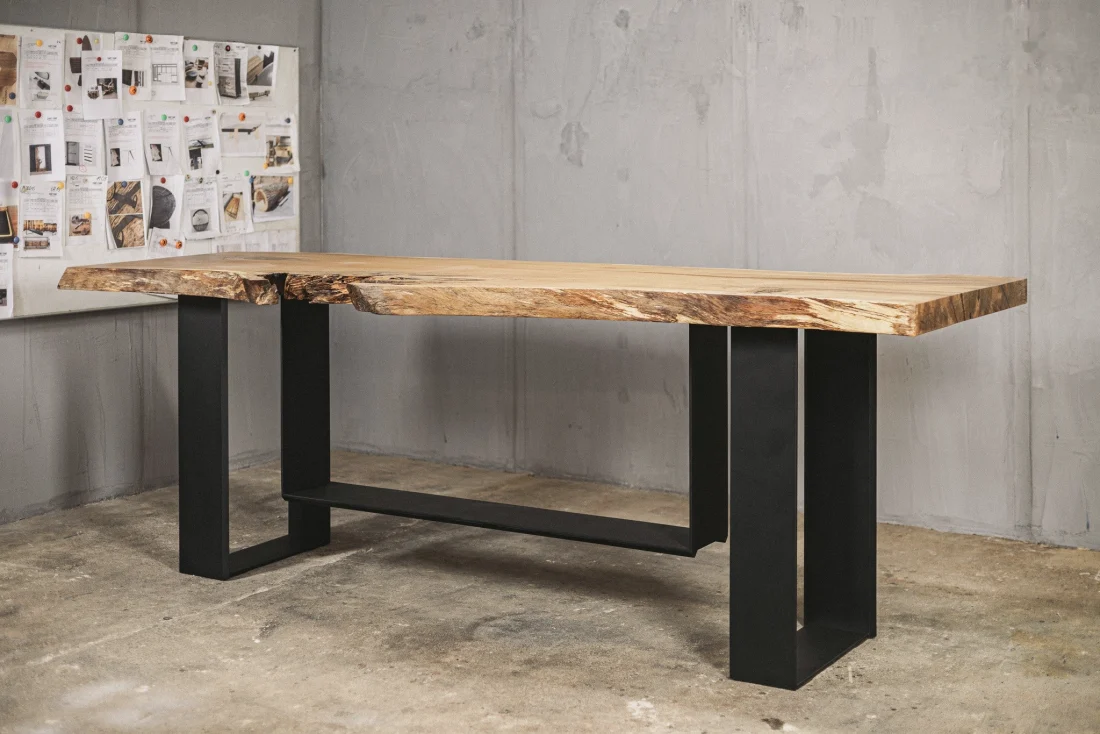
Denver keeps things simple: a live-edge oak top, natural on both long sides, set on two solid black steel blocks standing in for legs.
There is no taper, no ornament, nothing between the blocks and the floor, just enough mass to feel permanent under a heavy slab of wood. Three sizes make up the collection, the wood and figuring different in every piece since no live edge ever repeats. It suits a room that wants the wood itself to be the entire statement, with a base quiet enough to disappear once anyone actually sits down. Between the two blocks, there is enough open floor for a bench, a dog, or simply nothing at all. The finish only deepens with age, taking on more character with every year of use.
Bruges built its reputation on lace, made by hand in front windows for centuries, and on canals that gather pale light off the water.
This dining set pairs an oak table — straight-lined, warm, unremarkable in the best way — with chairs upholstered head to foot in a heavy white bouclé, textured like the lace the city is known for. The table does the structural work: solid oak, simple legs, nothing to distract from what surrounds it. The chairs, some with arms and some without, carry all the texture, their nubby white fabric catching light the way a lace pattern once did in a shop window. Around a long table, eight of these chairs read as one deliberate, quiet statement rather than eight separate pieces.
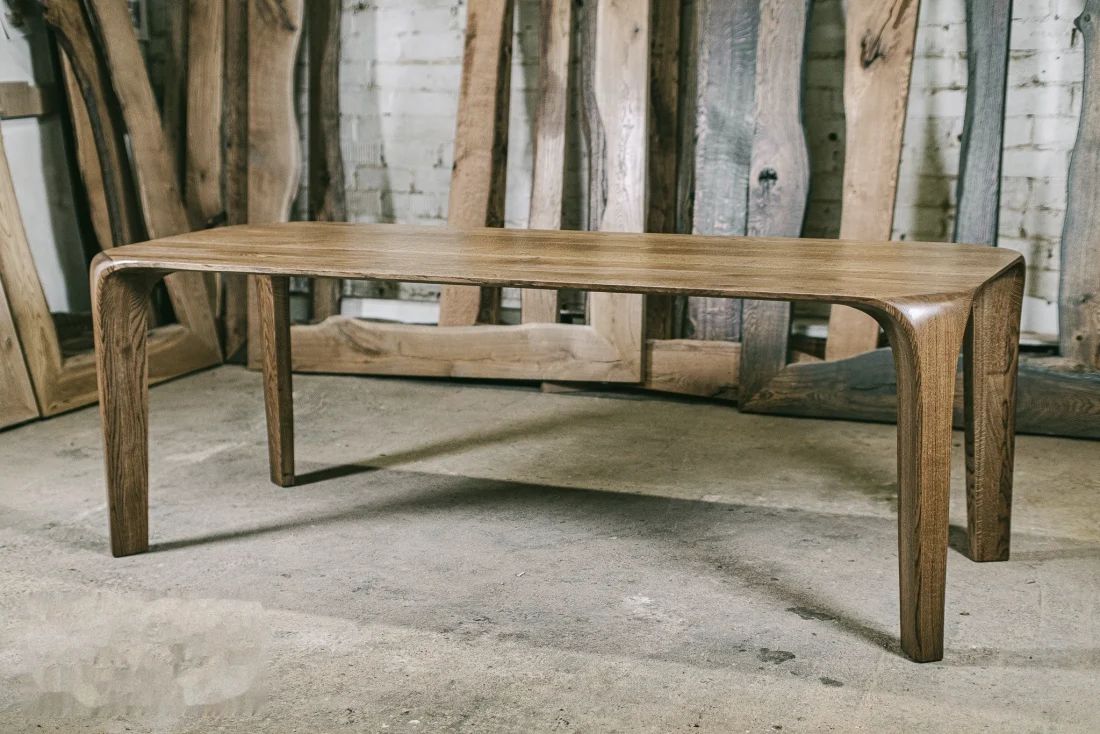
Amalfi's coast drops straight into the sea in dark, fluted cliffs, and this dining set takes its base from that geology — a run of vertical ridges in deep, walnut-toned oak holding up a long rectangular top.
The chairs echo it in miniature, each leg and armrest built from the same reeded, upright form. The wood is oak throughout, stained dark enough that the grain recedes and the shape takes over. Seats and backs are upholstered in a plain oatmeal fabric, the only soft note in an otherwise architectural set, with armchairs anchoring each end of the table and side chairs filling the run. It is a table for a room that wants gravity — evening dinners, a bottle open a while, no one rushing to clear the plates.
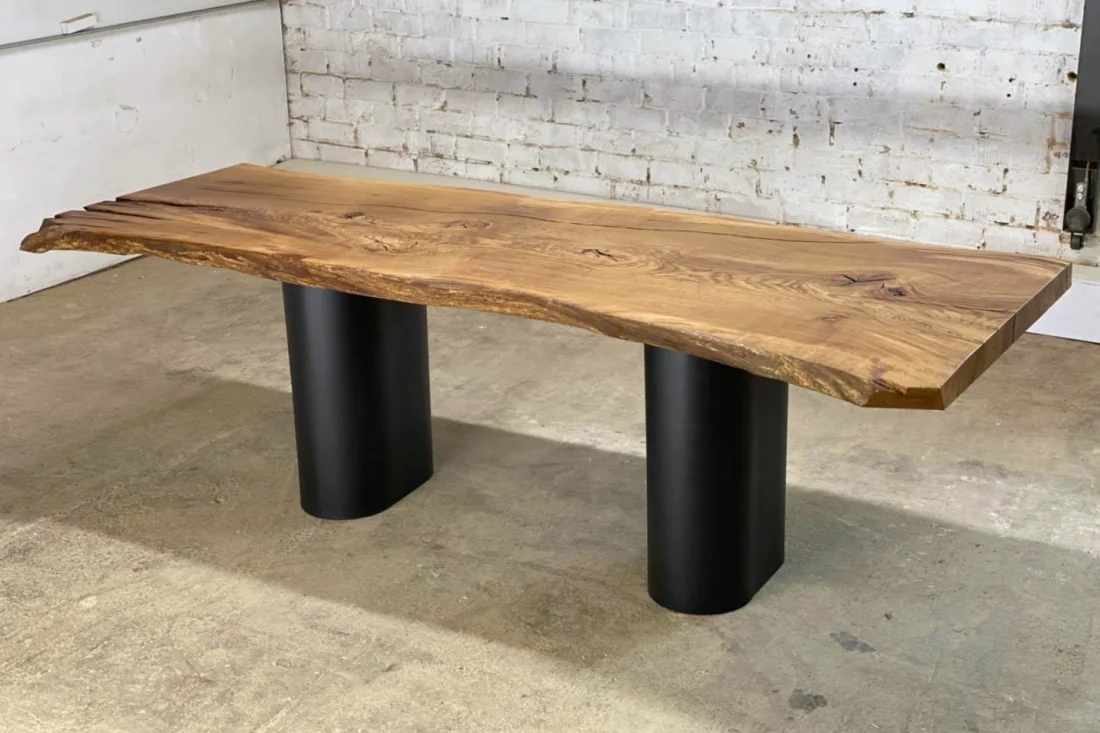
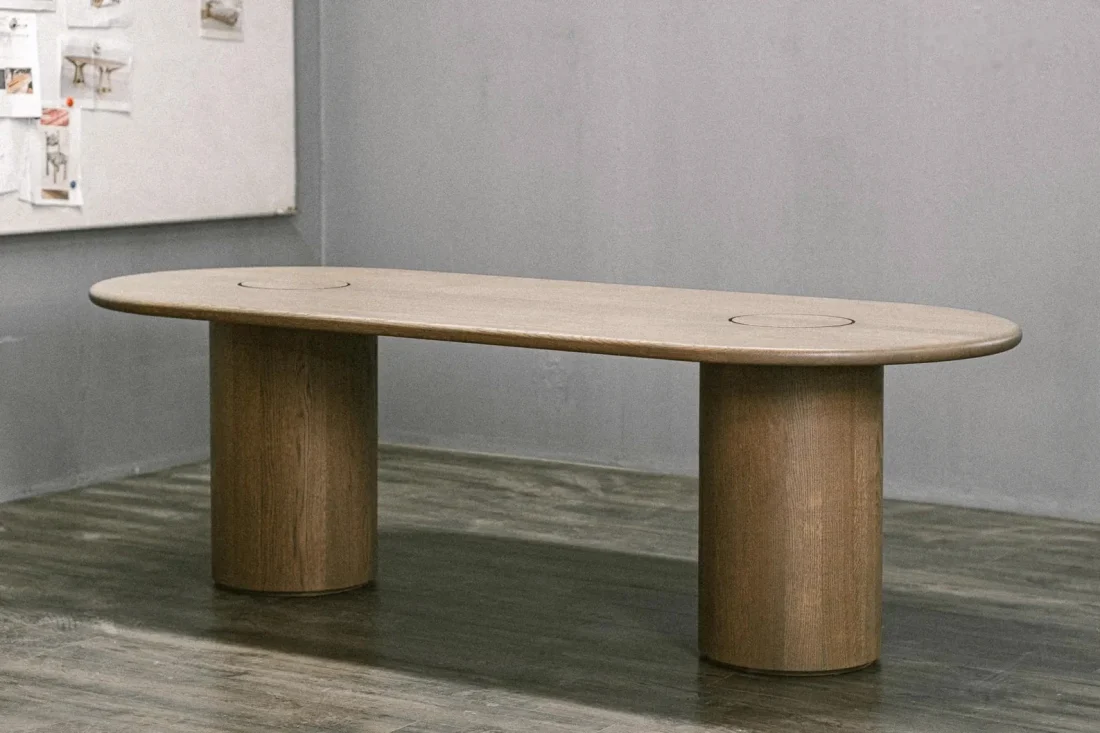
Sorrento's base is two plain cylinders, standing like a pair of columns rather than the usual four legs, wide enough at the footprint to feel stable and finished in the same light oak as the oval top above them.
There is no carving, no taper, just the honesty of a round post doing a round post's job. Six sizes make up the collection, all oval, all sharing the double-cylinder base regardless of overall length. It leaves generous legroom down both long sides, since there is nothing between the two columns to bump a knee against, which matters more at a table built for a long, slow dinner than it does on paper. The light oak tone keeps the whole piece from reading as heavy in a small room.
Budapest sets a round, live-edge oak slab on a base built like a birdcage turned upside down, vertical black steel wires forming a drum beneath the tabletop, open enough to see straight through.
The bark-edged rim of the top stays untouched, so the one perfectly circular element in the piece is the cage, not the wood itself. Six sizes make up the collection, each with its own live edge, since no two slabs come from the same tree. It works best where light can pass through the base from at least one side, near a window or under a pendant, so the wire structure throws its own shadow across the floor along with the table's. No two tables in the run ever throw quite the same pattern of shadow.
Vesuvio's base looks like it survived something, a trunk of oak, charred black and left in its raw, twisting form, flaring out at the top like roots reaching for a tabletop that is not actually wood at all.
A round sheet of glass sits directly on the blackened base, letting every knot and twist show through uninterrupted. Three sizes make up the collection, and because the base starts as raw material rather than a repeatable pattern, no two ever look quite alike. It works best as a centerpiece rather than a workhorse, somewhere it can be looked down into as much as eaten across, ideally under light that catches the char without washing it out. It suits a room built for conversation more than for daily paperwork.
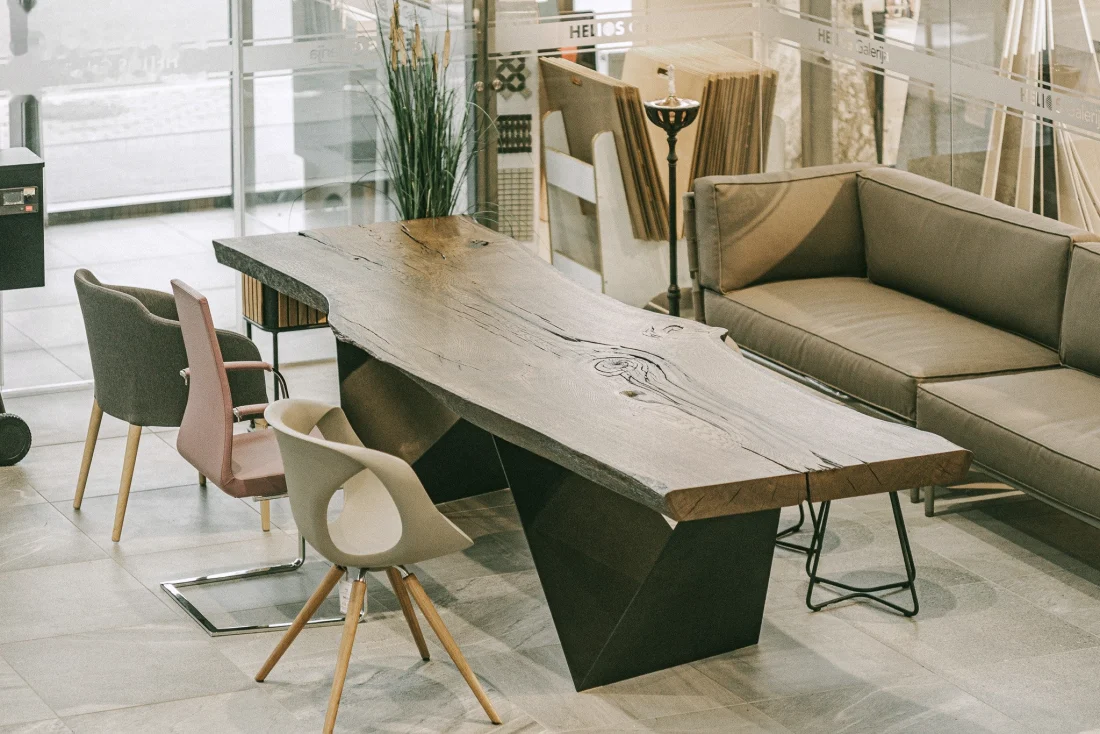
Granite valleys wear their history in cracks and weathered faces, and this table's top does something similar: a live-edge oak slab, its surface textured and burled, with veins of resin run through wherever the wood had split.
Black steel legs, bent into a sharp V on each end, hold it with no stretcher bar breaking up the view underneath. The resin is functional as much as decorative — it stabilizes a slab that would otherwise be too fractured to use as a tabletop, and it catches light differently than the oak around it. Centered in front of a sofa, it reads as one solid piece of landscape brought indoors rather than a table built to look rustic. No two tops in the collection show quite the same crack pattern, since no two slabs split the same way.
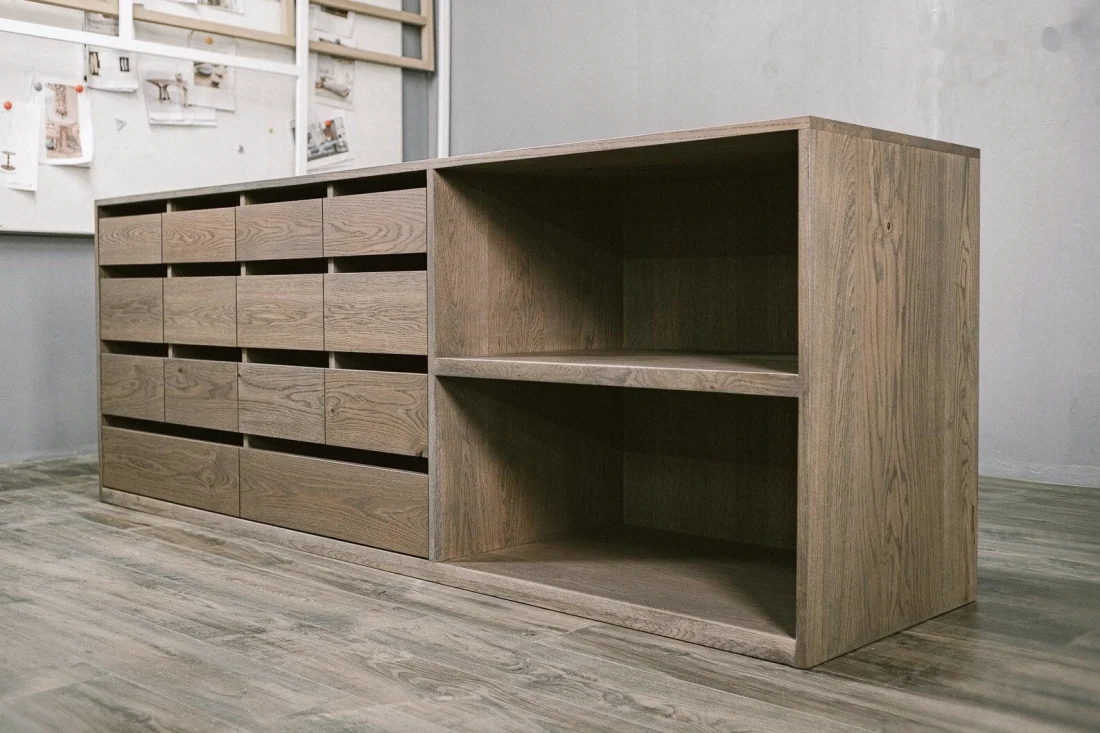
Trieste sits where the Adriatic runs unusually deep and dark right up to the shoreline, and this console takes that same deep, near-black tone — solid oak finished in a dark, almost olive-black stain, built as a run of open cubbies rather than closed doors.
Five sizes make up the collection, from a compact unit to one stretching well past six feet, but the finish and the open-box construction hold constant throughout. Without doors, the piece reads lighter than its dark color would suggest, each compartment visible and easy to reach into rather than hidden. Set below a television or along a media wall, the dark tone keeps it from competing with whatever is on the screen, which is precisely the job a piece like this has to do.
Tile facades in shifting patterns cover half the buildings in this city, and this cabinet borrows that patchwork logic in wood instead of ceramic: mismatched oak tones, walnut and antique and natural side by side, joined into a single frame where no two sections match.
A gold-toned metal base or black steel frame carries the weight underneath. No two pieces in the collection repeat the same arrangement of tones — the wood is reclaimed and sorted by hand, so the pattern stays genuinely unrepeatable rather than printed to look that way. It works as the one loud piece in an otherwise quiet room, the kind of cabinet a guest asks about before asking about anything else. No description quite prepares a visitor for the actual mix of tones up close, which is rather the intent.
Nothing on this cabinet asks to be noticed, and that is the entire design brief.
Flat door fronts run edge to edge in a muted black or walnut-toned oak, no visible hardware, no molding, no transition between drawer and door beyond a thin reveal line. A leather-wrapped drawer front appears on one version, oak veneer on another, but the silhouette never changes. It is a tall, narrow piece more than a wide one, built for a hallway or a bedroom corner rather than a main wall. In a room with more decorated furniture around it, this is the piece that lets everything else be the point — which, done well, is its own kind of statement. A room built entirely around restraint needs exactly one piece like this to prove the restraint was intentional.
Marble quarries gave this piece its name and its top: a slab of natural white stone, thick enough to read as solid rather than veneered, set over a cabinet of dark oak.
Two basins can be cut into the stone side by side, plumbing routed through black steel legs that keep the whole cabinet floating just off the floor. The drawers below run wide and shallow, sized for the flat clutter of a bathroom rather than deep storage. Dark wood under white stone is an old contrast, and it still works here — the cabinet recedes, the stone catches every bit of light in the room, and the whole vanity looks lighter than its weight. It suits a primary bathroom built around two people getting ready at once rather than one person passing through.
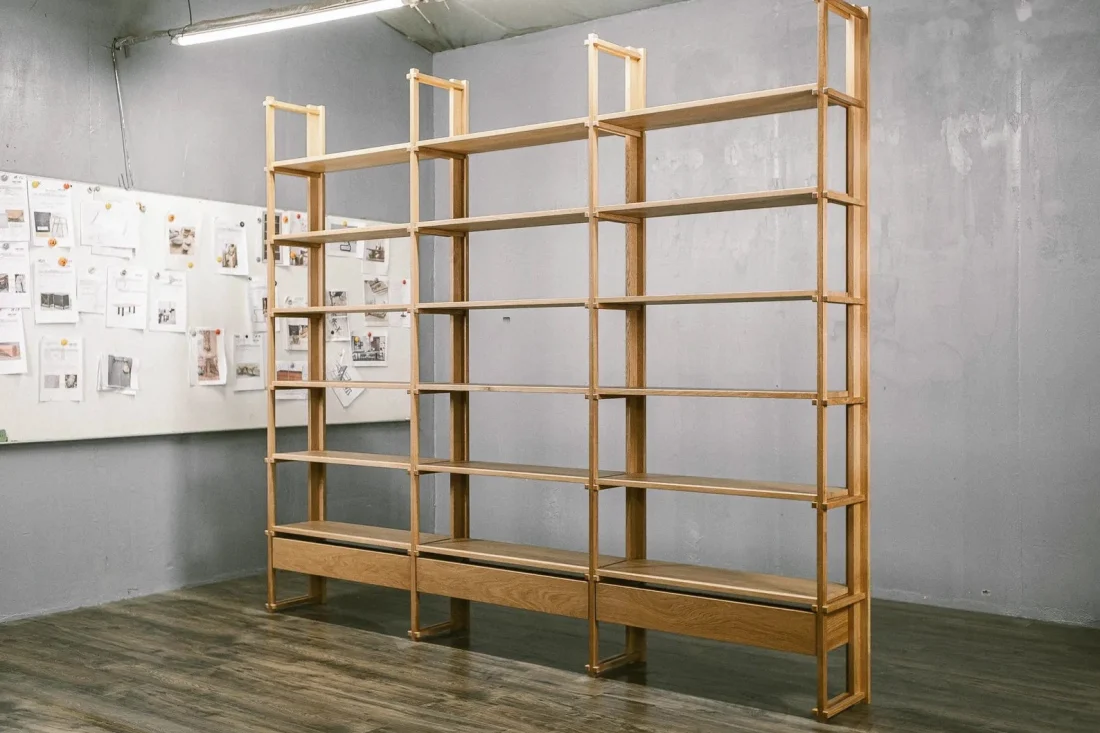
Mayfair's townhouses climb straight up in narrow, elegant rows, tall sash windows stacked floor over floor, and this shelving collection borrows that verticality outright.
Built mostly from solid oak, with select pieces framed in dark steel, the units rise well past head height on slim, ladder-like uprights, open shelves running the full span. The oak is left natural in most pieces, pale and straight-grained, occasionally shifting to a walnut tone with a black steel edge for contrast. Nothing about the construction hides itself — the joinery between shelf and upright is visible by design, the whole thing reading as structure first, storage second. Against a tall wall, one of these fills the height a room actually has rather than stopping short of it.
Farmhouse kitchens in old stone villages keep their storage simple — plank doors, visible joinery, wood left close to its natural state — and this sideboard follows the same brief.
Solid oak runs the full length in a natural or lightly oiled finish, knots and grain left uncovered rather than sanded flat, doors built as single wide planks rather than paneled fronts. Tapered legs keep the whole piece light on its feet despite the length. It suits a dining room that wants storage without polish — plates and linens behind plain doors, nothing lacquered, nothing hiding what the wood actually looks like. It ages the way a farmhouse table does: a little more honest every year. Open it up and the interior is finished as plainly as the outside, no lining, no gloss, just more oak.
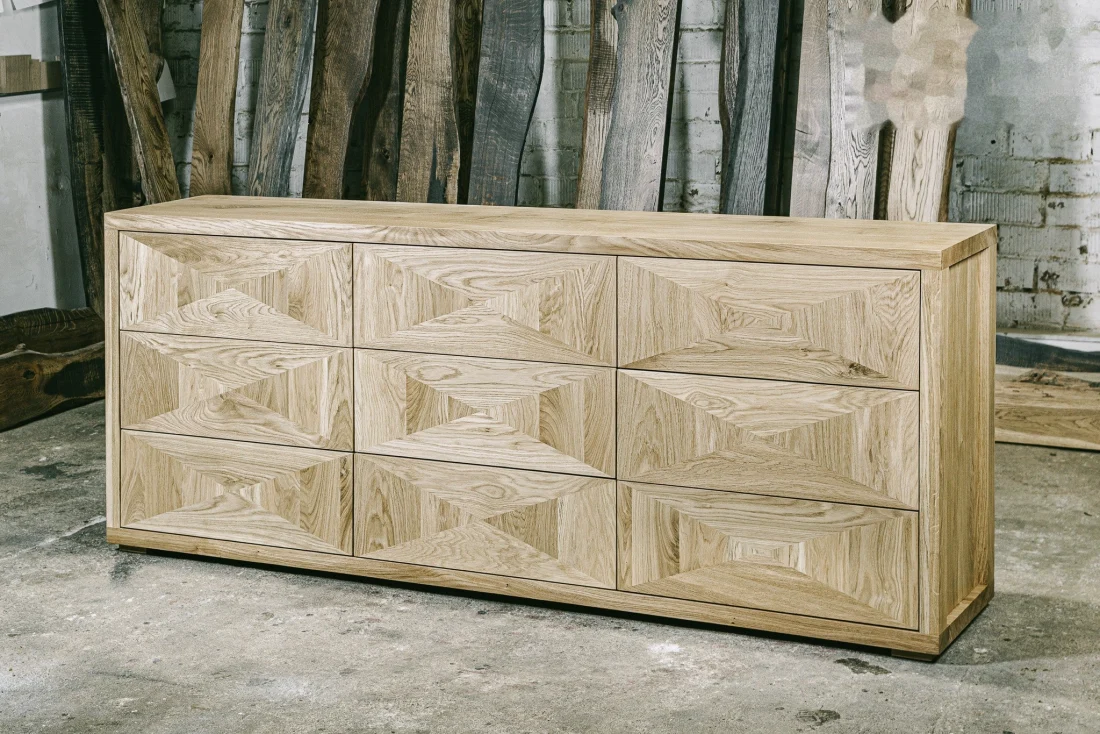
Coastal light does something particular to a room — it flattens shadows and warms every pale surface — and this console is built in a natural oak that catches exactly that kind of light.
The piece runs long and low, drawers flush across the front, resting on slim black metal legs that keep the visual weight near the floor. A version with a mirrored panel is available for entryways that want to bounce the light further into a room. Otherwise the design stays plain on purpose: no hardware to catch dust, no carved detail to interrupt the run of grain. It reads as the kind of piece that disappears under whatever is hung on the wall above it, which is exactly its job.
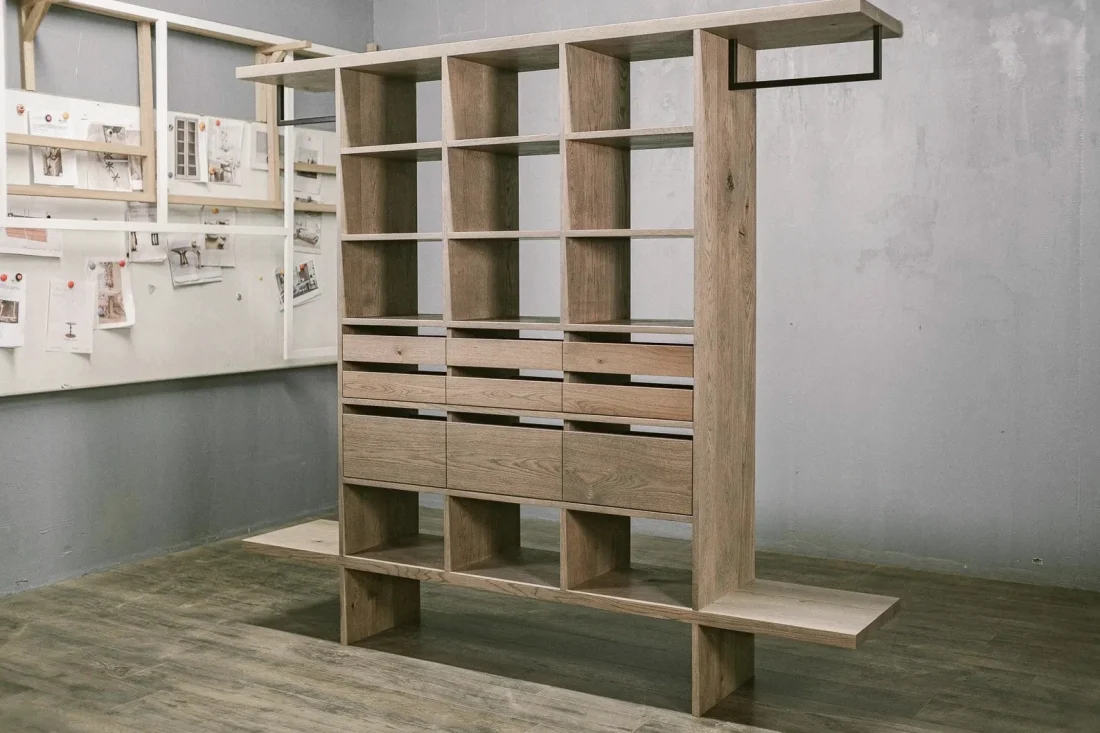
Phoenix takes its name from something that rises renewed out of what came before, and this wardrobe unit has that same open, rebuilt quality — a tall structure of oak compartments and shelving, deliberately left without doors, so the geometry of the piece is visible from every side.
It stands as a single large piece, built from natural oak throughout, with an angled shelf breaking the grid partway up and open bays running the rest of the height. Used as a room divider, it reads the same from either side, which is not true of most storage this tall. Set between two spaces, it separates a room without closing it off — light and conversation still move straight through the openings.
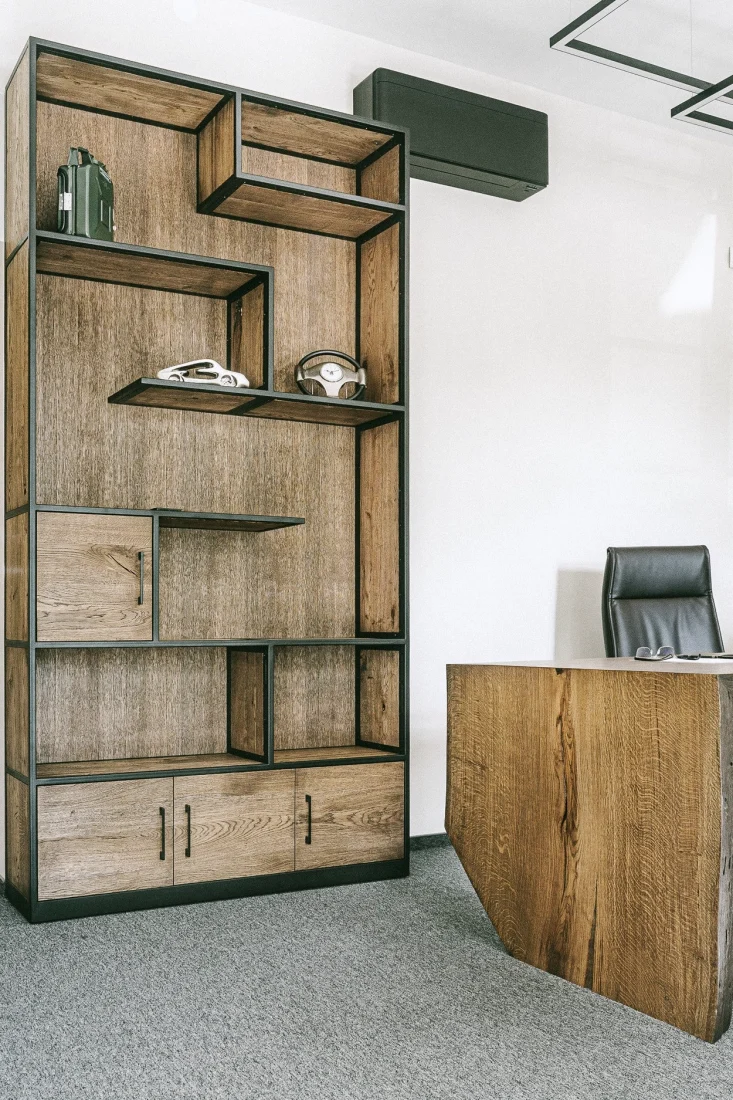
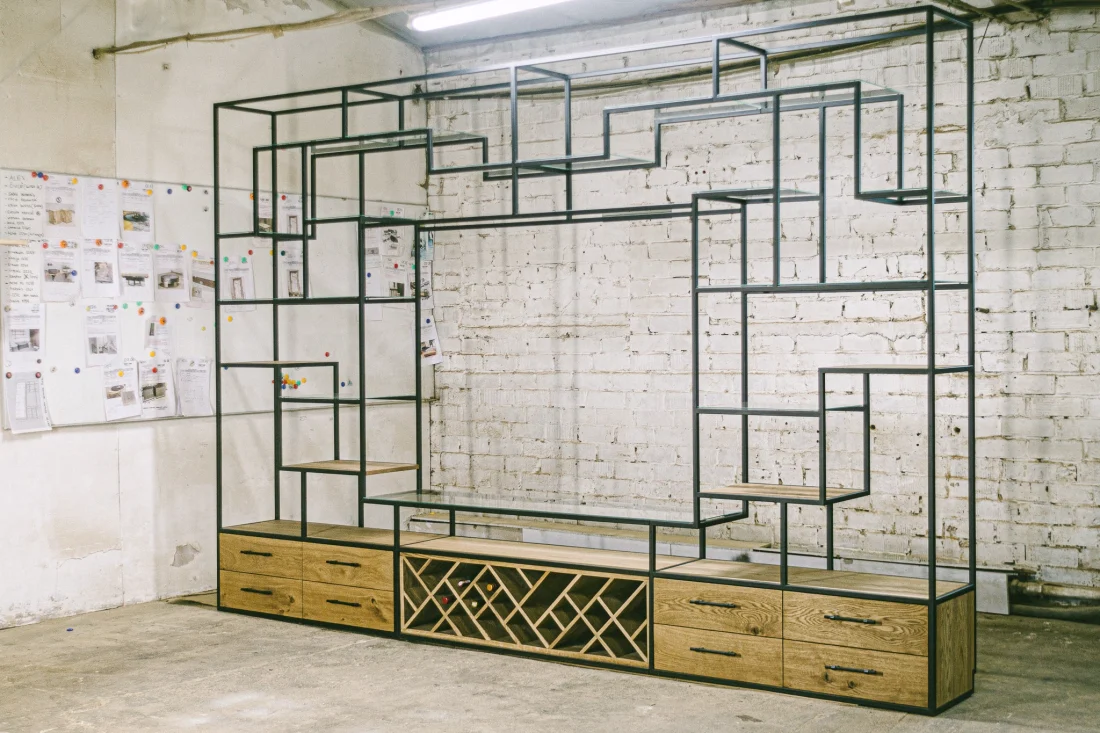
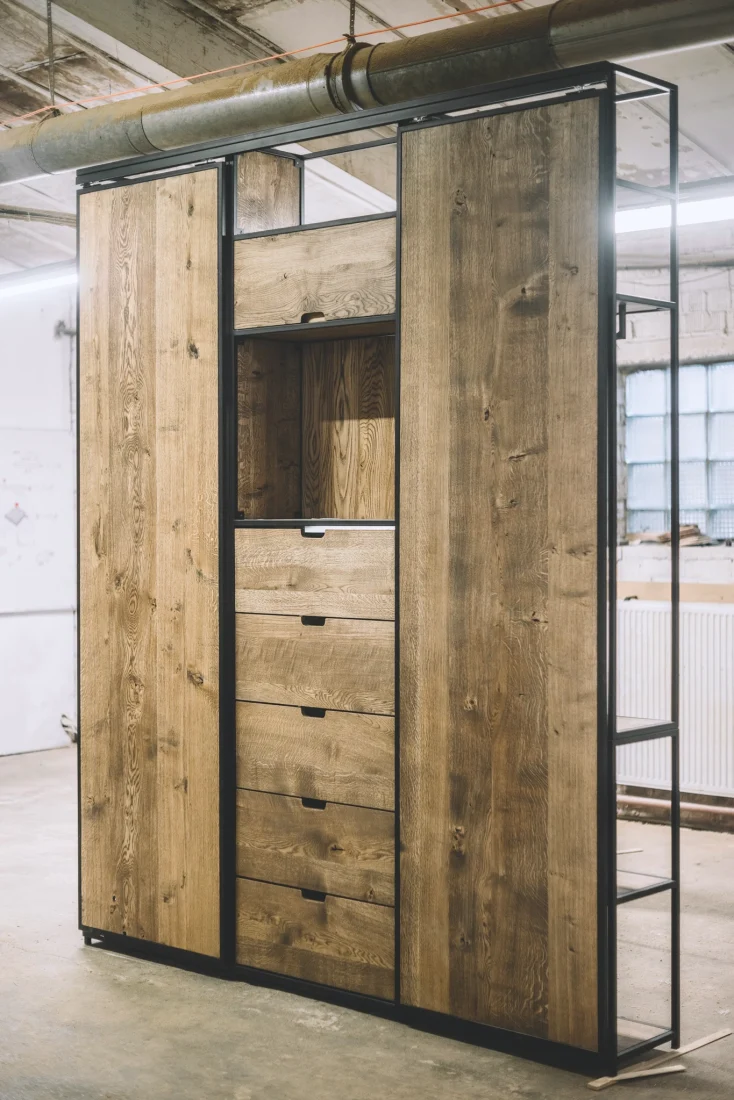
Tribeca's lofts were built as factories first, all exposed steel columns and grid windows, before anyone thought to live in them — and this shelving system keeps that raw, structural logic.
A tall black steel frame branches into an almost maze-like arrangement of verticals and horizontals, with oak shelves, drawers, and in some configurations glass and LED lighting set into the openings. Across the eight pieces, the steel grid is the constant; what fills it changes — a run of oak drawers along the base, a lit glass niche partway up, open bays elsewhere. Natural oak plays against black steel throughout, never fighting for the same attention. It suits a room that wants one dominant, sculptural object rather than a wall of matched furniture.
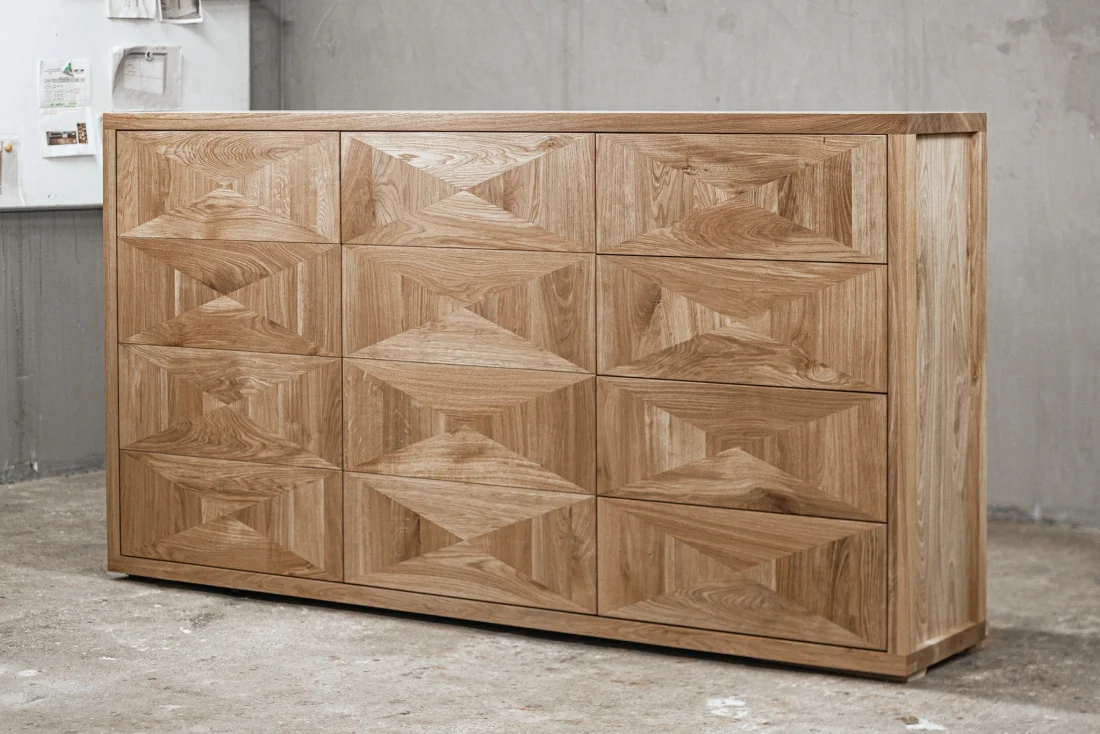
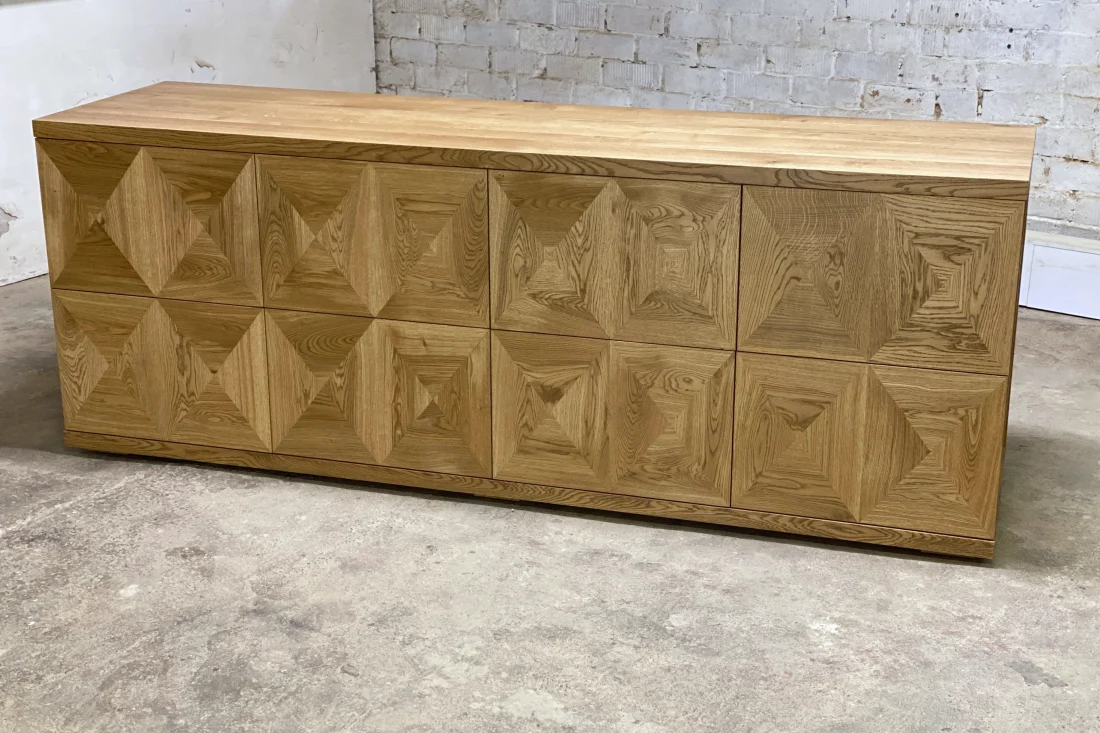
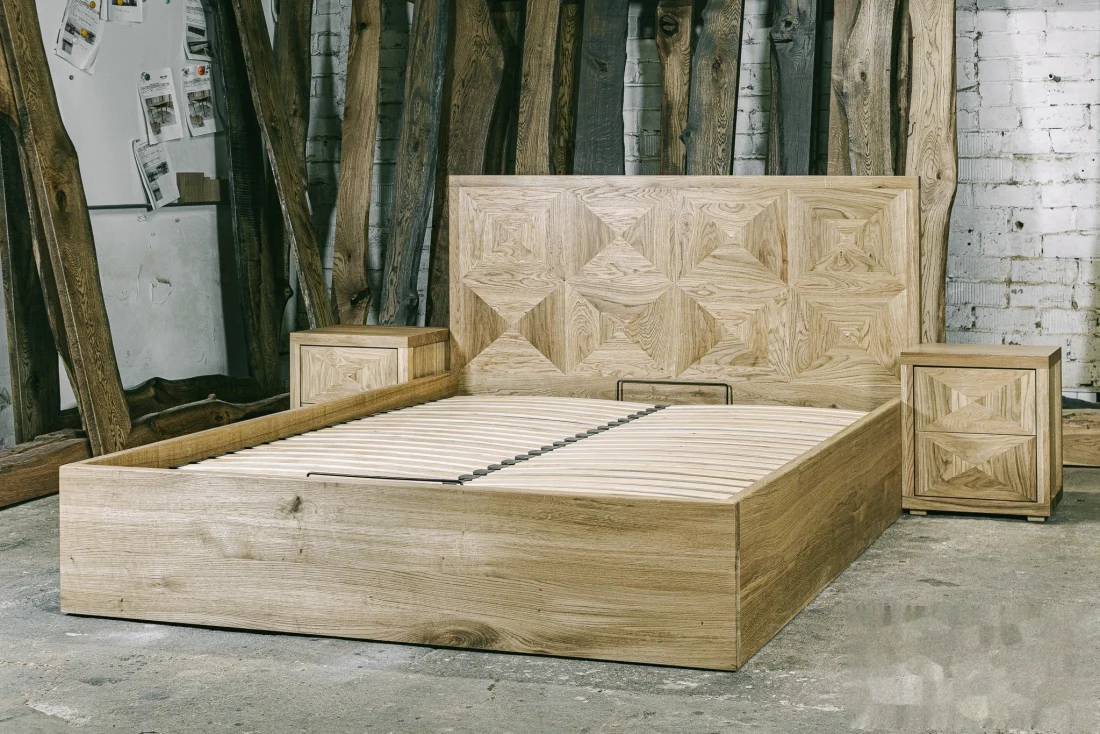
Moorish tilework across this city runs in tight repeating geometry, and this cabinet carves the same idea straight into solid oak: every door front cut into a grid of raised diamond facets, each one catching light from a slightly different angle.
The effect reads almost woven from a distance, more textile than woodwork, until you run a hand across it and feel the carving. Finishes range from a light natural oak to a near-black stain, with metal handles set flush into the pattern rather than breaking it. It works as the one carved piece in a room otherwise kept plain — the geometry does not need a matching table or chair to make its case. Passing a hand across the facets in low light is the best way to notice how deep the carving actually runs.
Cape Cod towns keep their houses pale against gray shingle and bright sky, and this cabinet takes that same light natural oak and sets it on a recessed black base, so the whole piece appears to float a few inches off the floor.
Panelled doors run flush across the front, the wood grain running horizontal and unbroken. A walnut-toned version with a black metal frame is also built for rooms that want more contrast. Either way, the recessed base is the trick: shadow under the cabinet reads as a gap, and a heavy piece of furniture ends up looking like it is barely touching the ground. It suits an entryway or a media wall equally well. Either placement lets the recessed base do its quiet trick of making a solid cabinet look barely there.
Ouray is a small town high in the Colorado mountains, the kind of place where a bedroom means heavy timber, deep quiet, and cold air outside the blankets.
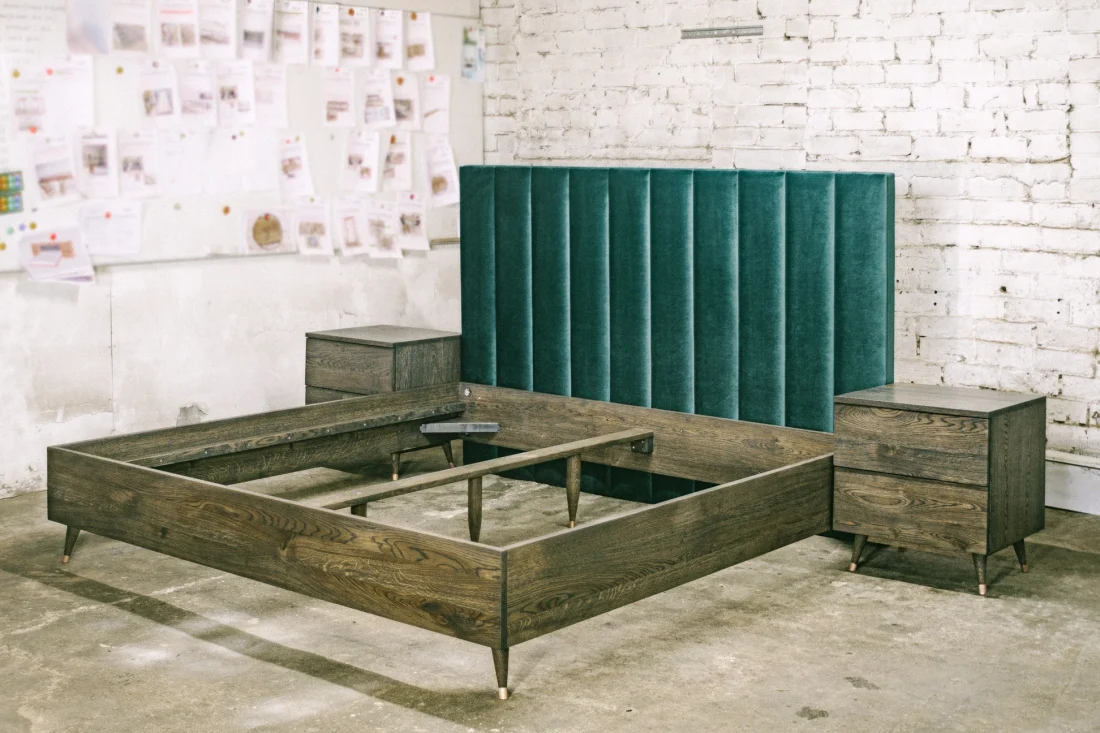
These beds carry that feeling. Wide oak platforms, low to the floor, with headboards that read as architecture — full panelled walls of oak, some with leather cushions set in where you actually lean. There is nothing decorative about the construction. The frames are solid oak throughout, joined to be slept on for decades and moved between houses without complaint. Several include floating nightstands built into the headboard wall itself, so the whole end of the room becomes one piece. A bed is the last thing you see at night and the first thing in the morning. This one earns both moments.
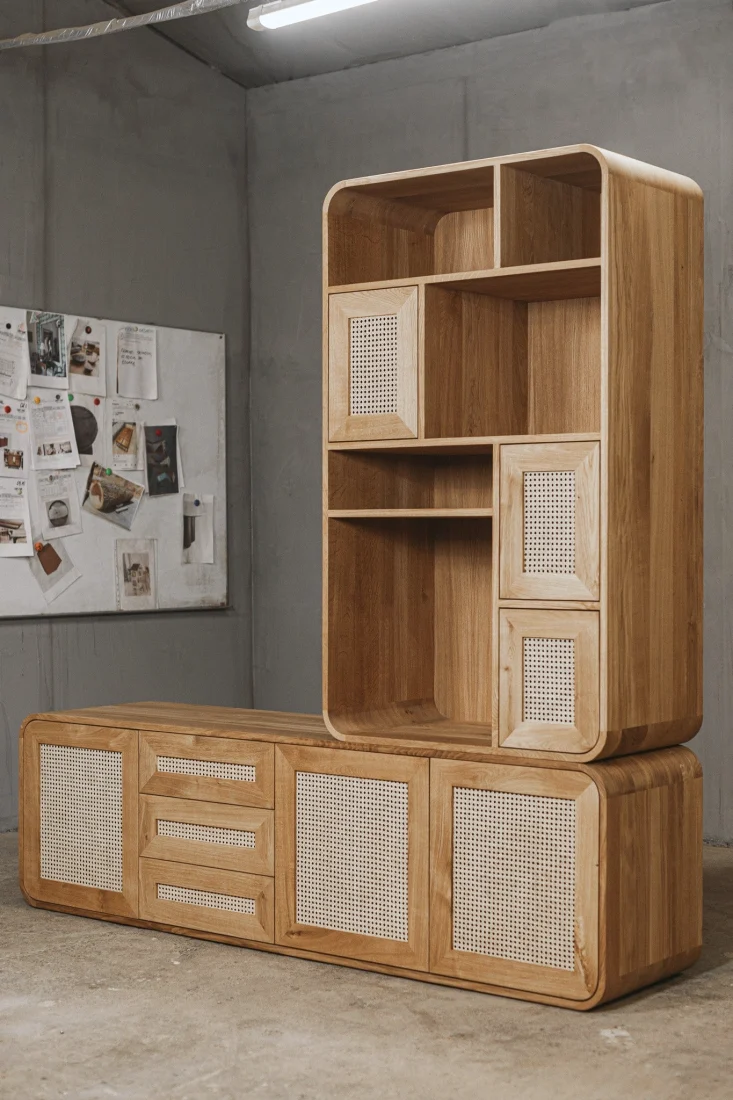
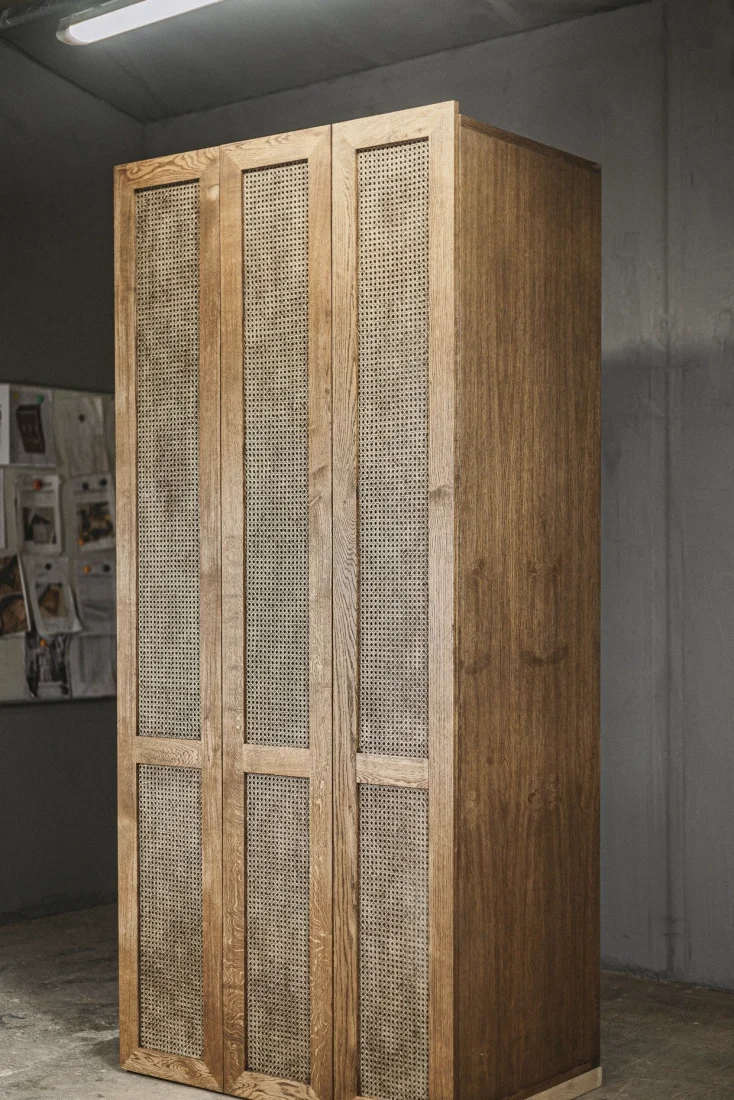
Menorca has a long history of hand-woven rope and cane work, made for boats and houses alike, and this wardrobe's door panels carry that craft directly — solid oak frames set with woven cane inserts instead of flat wood or glass, letting light and air move through even when the doors are shut.
Seven sizes make up the collection, in both natural oak and a deeper walnut tone, but the woven cane panel stays the identifying feature throughout, framed simply so the weave itself provides all the pattern. The oak carries the structural load; the cane does the rest. In a bedroom, it reads lighter than a solid-doored wardrobe of the same size, and it keeps what is inside from ever feeling completely sealed away.
Fluted columns and old arcades give this city's architecture its rhythm, and this closet borrows the same vertical grooving: a tall black metal frame scored with narrow channels, glass and open shelving mixed with oak-toned drawer sections, interior lighting built into the frame itself.
Nothing about it reads as a plain wardrobe box. It functions closer to a dressing room condensed into one piece — open display for what you want to see, drawers below for what you do not. The lighting matters more here than in most closets: switch it on and the piece reads as a small shop window built into a bedroom wall, which is more or less the intended effect. Positioned along a hallway rather than tucked in a corner, it turns a walk to the bedroom into something worth pausing for.
Big sky country builds barns to last generations, sliding doors and all, and this closet keeps that same logic at bedroom scale.
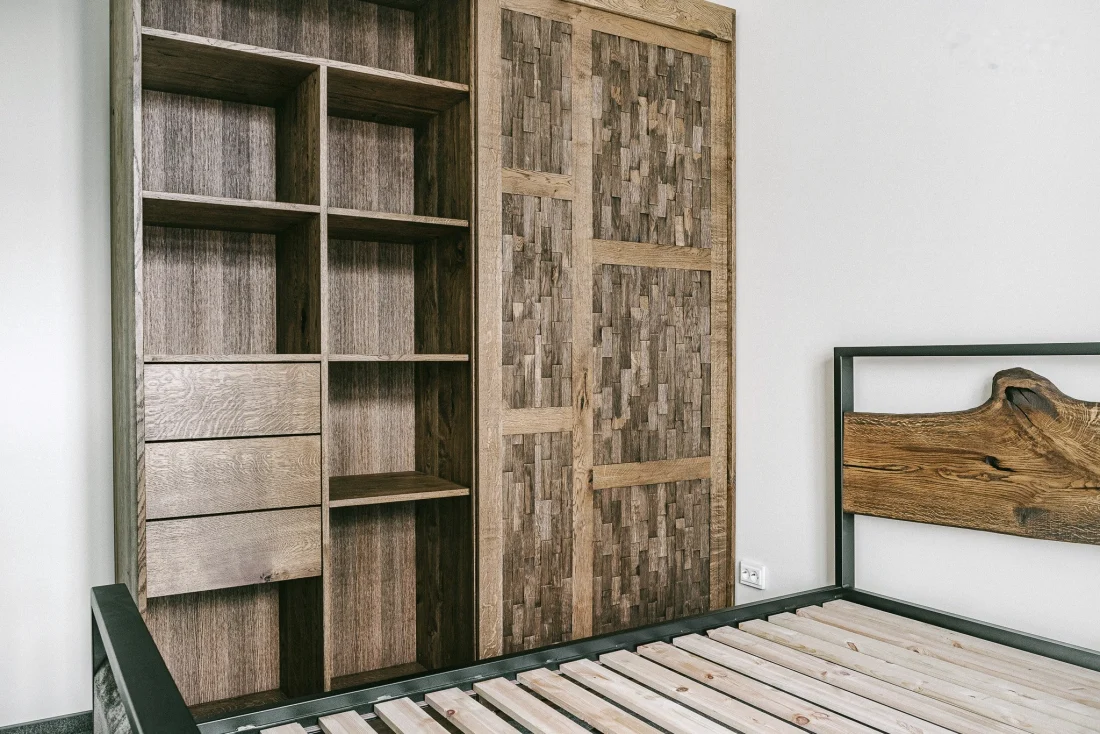
A black steel frame carries mixed wood sections — solid oak drawers below, open glass shelving above — with a walnut-toned sliding door running the width of the piece on a visible track. The mixed materials do double duty as storage and display: folded clothes and drawers stay hidden, while the open shelves above hold what you actually want to see each morning. It suits a room with high ceilings, since the piece reads tall rather than wide. Nothing about the hardware is disguised — the track and frame are part of the design, not an afterthought. It works best in a room built around exactly this kind of contrast — hidden storage below, open display above.
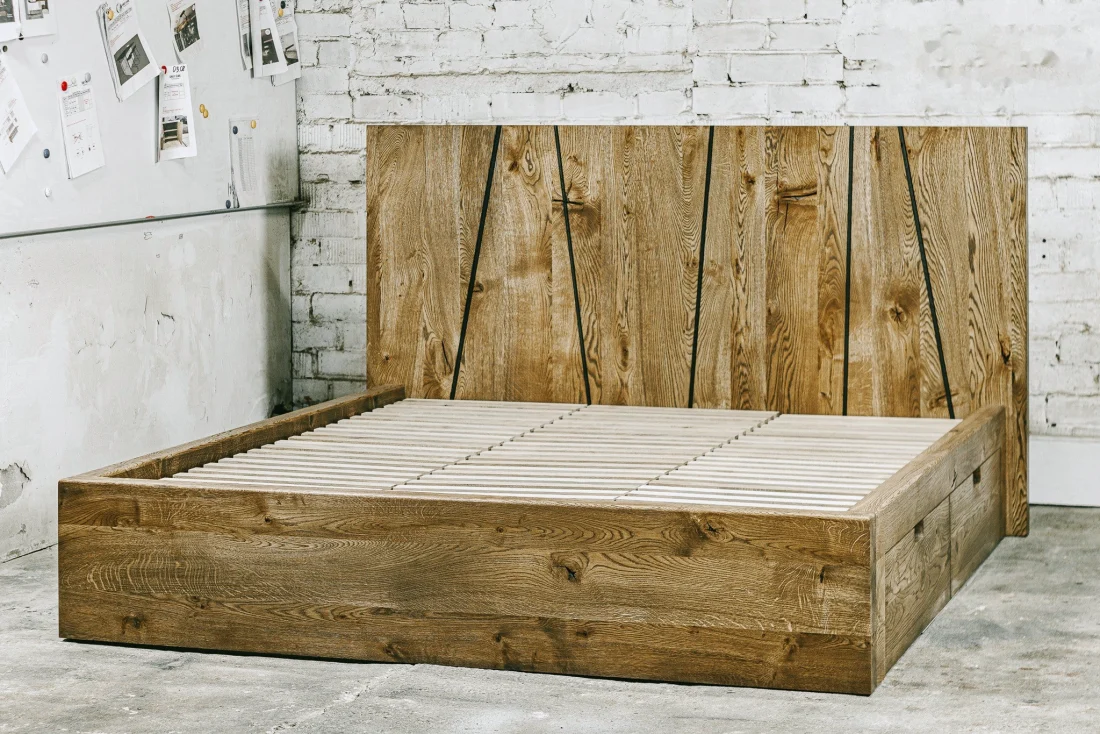
Limestone islands and long pale summers give Gotland its color, and this bed keeps that bleached, sun-worn look in solid oak.
The headboard is cut in one continuous wave, rising and falling like a coastline, sanded until the pale finish reads almost white. Underneath, the platform holds its own storage — drawers built into the base rather than added on. Some frames come in a natural, ungrained oak; others go dark, walnut-toned, for a room that wants contrast instead of calm. Either way the wave stays. A bed like this asks for plain linens and not much else on the walls — it is already the room's one gesture. Even the hardware stays hidden, worked into the drawer fronts so nothing metal interrupts the pale wood.
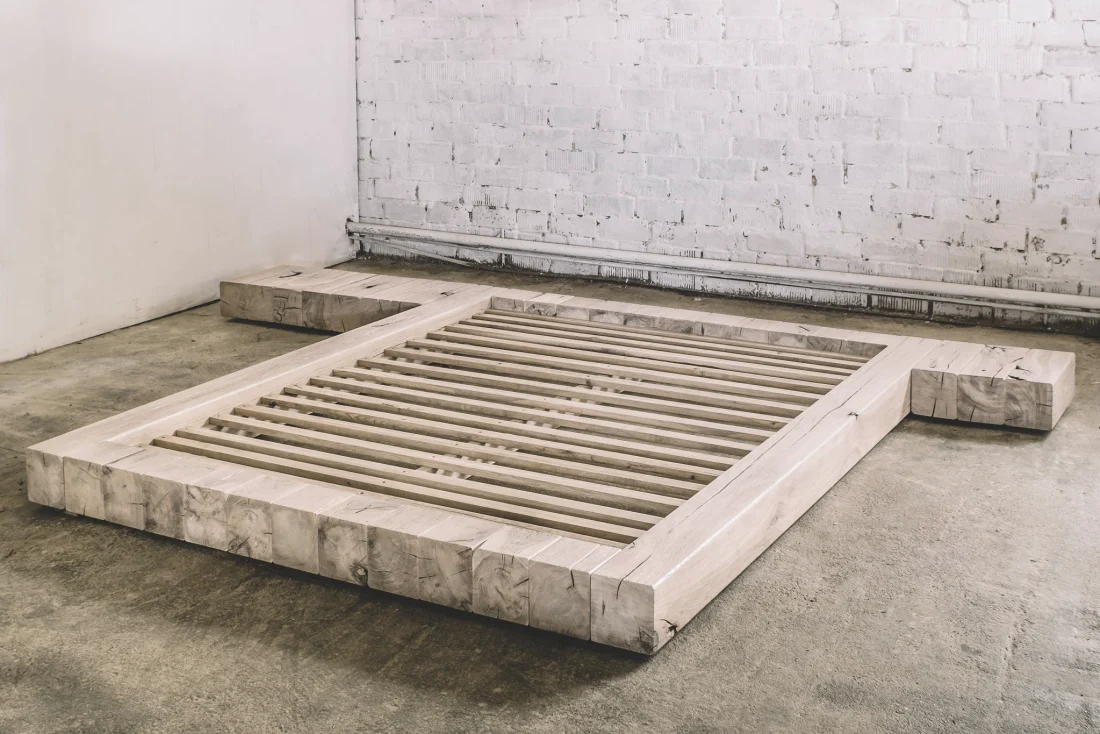
Whitewashed walls and a horizon that never seems to end — Santorini lends its color, not its shape, to this bed.
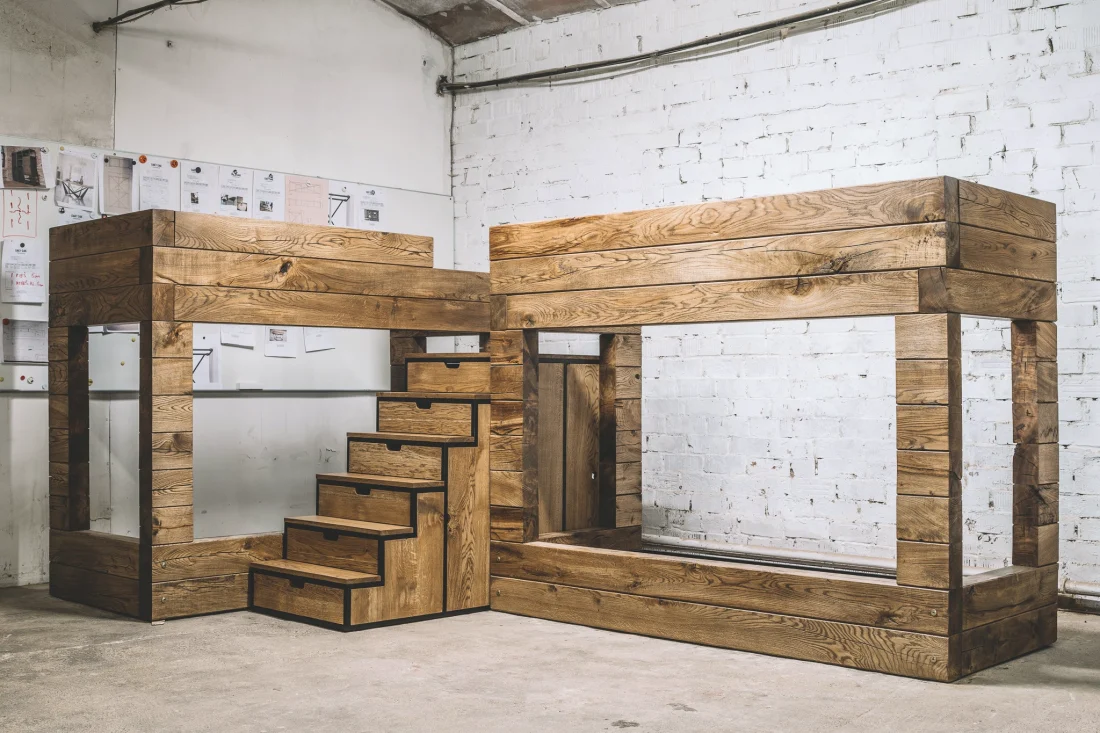
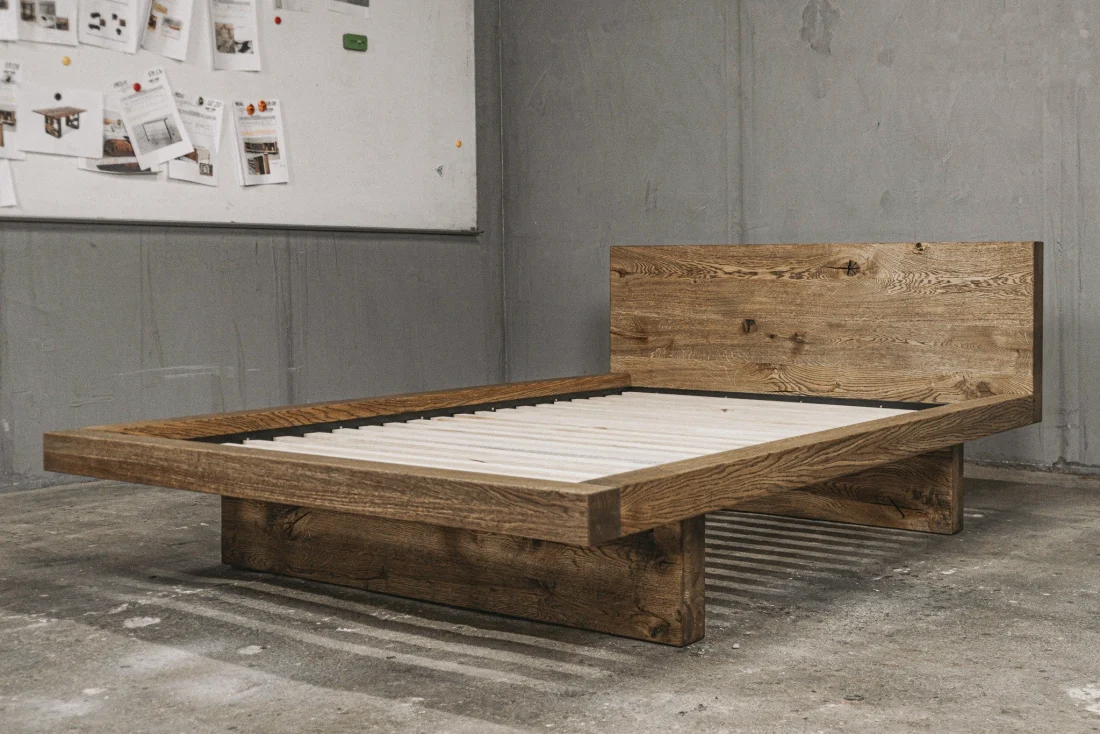
The platform sits low, built from chunky oak beams left with a pale, almost bleached finish, slatted through the center so the mattress breathes. A black steel frame carries some versions, oak legs the rest. There is little to it beyond that: no headboard doing extra work, no carved detail competing with the wood itself. It reads as calm the way a whitewashed room reads as calm — one material, one tone, nothing arguing with anything else. Set it low in a bedroom with bare walls and morning light does the rest. There is no footboard to speak of, so the platform reads as one long, low horizontal line across the room.
Austin's houses tend to blur the line between inside and outside, entries built as much for boots and bikes as for coats, and this open wardrobe unit is built for exactly that kind of arrival — a black steel frame holding oak shelving, a hanging rod, and a bench with drawers below, all left open rather than closed behind doors.
Two sizes make up the collection, both in natural oak against the black steel structure, with cubbies sized for shoes and baskets built into the base. Nothing is hidden here by design; the point is to see everything at a glance on the way in or out. It works best right inside a door, doing the sorting a closet usually leaves to a pile on the floor.
Mendocino sits on the Northern California coast, where wind and surf have spent centuries rounding the headlands into soft, deliberate curves.
This desk works the same way — a single oak plane bent into a wide, rounded rectangle, its corners eased rather than cut, resting on two thick drum-shaped legs. Everything about it reads as one continuous form: no hard edges, no applied trim, just solid oak shaped and sanded until the curve feels inevitable. A cable pass-through disappears into the surface rather than announcing itself, and a bank of drawers rides low along one flank, out of the way of your knees. It asks for a room with space around it — an office, a library corner — somewhere it can be walked around and appreciated from more than one angle before the papers pile on.
Portland pairs a top left close to raw — natural edges, visible knots, the color variation of a board that was never sanded into uniformity — with a base painted in a matte, olive-toned lacquer that reads more workshop than office.
It is an unusual combination, rustic wood over a distinctly modern-colored frame, and the contrast is the entire idea behind it. Only two sizes exist, a compact desk and a considerably larger one, both keeping the same raw-edged top and painted metal legs. It suits a room that wants one clearly handmade object at its center, a studio or a den, somewhere the desk can look like it arrived from a more interesting place than a showroom. It ages well too, since raw wood shows use as character rather than damage.