 239 444 7833239 444 7833
24 pieces across 6 collections. Solid European oak, built to order in 10–16 weeks.
Marble quarries gave this piece its name and its top: a slab of natural white stone, thick enough to read as solid rather than veneered, set over a cabinet of dark oak.
Two basins can be cut into the stone side by side, plumbing routed through black steel legs that keep the whole cabinet floating just off the floor. The drawers below run wide and shallow, sized for the flat clutter of a bathroom rather than deep storage. Dark wood under white stone is an old contrast, and it still works here — the cabinet recedes, the stone catches every bit of light in the room, and the whole vanity looks lighter than its weight. It suits a primary bathroom built around two people getting ready at once rather than one person passing through.
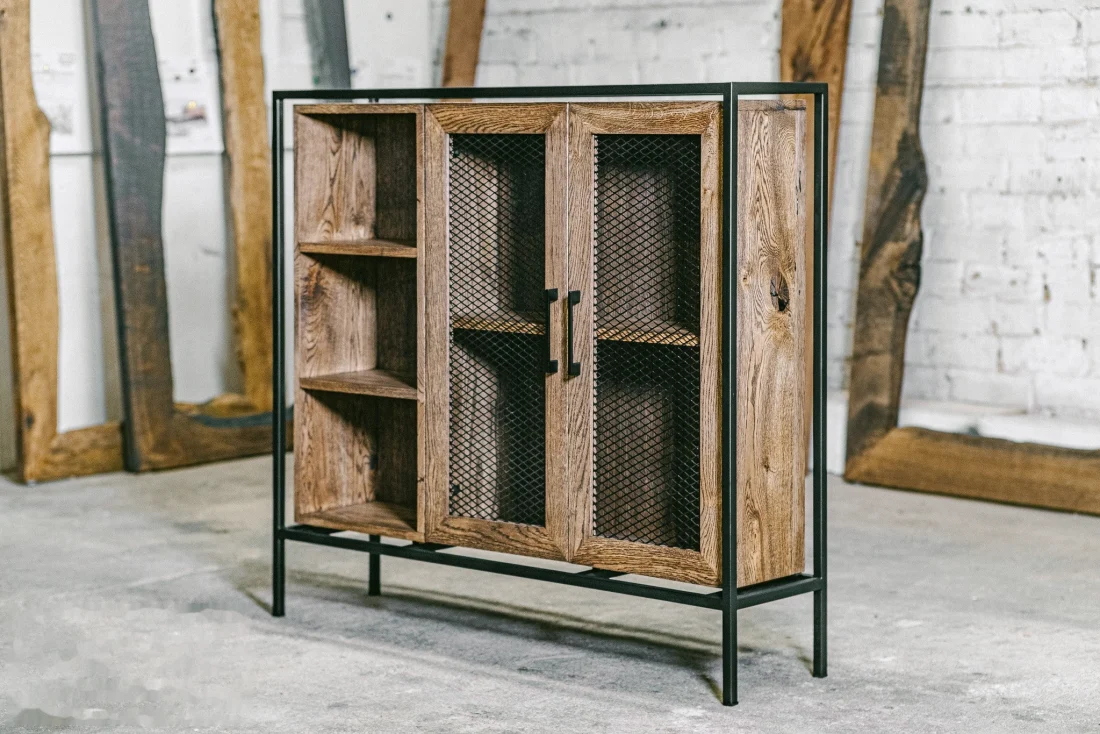
Amsterdam is a display case first and storage second: tall glass-and-mesh doors over open shelving, finished in an olive-toned oak that reads warmer than a plain natural stain and darker than walnut.
The mesh panels sit behind the glass rather than replacing it, so whatever is kept inside gets a little texture between it and the room. Four sizes run from a narrow bar cabinet to a wide buffet-height piece, all built the same way — black steel door frames, oak carcasses, adjustable interior shelves behind the glass. It wants glassware, ceramics, the things you own but rarely use, objects that can carry a little formality. Leave the interior light on in the evening and it does most of the decorating on its own.
Cortona is the piece that disappears on purpose.
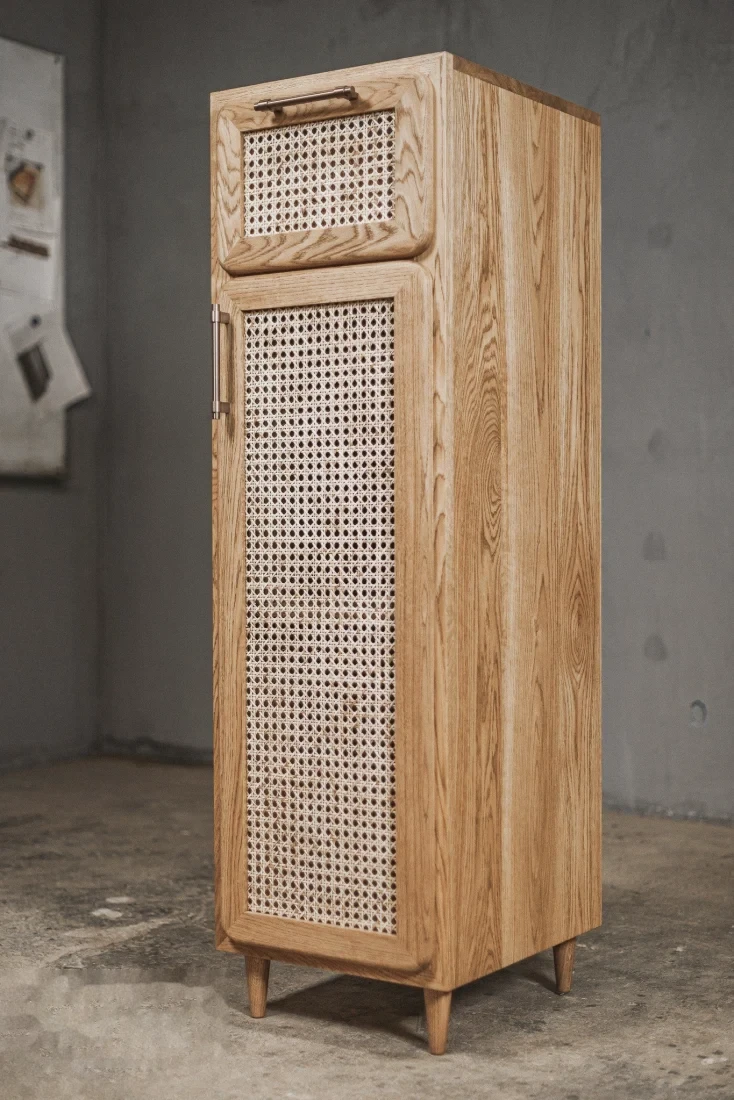
Full-height and paneled in the same woven caning as its shorter relatives, it is built to sit flush with a wall, a hallway or a kitchen corner, so opening it feels less like using furniture and more like finding a room you did not know was there. Five sizes cover everything from a slim linen cupboard to a full pantry-height cabinet, each keeping the same oak frame and mesh-paneled doors, finished light enough to read as part of the wall rather than a piece set against it. Inside, ordinary shelves and drawers do the work. From the outside, it simply looks like architecture that happens to open. It rewards a household that likes a little mystery tucked into a hallway.
Palma's doors are the point: tall panels of woven caning set into an oak frame, letting light move through the cabinet instead of stopping flat at a solid front.
It is the kind of detail associated with island houses built for cross-breezes, which is likely where the name comes from. The collection covers six pieces, a full-height wardrobe down to a narrow bedside cabinet, all sharing the same paneled-door language and the same light, natural oak tone. Behind the woven fronts, ordinary adjustable shelving does the actual work of storage. In a bedroom or a hallway it reads more like built joinery than a delivered cabinet, something that belongs to the room rather than added afterward. It asks for morning light more than anything else.
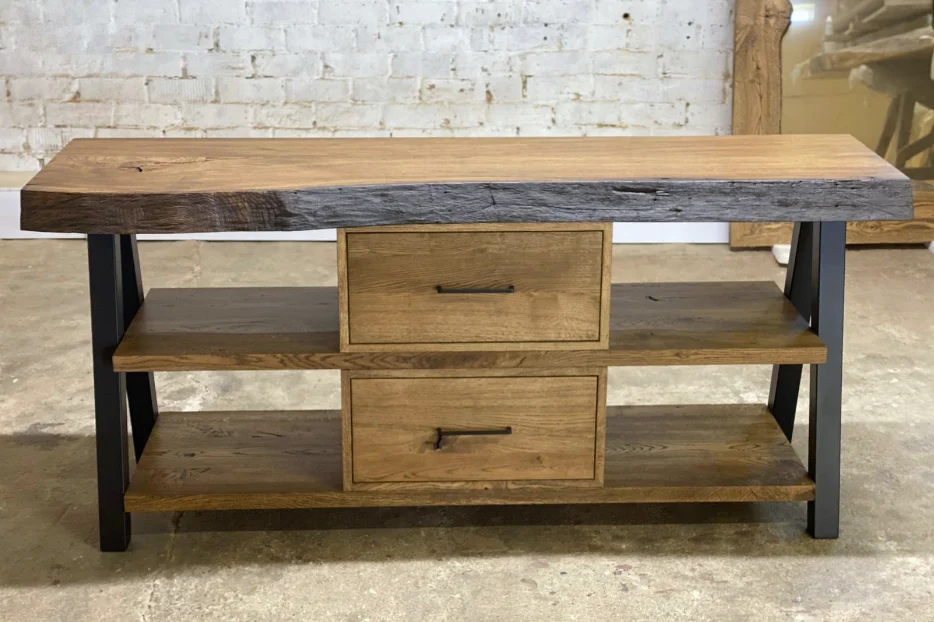
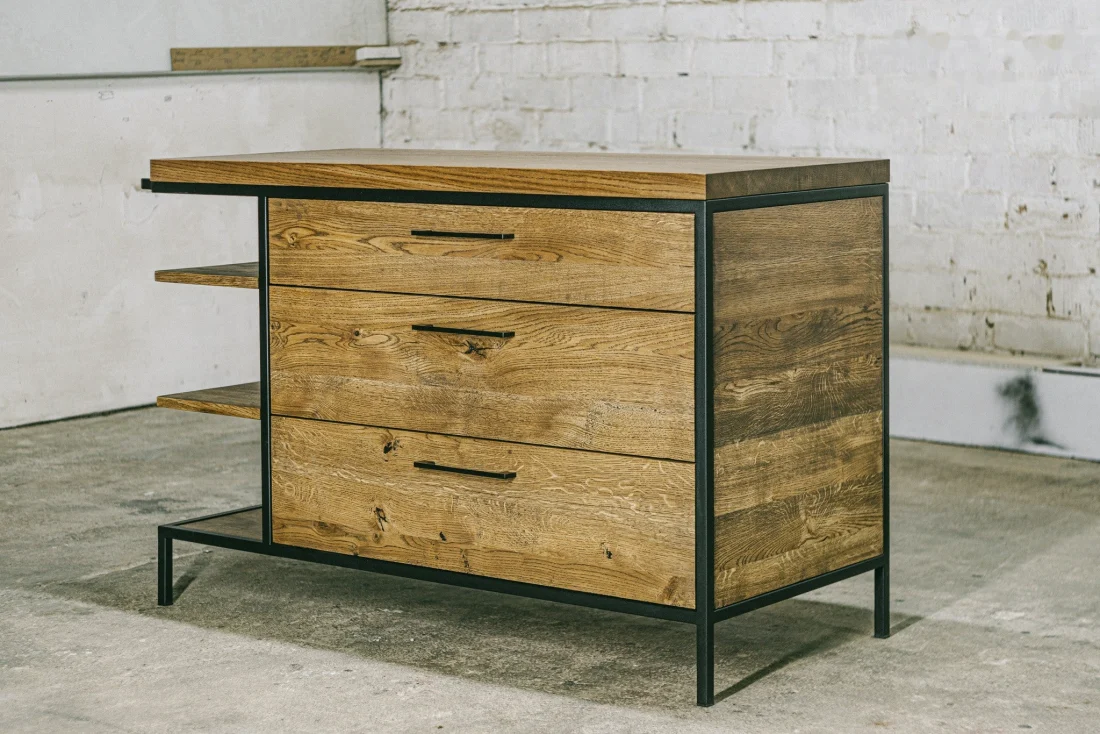
New England barns keep their beams rough on purpose, and this console borrows that logic: a live-edge oak slab on top, bark-line intact along one side, resting over open shelving on a black steel A-frame.
Two drawers sit tucked into the wood itself, finished flush so the storage does not interrupt the grain running the length of the top. It works as a console behind a sofa or a media stand against a long wall — the open shelving below keeps baskets or books in view rather than hidden. The steel frame does the structural work quietly, angled just enough to read as considered rather than merely functional. Set it low behind a sofa and it holds a lamp and a stack of books without ever looking crowded.
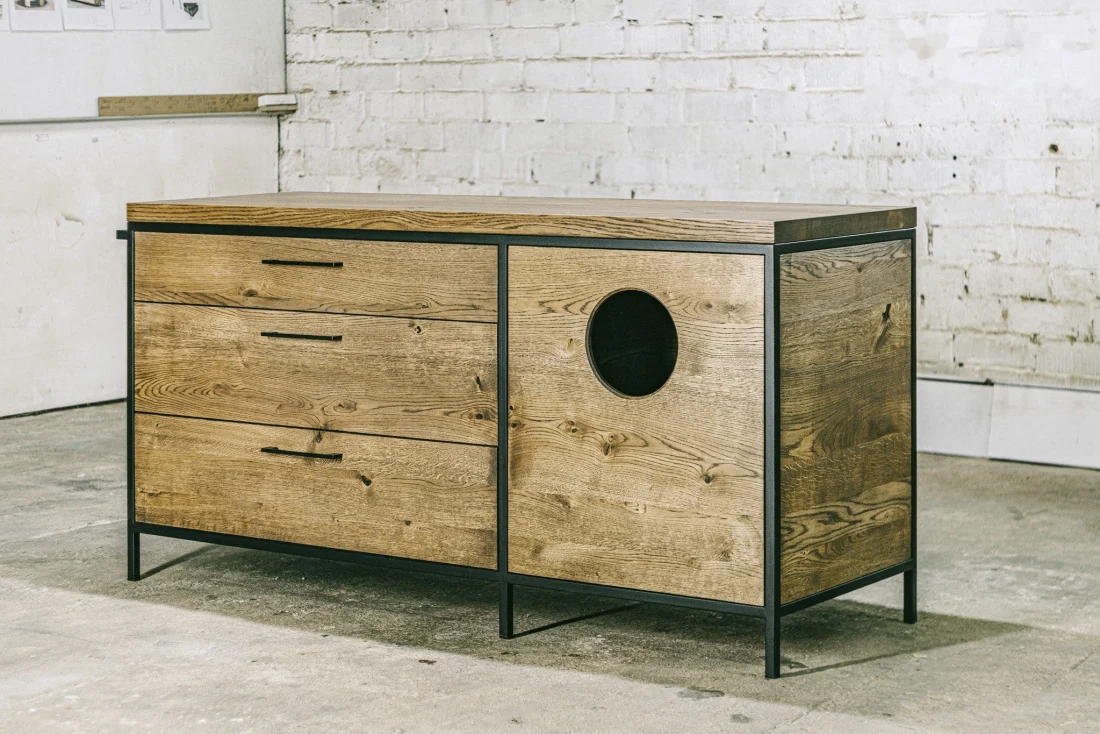
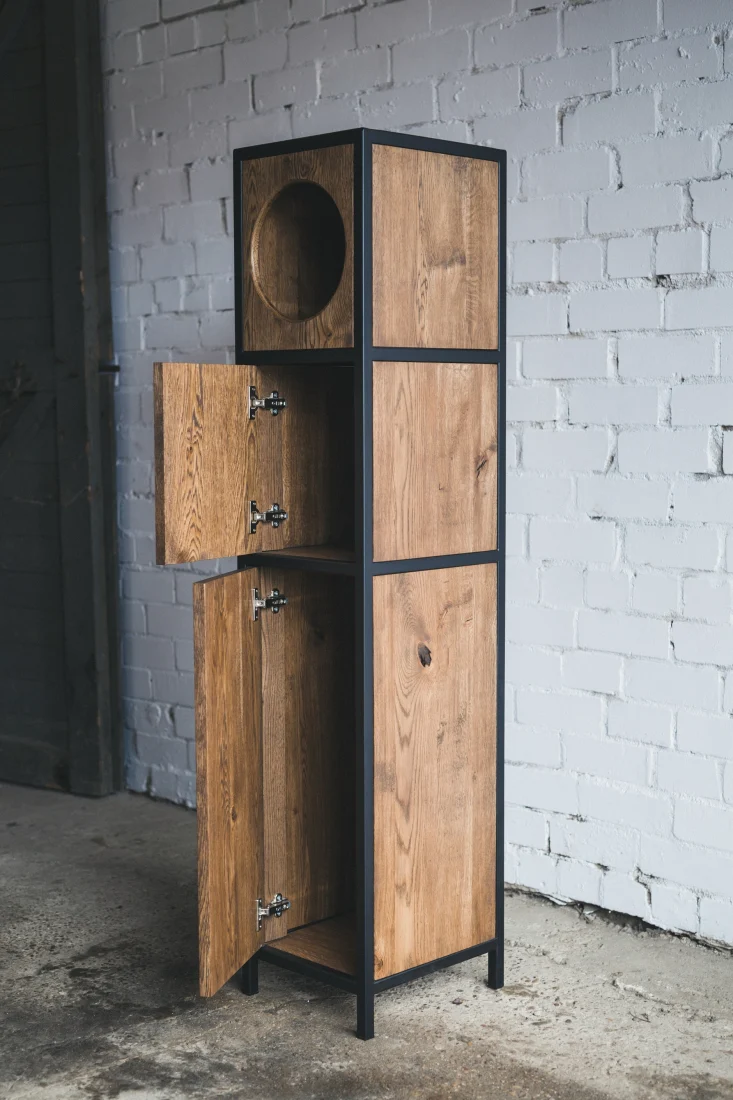
Reno's skyline is built around a single lit circle, and this storage cabinet takes that same shape as its signature — a tall oak cabinet with a round cutout serving as the door pull, cut clean through solid wood rather than applied as hardware.
The frame is black steel, thin enough to disappear against a wall, holding a case of natural oak with the circular door above and a drawer below. The cutout is the whole design statement: no other ornament competes with it, and the oak grain frames the circle rather than distracting from it. Narrow enough for a hallway or a bedroom corner, it holds more than its footprint suggests, and the round door makes it identifiable across a room before anyone reads a label.