 239 444 7833239 444 7833
32 pieces across 7 collections. Solid European oak, built to order in 10–16 weeks.
Mayfair's townhouses climb straight up in narrow, elegant rows, tall sash windows stacked floor over floor, and this shelving collection borrows that verticality outright.
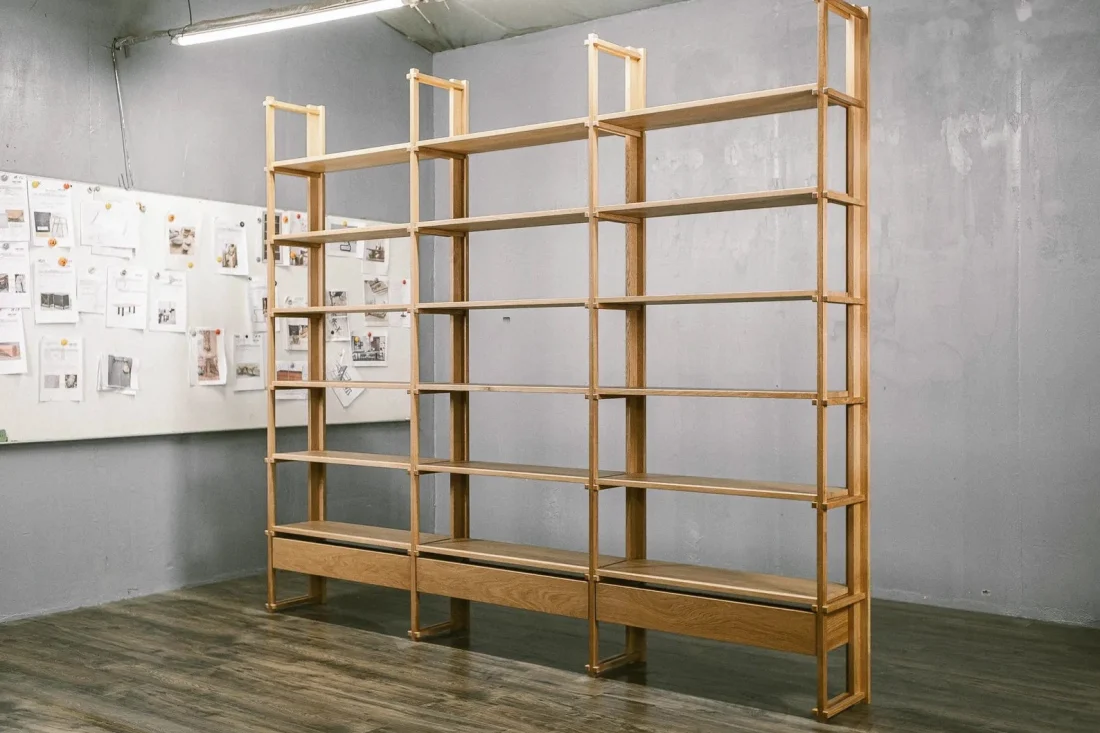
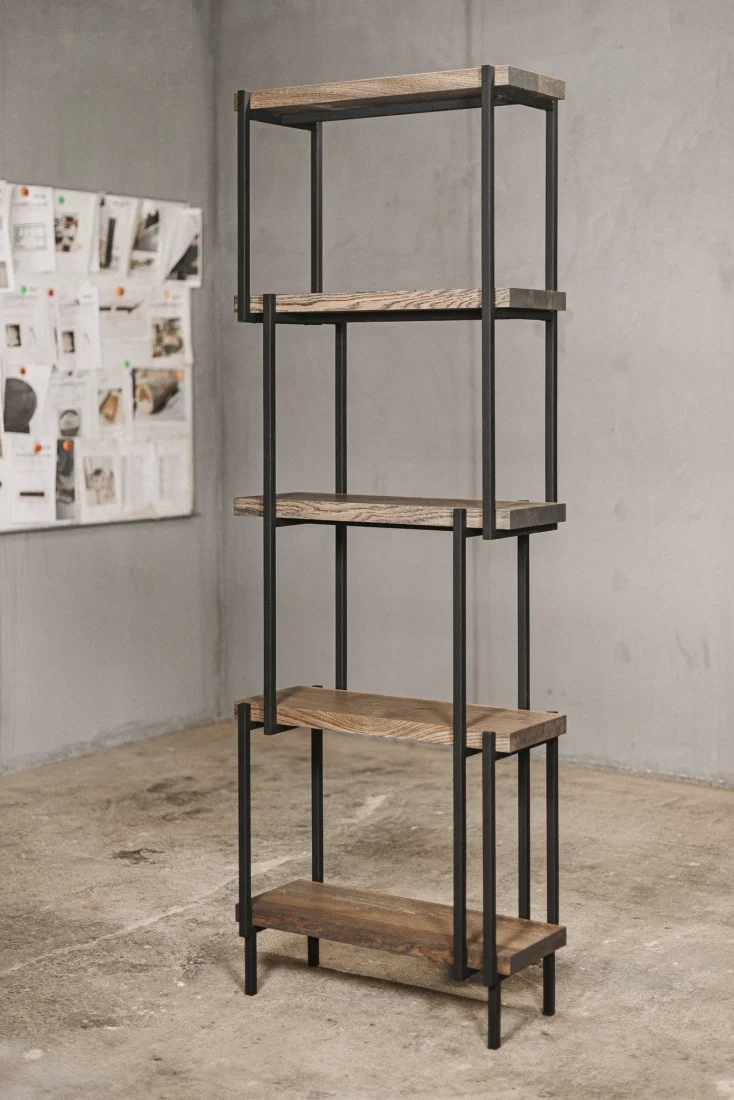
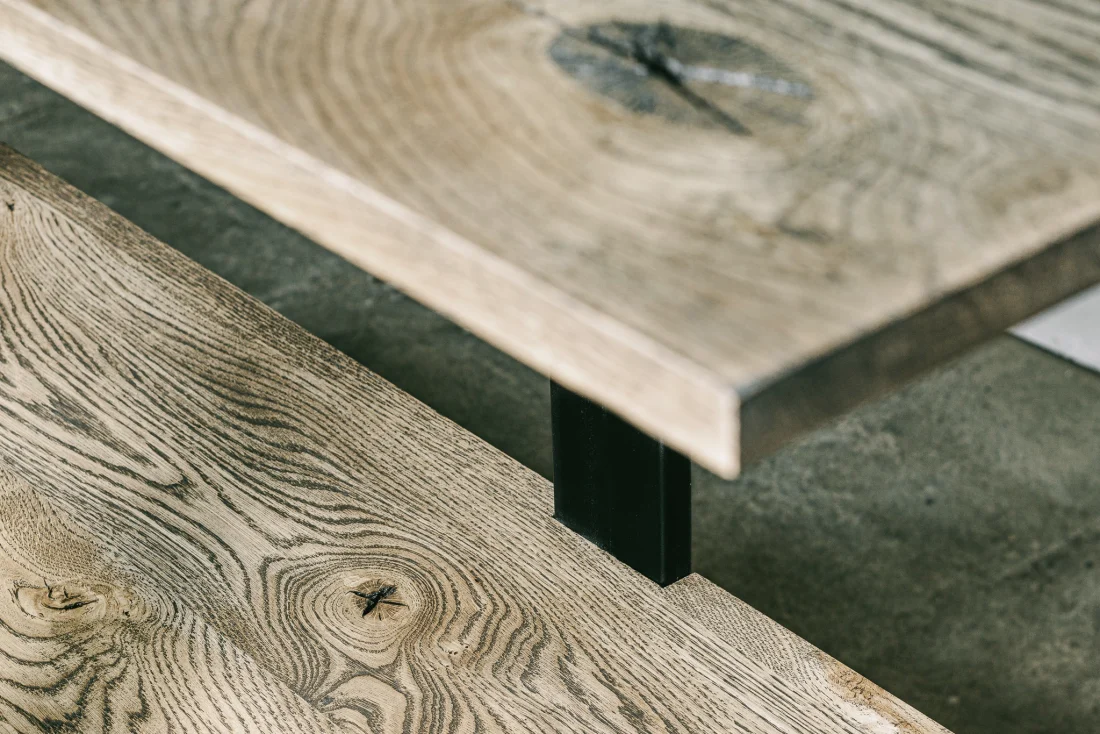
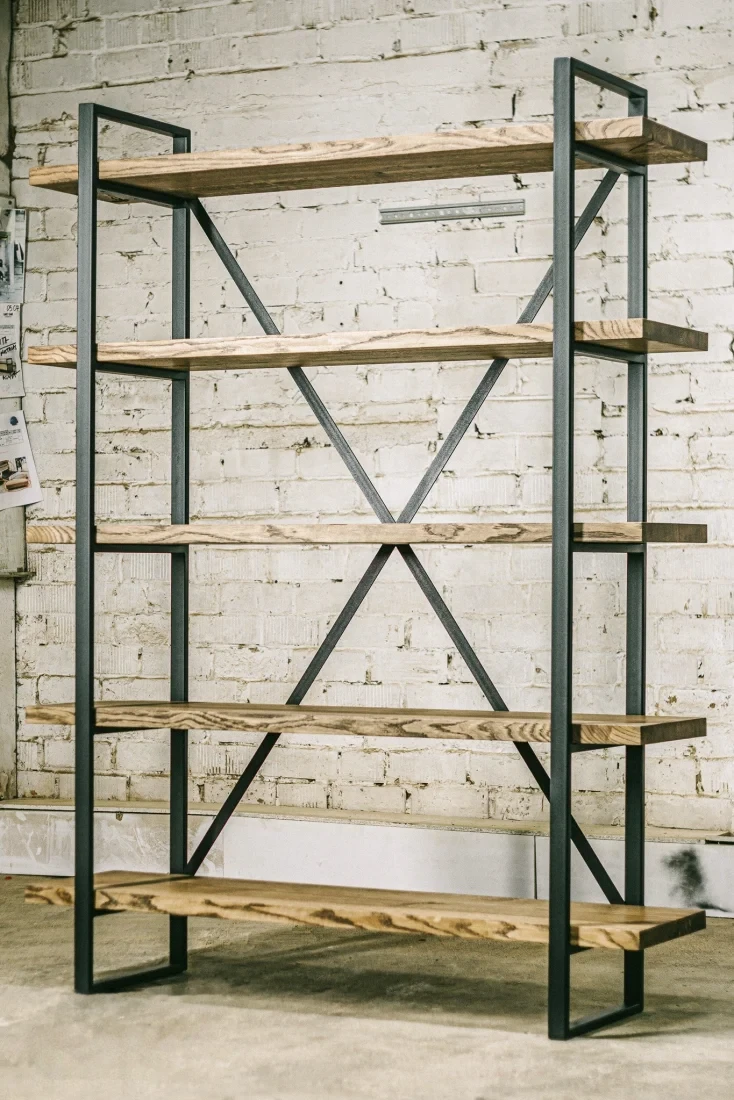
Built mostly from solid oak, with select pieces framed in dark steel, the units rise well past head height on slim, ladder-like uprights, open shelves running the full span. The oak is left natural in most pieces, pale and straight-grained, occasionally shifting to a walnut tone with a black steel edge for contrast. Nothing about the construction hides itself — the joinery between shelf and upright is visible by design, the whole thing reading as structure first, storage second. Against a tall wall, one of these fills the height a room actually has rather than stopping short of it.
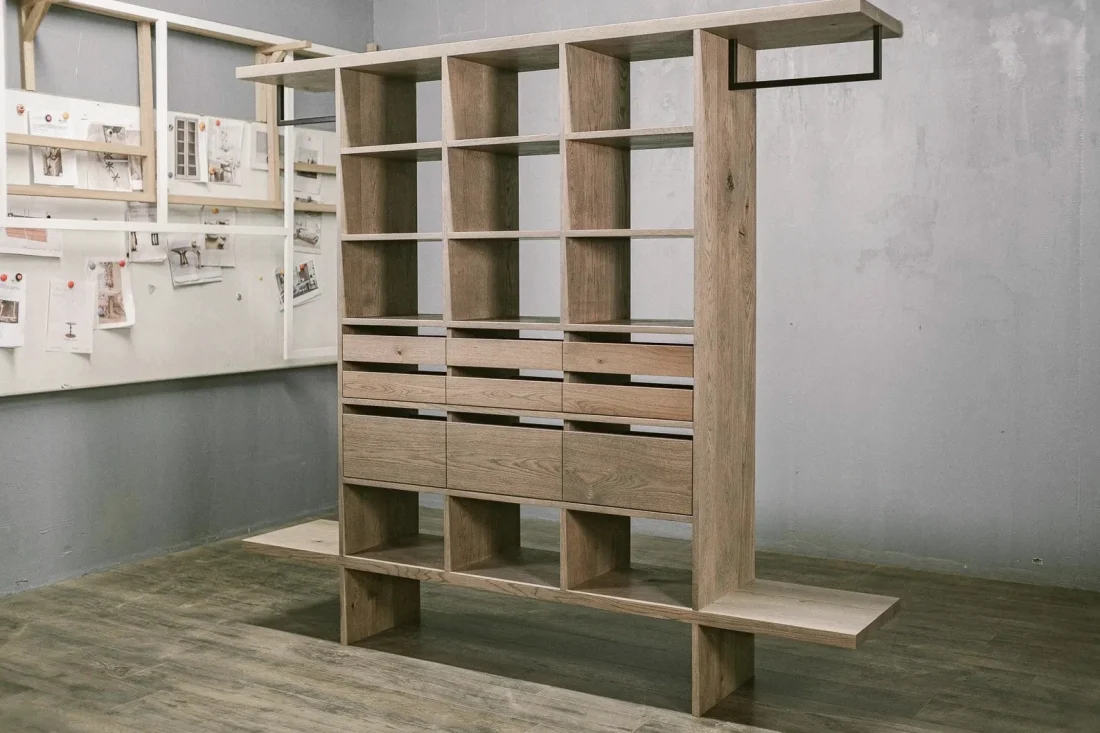
Phoenix takes its name from something that rises renewed out of what came before, and this wardrobe unit has that same open, rebuilt quality — a tall structure of oak compartments and shelving, deliberately left without doors, so the geometry of the piece is visible from every side.
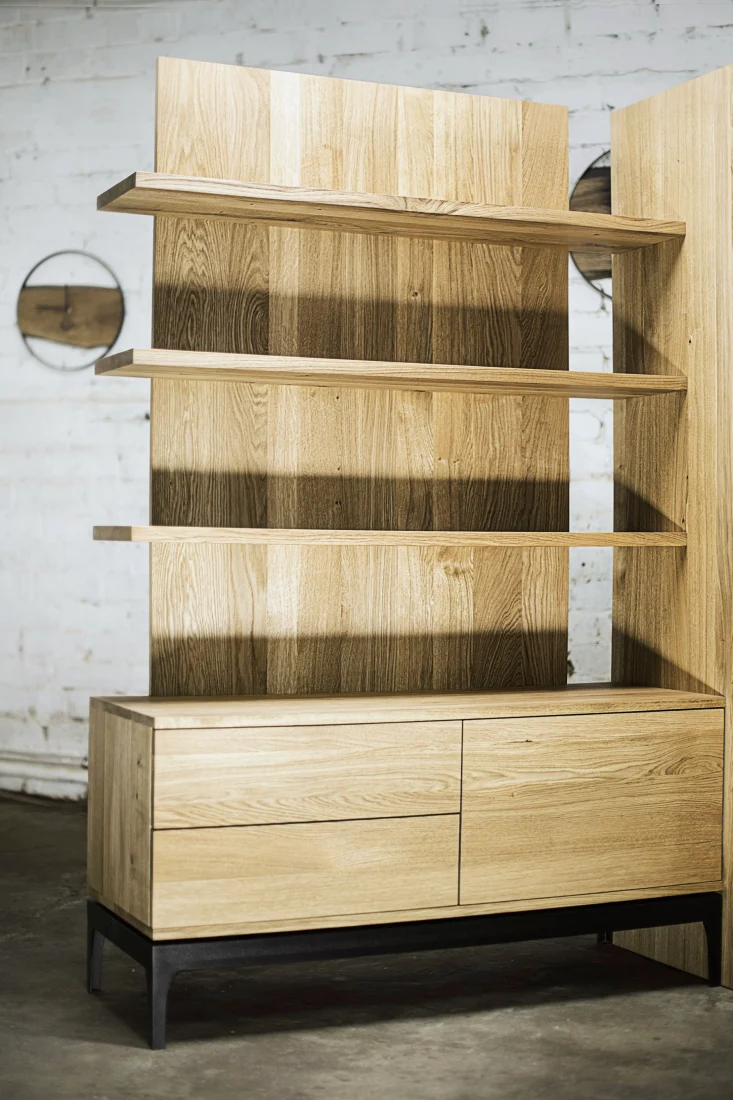
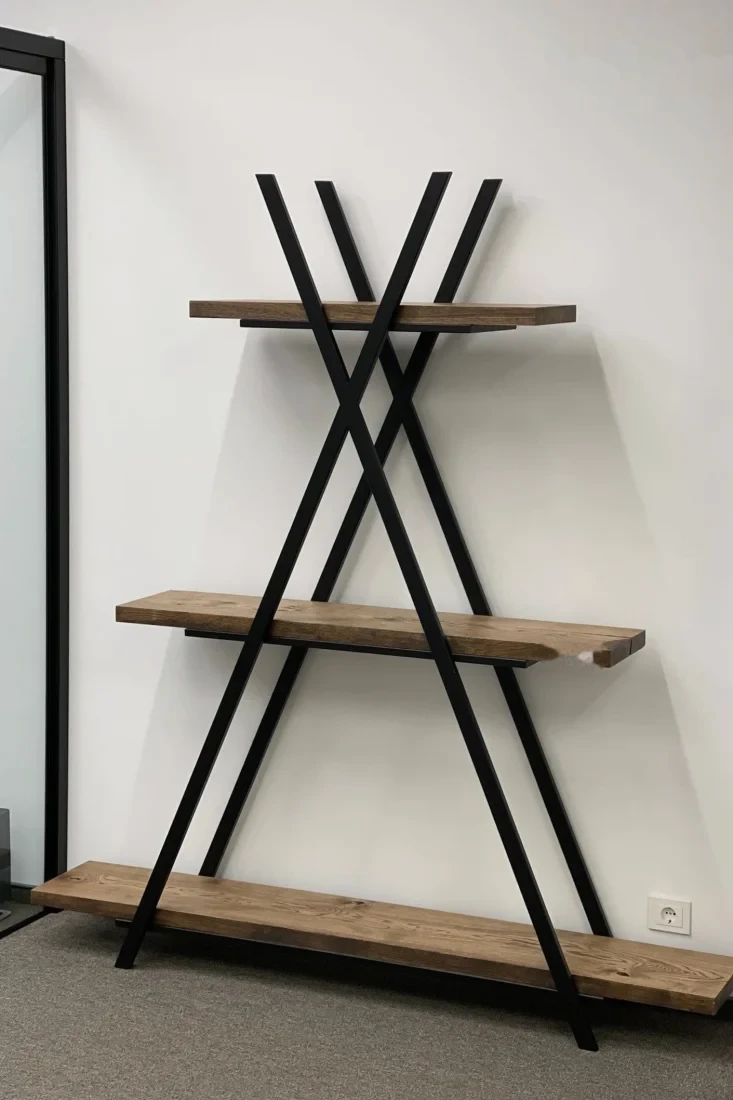
It stands as a single large piece, built from natural oak throughout, with an angled shelf breaking the grid partway up and open bays running the rest of the height. Used as a room divider, it reads the same from either side, which is not true of most storage this tall. Set between two spaces, it separates a room without closing it off — light and conversation still move straight through the openings.
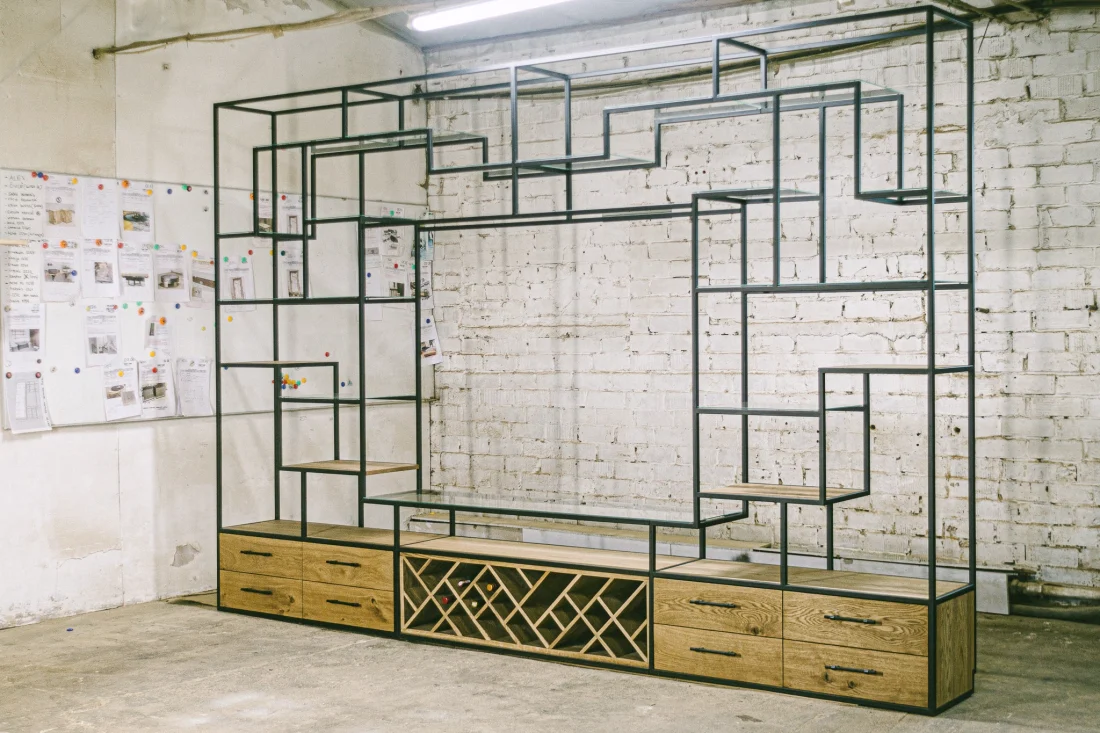
Tribeca's lofts were built as factories first, all exposed steel columns and grid windows, before anyone thought to live in them — and this shelving system keeps that raw, structural logic.
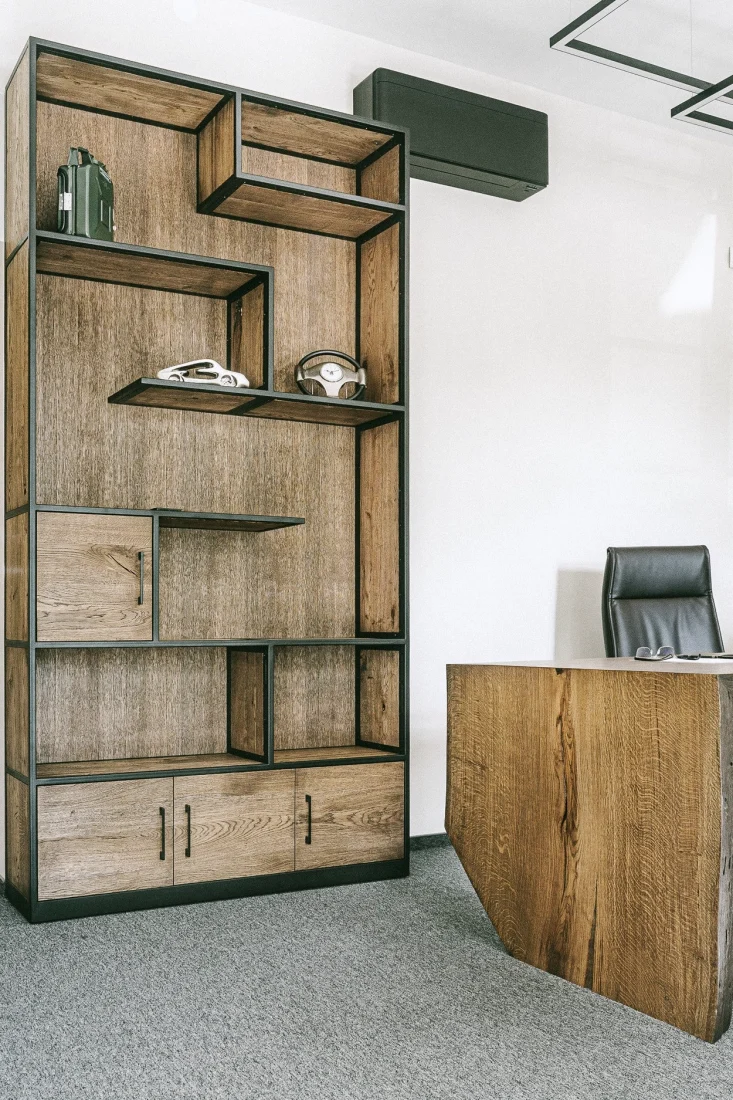
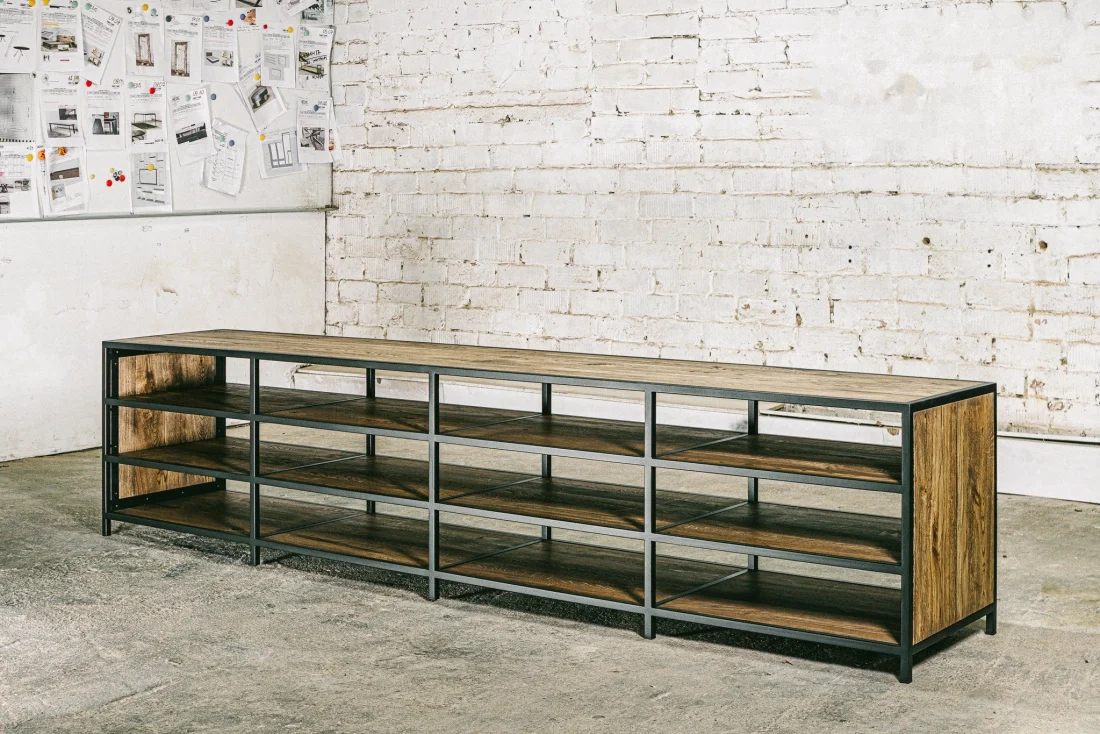
A tall black steel frame branches into an almost maze-like arrangement of verticals and horizontals, with oak shelves, drawers, and in some configurations glass and LED lighting set into the openings. Across the eight pieces, the steel grid is the constant; what fills it changes — a run of oak drawers along the base, a lit glass niche partway up, open bays elsewhere. Natural oak plays against black steel throughout, never fighting for the same attention. It suits a room that wants one dominant, sculptural object rather than a wall of matched furniture.
Kew is London's botanical garden, greenhouses and planted beds organized under glass and iron, and this shelving unit is built almost literally from that idea — a black steel frame holding oak planter boxes at different heights, sized to actually take soil and a growing plant rather than just a vase.
The two pieces in the collection share the same logic: oak boxes set into an open steel structure, with the frame doing the visible engineering and the plantings doing the rest. Each unit can be configured with a different finish and box layout, so no two gardens read identically. Set against a window, it becomes a living wall rather than furniture — the plants finish the piece in a way no finish coat could.
Dessau is where the Bauhaus school once stood, teaching that a grid, honestly built, could be its own decoration — and these wall-mounted shelves are a direct descendant.
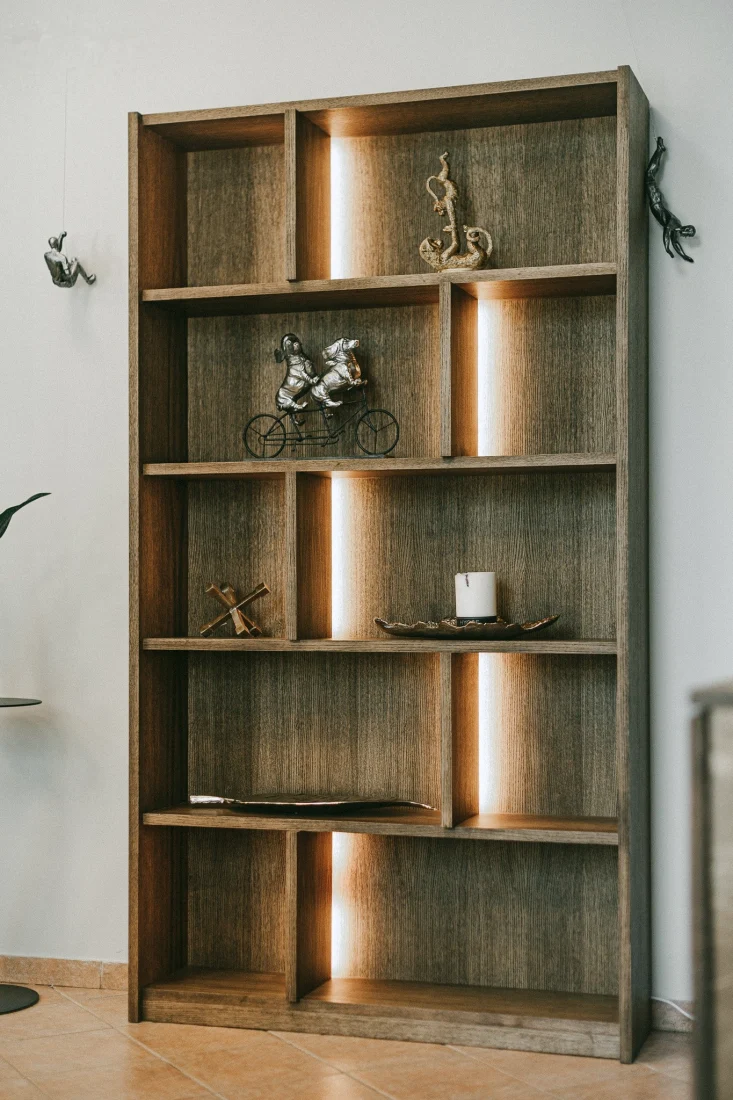
Open box modules in warm, walnut-toned oak sit inside a dark metal frame, the whole thing reading as applied geometry rather than a conventional shelf. Sizes vary widely across the six pieces, from a compact wall cube to a run over six feet wide, but the formula holds: oak boxes, black-dyed metal edging, no ornament beyond the pattern the modules make together. Mounted at eye level, it turns a blank wall into storage that looks intentional rather than added on — good for a hallway, an office, anywhere a plain wall needs one deliberate gesture.
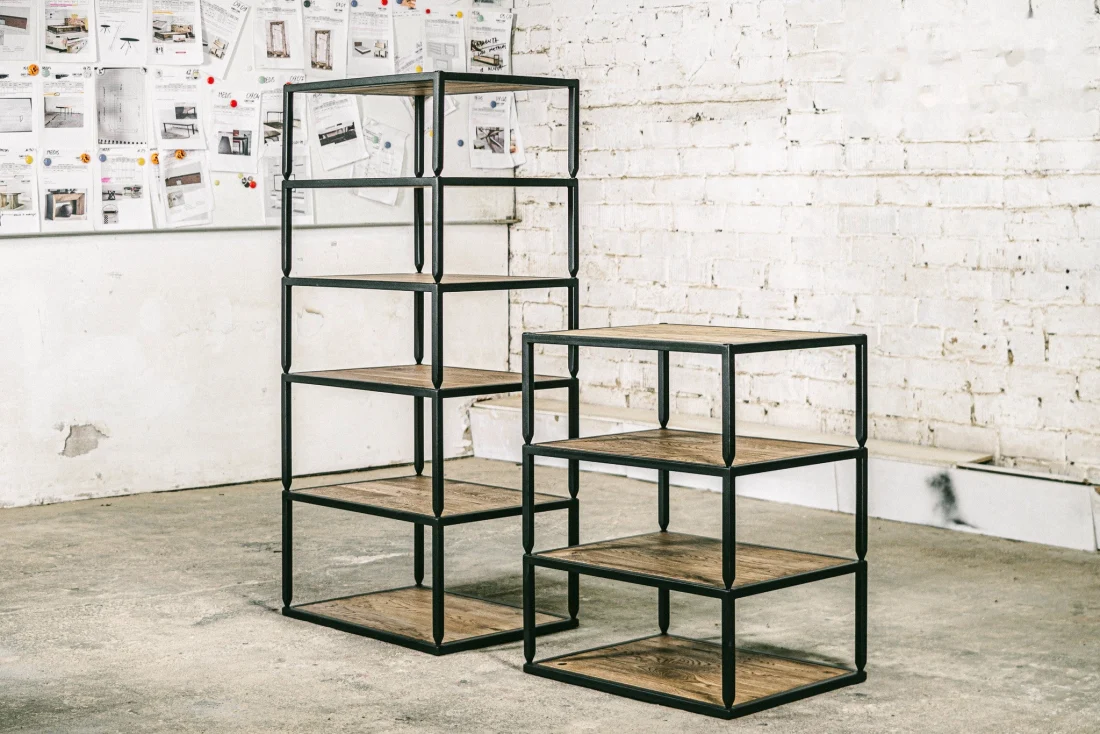
Cleveland grew up around steel mills and warehouse floors, and this shelving system carries that industrial directness — a black steel frame divided into cubes, each one filled with oak in a slightly different tone, walnut here, lighter oak there, so no two openings read quite the same.
The frame does the structural work throughout; the wood fills it in modular blocks rather than running as continuous shelving, which is what gives the six pieces their slightly irregular, stacked-crate look. Sizes range from a low, wide unit to one that climbs past seven feet. It works as a room divider as easily as a bookshelf, since the mixed-tone openings read from both sides — useful in a loft that needs a boundary without a wall.
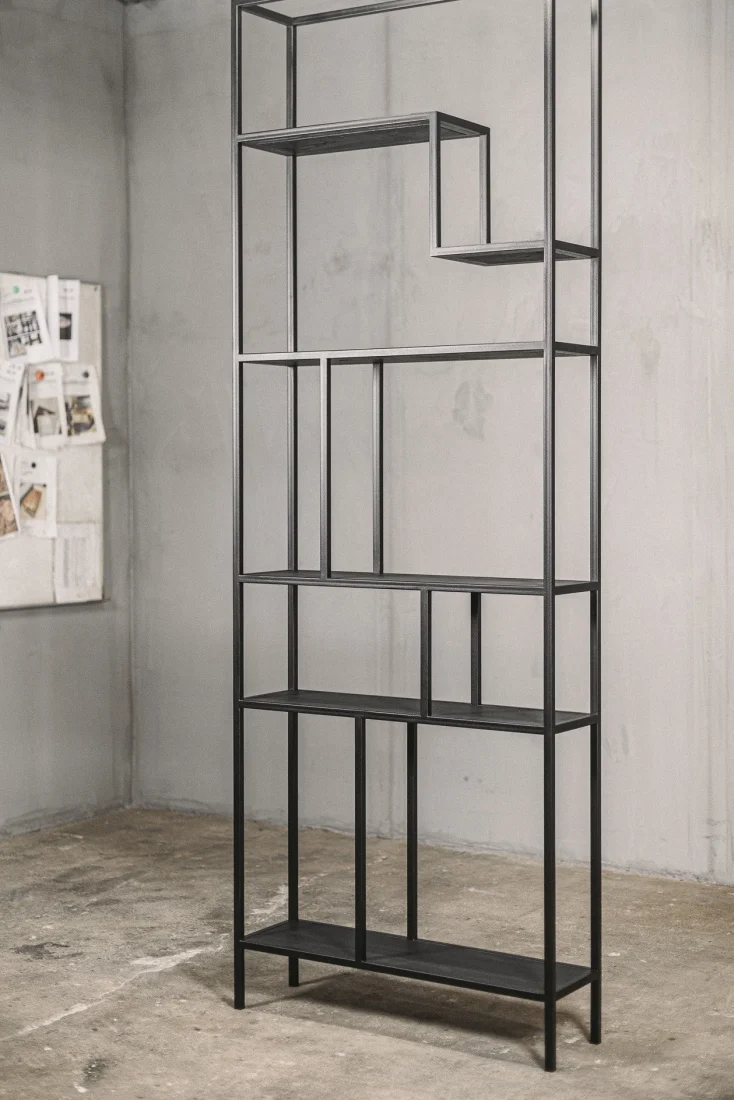
Seattle sits under a low grey sky most of the year, evergreens holding their color regardless, and this tall shelving unit takes that dark, layered green-and-black palette rather than the usual warm oak.
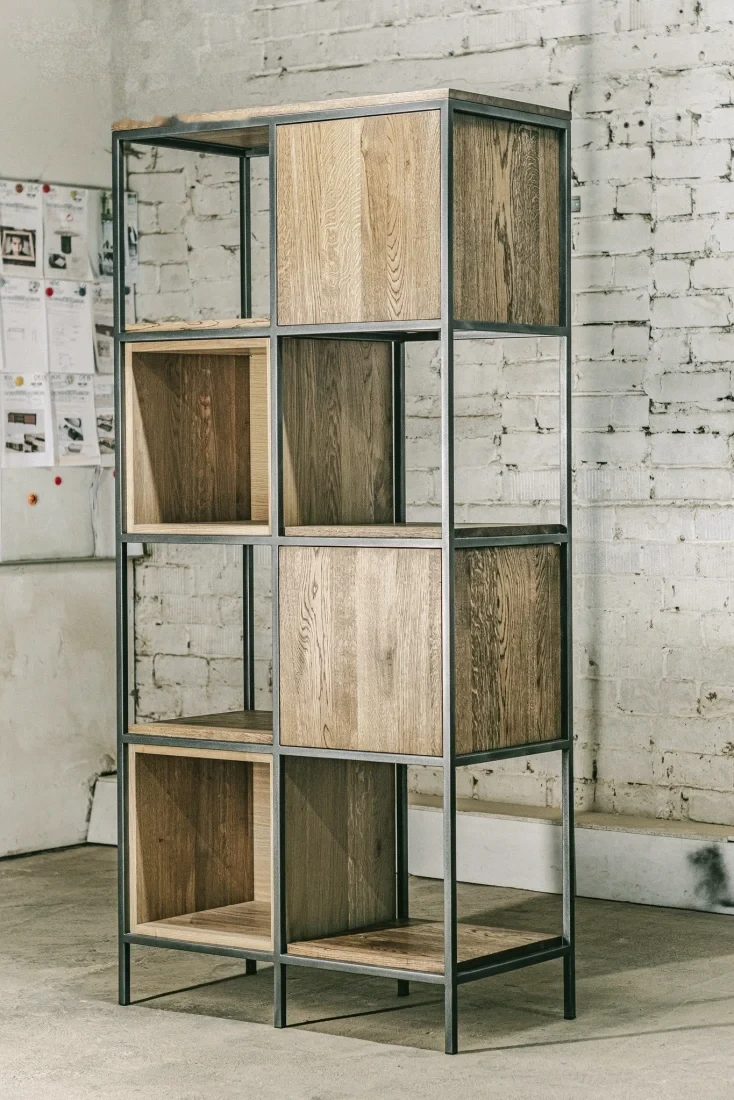
A steel frame in grey and black dyed metal carries oak shelving and a drawer base, rising in a narrow, upright column. Across the three pieces, proportions shift but the frame stays dark and the wood stays a warm walnut-toned oak, giving each unit real visual weight for its footprint. The drawer section at the base keeps smaller items out of sight while the open shelving above stays for display. Against a brick or plain wall, it reads as one tall, quiet object — good for a narrow gap that a wider bookshelf would not fit.